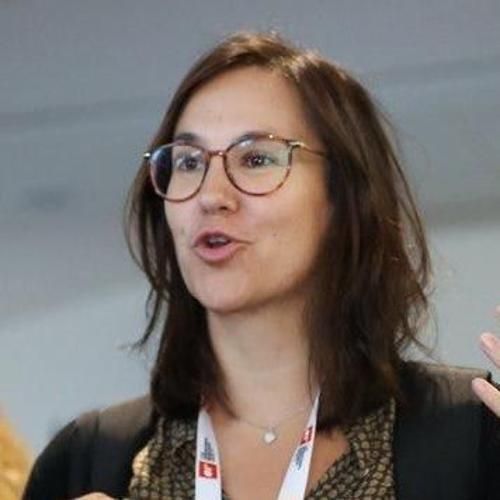
Berta Fernandez Rodriguez is Professor in the Department of Physical Chemistry at the University of Santiago de Compostela's Faculty of Chemistry. She directs research in theoretical and computational chemistry within the QTEC group, with expertise in quantum methods development and molecular interactions. Research develops computational frameworks for predicting optical activity, noncovalent interactions, and spectroscopic properties. Recent publications address semiempirical method refinement, chiral polymer design, supramolecular assembly, and NMR shift analysis. Work integrates quantum chemistry with materials science applications. Her doctoral thesis (1991) established theoretical structural analysis methods for NCO-containing compounds under Drs. Luis Carballeira Ocaña and Miguel Angel Rios Fernandez.
Pablo Pita Orduna is a Researcher in the Department of Fundamentals of Economic Analysis within the Faculty of Political and Social Sciences at the University of Santiago de Compostela. His work focuses on economic analysis of markets and institutions, particularly in socioecological systems and marine resource management. Education includes: PhD from University of A Coruña (2011): Fish communities of the coastal rocky reefs of Galicia, ecology and human impacts PhD from University of Vigo (2020): Analyzing key economic, social and governance patterns for the management of complex socioecological systems in data-poor situations Research interests center on economic analysis, fisheries management, marine ecology, socioecological systems, and environmental governance. His work examines human-environment interactions in coastal ecosystems, with emphasis on sustainable resource use and policy development. Publications demonstrate consistent focus on marine ecosystems, fisheries governance, and socio-economic dimensions of coastal communities. Recent work emphasizes participatory approaches, ecosystem services valuation, recreational fisheries, and sustainability challenges in small-scale fisheries across European coastal regions. Affiliated with research groups: AEMI (Economic Analysis of Markets and Institutions)
Gualberto Asencio Cortés is Associate Professor in Computer Science at Universidad Pablo de Olavide. He holds Ph.D. in Computer Science from UPO (2013) and Executive Master in Innovation from EOI (2016). Research focuses on developing advanced algorithms for: Time series forecasting in energy, agriculture, and environmental domains Feature selection methods for deep learning Explainable AI for predictive modeling Big data stream processing Developed innovative tools like FS-Studio for feature selection experimentation. Recent publications demonstrate strong focus on agricultural applications (pest forecasting, phenology prediction) and energy consumption modeling using hybrid deep learning approaches.
Joaquim Blesa Izquierdo is a Professor at the Department of Automatic Control, Universitat Politècnica de Catalunya. His research focuses on automatic control systems with emphasis on fault detection, water distribution networks, and data-driven methodologies. He leads the MASHED project on energy system management and has advised two PhD students in fault diagnosis and leak localization. His work integrates artificial intelligence techniques like LSTM neural networks with traditional control engineering approaches. Research interests include: Fault diagnosis/prognosis in complex systems Smart infrastructure monitoring (water networks, energy grids) Data-driven approaches for system analysis Hybrid energy storage systems Publications demonstrate strong focus on: Leak localization techniques for water distribution networks Fault detection mechanisms using LPV observers and ANFIS networks Multi-layer optimization for smart grid control Current supervision includes Xin Fang (fault prognosis) and Leonardo Gómez Coronel (deep learning for leak localization). The MASHED project (2022- ) develops digitalization strategies for hybrid energy storage systems.
Juana Sánchez Roig is an Associate Professor in the Department of Biochemistry and Molecular Biology within the Department of Fundamental Biology and Health Sciences at the University of the Balearic Islands (UIB), where she also serves as Deputy Director. With a PhD from UIB (2005, cum laude with European Doctorate distinction), she has established herself as a leading researcher in nutrigenomics and molecular biology. Her academic career includes a Ramón & Cajal research position from 2012-2018, three recognized six-year research periods, and three five-year university teaching periods. Dr. Sánchez Roig earned her doctorate from the University of the Balearic Islands in 2005 with cum laude distinction and European Doctorate recognition. Her academic journey progressed through the competitive Ramón & Cajal program before securing her current permanent faculty position. She has received recognition for both her research productivity (three six-year periods) and teaching excellence (three five-year periods). Her research focuses on the molecular mechanisms linking maternal nutrition, breast milk composition, and long-term metabolic health outcomes. Specifically, she investigates how maternal nutrition and bioactive components in breast milk affect neonatal development and predisposition to obesity and related diseases. Her work aims to identify robust nutrigenomic biomarkers that can predict healthy phenotypes and protect against overweight and obesity development. This research bridges basic molecular biology with clinical applications in personalized nutrition. Analysis of her publication record shows a strong focus on translational nutrigenomics research. Her most recent work emphasizes biomarker identification, systems biology approaches to energy balance regulation, and the long-term impacts of early nutrition. The trend shows increasing sophistication in methodologies, incorporating multi-omics approaches and systems biology frameworks to understand complex gene-nutrient interactions. Three six-year research periods recognized by Spanish academic authorities Three five-year university teaching periods recognized European Doctorate distinction Cum laude Doctorate As Principal Investigator, Dr. Sánchez Roig leads two competitive national research projects funded by the Carlos III Health Institute (PI17/01614 and PI20/00417). She has been continuously involved in 15 government-funded research projects, 6 European Union projects, and 9 industry contracts. In academic mentoring, she has co-directed 5 doctoral theses (2014-2018), supervised 30 Master's final projects (20 directly, 10 as co-supervisor), and guided 10 Bachelor's final projects. Dr. Sánchez Roig is an active member of the Nutrigenomics, Biomarkers and Risk Assessment (NuBE) research group, a consolidated experimental R&D laboratory at UIB. Her work integrates molecular biology techniques with clinical nutrition approaches, focusing on translating basic research findings into practical applications for obesity prevention and personalized nutrition strategies.
Dr. Viktória Diána Lovász is a Researcher at the Institute of Chemical Research of Catalonia (ICIQ) in Tarragona, Spain, leading an independent research group funded by a prestigious ERC Starting Grant. Her work bridges computational chemistry and experimental validation to advance catalytic science. Her academic foundation includes: Bachelor's and Master's degrees in Chemistry from RWTH Aachen University Specialized training in computational chemistry and catalysis Master's thesis research at Technical University of Berlin on diamondoid quantum simulations Dr. Lovász's research integrates advanced computational methods—particularly Density Functional Theory (DFT)—with experimental spectroscopy to decode complex chemical systems. She investigates reaction mechanisms (e.g., methanol decomposition pathways), semiconductor bonding, and functionalized nanomaterials like diamondoids. This interdisciplinary approach enables predictive modeling for sustainable catalysis and molecular medicine applications, leveraging ICIQ's state-of-the-art core facilities. Her major scientific recognitions include: ERC Starting Grant (ERC-StG) for independent research leadership FPI predoctoral fellowship during doctoral training As an ERC grant holder, Dr. Lovász directs a dynamic research program with substantial resources for computational infrastructure and team development. Her group collaborates extensively within ICIQ's ecosystem—including with experimental spectroscopy and catalysis teams—to validate theoretical models. While specific student counts aren't public, ERC grants typically support multiple PhD candidates and postdocs working on cutting-edge projects in computational molecular science. Her research group focuses on developing next-generation computational frameworks for catalytic processes relevant to renewable energy and molecular medicine. By combining quantum simulations with photodissociation mass spectrometry, her team pioneers methods to predict and optimize material behaviors at the atomic level, positioning ICIQ at the forefront of computational chemistry innovation.
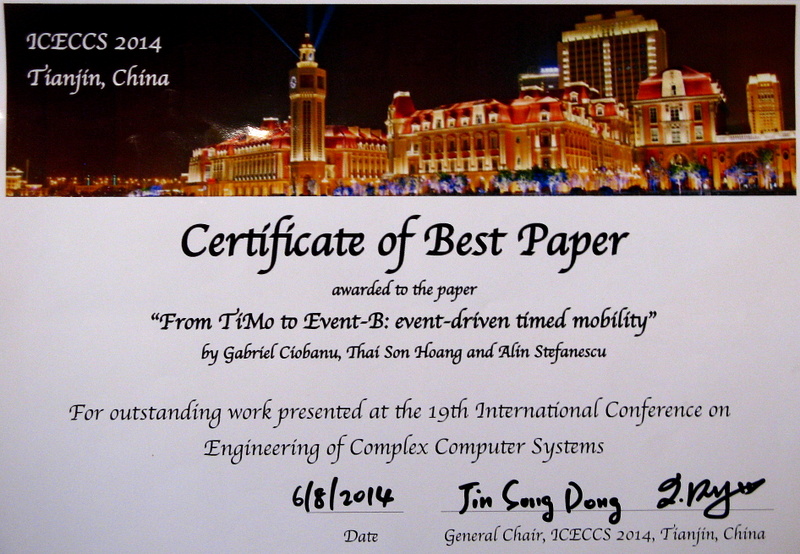
Alin Stefanescu is a Professor and Head of the Computer Science Department at the University of Bucharest , Romania. He is also a founding member of the Institute for Logic and Data Science (ILDS) . His research focuses on software engineering, cybersecurity, and artificial intelligence, with contributions to formal methods, model-based testing, and distributed systems. Education: PhD (2006) in Computer Science, University of Stuttgart Habilitation Thesis (2017) in Formal Methods for Software Testing, University of Bucharest MSc (2000), BSc (1998) in Computer Science, University of Bucharest Research Interests: Formal verification of distributed systems Model-based testing and software quality assurance AI-driven tools for cybersecurity and testing (e.g., RobustCheck, CyberGuardian) Blockchain applications in AI and identity management Reinforcement learning for fuzz testing and automation Recent Trends in Publications: Recent work emphasizes AI integration in testing frameworks, blockchain for secure AI systems, and adaptive cybersecurity tools. He has pioneered open-source tools like RiverFuzzRL and EBLT, addressing challenges in automated testing and vulnerability analysis. Awards: Best Paper Award at ICSOFT'23 (2023) 10-Year Most Influential Paper Award (2023, for 2013 work) Best Student Paper Award (2010) Grants & Labs: Active in EU-funded projects like DYNABIC (AI techniques) and MEASURE (metrics modeling). Leads the ILDS institute, focusing on logic and data science research.
Loig Jezequel is an Associate Professor at the University of Nantes, teaching in the Computer Science Department of the IUT de Nantes and conducting research in the Real-Time Systems team at LS2N (Laboratory of Computer Science and Networks). His research focuses on formal methods for distributed systems, including model checking, Petri net analysis, and automated verification techniques. He earned his Ph.D. in 2012 under the supervision of Éric Fabre at IRISA, Rennes, France. **Research Interests**: Model Checking and Verification of Distributed Systems Petri Nets and Unfolding Techniques Lazy Reachability Analysis Factored Planning and Optimal Algorithms Algorithm Design for Concurrent Systems **Key Contributions**: Developed tools like Distoplan (for distributed optimal planning) and LaRA (lazy reachability analyzer) Co-organizer of the Model Checking Contest (MCC) since 2015 and SynCoP workshop since 2019 Recipient of a PHC Procope grant for distributed model-checking research (2016–2017) **Grants & Collaborations**: ANR project PACS Collaborations with Javier Esparza (Technische Universität München), Didier Lime (LS2N), and others **Labs/Teams**: Active member of the Real-Time Systems group at LS2N and the MExICo team at LSV (Cachan).
Wajih Al-Soufi is a Professor in the Department of Physical Chemistry at the University of Santiago de Compostela. He holds a PhD from Georg-August-Universität Göttingen. His research focuses on supramolecular chemistry, aggregation dynamics of proteins like amyloid-β, and innovative educational methodologies in chemistry. Al-Soufi has directed five theses, including works on supramolecular systems and beta-amyloid aggregation. His contributions span fluorescence spectroscopy, cyclodextrin complexes, and practical laboratory techniques in education. Education & Academic Contributions PhD: Georg-August-Universität Göttingen (1991) Director of Theses: Sonia Freire, Lucas Piñeiro, Jorge Bordello, Belén Reija, Emilio Álvarez (2000–2015) Research Interests Fluorescence-based techniques for supramolecular dynamics Aggregation mechanisms of amyloid proteins Development of hands-on educational tools in chemistry Surfactant and cyclodextrin complexation studies Publications Overview Al-Soufi has authored/co-authored 8 journal articles and contributed to 1 collective work. His recent works emphasize applications of fluorescence correlation spectroscopy, educational practices integrating real-world scenarios (e.g., kitchen chemistry), and early diagnostics of neurodegenerative diseases via amyloid fluorescence. Key topics include protein aggregation pathways and critical micellar concentration modeling. Labs/Teams Conducts research within the Department of Physical Chemistry at USCG, collaborating with institutions like the Science Bulletin and Journal of Chemical Education. His work often involves interdisciplinary teams focusing on biophysical chemistry and science education.
Myriam Soto Ruiz de Gordoa is a Researcher at Mondragon Unibertsitatea's Department of Mechanics and Industrial Production, specializing in health economics, logistics optimization, and healthcare management. She holds a Doctorate (2018) from Mondragon Unibertsitatea, focusing on statistical analysis methods for evaluating healthcare interventions. Her work bridges operational logistics with public health systems, emphasizing cost-effectiveness analyses, integrated care models, and socio-economic disparities in healthcare access. She contributed to the CareWell project, evaluating multimorbidity management strategies, and collaborated on projects assessing cancer screening programs and dementia care protocols. Education: PhD in 2018: Thesis titled "Applicability of statistical analysis of observational design based on process indicators and budget impact analysis for the evaluation of integrated health interventions" Supervised by Dr. Juan Ignacio Igartua López and Dr. Javier Mar Medina Research Interests: Myriam's research focuses on: - Economic evaluation of healthcare interventions - Health disparities related to socioeconomic status and gender - Logistics optimization in healthcare systems - Integrated care models for complex and multimorbid patients - Real-world data analysis for disease burden assessment - Impact of clinical decision-making on healthcare costs Key Contributions: - Developed budget impact models for Alzheimer's disease therapies - Analyzed disparities in antipsychotic prescribing for dementia patients - Evaluated colorectal and breast cancer treatment costs by clinical stage - Designed logistics frameworks for remanufacturing systems in healthcare - Led pedagogical innovations in challenge-based learning for logistics education Grants & Collaborations: - Member of the DOLP 1ENG group (Logistic and Productive Operations Management) - Collaborations with healthcare institutions on integrated care programs - Participation in the CareWell initiative addressing complex patient care Labs/Teams: Active in Mondragon University's research clusters focusing on: - Healthcare Systems Optimization - Public Health Analytics - Education Technology and Active Learning Methodologies
César Díaz Gómez is a Professor at the Barcelona School of Architecture (ETSAB) within the Universitat Politècnica de Catalunya (UPC). He specializes in Architectural Technology and Building Rehabilitation, focusing on residential construction, historic preservation, and urban planning. His work bridges academic research and practical interventions in architectural heritage and modern housing complexes. He holds a Doctorate in Architecture, Building, and Urban Planning Technology (2007) and a Master's in Advanced Studies in Architecture (2015), complemented by degrees in Architecture (1994) and Technology in Architecture (2007/2009). His research explores topics such as construction anomalies, adaptive reuse of industrial buildings, and socio-spatial characterization of housing estates in the Barcelona Metropolitan Area. His publications emphasize rehabilitation strategies for historic and modern buildings, including works on textile industrial buildings and interventions in residential complexes. He has advised over 20 graduate projects, focusing on architectural restoration, urban revitalization, and functional adaptations of heritage structures. His contributions span technical audits, material conservation, and participatory urban planning methodologies.
Anxo Sánchez is Full Professor of Applied Mathematics at Universidad Carlos III de Madrid and founder of the Complex Systems Interdisciplinary Group (GISC). His interdisciplinary research applies physics of complex systems to social, economic, and biological phenomena. Key contributions include foundational work on localization theorems, phase transitions, cooperation dynamics on networks, and the mathematical modeling of social structures like Dunbar circles. He pioneers open science practices and citizen science experiments through his behavioral research lab.
Felipe Espinosa Zapata is a Full Professor in the Electronics Department at the University of Alcala, Spain. He holds a Ph.D. in Telecommunications from the University of Alcala (1998) and an M.S. from the Polytechnic University of Madrid (1992). His research focuses on electronic and network control systems applied to intelligent transportation, smart cities, and industrial automation. He has led 18 publicly funded projects and 22 industry-funded initiatives, contributing to 9 patents. He is a co-author of 5 book chapters and over 40 journal articles, with extensive contributions to international conferences. Research interests include adaptive control for autonomous vehicles, event-based sensor networks, and robotic trajectory tracking. He has supervised 7 PhD theses and serves on the editorial boards of two international journals. Notable projects include the GEINTRA group’s work on intelligent transport systems and the ALCOR project optimizing remote robot guidance. He also pioneered the Cuadrelec Chair in railway electronic control systems, collaborating with industry partners like Cuadrelec S.L. His work bridges theoretical control engineering with practical applications, emphasizing energy efficiency in IoT nodes, multi-AGV transportation systems, and self-triggered control mechanisms. Publications span robotics navigation, sensor fusion, and smart city infrastructure, reflecting his interdisciplinary approach to solving complex automation challenges. Education: Ph.D. in Telecommunications (University of Alcala, 1998) M.S. in Telecommunications (Polytechnic University of Madrid, 1992) Key Roles: Full Professor (since 2016), University of Alcala Head of Cuadrelec Chair of Electronic Control Awards and Recognition: Recipient of international collaborative grants and industry partnerships Grants and Projects: 18 public-funded research projects 22 industry-sponsored initiatives Labs and Teams: GEINTRA Research Group: Electronic Engineering Applied to Intelligent Spaces and Transport Cuadrelec Chair: Railway Electronic Control Systems
Marcela Molina Meyer is an Associate Professor in the Department of Mathematics at Universidad Carlos III de Madrid. Her research specializes in computational mathematics with applications to differential equations and ecological modeling. Recent work focuses on spectral methods, spatial competition models, and numerical solutions for complex systems. Her publications demonstrate consistent focus on mathematical modeling and computational techniques, particularly addressing problems in population dynamics and boundary value problems through advanced numerical frameworks.
Andrea Laura Riccardi Sacchi is a tax law researcher specializing in international taxation, with particular expertise in digital economy taxation, BEPS framework implementation, and Uruguayan tax law. She completed her doctoral studies at Universitat de València, where she defended her thesis 'Revitalizing the jurisdictional connection at source as a global solution for taxing corporate income from services' in 2020 under the direction of Francisco Alfredo García Prats. Her research focuses on contemporary tax challenges including the adaptation of traditional tax frameworks to digital business models, withholding tax systems in the BEPS era, and the concept of 'source of income' in international taxation. She has published extensively on Uruguayan tax law within international contexts, analyzing how traditional tax frameworks adapt to new business models and digital economic activities. Dr. Riccardi Sacchi's publication record demonstrates consistent scholarly output from 2017-2025, with 11 journal articles, 4 collaborations in collective works, 1 book, and her doctoral thesis. Her work appears in prestigious tax publications including Tax Magazine and Cahiers de Droit Fiscal International. Her most recent research addresses nexus concepts for taxation, digital intermediation platforms for tax compliance, and big data applications in tax administration. Her academic contributions include: Analysis of withholding tax systems in the BEPS era Research on digital economy taxation challenges Examination of double taxation avoidance agreements Studies on Uruguayan tax law within international frameworks Investigation of spatial aspects in consumption taxation Dr. Riccardi Sacchi has established herself as a significant contributor to international tax scholarship, particularly regarding how smaller economies like Uruguay navigate complex international tax frameworks in the digital age. Her work bridges theoretical tax principles with practical implementation challenges, offering valuable insights for both academic and policy audiences.