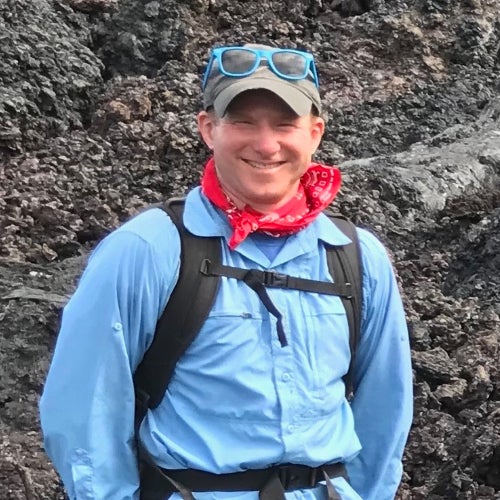
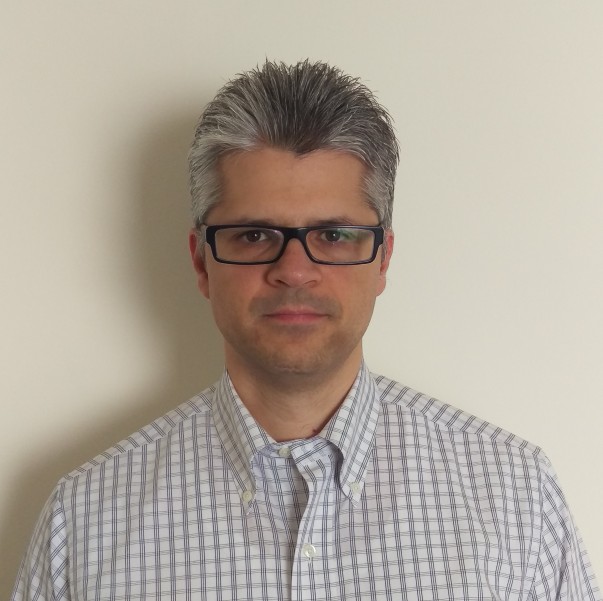
Professor Adam Soule is a faculty member in the Department of Marine Geology and Geophysics at the University of Rhode Island's Graduate School of Oceanography. He also serves as the Executive Director of the NOAA-funded Ocean Exploration Cooperative Institute, a collaborative effort involving the Ocean Exploration Trust, URI GSO, WHOI, University of New Hampshire, and University of Southern Mississippi. Education B.A. from Carleton College (Northfield, MN) Ph.D. from the University of Oregon (Eugene, OR) Research Focus Dr. Soule's research investigates submarine volcanic activity and its impacts on ocean chemistry and ecosystems. His work includes: Developing chemical geochronometers to study eruption dynamics Using numerical fluid dynamics simulations Deploying deep submergence tools like submersibles, ROVs, and autonomous vehicles He emphasizes technological innovation for deep-sea exploration, integrating machine learning techniques to analyze complex geological data.
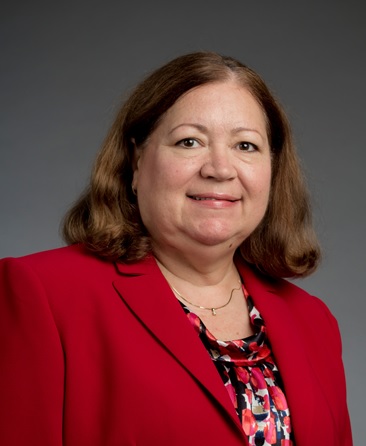
Maria Pozo de Fernandez is an Assistant Professor in the Chemistry and Chemical Engineering department of the College of Engineering and Science at the Florida Institute of Technology . Her office is located in the F.W. Olin Engineering Complex, room 254, and she can be reached at mpozo@fit.edu . Her research portfolio centers on experimental thermodynamics, with a particular emphasis on phase equilibria , high-pressure vapor-liquid equilibria (VLE) and vapor-liquid-liquid equilibria (VLLE) , supercritical fluids , and gas diffusion in polymers and polymer blends . These investigations provide fundamental data and models critical to the design of separation processes, supercritical-fluid technologies, and advanced polymeric materials. Across her publications, a consistent theme emerges: meticulous measurement and correlation of high-pressure phase behavior for industrially relevant binary and multicomponent mixtures involving carbon dioxide, light hydrocarbons, and polar co-solvents. The data sets serve as benchmarks for equation-of-state development and process-simulation packages. Laboratory & Teams: While specific laboratory names are not provided, her physical location in the F.W. Olin Engineering Complex places her within FIT’s well-equipped thermodynamics and separations research laboratories.
Tony Schapira is Professor of Neurological Science at University College London (UCL) and Head of the Department of Clinical Neurosciences at UCL Institute of Neurology. He serves as a Consultant Neurologist at the National Hospital for Neurology and Neurosurgery and Royal Free Hospital, and holds additional leadership positions as Vice Dean of UCL Medical School and Director of the Royal Free Campus. His academic appointments include Visiting Professorships at Harvard (2009) and Yale (2010). Education includes: Bachelor of Science (Honours) from King's College London (1976) Bachelor of Medicine/Bachelor of Surgery from Charing Cross and Westminster Medical School (1979) Member of the Royal College of Physicians (1982) His primary research investigates neurodegeneration mechanisms in Parkinson's disease (PD), with emphasis on mitochondrial dysfunction, alpha-synuclein pathology, and GBA1 mutation pathways. His work spans molecular pathogenesis, drug development for disease modification, and clinical phenotyping of at-risk populations. Current projects focus on identifying prodromal biomarkers and developing neuroprotective therapies through international clinical trials. Schapira's recent publications (2024-2025) demonstrate concentrated research in Parkinson's disease mechanisms, mitochondrial biology, genetic risk factors (particularly GBA1 variants), and novel therapeutic approaches. Article themes consistently explore protein aggregation pathways, lysosomal function, metabolic interactions, and clinical trial methodologies. Awards and honors include: Fellow of the Academy of Medical Sciences (1999) Undergraduate Scholarship at Westminster Medical School He has supervised 11 PhD students and one MD candidate, and currently mentors post-graduate and post-doctoral researchers. His department received UCL's 'Excellence in Medical Education' award (2007-2008). Major grants include co-principal investigator roles on: MRC-Wellcome Strategic Award in Neurodegeneration (£6 million) Wolfson Award (£20 million) He directs a research department comprising 3 Readers, a Senior Lecturer, technicians, and academic staff, with facilities for biochemistry, molecular biology, tissue culture, and advanced imaging. The team investigates neurodegenerative disorders including Parkinson's, Huntington's, and Friedreich's ataxia.
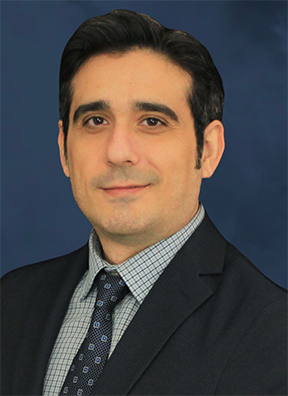
Yakir Hadad is a Senior Lecturer (equivalent to Assistant Professor) at Tel Aviv University's School of Electrical Engineering, Department of Physical Electronics. He holds a B.Sc. and M.Sc. from Ben-Gurion University (2006, 2008) and a Ph.D. from Tel Aviv University (2014), followed by postdoctoral research at the University of Texas at Austin (2014-2016). His research focuses on fundamental wave phenomena in complex systems, with expertise spanning: Analytical methods in electrodynamics and acoustics Physical bounds in wave engineering Time-variant and nonlinear wave systems Metamaterials for RF/optical applications Plasmonics and nanophotonics Hybrid-physics wave interactions Publication analysis reveals consistent focus on wave manipulation through spatiotemporal modulation, non-reciprocal systems, and topological phenomena, with recent expansion into machine learning applications for electromagnetic field transformation. His work bridges theoretical foundations with practical devices like antennas, waveguides, and frequency converters. Major Scientific Awards: Krill Prize for Excellence in Research (2020) Alon Fellowship for Outstanding Young Researchers (2017-2020) Leopold B. Felsen Award for Excellence in Electrodynamics (2016) TAU Rector's 100 Best Teachers List (2019) Leads an active research group with 3 PhD candidates, 1 MSc student, and 3 undergraduate researchers. Current projects include time-varying metamaterials, acoustic wave guiding, and nonlinear device synthesis. Research is supported by: ISF Grant 1353/19 (2019-2023) MAFAT research grant Alon Fellowship (2017-2020) TAU Rector Startup Fund (2017-2020)
Giuseppe Pascazio serves as a Full Professor in the Department of Mechanics, Mathematics & Management at the Polytechnic University of Bari, Italy. His research spans computational fluid dynamics with dual focus on aerospace applications and biomedical engineering, particularly in hypersonic flow phenomena and microwave ablation technologies for cancer therapy. His primary research interests include fluid dynamics, computational methods for high-enthalpy flows, thermochemical non-equilibrium modeling, turbulent boundary layer analysis, and biomedical device optimization. Pascazio develops advanced numerical techniques including high-order schemes, state-to-state kinetics implementations, and GPU-accelerated solvers to address complex flow physics in atmospheric entry and medical applications. His work bridges fundamental gas dynamics with practical engineering solutions for spacecraft thermal protection and minimally invasive cancer treatments. Analysis of his recent publications (2021-2025) reveals three dominant research thrusts: (1) High-fidelity simulation of hypersonic flows with detailed chemistry using state-to-state kinetics, (2) Development of robust numerical methods for shock-capturing in thermochemically non-equilibrium flows, and (3) Biomedical applications focusing on microwave ablation probe design and microcapsule transport in vascular systems. His aerospace work emphasizes atmospheric reentry physics while biomedical research targets cancer therapy optimization. Pascazio has participated in significant research projects including "PrInCE" (Innovative Processes for Energy Conversion) and "INNOVHEAD" (Advanced technologies for reduction of polluting emissions in Heavy Duty engines). His collaborative work involves industrial partnerships in aerospace and medical device sectors, though specific grant details beyond project names aren't provided. He maintains active research output with over 50 publications demonstrating consistent contributions to high-speed aerodynamics and biomedical fluid dynamics.
Dr. Vladimir Zykov serves as a Scientist at the Max Planck Institute for Dynamics and Self-Organization, based in the Laboratory for Fluid Physics, Pattern Formation and Biocomplexity (LFPB) in Göttingen, Germany. His research spans Fluid Dynamics, Pattern Formation, Biocomplexity, and Self-Organization, focusing on emergent phenomena in physical and biological systems. This work explores how complex structures arise from simple interactions in fluid environments and living matter, with implications for nonlinear dynamics and systems biology. As a core member of the LFPB, he contributes to the institute's mission of investigating self-organizing processes through experimental and theoretical approaches, leveraging the laboratory's specialized facilities for interdisciplinary studies in complex systems.
Engin Danis is an Assistant Professor in the Department of Mechanical and Aerospace Engineering at the University of Missouri, Columbia. His research focuses on advancing computational methods for complex fluid dynamics, particularly in high-speed and hypersonic regimes. With expertise in high-order discretizations, turbulence modeling, and large-scale numerical simulation, he develops algorithms that capture intricate flow phenomena with high fidelity and computational efficiency. Dr. Danis's research interests include: High-order numerical methods Hypersonic flows Turbulence modeling Tensor networks for fluid dynamics Compressible flow simulation His publication record demonstrates a strong trend toward applying tensor network methodologies to solve challenging problems in computational fluid dynamics. This innovative approach enables more efficient computation of complex fluid phenomena while maintaining high accuracy, particularly for high-speed and hypersonic flows. His research spans both fundamental numerical method development and practical applications in aerospace engineering. Professional affiliations: American Institute of Aeronautics and Astronautics American Physical Society Society for Industrial and Applied Mathematics Prior to joining the University of Missouri, Dr. Danis was a postdoctoral research associate at Los Alamos National Laboratory where he pioneered tensor-train-based solvers for partial differential equations. He also has industry experience from GE Aviation, where he contributed to high-fidelity simulation tools for aircraft engine thermal-fluid systems.
Katherine Newhall is a Professor in the Department of Mathematics at the University of North Carolina at Chapel Hill, where she maintains an active research program in stochastic modeling and dynamical systems. Her office is located in Phillips Hall 308, and she can be reached at knewhall@unc.edu. She serves as a member at large of the GSNP (Group on Statistical and Nonlinear Physics) board, a position she assumed in April 2024. Dr. Newhall earned her educational credentials from Rensselaer Polytechnic Institute, including a B.S. in Applied Physics and Applied Mathematics (2004), an M.S. in Mechanical Engineering (2006) with thesis entitled 'Turbulent Boundary Layers: A look at Skin Friction, Pressure Gradient and Surface Roughness,' and a Ph.D. in Mathematics (2011) with dissertation 'Synchrony in Stochastically-Driven Neuronal Network Models.' Following her doctoral work, she completed postdoctoral research at New York University's Courant Institute of Mathematical Sciences from 2011 to 2014. Her research focuses on developing new tools for analyzing large and infinite dimensional stochastic systems to understand large-scale and long-time dynamics of physical and biological systems. Rather than relying on traditional Fokker-Planck formulations that become intractable with increasing complexity, her work builds on concepts of statistical mechanics to create macroscopic descriptions from individual unit statistics. This approach extends the usefulness of energy landscapes even in non-gradient systems, enabling explanations of experimentally observable phenomena while exposing fundamental mechanisms responsible for system behavior. Her work spans applications from granular materials and chromosome dynamics to biological systems and metamaterials. Dr. Newhall's publications demonstrate consistent advancement in stochastic modeling techniques, with recent work (2023-2025) focusing on hyperuniformity in biological structures, energy landscape sampling methods, and the role of weak transient interactions in biological systems. Her research shows a clear trajectory from fundamental mathematical developments toward increasingly sophisticated biological applications. Outstanding Referee of the Physical Review journals (2019) NSF grant DMS-1816394 DMREF grant ($2M NSF Grant to Revolutionize Materials, 2023) Member at large of the GSNP board (2024) Dr. Newhall has successfully mentored numerous PhD students to completion, including Anna Coletti (2024), Daftari (2023), Moakler (2021), Ben Walker (2021), and Yuan Gao (2019). Her research is consistently supported by competitive grants, most notably the $2M NSF DMREF grant awarded in 2023. She maintains active collaborations across disciplines, particularly in applying mathematical techniques to biological problems such as chromatin organization and organ transplantation risk assessment. Her laboratory work focuses on developing computational methods for analyzing complex stochastic systems, with particular emphasis on the hydra string method for exploring high-dimensional potential energy surfaces. The research group maintains strong connections with both theoretical and experimental collaborators working on granular materials, chromosome dynamics, and biological systems.
Prof. Dr. Myfanwy Evans is a Professor of Applied Geometry and Topology at the University of Potsdam . Her research focuses on geometric and topological modeling of soft and biological systems, with emphasis on analyzing complex microstructures through experimental and theoretical approaches. She is affiliated with the Institute of Mathematics, leading projects in geometric constraints in biological and synthetic materials. Current Position: Professor, University of Potsdam (2020–present) Previous Roles: Emmy Noether Research Group Leader (2015–2020), Humboldt Postdoctoral Fellow (2011–2014) Research Highlights: Evans investigates topological potentials in protein assembly, curvature in biological systems, and geometric optimization in tensegrity frameworks. Her work spans 3-periodic entanglements, network theory, and bicontinuous structures. Funding & Collaborations: Participates in Matters of Activity and MATH+ excellence clusters, collaborating across Berlin universities and Germany. She contributes to research on discretization in geometry and dynamical systems. Software Development: Co-created SPIRE , a tool for bicontinuous phase recognition applied to plastid cubic membranes and biological structures. Technical Expertise: Utilizes Riemannian optimization for geometric modeling, explores auxetic materials, and studies foam coarsening dynamics.
Dr. Edmund Spencer is an Associate Professor in the Department of Electrical and Computer Engineering at the University of South Alabama , with research focused on space plasma physics and space weather . He designs advanced instruments for space science, develops theoretical frameworks for plasma characterization, and applies stochastic optimization algorithms to complex systems. Ph.D. Electrical and Computer Engineering, University of Texas at Austin M.S. Electrical and Computer Engineering, University of Texas at Austin B.S. Electrical and Electronics Engineering, University of Leicester, UK His work bridges space instrumentation with nonlinear magnetospheric dynamics , particularly in geomagnetic substorms and solar wind-earth magnetosphere interactions . Current projects include onboard space weather modules for satellites and advanced antenna systems for CubeSats . Recent research trends from his 15 most recent publications (2019-2025) include: Development of time-domain impedance probes for ionospheric electron density measurements Applications of machine learning in substorm prediction Hybrid physics-black-box modeling for Dst index forecasting Advanced antenna designs for small satellites 3D Particle-in-Cell simulations for RF instruments Collisional effects in plasma probe measurements Scientific contributions include: NSF CAREER Award (2013) for RF impedance probe development Key role in NASA's USIP CubeSat missions (e.g., JAGSAT I) Leveraging WINDMI model for substorm dynamics analysis He teaches graduate and undergraduate courses in electromagnetics and stochastic processes , contributing to the department's space science integration in engineering education.
Assistant Professor Jackson Crane at Queen's University (Smith Engineering, Mechanical and Materials Engineering) specializes in renewable energy conversion technologies, electrocatalysis, and low-carbon combustion. His research spans detonation fundamentals for high-efficiency engines and CO2-reduction electrocatalysis for alternative fuel synthesis. Education: SB (MIT), MSc & PhD (Stanford), Postdoc (Queen's University) His research combines electrochemical CO2 conversion with detonation dynamics , focusing on multiphysics modeling and experimental validation. Current projects include: High-pressure CO2 reduction systems Detonation propagation in curved channels Pulse electrolysis for stable CO2 reduction Scientific awards include: Bernard Lewis Fellowship (2024) NSF Graduate Research Fellow (Stanford) Stanford Graduate Fellow
Kevin M. Miller is a Clinical Professor of Ophthalmology and Kolokotrones Endowed Chair at UCLA’s David Geffen School of Medicine. He serves as Chief of the Cataract and Refractive Surgery Division and Director of the Anterior Segment Diagnostic Laboratory, while being a member of the Stein Eye Institute. Education : MD from Johns Hopkins University School of Medicine (1985), Residency at UCLA (1991), Fellowship in Ophthalmic Optics at Johns Hopkins (1988). Leadership : Chair in instrumentation development, editorial board member for multiple journals, and organizer for international ophthalmology congresses. Dr. Miller’s research focuses on cataract surgery innovation , artificial iris devices , and refractive outcomes . He has investigated FDA-approved intraocular lenses, developed surgical systems, and pioneered implantation techniques for complex anterior segment disorders. His work spans clinical trials, device development, and surgical education. Key scientific contributions include advancements in toric IOLs, light-adjustable lenses, and artificial iris technology. He has delivered over 1,000 invited lectures and authored chapters in ophthalmic textbooks, emphasizing surgical precision and patient safety. Awards : Charles D. Kelman Award (2019), Life Achievement Award (2017), multiple ASCRS and AAO accolades. Teaching : Trains undergraduates, medical students, residents, and international fellows. Led development of AAO educational materials and certification programs. Labs : Directs the Anterior Segment Diagnostic Laboratory at Stein Eye Institute, focusing on device testing and surgical optimization.
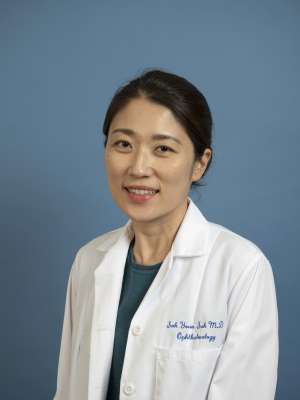
Dr. Soh Youn Suh serves as an Assistant Professor of Ophthalmology at UCLA's Stein Eye Institute within the David Geffen School of Medicine, specializing in pediatric ophthalmology and adult strabismus care at the Los Angeles clinical site. Her clinical expertise addresses complex eye alignment disorders and childhood vision conditions. Education: MD, Ewha Womans University School of Medicine, 2006 MS, Ewha Woman's University, 2010 Ophthalmology Residency, Ewha Womans University Medical Center, 2011 Pediatric Ophthalmology & Neuro-Ophthalmology Fellowship, Seoul National University Hospital, 2013 Pediatric Ophthalmology & Adult Strabismus Fellowship, Stein Eye Institute, UCLA, 2014 Research Fellowship, Ocular Motility Laboratory, Stein Eye Institute, UCLA, 2018 Her research program investigates biomechanical interactions between extraocular muscles, optic nerves, and orbital structures using advanced MRI and OCT imaging. Key discoveries include documenting abnormal optic nerve traction during eye movements in glaucoma patients with normal intraocular pressure and characterizing muscle pulley displacements in strabismus conditions. This work bridges neuro-ophthalmology and surgical planning through quantitative orbital analysis. Analysis of her 15 most recent publications (2020-2025) reveals three dominant research trajectories: (1) AI-driven segmentation of orbital structures using deep learning, (2) cerebrospinal fluid dynamics in optic neuropathies, and (3) biomechanical modeling of optic nerve strain during horizontal eye movements. These studies increasingly integrate computational methods with high-resolution imaging to decode pathophysiological mechanisms in strabismus and glaucoma. Scientific Recognition: Excellence in Research Award, Stein Eye Institute (2015) Excellence in Research Award, Stein Eye Institute (2016) Excellence in Research Award, Stein Eye Institute (2018) Dr. Suh has developed collaborative research partnerships through UCLA's institutional resources, particularly within Dr. Joseph L. Demer's ocular motility laboratory where she conducted postdoctoral research. Her work receives consistent institutional support through Stein Eye Institute infrastructure, though specific external grant funding isn't documented in source materials. She actively contributes to training through co-authorship with junior researchers on technical imaging studies. Her current research team at the Stein Eye Institute operates an orbital biomechanics laboratory focused on translating MRI/OCT findings into clinical applications. The group specializes in computational modeling of eye movement dynamics and developing AI tools for surgical planning in complex strabismus cases, with ongoing projects examining cerebrospinal fluid interactions in optic nerve disorders.
Pierre Sagaut is a Professor at Aix-Marseille Université , leading research in the Instabilities, Turbulence and Couplings team. He serves as Editor-in-Chief of the Journal "Computers and Fluids" and holds editorial roles at Journal of Computational Physics , Journal of Turbulence , and Journal of Scientific Computing . His academic leadership extends to roles in the Scientific Council of the AFM (President) and ERCOFTAC (Vice-President). Research Interests focus on Lattice Boltzmann Method (LBM) for compressible/turbulent flows Aerodynamics, aeroacoustics, and aerothermics Uncertainty quantification and data assimilation Immersed boundary techniques for complex geometries Scientific Awards include the 2024 CNRS Bronze Medal Senior Member, Institut Universitaire de France Article Trends highlight LBM applications in nuclear reactor safety, urban pollutant dispersion, helicopter intake dynamics, and transonic flows. Recent works address mass leakage correction, hybrid RANS/LES turbulence modeling, and quantum-inspired lattice gas algorithms. Grants & Collaborations involve partnerships with CNRS, ERCOFTAC, and AFM, focusing on computational fluid dynamics and turbulence modeling.
Papakonstantis Ilias is an Assistant Professor at the National Technical University of Athens (NTUA) , affiliated with the School of Civil Engineering and the Department of Water Resources and Environmental Engineering . His research focuses on environmental fluid mechanics, computational fluid dynamics (CFD), and hydraulic systems modeling.