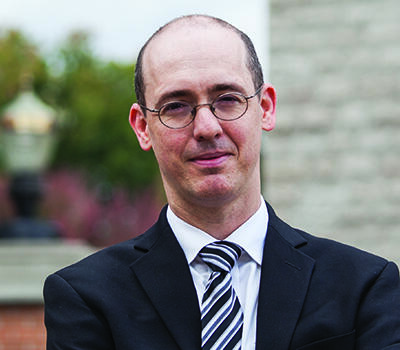
Ricardo Ruiz BaierView profile
Professor
Ricardo Ruiz Baier is a Professor of Computational Mathematics at Monash University in Melbourne, Australia, where he also holds an ARC Future Fellowship. He is affiliated with the Victorian Heart Institute and the Monash Data Futures Institute, highlighting his interdisciplinary research bridging mathematical theory with biomedical applications. His research focuses on the design and analysis of numerical methods for partial differential equations, particularly those that preserve the physical properties of natural phenomena. His expertise includes fundamental topics in numerical analysis and scientific computing such as analysis of finite volume and finite element methods using mixed and augmented formulations, space-time adaptivity and error estimation, perturbed saddle-point problems, multiphase flow and transport in porous media, cardiac electrophysiology and electromechanics, and interface problems. His recent publications reveal a strong emphasis on virtual element methods, poroelasticity models, and cardiac mechanics applications. His work spans theoretical numerical analysis, computational methods development, and practical biomedical applications, particularly in cardiac modeling. The research demonstrates a consistent focus on multiphysics problems and the development of robust numerical schemes for complex coupled systems. Scientific Awards: ARC Future Fellowship FT22 for 'Next-generation methods for transport in poroelastic media with interfaces' Australian Research Council Discovery Project DP21 for 'Towards predictive 4D computational models for the heart' Ruiz Baier actively supervises a large research group with numerous PhD students and postdoctoral researchers working on diverse aspects of computational mathematics. His group has secured funding from multiple sources including Monash Mathematics, the Australian Research Council, IITB-Monash Doctoral Programme, and international government scholarships. He frequently organizes major conferences and workshops, including the Computational Techniques and Applications Conference (CTAC 2024) and MATRIX workshops on numerical analysis. His research group operates at the intersection of mathematics, computational science, and biomedical engineering, with particular focus on developing computational models for cardiac function and mechanics. The group collaborates with international institutions including the University of Oxford and University of Oslo.