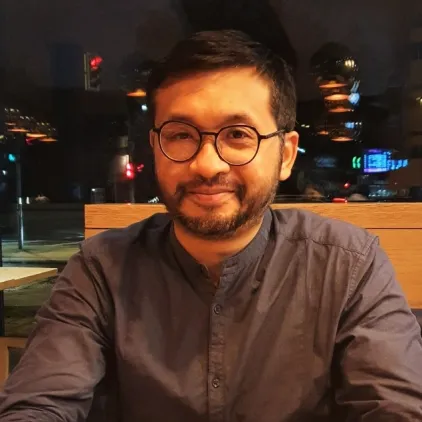
Prof. Hendro Wicaksono is a Professor of Data-Driven Industrial Systems at the School of Business, Social & Decision Sciences, Constructor University Bremen gGmbH. His expertise lies in applying AI and data-driven methods to enhance decision-making in complex industrial systems. He holds a Dr.-Ing. from Karlsruhe Institute of Technology (Germany) and M.Sc./B.Sc. degrees from German and Indonesian institutions. Research Interests : Focuses on causal AI, explainable AI, digital twins, sustainable industrial systems, and smart cities. His work integrates machine learning with domain-specific challenges in supply chains and energy management. Projects : Led over 10 funded projects including Delfine (accelerating energy transition), Talenta (digital asset management), and xAgri (agri-food supply chain analytics). Collaborates with global partners like Stadtwerke Trier and JetBrains. Teaching : Courses include Data Management in Industry 4.0, Production Planning, and Smart Cities. Recently on sabbatical in Spring 2023. Students : Supervises 20+ PhD/Master students researching topics like causal ML in software projects, EV adoption modeling, and blockchain logistics. Affiliations : Visiting Professor at University of Exeter, Adjunct Professor at Sebelas Maret/Airlangga Universities (Indonesia), and Academic Leader at Bandung Institute of Technology.
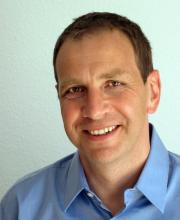
Hajo A. Reijers is a Professor at the University of Utrecht, Netherlands, with a former affiliation at Vrije Universiteit Amsterdam. His research focuses on Business Process Management (BPM), Process Mining, and Robotic Process Automation (RPA), emphasizing practical applications in healthcare, organizational processes, and human-computer interaction. He contributes to developing tools like SWORD for detecting workarounds and DEUCE for auditing electronic health records. His work spans algorithm development for process discovery, predictive analytics, and optimization techniques. Key areas include analyzing event logs, modeling workplace behavior, and enhancing process transparency. Reijers collaborates extensively with industry partners, addressing challenges in process automation, employee acceptance of AI, and ethical monitoring. His contributions to conferences like BPM, CAiSE, and ICIS highlight interdisciplinary approaches, combining computer science with organizational studies. Notable projects include frameworks for task mining, reinforcement learning in care processes, and pattern recognition in government transparency assessments. Research initiatives often involve cross-disciplinary teams, exploring topics like workplace well-being through process mining, decision-making support systems, and overcoming barriers to BPM adoption. His work bridges theoretical advancements with real-world impact, influencing both academic discourse and practical business solutions.
Thomas Höfer serves as Professor of Theoretical Systems Biology (W3) at Heidelberg University's Faculty of Biosciences and heads the Theoretical Systems Biology Division at the German Cancer Research Center (DKFZ). His work bridges mathematical modeling with experimental biology to decipher complex cellular processes. His research focuses on theoretical systems biology with emphasis on cancer evolution , hematopoietic stem cell dynamics , immune cell regulation , and transcriptional control mechanisms . Höfer's group develops quantitative frameworks to understand spatio-temporal organization in cellular signaling, particularly in glioblastoma progression, T-cell differentiation, and DNA repair processes. Analysis of his recent publications reveals a strong trend toward single-cell resolution modeling integrated with high-throughput experimental data , particularly in cancer heterogeneity and immune responses. His work frequently employs stochastic modeling and multi-scale approaches connecting molecular events to cellular phenotypes. Awards and recognitions include: Reinhart Heinrich Lecture (2011) Landahl Award from Society for Mathematical Biology (1994) Jowett Senior Scholar at Balliol College Oxford (1994-1996) Visiting professorship at École Normale Supérieur (2019/2020) Höfer coordinates major research consortia including the ERA CoSysMed OPTIMIZE-NB project optimizing neuroblastoma therapies and previously led the E:Bio ImmunoQuant consortium. His division at DKFZ collaborates extensively with experimental groups at BioQuant Center and within the CellNetworks Cluster of Excellence. He serves on editorial boards for Cell Systems and European Journal of Immunology , reflecting his interdisciplinary impact across computational biology and immunology.
Martin Henze is a tenure-track Assistant Professor at RWTH Aachen University's Department of Computer Science, where he leads the Security and Privacy in Industrial Cooperation (SPICe) research group. Additionally, he co-leads the Secure Production & Energy Networks research group at the Fraunhofer Institute for Communication, Information Processing and Ergonomics FKIE in Bonn, Germany. His work bridges academic research with practical industrial security applications, focusing on critical infrastructure protection. Dr. Henze's research interests center on technical security and privacy aspects of industrial networks and data sharing, with special emphasis on energy and production sectors. His work spans industrial intrusion detection, 5G security for industrial applications, IoT security in constrained environments, and blockchain security. He develops practical security solutions that balance protection needs with the resource constraints and operational requirements of industrial systems, particularly focusing on making security both effective and comprehensible for operators. His recent publications demonstrate a strong focus on industrial security challenges, with particular emphasis on intrusion detection systems that maintain operator control, TLS optimization for resource-constrained industrial IoT, 5G security for production systems, and novel approaches to securing legacy industrial protocols. His work consistently addresses the tension between security requirements and operational constraints in industrial settings. Nachwuchsförderpreis Verbraucherforschung NRW Borchers-Plakette ICT Young Researcher Award Dr. Henze actively contributes to the academic community through service on numerous prestigious program committees including ACM CCS, IEEE S&P, NDSS, and USENIX Security. His teaching portfolio includes graduate courses on Industrial Data Security, Industrial Network Security, and specialized seminars on 5G/6G Security and IoT Security. His research is highly collaborative, frequently involving partnerships across institutions and with industry to address real-world security challenges in critical infrastructure. He heads the SPICe research group at RWTH Aachen, which focuses on developing practical security and privacy solutions for industrial cooperation scenarios. The group's work emphasizes creating security mechanisms that are not only technically sound but also comprehensible and usable by industrial operators, recognizing that the human element is critical in maintaining security in complex industrial environments.
Dr. Amon Göppert serves as Professor and Chair of the Intelligence in Quality Sensing group at RWTH Aachen University's Laboratory for Machine Tools and Production Engineering (WZL). His work integrates artificial intelligence into manufacturing processes to enhance quality control, production efficiency, and sustainable practices. Göppert's research spans intelligent manufacturing systems with core expertise in AI-driven production engineering, circular economy applications, and advanced assembly systems. He investigates how machine learning optimizes production ramp-up, disassembly processes, and flexible manufacturing while developing sensor-based quality control solutions for industrial applications. His recent publications reveal strong trends toward AI implementation in production planning, with emphasis on worker assistance systems for disassembly, digital twin applications for real-time control, and mobile robotics in line-less assembly environments. Key focus areas include sustainable manufacturing, metrology innovation, and adaptive scheduling systems. Göppert leads multiple high-impact research initiatives: AI-driven Product Development: Machine learning for smart measurement strategies in metrology MetaVision Consortium: Industrial metaverse applications for AI-supported vision systems Generative AI for Non-Destructive Testing optimization Cluster of Excellence Internet of Production participation As Chief Engineer at WZL, he oversees technical implementation of research projects and collaborates with industry partners to translate innovations into practical manufacturing solutions, particularly in adaptive assembly systems and quality sensing technologies.
Christian Winkler is Professor for AI-based UX optimization and general business administration at Nuremberg Institute of Technology since 2022. With over 25 years of experience spanning entrepreneurship, enterprise architecture, and academia, he brings substantial industry expertise to his academic role. His career includes founding multiple technology companies including an internet service provider (WWL Internet AG) that went public in 1999, Querplex GmbH through management buyout in 2003, and datanizing GmbH as an NLP SaaS provider in 2017. Professor Winkler's research focuses on practical applications of artificial intelligence in business contexts, with particular expertise in natural language processing, user experience optimization, and data-driven marketing strategies. His work bridges theoretical AI research with real-world business applications, emphasizing accessibility of complex technologies. He has published extensively on language models (including BERT and LLaMA implementations), text analysis techniques, and social media data analysis for business insights. Recent publications reveal a strong trend toward optimizing large language models for practical deployment, with significant focus on analyzing user-generated content from social platforms like Instagram and WallStreetBets. His work demonstrates how NLP can extract valuable business intelligence from unstructured data sources while making advanced AI techniques accessible to non-technical business professionals. Winkler teaches E-Commerce, International Marketing Tools - Quantitative Methods, Applied User Experience, and Communication Management, reflecting his interdisciplinary approach that combines technical AI knowledge with business administration expertise. He is an active contributor to the data science community through conference presentations at events like m3 Konferenz, MLsummit, and data2day, as well as educational content for Heise Academy on Python and NLP topics.
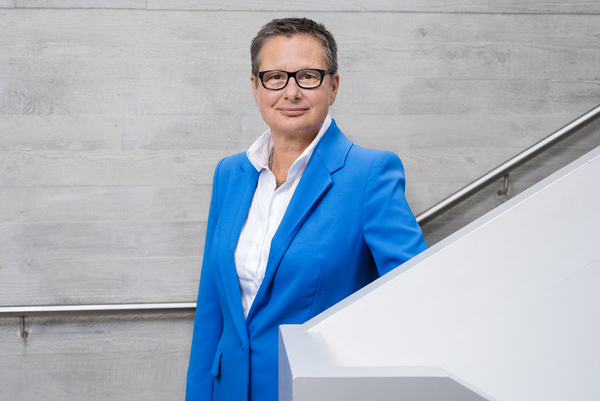
Prof. Bettina Heinrich is a Professor at Evangelical University Ludwigsburg since 2014, specializing in Social Work, Cultural Work, and related fields. Her teaching encompasses Theories of Social Work, Politics and Social Work, and Cultural Work across multiple Bachelor's and Master's programs including Social Work, International Social Work, and Inclusive Pedagogy & Special Education. She maintains an office in Building C, Room 1.06 at the Ludwigsburg campus with contact information publicly listed. Her educational background includes: 1988: Diploma in Pedagogy from the University of Tübingen Prof. Heinrich's research explores the intersection of Social Work and Cultural Work, with particular emphasis on gender studies, diversity, participation, and urban development. Her work investigates how cultural spaces can foster inclusion, especially for girls and young women, and examines the political dimensions of social work within European contexts. She analyzes how cultural education can create resonant spaces in what she describes as 'resonance-poor times,' addressing contemporary societal challenges through interdisciplinary approaches that bridge social work theory and cultural practice. Her research consistently highlights the importance of creating gender-specific spaces and addressing diversity complexities through intersectional frameworks. Her publication history reveals a clear trajectory from urban cultural policy to increasingly focused work on gender, participation, and cultural education. Recent articles show deepening engagement with creating inclusive spaces for marginalized groups, particularly girls, while maintaining connections to broader social work theory. Her work spans both theoretical explorations and practical applications within German and European contexts, demonstrating how cultural work serves as a bridge between social work theory and community practice. The consistent themes across her publications include diversity, inclusion, resonance, and the creation of meaningful social spaces. Prof. Heinrich has held significant leadership positions throughout her career: 1988-1991: Research group on cultural history and material culture, participant in the consulting firm FOKUS 1992-1995: Foundation for Cultural Further Education and Cultural Consulting, Berlin - Scientific staff member and head of Information/Documentation department 1995-2000: University of Applied Sciences Potsdam - Head of Scientific Further Education (1995-1998), Coordinating Head of Rectorate's Staff Units (1998-2000) 2000-2007: German Association of Cities - Cultural Policy Advisor in Berlin (2000-2003), Advisor at European Office in Brussels (2003-2004), Cultural and Educational Policy Advisor in Berlin and Cologne (2004-2007) 2007-2009: Governing Mayor of Berlin, Chancellery - Head of Department for Fundamental Issues and Deputy Head of Cultural Affairs Department 2010-2014: Stiftung wannseeFORUM, Berlin - Director She has served as a lecturer at the University of Applied Sciences Reutlingen and Potsdam since 1990 and as an expert/consultant for the European Executive Agency for Education, Audiovisual and Culture (EACEA) for the Culture Program 2007-2013. Prof. Heinrich regularly presents at national and international conferences and institutions including Centro Cultural ITAU (São Paulo/Brazil), Goethe-Institute, EUROCITIES, German UNESCO Commission, Institute for Foreign Cultural Relations (IfA), and German Society of the United Nations.
Matthias Becker is a Professor at the Institute for Practical Computer Science within the Faculty of Electrical Engineering and Computer Science at Leibniz University Hannover, where he has been a core member of the Human-Computer Interaction group since 2019. He serves as Internship Coordinator for Computer Science and Computer Engineering and holds key roles in the Computer Science Examination Board and Selection Committee, actively shaping academic governance and student development. His academic journey began with PhD studies at the University of Bremen (1996-2000) supported by a DFG grant, followed by a postdoctoral permanent position at Leibniz University Hannover (2000-2019), an Associated Assistant Professor role at École des Mines de Nantes (2000), and a Habilitation in Computer Science in 2013. This foundation enabled his transition to a full professorship in 2019. Becker's research spans Human-Computer Interaction, Simulation and Modeling, and Bio-inspired Computing, with applications in agriculture, renewable energy, and manufacturing. His work integrates distributed systems, optimization algorithms, and wireless sensor networks to solve complex real-world problems, such as greenhouse monitoring, wind farm logistics, and tire noise reduction. Recent publications reveal a strategic focus on practical validation of simulation models and cross-domain applications of nature-inspired algorithms. His 15 most recent publications (2018-2024) demonstrate consistent innovation in applying simulation techniques to offshore wind farm installation, agricultural pest management, and sports science. These works emphasize real-world validation, collaborative problem-solving, and the development of domain-specific optimization frameworks that bridge theoretical algorithms and industrial implementation. As Internship Coordinator, Becker facilitates critical industry-academia connections for students, while his examination board responsibilities ensure rigorous academic standards. His leadership in the Human-Computer Interaction group drives research on interactive systems for agriculture, energy, and health, with particular emphasis on user-centered design in complex operational environments like wind farm logistics and greenhouse automation.
Jens Michaelis is a Professor at the Faculty of Linguistics and Literary Studies, Bielefeld University, specializing in Computational Linguistics, Text Technology, and Linguistic Creativity. He serves as Deputy Head of the Department of Linguistics, Clinical Linguistics, Text Technology and Computational Linguistics, and provides academic advising for Computational Linguistics programs. His office is located at UHG U5-231, with contact details including telephone +49 521 106-6915 and email jens.michaelis@uni-bielefeld.de . Maintaining active research roles, he leads project B01 'Coercion as a creative mechanism in compositional interpretation' within the SFB 1646: Linguistic Creativity in Communication. His teaching responsibilities span modules like 23-CL-BaCL2.1 Selected methodological aspects 23-CL-BaCL5 Advanced Module 23-CL-BaCL6 Project Module 23-LIN-Ma3.1 Basics of Computational Linguistics 23-MeWi-HM3a_a Mathematical-linguistic language modeling across both undergraduate and graduate programs. His scholarly work focuses on formal grammar properties, syntactic mechanisms, and computational modeling of language. As an ordinary member of the Faculty Conference and Habilitation Committee, he contributes to academic governance while maintaining an extensive publication record in mathematical linguistics, minimalist grammars, and formal language theory.
Dr. Christiana Werner is a Research Associate at the University of Duisburg-Essen (UDE) within the AHRC/DFG project How Does It Feel? Interpersonal Understanding and Affective Empathy . She previously held a postdoctoral position at the University of Göttingen and a temporary role at Justus Liebig University Giessen in the Mind and Imagination research group. Her work bridges philosophy of mind, epistemology, and aesthetics, focusing on empathy's epistemic role. Education: PhD in Philosophy (University of Regensburg, 2012) Habilitation equivalent via Postdoc at UDE Research Interests: Christiana investigates how empathy and emotions facilitate understanding in social cognition and literary contexts, with a recent emphasis on epistemic and affective injustice. Her methodological approach combines analytical philosophy with interdisciplinary collaborations in psychology and literary studies. Project Leadership: She co-coordinated the DFG-funded Feeling and Understanding: The Role of Empathy in Understanding People and Literature network (2018–2023) with Thomas Petraschka. Current projects include Interpersonal and Phenomenal Understanding within the AHRC/DFG initiative. Publications: Author of How to Create Things with Words (2015) and co-editor of influential volumes like Imagination and Experience: Philosophical Explorations (2024) and Empathy’s Role in Understanding Persons, Literature, and Art (2023). Her work appears in journals such as Analysis , Philosophical Explorations , and The Journal of Aesthetics and Art Criticism . Teaching: Offers courses on analytical feminist philosophy, empathy, and philosophical explorations at UDE. She has presented at conferences including the Rhein Ruhr Epistemology Network Meeting (2024) and AHRC/DFG project events.
Vicky Fasen-Hartmann is a Professor at the Karlsruhe Institute of Technology (KIT) within the Department of Mathematics, specifically affiliated with the Institute of Stochastics. She has held her W3 Professor position since October 2012, with two periods of parental leave (August 2016-August 2017 and October 2018-October 2019). Prior to her current position, she held postdoctoral research positions at ETH Zurich (RiskLab), TU Munich, Université Pierre et Marie Curie, and Cornell University. Her educational background includes: Habilitation (2010) in Heavy Tails in Finance, Insurance and Telecommunication from TU Munich Ph.D. (2004) in Extremes of Lévy Driven Moving Average Processes with Applications in Finance from TU Munich Diploma in Mathematics (2002) from Karlsruhe Institute of Technology Professor Fasen-Hartmann's research spans multiple areas of theoretical and applied statistics with a focus on extreme value theory, heavy-tailed distributions, and their applications in finance and risk management. Her work bridges theoretical probability with practical financial applications, particularly in modeling rare events and systemic risks. She has made significant contributions to the understanding of Lévy processes, continuous-time ARMA models, and multivariate extremes. Her research combines rigorous mathematical theory with practical applications in financial mathematics, insurance, and telecommunications networks. The trends in her recent publications (2020-2025) show a clear evolution toward high-dimensional extreme value theory, financial network risk contagion, and advanced modeling of continuous-time processes. Her work increasingly addresses the challenges of modern financial systems, including systemic risk measurement, high-dimensional dependency structures, and the statistical properties of extreme events in complex systems. She has developed innovative methodologies for analyzing multivariate extremes, risk contagion, and continuous-time state space models. Professor Fasen-Hartmann has served in significant editorial roles including Associate Editor for the Scandinavian Journal of Statistics since 2014, Managing Editor of Lévy Matters (2008-2014), and Editor of Bernoulli News (2009-2011). She has also been active in academic service through committee work, including the Steering Committee of the Probability and Statistics Group in Germany (2014-2016) and the Examination Board of the Department of Mathematics at KIT (since 2017). She has supervised numerous doctoral and master's students, with current PhD candidates including Lucas Butsch (since 2021) and previously Lea Schenk, Celeste Mayer, Markus Scholz, and Sebastian Kimmig. Her teaching portfolio includes advanced courses in Time Series Analysis, Continuous Time Finance, Extreme Value Theory, and Asymptotic Stochastics. She regularly organizes workshops and conferences on specialized topics in probability and statistics, demonstrating her leadership in the academic community.
Daxin Tian is a prominent professor at Beihang University's School of Transportation Science and Engineering, specializing in intelligent transportation systems and vehicular networks. With over 170 publications spanning from 2006 to 2025, his research has significantly contributed to the advancement of connected and autonomous vehicle technologies. His work appears consistently in top-tier IEEE journals including IEEE Transactions on Intelligent Transportation Systems, IEEE Transactions on Intelligent Vehicles, and IEEE Internet of Things Journal, establishing him as a leading authority in the field. Professor Tian's research interests encompass several critical areas in modern transportation technology: Connected and Autonomous Vehicle Systems Vehicular Networking and Communication Protocols Vehicle Platooning and Cooperative Driving Algorithms Edge Computing Applications for Transportation Computer Vision for Autonomous Driving Perception Traffic Flow Optimization and Prediction Models Resource Allocation in Vehicular Networks His recent publications demonstrate an increasing sophistication in addressing complex multi-vehicle scenarios while maintaining practical considerations like communication reliability, energy efficiency, and safety constraints. The research trajectory shows a clear evolution from foundational networking and control problems toward more integrated AI-driven solutions that combine computer vision, natural language processing, and advanced control theory for next-generation transportation systems. Professor Tian maintains extensive international collaborations, particularly with researchers at Canadian institutions including Victor C. M. Leung's group, while leading a substantial research team at Beihang University. His work frequently bridges theoretical advances with practical transportation challenges, resulting in numerous high-impact publications that address real-world implementation barriers in intelligent transportation systems.
Sandra Geisler is a Junior Professor for Data Stream Management and Analysis at the Department of Computer Science, RWTH Aachen University, a position she has held since September 2021. She is also the leader of the Digital Health Spaces group at the Fraunhofer Institute for Applied Information Technology (FIT) in St. Augustin, reflecting her dual expertise in academic research and applied digital health solutions. Bachelor/Master: Diploma in Computer Science, RWTH Aachen University (2008) PhD: Doctoral degree in Computer Science, RWTH Aachen University (2016) Her research focuses on data stream systems, real-time analytics, data quality, and their applications in digital health and industrial processes. She has made significant contributions to ontology-based data quality management, edge computing for stream processing, and FAIR data principles. Recent work explores the integration of large language models into data management workflows and the development of privacy-preserving platforms for industrial data exchange. Her recent publications demonstrate a strong trend in distributed and edge-based stream processing, interdisciplinary applications in healthcare and supply chains, and the use of AI for data discoverability and quality. Topics include in-network computing, simulation of edge queries, self-tonometry for glaucoma, and cross-company data sharing with privacy awareness. She has served as Associate Editor for the Data & Knowledge Engineering Journal (Elsevier), Public Relation Chair for QDB Workshop (VLDB 2016), and Workshop Chair for IMMoA and HIMoA workshops. She has also edited a special issue on Information Management in Mobile Applications in the Pervasive and Mobile Computing Journal. Geisler has supervised multiple theses on topics including LLM-based ontology integration, edge anomaly detection, and data ecosystem modeling. She has been actively involved in research grants and projects related to industrial data processing, digital health, and sustainable production. She teaches courses such as Data Stream Management and Analysis and Data Ecosystems Lab. She leads the Digital Health Spaces research group at Fraunhofer FIT, focusing on innovative solutions for health data management and patient-centric digital tools. Her work bridges computer science, healthcare, and industrial applications, promoting secure, efficient, and intelligent data ecosystems.
Prof. Anja Rammig is a Professor at the Technical University of Munich (TUM), holding the Chair of Land Surface-Atmosphere Interactions within the TUM School of Life Sciences. Her research focuses on understanding how terrestrial ecosystems respond to environmental changes such as climate and land-use shifts. She employs integrated model-based and observational approaches to study processes like plant responses to drought, aiming to inform climate change mitigation strategies. Education: B.Sc./M.Sc. in Biology (Friedrich-Alexander University Erlangen-Nuremberg) and Ph.D. in Environmental Sciences (ETH Zurich, 2006). Professional Journey: Postdoctoral roles at the SLF Davos, Lund University, and PIK, before joining TUM as Assistant Professor in 2015 and advancing to full Professor. Her research emphasizes modeling ecosystem dynamics under climate extremes, with particular attention to the Amazon rainforest, European forests, and boreal landscapes. Key themes include CO2 fertilization effects, phosphorus cycling limitations, and the interplay between vegetation and atmospheric processes. She leads interdisciplinary projects like AmazonFACE, a large-scale CO2 enrichment experiment. Publications span topics from drought impacts to model development, with a focus on global carbon cycle projections and ecosystem resilience. Her work bridges ecology, climatology, and policy, contributing to climate-smart forestry strategies and biodiversity conservation frameworks.
Renate Delucchi Danhier is a researcher at the Faculty of Cultural Studies, Technical University of Dortmund, where she has held positions as Temporary Academic Councilor (2018–2026) and Research Assistant (2015–2018). She holds a Ph.D. in Comparative Linguistics from Heidelberg University and an M.A. in German as a Foreign Language, Classical Archaeology, and Egyptology. Doctorate: Comparative Linguistics, Heidelberg University (2015) Master of Arts: German as a Foreign Language Philology, Classical Archaeology, Egyptology, Heidelberg University (2008) Her research focuses on psycholinguistics, multilingualism, bilingual education, language and cognition, and the role of language in inclusion. She investigates how linguistic structures affect perception, particularly in spatial and educational contexts. Her work often integrates eye-tracking methodologies and interdisciplinary collaboration, especially with Barbara Mertins. The 15 most recent publications reveal a strong trend in psycholinguistics, with emphasis on comparative analysis of German and Spanish, syntactic features in educational texts, and multilingual cognition. Her recent work extends into data visualization and diversity in cognition, showing a growing interest in humanistic data representation. She has contributed to significant interdisciplinary projects such as 'Psycholinguistic Foundations of Inclusion' and co-edited special issues on diversity in cognition. Renate Delucchi Danhier has not received any explicitly mentioned scientific awards. She has not listed any advisees or students. There is no information about labs or research teams she leads, but her collaborative publications suggest active participation in research groups focused on language, cognition, and education.