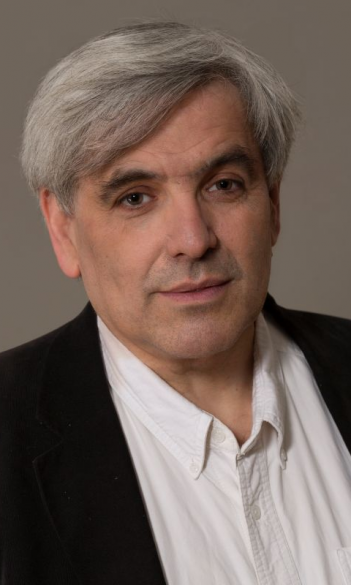
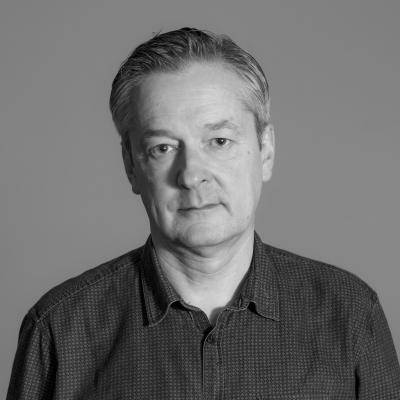
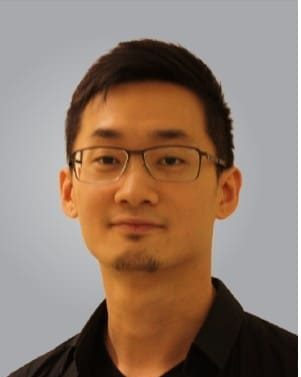
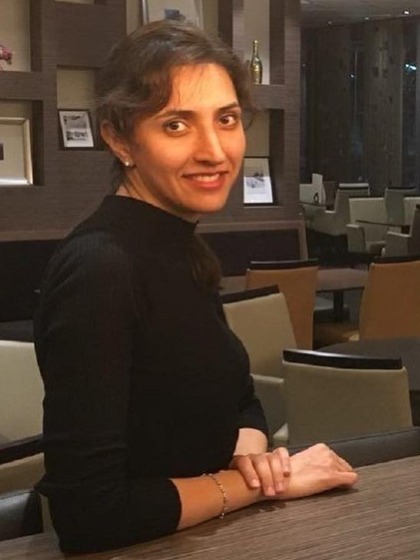
Valbona Muzaka is a Professor at the Department of Economic History, Uppsala University, and affiliated with the Center for the History of Entrepreneurship. Her research focuses on the intersection of intellectual property rights (IPR), international trade, development studies, and global health governance. Current Faculty: Professor, Department of Economic History, Uppsala University Key Affiliation: Center for the History of Entrepreneurship Her work explores the political economy of IPR, particularly in pharmaceuticals, agriculture, and technology transfer. She analyzes global governance mechanisms like the WTO TRIPS Agreement, WIPO Development Agenda, and patent systems in India and Brazil, emphasizing equity and access challenges in developing countries. Recent publications highlight IPR conflicts in global trade, AI applications in drug patent searches, and the role of trademarks as innovation indicators. Her research spans 2009–2024, with a focus on Brazil's healthcare system, India's patent reforms, and global South-North power dynamics. Collaboration Highlights: Co-authored work with James Scott (2024) and Omar Ramon Serrano (2020) Key Themes: Regime conflicts, benefit-sharing, neoliberalism, and financialization
József Garay is a Senior Research Fellow at the ELTE-MTA Theoretical Biology and Evolutionary Ecology Research Group, part of the Department of Plant Systematics, Ecology and Theoretical Biology at Eötvös Loránd University in Budapest, Hungary. His research spans evolutionary biology, mathematical ecology, and game theory, with a particular focus on evolutionary stable strategies and their applications to biological systems. Dr. Garay received his M.Sc. in Biology from Eötvös University (1981-1986), followed by postgraduate studies in Mathematics (1985-1989). He completed his PhD at the Hungarian Academy of Science in 2004, after doctoral studies in the Department of Plant Taxonomy and Ecology (1990-1994) and a summer school on Evolutionary Models of Cooperation in Seewiesen, Germany (1994). Garay's research interests center on evolutionary game theory and its applications to biological systems. He has made significant contributions to understanding evolutionarily stable strategies (ESS) in sexual populations, the evolutionary roots of morality, and the mathematical foundations of population dynamics. His work bridges theoretical mathematics with practical ecological applications, particularly in areas like optimal foraging, habitat selection, and the evolution of cooperation. A key aspect of his research involves extending classical game theory concepts to more complex biological scenarios, including multi-species systems and time-constrained evolutionary processes. His work on the evolutionary stability of self-sacrificing behavior and the relationship between individual fitness and group survival has provided important insights into the evolution of altruism and social behavior. Analysis of Garay's recent publications reveals a consistent focus on evolutionary game theory applied to biological systems, with increasing sophistication in modeling approaches. His work has evolved from foundational studies on evolutionarily stable allele distributions (ESAD) to more complex applications in areas like cannibalism dynamics, predator-prey interactions, and kin selection. There's a clear trajectory toward more integrative models that combine mathematical rigor with biological realism, often addressing questions at the intersection of evolutionary theory, ecology, and behavior. Notably, his research increasingly incorporates mathematical modeling techniques to analyze complex ecological phenomena, demonstrating the power of theoretical approaches to address empirical biological questions. Dr. Garay has received several prestigious awards and fellowships throughout his career: Juhász-Nagy Pál junior fellowship at Collegium Budapest Institute for Advanced Study (1999-2000) NATO research fellowship at Wilfrid Laurier University, Waterloo, Canada (2002) Research fellowship at Konrad Lorenz Institute, Austria (2005) Bolyai János fellowship of the Hungarian Academy of Sciences (2006-2008) While specific information about his advising activities is limited in the provided materials, Garay's extensive publication record spanning over three decades suggests he has likely mentored numerous graduate students and early-career researchers. His collaborations with colleagues like Zoltán Varga, Manuel Gámez, and Tomás Cabello indicate a strong network of research partnerships. Garay has secured multiple research grants supporting his work, including the Bolyai fellowship and international research opportunities that have enabled him to extend his theoretical models to practical ecological applications. His work on ecological monitoring systems demonstrates how theoretical frameworks can be applied to real-world environmental challenges. Garay is a core member of the HAS Theoretical Biology Group at Eötvös Loránd University, where he contributes to a vibrant research environment focused on mathematical approaches to biological problems. His work intersects with several research teams studying evolutionary ecology, population dynamics, and mathematical biology, creating opportunities for interdisciplinary collaboration on complex biological questions that require both theoretical insight and empirical validation. The group's research has significant implications for understanding fundamental biological processes and developing more effective conservation and management strategies.
Paola Gregory is an Associate Professor in the Department of Architecture and Design at the Polytechnic University of Turin, with significant academic contributions to architectural theory, urban transformation, and the affective dimensions of space. She maintains dual academic affiliations, serving as a member of the Board of the PhD Program in 'Architecture. Theories and Design' at Sapienza University of Rome while continuing her primary appointment at Politecnico di Torino. Her research focuses on the intersection of architecture, human experience, and urban transformation, with particular emphasis on affective spaces, social content in architectural design, and the relationship between embodied cognition and built environments. Gregory examines how emotional and sensory experiences shape our interaction with urban spaces, especially in contexts of regeneration and transformation. Her work bridges architecture with neuroscience, exploring how the body perceives and attributes meaning to environments through embodied cognition. She has conducted significant research on Turin's urban transformations, particularly in the Le Vallette neighborhood and the Vallino railway yard area, examining how de-industrialized spaces transition from Fordist to post-Fordist urban landscapes. Gregory's extensive publication record reveals a consistent trajectory exploring the emotional and experiential dimensions of architecture. Her recent work increasingly integrates neuroscience perspectives with architectural design, examining how spatial configurations affect human cognition and emotion. She has pioneered approaches that consider atmosphere, empathy, and memory as central components in urban design processes, challenging traditional functionalist approaches to space. National Competition of Ideas for Projects for the Redevelopment of Areas for Neighborhood Green Spaces (1987) Publication of works and treatises by the National Research Council, Italy (1998) As an advisor, Gregory has supervised numerous theses exploring innovative intersections between architecture and other disciplines, including the relationship between architecture and neuroscience, and architecture's role in the metaverse. Her teaching spans both undergraduate and doctoral levels, with a consistent focus on integrating social content and human experience into architectural design education. She has coordinated experimental workshops that engage local communities in participatory design processes, such as the 'Qui Abito' project in Turin's Le Vallette neighborhood, which used play practices to reimagine public spaces.
Arevik Gnutzmann-Mkrtchyan is Professor of Economics at the University of Regensburg and Deputy Academic Director of the Leibniz Institute for East and Southeast European Studies. Her research focuses on international trade, trade agreements, political economy, and development economics with regional expertise in Eastern Europe. Key research areas include: Empirical analysis of international trade in goods and services Political economy of trade agreements and policy reforms Impact of tariff changes and preferential trade systems Development economics in transition economies WTO dispute resolution and trade law Her work has examined trade preference withdrawals, customs union effectiveness, and services trade competitiveness. Gnutzmann-Mkrtchyan has received numerous awards including the Caroline Herschel Programme grant, Armen Alchian best paper award, and recognition as a Young Researcher at the Nobel Laureates Meeting in Economics. She maintains collaborations with international organizations including the World Bank and Asian Development Bank.
Peter Teirlinck is a part-time Professor in Innovation Management at the Department of Management, Strategy and Innovation within the Faculty of Economics and Business (FEB) at KU Leuven. He serves as Vice-Dean for Internationalization and Accreditation, member of the Faculty Board, and head of Subdivision 38 at the Brussels Campus. Concurrently, he holds a part-time position as Senior Policy Advisor at the Belgian Science Policy Office and represents Belgium in the OECD Space Forum and European Space Agency networks. His research centers on innovation policy evaluation, regional innovation systems, and industry-science relationships, with specific expertise in spatial R&D organization and SME innovation management. His work bridges academic inquiry with policy implementation, examining how regional ecosystems foster technological advancement and how firms navigate complex regulatory environments for sustainable innovation. Recent publications (2024-2025) reveal strong interdisciplinary trends spanning business strategy, regional science, and environmental policy. Key thematic clusters include climate policy impacts on corporate innovation, geographic determinants of EU funding allocation, and supply chain dynamics affecting firm-level innovation. His work consistently integrates empirical regional analysis with strategic management perspectives, particularly through European case studies and comparative frameworks. Teirlinck supervises PhD candidates including You, Z. and Zhang, L., focusing on regional innovation dynamics and supply chain innovation. His active research portfolio includes major projects such as 'Top Management Team Faultlines, Cross Border Search and Open Innovation' (2024-2028) and 'Domain-Specific Database Infrastructure for Empirical Research' (2024-2030), addressing critical questions in innovation policy evaluation, R&D cooperation mechanisms, and foreign direct investment impacts on management systems.
Andrew Adewale Alola is an Associate Professor at the Department of Economics, Inland Norway University of Applied Sciences, affiliated with the CREDS-Centre for Research on Digitalization and Sustainability. He holds a PhD in Economics from Eastern Mediterranean University (Cyprus), an MSc in Applied Mathematics and Computer Science from the same institution, and a bachelor’s degree from the University of Ilorin (Nigeria). Previously, he served as an Assistant Professor at the University of Vaasa (Finland) and held faculty positions at Istanbul Gelisim University and Nişantaşı University (both in Turkey). He collaborates with South Ural State University (Russia) and the University of Johannesburg (South Africa). His research focuses on Sustainability, particularly Energy and Environmental Economics, addressing global challenges under the UN Sustainable Development Goals. Over 150 peer-reviewed publications span journals like Science of the Total Environment and Energy Policy . Since 2020, he has been ranked in the Top 2% Global Scientists in Energy and Environment. He teaches, conducts research, and supervises theses. He is fluent in English and learning Norwegian. Key research themes include climate change, energy transition, material efficiency, and cross-country sustainability comparisons. He investigates policy mechanisms, renewable energy adoption, and economic-environmental trade-offs. His work often uses advanced econometric methods and policy analysis to inform sustainable development strategies. He is part of the Smarter Greener Innovation (SGI) and Sustainable Ecosystem Transition (SET) research groups. His articles analyze topics like fossil fuel subsidies, green bonds’ impact on emissions, and coal dependency reduction strategies. His contributions emphasize practical solutions to achieve environmental and economic synergies.
Olga Bountali is an Assistant Professor (on leave) at the University of Toronto Mississauga, cross-appointed between the Institute of Communication, Culture, Information and Technology (ICCIT) and the Department of Management, with a cross-appointment at the Rotman School of Management. Her expertise lies in operations management, stochastic modeling, and healthcare operations. She focuses on complex decision-making in competitive environments, particularly in healthcare systems and service operations. Dr. Bountali holds a Ph.D. in Operations Research from the University of Athens, followed by postdoctoral research at Southern Methodist University (Engineering Management) and Koç University (Industrial Engineering). She has collaborated with institutions like Parkland Memorial Hospital and UT Southwestern, applying stochastic models to improve healthcare delivery for uninsured patients with chronic diseases. Her work also includes consulting for Marriott Hotels and analyzing strategic customer behavior in service systems. Her research interests span queueing theory, healthcare policy analysis, and the application of operational tools to public health challenges. She actively collaborates across disciplines—engineering, business, and medicine—to address systemic inefficiencies in service operations, particularly in emergent dialysis and compassionate care protocols. Dr. Bountali’s research emphasizes interdisciplinary solutions, leveraging empirical data and mathematical modeling to inform policy and practice. Her recent projects include reengineering dialysis protocols and mitigating patient no-shows through strategic double-booking disincentives.
János Győri is a Professor at the Institute of Intercultural Psychology and Education at Eötvös Loránd University in Budapest. His roles include serving as a lecturer in the Relation between Shadow and Public Education Research Group and as an Alternate Member of the Credit Transfer Committee. He specializes in intercultural education systems, shadow education dynamics, and international comparative studies in teacher education and language learning motivation. His research spans multiple countries including Japan, Singapore, the Czech Republic, and Myanmar, with a focus on educational policies and student motivation across different cultural contexts. Dr. Győri’s work emphasizes cross-cultural pedagogical comparisons, particularly analyzing how informal educational structures (shadow education) influence formal schooling systems. He has conducted extensive studies on international students' language learning motivations, teacher identity formation, and gifted education programs across global contexts. His research bridges educational theory and practice, often employing both quantitative and qualitative methods to explore complex educational phenomena. Notable themes in his publications include examining motivational frameworks for language acquisition among international populations, analyzing systemic differences in teacher education between nations, and evaluating the societal impacts of supplementary educational systems. His recent work highlights emerging trends in global talent development strategies and the evolving role of non-formal educational interventions. While no specific awards are listed, his prolific publication record indicates sustained academic contribution to educational sciences. His advisory activities and committee roles reflect engagement with institutional educational reforms and cross-border educational collaborations.
Michael Gasiorek is a Professor of Economics at the University of Sussex Business School and Managing Director of InterAnalysis, a University spin-out focused on trade policy support. He previously directed the Centre for the Analysis of Regional Integration at Sussex (CARIS) and serves on the FEMISE Board of Directors. His research emphasizes international trade, regional integration, and policy impact, particularly for developing economies. Recent work includes analyzing Brexit’s trade effects, trade preference utilization, and global value chain dynamics. Prof Gasiorek has led over 20 grants from institutions like the EU, ESRC, and DFID, focusing on trade policy, post-Brexit challenges, and sustainable development. He co-founded TradeSift software to simplify trade data analysis and developed TAPES, a complex trade modeling tool. His professional roles include leadership at InterAnalysis and UK Trade Policy Observatory (UKTPO), where he scrutinizes trade policies and disseminates evidence-based insights. His research interests span trade policy design, rules of origin, and the interplay between trade and poverty reduction. Notable contributions include evaluating the EU’s Generalised System of Preferences and advising over 70 countries on trade negotiations. Recent publications address Brexit’s geographical trade impacts, post-Brexit trade frictions, and productivity effects of exporting.
Benjamin F. Jones holds the Gordon and Llura Gund Family Professorship of Entrepreneurship at Northwestern University's Kellogg School of Management, with joint appointments as Professor of Strategy and Courtesy Professor of Economics. He serves as Co-Director of the Ryan Institute on Complexity. His research examines economic growth drivers including innovation systems, entrepreneurship ecosystems, scientific progress, and global development patterns. Research focuses on: Science of science and innovation metrics Entrepreneurship dynamics and economic impact Global economic development patterns Innovation policy design and evaluation Team science and collaborative networks Climate-economy interactions His publications span economic growth theory, innovation policy, and scientific collaboration patterns, with recent work examining gender diversity in research teams, the geography of innovation, and career trajectories of scientists. Methodological approaches integrate large-scale data analysis with economic modeling. Honors and leadership: Non-resident senior fellow at Brookings Institution Research associate at National Bureau of Economic Research Co-director of NBER Innovation Policy Working Group Senior fellow at Institute for Progress Member of Council on Foreign Relations Awards include the 2023-24 L.G. Lavengood Outstanding Professor of the Year, Sidney J. Levy Award for Teaching Excellence, and multiple refereeing excellence awards from the American Economic Association. Formerly served as Senior Economist for Macroeconomics at the White House Council of Economic Advisers and Special Assistant at the U.S. Treasury Department.
William Y. C. Huang is an Assistant Professor in the Department of Biophysics at Johns Hopkins University. He received his B.S. in Chemistry from National Taiwan University (2010) and Ph.D. in Chemistry from UC Berkeley (2016) under Dr. Jay Groves. After postdoctoral work at Stanford University (2018-2023) with Dr. James Ferrell, he launched his independent research program at Hopkins in 2024. Education: B.S. in Chemistry, National Taiwan University (2010) Ph.D. in Chemistry, University of California, Berkeley (2016) Research Focus: Quantitative study of biochemical reactions at cell membranes Signal transduction mechanisms Single-molecule imaging and spectroscopy Development of reconstituted membrane assays Investigation of protein condensation phase transitions Kinetic modeling of membrane-bound biochemical systems Scientific Awards: NIH Pathway to Independence Award Searle Scholar Contact: Email: whuang@jhu.edu Office: 168 Mergenthaler Hall Phone: (410) 516-0166
Lukas Fesenfeld is an environmental governance and political economy researcher at ETH Zurich and a lecturer at the Oeschger Centre for Climate Change Research and the Policy Analysis and Environmental Governance group at the University of Bern. His interdisciplinary work focuses on identifying drivers and outcomes of transformative processes in environmental policies, particularly in energy and agri-food systems, to accelerate biodiversity protection and climate change mitigation. His research interests span the political economy of climate policy, food system transformation, and the interplay between policy, behavioral, and technological changes in socio-technical systems. Fesenfeld employs innovative mixed-method approaches combining quantitative and qualitative techniques including surveys, field experiments, advanced econometrics, and machine learning to understand complex feedback dynamics in sustainability transitions. His work has been published in leading journals including Nature Climate Change, Nature Food, and Global Environmental Change, addressing critical issues like the political feasibility of transformative climate policies and the governance of food system transformation. His research has identified key levers for systemic change rather than incremental improvements in food systems, with particular focus on meat consumption and food waste reduction. Theodor Kocher Prize (50,000 CHF) from the University of Bern SNIS Award 2021 for best PhD thesis on International Studies PhD scholarship by the Heinrich Böll Foundation Multiple competitive research grants totaling over EUR 1.7 million as principal investigator Fesenfeld has supervised over ten Bachelor's theses and eight Master's theses while teaching diverse courses on environmental governance, political economy, and climate policy. He actively engages with the science-policy interface through collaborations with NGOs, public administration, and participation in global policy assessment reports. His founding of the NAHhaft Institute for Sustainable Food Strategies demonstrates his commitment to translating research into practical solutions for food system transformation.
Bahar Haghighat is a Tenure Track Assistant Professor in Robotics and Automation at the Faculty of Science and Engineering, University of Groningen. She leads the Distributed Autonomous Intelligent Systems (DAISY) Lab as Principal Investigator and contributes to academic governance as a Member of the Faculty Council. Her professional affiliations include the Royal Netherlands Institute of Engineers (KIVI), the Institute of Electrical and Electronics Engineers (IEEE), and editorial roles with Nature Portfolio Journal Robotics and Springer Nature Journal Autonomous Robots. Her educational background includes: PhD in Robotics, Control, and Intelligent Systems from the Swiss Federal Institute of Technology in Lausanne (EPFL), Switzerland (2018) Master's degree in Electrical Engineering/Digital Electronics from Sharif University of Technology (SUT), Tehran, Iran Bachelor's degree in Electrical Engineering/Physics (double major) from Sharif University of Technology (SUT), Tehran, Iran Dr. Haghighat's research focuses on building novel miniaturized robotic swarms and algorithmic frameworks for sensing, surveying, and inspection applications. Her work spans mechatronics, electronics, embedded systems, embedded artificial intelligence and machine learning, and distributed systems. She envisions developing surface, aquatic, and aerial miniaturized robot swarms and small-scale intelligent devices for basic research and commercial applications including inspection of complex structures, environmental monitoring, space exploration, and search-and-rescue operations. Her recent publications demonstrate a strong focus on swarm robotics, particularly using particle swarm optimization techniques for multi-robot coordination, surface inspection tasks, and spacecraft hull inspection. Her research shows an interdisciplinary approach combining mechatronic design with advanced algorithms for self-assembly and collective decision-making in resource-constrained robotic systems. Her notable scientific achievements include: EPFL's PhD research award of Gilbert Hausmann for the best PhD thesis in mechanical engineering, electricity, and physics (2019) EPFL distinction of excellence for a PhD thesis in Robotics, Control, and Intelligent Systems (2018) Swiss National Science Foundation Postdoc Mobility Fellowship (2019) Swiss National Science Foundation Early Postdoc Mobility Fellowship (2017) Third place in EPFL's "My Thesis in 180 Seconds" competition (2017) EECS Rising Star recognition (2021 at MIT and 2019 at UIUC) Dr. Haghighat has served as Program Co-Chair for The International Symposium on Distributed Autonomous Robotic Systems (DARS) and has held visiting scholar positions at MIT and Harvard University. Her research has received media attention for applications in Mars rover technology and drone swarms for defect detection. She leads the DAISY Lab, which focuses on distributed autonomous intelligent systems for various inspection and monitoring applications.
Michael A. Lapré is a Professor of Operations Management at Vanderbilt University's Owen Graduate School of Management. He serves as Area Coordinator for Operations Management & Quantitative Methods and teaches courses including Managing Operations (Undergraduate Business Minor), Sports Analytics (MBA), and Operations Management (MMHC). His research focuses on organizational learning curves, quality improvement, and sports analytics, with notable contributions to FIFA World Cup tournament design, NFL competitive balance, and airline industry analysis. He holds a PhD from INSEAD and a Drs in Operations Research from Erasmus University. Awards include the 2024 Chancellor’s Cup for fostering student-faculty relationships, Shingo Research Prize, and multiple Wickham Skinner Awards. Leadership roles include senior editor at Production and Operations Management and associate editor at Journal of Quantitative Analysis in Sports . He advises undergraduate research assistants, mentors athletes through Vanderbilt soccer involvement, and emphasizes interdisciplinary education. Notable collaborations include studies with Formula One teams and FIFA, applying quantitative methods to real-world operational challenges. Awards reflect both academic and teaching excellence, with recognition for mentorship and community engagement. His work bridges theoretical rigor with practical applications, emphasizing learning processes across industries and sports.
Dr. Guido W.J. Bruinsma is an Assistant Professor in the Department of Industrial Engineering & Business Information Systems at the University of Twente. His research focuses on serious game design for organizational digital transformation, particularly in areas like employee behavior management, human resources strategy, and business-IT alignment. He actively contributes to the United Nations Sustainable Development Goals through his work. His research explores how serious games can facilitate complex organizational changes, especially in adapting to digital transformation challenges. Key topics include strategic human resources management, employee engagement strategies, and the design of interactive tools for organizational development. Recent publications highlight innovations in serious game frameworks for digital adoption and organizational strategy alignment. His work bridges educational technology with practical business challenges, evidenced by contributions to conferences like ECGBL and simulation methodologies in Formula One driver performance. No scientific awards are explicitly mentioned in the provided materials. Dr. Bruinsma has supervised two academic works, though specific student names are not listed here. His research networks include international collaborations focused on digital transformation and games-based learning methodologies.