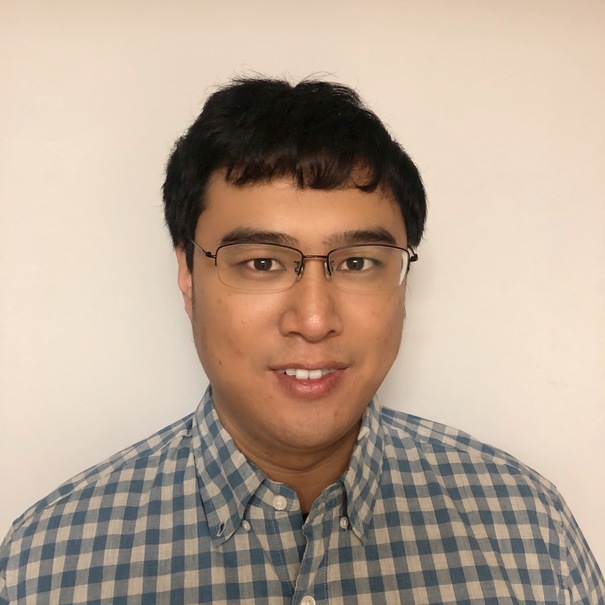
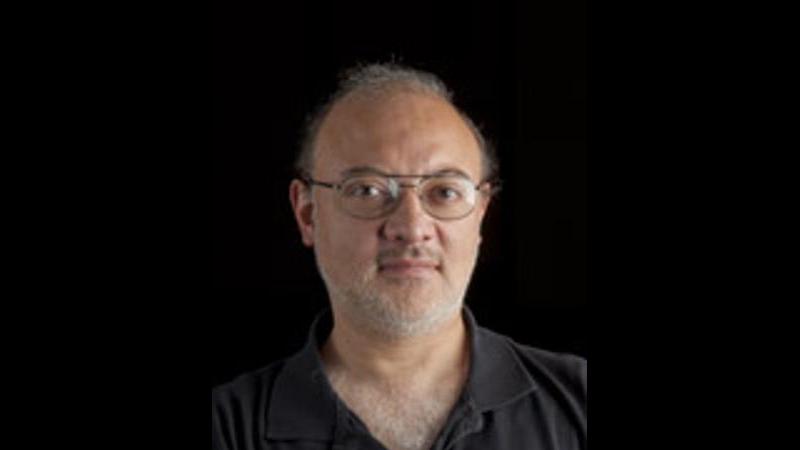
Meng Xu is an Assistant Professor in the Cheriton School of Computer Science at the University of Waterloo, Canada. He is affiliated with the Cryptography, Security, and Privacy (CrySP) group and the Cybersecurity and Privacy Institute (CPI). His research focuses on system and software security, emphasizing secure-by-design languages (e.g., Rust, Move), automated program analysis, and runtime defense techniques. Education : Ph.D., Computer Science (2020), Georgia Institute of Technology B.Eng. and B.Business (First Class Honors), Nanyang Technological University (2014) Research Interests : Secure-by-design languages Automated security analysis (fuzzing, symbolic execution) Runtime defense mechanisms (moving target defense, secure hardware) Key Awards : EAPLS Best Paper Award (2022) USENIX Security Distinguished Paper Award (2018) Grants & Funding : BlackBerry Research Grant (CAD $200,000) Amazon Research Award (USD $60,000) NSERC Discovery Grant (CAD $170,000) Labs & Collaborations : CrySP (Cryptography, Security, and Privacy Group) Cybersecurity and Privacy Institute (CPI)
Kevin W. Hamlen is the Louis A. Beecherl, Jr. Distinguished Professor in the Department of Computer Science at the University of Texas at Dallas. He serves as Executive Director of UT Dallas' Cyber Security Research and Education Institute. His research focuses on language-based security , binary software hardening , cyberdeception , and formal program verification . He has received multiple grants from agencies like AFOSR, NSF, DARPA, and industry partners including Lockheed Martin and Intel. PhD and MS from Cornell University BS from Carnegie Mellon University His research explores automated approaches to software security through techniques like binary disassembly , control-flow integrity , and honey-patching . He has pioneered methods for malware defense and cloud/web/mobile security . Recent work examines adaptive cyberdeception and GPU-based security frameworks . His publications span binary code manipulation , malware mitigation , and blockchain security . Key awards include the NSF IUCRC Technology Breakthrough Award and two CSAW Best Paper 2nd Prizes . He advises numerous PhD students, many of whom now work at Google, IBM, and Microsoft. His book Autonomous Cyber Deception (Springer, 2019) with Ehab Al-Shaer and Cliff Wang provides comprehensive coverage of adaptive cyberdeception strategies.
Volker Markl is a Professor at Technische Universität Berlin in the Institute of Software Engineering and Theoretical Computer Science, with additional affiliations at the Berlin Institute for the Foundations of Learning and Data (BIFOLD) and the German Research Center for Artificial Intelligence (DFKI). His research spans database systems, stream processing, and distributed data management with significant contributions to both theoretical foundations and practical implementations. Markl's research interests focus on next-generation data management systems, particularly for streaming and IoT environments. His work addresses critical challenges in distributed query processing, system integration, and performance optimization. He has pioneered approaches for stream processing in volatile infrastructures and developed innovative techniques for GPU-accelerated database operations. His NebulaStream project represents a major contribution to distributed stream processing systems. His publication record demonstrates consistent impact across top database venues including VLDB, SIGMOD, and ICDE. Recent work shows increasing focus on machine learning integration with database systems, privacy-preserving query processing, and educational approaches for teaching large-scale data management. Markl has mentored numerous researchers who have become prominent in the database community, with frequent collaborators including Steffen Zeuch, Tilmann Rabl, and Philipp Grulich. His leadership extends to major research initiatives and collaborations across European institutions.
Sonia Lopez Alarcon is an Associate Professor in the Department of Computer Engineering at the Kate Gleason College of Engineering, Rochester Institute of Technology (RIT). She has been a faculty member since 2009, teaching core courses like Computer Organization and developing quantum computing curricula including the new CMPE-257 undergraduate course and CMPE-757 graduate course. Her research bridges computer architecture and quantum computing with emphasis on practical quantum circuit implementation. Her educational background includes a Bachelor of Physics and Master's in Device Physics from the University Complutense of Madrid (2002), followed by a PhD in Computer Engineering (2009) where she researched cache hierarchy in simultaneous multithreaded architectures. During her studies, she gained industry experience at Lucent Technologies and Fundetel working on integrated circuit design. Dr. Lopez Alarcon's primary research focuses on Quantum Computing and heterogeneous hardware solutions, specifically quantum circuit compilation processes, scalability challenges, and error resilience techniques. She investigates how to translate theoretical quantum algorithms into executable circuits while managing noise and resource constraints, with applications in optimization problems and physics simulations. Her work connects computer engineering principles to emerging quantum technologies. Analysis of her publication timeline shows a strategic shift from traditional computer architecture (2015-2018 cache/HLS research for GPU/heterogeneous systems) to quantum computing (2019-2021). Recent work explores quantum algorithms for combinatorial optimization (Grover's), quantum simulation of physical systems, and machine learning applications, reflecting her adaptation to the rapidly evolving quantum landscape while maintaining her architectural expertise. Her teaching excellence has been recognized through multiple awards: Kate Gleason College of Engineering Exemplary Performance in Teaching Award (2016, 2017, 2020) Computer Engineering Most Effective Teacher Award (2016) She actively mentors graduate students including Mark Danza (MS Computer Engineering candidate 2025), with whom she collaborated on quantum machine learning research featured in Quantum Zeitgeist (May 2025). She contributes to RIT's quantum information science minor launched in 2022, developing curriculum and supervising student research in this emerging field. Dr. Lopez Alarcon leads quantum computing research efforts within RIT's Department of Computer Engineering, collaborating with colleagues like Cory Merkel on quantum algorithm applications. Her work is supported through her personal research website and integration into university-wide quantum initiatives, positioning her at the forefront of academic quantum computing education and research.
Nikil Dutt is a Chancellor’s Professor at the University of California, Irvine (UCI), with academic appointments in Computer Science, Electrical Engineering and Computer Science (EECS), and Cognitive Sciences. He is affiliated with UCI's Center for Embedded Computer Systems (CECS), Center for Cognitive Neuroscience and Engineering (CENCE), Calit2, CPCC, and LUCI. His research focuses on embedded systems, electronic design automation, computer architecture, and healthcare IoT. Dutt has authored/co-authored seven books and holds IEEE Fellow and ACM Distinguished Scientist titles. Education: B.E. (Mechanical Engineering) from Birla Institute of Technology and Science (Pilani, India), 1980; M.S. (Computer Science) from Pennsylvania State University, 1983; Ph.D. (Computer Science) from University of Illinois at Urbana-Champaign, 1989. Research Interests: Embedded systems, brain-inspired architectures, neuromorphic computing, and healthcare IoT. Current projects include the Information Processing Factory (IPF) for autonomous systems and CareDex for disaster resilience in aging communities. Awards: Multiple Best Paper Awards, NSF grants, and fellowships. Serves as editor for ACM TECS, IEEE TVLSI, and former Editor-in-Chief of ACM TODAES. Active in academic service, including ESWEEK Steering Committee roles. Grants: NSF IPF, UNITE, CareDex, and industry partnerships (e.g., Facebook). Research addresses energy-efficient data centers, autonomous driving systems, and wearable health technologies. Labs/Teams: Leads the Dutt Research Group (DRG), focusing on self-aware systems, edge computing, and neuromorphic architectures.
Nele Mentens is a full professor at both KU Leuven and Leiden University, where she leads cutting-edge research in applied cryptography, hardware security, and secure embedded systems. At KU Leuven, she is affiliated with the Faculty of Engineering Technology and the Electrical Engineering Department (ESAT), leading the Emerging Technologies, Systems & Security (ES&S) research group at the Diepenbeek campus. Simultaneously, she holds a full professorship at Leiden University’s Leiden Institute of Advanced Computer Science (LIACS), focusing on applied cryptography and security. She has been instrumental in numerous national and international research initiatives, including Horizon Europe and NWO-funded projects. Full Professor, KU Leuven (since 2023) Full Professor, Leiden University (since 2020) Associate Professor, KU Leuven (2014–2023) Post-doctoral Researcher & Lecturer, KHLim / KU Leuven (2007–2014) Ph.D. in Engineering Science, KU Leuven (2007) M.Sc. in Electrical Engineering, KU Leuven (2003) Her research focuses on secure and efficient hardware design, particularly for cryptographic applications on FPGAs, reconfigurable architectures, IoT security, and neuromorphic computing. She explores physical attack resistance, side-channel analysis protection, and trusted computing architectures, with applications in healthcare, industrial monitoring, and endpoint AI. Her work bridges theoretical cryptography with practical hardware implementations, emphasizing energy efficiency and real-time performance. The 15 most recent publications reflect a strong trend toward secure, energy-efficient, and intelligent embedded systems. Topics include neuromorphic AI accelerators, trusted IoT architectures, dynamic reconfiguration for side-channel protection, and secure medical data processing. These works span disciplines such as computer architecture, cybersecurity, digital design, and embedded systems, with a focus on hardware-software co-design and real-world deployment. Nele Mentens has received recognition for her contributions, including: Best Paper Award, DATE'16 Best Paper Nomination, AsianHOST'17 Best Paper Award, CHES'19 She has supervised over 15 Ph.D. students and post-docs, both current and former, and has served as principal investigator in approximately 25 funded research projects. Her work has attracted significant grants from Horizon Europe, NWO, FWO, and national innovation programs. She actively contributes to the academic community through editorial roles in top journals and leadership in major conferences. Nele Mentens leads the ES&S research group at KU Leuven and collaborates closely with LIACS at Leiden University. Her team includes Ph.D. students, post-docs, and research experts working on projects like NimbleAI, NeuroSoC, and TrustedIoT. She has also established secure electronics labs through infrastructure grants and maintains strong international ties with institutions such as EPFL, Ruhr University Bochum, and ETH Zurich.
Ashish Venkat is an Associate Professor in the Department of Computer Science at the University of Virginia, part of the School of Engineering and Applied Science. He holds a Ph.D. from UC San Diego and has established himself as a leading researcher in computer architecture, compilers, and computer security. Research Interests: His research focuses on cross-disciplinary hardware and software techniques to build secure, high-performance computing systems. He investigates robust exploit mitigations that maintain energy efficiency and programmability, with a particular emphasis on speculative execution, memory safety, hardware security, and privacy-preserving computing. He also explores the application of machine learning to detect security threats and model execution behavior. Publication Trends: His recent publications (2020–2025) demonstrate a strong focus on hardware-based security, particularly microarchitectural vulnerabilities (e.g., micro-op cache attacks), memory safety via microcode capabilities, and secure accelerators for bioinformatics. There is a consistent trend of publishing in top-tier venues like ISCA, MICRO, IEEE S&P, and USENIX Security, often featuring novel hardware/software co-design solutions. Scientific Awards: NSF CAREER Award (2023) NSF CRII Award (2018) IEEE Micro Top Pick (2019) IEEE Design & Test Top Pick (2020, 2021) HPCA Best Paper Runner-Up (2019) DATE Best Paper Nominee (2023) UVA Research Achievement Award (2023) ISCA Prolific Author of the Decade (2013–2022) Advising and Grants: He actively mentors graduate and undergraduate students, many of whom have pursued advanced degrees or joined leading tech companies. He has secured significant funding as PI or co-PI from NSF, DARPA, SRC, and Intel, including a $4.9M DARPA HERCULES grant and an NSF CAREER award. His projects focus on holistic security solutions, speculative optimization, and privacy-preserving machine learning frameworks. Labs and Teams: He leads a research group focused on secure and efficient computing systems, collaborating with researchers at institutions like UC San Diego, UC Riverside, and UC Irvine, as well as industry partners including Intel and IBM.
Betül Boz is an Assistant Professor at the Department of Computer Hardware, Faculty of Engineering, Marmara University. She holds a B.Sc. and M.Sc. in Computer Engineering from Marmara University, and a Ph.D. in Computer Engineering from Boğaziçi University. Her research focuses on computer architecture, optimization, and evolutionary computing. B.Sc., M.Sc., and Ph.D. in Computer Engineering Her research interests include computer architecture, parallel algorithms, optimization techniques, and evolutionary algorithms applied to graph coloring and scheduling. Recent work explores cloud computing scheduling, register allocation, and bioinformatics applications like circRNA-disease prediction. She has published extensively in these areas, utilizing evolutionary computing and machine learning. Key trends in her publications include evolutionary algorithms for graph coloring (2015–2025), register allocation (2004–2024), and cloud computing optimization (2023). She also investigates biomedical applications such as circRNA-disease association prediction. She has advised one thesis, managed one project, and her work aligns with UN Sustainable Development Goals. Her research outputs include 14 WoS-indexed publications, 11 WoS citations, and an h-index of 25 on WoS.
Wenwen Wang is an Associate Professor in the School of Computing at the University of Georgia's Franklin College of Arts & Sciences. His research focuses on computer systems, compiler design, and embedded systems security. He holds a Ph.D. in Computer Science from the University of Chinese Academy of Sciences (2014). Education: Ph.D., Computer Science, University of Chinese Academy of Sciences, 2014 His research emphasizes dynamic binary translation, compiler optimization, and secure embedded systems. Notable contributions include frameworks like JavART (JIT compiler optimization) and BSan (memory error detection). He received the 2021 M. G. Michael Award for Sciences from the Franklin College. Wang has secured two NSF grants totaling $1.2 million, including CSR: Small grants for FALCON (2023–2027) and Modernizing Dynamic Binary Translation Systems (2023–2027). He advises three graduate students: Ruili Fang, Yage Hu, and Boyang Yi. His work addresses challenges in cross-architecture virtualization, GPU-based graph computing, and hardware-triggered security mechanisms. Recent projects include Liberator (GPU graph processing) and InvisiGuard (embedded device integrity).
Gustavo Rodriguez-Rivera is an Associate Teaching Professor in the Department of Computer Science at Purdue University, part of the School of Science. He joined the department in 2000 and holds a Ph.D. in Computer Science from Purdue University (1998), an M.S. in Electrical Engineering from ITESM Campus Monterrey (1990), and a B.S. in Electrical Engineering from the same institution (1985). His research focuses on Operating Systems, Computer Networks, Memory Management, Embedded Systems, Real-Time Systems, and broader areas like Numerical Analysis and Artificial Intelligence. Dr. Rodriguez-Rivera has received multiple teaching awards, including the ACM Faculty Award in Computer Science (2020, 2023) and Best Teacher in the School of Science (2014, 2016). His work spans software engineering education, structural health monitoring for wind turbines, and memory management algorithms. Notable publications include studies on garbage collection techniques, real-time project tracking in programming courses, and vibro-acoustic modulation for turbine blade inspection. He has advised numerous projects and contributed to grants such as the NSF-funded work on wind turbine blade monitoring. His academic contributions also include developing secure programming course modules and tools for interactive debugging systems.
Patricia Lago is a Full Professor of Software Engineering at Vrije Universiteit Amsterdam (VU), leading the Software and Sustainability (S2) research group in the Computer Science Department. She directs the VU Digital Sustainability Center (DiSC) and has pioneered initiatives like the Green Lab, fostering collaboration between academia and industry to address software sustainability. Her roles include director of the Master of Information Sciences and co-founder of the Green IT Master’s track. Her research focuses on software architecture, sustainability, energy efficiency, and ethical software design. She chairs the ICT4S conference and serves on steering committees for IEEE ICSA and ECSA. Key projects include Innoguard (Hybrid Intelligence for Cyber-Physical Systems) and uDevOps (Microservice Quality Assurance). Awards include Best Paper Awards (2016, 2019, 2022) and the Distinguished Open Artifact Award (2024). She contributes to journals like IEEE Software and Journal of Systems and Software , emphasizing sustainability and ethical practices in software engineering.
Dr. Ngoc Nha Vi Tran is an Associate Professor of Computer Science at UiT The Arctic University of Norway. She holds a PhD from UiT and was a visiting scholar at Rutgers University, USA. Her research focuses on high-performance and energy-efficient computing, machine learning, and bioinformatics. She is a member of the NORA.startup Steering Group and leads the Arctic Green Computing Group. Education: PhD in Computer Science (UiT), M.Sc. in Software Engineering via Erasmus Mundus (Blekinge Institute of Technology, Sweden & Technical University of Kaiserslautern, Germany). Research interests include energy-efficient algorithms, bioinformatics tools (e.g., vCOMBAT), and applications of machine learning in healthcare and robotics. She teaches courses such as INF-2200 Computer Architecture, INF-2900 Software Engineering, and INF-2202 Concurrent Programming. Her work spans computational models for antibiotic target-binding, runtime energy optimization (REOH framework), and power models for embedded systems (RTHpower/ICE). She contributed to the EXCESS project on energy-efficient computing systems. Labs/Teams: Arctic Green Computing Group, EXCESS consortium.
Ronald D. Barnes is a Professor in the School of Electrical and Computer Engineering at the University of Oklahoma, where he returned in 2007 after serving as faculty at George Mason University. An OU alumnus, he earned his B.S. in Electrical Engineering from the university in 1998 and completed his Ph.D. in Electrical Engineering at the University of Illinois in 2005, specializing in complexity-effective microarchitecture. His educational background includes: B.S. in Electrical Engineering, University of Oklahoma (1998) Ph.D. in Electrical Engineering, University of Illinois (2005) Dr. Barnes' primary research centers on computer architecture, with emphases on multi-core systems, reduced-complexity architectures, and compiler-architecture co-design to address power, performance, and memory latency challenges. His work integrates static/dynamic compilers with novel hardware, focusing on program analysis, application mapping to accelerators, and runtime optimization. Notably, Google Scholar data indicates additional research in psychology and literary studies , examining fiction's impact on social cognition, moral judgment, and imaginative engagement, though this appears inconsistent with his ECE departmental affiliation. Analysis of his 15 most recent publications reveals a dual trajectory: engineering-focused work in computer systems (2005-2016) and a sharp pivot toward psychological studies of fiction, morality, and narrative comprehension (2022-2024). The recent publications predominantly investigate how fictional content influences theory of mind, empathy development, and moral reasoning, with significant output in mystery fiction literature. His scientific contributions span two distinct domains without overlap in methodology or subject matter, suggesting either interdisciplinary breadth or potential data misattribution in the provided sources.
Félix García is a prominent professor at the University of Castilla-La Mancha in Ciudad Real, Spain, with extensive contributions to software engineering, sustainable computing, and business process management. His research spans over two decades with 187 publications indexed in dblp, demonstrating consistent scholarly productivity and leadership in multiple research areas. Dr. García's research interests focus on critical contemporary challenges in software development, particularly green software engineering, energy efficiency in computing systems, and sustainable software development practices. His work bridges theoretical foundations with practical applications, addressing how software design, implementation, and maintenance impact environmental sustainability. He has pioneered research connecting software quality attributes with energy consumption, examining how design patterns, code smells, and refactoring techniques affect resource usage. His recent publications (2023-2025) reveal a strong focus on cutting-edge topics including Green AI, quantum computing sustainability, and energy-aware programming language design. These works demonstrate his ability to anticipate and address emerging challenges at the intersection of software engineering and environmental sustainability. Dr. García has received significant recognition through numerous collaborations, particularly with Mario Piattini (133 co-authored papers), Francisco Ruiz (63 papers), and María Ángeles Moraga (30 papers), establishing him as a central figure in his research community. His work has appeared in prestigious venues including IEEE Transactions on Software Engineering, Journal of Systems and Software, and ACM Computing Surveys. He has mentored numerous researchers who have become established scholars in their own right, including Javier Mancebo, Laura Sánchez-González, and César Jesús Pardo Calvache. His contributions to gamification in software engineering education through serious games like GLOBAL-MANAGER demonstrate his commitment to innovative teaching approaches.
Vikram S. Adve is a Professor in the Department of Computer Science at the University of Illinois at Urbana-Champaign. He co-founded and co-leads the Center for Digital Agriculture and directs the USDA-funded AIFARMS Institute , focusing on AI applications in sustainable agriculture. His research bridges compilers, parallel systems, and AI to address challenges in edge computing and digital farming. Research interests span compiler technologies (LLVM, HPVM), parallel programming models , software reliability , and AI-driven agriculture . Key projects include: CropWizard : Generative AI for agricultural decision-making. HPVM/ApproxHPVM : Compiler IR for edge devices. Hydride/MISAAL : Automated retargetable compiler construction. Recent publications (2018-2025) emphasize compiler optimizations, approximate computing, binary analysis, and AI for systems. Trends show convergence of compiler techniques , heterogeneous computing , and AI applications in agriculture and edge devices. Adve actively recruits students for projects funded by USDA, Intel, Amazon, and Illinois DPI. He leads the HPVM compiler team and digital agriculture initiatives , integrating cross-disciplinary research across CS, engineering, and agronomy.