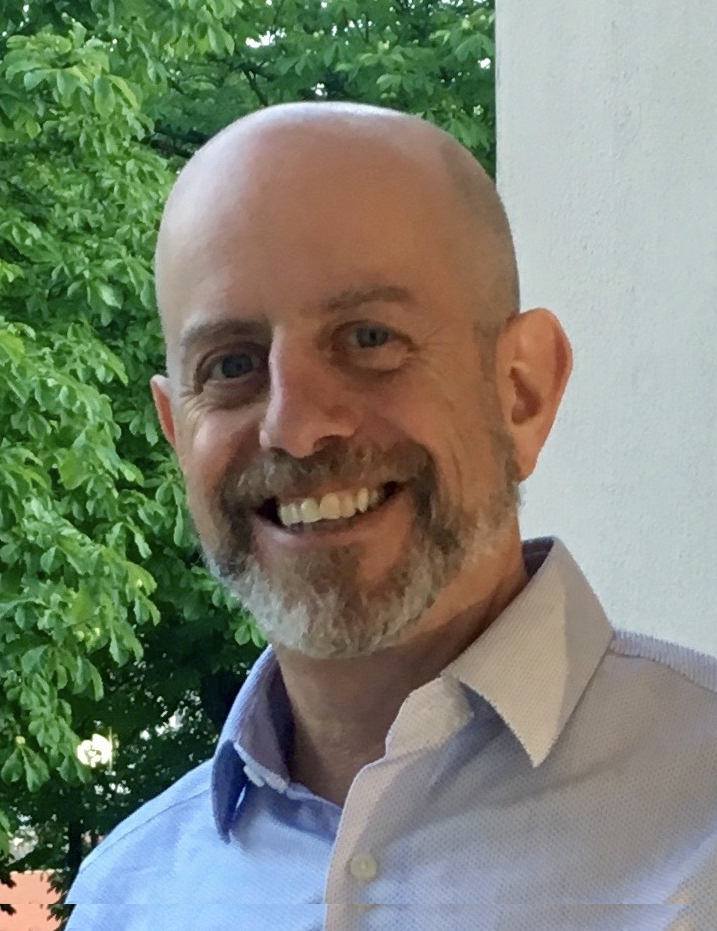
Teo Hock Hai is Provost's Chair Professor of Information Systems at the National University of Singapore's School of Computing, serving as Director for Humanities & Social Sciences Research in the NUS Office of the Deputy President. He previously headed the Department of Information Systems (2008-2015) and served as Vice-Dean for Corporate Communications. He holds PhD, MSc, and BSc degrees in Computer and Information Sciences from NUS. His research integrates Health Informatics , Digital Transformation , and Open Innovation , with current projects including multilingual dementia detection tools, AI-powered smoking cessation platforms, diabetes management apps, and crew fatigue prediction systems. His work emphasizes the design of IT artifacts to improve health outcomes, decision-making, and educational systems. His publications focus on AI applications in healthcare decision-making, behavioral responses to environmental data, digital platform architectures, and gamification strategies. Recent work examines AI's role in diagnostic workflows, pollution impact on exercise behavior, and emotion-driven information diffusion during health crises. Awards include the Information Management Research Award MIS Quarterly Reviewer of the Year (2004) Multiple best paper awards at international conferences He leads projects funded by national agencies and industry partners including Singapore Airlines, focusing on healthcare AI and digital resilience. He teaches doctoral courses on contemporary IS theories and mentors graduate researchers in health informatics and digital innovation.
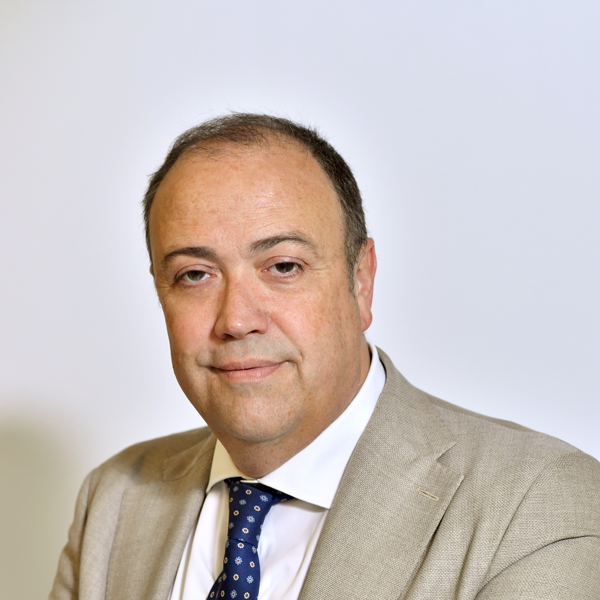
Professor Karim R. Lakhani is the Dorothy & Michael Hintze Professor of Business Administration at Harvard Business School (HBS), specializing in technology management, innovation, digital transformation, and AI. He leads initiatives like the Laboratory for Innovation Science at Harvard and co-founded the Digital, Data, and Design (D^3) Institute. His research explores open innovation, crowdsourcing, and AI-driven business models, with over 150 peer-reviewed publications. Lakhani holds a PhD from MIT and has taught in HBS's MBA, executive, and online programs. His work bridges academia and industry through partnerships with NASA, Harvard Medical School, and private firms. Education: PhD in Management, MIT SM in Technology and Policy, MIT Bachelor's in Electrical Engineering and Management, McMaster University Research Interests: Lakhani's work focuses on leveraging crowds, open-source communities, and contests to solve complex challenges. He explores how digital technologies reshape industries, emphasizing AI's role in redefining business models. His studies on innovation ecosystems and organizational behavior highlight strategies for competitive advantage in the age of AI. Key Contributions: He co-authored Competing in the Age of AI , a seminal work on AI-driven enterprise transformation. His research on blockchain and digital ubiquity has informed global business strategies. Lakhani's initiatives, including the NASA Tournament Lab, demonstrate practical applications of academic research in real-world innovation. Recognition: Aga Khan Foundation International Scholarship Doctoral Fellowship from Canada's Social Science and Humanities Research Council Advising & Grants: Lakhani advises executives on digital transformation through HBS programs like Competing with Big Data. His grants fund projects on AI ethics, innovation contests, and organizational learning. He has co-developed courses on digital strategy and innovation, blending theory with actionable insights. Labs & Teams: He leads the Crowd Innovation Lab and co-chairs HBS's Business Analytics Program. His collaborations span academia, government, and industry, fostering interdisciplinary problem-solving and scaling innovation.
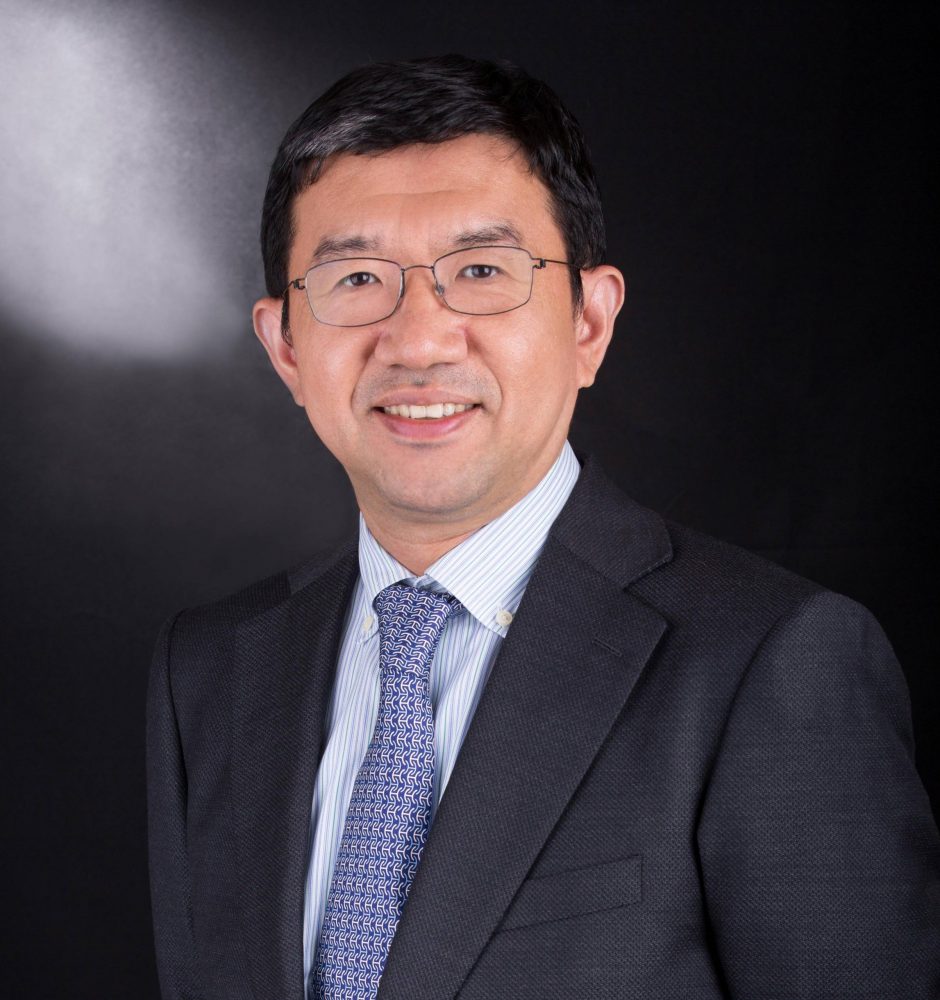
Haipeng Liu is an Assistant Professor in the Centre for Intelligent Healthcare at Coventry University. His research focuses on cardiovascular system modeling, biosignal processing, wearable nanosensors, and AI-driven diagnostics. He has supervised over 100 research outputs and holds editorial roles in journals like Frontiers in Physiology and Electronics . His work bridges clinical needs with technological innovation, particularly in healthcare technology and cardiovascular diagnostics. Research Interests: Computational modeling of cardiovascular systems, AI-enhanced diagnostics, wearable sensors, and medical imaging. Key Awards: British Heart Foundation Travel Award (2019), First Prize in National Mathematics Competition (2011). Collaborations: Active in global research networks, including the World Stroke Organization. His recent work emphasizes machine learning applications in cardiology and stroke diagnostics, with publications in Physics of Fluids , European Journal of Radiology , and Frontiers in Genetics . He is a sought-after advisor for PhD students exploring healthcare technology.
Lee Spector is a Professor of Computer Science at Amherst College and an Adjunct Professor at the University of Massachusetts, Amherst . Previously, he taught at Hampshire College from 1992 to 2019, where he held roles including Dean of the School of Cognitive Science and Director of the Computational Intelligence Laboratory . He earned a B.A. in Philosophy from Oberlin College (1984) and a Ph.D. in Computer Science from the University of Maryland (1992). His research focuses on artificial intelligence, artificial life, evolutionary computation, and intersections with cognitive science, physics, and the arts. Notable contributions include work on genetic programming for music generation (e.g., GenBebop ), quantum computing algorithms, and evolutionary robotics. He serves as Editor-in-Chief of Genetic Programming and Evolvable Machines and has authored over 100 publications, including the book Automatic Quantum Computer Programming: A Genetic Programming Approach (2004). Spector has received prestigious awards such as the NSF Director's Award for Distinguished Teaching Scholars and gold medals in the GECCO Human Competitive Results contest. He also engages in public outreach, including an op-ed in The Boston Globe on digital evolution (2005).
Professor Ulysses Sengupta is a leading academic and practitioner in architecture and urbanism at the Manchester School of Architecture , where he holds the Professor of Architecture and Urbanism title. He is the founding director of the [CPU]lab (Complexity Planning and Urbanism Research Laboratory) and leads the [CPU]ai master’s design atelier, which integrates data-driven design and computational thinking into architectural education. His work bridges academic research, pedagogy, and practice through Softgrid Limited , an internationally networked architecture and urban research firm. Founding director of [CPU]lab Leader of [CPU]ai atelier Director of Softgrid Limited International collaborations with institutions like the Architectural Association and University of Westminster Research Interests focus on cities as complex adaptive systems, utilizing big data, IoT, and machine learning to address urban sustainability and governance. Key themes include: Smart cities and digital urban disruption Agile governance and participatory planning Complexity-based design methodologies Global South urbanism and resource-limited settings Interdisciplinary tools for urban data analysis Eco-architecture and futureproofing urban systems Articles highlight his work on urban data analysis, mobility-as-a-service, transdisciplinary systems mapping, and the intersection of social/environmental justice in smart cities. His Google Scholar profile reflects a consistent focus on computational urbanism and sustainable transformation frameworks. Scientific Awards include shortlisting for the Colvin Prize (2025), a prestigious honor in architectural research. His projects span ESRC, H2020, and Innovate UK grants, including leadership in the DACAS network and Synchronicity EU initiative. Professional Contributions encompass advisory roles for international organizations like RIBA, policy briefs for the United Nations University, and design competitions in China, India, and the UK. His [CPU]ai atelier redefines architectural education through computational complexity.
Professor Rory Medcalf AM FAIIA has served as Head of the National Security College (NSC) at The Australian National University since 2015. A prominent strategic analyst with over 30 years of multidisciplinary experience spanning diplomacy, intelligence analysis, think tanks, academia, and journalism, he has led the NSC's transformation into Australia's premier institution for executive development, policy impact, and Indo-Pacific security research. His career highlights include founding the Lowy Institute's International Security Program (2007-2015), serving as senior strategic analyst at the Office of National Intelligence, and diplomatic postings to New Delhi and Japan. As a thought leader on Indo-Pacific strategy, he authored the influential 2020 book Contest for the Indo-Pacific (translated into Japanese/Chinese), which shaped regional security discourse. Key research areas focus on Australian national security policy , maritime security , nuclear stability , and Indo-Pacific strategic imagination . Recent publications emphasize preparedness models (especially Finland's 'comprehensive security'), critical infrastructure protection, and managing China's rise through multilateral frameworks. Scientific awards include: 2022 Member of the Order of Australia (AM) 2022 Japanese Foreign Minister Commendation 2023 Fellow of Australian Institute for International Affairs (FAIIA) He maintains significant policy advisory roles, including Australia's ASEAN Regional Forum expert register membership and scientific advisory positions with Finnish Institute for International Affairs. His work bridges academic research, government strategy, and international dialogue through track 1.5/trilateral partnerships with India, France, and Japan.
Marie Candito is a Lecturer at the School of Linguistics, Paris Cité University. She serves as Deputy Director of the Laboratoire de Linguistique Formelle (LLF, CNRS) since January 2025 and Head of the M2 Computational Linguistics program at Paris Cité University. Her research focuses on natural language processing, computational linguistics, and linguistic abilities of large language models. Current Projects : Co-PI of ANR SELEXINI (2021-2025) and scientific coordinator for LLF in ANR PANTAGRUEL (2023-2025) Past Projects : PI of ANR ASFALDA-French FrameNet (2013-2016), scientific coordinator for ANR PARSEME-FR (2015-2019), and member of ANR SEQUOIA (2010-2013) Her work involves measuring and mitigating biases in language models, inducing semantic lexicons from corpora, and studying human vs. LLM word associations. She supervises PhD students including Maria Andueza Rodriguez, Anna Mosolova, and David Kletz.
Dr. Shaobo (Kevin) Li is a Tenured Associate Professor at the School of Business, Southern University of Science and Technology (SUSTech), with secondary appointment in the Department of Information Systems & Management Engineering. He holds a PhD in Business Administration from Nanyang Technological University (2019), Master of Business Administration (University of Virginia, 2014), Master of Finance (West Virginia University, 2012), and Bachelor of Business Administration (Lanzhou University, 2011). National High-Level Youth Talent Program awardee Overseas High-Caliber Personnel in Shenzhen City Recipient of 2018 China Scholarship Council’s Excellent Self-Funded Student Scholarship His research focuses on the intersection of digital economy, social welfare, and technology-driven marketing, employing experimental methods, empirical models, and neuroscience. He serves as Associate Editor for the Journal of Business Research and has published in top UTD-24 journals including Journal of Consumer Research, Information Systems Research, and Production and Operations Management. His work examines platform economics, brand management during crises, and consumer behavior related to AI, sustainability, and health decisions. He has led 10+ research projects (National Natural Science Foundation, Ministry of Science and Technology 2030 Program) and received multiple research awards, including Academy of Marketing Science Best Doctoral Dissertation Proposal Award (2019) and Best Paper Awards at China Marketing Science (2020,2024), China Marketing International Conference (2023), and CMAU Annual Conference (2023,2024). Teaching accolades include SUSTech’s Premier Teaching Award, Top 10 Most Popular Professor among undergraduates, and Nanyang Business School’s Best Graduate Teaching Award (2017). Teaches Financial Marketing (undergraduate) Teaches Frontiers of Management & Research Methods (PhD) Actively recruiting research assistants, postdocs, and joint PhD candidates with Hong Kong Polytechnic University
Anja Tuschke holds the W3 Professorship for Business Administration, especially Corporate Management / Strategic Management, at the Ludwig Maximilian University of Munich within the Faculty of Business Administration . Her work bridges strategic decision-making, organizational dynamics, and corporate governance, with a focus on leadership, boardroom practices, and institutional influences. Teaching: Courses include Strategic Management: Concepts and Cases , Organizational Theory , and Strategy and Leadership . Research: Explores strategic change, corporate misconduct, board networks, executive compensation, and institutional legitimacy. Publications highlight trends in governance, organizational behavior, and strategic adaptation, with recent focus on digital transformation, CEO accountability, and network-driven practices.
Ronald Stuart Burt is a Senior Professor of Organization Design at Bocconi University, Milan, specializing in the intersection of social network theory and organizational behavior. His research examines how network structures—particularly structural holes and brokerage positions—influence information flow, innovation, and performance in complex organizations. His core research interests include Social Network Analysis, Structural Hole Theory, Organizational Behavior, and Network Brokerage. Burt investigates how individuals and teams leverage network positions for competitive advantage, with recent work focusing on bridge supervision dynamics, the role of shared language in team networks, and cross-cultural network phenomena like guanxi. His theoretical contributions bridge sociology and management science, emphasizing empirical validation of network effects. Analysis of his 2022-2024 publications reveals sustained focus on structural holes as conduits for information control, with expanding applications to team performance, cross-cultural business networks, and cooperative behavior. Key trends include methodological refinements in network causality testing, integration of linguistic elements into network analysis, and contextual extensions to Chinese business practices. His work consistently appears in premier outlets like American Journal of Sociology and Academy of Management Journal , demonstrating interdisciplinary reach across sociology, management, and economics.
Luca Molteni is an Assistant Professor at the Department of Decision Sciences at Bocconi University and a Faculty Member of the MBA program at SDA Bocconi School of Management. He has been collaborating with SDA Bocconi since 1987 and served as the Department of Decision Science Liaison Officer at SDA Bocconi School of Management since January 2017. His academic work focuses on data analysis, predictive modeling, and their applications in marketing and strategic decision-making. His research spans statistical methods for customer satisfaction, market positioning, segmentation, and quantitative analysis in business contexts. He has contributed to publications like International Journal of Design & Nature and Ecodynamics and Economia & Management , emphasizing practical data science applications in banking and pharmaceutical industries. His works highlight the integration of Big & Small Data analytics into business strategy, marketing research, and CRM systems. Selected Publications Co-edited a comprehensive marketing research book with Gabriele Troilo (2022) Authored chapters on product positioning, market segmentation, and quantitative research (2022) Published an article on data science roles in Economia & Management (2021)
Song Liu serves as Associate Professor in Data Sciences and AI within the School of Mathematics at the University of Bristol. His academic journey spans multiple continents with a BEng from Suzhou University, MSc from Bristol, and Doctor of Engineering from Tokyo Tech. Current research focuses integrate mathematical foundations with practical AI applications across engineering domains. His educational background demonstrates international expertise: BEng: Suzhou University MSc: University of Bristol Doctor of Engineering: Tokyo Tech Research centers on exponential family manifolds and graphical models , with significant contributions to score matching techniques for missing data and generative modeling. His work bridges theoretical statistics with real-world applications in structural health monitoring and power electronics, particularly through transfer learning frameworks for magnetic core loss prediction. Recent publications reveal increasing focus on Wasserstein gradient flows and differential parameter inference in high-dimensional spaces. Liu's publication trajectory shows consistent innovation in density estimation and generative modeling, with recent work (2023-2025) emphasizing practical implementations in engineering contexts. Key themes include score-based diffusion models, manifold learning applications, and novel approaches to divergence minimization using velocity fields and optimal transport theory. Award recognition includes: Outstanding Paper at ICML2025 3rd Place in MagNet Challenge 2023 (Outstanding Performance Award) Grant leadership includes the 2023-2024 project Using Machine Learning to Correct Probe Skew in High-frequency Electrical Loss Measurements as Co-Investigator, and the 2019 Joint Workshop Between JGI and ISM as Principal Investigator. His academic service extends to hosting international researchers like Ayaka Sakata (2023) and receiving competitive fellowships for boundary example simulation (2018-2020). While no formal lab structure is specified, his collaborative network spans electrical engineering (magnetic core loss projects) and structural analysis (offshore wind foundation monitoring).
Pranamesh Chakraborty serves as an Assistant Professor in the Department of Civil Engineering at the Indian Institute of Technology Kanpur (IIT Kanpur), where he specializes in Transportation Engineering with expertise spanning Intelligent Transportation Systems, Machine Learning, Big Data Analytics, and Naturalistic Driving Studies. Faculty position: Assistant Professor, Department of Civil Engineering Academic qualifications: PhD from Iowa State University (2019), M.Tech from IIT Kanpur (2014), B.E. from IIEST Shibpur (2012) Previous appointments: Assistant Professor at Techno India University and KIIT University Dr. Chakraborty's research program focuses on developing innovative computational approaches to transportation challenges, with particular emphasis on applying machine learning techniques to traffic management, incident detection, and policy analysis. His work bridges civil engineering principles with cutting-edge data science methodologies. Analysis of his publication record reveals a consistent research trajectory centered on data-driven transportation solutions, with increasing emphasis on deep learning applications and real-world policy implications. His work demonstrates strong interdisciplinary integration across engineering, computer science, and urban planning domains. Research Excellence Award, Iowa State University, 2019 Best Student Paper, TRB Managing Roadways and Transit Together Conference, Seattle, 2018 Student Essay Competition Winner, ITS America, San Jose, 2016 Academic Excellence Award, Indian Institute of Technology Kanpur, 2013 Dr. Chakraborty maintains an active research program with multiple publications in high-impact transportation journals. His previous experience includes serving as a Graduate Research Assistant at Iowa State University and teaching positions at multiple Indian institutions before joining IIT Kanpur.
Jin Li serves as Zhang Yonghong Professor in Economics and Strategy, Area Head of Management and Strategy, and Director of the Centre for AI, Management and Organization (CAMO) at Hong Kong University Business School. Previously, he held tenured positions at Kellogg School of Management and London School of Economics where he was Tenured Associate Professor of Managerial Economics and Strategy. Professor Li's research focuses on organizational economics, personnel economics, and labor economics, examining how firms design organizations to align incentives and build trust. His recent work explores digital economy topics including causality issues in machine learning algorithms, blockchain governance, and AI-organization interactions. This research demonstrates how organizational design creates competitive advantage through effective incentive structures and relational contracts. His publication portfolio shows consistent output in top-tier journals with recent emphasis on AI's organizational impact (2022-2023). Key thematic clusters include relational contracting dynamics (30% of recent work), digital transformation challenges (25%), labor market structures (20%), and blockchain governance mechanisms (15%). Management Department teaching prize at London School of Economics Associate Editor, Management Science Professor Li has advised numerous PhD students through courses like 'Economics of Organization for PhDs' at Kellogg. His service includes reviewing for 30+ top journals (AER, Econometrica, JPE, QJE, ReStud) and grant proposals for NSF and SSHRC. He serves as external PhD examiner for Norwegian School of Economics. As Director of CAMO, he leads research initiatives at the AI-organization interface, focusing on how artificial intelligence transforms workplace structures, managerial decision-making, and competitive dynamics in digital economies.
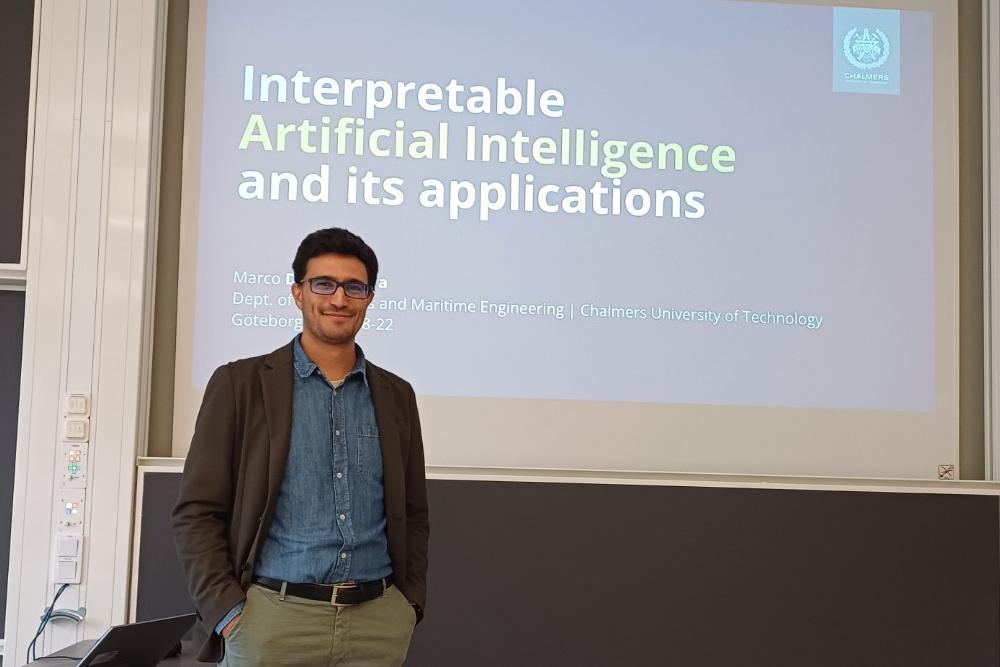
Marco L. Della Vedova is a Senior Lecturer in Applied Artificial Intelligence at Chalmers University of Technology, Sweden. He works in the Vehicle Engineering and Autonomous Systems division within the Department of Mechanics and Maritime Sciences, as part of Prof. Mattias Wahde's research group. Since 2025, he has served as Director of the Data Science and AI master's programme (MPDSC) at Chalmers, where he teaches courses including Introduction to Artificial Intelligence and Digitalization in Sports. Dr. Della Vedova earned his academic foundation at the University of Pavia, Italy, where he completed his BSc (2006), MSc (2009), and PhD (2013) in Computer Engineering. His doctoral research focused on "Real-Time Physical Systems and Electric Load Scheduling" under Prof. Tullio Facchinetti. During his PhD studies, he spent a year at U.C. Berkeley hosted by Prof. Francesco Borrelli at the Model Based Predictive and Distributed Control Lab. His research spans multiple AI domains with a strong emphasis on interpretability. Dr. Della Vedova develops interpretable methods for conversational AI, naturalness evaluation of forests using canopy height models, and geospatial applications. His work bridges theoretical AI with practical societal benefits, particularly in environmental monitoring, transportation systems, and orienteering. He has previously contributed to cloud computing, hate speech detection, and cyber-physical energy systems, demonstrating his interdisciplinary approach to AI research. Dr. Della Vedova's publication record reveals a consistent trajectory of impactful research across multiple domains of artificial intelligence. His recent work shows a strong focus on interpretability in AI systems, with significant contributions to natural language processing, geospatial analysis, and causal inference. The research demonstrates both theoretical depth and practical applications, particularly in environmental monitoring and social media analysis. His methodology often combines traditional machine learning approaches with novel interpretability techniques, creating bridges between complex AI systems and human understanding. Dr. Della Vedova has received several prestigious recognitions for his work: Best PhD thesis award from the Order of the Engineers of Bergamo (2013) Italian champion of Il Cervellone (2012) Top Italian performer in IEEEXtreme 6.0 programming competition (148th overall globally, 2012) Premio Arturo Schena award from Fondazione Credito Valtellinese (2010) With over 50 students supervised through bachelor's and master's theses, Dr. Della Vedova has established himself as a dedicated mentor in the AI community. His current PhD students include Minerva Suvanto working on interpretable NLP and Vivien Lacorre developing AI for railway infrastructure inspection. His supervision spans diverse topics from forest naturalness evaluation to hate speech detection and transportation optimization. Beyond formal supervision, he actively contributes to educational initiatives including serving as Director of Chalmers' Data Science and AI master's program and developing innovative teaching methods that connect theoretical concepts with real-world applications. Dr. Della Vedova is deeply embedded in both academic and professional communities. He leads the Applied Artificial Intelligence research group at Chalmers while maintaining strong connections with European research networks through projects like the ERASMUS+ EUrienteering initiative. His interdisciplinary approach is reflected in collaborations across computer science, environmental science, and social sciences. Notably, he applies his AI expertise to orienteering both as a researcher developing localization methods and as a licensed Event Advisor for the International Orienteering Federation, demonstrating how his professional and personal interests converge in innovative ways.