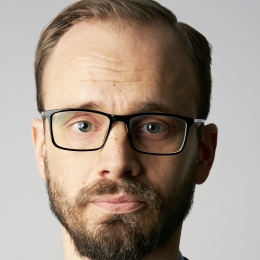
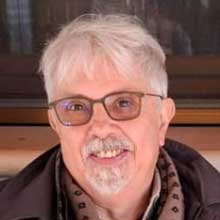
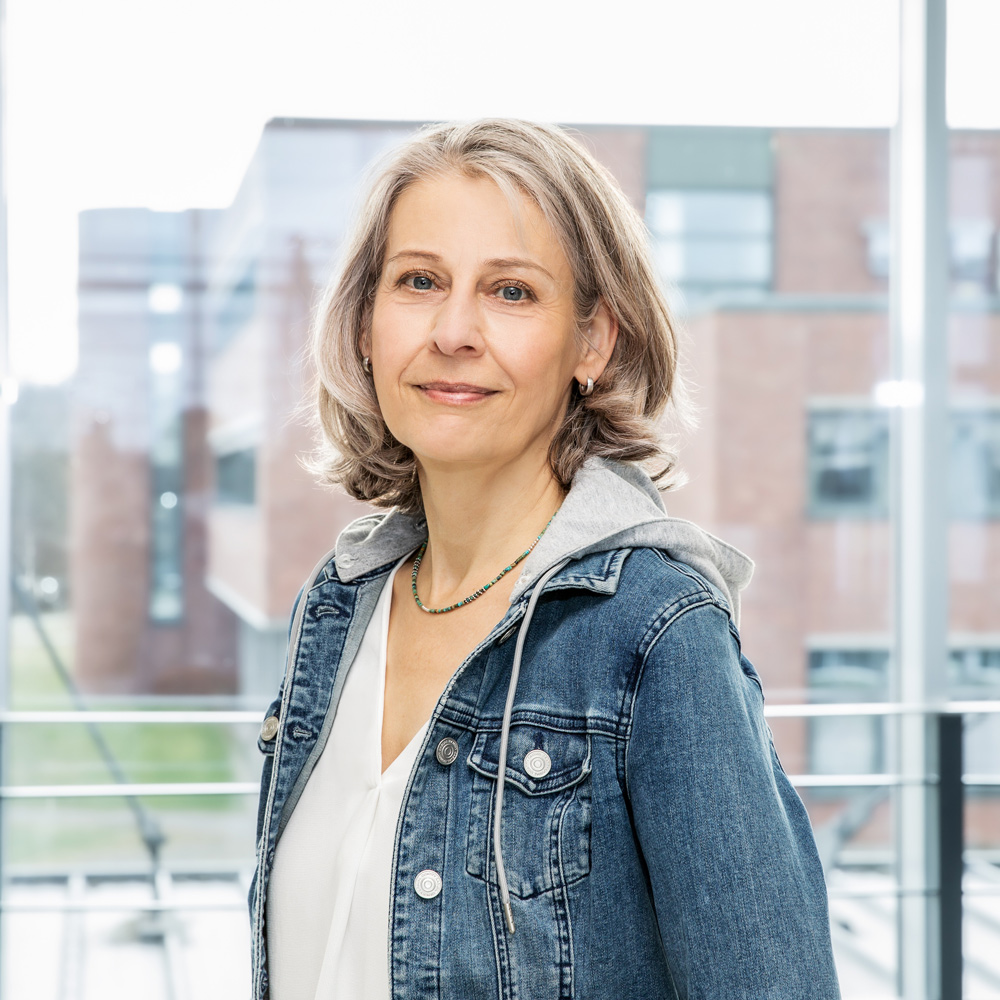
Nancy Margaret Reid is a University Professor of Statistical Sciences at the University of Toronto, holding the Canada Research Chair in Statistical Theory and Applications. She has served as Scientific Director of the Canadian Statistical Sciences Institute (2015–2019) and led the Department of Statistical Sciences as Chair (1997–2002). Her research focuses on theoretical statistics, particularly likelihood inference and foundational aspects of statistical methodology. Reid earned her PhD from Stanford University (1979) under Rupert G. Miller, with Brad Efron and Vernon Johns on her committee. Reid's accolades include Fellowships from the Royal Society, Royal Society of Canada, and National Academy of Sciences, as well as the Guy Medal in Gold (2022) and David R. Cox Award (2023). She has authored influential books like *Theory of the Design of Experiments* and contributed to courses on mathematical statistics and likelihood inference. Active in academic service, she teaches graduate-level courses and has advised numerous students and postdocs in theoretical and applied statistical research.
Mulki Al-Sharmani is a Professor at the University of Helsinki, affiliated with the Faculty of Arts and the Department of Cultures (specializing in Middle Eastern Studies). Her research focuses on Islamic feminism, Muslim family law, gender studies, and transnational migrant communities. She examines how religious texts and practices intersect with legal frameworks and social dynamics in contexts like Egypt, Finland, and the Somali diaspora. Her work includes analyzing Islamic legal reform, gender equality in marriage, and the lived experiences of Muslim women. Key publications explore Qur'anic hermeneutics, the role of feminist activism in legal change, and the wellbeing of transnational families. She has contributed to projects like 'Reclaiming Adl and Ihsan in Muslim Marriage' and co-edited volumes on Islamic ethics and family law reform. Research interests: Islamic feminist theory, Middle Eastern legal traditions, transnational family dynamics, and religious praxis. Recent articles highlight themes like Qur'anic ethics of marriage, legal pluralism in Finland, and the political dimensions of Egyptian family law reform. Active in international conferences, including presentations at SOAS University of London, American University in Cairo, and panels on Islamic law and gender at venues like MESA and EASR. Involved in interdisciplinary initiatives such as the Africa Research Forum and Musawah's global network for equality in Muslim family laws.
Snježana Babić serves as Associate Professor and Head of the Graduate Study Program Informatics - Teaching Major at the Faculty of Informatics in Pula , University of Pula. With a PhD obtained in 2016 and university affiliation since 2017, she teaches across undergraduate and graduate programs focusing on ICT fundamentals, web design, digital competencies, and informatics education methodology. Her educational background includes graduation in 1993 followed by doctoral studies culminating in 2016. Though specific institutions aren't detailed in the text, her career trajectory shows progression from foundational ICT teaching to specialized informatics education leadership. Babić's research centers on educational technology adoption with particular emphasis on programming pedagogy for young learners through the MEMA method. Her work investigates digital competencies across multiple educational contexts, from primary schools to higher education. Recent publications demonstrate rapid adaptation to emerging technologies, with 2025 studies examining ChatGPT integration in Croatian educational settings and cross-cultural applications of programming methods. Analysis of her 15 most recent publications reveals consistent focus on technology acceptance models applied to Croatian educators and students. The research trajectory shows evolution from foundational e-learning systems (2016-2020) to cutting-edge AI and robotics applications (2022-2025), maintaining strong methodological focus on teacher motivation , implementation barriers , and culturally-specific adoption factors . Her teaching portfolio demonstrates deep integration with research interests: Undergraduate: ICT Fundamentals, Web Design and Application Graduate: Digital Competencies in Education, Informatics Education Methodology, Practicum for IT Educators Cross-disciplinary: ICT in Nursing, Healthcare Informatics Babić actively contributes to institutional leadership as program head while maintaining robust research productivity. Her work bridges theoretical technology adoption frameworks with practical implementation challenges in Croatian educational contexts, particularly examining how emerging technologies like humanoid robots and AI assistants can be effectively integrated into teaching practices.
Prof. Dr. Ahmet Taşağıl is a prominent historian specializing in Turkic studies, Eurasian history, and pre-Islamic cultures. He holds the rank of Professor at Yeditepe University's Faculty of Arts and Sciences, History Department, since 2015, and previously served at Mimar Sinan Fine Arts University. His academic journey includes a PhD from Istanbul University (1989-1991) and extensive research on ancient Turkic empires like the Gokturks and Huns. Education: PhD in General Turkish History (Istanbul University), MSc in Medieval History (Istanbul University), BA in History (Istanbul University). Affiliations: Currently at Yeditepe University; previously at Mimar Sinan Fine Arts University and Kirgizistan-Türkiye Manas Üniversitesi. Research Interests : Focuses on early Turkic states (Gokturks, Huns, Uyghurs), cross-cultural relations between Turkic and Chinese empires, shamanism, and pre-Islamic Turkic societies. His work bridges archaeology, ethnohistory, and political analysis, with a particular emphasis on primary sources like Chinese records and Orkhon inscriptions. Publications : Over 50 books and articles, including seminal works like Kök Tengri’nin Çocukları , Avrasya'nın Sekiz Asrı Çengizoğulları , and İslamiyet Öncesi Türkler . His research often examines the socio-political structures of nomadic empires and their legacy in Eurasian history. Awards : Recipient of the Moğalistan Devlet Onur Madalyası, Muğla Sıtkı Koçman Tarih Ödülü, and numerous academic honors. His contributions to Turkic cultural heritage are widely recognized internationally. Grants & Projects : Led projects on Central Asian archaeology, cultural atlas of the Turkic world, and historical studies of Siberian tribes. Collaborated with institutions in Kazakhstan, Russia, and Turkey. Teaching : Offers courses on pre-Islamic Turkic history, Eurasian empires, and historical methodology in Turkish and English.
Karl Gustafsson is a Professor at Stockholm University within the Department of Economic History and International Relations. His work bridges security studies , collective memory , and digital research methods in international relations. Current Role: Professor of International Relations, Stockholm University Previous Positions: Post-Doc at Lund University, Researcher at Swedish Institute of International Affairs Visiting Appointments: University of Tokyo, Osaka University, Keio University, Academia Sinica, Nordic Institute of Asian Studies Research Focus: Karl specializes in memory politics , ontological security , and anxiety-driven international dynamics , particularly in Sino-Japanese relations and digital platforms . His studies explore how historical narratives and online memory construction influence state identity and policy. Awards & Grants: Recipient of the Wang Gungwu Prize (2014) and Stockholm University Association’s award (2011). Holds Swedish Research Council and Marianne & Marcus Wallenberg Foundation grants for projects on apologies in international politics and digital memory in East Asia . Publications: His work appears in journals such as International Studies Quarterly , European Journal of International Relations , and Memory Studies , addressing topics like narrative power in East Asia, anxiety’s role in policy change , and digital humanities applications in IR.
Takuya Ooura is an Assistant Professor at the Research Institute for Mathematical Sciences (RIMS) at Kyoto University, specializing in numerical analysis and mathematical software development. His work bridges theoretical mathematics with practical applications in scientific computing and software development. Dr. Ooura earned his educational credentials through a rigorous academic path: he graduated from Hokuriku High School in 1987; completed his undergraduate studies at Nagoya University's School of Science in 1992; earned his Master of Engineering from the Department of Applied Physics at the University of Tokyo in 1994; and completed his PhD (Engineering) from the same department in 1997. His academic journey continued with a Research Fellowship from the Japan Society for the Promotion of Science (1997) followed by a position as Research Associate at RIMS, Kyoto University (2000). Dr. Ooura's research focuses on numerical integration algorithms, particularly his groundbreaking double exponential formula for Fourier-type integrals, which has been incorporated into Mathematica's NIntegrate function. He has also developed a high-speed FFT library that's utilized in Google Chrome browser (visible in chrome://credits). His work on continuous Euler transformation for accelerating convergence of slowly decaying integrals represents significant innovation in numerical analysis. His research spans both theoretical development and practical implementation of mathematical algorithms with real-world applications. His publication record demonstrates consistent contributions to numerical analysis, with particular emphasis on quadrature methods, integral transforms, and high-precision computation. His work shows a clear progression from theoretical foundations to practical implementations, with several algorithms achieving widespread adoption in commercial and open-source software. Paper prize awarded by JSIAM (2000) for 'A continuous Euler transformation and its application to Fourier transforms of slowly decaying functions' Paper prize awarded by JSIAM (2001) for 'Improvement of the PI Calculation Algorithm and Implementation of Fast Multiple-Precision Computation' Paper prize awarded by JSIAM (2005) for 'An Improved Convergence Test for the Double Exponential Formula' Japan Society for Industrial and Applied Mathematics 4th Achievement Award (2014) for 'Pioneering and practical development of the double exponential numerical integration method' Dr. Ooura has developed several widely used mathematical software packages including the double exponential integral formula, Clenshaw-Curtis numerical integration rule, and a general-purpose FFT library. His FFT package is particularly notable for its speed and accuracy, with benchmark tests showing superior performance compared to other implementations. His software has been incorporated into major projects including Google Chrome and SETI@home, demonstrating the practical impact of his theoretical work. His future research directions include further development of numerical computation libraries and applying his methods to various computational problems.
Dr. Elaine T. Jurkowski serves as Professor in Social Work at Southern Illinois University's College of Health and Human Sciences, holding multiple leadership roles including Graduate Program Director (2021-present) and Program Director for Gerontology Programs (2020-present). She maintains cross-appointments as Adjunct Professor in the School of Medicine's Family Practice Residency Program and Professor in the Department of Health Education, demonstrating her interdisciplinary impact. B.S.W. (Industrial Social Work), University of Manitoba, Canada M.S.W. (Policy and Administration), University of Manitoba, Canada Ph.D., Public Health, University of Illinois at Chicago M.B.A., Southern Illinois University Carbondale (2022) Dr. Jurkowski's research program centers on health disparities, access to mental health services, aging, and disability issues, with particular focus on rural populations. Her work bridges public health, social work, and gerontology through innovative approaches to program evaluation, technology-enhanced teaching, and culture change in long-term care settings. She has developed expertise in international health planning and inter-professional collaboration across diverse cultural contexts. Her publication portfolio shows consistent thematic development across decades, with recent work focusing on medical tourism during the pandemic, rural-urban health disparities, and technology applications in gerontology education. These publications reflect her commitment to addressing healthcare access challenges for vulnerable populations through both scholarly inquiry and practical interventions. Great Cities Research Fellow in Health Provost Faculty Fellow (2018) Provost Assessment Fellow (2016) Student Hotspotting certification (2018-present) A.P.M. Assessment Academy certification (2016, 2017) Dr. Jurkowski has successfully secured over $1 million in research funding from agencies including Health Resources and Services Administration, The Hartford Foundation, and Administration on Aging. Her grant portfolio demonstrates sustained commitment to improving services for older adults and people with disabilities, particularly in rural settings. She has served as Graduate Program Director twice (2003-2014, 2021-present), mentoring numerous social work students through their academic and professional development. Her professional activities extend beyond campus through international consulting in West Africa, Hong Kong, India, China, Russia, and Egypt, and community engagement via the "Dare to Care" radio show and board service with Caring Counseling Ministries, Supporting People in Need, and UNA/USA Southern Illinois Chapter.
Jeff Huang is an Associate Professor and Associate Chair of Computer Science at Brown University. His research focuses on Human-Computer Interaction (HCI), with emphases on personalized systems using behavioral data, health informatics, and user interfaces. Huang holds a PhD from the University of Washington and degrees from the University of Illinois at Urbana-Champaign. His work is funded by NSF, NIH, and ARO, and he has received awards including the NSF CAREER Award and ARO Young Investigator Award. Education: PhD in Information Science, University of Washington (2013) MS in Computer Science, University of Washington (2013) BS and MS in Computer Science, University of Illinois at Urbana-Champaign (2007) Research Interests: His work spans health informatics (e.g., sleep tracking systems like Self-E and SleepCoacher), user interface design, and leveraging behavioral data for personalized systems. Notable projects include WebGazer (webcam eye tracking), filtered.ink (creative illustration tools), and Sochiatrist (mental health analytics). Teaching: He teaches courses on user interfaces, HCI, and research methods, including CSCI 0130/1300 (User Interfaces), CSCI 2300 (HCI Seminar), and CSCI 2000 (Research Methods). Awards: NSF CAREER Award Facebook Fellowship ARO Young Investigator Award Grants & Advising: Huang leads a research group advising over 50 students, many of whom have pursued academic and industry roles. His grants support projects in HCI, health tech, and collaborative systems.
Alexandra Livada is a Professor at the Department of Statistics within the School of Information Sciences and Technology at Athens University of Economics and Business (AUEB). She holds office at two locations: 12 Codringtonos Street, 2nd Floor and 76 Patision Street, Antoniadou Wing, 3rd Floor in Athens, Greece. Her contact information includes email livada@aueb.gr and phone number +30 210-8203521. Dr. Livada earned her BA and MA in Economics from Athens School of Economics and Business followed by a PhD in Economics from Essex University, UK in 1988. Her academic career has spanned several decades with extensive teaching experience at both undergraduate and postgraduate levels. Her research interests encompass a diverse range of quantitative fields: Quantitative economics and applied econometrics Time series analysis and forecasting techniques Income distribution and inequality measurement Applied financial econometrics Business cycles analysis Medical statistics Index numbers and official statistics Professor Livada's publication record demonstrates consistent scholarly productivity across multiple disciplines, with a noticeable trend toward interdisciplinary work connecting economics with healthcare and social policy. Her recent research shows increasing focus on income inequality across different geographic regions, economic sentiment during crises, and the intersection of medical conditions with statistical analysis. Her scholarly contributions have been recognized through numerous citations in leading journals and books. She has served as a referee for prestigious journals including the European Journal of Political Economy, Journal of Public Economics, and Journal of Insurance, Mathematics and Economics. Professional service highlights include: Member of multiple project teams Marie-Curie project supervisor External evaluator for the Greek State Scholarship Foundation (IKY) External evaluator for the Social Sciences and Humanities Research Council of Canada Co-author of the book "Index Numbers and Official Statistics" Professor Livada maintains an active research agenda with collaborations spanning economics, statistics, and medical fields, demonstrating the interdisciplinary nature of contemporary quantitative research.
Federico ZANETTIN is a Full Professor in the Department of Comparative Linguistic and Cultural Studies at Ca' Foscari University of Venice. His research focuses on translation studies with particular emphasis on corpus linguistics, graphic narrative translation, and journalistic translation. He maintains an active presence in the academic community through editorial work and research collaborations. Professor ZANETTIN's research interests span multiple areas of translation studies. He is particularly known for his work on corpus linguistics and its applications to translation analysis, with a focus on creating and using linguistic databases. His research on the translation of graphic narratives examines the verbal and visual aspects of translating comics and graphic novels across cultures. Additionally, he investigates journalistic translation , analyzing how information is translated and disseminated across media platforms. His scholarly work demonstrates consistent productivity, with numerous publications that explore the intersection of translation, culture, and media. Professor ZANETTIN's research shows particular strength in analyzing adaptation processes across linguistic, cultural, and modal boundaries, both synchronically and diachronically. Professor ZANETTIN serves on several important editorial boards: Co-editor of inTRAlinea Member of the international advisory board for The Translator Member of the international advisory board for Translang Member of the international advisory board for Entreculturas Member of the publications committee for Transletters. International Journal of Translators and Interpreters Member of the scientific committee for the Book series Interactio He is also frequently called upon as a referee for prestigious research projects, including those funded by The British Academy (UK), MIUR (Ministry of Education, University and Research), Italy, CSIC (Consejo Superior de Investigaciones Científicas), Spain, NRC (National Research Council), Canada, National and Kapodistrian University of Athens, Greece, and SNSF (Swiss National Science Foundation). Professor ZANETTIN teaches courses in English language and translation at both undergraduate and graduate levels, focusing on European, American, and postcolonial languages and literatures. His teaching reflects his research expertise in translation studies and cross-cultural communication.
Renate Sachse is a Researcher at the Chair of Structural Analysis, Technical University of Munich (TUM), where she has worked since May 2024. Previously, she held postdoctoral positions at Harvard University's Bertoldi Lab (2024) and TUM's Chair of Computational Mechanics (2021-2024), following academic staff roles at the University of Stuttgart (2015-2020). Her interdisciplinary work bridges civil engineering, biomechanics, and computational modeling. Her educational foundation includes a Master's in Civil Engineering from the University of Stuttgart (2014; thesis: 'Isogeometric contact analysis of thin-walled structures') and a Bachelor's from the same institution (2011; thesis: 'A Primary School Pavilion for Magagula in South Africa - Structural Analysis'). She also completed ERASMUS studies at ESTP Paris and internships at Foster + Partners and Werner Sobek AG. Dr. Sachse's research centers on biomechanics and biomimetics, with pioneering work on plant-inspired structures. She investigates snapping mechanisms in carnivorous plants (Venus flytrap, waterwheel plant) to develop bio-inspired adaptive systems, soft robotics, and metamaterials. Her expertise spans motion design for large-deformation structures, isogeometric analysis, and hygroscopic actuation in 4D-printed materials, emphasizing computational modeling of contact mechanics and structural stability. Analysis of her 15 most recent publications reveals a dominant focus on biomechanics (60% of articles), particularly plant movement mechanics translated into engineering solutions. Her work consistently integrates computational structural analysis with biological principles, showing increasing emphasis on motion design (25% of recent output) and additive manufacturing applications (15%). Key trends include translating snap-buckling phenomena into robotics and developing material design spaces for responsive structures. Her distinguished awards include the Bertha Benz Prize (2022), Klaus Tschira Boost Fund Fellowship (2022-2024), and University of Stuttgart Publication Award (2022). Additional recognition comprises GAMM Juniors Fellowship (2020-2022), AVK Innovation Award (2017), and Emil Mörsch Study Prize (2014). She has secured independent funding through the Klaus Tschira Boost Fund for high-risk interdisciplinary projects and participates in collaborative initiatives including CoDA, MistralWind, WINSENT, and FlexWing. While teaching advanced courses at TUM (Advanced Finite Element Methods, Theory of Plates), her mentorship focuses on computational mechanics and biomimetic design principles. Currently based at TUM's Chair of Structural Analysis under Prof. Bletzinger, she maintains active collaboration with Harvard University's Bertoldi Lab in developing next-generation adaptive structures.
Prof. Dr. Eva Spies is a Professor for the Study of Religion with Focus on Africa at the University of Bayreuth within the Faculty of Humanities & Social Sciences . She holds a PhD in Cultural Anthropology from the University of Mainz and leads the Research Section Moralities in the Africa Multiple Cluster of Excellence (EXC 2052). Key Roles : Principal Investigator, Bayreuth International Graduate School of African Studies (BIGSAS) Vice Dean of Research Co-founder, German Association for the Study of Religion's Africa working group Research Interests span religious plurality, development cooperation, and transformative practices. She coined the concept of religious engineering to analyze how religious resources shape social/political worlds. Regional expertise in Niger/West Africa and Madagascar/Indian Ocean , with focus on: South-South mission Religion and pandemic response Intercultural hermeneutics Epistemological conflicts Material culture in development Projects : Africa Multiple Cluster of Excellence (2025): "Religious engineering. The making of moralities, development and religion in Niger" Humboldt Research Hub (2021): "Fighting pandemics with religion?" (with Moi University and University of Zimbabwe) Education : PhD in Cultural Anthropology, University of Mainz
Martin T. Wells is the Charles A. Alexander Professor of Statistical Sciences at Cornell University, with joint appointments in the Department of Statistical Science, Department of Biological Statistics and Computational Biology, Department of Social Statistics, and as Professor of Clinical Epidemiology and Health Services Research at Weill Medical School. He serves as Editor-in-Chief of the ASA-SIAM Book Series and Co-Editor of the Journal of Empirical Legal Studies. Cornell University, Ithaca, NY Weill Cornell Medical College Research Interests span applied and theoretical statistics, Bayesian methods, biostatistics, clinical epidemiology, and computational biology. His work bridges disciplines like finance, legal studies, and health services research. Article Trends highlight advancements in Bayesian modeling, quantum cognition machine learning, tensor analysis, and misclassification correction, with applications in genomics, finance, and public health. Fellow of the American Statistical Association Fellow of the Royal Statistical Society Contributions include developing statistical software (e.g., rTensor), methodological innovations in clinical trials, and empirical legal studies on civil rights and the death penalty.
Melissa Coyle is a Senior Lecturer at the School of Sport, Exercise and Rehabilitation, Marjon University. She specializes in sport and exercise psychology, focusing on applications in sport science, coaching, physical education, outdoor education, and health and well-being. Her qualifications include HCPC registration as a sport and exercise psychologist, BASES chartered scientist, and BASES-accredited sport scientist (Psychology), alongside a PGCert, MSc, and BSc. Her research explores psychological factors in high-stakes environments, including military training, cancer patient exercise programs, and aging populations. Notable studies include a qualitative evaluation of an 8-week exercise referral program for cancer patients and an investigation into psychological factors in Royal Artillery Army Commando training. She has also examined motivations and barriers to indoor bowls participation among over-65s and mental health transitions in university students. Dr. Coyle has been awarded grants for studies like 'Psychological factors in Army Commando training' and 'Exercise adherence for cancer recovery.' Her publications span journals like Psychology of Sport and Exercise and conferences such as the Association of Applied Sport Psychology. She actively contributes to professional bodies like HCPC and BASES. Her teaching emphasizes practical applications of psychology in sports and health, complemented by research-driven insights. Beyond academia, she is an avid golfer and hill walker.
Linda Morrice is a Professor of Education and Migration at the School of Education and Social Work, University of Sussex. She specializes in the intersection of refugee/migration studies with education, focusing on informal learning, social integration, and exclusion. Her research spans both the Global North and South, emphasizing refugee access to higher education and policy implications. Current role: Co-Director, Centre for International Education (2021-2024) Education: BA(Hons) in Social Anthropology (University of Sussex), PgDip (Birkbeck, 2004), MA (University of Sussex, 2005), Doctorate in Education (University of Sussex, 2010) Her scientific work explores refugee education through participatory methodologies, creative/narrative methods, and life history approaches. Recent publications analyze racialized borders, digital technology’s role in refugee well-being, and sanctuary city frameworks. Supervision interests include refugee family dynamics, informal pedagogies, and gendered policy impacts. Key grants include UKRI funding for digital well-being of unaccompanied refugee children (2024-2027), ESRC projects on longitudinal qualitative studies (2023-2024), and AHRC research on refugee cultural values (2013-2014). She has led evaluations for the Home Office and Queen Rania Foundation. Professional roles: Co-Chair, Sussex University of Sanctuary group (2019-2024) Advisory member for Home Office integration frameworks and vulnerable persons resettlement schemes Labs/teams: Founding member of University of Sussex Sanctuary Group and Brighton & Hove Sanctuary on Sea. Her research emphasizes participatory practices with refugee communities and longitudinal tracking of social networks.