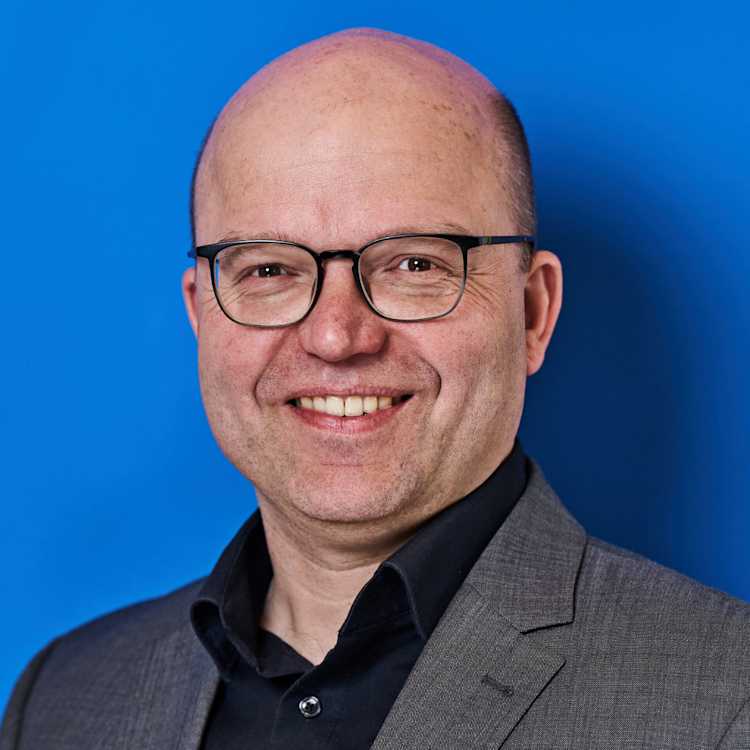
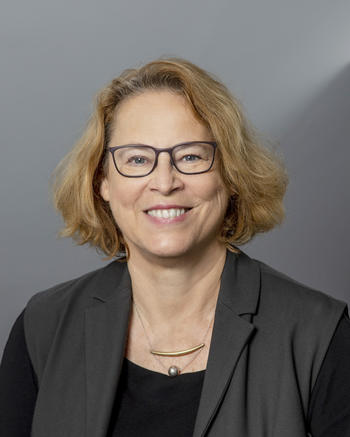
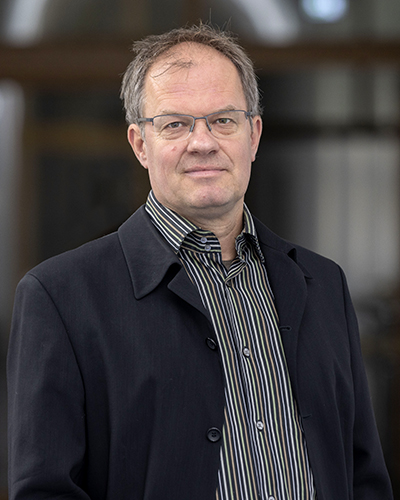
Prof. Dr. Alexander Stroh-Steckelberg is Professor of Political Science with a focus on African Politics & Development Policy at the University of Bayreuth since 2022. He serves as Deputy Head of the Bayreuth International Graduate School of African Studies (BIGSAS) until 2025 and has held prior roles as Junior Professor and Senior Fellow at BIGSAS (2015–2021). His academic career includes research associate positions at the GIGA German Institute of Global and Area Studies (2006–2015) and teaching roles at the Universities of Abomey-Calavi, Heidelberg, and Lüneburg. Stroh-Steckelberg’s research spans comparative democracy studies , judicial politics , electoral systems , political party dynamics , and development policy in Africa, with regional expertise in Francophone West Africa and Rwanda . His work emphasizes institutional diffusion, informal networks in courts, and the interplay between formal and informal governance structures. Recent publications reveal a focus on judicial appointment policies , electoral manipulation , and local governance challenges across Africa. He contributes to methodological advancements in comparative area studies and network analysis , particularly in non-Western democracies. Stroh-Steckelberg is actively involved in academic communities including the American Political Science Association , German Political Science Association , and Association for African Studies in Germany .
Rahul Mukherji is a Professor at the Department of Political Science, South Asia Institute, Heidelberg University. He has held visiting positions at institutions including the University of Goa, Tata Institute of Social Sciences, and Fudan University. His research spans Indian politics, political economy, international relations, and climate policy. Education: PhD in Political Science, Columbia University (1999) M.Phil and MA in South Asian Studies, Jawaharlal Nehru University (1992, 1990) Bachelor in Economics (Honours), Delhi University (1988) Mukherji examines democratic backsliding , climate governance , and political economy of reforms in India. His recent work explores the intersection of COVID-19 and authoritarian trends , alongside state capacity in welfare delivery. Scientific Awards NUS Award for Research Excellence (2014, 2012) President’s Fellow, Columbia University (1997-1999) Ambedkar Overseas Fellow in International Relations (1993-1996) Mukherji serves on the editorial boards of journals like India Review , Pacific Affairs , and Governance . He is series editor for Oxford Institutions and Development in South Asia and editor of Indian Politics and Policy .
Zaur Gasimov is a Lecturer at Johannes Gutenberg University Mainz and currently serves as DAAD Departmental Coordinator and Co-Head at the Faculty of Economics and Administrative Sciences, Turkish-German University. He holds a habilitation in Modern History and Eastern European History, with a focus on Eastern European History, political science, and sociology. Education : B.A. in International Relations from Baku State University; M.A. from Catholic University of Eichstätt-Ingolstadt; Doctorate in Eastern European history Research : Concentrates on Russian-Turkish relations, nationalism in Eastern Europe, cultural transfer processes, and historical narratives. His habilitation thesis analyzed Polish-Turkish anti-Soviet alliances. Publications : Authored monographs on Prometheism, Azerbaijani historiography, and Russification policies. Collaborated on comparative studies of cultural transfer and Ottoman-Russian entanglements.
Anna-Lena Hönig is a postdoctoral researcher at the Cluster of Excellence 'The Politics of Inequality' at the University of Konstanz. Her work focuses on comparative authoritarian politics, democratization, and the dynamics of resistance and repression, with an emphasis on cooperation between non-state actors such as NGOs, social movements, and terrorist organizations. Co-founder of the annual Workshop on Conflict Dynamics Board member of the German Association for Peace and Conflict Studies (AFK) Her methodological focus includes social network analysis, survey experiments, and causal inference. She previously completed her PhD at the University of Mannheim and was affiliated with the Graduate School of Economic and Social Sciences (GESS) and the Peace Research Institute Oslo (PRIO) through its Research School on Peace and Conflict.
Dr. Oliver Raaz is a Research Associate at the Institute for Media and Communication Studies , part of the Department of Political and Social Sciences at Freie Universität Berlin. His work focuses on organizational communication, public relations, and the intersection of media theory with strategic discourse. University: Freie Universität Berlin School: Department of Political and Social Sciences Department: Institute for Media and Communication Studies Email: oliver.raaz@fu-berlin.de His research interests span organizational communication , public relations , transparency theory , critical post-structuralism , non-standardized research methods , and digital media in chronic disease management . He actively contributes to academic discourse through publications in peer-reviewed journals and edited volumes. Recent publications highlight trends in PR historiography , organizational transparency , digital media ethics , polyphony theory , and complexity frameworks . His work often integrates critical theory with empirical analysis.
Prof. Dr. Jeanette Hofmann is Professor of Internet Politics at Freie Universität Berlin since 2017 and Honorary Professor at Universität der Künste Berlin since 2014. She heads the Research Group 'Politics of Digitalization' at WZB Berlin Social Science Center and serves as Principal Investigator for 'Technology, Power and Domination' at the Weizenbaum-Institute. Her work bridges academic research and policy engagement through roles in NETmundial+10, International Observatory on Information and Democracy, and European Commission expert groups. Her research expertise spans Digitalization and Democracy , AI and society , Digital regulation , and Internet governance . Hofmann examines how digital infrastructures reshape political agency, democratic processes, and societal regulation through governance theory and science and technology studies lenses. Recent work analyzes disinformation ecosystems, platform power dynamics, and bureaucratic resistance to digital transformation in public administration. Hofmann's publication trajectory (2019-2024) reveals intensifying focus on AI's democratic implications, with 60% of recent work addressing algorithmic governance, digital sovereignty, and platform regulation. Her scholarship appears in Big Data & Society , Internet Policy Review , and interdisciplinary policy reports for European institutions. Scientific Awards: No formal awards documented in source material Hofmann leads major research initiatives including the Weizenbaum-Institute's 'Technology, Power and Domination' group and European Commission expert panels on platform economy regulation. Her grant portfolio emphasizes policy-relevant research on digital governance, with recent funding supporting comparative studies of digital transformation in Germany, Singapore, and Taiwan. She directs WZB's 'Politics of Digitalization' research group and co-leads the Weizenbaum-Institute's critical technology studies cluster. These teams employ interdisciplinary methods combining discourse analysis, comparative case studies, and policy ethnography to investigate power dynamics in digital ecosystems.
Erica Frantz is an Associate Professor of Political Science at Michigan State University and a Distinguished Visiting Professor at the Institute of Political Science, Tübingen University. She earned her PhD in Political Science from UCLA in 2008. Her research focuses on authoritarian politics, including democratization, conflict, development, and the security implications of autocratic rule. She previously served as an Assistant Professor at Bridgewater State University (2011–2015). Research interests include comparative politics, authoritarian regimes, and policy analysis. Her work bridges theoretical frameworks with real-world applications, addressing topics such as regime stability, political violence, and governance challenges in non-democratic contexts. In 2020, she received the MSU College of Social Science Outstanding Teacher Award. She is affiliated with the Schlumberger Team at Tübingen University and contributes to the CMEPS Joint Master's Program. Her publications include influential books like Authoritarianism: What Everyone Needs to Know (Oxford UP, 2018).
GIGA German Institute of Global and Area StudiesGermany
Thomas Richter is a leading academic and Professor at the German Institute for Global and Area Studies (GIGA) , where he serves as Lead Research Fellow and Head of the Research Programme "Accountability and Participation" . His work focuses on the institutional and material determinants of authoritarian rule , executive personalization , and global political economy , particularly in the Middle East and North Africa region. Education: PhD in Political Science (summa cum laude) at the University of Bremen (2008); studies at Eberhard-Karls University Tuebingen and University of Michigan, Ann Arbor. His research explores the interplay of rentier statehood and economic reforms , civil society under authoritarian regimes , and shrinking civic spaces . Recent projects include the Merian Center for Advanced Studies in the Maghreb (MECAM) and the Monitoring System and Transfer Platform Radicalisation (MOTRA) , funded by BMBF and DFG. Richter has published extensively on topics such as anti-Semitism , executive power dynamics , and public opinion on military service in Germany. He has received notable awards, including the Lijphart/Przeworski/Verba Data Set Award (2017) and the Gero Erdmann-Preis für vergleichende Area-Forschung (2022) . His collaborative work spans institutions like the WZB Berlin and Université de Tunis . Richter is also a co-editor of the Perspectives on the Maghreb series with Amsterdam University Press.
Prof. Dr. Aurel Croissant is a full Professor of Political Science at the Institute of Political Science, Ruprecht-Karls-University Heidelberg. His academic career spans institutions like the Naval Postgraduate School (Monterey, CA) and fellowships from prestigious bodies including the East West Center Honolulu and the Korea Foundation. Editorial Leadership: Editor-in-Chief of Democratization , and serves on editorial boards of journals like International Studies Review and Asian Politics & Policy . Research Focus: Comparative analysis of democracies and autocracies, civil-military relations, autocratization, democratic resilience, terrorism, and political violence in East/Southeast Asia and the Korean Peninsula. Advisory Roles: Member of academic advisory boards for institutions including the Sustainable Governance Indicators (SGI) and the Bertelsmann Transformation Index (BTI). His recent publications examine democratic backsliding, civil-military dynamics in autocracies, and pandemic governance. Awards include fellowships from the National Endowment for Democracy and the Taiwan Foundation for Democracy. He has advised numerous PhD students and collaborates extensively with international scholars.
Prof. Dr. Rachid Ouaissa serves as University Professor and Head of the Department of Middle Eastern Politics at the Center for Near and Middle Eastern Studies (CNMS), Philipps University of Marburg since March 2009. He concurrently holds affiliations with the Center for Interdisciplinary Religious Studies and Center for Conflict Research at the same institution, and maintains active roles in Berlin-based research networks including EUME and the Wissenschaftskolleg zu Berlin. His academic formation includes a PhD from the University of Leipzig (2004) supervised by Prof. Hartmut Elsenhans, preceded by undergraduate studies at Martin-Luther-Universität Halle-Wittenberg (1994-1999) where he received the DAAD-Preis in 1997. His scholarly trajectory includes a Visiting Scholarship at Dalhousie University (2008) and prior research positions at the University of Leipzig. Ouaissa's research program centers on Middle Eastern and North African political dynamics with four interconnected pillars: cultural-identitarian political movements (comparing BJP in India and Algerian parties), moderate Islamist parties as potential EU partners, state-class behavior during resource scarcity (Iraq case study), and fundamentalist movement development (FIS in Algeria vs. Mahdia in Sudan). His conceptual innovation emphasizes blocked middle classes mobilizing religious identity to challenge state power, while his recent work develops 're-configuration' frameworks for understanding post-Arab Spring transformations. His publication trajectory from 1999-2021 reveals evolving scholarly priorities: early work focused on Algerian state formation and political Islam, shifting toward comparative cultural-identitarian movements (2007-2009), then moderate Islamist parties' foreign policy (2009-2012), with contemporary research addressing Hirak protests and theoretical re-configuration models. The corpus demonstrates consistent engagement with Algeria while expanding to regional comparative frameworks, particularly through co-edited volumes on Maghreb entanglements and MENA transformation processes. His scientific recognition includes: DAAD-Preis der Martin-Luther-Universität (1997) Friedrich-Ebert-Stiftung PhD Fellowship (2000-2002) Friedrich-Ebert-Stiftung Scholarship (1998-1999) Professor Ouaissa has secured major research funding including two German Research Foundation (DFG) projects: 'New Cultural-Identitarian Political Movements' (2007-2009) and 'Moderate Islamist Parties as EU Partners' (2009-2012). He actively mentors emerging scholars through the Friedrich-Ebert-Stiftung's doctoral programs and serves on its selection committees, while his policy engagement manifests through frequent media contributions analyzing Algerian protests and regional dynamics for outlets including Le Monde, El Watan, and Deutsche Welle. He leads the Department of Middle Eastern Politics at CNMS while contributing to the university's interdisciplinary research infrastructure through the Center for Interdisciplinary Religious Studies and Center for Conflict Research. His international scholarly integration is evidenced by co-editing the book series 'Politik und Gesellschaft des Nahen Ostens' and 'Studien zur Geschichte und Zeitgeschichte Westasiens und Nordafrikas', alongside editorial leadership of the journal META (Middle East Topics and Arguments).
Prof. Dr. Katharina Bluhm is Professor of Sociology with a focus on Eastern Europe at the Institute for Eastern European Studies (Osteuropa-Institut) at Freie Universität Berlin. She has served as Head of the Department of Sociology since 2011 and as Head of the Institute for East European Studies since 2014. Her academic career spans multiple prestigious institutions including Humboldt University, Friedrich Schiller University in Jena, Harvard University, and the University of Osnabrück. Her educational background includes philosophy studies at Humboldt University and Lomonosov University in Moscow, followed by a shift to sociology after the fall of the Berlin Wall. She completed her doctoral degree at Humboldt-Universität zu Berlin in 1987 and her habilitation at Friedrich-Schiller-Universität Jena in 2004. Prof. Bluhm's research focuses on the illiberal-conservative turn in Russia and Eastern Central Europe, economic and social policy, and the role of elites. Her work combines theoretical frameworks from economic sociology, political sociology, and the sociology of knowledge to analyze post-Soviet transformations. She has made significant contributions to understanding the new Russian conservatism, varieties of capitalism in Eastern Europe, welfare state regimes, and business elites. Her recent research has examined Russia's conservative counter-movement, the relationship between business, state, and social welfare provision in Russian regions, and the development of illiberal conservatism in Eastern Europe. Her 2023 monograph "Russia and the West: Ideology, Economics, and Politics since the End of the Soviet Union" represents a major scholarly contribution that analyzes how Russian neoconservatives construct societal alternatives to the "West" through both civilizational demarcation and positioning Russia as the "other Europe" with a mission for Europe itself. Member of the foundation board of the Leibniz Institute for East and Southeast European Studies (IOS), Regensburg (since 2017) Member of the academic advisory board of the Center for East European and International Studies (ZOiS), Berlin (since 2017) Member of the advisory board of the Institute for European Politics (IEP) Berlin (since 2016) Member of the international advisory council of the Strategic Academic Unit for Social Development of the National Research University Higher School of Economics (HSE), Moscow (since 2016) Editor of the online journal 'Employment and economy in Central and Eastern Europe' (emecon) (since 2011) Prof. Bluhm actively leads the Cluster of Excellence "Contestations of the Liberal Script" (SCRIPTS) as Principal Investigator for Research Unit "Orders." She has supervised numerous research projects including "GOVRUS - Variationen von Governance in hybriden Regimen" and "Ökonomische Eliten im erweiterten Europa." Her research colloquia regularly bring together international scholars to discuss pressing issues in Eastern European studies, with recent events addressing Ukraine's resilience, Russian conservatism, and transformations in post-Soviet societies. She remains deeply engaged in public intellectual discourse through events like the "Futuring the Liberal Script" discussion series.
GIGA German Institute of Global and Area StudiesGermany
Prof. Aurel Croissant is a Professor of Political Science at Heidelberg University's Institute of Political Science. His research focuses on comparative democracy, authoritarianism, civil-military relations, and political systems in Asia-Pacific. He holds editorial roles at journals like Democratization and has authored/co-authored over 300 publications. Key works include Democratic Regressions in Asia and Routes to Reform: Civil-Military Relations and Democracy in the Third Wave . He has been a Fellow at institutions such as the East West Center and the National Endowment for Democracy. His team includes doctoral candidates like Nikitas Scheeder. He advises on democratic resilience, autocratization, and regional governance, contributing to projects like the Bertelsmann Transformation Index and Sustainable Governance Indicators. Education: MA (1996), PhD (2001) from Johannes Gutenberg University Mainz; postdoctoral work at Heidelberg University. Tenure-track Assistant Professor (2004) at the Naval Postgraduate School, Monterey, CA, before joining Heidelberg in 2006. Research Interests: Civil-military relations, democratization, authoritarianism, Asian politics, conflict studies. Notable Publications (2020–2025): Explores pandemic governance ( Democracy, State Capacity and the Governance of COVID-19 in Asia-Oceania ), democratic resilience, and regional militarization trends. Recent works analyze South Korea's democratic resilience, autocratization patterns in Asia, and military roles in authoritarian regimes. Awards & Fellowships: Recognized as a Fellow by the East West Center, Korea Foundation, and others. Editorships of journals and book series, including Democratization Special Issues Series .
GIGA German Institute of Global and Area StudiesGermany
Dr. Idriss Jebari is an Associate in the Department of Near and Middle Eastern Studies at Trinity College Dublin. Previously held positions include Visiting Fellow at the GIGA Institute for Middle East Studies (2023–2024), Bowdoin College (2017–2019), and the American University of Beirut (2016–2017). His research focuses on Maghreb intellectual history, decolonial thought, and political sociology. Research interests include Arab political thought, postcolonial intellectual trajectories, and transitional justice in North Africa. Key themes: nation-building processes, cultural heritage disputes, and the role of historians in decolonization. Active in analyzing Algerian-Moroccan relations and regional reconciliation models. Notable publications explore the Tunisian New Left, Abdallah Laroui’s historiography, and Franco-German reconciliation frameworks for North Africa. His work bridges historical analysis with contemporary political dynamics, emphasizing marginalized voices in Maghreb historiography.
Dr. Irene Weipert-Fenner is a Senior Researcher and Project Director at the Peace Research Institute Frankfurt (PRIF), serving as a member of its Executive Board since 2024 and coordinating the Research Group on Regime Competition since 2023. She holds a PhD from Goethe University Frankfurt (2013) and previously served as a Visiting Professor for Middle Eastern Politics at the University of Marburg (2019). Her research focuses on authoritarian regimes, political transformation, social movements, and socioeconomic conflicts in North Africa, with a particular emphasis on Egypt and Tunisia. Key projects include leading studies on IMF reforms, socioeconomic protests, and trust dynamics in social movements. She has authored or co-authored over 30 peer-reviewed articles and books, including The Autocratic Parliament (2020) and edited volumes on clientelism and protests. Awards include the DAVO Dissertation Prize (2014). Her work bridges comparative politics, conflict studies, and regional expertise, addressing themes like democratization, protest dynamics, and geopolitical implications of regional conflicts. Affiliations: PRIF, University of Marburg (visiting role) Education: PhD in Political Science, Goethe University Frankfurt (2013) Research Groups: Regime Competition, Intra-state Conflict Key Projects: ConTrust initiative (2021–2025), Tunisian budget politics analysis Her research publications emphasize interdisciplinary approaches to understanding political economy, trust in social movements, and the interplay between socioeconomic grievances and authoritarian resilience. Recent work explores green hydrogen economies in North Africa and the erosion of democratic trust in Tunisia.
Timm Beichelt is a Professor of European Studies at the European University Viadrina, where he serves as Dean of the Faculty of Social and Cultural Sciences and Head of the Master's degree programme in European Studies (MES). His research bridges political science and social/cultural sciences, focusing on democracy and autocracy in Central/Eastern Europe, EU foreign policy, and the intersection of football and politics. Doctorate in Political Science (University of Heidelberg, 2000, summa cum laude) Junior Professor at European University Viadrina (2003) Head of MES since 2003 Director of Viadrina Institute for European Studies (2017-2022) Head of Jean Monnet Policy Network 'ValEUs' (2024) His research explores democratic consolidation in post-socialist Europe, political emotions , and the politics of football as a transnational organizational field. Recent work analyzes EU foreign policy contradictions, autocratic practices in football, and emotional dynamics in governance. Articles reveal a focus on institutional hybridity, transnational networks, and late-modern societal contradictions. Recipient of the German Political Science Association (DVPW) Dissertation Prize (2000) Board member of Brandenburgische Landeszentrale für Politische Bildung (2019) Advisory Board member of Genshagen Foundation (2014) Co-spokesperson for DGO specialist group 'Political and Social Science' (2018) Beichelt leads the EU-funded 'ValEUs' research network and has contributed extensively to debates on democracy promotion, Europeanization, and the social dimension of political emotions. His career spans teaching, research, and leadership roles, emphasizing interdisciplinary approaches to European integration and political systems.