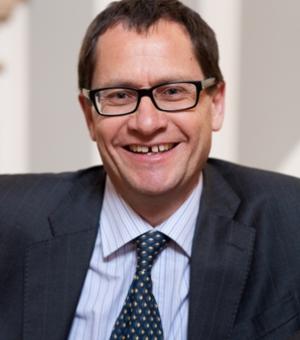
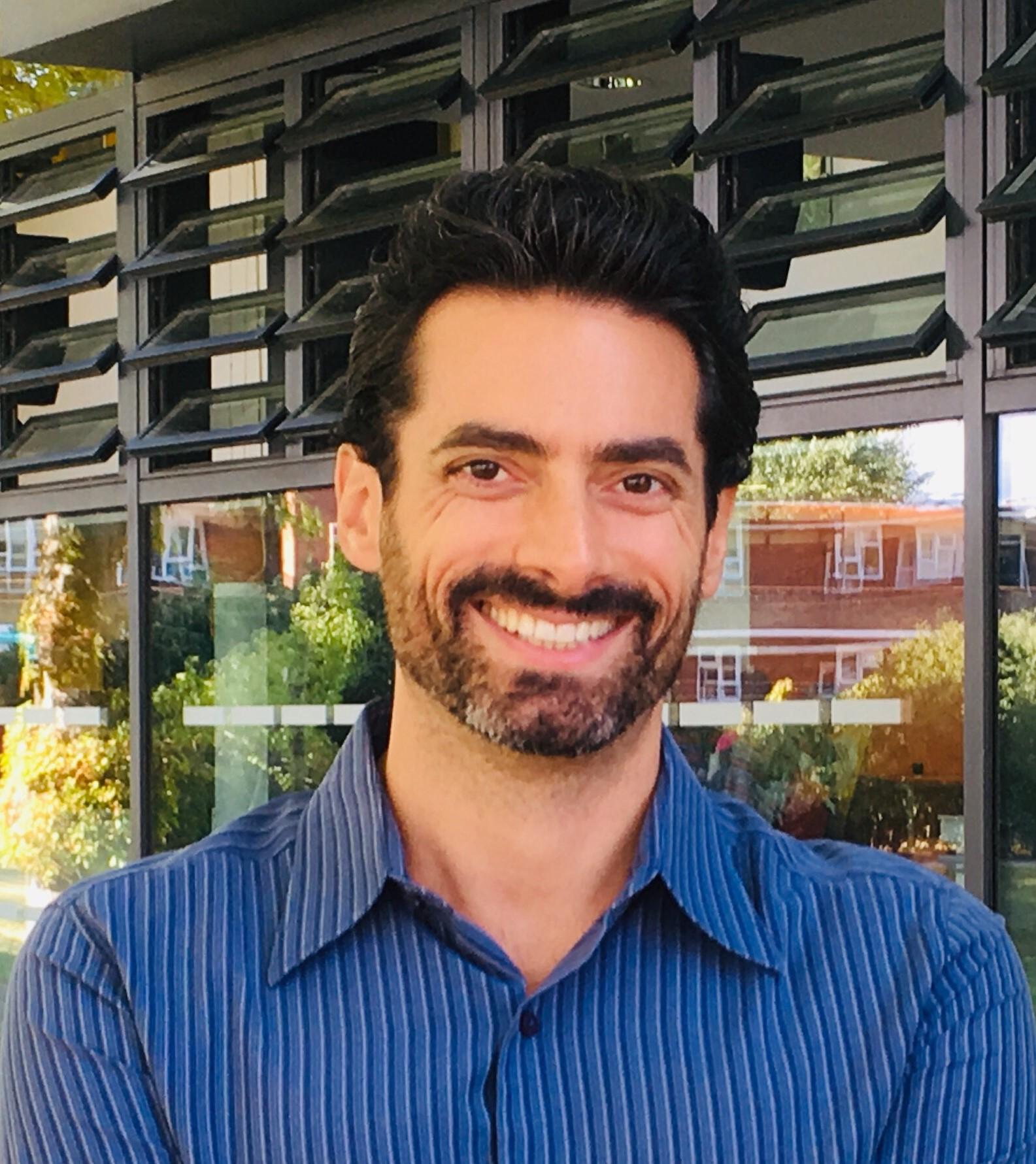
Prof. Roger Goodman is the Nissan Professor of Modern Japanese Studies at the University of Oxford and Warden of St. Antony's College. He holds leadership roles in the Oxford School of Global and Area Studies (OSGA) and the Social Sciences Division. His career spans over 40 years, including a doctorate in social anthropology (1982), a Junior Research Fellowship (1985–88), and professorships at the University of Essex and Oxford. His research focuses on Japanese education, social policy, and comparative studies of East Asia and the UK. Education: PhD in Social Anthropology (St Antony’s College, 1982) Affiliations: Nissan Institute of Japanese Studies, OSGA, St Antony’s College Research interests include Japanese education systems, youth culture, social welfare policies, and cross-cultural comparisons. His work bridges anthropology and sociology, addressing themes like demographic shifts, university governance, and policy reform. Notable publications include Family-Run Universities in Japan (2020) and Children of the Japanese State (2000). Awards: Fellow of the Academy of Social Sciences (2013), Academy President (2020–) He has supervised ~40 doctoral theses, covering topics from Shinto shrines to education reform. His teaching emphasizes anthropological perspectives on Japanese society, including kinship systems, gender, and popular culture.
Christine R. Harris, Ph.D., is a Professor in the Department of Psychology at the University of California, San Diego. She holds roles as Coeditor-In-Chief of Emotion Review and Chair of the Revelle faculty. Her research focuses on the study of emotion, particularly social emotions like jealousy, envy, embarrassment, and shame, and their impacts on cognition, behavior, and interpersonal relationships. She has also explored evolutionary origins of emotions, methodology in psychological research, and the role of emotion in healthcare decision-making. Education: Ph.D. in Psychology, UC San Diego (1998) M.A. in Psychology, UC San Diego (1995) B.A. in Psychology, UC San Diego (1987, Cum Laude) Research Interests: Dr. Harris investigates how emotions shape real-life decisions and interactions, including jealousy's role in homicide, envy's influence on political orientation, and embarrassment's effects on healthcare avoidance. Her work bridges evolutionary theory, social psychology, and cognitive science, often emphasizing replicability and methodological rigor. She has published widely in top journals like Psychological Science and Emotion . Awards: EXCEL Gold Award (2005) for her article The Evolution of Jealousy . Grants & Funding: National Institute of Mental Health R01 grants on jealousy and attention studies. National Science Foundation funding for jealousy research. Labs & Service: She leads the Social Brown Bag seminar series and contributes to editorial boards of major journals. Her teaching includes courses on emotion psychology and interpersonal relationships.
Jan Emblemsvåg is a Professor at NTNU’s Department of Ocean Space Operations and Civil Engineering in Ålesund, Norway. He has held senior industry roles including Shipyard Director at Vard, SVP Ship Design & Systems at Rolls-Royce Marine, and Managing Director at Midsund Bruk. His academic positions span BI Norwegian Business School, Ålesund University College, and NTNU since 2006. Emblemsvåg’s expertise bridges engineering and management, focusing on sustainable development through rigorous analytical frameworks. Education: PhD from Georgia Institute of Technology (1999), MSc (1995), and Civil Engineering degree from Norwegian Institute of Technology (1994). R&D focuses on six core areas: 1) Product/process development with Lean methodologies, 2) Life-Cycle Costing/Analyses (integrating cost, environmental, and social dimensions), 3) Risk management and uncertainty analysis using Monte Carlo methods, 4) Operations/General management under Lean principles, 5) Project management with Lean integration, and 6) Renewable energy (especially nuclear power’s role in maritime and industrial sectors). Publications emphasize energy policy critiques, nuclear propulsion feasibility, and sustainable shipping. Recent work highlights nuclear energy’s potential as a cost-effective, low-emission solution for maritime transport and industrial needs. Active in policy debates advocating evidence-based energy strategies. Labs/Teams: Leads NTNU’s research initiatives on nuclear propulsion for merchant ships (NuProShip project) and collaborates internationally on maritime safety and evacuation modeling.
Prof. Dr. Ulrich Mücke is Professor of Latin American and Iberian Peninsula History at the University of Hamburg , Faculty of Humanities, Department of Global History. His research focuses on Latin America's political culture, self-testimony, and colonial/postcolonial memory. Education: Studied history, political science, and philosophy at University of Hamburg (1988-1994) Doctorate at University of Hamburg (1997) Research interests span Latin America's political systems, autobiographical writing in colonial contexts, and transnational migration. His 2025 work examines Peruvian memory politics post-civil conflict, while 2024 collaborative research investigates Cuban contract workers in GDR. Earlier articles analyze voting patterns, conservative thought, and indigenous representation. Key trends in his 15 most recent publications include: 19th-century political culture in Peru, colonial self-representation, conservative ideologies in Iberian Atlantic, German-Peruvian migration, and critical analysis of historical textbooks. Notable keywords: Political History , Autobiography , Migration Studies , Colonialism . Awards: Kurt-Hartwig-Siemers-Prize (1997) from Hamburg Scientific Foundation Current work includes editorial leadership of the Yearbook for Latin American History and a 2025 lecture series on international cooperation.
Prof. Dr. Julia Bernstein is a Professor of Discrimination and Inclusion in Immigration Society at Frankfurt University of Applied Sciences (since 2015), affiliated with the Department of Social Work and Health. Her academic background includes a B.A. in Sociology, Cultural Anthropology, and Art History (1992–1995), an M.A. in Sociology and Cultural Anthropology (1996–2000) from the University of Haifa, Israel, and a Ph.D. in Cultural Anthropology from Goethe University Frankfurt (2009). She leads the research area Social Legacy of National Socialism and coordinates international projects on antisemitism prevention. Bernstein's research examines discrimination through interdisciplinary lenses, focusing on: Antisemitism in institutional and everyday contexts Migration, identity, and transnationalism among Russian-speaking Jews Stereotyping mechanisms and racialization processes Holocaust memory and its societal repercussions Food sociology as a marker of cultural identity Her recent publications (2020–2022) demonstrate a strong focus on antisemitism in educational settings, analyzing victim perspectives, teacher training gaps, and pedagogical counter-strategies. She frequently addresses media representations of Jewish communities and the normalization of Israel-related antisemitism. Honors include the Barbara-und-Piergiuseppe-Scardigli-Preis for her dissertation (2011) and nomination for the WISAG-Preis (2010). Bernstein directs federally funded projects like Mach mal keine Judenaktion! (2017–2019) and collaborates with institutions including the German Federal Anti-Discrimination Agency, Anne Frank Educational Center, and Tel Aviv University's Kantor Center. At Frankfurt UAS, she teaches courses on antisemitism, social inequality, and Holocaust legacy in Bachelor of Social Work and Master of Diversity and Inclusion programs. She mentors emerging scholars through the Ernst Ludwig Ehrlich Studienwerk and co-leads the Frankfurt meets Haifa academic exchange initiative.
Ida Zilio-Grandi is an Associate Professor in the Department of Asian and North African Studies at Ca' Foscari University of Venice, where she specializes in Arabic Language and Literature (SSD L/OR-12). She also holds teaching responsibilities in Islamic Thought and Theology (SSD L/OR-10) and has been actively involved in multiple interdisciplinary programs, including Master’s degrees in Interfaith Dialogue, Islamic Philosophy, and Mediterranean Studies. From 2019 to 2023, she served as Director of the Italian Cultural Institute in Abu Dhabi under the Ministry of Foreign Affairs, reflecting her deep engagement with cultural diplomacy. Education Graduated in Oriental Languages and Literatures (Arabic) from Ca' Foscari University of Venice. PhD in “Studies on the Middle East and the Maghreb from the founding of Islam to the Present day” at the University of Naples “L’Orientale”. Research Interests Her scholarly work centers on Quranic studies, Islamic ethics, and Arabic literature. She investigates religious figures in the Quran (e.g., Mary, Cain, Pharaoh, Jonah), Islamic moral concepts such as gratitude (šukr), patience (ṣabr), tolerance, and mercy, and the ethical dimensions of employment, speech, and hospitality. Her research draws on classical exegesis, adab literature, and contemporary Islamic thought, bridging historical analysis with modern applications. She also explores interfaith dialogue, particularly between Islam, Christianity, and Judaism, and cultural relations between the Islamic world and the West. Publication Trends Her recent publications (2020–2025) reflect a sustained focus on Islamic virtues, ethics, and Quranic interpretation. These include monographs on the moral life of Muslims, studies on Sufism in the UAE, Abraham’s legacy, and environmental ethics in Islam. Her work combines rigorous philological analysis with philosophical insight, often published in high-impact journals and academic volumes. Scientific Service and Recognition Member of the “Committee for Islam in Italy” at the Ministry of Interior (since 2015). Member of the Scientific Committee of the “Dialogue méditerranéen sur la modernité et le religieux” at Collège des Bernardins, Paris. Sits on the editorial boards of Annali di Ca’ Foscari , Islamo-Christiana , and L’opera Comune . Invited Researcher at the Pontificio Istituto di Studi Arabi e d’Islamistica (PISAI), Rome (since 2017). Advising, Grants, and Leadership She has coordinated several Master’s programs at Ca' Foscari, including the LM “Languages, Economies and Societies of Asia and Mediterranean Africa (LEISAAM)” and the international LM “MIM – Crossing the Mediterranean.” She is the Erasmus+ Coordinator for partnerships with the University of Jordan and Mohammed V University in Rabat. She led the research project The Languages of the Absolute (2011–2015), funded by Ca' Foscari University. Though no formal students are listed, her mentorship is evident through her academic leadership and editorial roles. Labs and Research Groups She is affiliated with several research centers, including the Ca' Foscari Center for Studies on Human Rights (CESTUDIR), the Center for Contemporary Middle East Studies (CEM), and the Religion, Law and Economy in the Mediterranean Area Center (REDESM). She is also a member of the Arab-Christian Research Group (GRAC) and the Lay Association for Biblical Culture “Biblia.”
Tomás Rotta is a Senior Lecturer and Programme Director of Economics in the Institute of Management Studies at Goldsmiths, University of London. He is a member of the Structural Economic Analysis Research Unit and serves on the management committee of the Association for Heterodox Economics. Education: Post-graduate certificate in higher education (HEA fellow), 2015 PhD in Economics, University of Massachusetts Amherst, USA, 2014 MA in Economics, University of Massachusetts Amherst, USA, 2010 MSc in Economic Development, University of São Paulo, Brazil, 2008 BSc in Business Management, University of São Paulo, Brazil, 2004 Tomás’ research focuses on Political Economy, value theory, and input-output analysis. He investigates economic growth and distribution, the impact of intellectual monopoly on digital assets and the knowledge economy, and computational/quantitative methods in contemporary issues. His work often integrates Marxian theory with empirical modeling using R and Python. Recent publications analyze global value chains, income inequality in the United States, and comparative economic exploitation across 43 countries. These studies employ quantitative frameworks to explore how information rents and intellectual monopoly affect value creation, distribution, and productivity. Tomás’ affiliations include the Structural Economic Analysis Research Unit and the Association for Heterodox Economics. He teaches Advanced Econometrics, Econometrics, and Applied Quantitative Economics at postgraduate and undergraduate levels.
Béla Greskovits is a University Professor at the Central European University (CEU) in Vienna, Austria, holding dual roles in the Department of International Relations and Department of Political Science, alongside Emeritus statuses in both departments. He also serves as a University Professor in the Doctoral School of Political Science, Public Policy, and International Relations. His research focuses on the political economy of East-Central Europe, comparative economic development, social movements, and democratization, with a current emphasis on civil society’s role in the rise of right-wing populism. Academic appointments include visiting roles at Harvard University (2008-09), Cornell University (1998-99), and the European University Institute (2016-21). He earned a PhD in Economics from the Hungarian Academy of Sciences (1996) and an MA from the Budapest University of Economics (1980). Fluent in Hungarian, English, and German, he has authored over 100 publications, including the influential book Capitalist Diversity on Europe's Periphery (2012, co-authored with Dorothee Bohle), which won the Stein Rokkan Prize in 2013. Key Awards: 2021 East European Politics Best Article Prize, 2021 Polányi Károly Prize, Danubius Award (2018), Bibó István Prize (2014), and CEU Outstanding Research Award (2014). His work bridges political economy and sociology, analyzing how economic systems interact with democratization processes. Recent publications explore nationalism, rule of law crises in Europe, and Hungary’s illiberal turn. He has advised numerous policy initiatives and remains a leading voice on post-socialist transformation and civil society dynamics.
Colin Hay is a Professor of Political Science at Sciences Po, Paris, affiliated with the Center for European Studies and Comparative Politics (CEE) and the Interdisciplinary Laboratory for the Evaluation of Public Policies (LIEPP). He also holds an affiliate professorship at the University of Sheffield, UK, where he was a founding co-director of the Sheffield Political Economy Research Institute (SPERI). Previously, he was Professor of Political Analysis and Head of Department at the University of Birmingham. He has held visiting positions at Harvard, MIT, ANU, and the University of Manchester. Hay’s research focuses on the political economy of neoliberalism, European integration, globalization, welfare state transformation, and the crisis of democratic legitimacy. He is a leading proponent of constructivist institutionalism and has extensively analyzed Thatcherism, Brexit, and the failure of Anglo-liberal capitalism. His work bridges theoretical innovation with empirical depth, particularly in understanding political disaffection and institutional change. The recent articles (2021–2024) reflect a sustained focus on the political legacies of neoliberalism, the ideological persistence of Thatcherism, the reconfiguration of the welfare state, and the politicization of crises such as Brexit and the pandemic. His publications span top journals like New Political Economy , British Politics , and Comparative European Politics , as well as influential books that critically assess contemporary capitalism and democratic governance. Philip Abrams Memorial Prize (1997) BISA's Review of International Studies Prize (2001) UKPAC Prize (2004) WJM Mackenzie Prize (2008) Richard Rose Prize (2009) Fellow of the Academy of Social Sciences (2009) Hay has served as lead editor of New Political Economy , co-founded Comparative European Politics and British Politics , chaired the 2014 Research Excellence Framework (REF) panel for Politics and International Studies, and was President of the European University Institute’s Research Council. He has received major research grants from the ESRC on globalization, European integration, and anti-politics. He has advised on public policy and academic evaluation at national and international levels, reflecting his significant impact on the discipline. He is actively involved in academic leadership, editorial work, and policy-oriented research through his roles at Sciences Po, LIEPP, and SPERI, contributing to debates on civic capitalism, inclusive growth, and democratic renewal.
Dr. Wannasarn Noonsuk is an Associate Professor in the Department of Art, Design, and Art History at California State University, Fresno, where she has taught courses like Asian Art, Southeast Asian Art, and South Asian Art since 2018. Her research focuses on the archaeology of Peninsular Thailand , early maritime trans-Asiatic trade , state formation in Southeast Asia , and the social roles of Hindu-Buddhist art . Education : Post-Doctoral Study (2013), École Française d'Extrême-Orient; Ph.D. (2012), M.A. (2009) in Art History, Cornell University; M.A. (2005) in Anthropology, University of Hawai'i; B.A. (2001) in Archaeology, Silpakorn University. Her recent publications analyze Hindu elements in Southeast Asian art (2024), Srivijaya network dynamics (2024), and employ scientific analyses of ceramics (2019-2020) to trace trade and cultural exchange. She has presented at institutions including SOAS (2021), National University of Singapore (2019), and Cornell University (2010), and serves as Vice President of Programs for the Fresno County Archaeological Society (2021-present). Her work spans archaeological science , cultural heritage management , and cross-cultural interactions between South and Southeast Asia, particularly in pre-modern trade and religious networks.
Judith Byfield serves as the Stephen ’59 and Madeline ’60 Anbinder Professor of History in Cornell University's College of Arts and Sciences, with cross-appointments in the Africana Studies and Research Center and Feminist, Gender and Sexuality Studies Program. She actively contributes to the Latin American and Caribbean Studies program as Core Faculty and Steering Committee member, demonstrating deep interdisciplinary engagement across African, Caribbean, and diaspora studies. Her academic foundation includes a Ph.D. (1993) and M.Phil. (1984) from Columbia University alongside a Dartmouth College B.A. (1980), establishing her expertise in historical methodologies with regional specialization in West Africa. Professor Byfield's research centers on Nigerian women's socio-economic experiences, examining tie-dye production systems, World War II impacts, and political activism within nationalist movements. Her current Fulbright Global Scholar project "Curry Goat and Gari: West Indian Women in 20th-Century Lagosian Society" investigates Caribbean-British-Nigerian cultural bridging among West Indian women migrants, revealing transnational diaspora formation through culinary and social practices. This work extends her longstanding exploration of gendered economic agency in African contexts. Her publication trajectory shows evolution from localized studies of women's craft economies toward broader transnational frameworks, consistently emphasizing gendered perspectives within African and diaspora histories while connecting Nigerian experiences to global Caribbean and Atlantic world narratives. Key recognitions include: Fulbright Global Scholar fellowship for current research Endowed Stephen ’59 and Madeline ’60 Anbinder Professorship American Historical Association Book Prize for "A Great Upheaval: Women and Nation in Post-War Nigeria" Professor Byfield secures major research grants including the Fulbright Global Scholar award, while mentoring students through undergraduate courses like HIST 1590 (History and Popular Culture in Africa) and HIST 4291 (Marriage and Divorce in the African Context). Her interdisciplinary approach spans History, Africana Studies, and Gender Studies curricula, emphasizing collaborative scholarship across Cornell's international programs. Though not associated with formal laboratories, her scholarly ecosystem thrives through the Einaudi Center for International Studies and Latin American and Caribbean Studies program, where she shapes collaborative research initiatives examining global African connections and diaspora formations through historical lenses.
Jessica Hullman is the Ginni Rometty Professor of Computer Science at Northwestern University's McCormick School of Engineering and a Faculty Fellow at the Institute for Policy Research. Her research develops theoretical frameworks and interfaces for human-AI collaboration, focusing on uncertainty quantification, statistical modeling, and decision-making in domains like scientific research and AI-assisted analysis. Education: PhD in Information (Visualization), University of Michigan (2013) MS in Information Analysis, University of Michigan (2008) BA in Comparative Studies, Ohio State University (2003) Tableau Postdoctoral Fellowship, UC Berkeley (2015) Research Focus: Hullman's work bridges formal models of rational inference (e.g., Bayesian decision theory) with real-world applications. Key areas include: human-AI complementarity in decision-making, visualization of uncertainty, statistical reform, and LLM applications in behavioral science. Her research consistently addresses the alignment of data-driven interfaces with human cognitive capabilities. Publication Trends: Recent work demonstrates a strong emphasis on human-AI collaboration frameworks, decision-theoretic evaluation of visualizations, and methodological rigor in machine learning and social science. Key themes include uncertainty quantification (conformal prediction, privacy tradeoffs), behavioral experiments in AI-assisted tasks, and critical analyses of scientific practices. Awards & Honors: Microsoft Faculty Fellow (2019) Google Faculty Award NSF CAREER, Medium, and Small Awards Multiple best paper/honorable mention awards at top HCI/visualization venues (CHI, VIS) Funding & Labs: Principal Investigator for NSF-funded projects including HCC: Medium on visualization tools. Previously affiliated with University of Washington's Interactive Data Lab and DataLab. Current research includes NSF-supported work on improving data visualization for reasoning about analytical assumptions.
Troels Schultz Larsen is an Associate Professor in the Department of Social Sciences and Business at Roskilde University, specializing in Social Dynamics and Change. With a PhD and MSc in Public Administration, he has been with Roskilde University since 2005, progressing from PhD fellow to his current position as Associate Professor since 2014. His work focuses on urban sociology, territorial stigmatization, and the dynamics of marginalized urban areas within the Danish welfare state context. Dr. Schultz Larsen's academic journey includes: 2014-Present: Associate Professor, Department of Social Sciences and Business, Roskilde University 2009-2014: Assistant Professor/Post-Doc, Department of Society and Globalization, Roskilde University 2005-2009: PhD Fellow, Department of Society and Globalization, Roskilde University 1998-2005: MSc (Public Administration equivalent), Department of Social Science, Roskilde University Identifying his theoretical position as "Historically-Specific Praxis-Theory," Dr. Schultz Larsen draws inspiration from Bourdieu, Wacquant, Gramsci, and other critical theorists. His research spans urban sociology, territorial stigmatization, welfare state dynamics, and public innovation. He examines how marginalized urban areas are produced and maintained through intersecting social, economic, and political processes, with particular attention to the Danish context and its "ghetto list" policies. His work challenges simplistic interpretations of urban marginality, emphasizing the complex interplay between housing markets, labor markets, education systems, and family structures in reproducing spatial inequalities. Dr. Schultz Larsen's recent publications reveal a deepening focus on territorial stigmatization as both a theoretical concept and practical policy issue. His 2024-2025 work, including the book "Fragmenting Cities: The State, Territorial Stigmatization and Urban Marginality," develops a comprehensive framework for understanding how state policies actively produce spatial inequalities. He critically analyzes Denmark's controversial "ghetto list" policy, demonstrating how such classifications function as mechanisms of dehumanization and social exclusion. His research increasingly adopts comparative perspectives, connecting Danish urban marginality to broader European and global patterns of spatial inequality. Dr. Schultz Larsen's scholarly contributions include: Active participation in major research projects including EU-HORIZON24's RURALITIC Membership in the Royal Danish Academy (2025-2027) Extensive media engagement on urban policy issues With over 15 years of teaching experience at Roskilde University, Dr. Schultz Larsen has supervised numerous student projects across social sciences, politics, and public administration. His supervision spans diverse topics including urban policy, social integration, housing, labor market policies, and public innovation. He has been involved in several significant research grants, most notably as a participant in the CLIPS project (Collaborative Innovation in the Public Sector), a major multi-institutional collaboration examining innovation in public services. His current research includes the EU-HORIZON24 project RURALITIC and the BOSID project on housing stigmatization in Denmark. Dr. Schultz Larsen is actively involved in research networks focused on urban marginality and territorial stigmatization. He collaborates closely with Dr. Katrine Nørgaard Delica on multiple projects and publications, including their forthcoming book "Fragmenting Cities." His work with the North Seeland Police Department on the "TRYK Politi" initiative represents a significant practice-oriented research partnership examining citizen engagement in crime prevention. As a member of the Royal Danish Academy (2025-2027), he contributes to national scholarly discussions on urban policy and social governance.
Prof. Noam Noked is an Associate Professor at the Faculty of Law, The Chinese University of Hong Kong, specializing in tax law and policy. He serves as Director of the Faculty’s Ph.D. and M.Phil. programs and is an Honorary Secretary of Hong Kong’s Joint Liaison Committee on Taxation. Education: Doctor of Juridical Science (S.J.D.), Harvard Law School LL.M. (requirements fulfilled, degree waived), Harvard Law School LL.B., Tel Aviv University Faculty of Law B.A., Accounting Department, Tel Aviv University Research Interests: Tax policy and international taxation Tax administration and compliance Law and economics intersections His work focuses on combating offshore tax evasion, mandatory disclosure rules, and aligning domestic tax frameworks with global minimum standards. Scientific Awards: Research Excellence Award (2023-24) Young Researcher Award, CUHK (2020) John M. Olin Prize for Best Paper in Law & Economics (2010) Research Grants: HK$481,000 General Research Fund (2023-2025): "New Ways to Compete: How Hong Kong Can Adapt to the New International Tax Order" HK$475,000 General Research Fund (2021-2023): "Mandatory Disclosure Rules: Development, Policy Analysis, and Implications for Financial Centers" HK$470,000 Early Career Scheme (2019-2021): "Regularization of Tax Noncompliance: Comparative Legal Analysis and Proposal for China"
Prof. Dr. Heiner Rindermann is a Professor of Educational and Developmental Psychology at Chemnitz University of Technology (TUC). Affiliated with TUC's Institute of Psychology under the Behavioural and Social Sciences school, his work bridges educational practices and cognitive development. Academic Timeline: 1988-1993 Heidelberg RA, 1994-1999 LMU Munich RA, 1999-2007 Otto-von-Guericke-University Magdeburg RA, 2001 University of Graz visiting professor, 2003-2004 University of Kassel interim, 2004-2006 Saarland University interim, 2006-2007 Paderborn University interim, 2008-2010 University of Graz Professor, 2010-present TUC Professor. Educational Background: 1972-1985 Baden-Württemberg schools, 1986-1995 University of Heidelberg (PhD 1995), 2005 Landau habilitation. Research Interests focus on cognitive competence development , cross-cultural comparisons , intelligence-societal development links , kindergarten quality assessments , and international comparative studies . His work examines psychometric vs. Piagetian frameworks, emotional competence, and educational program evaluation. Academic Contributions include the William-Stern-Preis (2007) , APS Fellowship (2010) , and Mexican National Award of Giftedness (2016) . He serves on editorial boards for journals like Zeitschrift für Pädagogische Psychologie and Intelligence , and reviews for over 40 journals and institutions. Projects include BMBF-funded SoKonBe (external educational consultation using socio-cognitive conflicts) and international collaborations like the Study of Latin American Intelligence with Earl Hunt and Jelte Wicherts. His publications span books including Cognitive Capitalism (Cambridge University Press, 2018) and chapters in encyclopedias.