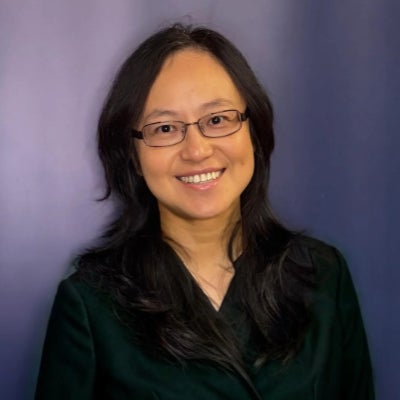
Mizuko (Mimi) Ito is a cultural anthropologist and learning scientist at the University of California, Irvine, serving as Director of the Connected Learning Lab and holder of the John D. and Catherine T. MacArthur Foundation Chair in Digital Media and Learning. She previously held research appointments at Keio University and the University of Southern California. Ito earned dual PhDs in Education and Anthropology from Stanford University and a BA in East Asian Studies from Harvard University. Education: PhD in Education, Stanford University PhD in Anthropology, Stanford University Bachelor's Degree in East Asian Studies, Harvard University Research Interests: Ito's work focuses on leveraging youth interests and digital media to foster equitable, socially connected learning. Her research spans mobile media culture in Japan, youth social media engagement in the US, and global adoption of children's media. She developed the connected learning framework, emphasizing youth-centered, equity-oriented approaches to education in the digital age. Grants & Partnerships: Ito has secured funding from major organizations including the MacArthur Foundation, Bill and Melinda Gates Foundation, National Science Foundation, and Microsoft Research. She co-founded the Connected Learning Alliance to advance research and impact in technology and learning. Awards: Recipient of the Jan Hawkins Award for Early Career Contributions (AERA) Labs & Initiatives: Directs the Connected Learning Lab at UC Irvine, which explores opportunities and risks of digital media in education. The Lab collaborates with global networks to design inclusive learning ecosystems.
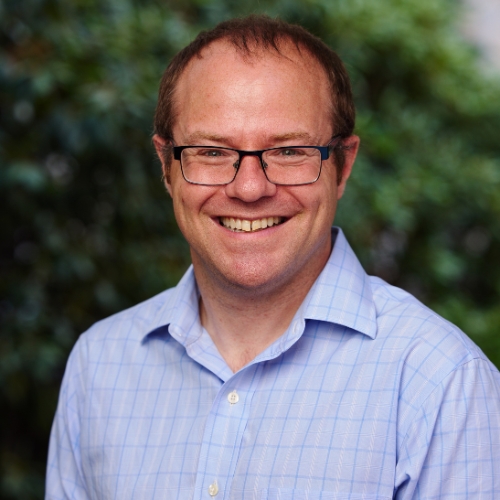
Carey Jewitt is a Professor of Technology and Learning at UCL Knowledge Lab, part of the Department of Culture, Communication and Media at the UCL Institute of Education (IOE). She also serves as Chair of the UCL Collaborative Social Science Domain. Her research focuses on how digital technologies shape interaction and communication, emphasizing interdisciplinary methodological innovation and multimodal theory development. She leads the InTouch project, an ERC Consolidator Award investigating the social implications of digital touch technologies for future communication. She has secured funding from the ERC, ESRC, EPSRC, and the British Academy for interdisciplinary research projects. Carey co-founded the journals Multimodality & Society and Visual Communication (both published by SAGE). Her work appears in journals like New Media & Society and Information, Communication & Society , alongside her 2020 book on digital touch communication. Her research trends emphasize the intersection of technology, communication, and sociology, with recent work exploring multimodal interaction, digital touch, and sociotechnical systems. Awards include the prestigious ERC Consolidator Award. Carey has advised numerous interdisciplinary projects and led grants from major funders. Her work is affiliated with UCL Knowledge Lab and the InTouch initiative, focusing on collaborative social science and innovative digital methodologies.
Rochelle F Hanson is a tenured Professor in the Department of Psychiatry and Behavioral Sciences at the Medical University of South Carolina (MUSC), affiliated with the National Crime Victims Research and Treatment Center (NCVC). She serves as Director of the NCVC Family and Child Program and holds roles in multiple interdisciplinary initiatives. Her research focuses on implementing trauma-focused evidence-based interventions, particularly in community settings, and improving provider fidelity to these practices. She also leads efforts to integrate mental health services into pediatric primary care. Dr. Hanson specializes in treating trauma in children, adolescents, and adults, with expertise in Trauma-Focused Cognitive Behavioral Therapy (TF-CBT). She has secured grants from NIMH, OVC, SAMHSA, and the Duke Endowment, including projects like Project BEST (Duke Endowment-funded initiative for child trauma care) and the National Mass Violence Victimization Resource Center. She supervises psychology interns and postdoctoral fellows and has been recognized for her mentorship with the 2010 MUSC Teaching Excellence Award. Her current work emphasizes sustaining implementation efforts through learning collaboratives and interprofessional partnerships. She also directs a VOCA-funded pediatric primary care behavioral health initiative.
Professor Yan (Lindsay) Sun is a faculty member at the University of Rhode Island in the College of Engineering under the Department of Electrical, Computer and Biomedical Engineering . She is the founding director of the Center for Cyber-Physical Intelligence and Security (CYPHER) and an IEEE Fellow . Her research focuses on cyber-physical systems security , power grid security , network security , and trustworthy social computing , with a particular emphasis on trust modeling and management in complex systems. Her publications span smart grid security , microgrid control , machine learning applications in power systems, and blockchain-based security mechanisms . The work often explores adversarial threats , resilient control strategies , and data augmentation techniques for improved grid monitoring. NSF CAREER Award (2007) IET Wireless Sensor Systems Premium Award (2018) EURASIP Best Paper Award (2015) IEEE Fellow (2019) URI College of Engineering Outstanding Research Award (2022) She actively leads interdisciplinary CYPHER Lab initiatives involving cyber-physical system resilience , network security , and smart grid analysis , collaborating with government and industry partners.
Golshan Golriz is an Assistant Professor of Sociology at Queen’s University, Canada. She holds a BA in Women and Gender Studies from York University, an MA from the Women and Gender Studies Institute at the University of Toronto, and a PhD in Sociology from McGill University. Her work focuses on structural inequalities affecting Queer and Trans Black Indigenous and People of Colour (QTBIPOC), combining feminist and social scientific methods with intersectional frameworks. Current research includes LGBTQ religious activism, identity-centric social movements, and cancel culture’s relationship with structural inequality. Education: BA: York University (Women and Gender Studies + Sexualities Studies certificate) MA: University of Toronto (Women and Gender Studies Institute) PhD: McGill University (Sociology) Research Interests: Structural inequalities & QTBIPOC communities Queer/Trans Muslim marginalization Racism, capitalism, and Middle Eastern sexuality representations Social movements and comparative historical methods Current Projects: Co-edited volume on LGBTQ religious activism Comparative study of identity-centric movements Critical analysis of cancel culture mechanisms Lab/Team: Research emphasizes interdisciplinary collaboration, integrating qualitative methods with activism-focused research.
Professor Marta Zofia Kwiatkowska is Professor of Computing Systems and Fellow of Trinity College at the University of Oxford, where she has held a faculty position since 2007. She previously served as Professor of Computer Science at the University of Birmingham (2001–2007), Reader and Lecturer at the University of Birmingham (1994–2001), and Lecturer at the University of Leicester (1986–1994). Her academic career began as Assistant Professor at the Jagiellonian University in Kraków, Poland (1980–1988). Education: BSc/MSc in Computer Science, Jagiellonian University, Kraków MA, University of Oxford PhD, University of Leicester Research Interests: Professor Kwiatkowska spearheaded the development of probabilistic and quantitative verification methods on the international stage. Her work bridges theory and practice through the PRISM model checker—the leading software tool in probabilistic model checking—used worldwide for research and teaching. Application domains include communication and security protocols , nanotechnology designs , power management , ubiquitous computing and systems biology . She investigates automated verification , temporal logics , semantic models for concurrency , real-time systems , and biological process modelling . Current grant funding exceeds £3.7 million from EPSRC, EU and ERC, including the prestigious ERC Advanced Grant VERIWARE. Scientific Awards & Honours: Fellow of the Royal Society Fellow of the ACM Fellow of the European Association for Theoretical Computer Science (EATCS) Fellow of the British Computer Society (BCS) Fellow of the Polish Society of Arts & Sciences Abroad ERC Advanced Grant VERIWARE (€2.046 M, 2010–2015) Top Cited Article Award, Theoretical Computer Science (2005–2010) Best Paper Award, QEST 2006 Doctoral Supervision & Grants: Professor Kwiatkowska actively supervises doctoral students (D.Phil. at Oxford) and post-doctoral researchers. She welcomes applications in areas aligned with her research interests, detailed here . Current students include Charlie Griffin, Daqian Shao, Matthew Yuan and Minghao Liu; past students and researchers number over twenty, many now in faculty or industry leadership roles. Laboratory & Teams: She leads the Oxford Quantitative Verification group within the Department of Computer Science. Ongoing projects include FUN2MODEL, ELSA, FAIR and the flagship PRISM probabilistic model checker. The group maintains strong collaborations with biological, robotics and engineering teams worldwide.
Benjamin K. Sovacool serves as Director of the Boston University Institute for Global Sustainability (IGS) and Professor in the Department of Earth & Environment within the College of Arts & Sciences, focusing on global energy policy and climate justice challenges. His academic credentials include: PhD in Science & Technology Studies from Virginia Tech MsC in Science Policy from Virginia Tech MA in Communication Studies from Wayne State University BA in Philosophy and Communication Studies from John Carroll University Research centers on energy justice , climate change mitigation , and renewable energy transitions , examining ethical dimensions of energy infrastructure, policy design for energy access, and adaptive capacity building. His work bridges social science and engineering perspectives, endorsed by figures like former President Clinton and Nobel Laureate Ostrom. Publications address urgent decarbonization challenges, exemplified by his 2022 Science article on industrial megaprojects. His scholarship consistently analyzes equity implications across energy supply chains and climate solutions, emphasizing interdisciplinary approaches. Key recognitions: Distinguished Graduate Alumni Achievement Award (Virginia Tech) 2019 USERN Prize for Social Justice research Dedication to Justice Award (American Bar Association) Distinguished Visiting Energy Professorship (Vermont Law School) Academician of the UK Academy of Social Sciences Secured $28.2+ million in competitive funding from DOE, NSF, European Commission, and major foundations. Current projects include Advancing Transformational Energy Justice (Sloan Foundation), Limits to Digitalization (Norwegian Research Council), and NIH-funded climate-health initiatives. Leadership spans IPCC AR6 authorship and EU energy advisory roles. As IGS Director, he leads cross-institutional teams tackling global sustainability through initiatives like the Industrial Decarbonization Research Center and GENIE project on negative emissions technologies, fostering collaborations with European and US research entities.
Christina Chung is an Assistant Professor in the Department of Computational Media at the University of California, Santa Cruz (UCSC). Her research focuses on personal informatics, health & wellbeing in interpersonal contexts, and human-computer interaction (HCI). She has previously been affiliated with the University of Washington (UW) and Indiana University, evidenced by her emails at those institutions. Her work explores topics such as goal-setting behaviors in technology-mediated environments, dining-out challenges for individuals with food hypersensitivities, and collaborative health practices between patients and healthcare providers. Key research interests include behavioral design, user experience (UX) in healthcare systems, and the intersection of technology with social behavior. She has published in journals like the International Journal of Human-Computer Studies and the ACM CHI Conference proceedings. Her studies often involve participatory design approaches to address real-world challenges, such as improving restaurant safety protocols for allergy sufferers or enhancing patient-doctor data-sharing practices. Chung collaborates with interdisciplinary teams, including the Design Use Build group at UW and the Proactive Health Lab at Indiana University. Her research bridges academic and applied contexts, aiming to create technologies that support long-term health behaviors and interpersonal well-being.
Mari Moora is a distinguished Professor in Community Ecology at the University of Tartu's Faculty of Science and Technology, Institute of Ecology and Earth Sciences. Since August 2023, she has served as the Vice Rector for Research at the University of Tartu, a position she will hold until July 2028. With a career spanning over three decades at the University of Tartu, Professor Moora has established herself as a leading expert in plant ecology, particularly in the field of mycorrhizal symbiosis and its role in shaping plant communities. Education: Secondary education at Nõo Secondary School (1984) Bachelor's degree in Biology (Genetics) from University of Tartu (1989) PhD in Plant Ecology from University of Tartu (1998) with thesis supervised by Martin Zobel Professor Moora's research focuses on the processes behind the structure and diversity of plant communities, particularly examining the role of biotic interactions such as mycorrhizal symbiosis and pollination in shaping plant populations. Her work extends to studying global diversity patterns of arbuscular mycorrhizal fungi and soil metagenomics - investigating how soil molecular diversity influences visible ecological patterns across ecosystems. Her interdisciplinary approach combines field ecology, molecular techniques, and theoretical frameworks to address fundamental questions in community ecology and biodiversity science. Her recent publications demonstrate a clear trend toward understanding ecological processes at multiple scales, from molecular interactions to global biodiversity patterns. Professor Moora's work increasingly integrates cutting-edge molecular techniques like metabarcoding with traditional ecological approaches, creating a more comprehensive understanding of plant-microbial interactions. Her research has significant implications for biodiversity conservation, ecosystem restoration, and understanding how ecological communities respond to environmental change. Scientific Awards: Order of the White Star, 4th class (2025) Estonian Academy of Sciences Alma Tomingas Medal (2023) Science Award of the Estonian Republic (2016) Honorary member of the University of Rio Cuarto (Argentina) (1998) Professor Moora has served as a principal investigator for significant research projects including "Plant-microbial mutualisms in dynamic ecosystems" (2021-2025) and the University of Tartu component of "Agroecology and new crops in future climates" (2024-2030). She has been actively involved in research administration and evaluation, serving on panels for the European Research Council, German Research Foundation, and European Commission. Her editorial work includes being an Academic Editor for PLoS ONE (2011-2016) and serving as a referee for numerous high-impact ecology journals. As Head of the Chair of Plant Ecology (2021-2023) and currently as Vice Rector for Research, Professor Moora plays a significant role in shaping research strategy and academic leadership at the University of Tartu. Her work bridges fundamental ecological research with practical applications for biodiversity conservation and sustainable land management.
Adam B. Badawi is a Professor of Law at the University of California, Berkeley - School of Law, where he maintains an active research agenda at the intersection of law, finance, and corporate governance. His scholarly work has established him as a leading expert in contract law, M&A transactions, securities litigation, and ESG compliance. Professor Badawi's research interests span multiple dimensions of corporate law and legal theory. His work on contractual complexity, particularly in debt agreements and M&A transactions, has provided significant insights into how legal drafting affects economic outcomes. He has extensively examined the business judgment rule, board authority, and the role of courts in corporate governance. More recently, his research has expanded into ESG-related topics, analyzing how environmental, social, and governance considerations intersect with traditional corporate law frameworks. His methodological approach often combines legal analysis with empirical techniques, including text analysis of legal documents and event studies of litigation outcomes. Professor Badawi's scholarly output demonstrates consistent high-impact research across multiple domains of corporate law. His early work focused on foundational aspects of contract theory and interpretation, while his more recent publications reflect growing interest in ESG metrics, executive compensation structures tied to sustainability goals, and the evolving regulatory landscape. The trajectory of his research shows a progression from theoretical legal analysis toward increasingly empirical and interdisciplinary approaches that bridge law with finance and data science. Professor Badawi has collaborated with numerous scholars across different institutions, including Duke University, Stanford Law School, and the University of Chicago Law School, reflecting the interdisciplinary nature of his work and its relevance to multiple academic communities.
Elena Simperl is a Professor of Computer Science and Deputy Head of Department for Enterprise and Engagement at King's College London's Department of Informatics. She co-directs the King's Institute for Artificial Intelligence and serves as Director of Research for the Open Data Institute. As a Hans Fischer Senior Fellow at the Technical University of Munich's Institute for Advanced Study, she leads the Trustworthy Knowledge Graphs focus group and contributes to advancing human-centric AI research across European institutions. Professor Simperl obtained her doctoral degree in Computer Science from the Free University of Berlin and her diploma from the Technical University of Munich. Prior to joining King's, she held academic positions in Germany, Austria, and at the University of Southampton, and was a Turing Fellow. Her career trajectory demonstrates consistent leadership in bridging academic research with practical applications in data ecosystems. Her research sits at the critical intersection of AI and social computing, focusing on human-centric approaches to building sociotechnical systems that integrate data, algorithms, and human capabilities. She investigates how to make knowledge engineering more accessible, how to leverage collective intelligence for data quality improvement, and how to design participatory AI systems that address societal challenges like misinformation. Her work spans knowledge graphs, semantic technologies, crowdsourcing, and open data, with particular emphasis on the social dimensions of data-intensive systems and the governance frameworks needed for trustworthy AI deployment. Analysis of her recent publications reveals a strong evolution toward integrating large language models with traditional knowledge engineering practices while maintaining human oversight. There's a clear trajectory from foundational work on knowledge representation toward increasingly applied research addressing real-world challenges in media ecosystems, citizen science, and data governance, with growing attention to policy implications of AI technologies. Fellow of the British Computer Society Fellow of the Royal Society of Arts Hans Fischer Senior Fellow at TUM-IAS (2023) Ranked among top 100 most influential scholars in knowledge engineering of the last decade Included in Women in AI 2000 ranking Professor Simperl has led 14 major European and national research projects totaling millions in funding, including MediaFutures (a Horizon 2020 program tackling online misinformation), QROWD, ODINE, Data Pitch, and ACTION. She currently co-chairs the Croissant working group in ML Commons developing data standards for AI, and serves as president of the Semantic Web Science Association. Her research has directly influenced the development of data ecosystems supporting startups and citizen science initiatives across Europe, demonstrating exceptional ability to translate theoretical advances into practical impact. As Director of Research at the Open Data Institute, she oversees initiatives connecting data entrepreneurs with artists and civic organizations. Her leadership in the MediaFutures project established a data-driven innovation hub that supported 51 startups/SMEs and 43 artists through three open calls, creating a sustainable model for arts-technology collaborations addressing media challenges. Her work with the ODINE project helped create a European ecosystem for data-driven startups, demonstrating her commitment to building practical applications of open data principles.
Prof. Dr. Teresa Sansour is a full Professor of Pedagogy and Didactics in Cases of Intellectual Development Impairments with Special Consideration of Inclusive Educational Processes at the Institute for Special and Rehabilitation Education, Carl von Ossietzky University of Oldenburg. She joined the university in April 2020 and has held leadership roles including Vice Director for Teaching at the Center for Teacher Education (since October 2021) and Deputy Institute Director (since April 2025). Her academic affiliations reflect a deep commitment to inclusive and special education. Her research focuses on educational interactions in the context of intellectual disabilities, inclusive subject didactics, the participation of people with complex disabilities, and the professionalization of educators and prospective teachers. Key research areas include inclusive literacy, art education, teacher motivation, and social integration. She leads significant funded projects such as Literary Texts in Simple Language (LiES) and Lighthouses for Participation , both aimed at enhancing inclusion for people with disabilities. The recent publications of Prof. Sansour span topics such as school absenteeism in autism, self-concept in intellectual disabilities, inclusive art education, and participation models. Her work demonstrates a strong interdisciplinary and applied focus, combining qualitative methods with pedagogical innovation. She frequently publishes in peer-reviewed journals and edited volumes on special education, inclusive didactics, and disability studies. Member, German Society for Educational Research (DGFE), Section Special Education Member, Network for Complex Disabilities e.V. Chair, Advisory Board of the Georg-Leffers-Stiftung Chair, Association for the Promotion of Pedagogical Rehabilitation and Social Integration of People in Risk Situations Board Member, German Interdisciplinary Society for Research Promotion for People with Intellectual Disabilities (DIFGB) Prof. Sansour actively contributes to academic leadership and teacher training. She serves as program coordinator for the Bachelor’s in Special Education and accreditation officer for the Special Education/Social Studies cluster. Her work includes advising on inclusive curricula, fostering research collaborations, and securing external funding for inclusive initiatives. She has not received explicitly mentioned scientific awards in the provided text. She is involved in multiple collaborative research teams and projects focused on inclusion, literacy, and disability rights.
Celia Parker-Vincent is a Lecturer in Intelligence Studies at the Department of War Studies, King’s College London, affiliated with the School of Security Studies and the Faculty of Social Science & Public Policy. She holds a PhD from King’s College London (focused on leadership in the UK’s intelligence community) and an MA in Intelligence and Security from the University of Leicester (2017–2019). Her research emphasizes organizational leadership within intelligence communities, intelligence analysis, and the dynamics between intelligence and policymakers. She is a core member of the King’s Centre for the Study of Intelligence (KCSI) and Editor-in-Chief of its blog, Insights. Teaching includes courses on British intelligence history (7SSWN135) and covert influence strategies (7SSWN336). Her interdisciplinary work applies organizational studies frameworks to intelligence challenges. Recent publications explore UK intelligence reforms, joint capability coordination, and policy-maker accountability. She has contributed to French-language intelligence studies and UK government advisory roles. Her research also examines the UK National Security Council’s role and potential reforms. Her work frequently intersects with UK government experience, including roles at the Foreign and Commonwealth Office and Cabinet Office, alongside extensive lecturing/training for UK government personnel. She advocates for institutional resilience and ethical intelligence practices through her academic and editorial activities.
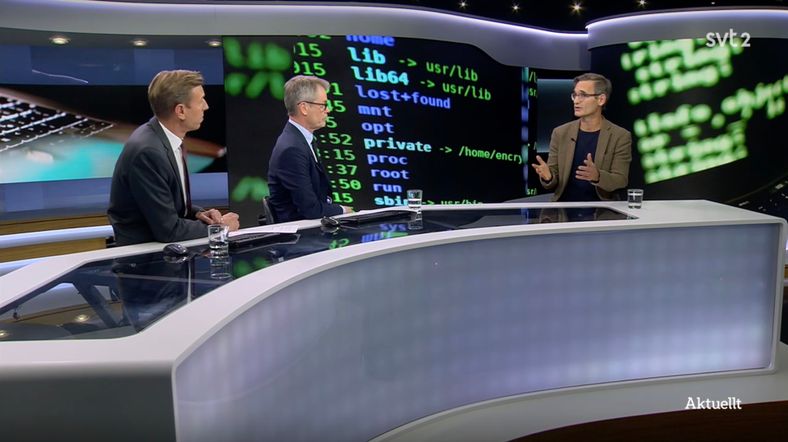
Pontus Johnson is a Professor at the KTH Royal Institute of Technology in Stockholm, Sweden. He leads the Center for Cyber Defense and Information Security (collaborating with Swedish Armed Forces, FRA, MSB, FOI, FHS) and serves as vice director of Cybercampus Sweden since 2024. His research focuses on cybersecurity , enterprise architecture analysis , and probabilistic threat modeling , particularly through his development of the Meta Attack Language (MAL) for simulating cyber attacks on networked systems. Education: MSc in Computer Science, Lund Institute of Technology (1997) PhD in Computer Science, KTH (2002) Docent title, KTH (2007) Leadership Roles: Director, Center for Cyber Defense and Information Security (2013–present) Vice Director, Cybercampus Sweden (2024–present) Board Member, Swedish Research Council (2025–present) Deputy Chair, Swedish Royal Academy of Engineering Sciences (IVA) Board (2024–present) His work spans cybersecurity research , attack simulation methodologies , and enterprise architecture frameworks . He has developed tools like securiCAD (acquired by Google) and pwnPr3d for probabilistic threat modeling. His 15 most recent publications highlight advancements in graph-based attack simulations , automated security assessments , and AI applications in cyber defense . Scientific recognition includes: Listed among Tech Awards Sweden's 50 Most Influential People in Swedish Tech (2022, 2023) Discovery of vulnerability in the Universal Turing Machine (2021) He supervises 16 PhD students and alumni (2005–2024), including Simon Gökstorp , Jakob Nyberg , and Sotirios Katsikeas . His academic service includes over 50 program committee roles and leadership positions in international conferences. He contributes to both academic and public domains through media appearances (SVT, Aftonbladet), courses in ethical hacking , and industry collaboration via his role at Google (20% of his time). His research group Software Systems Architecture and Security (SSAS) focuses on predictive security frameworks and system-of-systems analysis.
Oswald J. Schmitz is the Oastler Professor of Population and Community Ecology at the Yale University School of the Environment. His research bridges biodiversity and ecosystem services, focusing on species interactions, climate change impacts, and conservation strategies. He employs field experiments and mathematical models to study predator-herbivore-plant dynamics, nutrient cycling, and carbon sequestration. Education: B.Sc., M.Sc., University of Guelph Ph.D., University of Michigan Research areas include: Trophic rewilding for climate solutions Human-wildlife conflict dynamics Meta-ecosystem nutrient flows Animal-driven carbon cycle modifications Context-dependent conservation strategies His 2024 Bormann Prize-winning work on calving impacts in nutrient cycles and other recent publications highlight innovative ecosystem science. Schmitz mentors students like Kristy Ferraro and collaborates with alumni such as Rob Buchkowski and Julia Monk. He teaches three conservation-focused courses with an emphasis on quantitative skills and real-world applications.