Jennifer Coates, PhD is an Associate Professor of Food Policy and Applied Nutrition at Tufts University’s Friedman School of Nutrition Science and Policy, and a Senior Researcher at the Feinstein International Center. Her work focuses on improving the design and evaluation of international nutrition and food security programs, particularly in development and humanitarian contexts. She develops methods for scaling dietary data collection (e.g., INDDEX24 platform), assesses food affordability metrics in Africa, and evaluates micronutrient programs globally. Dr. Coates holds leadership roles in UN inter-agency groups on food security measurement and agricultural statistics. Education: PhD and MS in Food Policy & Applied Nutrition from Tufts (2006, 2000), BA in International Relations from Tufts (1994). She teaches courses on nutrition program monitoring, food security, and development at the Friedman School. Research Interests: Food policy design, program evaluation, nutrition equity, and sustainable development. Her work emphasizes low-resource settings and integrates technology for scalable data collection methods. Key Contributions: INDDEX project to standardize dietary assessments, IANDA initiative on diet affordability metrics, and ACFA/GAIN partnerships for nutritional impact evaluation. Her research bridges academia and policy, impacting global health programs.
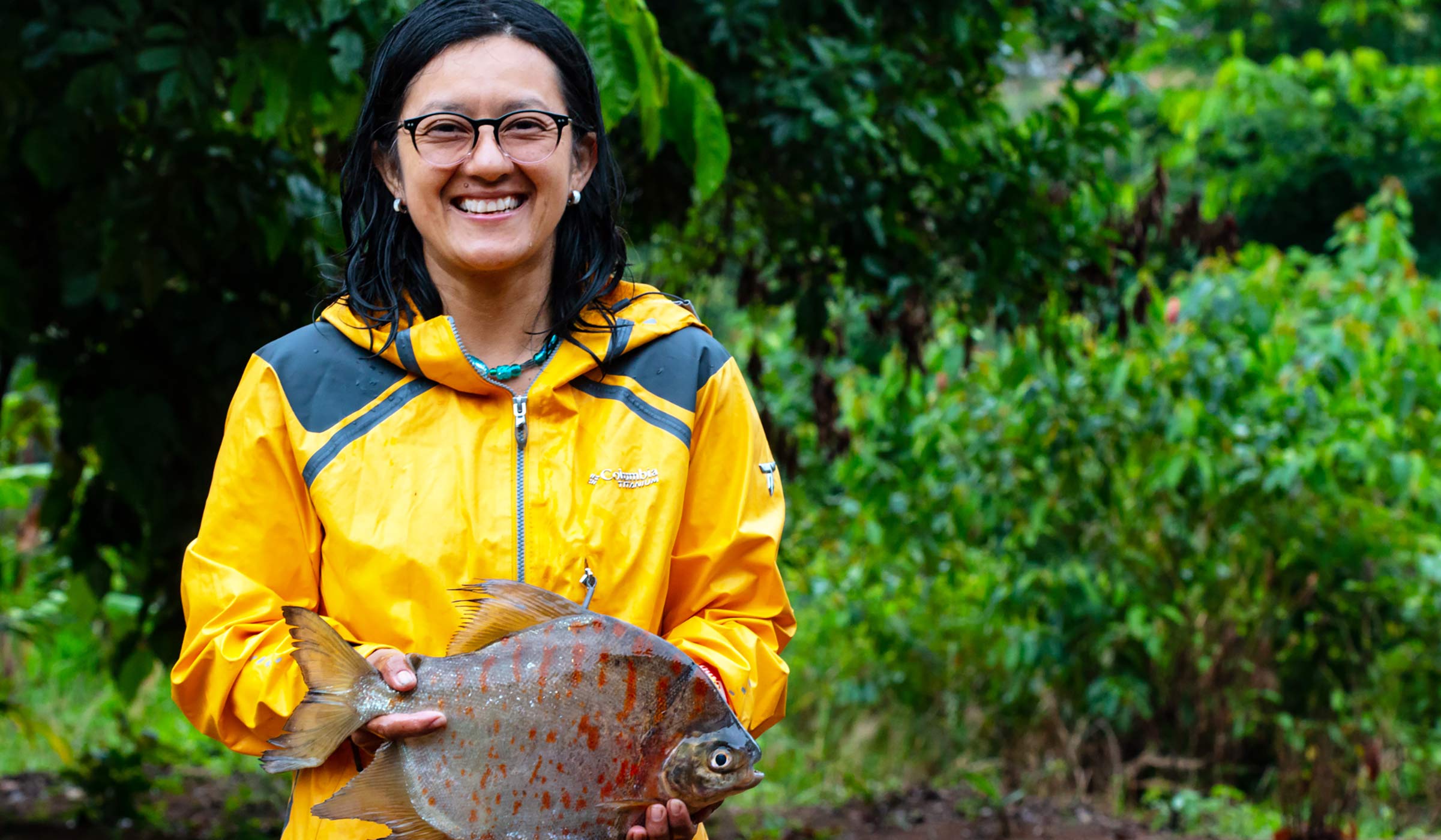
Sandra Correa is an Assistant Professor in the Department of Wildlife, Fisheries and Aquaculture at Mississippi State University, affiliated with the College of Veterinary Medicine's Global Center for Aquatic Health and Food Security. She is a river and aquatic ecologist dedicated to promoting sustainable river ecosystems and improving fisheries management in both local and global contexts. Her research centers on river ecology, aquatic biodiversity, and sustainable fisheries, with a strong emphasis on community-based conservation and food security. She leads a project funded by the Feed the Future Innovation Lab for Fish, focusing on the Sre Ambel River system in Cambodia, where she established a Citizen Science Program to collect critical fisheries data. This initiative supports vulnerable populations by improving nutrition and alleviating poverty through sustainable aquaculture practices. Dr. Correa has developed and teaches a graduate-level course in river ecology, designed to provide a holistic understanding of large river systems. Her work bridges ecological science and human well-being, particularly in communities dependent on river fisheries for food and income. She is passionate about mentoring students, especially first-generation college students, and fostering an inclusive academic environment. She leads research activities under the Feed the Future Innovation Lab for Fish, contributing to global efforts in aquatic health and food security. Her projects integrate field data collection, community engagement, and ecological analysis to support long-term sustainability of river ecosystems. Dr. Correa’s work is primarily conducted through the Global Center for Aquatic Health and Food Security within the College of Veterinary Medicine, where she collaborates on interdisciplinary initiatives aimed at improving aquatic resources and rural livelihoods.
Forest Rohwer is a Professor of Biology at San Diego State University (SDSU) in the Department of Biology, College of Sciences. A pioneering marine and viral ecologist, Dr. Rohwer has significantly advanced the field of metagenomics, particularly in coral reef and human microbiome research. His work focuses on understanding the roles of microbes and viruses in ecosystem health and disease. Education: PhD from the UCSD-SDSU Joint Doctoral Program in Molecular Biology (1997); BS from College of Idaho. Dr. Rohwer's research spans marine microbial ecology and human respiratory microbiology , with an emphasis on coral reef health, phage biology, and cystic fibrosis. He investigates how anthropogenic stressors trigger microbial shifts leading to coral disease and how viral communities influence the human lung microbiome. His lab employs cutting-edge '-omics' technologies, including metagenomics and transcriptomics, to study ecosystem dynamics at molecular and spatial levels. His recent publications highlight trends in coral reef microbial synchrony , phage-bacteria interactions in mucus , and personalized phage therapy for antibiotic-resistant infections. He has also contributed to spatial mapping of coral holobionts and the impact of dietary compounds on gut prophage induction. Awarded the International Society of Microbial Ecology Young Investigators Award . Elected Fellow of the American Academy of Microbiology and AAAS . Recognized in The World's Most Influential Scientific Minds by Thomson Reuters. Recipient of multiple honors from SDSU, including Outstanding Faculty and Teacher Scholar awards. Dr. Rohwer leads an active research lab that mentors undergraduate, graduate, and postdoctoral researchers. He has secured significant research funding and is involved in outreach initiatives like the Phage Outreach Program for high school students. His lab is central to projects such as Coral Reef Arks and the Viral Information Institute, promoting citizen science and public engagement in virology. He is the author of influential books including Life in Our Phage World and Coral Reefs in the Microbial Seas , which synthesize complex microbial ecology concepts for broad audiences.
Basmah Safdar, MD, is a Professor of Emergency Medicine at Yale School of Medicine, where she also serves as Vice Chair for Faculty Affairs and Development, Director of Women’s Health Research at Yale (WHRY), and Medical Director of the Chest Pain Center at Yale New Haven Hospital. She leads the Yale CMD Registry and Biorepository, focusing on sex and gender-specific research in microvascular health. Norma Weinberg Spungen and Joan L. Bildner Professor of Emergency Medicine Director, Women's Health Research at Yale Vice Chair for Faculty Affairs and Development, Emergency Medicine Medical Director, Chest Pain Center Dr. Safdar earned her MD from Aga Khan University, completed residency and chief residency at Yale New Haven Hospital, and holds an MSc in Cardiovascular Epidemiology from Harvard University. She is a 2024 Fellow of the Hedwig van Ameringen Executive Leadership in Academic Medicine (ELAM) Program. Her research centers on microvascular dysfunction in the heart, brain, and its implications in conditions like chest pain and COVID-19. She investigates sex-specific differences in cardiovascular disease, aiming to improve diagnosis, reduce healthcare disparities, and develop precision medicine approaches. Her work spans clinical trials, translational research, and biomarker discovery, with a strong emphasis on emergency medicine settings. Her recent publications highlight trends in identifying novel biomarkers (e.g., renalase), understanding systemic microvascular disease, addressing gender and race bias in healthcare, and advancing clinical diagnostics for coronary microvascular dysfunction. Her research integrates machine learning, epidemiology, and clinical cardiology to improve patient outcomes. Hedwig van Ameringen Executive Leadership in Academic Medicine® (ELAM®) Program (2024) Women Executive Leadership Program, Impact Center (2022) AWAEM Midcareer Award, Society of Academic Emergency Medicine (2020) Momentum Leadership Award, Academy for Women in Emergency Medicine (2014) Best Clinical Science Research Award, Resident Category (2005) Dr. Safdar is deeply committed to mentorship and faculty development. She mentors medical students, residents, fellows, and junior faculty and led the national organization AWAEM as President. She has secured grants from the NIH, CDC, and foundations to support her research and leadership programs. She champions equitable clinical and academic systems, advocating for transparent advancement and compensation practices in emergency medicine. She leads the Safdar Lab, which conducts interdisciplinary research on sex and gender-specific microvascular health, collaborating with experts in cardiology, neurology, epidemiology, and biomedical data science. The lab leverages clinical data, biorepositories, and advanced analytics to drive innovation in women’s health and emergency care.
Cecilia Olsson is an Associate Professor and Senior Lecturer at the Department of Food, Nutrition and Culinary Science at Umeå University. Her work spans teaching, research, and PhD education, with a focus on the nutritional and social significance of food within the Swedish welfare system, particularly school meals. She supervises three PhD students and contributes to course development and thesis examination. Registered dietitian and nutritionist with over 20 years of experience Former head of department and program coordinator for the Dietitian Program Research groups: School Meals, Learning Meals, Dietary Intake Measurement Her research explores sociological and psychological aspects of food and meals, emphasizing inclusivity for neurodivergent students, dietary compliance in clinical settings, and the disconnect between policy and practice in school meal programs. She employs empathy-based methods and interdisciplinary frameworks. Recent publications analyze video consultation adoption in dietetics, gender norms in celiac disease management, and the impact of meal environments on cognitive function. Her work consistently bridges public health, educational practices, and social equity in food systems. Olsson actively collaborates on projects like 'Dietitian Online' (DiOn) and 'ProMeal' across Nordic countries, aiming to improve health outcomes through structured meal programs. She has contributed to understanding regional variations in celiac disease incidence and dietary assessment methodologies.
Ján Strelinger serves as a Senior Lecturer at the Department of English Language, Faculty of Applied Languages, University of Economics in Bratislava, where he has contributed to academic programs since 2008 with expertise spanning language pedagogy and cross-cultural business communication. His educational foundation includes a second degree in Translating and Interpreting (English-Italian) from Comenius University (1991) and a third degree in International Economic Relations from the University of Economics in Bratislava (2016), complemented by professional development through study stays at Universitá di Padova (2003), Universitá per stranieri di Siena (2006), and UC Berkeley (2007). Strelinger's research critically examines Language Teaching methodologies for business contexts, Translation Studies in EU documentation, Consumer Behavior in sustainable food systems, and Cultural Diplomacy in international negotiations. His work bridges linguistic theory with practical applications in economics and management education, emphasizing innovative approaches to multilingual professional communication. Analysis of his publications reveals a consistent focus on adapting language education to global business demands, with significant contributions to understanding Slovak consumer patterns in organic food markets and developing pedagogical frameworks for cross-cultural negotiation competence. No major scientific awards or fellowships were documented in the source material. He has supervised 2 Bachelor's theses and secured research funding through KEGA grants: KEGA Project (2018-2019): 'Ideational idioms in Business English communication' (Co-investigator) KEGA Project (2024): 'Innovative Methods in Teaching Business Negotiations in English' (Co-investigator) His recent Erasmus mobility at Universidad de País Vasco EHU (March 2024) underscores ongoing international collaboration in language education.
Dr. Michael Rajnik is a Clinical Professor of Pediatrics at the Uniformed Services University of the Health Sciences in Bethesda, MD. He serves as Division Director for Infectious Disease within the School of Medicine, with academic and clinical expertise focusing on pediatric infectious diseases, epidemiology, and global health initiatives. B.S. Chemistry, King's College (1991) M.D., University of Virginia School of Medicine (1995) Pediatrics Residency, Wilford Hall USAF Medical Center (1998) Pediatric Infectious Diseases Fellowship, National Capital Consortium/USUHS (2001) Dr. Rajnik's research spans pediatric infectious diseases with emphasis on respiratory tract infections, epidemiology, and global health. He has led studies on rotavirus immunization effectiveness, tuberculosis treatment innovations, and pandemic-related healthcare impacts across military populations. His work combines clinical research with public health surveillance and has shaped vaccination and infection control practices within military healthcare systems. Pediatric infectious diseases during wartime, vaccine-preventable illnesses, and multidrug-resistant infections form recurring themes in his research. Recent work focuses on COVID-19 pandemic effects across military pediatric and adult populations, including rotavirus hospitalization trends, cardiac complications, and sexually transmitted infection management. Scientific contributions and recognitions include: Chair, Infectious Diseases Institutional Review Board (2009-2016) Chair, American Academy of Pediatrics Executive Committee (2009-2014) President, Armed Forces Infectious Diseases Society (2007-2008) USAF Master Educator (2007, 2012) Educator of the Year, San Antonio Uniformed Services (2006) As a mentor and Fellowship Director (2006-2016), Dr. Rajnik has guided numerous military physicians in pediatric infectious diseases while leading research administration and advocating for military families within the American Academy of Pediatrics. His clinical and administrative roles demonstrate sustained commitment to advancing military pediatric medicine through education, research, and policy engagement.
Oliver Meixner is an Associate Professor at the Institute of Marketing and Innovation within the Department for Economics and Social Sciences at the University of Natural Resources and Life Sciences, Vienna (BOKU) . His work focuses on agricultural economics, sustainable marketing, and consumer behavior in food systems. Key Research Areas: Sustainable agriculture and food economics Consumer behavior and market research Innovation and digital transformation in agrifood Notable Contributions: Developed methodologies for AHP group decisions and fuzzy priority aggregation Evaluated eco-label effectiveness and food waste reduction strategies Assessed EU rural development programs' impact on agricultural competitiveness Publications & Projects (2016-2024) show a consistent focus on: Food labeling and consumer trust Sustainability assessments in agribusiness Digital transformation in food networks Climate crisis impact on consumer behavior Innovative marketing models for agrifood chains Scientific Recognition Award of Excellence (ISAHP 2020) Most Innovative Idea Award (ISAHP 2016) Literati Network Outstanding Paper (2013) Advising spans 123 theses including topics on: Consumer preferences for eco-labels Acceptance of alternative proteins Digital food shopping behavior Payment willingness for sustainable products
Robert R Clarke serves as Executive Director and Director of The Hormel Institute, and holds a Professor position in the Chemical and Structural Biology department at the University of Minnesota Medical School. His research focuses on breast cancer mechanisms, drug resistance, and systems biology approaches to understanding hormone receptor signaling. Dr. Clarke's research interests center on breast cancer biology with specific emphasis on drug resistance mechanisms, hormone receptor signaling pathways, and systems biology approaches to cancer. His work integrates molecular biology, computational approaches, and structural analysis to understand cancer progression and treatment resistance. He has developed several computational tools including CAM3.0 for cell type deconvolution and DDN3.0 for network analysis, demonstrating his interdisciplinary approach spanning wet lab and computational biology. His recent publications demonstrate a strong focus on breast cancer mechanisms, particularly TXNIP's anti-tumor role and antiestrogen resistance. His research increasingly incorporates computational biology approaches for analyzing complex biological data, including RNA-seq analysis, network rewiring in cancer, and cellular composition determination from bulk tissues. The work spans basic molecular mechanisms to translational applications, including nanoparticle-based cancer therapies. Dr. Clarke leads multiple significant research projects including 'Novel functions of ESRRB in glioblastoma' funded by NIH (2024-2026), 'CryoEM Support Technology' from NIST (2023-2025), 'Cell communication in antiestrogen resistance' from the Department of Defense (2021-2023), 'Development of a Cancer Immune Therapy Paradigm with Iron Oxide Nanoparticles' from Johns Hopkins University (2020-2023), and 'Integrative analysis of exitrons in metastatic prostate cancer' from the Department of Defense (2019-2024). As Executive Director of The Hormel Institute, Dr. Clarke leads a major cancer research center focused on understanding cellular mechanisms of cancer. His team employs diverse approaches including molecular biology, structural biology, computational analysis, and animal models to investigate cancer progression and treatment resistance. The institute has produced significant research output with over 360 publications attributed to Dr. Clarke's work.
Jeanine Rhemtulla is an Associate Professor in the Department of Forest and Conservation Sciences at the University of British Columbia's Faculty of Forestry. She directs the Landscapes & Livelihoods Lab, focusing on reconciling biodiversity conservation with sustainable livelihoods through spatial analysis of multi-functional landscapes. Applied Conservation Science Ecosystems and Climate Change Human Dimensions of the Environment Her research integrates landscape ecology, historical ecology, and socio-economic factors to address land-use conflicts. Key projects span Canada, Ecuador, and Mexico, examining agroforestry systems, forest restoration, and climate change impacts on ecosystem services. Recent publications analyze: Landscape-scale interactions between natural disturbances and human management Trade-offs in global restoration pledges Geospatial methodologies using machine learning Human dietary dependencies on forest ecosystems Historical institutional legacies in forest landscapes
Dr. Sebastian Ferse is a Senior Scientist at the Leibniz Centre for Tropical Marine Research (ZMT), affiliated with the Office for Knowledge Exchange in the Programme Area 'Ecosystem Co-Design towards a sustainable Anthropocene'. Based in Indonesia, his research integrates ecological and socio-economic approaches to address coral reef sustainability, marine resource use, and human-environment interactions in tropical coastal systems. His interdisciplinary work focuses on biodiversity-ecosystem functioning relationships, coral reef community assembly, restoration techniques, and sustainable livelihood strategies. Key themes include: Ecological impacts of mariculture and small-scale fisheries Fish-habitat interactions under anthropogenic stress Patron-client dynamics in resource governance Transdisciplinary co-design for ocean sustainability Recent publications (2023-2025) demonstrate a strong focus on climate resilience, conservation policy, and socio-ecological trade-offs. Dominant trends include coral reef restoration frameworks, fisheries management innovations, urbanization impacts on marine ecosystems, and equitable knowledge co-production in marine science. He leads/co-leads multiple international projects including ongoing initiatives (MOOBYF, TemPe, 4D REEF) and recently concluded programs (LeNa Shape, PACPATH, REEF FUTURES, SOCPacific, REPICORE, SPICE III, TRIPLE C) focused on ecosystem resilience, coastal governance, and scenario planning. Through ZMT's knowledge exchange framework, he coordinates interdisciplinary teams examining marine social-ecological systems across Indonesia, the Pacific Islands, and global tropical reef networks.
Anita Berg is an Associate Professor in Sociology at the Faculty of Nursing and Health Sciences, Nord University. She serves as Assistant Division Leader for Social Education and Mental Health, Study Program Advisor for the Bachelor in Social Education, and heads the research group 'Equitable community participation and marginalised groups.' Her research interests focus on Public health work in municipal settings Social inequality in health Equitable community participation for marginalized groups Science of Professions She emphasizes educational development, student active learning, and academia-practice collaboration. Her publications span digital technology in healthcare , mental health in schools , long-term bariatric surgery outcomes , and social inclusion . Key trends include technology's role in bridging health disparities and stakeholder engagement in public health. Berg leads interdisciplinary projects like customized ICT for disabilities and parenting support in schools , fostering partnerships between academia and municipal sectors.
Casey Rosen-Carole is an Associate Professor at the University of Rochester Medical Center with dual appointments in the Department of Pediatrics and Department of Obstetrics and Gynecology . As Chief of the Division of Breastfeeding and Lactation Medicine, she specializes in systems change for breastfeeding education, maternal-infant health, and addressing social determinants of health through equity programming. Trained at New York Medical College (MD, 2005) and Margaret Warner Graduate School (MS, 2016) Completed Pediatrics residency (Yale New Haven Hospital, 2006-2008) and fellowship (University of Rochester Medical Center, 2014-2016) Research Focus : 1) Systems-level interventions for breastfeeding support; 2) Maternal stress physiology in NICU settings; 3) Community-based health equity initiatives. Her work bridges clinical practice with policy development, evidenced by 15 recent publications on lactation medicine, pandemic protocols, and clinical guidelines. Scientific Leadership : Dean's Teaching Fellow (2020-2022) IBCLC Care Award (2019) Ruth A. Lawrence Academic Faculty Service Award (2019) Multiple clinical protocol contributions to the Academy of Breastfeeding Medicine Clinical Practice : Provides comprehensive outpatient/inpatient breastfeeding medicine with fluency in French and Spanish. Recognized for patient-centered care through 56 5-star ratings, emphasizing shared decision-making and anxiety reduction for new parents.
Marcus Claesson is a Lecturer in the Department of Microbiology at University College Cork (UCC), Ireland. He is also a Principal Investigator and Funded Investigator at the Alimentary Pharmabiotic Center, managing the BioIT platform. His research focuses on microbiota analysis, particularly in inflammatory bowel disease (IBD) and the gut microbiome of elderly Irish subjects via metagenomics and 'omics' methods. Education: BSc in Chemical Engineering, Chalmers University of Technology MSc in Bioinformatics, Chalmers University of Technology PhD in Bioinformatics, University College Cork Marcus specializes in bioinformatics method development for analyzing gut microbiota composition and function. His work includes the ELDERMET project (metagenomic analysis of elderly microbiomes) and sequencing Lactobacillus salivarius and Bifidobacteria to identify probiotic traits. He has explored the role of flagellin proteins in inflammation and the impact of antibiotics on elderly microbiota. His peer-reviewed publications (15 most recent) reflect a strong focus on microbiome analysis , metagenomics , and probiotic discovery , with applications in human health and microbial ecology . Scientific Awards: UCC Early Stage Researcher of the Year (2012) Alimentary Pharmabiotic Centre Young Scientist of the Year (2010) Bioscience Institute PhD Student of the Year (2007) Marcus supervises doctoral students in microbiome research and teaches modules including Computational Biology , Computational Systems Biology , and Genomic Data Analysis . He coordinates the MSc program in Bioinformatics and Computational Biology.
Dr. Geoff Norton is a faculty member at the School of the Environment , University of Queensland. His work focuses on Integrated Pest Management (IPM) , Digital Identification Tools , and Agricultural Sustainability , with a particular emphasis on rice planthoppers, sweetpotato diagnostics, and weed science. He has developed interactive software platforms like Diagnosis and Sweetpotato DiagNotes to enhance crop protection training and decision-making. Research Trends : His publications span Digital tools for pest and species identification Collaborative approaches to rice pest management Scenario-based educational software Weed surveillance systems Labs & Teams : Norton has collaborated with institutions such as Imperial College London, Springer, and the International Society for Horticultural Science. He contributed to the Cooperative Research Centre for Tropical Pest Management and developed tools for tropical plant protection and biosecurity.