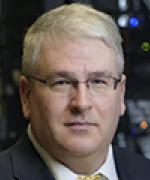
Michael Donald Bailey is a Professor and former Chair of the School of Cybersecurity and Privacy (SCP) at Georgia Institute of Technology, part of the College of Computing. Previously, he served as a Professor at the University of Illinois at Urbana-Champaign (UIUC) and as a Research Associate Professor at the University of Michigan. His research focuses on the security, performance, and availability of distributed systems, with over 90 scholarly publications. He has led initiatives to expand cybersecurity education, including new undergraduate threads and professional master’s programs at Georgia Tech. Bailey’s industry experience includes roles at Arbor Networks, where he managed teams protecting internet traffic from DDoS attacks, and three startups. He is a Senior Member of IEEE and ACM. Roles: Professor, Chair (until 2025), Researcher Affiliations: Georgia Tech (SCP, College of Computing), UIUC (Security and Privacy Research Group) His research interests span network security, distributed systems, and privacy engineering. Notable contributions include work on TLS certificate management, IoT security, and phishing defense mechanisms. Bailey advises students at both UIUC and Michigan, fostering next-generation cybersecurity experts.
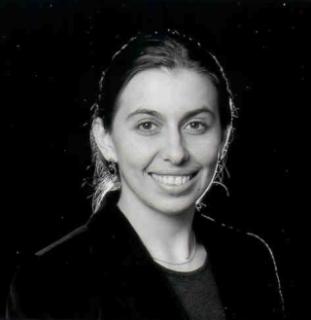
Katya Drozdova is a Professor at Seattle Pacific University’s School of Business, Government, and Economics , with a joint appointment in Business, Information Systems, and Political Science. She holds a PhD and MPhil in Information Systems from NYU Stern School of Business and MA/BA in International Relations from Stanford University. Expertise in cyberpower, geopolitical strategy, counterterrorism, and asymmetric threat analysis Principal Investigator for the Mining Afghan Lessons from Soviet Era (MALSE) program funded by the U.S. Department of Defense Visiting Fellow at Stanford’s Hoover Institution and affiliate with the Empirical Studies of Conflict Project (ESOC) Her research combines information theory with security studies , focusing on: Strategic decision-making under uncertainty Human and technological network optimization in hostile environments U.S.-Russia relations and their geopolitical implications Early-warning systems for terrorist network detection Cybersecurity policy balancing civil liberties Recent publications analyze cyberpower (SAGE, 2017), asymmetric warfare (Journal of Cold War Studies, 2019), and geo-religious literacy in Russia (Routledge Handbook, 2022). Her work has been cited in Computational and Mathematical Organization Theory and Hoover Digest . Key affiliations include: NYU’s Alexander Hamilton Center for Political Economy Stanford’s Center for International Security and Cooperation (CISAC) Consortium for Research on Information Security and Policy (CRISP) funded by NSA Community engagements: Hosted Qatar’s Prime Minister Sheikh Abdullah Al-Thani (2016) Public dialogue with General Keith Alexander (2015) Interview with Secretary Madeleine Albright (2014)
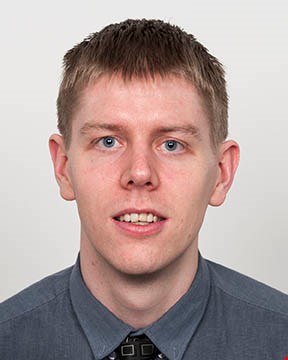
Dr Richard Hammond serves as a Senior Lecturer in War Studies within the History and Politics Division of Brunel University London's College of Business, Arts and Social Sciences. Previously holding positions at King's College London and the Universities of Portsmouth and Exeter, he completed his PhD at the University of Exeter in 2012 focusing on Allied anti-shipping operations in the Mediterranean during World War II. His educational qualifications include a PhD in History (University of Exeter), BA (Hons), and MA. He holds Fellow status with the Higher Education Academy (FHEA) and serves as Director of Postgraduate Taught Programmes since 2021. Hammond's research centers on Military History with specialized expertise in World War II naval operations, Mediterranean theater strategy, and Anglo-Italian military relations. His work critically examines inter-service rivalries within British armed forces, the evolution of maritime air power, and sociopolitical dimensions of total war. Key contributions include analysis of multinational naval cooperation, anti-shipping campaigns, and strategic perceptions of enemy capabilities during wartime. His publication record reveals consistent focus on Mediterranean naval-air operations during 1939-1945, demonstrating how logistical warfare shaped Axis defeat. Recent work expands into sociopolitical dimensions of 'total war' while maintaining technical analysis of command structures and operational learning across military services. Scientific recognition includes: Corbett Prize in Modern Naval History (Proxime Accessit) from the Institute for Historical Research Moncado Prize awarded by the Society for Military History Dr Hammond actively supervises doctoral research on modern military history, currently guiding Colin Browning's study of political education in WWII British Army and Suncica Mandic's work on Tito and Clausewitz. He recently completed supervision of James Halstead's research on operational learning in British/Indian Armies and Nick Blackman's study of Royal Navy helicopter development. His research has received competitive funding including the Truman Library Institute Research Grant ($2,500, 2021) and General/Mrs Ridgway History Research Grant ($1,500, 2019). As Vice President of the Second World War Research Group and Editor of War in History journal since August 2024, Hammond maintains significant professional engagement. His public outreach includes televised documentaries such as 'How to lose a War' (2022) and 'Factories at War' (2019), translating academic research for broader audiences.
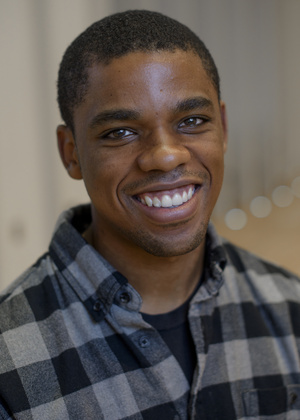
Steve Oney is an Associate Professor at the University of Michigan School of Information and Computer Science and Engineering (by courtesy). His research focuses on enabling and encouraging more people to write and customize computer programs by creating new programming tools and exploring usability issues in programming environments. With a strong background in Human-Computer Interaction, he bridges the gap between theoretical research and practical applications in programming education, accessibility, and developer tool design. Dr. Oney completed his Ph.D in Human-Computer Interaction at Carnegie Mellon University's Human-Computer Interaction Institute under Professor Brad Myers and Dr. Joel Brandt. He also earned an M.Eng in Computer Science and SB degrees in Computer Science and Mathematics from MIT. His research spans multiple interconnected areas with a unifying theme of making programming more accessible and understandable. Key focus areas include programming education tools that help instructors understand student code at scale, web automation systems that simplify repetitive tasks, accessibility research addressing challenges faced by visually impaired programmers, and innovative VR programming environments. His work consistently emphasizes the human aspects of programming, exploring how tools can better support diverse programming needs and contexts. Dr. Oney's research output shows a strong trajectory toward increasingly sophisticated tools that integrate AI capabilities while maintaining a focus on human-centered design principles. Recent publications demonstrate growing emphasis on inclusive design, educational applications, and the integration of generative AI in programming environments. L@S 2024 Best Paper Award for CFlow CHI 2023 Honorable Mention for VizProg UIST 2024 Best Short Paper (EdCode) VL/HCC 2019 Best Short Paper Recognition for Contribution to Diversity and Inclusion (CSCW 2021) UMSI Excellence in Instruction Award (2021) University of Michigan President's Postdoctoral Fellowship (2015) As a mentor, Oney advises multiple Ph.D. students and postdoctoral researchers, with several successful graduates including Dr. Lei Zhang (June 2024). His research has secured over $1 million in funding from the National Science Foundation, Google, and Adobe, supporting projects that address critical challenges in programming education, accessibility, and developer tool design. He leads the Programming Tools Lab at the University of Michigan, where his team develops innovative tools that help programmers work more effectively. Current projects focus on AI-enhanced programming education, web automation, accessibility for diverse user groups, and next-generation programming environments for virtual and augmented reality.
Eirik Brazier serves as Associate Professor in the Department of Culture, Religion and Social Studies at the Faculty of Humanities, Sports and Educational Sciences, University of South-Eastern Norway (USN), where he teaches history and social studies in teacher education programs and international politics through IFOS (Year-long course in international understanding and cooperation). His academic appointments include editorial roles at Store norske leksikon as subject editor for First World War, Canadian, and Australian history, and as topic editor for Norway at 1914-1918 online, the International Encyclopedia of the First World War. His research spans multiple interconnected domains including British colonial history, Norwegian involvement in World War I (despite official neutrality), intelligence operations during wartime, and the cultural history of bicycles. Recent scholarly output demonstrates particular focus on Norwegian war decorations from World War II, German military brothels during occupation, and Scandinavian participation in Allied forces. His methodological approach combines traditional archival research with digital history techniques and analysis of gaming culture's relationship to historical understanding. Academic trends in his publication record reveal increasing specialization in transnational military history, with growing emphasis on microhistorical case studies (e.g., individual soldiers like Knut Werswick) alongside broader analyses of imperial structures. His work consistently bridges academic and public history through popular science contributions in media outlets like Dagbladet and radio appearances on NRK P2, particularly regarding Haus Sphinx brothel investigations and Norwegian-American combat experiences. Brazier actively participates in multiple research collectives including the Political Culture Research Group at USN, the Social Science Didactics Research Group, the Nordic Surveillance History Network ("Maktens øyne og ører"), and international collaborations like the Australia Canada New Zealand Research Network. His current projects explore Scandinavia's role in World War I, digital tools for historical education, and the social history of cycling as cultural phenomenon.
Professor Odd Jarl Borch is a prominent academic at Nord University specializing in emergency preparedness, crisis management, and Arctic security. His work bridges theoretical research with practical implementation through international collaborations and policy contributions. Education: Harstad Gymnasium Norwegian School of Economics Umeå University, Sweden Indiana University, USA Bodin Maritime College Professor Borch's research focuses on emergency preparedness systems in high-complexity environments, particularly in the Arctic region. His work examines civil-military cooperation, hybrid threats, and organizational management during crises. He has pioneered research on maritime safety in polar regions and developed frameworks for cross-border emergency response coordination. His approach integrates theoretical organizational models with practical crisis management applications, emphasizing the unique challenges of Arctic operations. His recent publications (2020-2024) reveal a strong trajectory toward hybrid threat analysis and collaborative security frameworks. The research consistently addresses Arctic-specific challenges while developing universally applicable emergency response models. Key themes include virtual network intelligence, civil-military coordination mechanisms, and structural adaptations for high-complexity environments. His work demonstrates increasing emphasis on digital transformation in emergency management and the evolving nature of security threats in polar regions. Professor Borch leads significant research initiatives including the NORDLAB Center for Emergency Preparedness and Cooperation and coordinates a network of 25 European researchers on civil-military preparedness. He has initiated major international collaborations such as the Arctic Safety and Security network with 22 universities and the ARCSAR innovation network. His practical impact extends to public service through membership on the Corona Commission, the Total Emergency Preparedness Commission, and the cruise industry safety investigation committee. He has supervised numerous bachelor's, master's, and PhD students in organization and management subjects related to security and crisis management. His teaching portfolio includes fisheries economics, vessel operations, financial management, and crisis management. Professor Borch's laboratory work centers on the NORDLAB emergency management facility, which conducts advanced simulation training for Arctic emergency response professionals.
Prof. José Sanders serves as Rector Magnificus and Chair of the Board of Deans at Radboud University, holding a full Professorship specializing in narrative communication within organizational contexts, including health communication, journalism, and advertising. Research Interests: Her work applies cognitive linguistic frameworks to analyze how narrative structure, style, and viewpoint alignment influence audience understanding, engagement, and behavioral intentions. Key domains include discourse optimization for strategic communication, narrative health interventions, and perspective-taking mechanisms in textual discourse. Publication Trends: Recent publications (2019-2023) consistently explore narrative applications in health contexts—chronic Lyme disease patient experiences, childbirth narratives, vaccination communication, and schizophrenia discourse—using cognitive linguistic analysis to examine viewpoint representation and communicative efficacy. Grants and Projects: 2012-2017: NWO Programme ‘Begrijpelijke Taal’ project on prevention and health regulation through understandable personal narratives (nr. 321-89-006), collaborating with ArboNed/Sector Institute for Transport and Logistics. Ancillary Activities: Current external roles include Lector and coordinator of lectores at ’s-Hertogenbosch Cathedral Basilica (since 2011), Chair of Thijmgenootschap’s general board (2024-2028), and member of the Netherlands Commander of the Order of the Holy Sepulchre’s board (2022-2026).
Elise Newman is an Assistant Professor in the Department of Linguistics and Philosophy at MIT. Her research focuses on syntax, with additional interests in semantics/pragmatics and first language acquisition. She completed her PhD at MIT in 2021 and held a postdoctoral position at the University of Edinburgh, collaborating on projects about syntactic locality effects. Her work bridges formal syntax with experimental approaches, exploring topics like argument structure, syntactic locality, and cross-linguistic variation. Education: PhD in Linguistics (MIT, 2021); Postdoctoral Research at University of Edinburgh (2021-2022). Research themes include syntactic derivation processes, feature-driven movement, and the interface between syntax and semantics. Recent publications analyze DP movement, A/A-bar interactions, and the role of features in syntactic pathways. Her work often employs theoretical frameworks from the minimalist program while engaging with empirical data from diverse languages like Wolof and Shanghainese. Publications showcase contributions to core syntax questions, including subcategorization restrictions, pied-piping phenomena, and adjunct island effects. Though no specific awards are noted, her work demonstrates significant engagement with foundational linguistic theory. Advising and grants details are not explicitly stated in the provided information. Active in academic networks, she collaborates with institutions globally and participates in MIT's Linguistics Program, contributing to the vibrant theoretical linguistics community there.
Ian Worthington is a Professor of Ancient History at Macquarie University's School of Humanities since 2017. Previously, he held the Curators' Distinguished Professorship at the University of Missouri (USA). He earned his B.A. from Hull University, M.A. from Durham University, and Ph.D. from Monash University. His expertise lies in Greek history and oratory, with a focus on Macedonian history, Athenian political discourse, and Hellenistic dynamics. Worthington has authored 10 solo books—including Macedonia under the Argead Kings (2026) and Roxane of Bactria (2027)—and edited over 11 volumes. He leads Brill's New Jacoby , a monumental international project reconstructing ancient historiography. He has secured grants like the $141K ARC Discovery Project (2020-2022) on Athenian war efforts. His research spans Alexander the Great, Philip II, Ptolemy I, and Athenian post-empire history. Notable awards include Fellowships from the Royal Historical Society (2019) and Society of Antiquaries (2020). He actively engages in public scholarship through BBC documentaries, podcasts, and lectures globally, blending academia with cultural commentary. Worthington is affiliated with Macquarie's Centre for Ancient Cultural Heritage and Environment (CACHE) and collaborates internationally. Beyond academia, he is an avid enthusiast of K-pop and Korean culture.
William S. Cormack is a Professor of History at the University of Guelph's Department of History (College of Arts). His research focuses on the French Revolution, particularly political struggles over national representation, naval history during the Revolution, and the Revolution's impact in Caribbean colonies like Martinique and Guadeloupe. He has held academic positions at the University of Saskatchewan, Royal Military College of Canada, and Queen's University before joining Guelph in 1998. Dr. Cormack's education includes a Ph.D. from Queen's University (1992), M.A. from Carleton University (1985), and B.A. from the University of Calgary (1983). His work examines revolutionary scripts' influence, the collapse of the 1791 Constitution, and Enlightenment connections to later revolutionary movements. His advising covers topics like Enlightenment thought, revolutionary martyr cults, gender roles during the Revolution, Huguenot responses, and pre-revolutionary Jewish status reforms. Key publications include books on Caribbean revolutionary dynamics and naval political conflicts during the 1790s.
Hajime Hoji is an Associate Professor of Linguistics at the University of Southern California (USC) , specializing in Language Faculty Science through an internalist approach. His research bridges linguistics with the scientific method, emphasizing definite predictions , experimental validation , and universal reproducibility . Education: Ph.D. in Linguistics, University of Washington (1985). Key Publications: Language Faculty Science (Cambridge University Press, 2015) and The Theory and Practice of Language Faculty Science (De Gruyter Mouton, 2022). Research Focus: Hoji’s work centers on studying the language faculty as a cognitive system using the Guess-Compute-Compare method inspired by Richard Feynman. He prioritizes rigorous testability , replication , and exceptionless experimental results , particularly in Japanese syntax (anaphora, scope dependency, c-command effects). Collaborations: Co-edited volumes with Daniel Plesniak and Yukinori Takubo , extending his research to cross-linguistic analysis (English, Korean, Mandarin). Methodological Contributions: Developed self-experimentation and non-researcher-informant experiments to validate hypotheses about formal dependencies and grammatical structures . His framework challenges traditional compatibility-seeking linguistic approaches.
Souadou Lagdaf is an Associate Professor of History of Islamic Countries at the Department of Humanities, University of Catania, where she also contributes to the PhD program in Heritage and Cultural Production Sciences. Since 2024, she has held a collaborative role at the Institute of Mediterranean Studies (ISMED) of the National Research Council (CNR). She previously served as Vice President of the Special Teaching Structure of Foreign Languages and Literatures of Ragusa (2020–2022) and has held research positions at the University of Catania since 2011. Education: Bachelor’s Degree in Political Science – International Politics, University of Catania, 2004 (110 cum laude) PhD in Contemporary History, Department of Analysis of Political, Social and Institutional Processes, University of Catania, 2008 National Scientific Qualification as Associate Professor (Sector 10/N1), 2018 Her research focuses on Western Sahara, the Sanusiyya brotherhood in Libya, the social anthropology of customs and religious commandments in Mauritanian society, gender studies, and immigration. She employs interdisciplinary methods combining historical analysis, oral history, and anthropological fieldwork. Her work emphasizes marginalized voices, particularly women in conflict zones and postcolonial societies. The trends in her recent publications reflect a sustained engagement with gender, decolonization, and religious interpretation in North Africa. She frequently analyzes how sacred texts are used to justify gender hierarchies and explores the socio-political dimensions of Islamic practices in postcolonial contexts. Her scholarship bridges historical inquiry with contemporary social issues, particularly in Libya, Western Sahara, and Mauritania. Scientific Memberships and Editorial Roles: Editorial Board, Meridiana (2024) Member, Centro Universitario de estudios sobre el Sahara Occidental (CESO), University of Santiago de Compostela (2022) Board of Directors, Sicilian Institute for the History of Contemporary Italy Carmelo Salanitro (ISSICO) (2018) Member, Western Sahara International Academic Observatory (OUISO) (2017) Co-Director, Editorial Series Intelligere: mediare tra identità e alterità , Agorà & Co, Lugano (2016) Lagdaf has secured multiple research grants and leads projects on gender, migration, and decolonization. She has advised students on topics such as Islamic pillars and has conducted extensive field research, including oral history collection in Sahrawi refugee camps (Algeria) and Mauritania. She actively organizes academic events, particularly on women’s issues in Islamic societies. Laboratories and Research Groups: Collaborative researcher at CNR-ISMed (Institute of Mediterranean Studies) Member of research teams on gender, migration, and postcolonial studies at the University of Catania Coordinator of the "Voci di Donne" conference series on women, peace, and subordination
Alan Hezao Ke is an Assistant Professor in the Department of Linguistics at Michigan State University's College of Arts & Letters. His primary research focuses on syntax, semantics, and psycholinguistics, with particular emphasis on experimental and computational approaches to syntax, language acquisition, and sentence processing. He completed his Ph.D. in Linguistics at the University of Michigan in 2019. Research Interests : Syntax, Semantics, Psycholinguistics, Computational Linguistics Specializations : Experimental syntax, Parametric variation, Neural synchrony in language processing Publications demonstrate his expertise in: Syntactic theory and parametric variation Binding theory and null object resolution Computational modeling of language acquisition Neural mechanisms in syntactic processing Quantifier domains and distributive semantics Chinese-specific syntactic phenomena Contact: kehezao@msu.edu | Office: Wells Hall, Michigan State University
Dr. Siegbert Riecker is a theologian affiliated with the Evangelische Theologische Faculteit in Leuven, specializing in Old Testament studies. He holds a Dr. theol. (2006, Evangelische Theologische Faculteit, Leuven, magna cum laude) and Lic.Theol. (1998, Evangelische Theologische Faculteit, Leuven). His academic journey includes education from Freie Theologische Akademie Gießen (M.Div. Equiv., 1997) and Westerwald-Gymnasium Altenkirchen (Abitur, 1992). He has taught at institutions across Germany, Belgium, Switzerland, Latvia, and India. Dr. theol., Evangelische Theologische Faculteit, Leuven (2006) Lic.Theol., Evangelische Theologische Faculteit, Leuven (1998) Riecker’s research focuses on Old Testament theology, ethics, and Christian apologetics. He explores themes like the blessing mandate for Israel, the Pentateuch crisis, Noachide laws, and the literary unity of biblical texts. His recent publications emphasize the historical-canonical approach, sacrificial theology, and the theological implications of Genesis through Kings. His 2019 book The Old Testament Basis of Christian Apologetics earned the Franz-Delitzsch Förderpreis. Key themes in his 2023 Einleitung in das Alte Testament include literary integrity, priestly composition, and synchronic analysis. Earlier works examine Joshua’s conquest narratives, Pentateuchal source criticism, and the priestly character of Genesis-Kings. 2024: Franz-Delitzsch Förderpreis for apologetics work 2023: Co-editor of Einleitung in das Alte Testament Riecker’s teaching spans systematic theology and Old Testament at Bibelschule Kirchberg (since 2008) and Evangelische Theologische Faculteit (since 2007). He contributes to discussions on biblical ethics, missions, and canonical approaches.
Larry P. Heck is a Professor with a joint appointment in the School of Electrical and Computer Engineering and School of Interactive Computing at the Georgia Institute of Technology. He holds the Rhesa S. Farmer Advanced Computing Concepts Chair and is a Georgia Research Alliance Eminent Scholar . Education: BSEE, Texas Tech University (1986) MSEE, Georgia Institute of Technology (1989) PhD EE, Georgia Institute of Technology (1991) His research focuses on conversational AI , dialogue systems , and machine learning applied to natural language processing and speech recognition . He pioneered early industrial applications of deep learning in speech processing and has contributed to advancements in multimodal interaction, knowledge distillation, and real-time question answering systems. Recent publications emphasize moral reasoning in AI , multimodal dialogue , and large-scale dataset creation for conversational systems. His work bridges language modeling , sensor fusion , and ethical AI through innovations in contextual reasoning and interface masking. Scientific Distinctions: IEEE Fellow (2020) IEEE Signal Processing Society Best Paper Award Academy of Distinguished Engineering Alumni, Georgia Tech (2017) Distinguished Engineer Award, Texas Tech University (2017) Fellow, National Academy of Inventors (2025) He has secured significant funding from DARPA and NSA for speaker recognition systems and has led cutting-edge research at institutions including Microsoft, Google, and Samsung. His lab focuses on conversational systems and deep learning for speech and multimodal data.