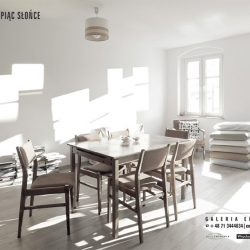
Tomasz Dobiszewski is an Assistant Professor at the Eugeniusz Geppert Academy of Art and Design in Wrocław, Poland, within the Faculty of Graphics and Media Art 's Media Art Department . He works across photography, video, and multimedia installations to explore perception limitations, time-space relationships, and digital-physical intersections. Education: MA from University of Arts in Poznań (2005), PhD from Eugeniusz Geppert Academy (2018) Key Research: Visual cognition, intermedia art, AI integration, and imperceptible phenomena visualization His artistic practice reveals a consistent exploration of perception paradoxes and media taming through projects like: Tracking the Sun (2022) - Using solar exposure to create negative-burned records Designations (2013) - Word-shaped lens photography based on Wittgensteinian concepts Blackout Group collaborations (2023) - 3D printing and AI experiments Scientific Awards: 2017 - Jerzy Grotowski Scholarship 2012 - Minister of Culture and National Heritage Scholarship His recent works showcase AI's artistic potential through projects like Album Primo-Avrilesque (2023) and The Sixth Obstruction (2024), while maintaining analog techniques in works such as Shadowplay (2010) and Palingenesis (2004).
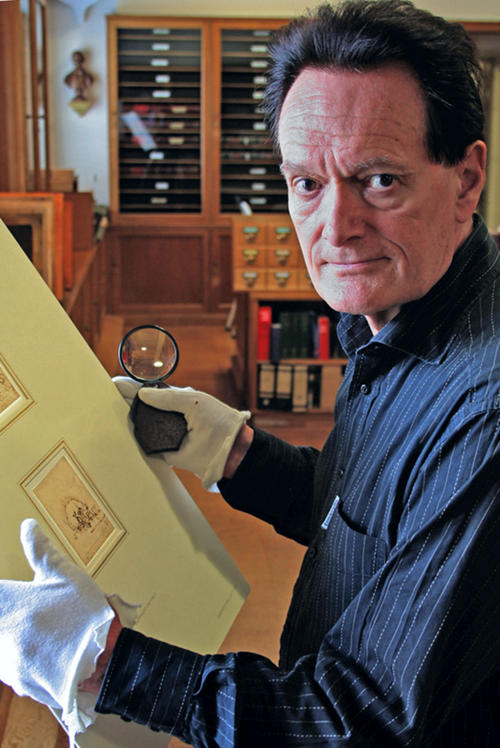
Martin Kemp is a Professor of Art History at Oxford University, specializing in the intersection of visual language between art and science from the Renaissance to contemporary contexts. He has held prestigious roles including the British Academy Wolfson Research Professor (1993–1998) and has lectured globally at institutions like Princeton, New York University, and the Victoria and Albert Museum. Education: Kemp studied Natural Sciences and Art History at Cambridge University and the Courtauld Institute in London. His academic career spans over 25 years, including roles at the University of Glasgow and St. Andrews. Research Interests: Kemp explores spatial visualization in art and science, emphasizing three-dimensional and dynamic forms. His work focuses on Leonardo da Vinci, anatomical illustration, optics, and the application of scientific principles in artistic practices. He investigates how visual intuition bridges problem-solving in both fields, transcending traditional disciplinary boundaries. Publications & Exhibitions: Kemp has authored seminal books such as Leonardo (2004), The Science of Art (1990), and Seen and Unseen (2006). He curates major exhibitions, including Spectacular Bodies at the Hayward Gallery and Leonardo da Vinci: Experience, Experiment, Design at the Victoria and Albert Museum. His column Science in Culture in Nature explores interdisciplinary themes. Awards: Recipient of the British Academy Wolfson Research Professorship (1993–1998), recognizing his contributions to art and science scholarship. Advising & Grants: Kemp has mentored through his academic roles, though specific grants are not detailed in the text. His work often involves collaborative projects with scientific and cultural institutions. Labs/Teams: Kemp collaborates with museums and academic networks but no dedicated lab is explicitly mentioned. His research is field-driven, focusing on curatorial and textual analysis.
Christian Hosam is an Assistant Professor of Political Science and Faculty Affiliate of the Albright Institute at Wellesley College. His research interrogates the structural dynamics of the American political economy and their disproportionate impact on Black communities and communities of color, with a focus on how policy mechanisms intended to advance racial justice can paradoxically exacerbate inequalities. Hosam earned his PhD in Political Science from the University of California, Berkeley in 2024, following undergraduate studies in Government and African American Studies (with Honors) at Wesleyan University (2015). His scholarship centers on Black politics, congressional representation, and the racialized dimensions of American political economy. He examines how institutional constraints—particularly congressional polarization and gridlock—limit transformative policy outcomes for Black communities despite increased descriptive representation, a tension he conceptualizes as 'representational triage.' His work also addresses the American maternal mortality crisis and its intersection with anti-Black healthcare structures. Publication trends reveal consistent engagement with race, representation, and institutional politics across journals like Politics, Groups, and Identities and Sociological Forum , evolving from media distrust in the Trump era (2020) to contemporary analyses of Black congressional politics (2025) and racial triangulation (2022). Hosam's research has been supported by prestigious fellowships: Social Science Research Council UC Berkeley Empirical Legal Studies Fellowship UC Berkeley Institute for Governmental Studies UC Berkeley Center for the Study of Law and Society APSA Diversity Fellowship Program As a new faculty member, his current grant activities focus on his book project The Last Best Hope: Black Congressional Representation and the Elusive Search for Racial Justice , while his public scholarship extends to Dissent Magazine and The Washington Post . Prior to Wellesley, he contributed to interdisciplinary policy research as a Graduate Student Researcher at UC Berkeley's Possibility Lab.
Lorena Herzog serves as a Research Fellow at the WZB Berlin Social Science Center within the Research Group Globalization, Work, and Production , and holds an associated researcher position at the Weizenbaum Institute's Working with Artificial Intelligence group. Her work critically examines intersections of digitalization, ecological transformation, and labor market structures through sociological and political economy lenses. Education: Graduate Studies at Freie Universität Berlin (2020-2024) Undergraduate Studies at Humboldt-Universität zu Berlin (2015-2020) with one-year exchange at Tel Aviv University Research Focus: Herzog investigates how digital disruption and green transitions reshape work organization, business models, and economic governance. Her current GEMI project analyzes strategy development challenges during sustainability transitions, while prior work examined pandemic-driven automation in 540 German firms across six sectors. She consistently integrates sociological work analysis with political economy frameworks to address platform labor dynamics and green industrial policy. Publication Trends: Her 2022-2024 output reveals escalating focus on crisis-accelerated digitalization (particularly pandemic impacts on platform work and Industry 4.0 adoption) and green transition financing . Cross-sectoral analyses of automotive, logistics, and finance industries demonstrate how crises catalyze technological adoption while exacerbating organizational inequalities between pioneer and laggard firms. Research Ecosystem: Herzog operates within WZB's collaborative environment studying work transformations, contributing to interdisciplinary projects that bridge social science with AI research through the Weizenbaum Institute partnership. Her methodological approach combines qualitative case studies with standardized firm surveys to generate policy-relevant insights on just transition pathways.
Dr. Patrik Elm is an Associate Professor at Linnaeus University specializing in information security and systems thinking. He holds a PhD in Computer Science from Blekinge Institute of Technology (2007). His research focuses on information security in public sector organizations, organizational complexity, and the interplay between human and technical factors in information systems. Dr. Elm has held leadership roles including department head and has led projects like RAPID (strengthening online education in Pakistan) and DI-PHDICTKES (developing ICT PhD programs in Kosovo). He co-supervises PhD students and reviews for international journals/conferences. His work bridges systems theory with practical governance models, particularly addressing GDPR compliance and data flow management. Education: PhD in Computer Science (2007) from Blekinge Institute of Technology. Leadership Experience: Department head roles, international university collaborations, and organizational development initiatives. Projects include: RAPID: Replicating pandemic-era distance learning practices in Pakistan. DI-PHDICTKES: Establishing ICT PhD programs in Kosovo. Seed Projects: Addressing challenges in lifelong learning and patient empowerment limits. Research Interests: Cybersecurity compliance, public sector IT governance, systems thinking pedagogy, and digital strategy inefficiencies. Publications emphasize secure data governance, pandemic-era educational shifts, and interdisciplinary systems approaches. Grants & Funding: Not explicitly listed but implied through project involvements. Labs/Teams: Involved in Linnaeus Knowledge Environments like Digital Transformations. Advising: Mentors multiple PhD students and participates in exam committees.
Grzegorz Hańderek is a Professor and Rector at the Academy of Fine Arts and Design in Katowice. He holds a Doctorate in Fine Arts (2005) and became a Professor in 2021. His roles include Dean of the Faculty of Art (2008–2012), Vice-Rector (2012–2020), and Rector since 2020. His artistic practice spans drawing, printmaking, installations, and site-specific projects, with over 250 exhibitions internationally. Education: B.A. in Fine Arts (University of Silesia, 2002), M.F.A. in Intaglio Techniques (AFAD Katowice, 2003). Research focuses on visual arts, cultural heritage preservation, and design education. Awards include Ministry of Culture grants and a bronze medal at ED-Awards 2014 for the Polish National Radio Symphony Orchestra’s visual system. Key projects include: Leading the Interpretation of Literature Studio Co-author of The Insects Project (2016), addressing diacritic design in Central Europe Pioneer in volumetric filmmaking ( NEBULA , 2018) Wayfinding research for Silesian government buildings He advises students in art education and collaborates with institutions like Beijing University of Technology and the Upper Silesian Museum. His work bridges traditional craftsmanship and digital innovation in art, design, and public spaces.
Szymon Kobylarz (born 1981) is a Professor and currently serves as Dean of the Faculty of Art at the Academy of Fine Arts in Katowice (ASP Katowice), Poland. He is affiliated with the Painting Studio III where he teaches. Kobylarz is a prominent figure in the Polish contemporary art scene, with his work frequently presented both in Poland and internationally. His research interests span across multiple disciplines within visual arts, with a strong focus on painting, installation art, and sculpture. Kobylarz's work often explores conceptual frameworks, mathematical structures in art, philosophical inquiries, and sociopolitical commentary. His artistic practice demonstrates a sophisticated blend of traditional painting techniques with contemporary conceptual approaches. The analysis of Kobylarz's recent works reveals a consistent exploration of geometric forms, temporal concepts, and philosophical inquiries. His pieces often incorporate mathematical structures (such as the dodecahedron tree), existential themes (as seen in 'A Man Who Did Not Live Through the End of the World'), and conceptual frameworks (like 'Unknown unknowns'). His work shows a progression from more traditional painting towards increasingly conceptual and multimedia approaches, while maintaining a strong foundation in visual arts. Scientific Awards: Grantee of the Minister of Culture and National Heritage (awarded twice) Kobylarz has made significant contributions to the academic community through his leadership as Dean of the Faculty of Art and his teaching in the Painting Studio III. His work has been instrumental in promoting contemporary art practices within the academic setting. He has likely supervised numerous students through their artistic development, though specific names are not documented in the available information. His studio serves as an important space for developing emerging artists in the region. Kobylarz maintains an active studio practice while fulfilling his administrative responsibilities, demonstrating a commitment to both artistic creation and academic leadership. His work bridges the gap between traditional art forms and contemporary conceptual approaches, making him a significant figure in the Polish art education landscape.
Dr. Muhammad Hussain is a Research Fellow at The University of Western Australia (UWA) within the School of Psychological Science, affiliated with the Western Australian Centre for Road Safety Research (WACRSR). He holds a PhD from Tsinghua University, a Master's from the University of Engineering and Technology (Taxila, Pakistan), and a Bachelor's in Civil Engineering from the same institution. His expertise spans road safety, autonomous vehicles, traffic modeling, and pavement engineering. Key research areas include cooperative automated driving, road safety in roadwork zones, and driver distraction impacts on traffic flow. He has contributed to 19 peer-reviewed articles and secured grants such as the Austroads Project on driver distraction. His work aligns with UN Sustainable Development Goals, particularly in advancing safe and sustainable transport systems. Education: PhD in Transportation Engineering, Tsinghua University (2021) Masters in Transportation Engineering, UET Taxila (2014) Bachelor in Civil Engineering, UET Taxila (2011) Research Interests: Focuses on road safety innovation, including autonomous vehicle integration, accident analysis, and traffic simulation. His work combines empirical studies with advanced modeling techniques to address modern transportation challenges. Current projects include evaluating lane-change behaviors in roadwork environments and investigating cross-border tourism through economic corridors. Grants & Projects: Principal Investigator in the Austroads Project National Driver Distraction Roadmap: Stage 3 Implementation , focusing on data harmonization strategies to mitigate driver distraction risks. Labs/Teams: Conducts research through the WACRSR, a multidisciplinary center addressing road safety challenges in Australia and globally. Additional Roles: Adjunct Research Fellow at Queensland University of Technology and contributor to international conferences on transportation safety and policy.
Maurizio Codispoti is a Full Professor at the Department of Psychology 'Renzo Canestrari', University of Bologna. His research focuses on the interplay between emotion, learning, and perception, particularly in the context of natural scene processing. He employs physiological measures like ERP, oscillatory brain activity, and autonomic responses to study emotional and cognitive mechanisms. Education: PhD in Experimental Psychology from the University of Bologna (1997), postdoctoral training at the National Institute of Mental Health (USA, 1998). Academic roles include Associate Professor (2002–2012) and Assistant Professor (2000–2002) at Padova and Bologna universities. Research Interests: Emotion-cognition interactions, attentional capture, habituation processes, and the role of spatial frequencies and context in emotional engagement. His work emphasizes the neural and behavioral correlates of affective processing. Teaching: Courses include 'Emotions and Cognitive Processes', 'General Psychology', and 'Experimental Psychology' across undergraduate and graduate programs since 2001. Funding: Secured grants totaling over €120,000 from institutions like the University of Bologna and the Bial Foundation, supporting studies on emotional distraction and neural oscillations. Awards: Fellow of the Psychonomic Society (2016). His work has been cited over 10,000 times (Google Scholar), with an H-index of 40.
Assoc. Prof. Dr. Kamile ÇETİN serves as an Associate Professor in the Department of Turkish Language and Literature at Süleyman Demirel University's Faculty of Humanities and Social Sciences, a position she has held since 2023. Previously, she progressed through academic ranks at the same institution, serving as Doctor Lecturer (2016-2023) and Research Assistant (2006-2016), demonstrating a dedicated 18-year academic career in Turkish literary studies. Dr. ÇETİN completed her Licentiate (2002), Master's (2006), and Doctorate in Ancient Turkish Literature (2014) at Süleyman Demirel University and Gazi University respectively. Her academic development reflects a specialized focus on classical Turkish literary traditions from the outset of her scholarly journey. Her research centers on Classical Turkish Literature with particular emphasis on Divan poetry analysis, redif (refrain) techniques, and symbolic representation. She has pioneered studies examining material culture elements within poetic traditions, investigating how everyday objects like clothing, jewelry, colors, and natural elements function as literary symbols. Her work bridges literary analysis with cultural history, revealing how Ottoman poets transformed mundane elements into sophisticated poetic motifs. Dr. ÇETİN has made significant contributions to gender studies in Ottoman literature through comparative analyses of male and female poets like Necâtî Bey and Mihrî Hatun. Analysis of her recent publications (2023-2024) reveals distinctive research patterns: she systematically explores the intersection of material culture and poetry, employs redif analysis as a methodological framework, and investigates symbolic representation across diverse poetic forms. Her work demonstrates particular expertise in color symbolism (as seen in Bitlisli Şükrî studies), floral imagery (in Ahmed-i Rıdvân analyses), and clothing metaphors across classical Ottoman poetry. Dr. ÇETİN has supervised three Master's theses on specialized topics including precious stones in women poets' divans, textual analysis of Cafer Efendi's architectural treatise, and beauty concepts in Hafız's poetry. Her teaching portfolio encompasses advanced courses in Old Turkish Literature, Ottoman Turkish language, and specialized textual analysis, reflecting her comprehensive expertise in classical Turkish literary traditions.
Karen R. McLean is an Associate Professor and Department Chair of Social Work at Western Connecticut State University (WCSU). She holds degrees from the University of Connecticut, including a Ph.D. in Social Work, and has focused her career on policy and macro practice since joining WCSU in 2015. Her expertise is rooted in 26 years of public service in social welfare prior to her academic career. B.A. in Psychology, University of Connecticut M.S.W., University of Connecticut School of Social Work Ph.D., University of Connecticut School of Social Work Dr. McLean’s research emphasizes community-based participatory research , cultural diversity , and social work mentoring . Her recent projects explore self-care practices among social work students, mentoring experiences of African American students at predominantly white institutions, and hair discrimination among students of color. She aims to foster dialogue on community differences to drive social change. Her publications and presentations highlight trends in participatory action research, cultural competency, and macro-level social work interventions. Notable contributions include book chapters on qualitative research methods and a coauthored book on cultural diversity. Though no awards are explicitly listed, her work spans peer-reviewed journals, edited volumes, and workshops on social justice. Dr. McLean has presented extensively at conferences, including the National Association of Social Workers and the National Association of Black Social Workers, addressing topics like trauma, empathetic engagement, and race. She also served as an adjunct professor for over a decade before joining WCSU full-time. Contact: brownk@wcsu.edu
Colin Rennie is a Senior Lecturer at the University of Sunderland within the Faculty of Education, Society and Creative Industries, specifically in the School of Media and Creative Industries. He runs the BA Hons Programme in glass and ceramics and has established himself as a significant figure in contemporary glass art and digital interface design. Rennie's research interests span glass art, digital glass interface design, computational art, and the exploration of medieval color theory, particularly the work of Robert Grosseteste. His practice combines traditional glass techniques with cutting-edge digital technologies. His major projects include the 'Illuminating Colour' exhibition which explored Grosseteste's theories on light and color through collaboration with scientists and historians from Oxford and Durham Universities. His recent publications reveal a consistent focus on the intersection of art, technology and historical scientific concepts, with particular attention to glass as both material and medium for conceptual exploration. Rennie's work demonstrates how historical scientific theories can inform contemporary artistic practice, especially in the realm of glass art and digital fabrication. Notable Awards and Recognition: His work is held in the Victoria and Albert Museum London collection His work is featured in the Ebletoft Glass Museum Denmark His work is included in the Hsin-Chu Municipal Glass Museum Taiwan collection His work appears in the Ernsting Stiftung Glasmuse collection Rennie has developed significant expertise in hot glass techniques, Rhino 3D modeling, and waterjet cutting. His educational background includes a Master of Design from Edinburgh College of Art (1995-96) and a 1st Class BA Honours Degree from the same institution (1991-1995). He has taught at prestigious institutions including the University of Wolverhampton and the Musee atelier du Verre in France, in addition to his current position at Sunderland.
Linda Bertelli is an Associate Professor in Aesthetics at IMT School for Advanced Studies Lucca, where she also serves on the Faculty Board of the PhD Program in "Cognitive and Cultural Systems." Her academic career spans philosophy, aesthetics, and visual studies with a particular focus on the intersection of image theory, photographic history, and feminist thought. Dr. Bertelli earned her PhD in Philosophy from the University of Pisa and has held prestigious positions including Marianne DiPalermo McCauley Visiting Scholar at the John D. Calandra Italian American Institute of the City University of New York. She is an active member of several scholarly organizations, serving on the national board of the Italian Society of Aesthetics and participating in Domitor and SISF. Her research interests encompass a wide range of topics within aesthetics and visual culture. She specializes in the theory of the image, the historical development of photography between the nineteenth and twentieth centuries, and the history of feminist movements in Italy during the second half of the twentieth century. Her work frequently engages with the writings of Henri Bergson and Ernst Bloch, while also examining contemporary feminist aesthetics and the work of Italian feminist theorist Carla Lonzi. She has made significant contributions to the understanding of chronophotography and its relationship to early cinema and scientific visualization. Dr. Bertelli's scholarly output includes two major monographs on Henri Bergson's theory of image and representation (2014) and Ernst Bloch's aesthetics (2018), along with numerous essays on Étienne-Jules Marey, chronophotography, and feminist aesthetics. Her recent publications demonstrate continued engagement with contemporary issues in visual culture, feminist theory, and the philosophy of photography. Among her notable achievements is the "New Aesthetics Award" (2011), an Italian National Award presented by the Italian Society for Aesthetics. She currently serves as scientific director of a two-year project (2022-2024), co-funded by the Tuscany Region, focused on archives and photographic collections in the Lucca area, demonstrating her commitment to preserving and analyzing regional visual heritage. Dr. Bertelli regularly presents her research at international conferences and is involved in multiple national and international research projects. Her interdisciplinary approach bridges philosophy, art history, gender studies, and media studies, making significant contributions to our understanding of visual culture and its historical development.
Felipe Pantoja is an Assistant Professor of Marketing at the MBS School of Business, specializing in Sensory Marketing, Consumer Behavior, and Luxury Brand Management. His research explores how sensory experiences influence consumer cognition and decision-making, particularly in food consumption and advertising contexts. He holds a Ph.D. from NEOMA Business School (France) and serves as an associate editor for the Italian Journal of Marketing , contributing to editorial review boards of journals like Journal of Business Research and Journal of Consumer Marketing . His research interests bridge sensory marketing, CSR, and artificial intelligence, with notable work on sustainable luxury communication, brand licensing strategies, and consumer responses to environmental cues (e.g., music tempo, tactile inputs). He has published in journals such as Journal of Advertising and Journal of Retailing and Consumer Services , alongside case studies analyzing brands like Starbucks, Apple, and Anki Luxe Leathers. Pantoja’s articles often address global market challenges, strategic brand positioning, and consumer psychology in luxury and tech sectors. His work emphasizes practical applications for businesses, such as optimizing product placements, enhancing brand communication, and leveraging sensory elements to drive consumer engagement. While no formal awards are listed, his editorial roles and prolific publications reflect scholarly contributions. He advises on marketing strategies without listed students/grants, and no lab affiliations are mentioned.
Dr Jan Rouke Kuipers is a Lecturer in Psychology at the University of Stirling. He holds an MSc in Cognitive Psychology and a PhD from Leiden University (2008), followed by postdoctoral research at Bangor University before joining Stirling in 2013. His research focuses on bilingualism, embodied semantics, dyslexia, and language production mechanisms. Key methods include ERP, eye-tracking, pupillometry, and TMS. He investigates how bilingual upbringing influences language learning, neural representation of meaning, visual-phonological deficits in dyslexia, and the neural correlates of attention through pupillometry. His recent work explores mobile cognition and cross-modal semantics. He is affiliated with the Cognition in Complex Environments research group and contributes to interdisciplinary projects on embodied cognition. Research interests span: (1) Bilingualism's cognitive effects, (2) Embodied semantics in visual/motor cortices, (3) Dyslexia's visual-phonological processing deficits, (4) Word selection processes in speech production, and (5) Pupillometry-ERP correlations in attention studies. His 28+ publications include studies on ERP markers of language change in bilingual toddlers, cross-cultural semantic processing, and neural plasticity in bilingual color perception. Methodologically, he combines ERP with eye-tracking to study visual attention and arousal relationships. Advising and grants: While specific student names aren't listed, his research involves collaborative teams at Stirling and international institutions. Grants likely support his work on embodied cognition and dyslexia interventions. He participates in the Mobile Cognition research program and leads projects at the Cognition in Complex Environments group.