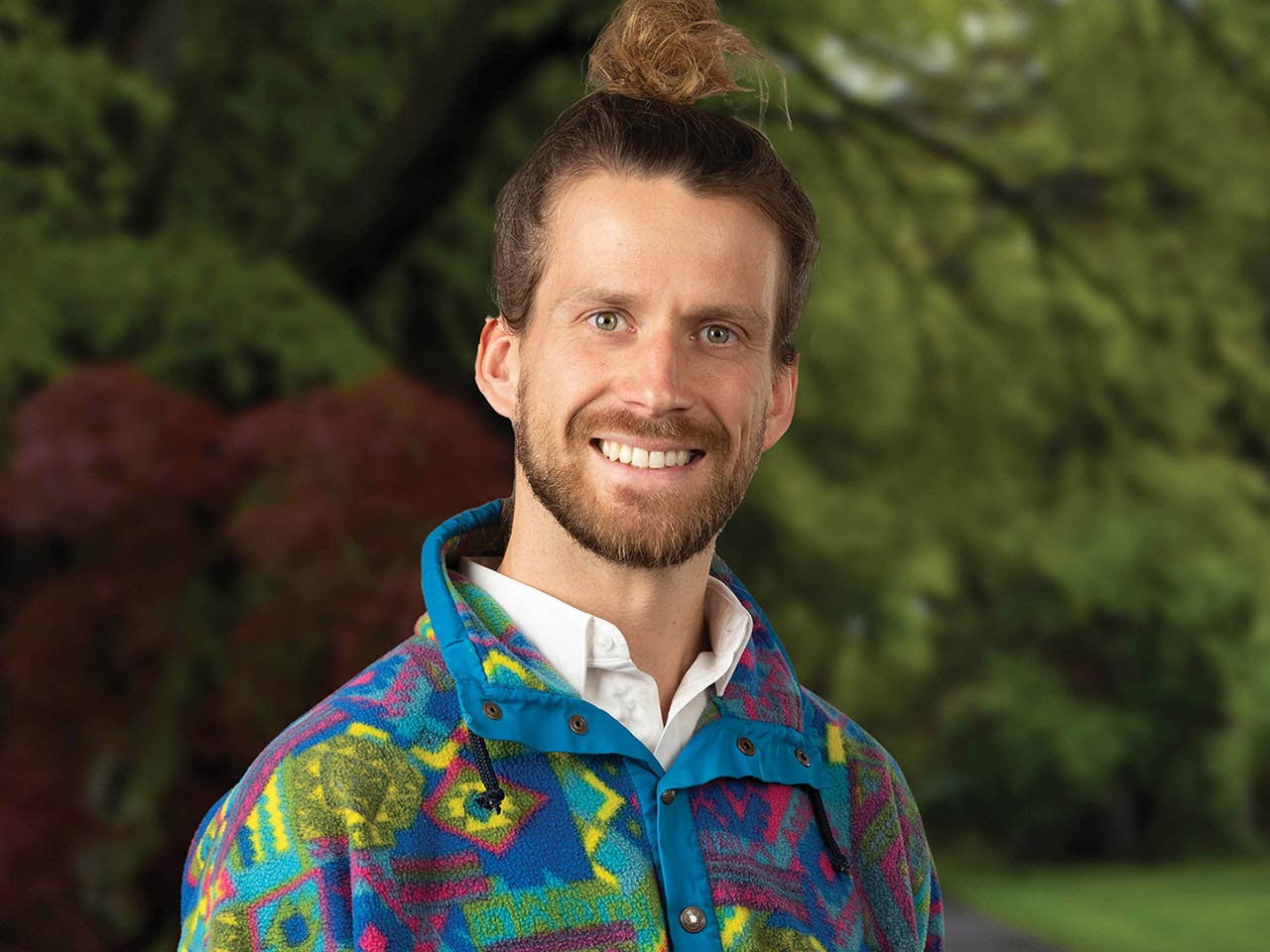
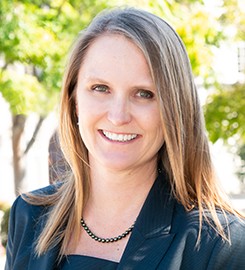
David Klindt is Assistant Professor at Cold Spring Harbor Laboratory, leading research at the intersection of biological systems and artificial intelligence. His lab investigates how brains process sensory information and generalize knowledge across contexts, studying neural representations to inspire robust AI models. Research combines computational neuroscience and machine learning to develop algorithms mimicking biological learning efficiency. Current projects examine latent computing in biological neural networks through dynamical systems frameworks, sparse coding principles in neural representations, and geometric organization in visual processing. His group develops methods for mechanistic interpretability, self-supervised learning identifiability, and compute-efficient inference. Recent publications analyze toroidal representations in grid cells, retinal feature detection, and Cryo-EM structure disentanglement. Dr. Klindt's work has been recognized through publications in Nature Communications, eLife, and NeurIPS. Before joining CSHL, he was a Machine Learning Research Scientist at Meta Reality Labs and postdoctoral researcher at Stanford University and NTNU. He holds a Ph.D. in Computational Neuroscience and Machine Learning from the University of Tübingen.
Anjali Vats is an Associate Professor of Law at the University of Pittsburgh School of Law with a secondary appointment in the Department of Communication. Her work bridges legal scholarship with critical race theory, focusing on the intersection of intellectual property law and racial justice. She has established herself as a leading voice in Critical Race Intellectual Property scholarship. Professor Vats's research centers on the racial dimensions of intellectual property law, examining how copyright, trademark, and patent systems perpetuate racial hierarchies and white supremacy. Her scholarship explores the whiteness of intellectual property frameworks, the erasure of Black intellectual labor, and the potential of critical race theory as a methodology for intellectual property research. She has developed the field of Critical Race Intellectual Property (CRT-IP), which analyzes how intellectual property law constructs racial categories and reinforces racial inequality in the United States and globally. Her publication record reveals a clear trajectory of developing Critical Race Intellectual Property as a distinct scholarly field. Beginning with foundational works like 'Critical Race IP' (2018) and 'The Color of Creatorship' (2020), she has systematically examined how intellectual property law shapes racial categories and citizenship. Her more recent work expands into digital spaces, examining racial dynamics in cyberlaw and addressing geopolitical dimensions of intellectual property through a critical race lens. The 2024 publications on Chinese and Russian cybercrime in global racial orders and knowledge anti-imperialism demonstrate the continued evolution of her scholarship into transnational and decolonial frameworks. Professor Vats's research has been published in leading law journals including the Cardozo Arts & Entertainment Law Journal, University of Pittsburgh Law Review, IDEA: The IP Law Review, and the LSU Journal for Social Justice & Policy. Her work has been featured in edited volumes from prestigious publishers including Stanford University Press, Oxford University Press, and the University of California Press. Her scholarship has been cited in legal discourse on race and intellectual property, with particular attention to how copyright frameworks erase Black intellectual contributions while centering white creators. Her collaborative work, particularly with Deidre A. Keller, has been instrumental in establishing Critical Race Intellectual Property as a viable scholarly methodology. The co-authored publications demonstrate a sustained intellectual partnership focused on developing transdisciplinary methods to address the 'unbearable whiteness' of intellectual property law. Her more recent collaboration with Sheila I. Velez Martinez on 'Knowledge Anti-Imperialism in a Propertied World' signals an expansion of her scholarly interests into anti-imperial frameworks for analyzing intellectual property systems.
Sarah Carton is a Teaching Professor in the Psychology Department at Rutgers University, part of the School of Arts and Sciences. She joined Rutgers in Fall 2019 after earning her Ph.D. in the Cognition & Perception Program at New York University (2008). Her research focuses on developmental psychology, visual perception, and cognitive development in infants and young children. She teaches courses such as Introductory Psychology, Drugs & Behavior, Sensation & Perception, and Cognition, with upcoming courses like Perception of Color (PSY 2xx). Dr. Carton’s research interests include object recognition, visual illusions, perceptual categorization, infant development, and eye-tracking methodologies. Her work explores how infants perceive impossible figures, haptic exploration of objects, and transitional saccades in response to visual stimuli. She investigates foundational questions about how infants distinguish possible from impossible objects and develop spatial and dimensional understanding through multisensory interactions. Her teaching portfolio includes undergraduate courses at both Livingston and New Brunswick campuses. She actively contributes to educational initiatives in psychology, emphasizing evidence-based pedagogy. Dr. Carton’s current research trends span perceptual development, cognitive differentiation in infants, and the role of visual and haptic modalities in forming conceptual categories. Dr. Carton’s work has been published in leading journals, with recent studies examining young children’s understanding of object coherence and infants’ visual responses to paradoxical stimuli. Her research integrates behavioral experiments and eye-tracking technology to unravel early perceptual and cognitive processes.
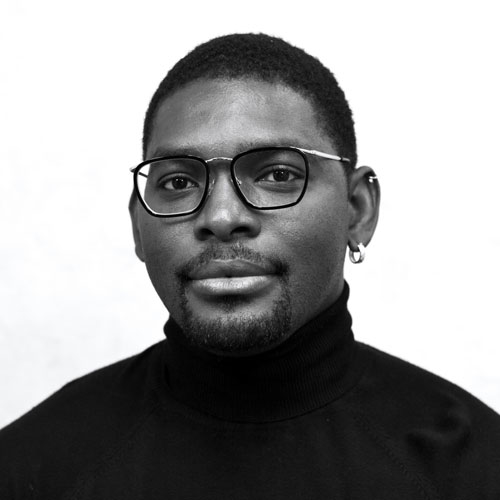
Drexler James is an Assistant Professor of Psychology at the University of Minnesota, Twin Cities, and an affiliate faculty member of the Robert J. Jones Urban Research and Outreach-Engagement Center. His research focuses on the social and psychological determinants of health among minoritized groups, particularly African American adults and men of color who have sex with men. He also examines the health consequences of biological race essentialism, using intersectionality as a framework to understand health inequities. James holds a B.Sc. in Psychology from the Illinois Institute of Technology and a Ph.D. in Social & Personality Psychology from the University of Illinois at Chicago, with a minor in Community Health Research. His specialties include racism and health, psychological essentialism, and internalized oppression. As the primary investigator of the Health, Intersectionality, Essentialism, & Stigma (HIES) Research Team, he investigates how stigma operates dynamically across perceivers and targets to reinforce health disparities. Recent work explores barriers to healthcare access, internalized racism’s mental health impacts, and the socio-cultural implications of racialized stereotypes. His academic contributions span over 20 peer-reviewed articles addressing race-related health disparities, internalized oppression, and the psychological impacts of systemic racism. While no formal awards are listed, his work demonstrates significant engagement with marginalized communities’ health challenges.
Carolle Charles is an Associate Professor in the Department of Sociology and Anthropology at the Weissman School of Arts and Sciences, Baruch College, City University of New York. With a career spanning several decades, she has established herself as a leading scholar in Haitian Studies, Gender Studies, and Immigration Studies, with particular focus on the Haitian diaspora experience in the United States. Education: Ph.D., Sociology, SUNY-Binghamton M.A., Political Science, UQUAM, Montreal Canada B.A., Political Science, UQUAM Montreal, Canada B.A., Political Science, U. de Chile Professor Charles's research centers on the complex intersections of race, gender, and immigration, particularly examining how Haitian immigrants navigate identity formation in the United States. Her work challenges conventional understandings of Blackness by exploring how Haitian immigrants experience and redefine racial categories within the American context. She has made significant contributions to understanding Haitian women's experiences, both in Haiti and in diaspora communities, with particular attention to how gender intersects with class, race, and national identity. Her scholarly work reveals consistent themes across decades of research: the fluidity of racial identity among Haitian immigrants, the gendered dimensions of migration and settlement, and the political consciousness that emerges from the Haitian diaspora experience. Professor Charles has documented how Haitian immigrants have actively reshaped American understandings of Blackness while simultaneously maintaining connections to their homeland. Scientific Awards: Fulbright Fellow (2000-2001) Community Services Award from Haitian Cultural Society (1994) Baruch College Research Fellowship (1982) Sociology Department Fellowship at SUNY-Binghamton (1979-1982) Professor Charles has served as a dedicated mentor to numerous students through independent study courses and has been actively involved in institutional service at Baruch College, including serving on the Latin American and Caribbean Studies Committee, the Social Affairs Committee (as Chair), and the School of Social Sciences Mentoring Program. She has also contributed significantly to professional organizations, notably serving as President of the Haitian Studies Association (2016-2017) and holding leadership positions in the Caribbean Studies Association. Her community engagement extends to founding roles in organizations like AFSC/Haitian Community Dialogue and DWA FANM, a Haitian Immigrant Women Organization.
Dr. Rohini Rai is a Lecturer in the Sociology of Race at Brunel University London's Department of Social and Political Sciences, within the College of Business, Arts and Social Sciences. Her work critically examines racialization, global racisms, and decolonial praxis in educational and urban contexts. PhD from University of Manchester (2019) MA and BA in Sociology from University of Manchester and Miranda House (University of Delhi) respectively Research Focus: Engages with postcolonial and decolonial theories to analyze racialized identities in the Himalayas and Northeast India, urban spatial dynamics in Delhi, and the 'Decolonial turn' in British academia. Her scholarship bridges Global South urbanisms with critical race studies. Publications span journals like Ethnic and Racial Studies and Asian Ethnicity , addressing topics from racialized microaggressions to the political economy of 'world-class' city narratives. She also explores the transformation of colonial racial categories into contemporary neoliberal frameworks.
Prof. Anna Franklin is a Professor of Visual Perception and Cognition at the University of Sussex's School of Psychology. She leads the Sussex Colour Group and Sussex Baby Lab , focusing on human color perception, development, and neural representation. Her research combines cognitive psychology, developmental science, and neuroscience to explore how color perception develops, influences aesthetics, and relates to conditions like autism. Key projects include ERC-funded initiatives studying environmental impact on color perception and developing the ColourSpot diagnostic app for childhood color vision deficiency. She also serves as Deputy Director of Research and Knowledge Exchange for the School of Psychology. Education includes a BA from the University of Nottingham and a PhD from the University of Surrey, followed by a postdoctoral fellowship. Her work spans 107+ publications, emphasizing interdisciplinary methods like hyperspectral imaging and fMRI. Collaborations include industry partnerships with ETTA LOVES and COSATTO to apply infant visual preference research in product design. Research grants include European Research Council awards (Starting Grant 2012-2017, Consolidator Grant 2018-2025) and a Proof of Concept grant for ColourSpot . Her labs investigate cross-cultural color categorization, infant aesthetics, and neural correlates of color processing. Future work focuses on calibrating visual systems to environmental statistics and improving early childhood color vision screening.
Robin D. Muhammad is an Associate Professor and Chair of the Department of African American Studies at Ohio University's College of Arts and Sciences. He is based in Bentley Annex 315 on the Athens Campus and contributes significantly to both teaching and research in African American history and labor studies. Education: Ph.D. in History, Carnegie Mellon University M.S. in History and Social Policy, Carnegie Mellon University B.A. in History and Spanish, University of California at Davis Dr. Muhammad is a labor historian whose research focuses on African American industrial workers, particularly in 20th-century California. His work explores the intersections of race, labor, federal policy, and technological change, with a special emphasis on shipbuilding communities and political movements like Garveyism. He teaches foundational courses such as Introduction to African American Studies , African American History I and II , and specialized topics including History of the Black Worker and The Black Press in North America . His recent publications reflect a strong trajectory in African American labor history, civil rights movements, gender and work, and transnational Black politics. Themes across his articles include racial segregation in wartime industries, Black women's labor activism, the Double V Campaign, and the global reach of Garveyism. His forthcoming book, Arsenal of Liberation , synthesizes much of this research into a comprehensive study of African American workers in the San Francisco Bay Area. Scientific Awards and Honors: Special 1804 Library Endowment, Ohio University (2007) Arts and Humanities Junior Faculty Endowment, Ohio University (2007) Goldman Award for Excellence in Graduate Teaching, Carnegie Mellon University (2004) Carnegie Scholar, Carnegie Mellon University (1996–2000) Dr. Muhammad is actively involved in university service, having co-chaired the MLK Celebration Committee and served on the University Curriculum Council, the Advisory Board for the Global Studies Program, and the Black Alumni Reunion Advisory Committee. He has secured research grants and contributed extensively to academic encyclopedias and journals, establishing himself as a key scholar in African American labor and political history. No information is available about advisees or laboratory/team affiliations.
Professor Annette Byrne is a leading academic at RCSI University of Medicine and Health Sciences , where she serves as Professor of Physiology and Head of the Precision Cancer Medicine (PCM) Group. She has held this position since 2019 after progressing through roles as Lecturer (2008), Senior Lecturer (2013), and Associate Professor (2017). Her research focuses on precision medicine approaches for colorectal and brain cancers , integrating multi-modality molecular imaging , Next Generation Sequencing , and patient-derived xenograft models . PhD in Cell Biology (University of York, 1999) John Kerner Fellowship in Gynaecologic Oncology (UCSF, 1999-2001) Scientist at Pharmacyclics Inc. (2001-2003) Senior Scientist at Angion Biomedica Corp. (2003-2005) Principal Investigator at UCD Conway Institute (2005-2008) Her research interest lies in precision cancer medicine , particularly elucidating predictive biomarkers (genomic, transcriptomic, proteomic) and identifying novel therapeutic targets . Key methodologies include radiomics , fluorescence-guided surgery , and systems modeling of apoptosis pathways. She has pioneered Ireland's first Tumour Xenograft Facility and Translational In Vivo Imaging Centre . Recent publications highlight her work on cross-species radiomics , cell-free DNA analysis , and glioblastoma microenvironment subtyping . Her Marie Curie networks (Gliotrain, Glioresolve) and COLOSSUS project have trained 25+ PhD researchers in brain cancer therapeutics. Over €45M in national/international grants Member of Royal Irish Academy (2025) Highly cited in Cancer Discovery , Annals of Oncology , and Nature journals She supervises multiple PhD candidates and leads the RCSI Precision Cancer Medicine Group , which utilizes computational approaches and molecular imaging to improve cancer treatment outcomes. Her GLIORESOLVE and EDIReX projects focus on tumor microenvironment manipulation and distributed PDX infrastructure.
Kate Laskowski is an Associate Professor in the Department of Evolution and Ecology at University of California, Davis , focusing on behavioral diversity and plasticity. Her research explores how evolutionary processes shape developmental mechanisms generating individual variation. Education: B.S. in Biological Sciences (2006, UMBC), Ph.D. in Integrative Biology (2013, University of Illinois) Her work integrates ultimate and proximate perspectives to analyze how genetic, parental, and experiential cues build phenotypes. Recent research emphasizes clonal fish models to study non-genetic origins of behavior, eco-evolutionary dynamics, and collective behavior across scales. Publications from 2023-2025 highlight themes in behavioral repeatability , predation risk responses , genetic life-history trade-offs , and social conformity vs. individuality . Her methods combine experimental studies with statistical modeling and meta-analytic frameworks. Scientific Awards: Sloan Fellow (2023) Kate collaborates with the Center for Population Biology and advises in the Animal Behavior and Population Biology graduate programs. Her lab investigates behavioral individuality in clonal systems, with applications to conservation and evolutionary theory.
Rachel J. Anderson is a Professor of Law at the William S. Boyd School of Law, University of Nevada, Las Vegas (UNLV), where she serves as Director of the International, Transnational & Comparative Law Program and Co-Director of the Business & Commercial Law Concentration. Her academic and professional work bridges legal scholarship, public service, and institutional leadership. University: University of Nevada, Las Vegas School: William S. Boyd School of Law Rank: Professor of Law Email: rachel.anderson@unlv.edu Phone: 702-895-5806 Education: J.D., University of California, Berkeley, School of Law M.A., Stanford University, International Policy Studies Zwischenprüfung, Humboldt-Universität zu Berlin Professor Anderson teaches Business Organizations, International Business Transactions, and International Law. Her research centers on good governance across public and private sectors, with emphasis on business law, international law, and poverty law and policy. She explores how legal frameworks can promote equity, human rights, and sustainable development, particularly in transnational contexts. Her recent scholarship spans topics such as global corporate citizenship, gender equality in the workplace, transnational corporate accountability, and colonial reparations. The publications reflect a consistent engagement with structural inequities and the role of law in addressing them. Her work appears in journals like Denver University Law Review , Michigan State Journal of International Law , and California Law Review , as well as in edited volumes and policy commentaries. Scientific Awards and Honors: UNLV 2024 Community Engagement Service-Learning Award Outstanding Non-Traditional Career Award, National Bar Association Women Lawyers Division, 2024 State Bar of Nevada, Medal of Justice, 2012 Lawyers of Color Magazine, Law School Diversity 50 Under 50 List, 2014 Multiple congressional and state-level recognitions for public service Professor Anderson has held significant public service roles, including General Counsel for the Office of the Nevada Attorney General (2019–2021) and Director of the Poverty Law & Policy Clinic (2023–2025). She is active in professional organizations such as the Association of American Law Schools (AALS), where she was elected Chair-Elect of the Section on Poverty Law in 2025, and serves on the Board of Directors for Nevada Legal Services. She also contributes to national conversations on democracy, voting rights, and diversity in the legal profession. Labs, Teams, and Professional Affiliations: Member, American Society of Comparative Law’s Board of Directors Member, Nevada Supreme Court’s Access to Justice Commission Board Member, Nevada Legal Services Leadership roles in AALS Sections on Poverty Law and Clinical Legal Education Contributor to National Bar Association initiatives on racial equity and mental health
Michael Webster is a Professor of Psychology at the University of Nevada, Reno, serving as Co-Director of the Graduate MS/PhD Neuroscience Program and Undergraduate BS Neuroscience Program, and Director of the NIH-funded COBRE for Integrative Neuroscience. His research focuses on visual perception, particularly how perception adapts to environmental and physiological changes. He leads major initiatives like the $10 million COBRE grant establishing an fMRI facility and neuroscience programs. Education: Ph.D., Psychology, University of California, Berkeley (1988); B.A., Psychology, University of California, San Diego (1981). Research Interests: Cognitive neuroscience of vision, visual adaptation mechanisms, color and face perception, and cultural/environmental influences on perception. Notable contributions include discoveries about face adaptation, color constancy, and blur correction. His work is funded by NIH grants and recognized through awards like the Outstanding Researcher Award. Grants/Awards: NIH COBRE Directorship, foundation professorship, grants for radiology adaptation studies. His lab (Visual Perception Lab) explores neural and cognitive bases of visual processing.
Lisa P. Ramsey is a Professor of Law at the University of San Diego School of Law, where she teaches Trademark Law, International Intellectual Property, Civil Procedure, Trademark Litigation, Intellectual Property Survey, and Intellectual Property Seminar. She joined the USD law faculty in 2004, progressing from Assistant Professor (2004-2006) to Associate Professor (2006-2009) and then to full Professor (2009-present). Professor Ramsey's research focuses on the intersection of trademark law and free speech rights, examining how trademark protection can conflict with First Amendment protections. Her scholarship addresses potential conflicts between trademark laws and free expression, explaining how trademark protection of certain inherently valuable words, symbols, and product features can harm fair competition and freedom of expression. She has written extensively on non-traditional trademarks, the impact of Supreme Court decisions like Matal v. Tam on trademark registration, and the application of First Amendment principles to trademark enforcement. Her publications reveal a consistent focus on balancing trademark rights with free expression, with particular attention to how trademark law affects artistic expression, political speech, and competition. Recent work examines the implications of the Supreme Court's decisions in cases like Jack Daniel's v. VIP Products and Vidal v. Elster for trademark enforcement and registration. Thorsnes Prize for Outstanding Legal Scholarship (2020-2021) Class of 1975 Endowed Professorship (2017-2018) Order of the Coif Women of Influence in Law 2025 Honoree (San Diego Business Journal) Professor Ramsey actively participates in professional organizations, serving on the Trademark Law Committee of the American Intellectual Property Law Association and contributing to the International Trademark Association's Model Trademark Law Guidelines. She has testified before the U.S. Senate Judiciary Committee's Intellectual Property Subcommittee regarding the First Amendment implications of the proposed No FAKES Act. Her upcoming book, 'Trademarks and Free Speech: Conflicts and Resolutions,' is scheduled for publication by Cambridge University Press in December 2025.
Tomika Greer, Ph.D., serves as Associate Professor in the Department of Human Development and Consumer Sciences at the University of Houston's College of Technology, where she coordinates both the graduate and undergraduate Human Resource Development (HRD) programs. Her extensive teaching portfolio spans 19 courses delivered online and face-to-face, covering quantitative methods, organizational learning, talent management, and e-learning design. Her academic credentials include: Ph.D. in Human Resource Development, Texas A&M University M.Ed. in Instructional Technology, Texas Tech University B.S. in Chemical Engineering, North Carolina State University Dr. Greer's research program critically examines career development pathways for women, veterans, and underrepresented populations through lenses of gender diversity, work-life integration, and remote work dynamics. Her scholarship bridges STEM education equity and organizational behavior, with particular focus on first-generation college students and military-to-civilian transitions. Analysis of her 15 most recent publications (2016-2023) reveals three dominant trajectories: 1) Feminist HRD evolution toward gender diversity beyond binary frameworks, 2) Pandemic-era telework adaptation strategies and their impact on career trajectories, and 3) Systematic investigations of structural barriers facing marginalized professionals. Her work consistently employs mixed-methods approaches across journals like Frontiers in Psychology and International Journal of HRD. Major recognitions include: Double AHRD Book of the Year Award (2023) for edited volumes on critical HRD Scholarly Publication Award from UH Women of Color Coalition (2023) Inclusion in Cell Press's 1,000 Inspiring Black Scientists list (2020) Dissertation of the Year Award from American Society of Training and Development (2011) Texas A&M Diversity Fellowship ($63,000) during doctoral studies As Faculty Advisor for the Student Society of HRD, she has secured Student Organization of the Year awards (2018, 2021) while mentoring students through the Graduate Enhancement for Minority Studies (GEMS) program. Her grant work focuses on minority recruitment in STEM through case studies at Hispanic-Serving Institutions. Dr. Greer actively shapes the field through her re-elected service on the Academy of HRD's International Board of Directors (2018-2024) and leadership in curriculum development for HRD undergraduate education, emphasizing research-based pedagogical approaches.
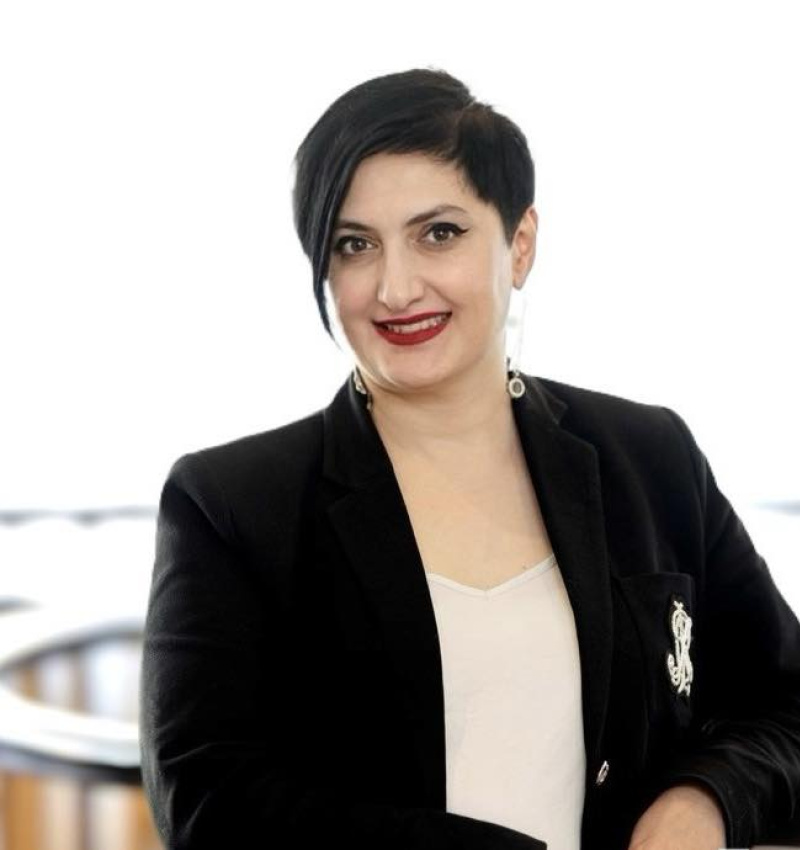
Nvard A. Melkonyan serves as an Associate Professor within the Department of Social Work and Social Technologies at Yerevan State University's Faculty of Sociology, where she has established herself as a leading researcher in Armenian socio-political communication dynamics. Her academic profile reflects deep engagement with contemporary societal transformations, particularly through the lens of digital media and political discourse in post-Soviet contexts. Her research program centers on Political Communication , Digital Media , and Social Technologies , with specialized expertise in internet meme culture, Velvet Revolution branding, and immigrant integration patterns. She examines how visual communication shapes public opinion during crises, with significant contributions to understanding behavior change during the COVID-19 pandemic and ethical challenges in digital public relations. Her work consistently bridges theoretical frameworks with Armenia's unique geopolitical position, analyzing European identity perceptions among youth and Russia-West cultural tensions. Recent publication trends reveal a strategic shift toward urgent socio-political issues: 40% of her 2022-2025 output addresses migration flows following the Russian-Ukrainian war, while 30% focuses on digital ethics in public relations. Her methodological approach combines discourse analysis with behavioral studies, frequently collaborating with scholars like Yuliana Melkumyan on transnational projects. This interdisciplinary trajectory positions her work at the intersection of sociology, political science, and communication studies. Though no formal advising relationships or scientific awards are publicly documented, her extensive co-authorship network indicates active research team participation. Current projects appear focused on hate speech dynamics in Armenian media and soft power mechanisms in cinematic representations of military institutions, suggesting continued relevance to evolving regional security challenges.