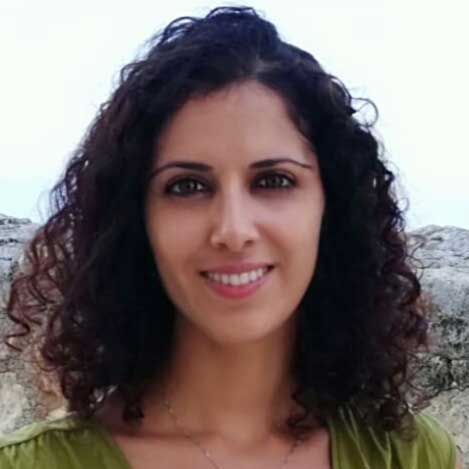
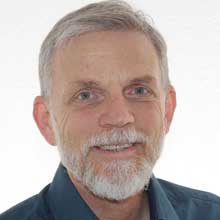
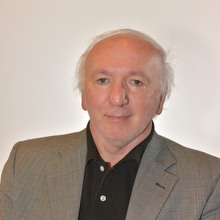
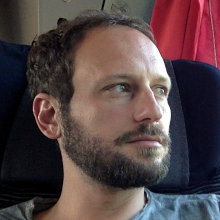
Ruba Salih is a Full Professor of Anthropology at the Department of the Arts, University of Bologna. She holds a Laurea in Political Science from the University of Bologna (1994) and a PhD in Social Anthropology from the University of Sussex (2000), supported by a Marie Curie grant. Previously, she served as Full Professor at SOAS, University of London (2010–2022), and as Senior Lecturer at the University of Exeter (2007–2010). Her work focuses on transnational migration, diasporas, colonialism, Palestinian refugee politics, gender, and trauma studies. Research highlights: aesthetics of waiting among Palestinian refugees, decolonial environmental justice, and intersectional solidarity movements Leadership roles: Board Member of the Arab Council for the Social Sciences (2015–2019), Executive Board member of Insaniyyat (Palestinian Anthropologists Association) Publications include Gender in Transnationalism and Musulmane Rivelate (winner of Premio Pozzale 2011). Recent work explores the Anthropocene through colonial ecological destruction in Palestine.
Glenda Sluga is a Full-time Professor with a Joint Chair in the Department of History at the European University Institute (EUI) and also holds a concurrent appointment at the Robert Schuman Centre for Advanced Studies. She is a leading scholar in international history, capitalism, and globalization, with a strong focus on 20th-century economic and diplomatic thought. Her research is widely recognized and funded by prestigious grants, including an ERC Advanced Grant and an Australian Research Council Laureate Fellowship. Her research interests span a broad range of fields including: International and Diplomatic History Global and Transnational History Capitalism and Economic History Environmental and Cultural History European Integration and Decolonisation Intellectual and Political History Recent publications highlight her engagement with global economic thinking, climate and capitalism, the history of international organizations, and the construction of international order. Her work often bridges conceptual and empirical analysis, focusing on figures like Barbara Ward and Margaret Mead, as well as major events such as the 1972 UN Conference on the Human Environment. Themes of memory, nationalism, and global publics recur across her recent output, indicating a deepening exploration of the cultural dimensions of internationalism. Her scientific honors include: European Research Council Advanced Grant (2020) Australian Research Council Kathleen Fitzpatrick Laureate Fellowship (2013) Fellow of the Australian Academy of the Humanities Glenda Sluga actively mentors PhD students and serves as second reader for numerous candidates, demonstrating strong commitment to academic training. She leads major research initiatives such as the project on ‘Twentieth Century International Economic Thinking’ and participates in working groups on business history, diplomatic history, and planetary futures. There is no indication of lab-based research, but her leadership in interdisciplinary clusters and grant-funded programs underscores her role in shaping collaborative academic environments.
Cristina Dondi serves as a Full Professor in the Department of Modern Literature and Culture at Sapienza University of Rome's Faculty of Arts and Philosophy. Her academic work centers on the history of the book with specialized expertise in incunabula (15th-century printed books), early book trade networks, and digital humanities methodologies. She teaches the "History of the Book" course for Global Humanities students, delivering lectures in person at Rome's Faculty of Arts and Philosophy during the 2024-2025 academic year. Her research spans material evidence of early printed books, Venetian printing practices, Dante's textual circulation, and library transformations during religious secularization. She pioneers digital approaches through projects like 15cBOOKTRADE and CERL, developing visualization tools for historical book movement data and collaborative digital infrastructures. Her work bridges traditional book history with computational analysis, emphasizing how physical artifacts reveal cultural and commercial networks. Analysis of her 2021-2023 publications shows consistent integration of digital tools with historical scholarship, particularly regarding Italian incunabula circulation and MEI database applications. She frequently examines Venetian commercial practices, Dante's reception, and collaborative digital resource creation, demonstrating how visual analytics transforms understanding of pre-modern book economies. Scientific Awards: No specific awards were documented in the provided sources. Professor Dondi leads significant research initiatives including the 15cBOOKTRADE project and Consortium of European Research Libraries (CERL) collaborations, which involve multi-institutional teams developing digital ecosystems for book historical research. These projects generate scholarly publications, digital tools, and educational resources while securing substantial research funding for infrastructure development and international conferences. She actively shapes the CERL digital ecosystem and 15cBOOKTRADE project framework, fostering interdisciplinary collaboration between historians, librarians, and computer scientists. Her current work focuses on expanding Material Evidence in Incunabula (MEI) applications and creating open-access platforms for analyzing early print culture across European collections.
Caterina Stefania Romeo is an Associate Professor in the Department of Modern Literature and Culture at Sapienza University of Rome's Faculty of Letters and Philosophy. She teaches courses including Introduction to Literary Criticism, Gender, Race, and Mobilities: Narratives and Counternarratives, and Literature, Migration, Inequality. Her office is located on the 4th floor of the Faculty of Letters and Philosophy in Studio B. Dr. Romeo specializes in Postcolonial Studies, Gender Studies, Migration Studies, and Race and Ethnicity Studies, with particular focus on Italian literature and transnational perspectives. Her research explores the intersections of race, gender, and postcoloniality in contemporary Italian contexts, examining how these dynamics shape national identity, urban spaces, and literary production. She has made significant contributions to understanding postcolonial Italian literature, Black Italian experiences, and intersectional approaches to cultural studies. Her scholarly work demonstrates consistent engagement with contemporary issues in Italian society, particularly regarding migration, race relations, and gender dynamics. She has developed innovative frameworks for analyzing how postcolonial perspectives reshape understandings of Italian national identity and cultural production. Premio nazionale di divulgazione scientifica (2014) - finalista John Fante Prize (2009) for La pelle che separa di Kym Ragusa Acerbi Special Prize for Women's Writing (2008) for Vertigo di Louise DeSalvo American Italian Historical Association Award for best doctoral thesis in Italian American Studies (2000) Dr. Romeo has supervised numerous doctoral students including Christina Maraboutaki, Giulia Fabbri, Valentina Quaresima, Barbara De Vivo, Emily Marogi, and Karisma Wilson. She has received multiple research grants including Transliteratures Fellowship, Princeton-Pettoranello Foundation Dissertation Grants, and various post-doctoral fellowships. Her work demonstrates sustained engagement with both theoretical frameworks and practical applications in postcolonial, gender, and migration studies. She is actively involved in organizing academic events, conferences, and seminars focused on postcolonial studies, gender studies, and migration. Dr. Romeo has collaborated extensively with international scholars and institutions, reflecting her transnational approach to research and teaching.
Stéphanie Novak is a Full Professor at the Department of Comparative Linguistic and Cultural Studies, Ca' Foscari University of Venice. Her research focuses on European institutions, transparency, accountability, collective decision-making, and international negotiations. She has published extensively in journals like the Journal of Common Market Studies and Global Policy, and co-edited a volume with Jon Elster on majority decisions. Current Assignments: Member of the Steering Committee of the Ca' Foscari International College; Delegate for Internationalization Research Interests include: EU institutional transparency and accountability Collective decision-making and consensus Intergovernmental relations and crises Legislative process conflict-resolution International negotiation dynamics Democratic compromise in supranational contexts Her 2023-2024 publications analyze transparency dilemmas, consensus fragility, and digital policy interoperability. Earlier works (2005-2020) examine voting norms, institutional hypocrisy, and EU global representation. Scientific Awards: Dalloz-Bibliothèque de thèses prize (doctoral thesis) Editorial Involvement: Associate Editor, Journal of European Policies (since 2017) Editorial Board, La Fabrique du Politique (since 2018) Former Board Member, La Vie des Idées (2009-2021) Grants & Projects: POLiN Project (2023-2025): Interoperability in EU digital health policies Universalism and Right of Man Project (2023-2026): Late Enlightenment political conditions Observatoire des Institutions Européennes (2014-2021): EU institutions and transparency
Lucia Avallone is an Associate Professor at the University of Bergamo, teaching Arabic language and literature. She holds a PhD in 'Near Eastern and Maghreb Studies. Cultural Specificities and Intercultural Relations' from the University of Naples 'L'Orientale' (2011) and graduated from the University of Turin (1989). National Scientific Qualification for Full Professor in Cultures of the Ancient Near East, Middle East, and Africa (2024-2035) Member of AIMA (International Association for the Study of Middle and Mixed Arabic) Advisor for Master's Degree in Modern Languages for International Communication and Cooperation (LM-38) Member of PhD programs in Philological and Linguistic Studies (Bergamo) and Linguistic Sciences (Bergamo-Pavia) Her research focuses on modern and contemporary Arabic language and literature , especially linguistic variation , code switching between standard and vernacular Arabic , and Arabic-European language contact . She analyzes political discourse and develops methodologies for Arabic language teaching, with particular attention to dialect-standard dynamics in literary and pedagogical contexts. Recent publications examine: Linguistic creativity in contemporary Egyptian fiction Sociolinguistic aspects of modern Arabic narratives Translation challenges between Arabic dialects and Standard Arabic Historical connections between Arabic and Mediterranean cultures She supervises master's theses and participates in doctoral committees, emphasizing: Intercultural communication Postcolonial Arabic literature Language pedagogy innovations
Dario MICCOLI is an Associate Professor at Ca' Foscari University of Venice, serving as Director's Delegate for Job Placement. He is affiliated with the Department of Asian and North African Studies, focusing on Jewish history, Mediterranean studies, and diaspora narratives. His research emphasizes cultural memory, colonial legacies, and transnational Jewish communities. His research interests include the history of Jewish communities in Egypt, Morocco, Rhodes, and Israel, with a particular focus on migration, literary representation, and digital preservation of cultural heritage. Key works explore Sephardic and Mizrahi identities, postcolonial Mediterranean dynamics, and the intersection of literature and nationalism. Recent publications highlight studies on Egyptian Jewish bourgeoisies, Rhodesian colonial experiences, and Mizrahi radicalism. His work frequently bridges historical analysis with contemporary cultural discourse, examining how marginalized communities narrate their histories. Miccoli has curated several volumes on ethnic museums and edited collections on Jewish cultural expression. His teaching and administrative roles reflect a commitment to interdisciplinary approaches to Middle Eastern and Mediterranean studies.
Gloria Samuela Pagani is an Associate Professor of Arabic Language and Literature at the University of Salento, Italy. She holds a PhD in Islamic Studies from the University of Naples 'L'Orientale' (2000) and has taught since 2005 at the Department of Humanities. Her expertise spans Arabic language pedagogy, classical and modern Arabic literature, and Middle Eastern cultural history. Education: Bachelor's in Islamic Studies (La Sapienza University, Rome, 1994) PhD in Islamic Studies (University of Naples 'L'Orientale', 2000) Research focuses on Islamic mysticism, Arabic literary traditions, and intercultural translation. She has conducted research in Damascus, Cairo, and Paris, and taught at universities including La Sapienza Rome and the Ecole des Hautes Études en Sciences Sociales (Paris). Teaching responsibilities include courses on Arabic literature, language instruction, and Middle Eastern cultural history. She co-organizes international conferences and collaborates with institutions like the Institut Français d'Archéologie Orientale and the University of Tübingen's Islamic Theology Center.
Walaa ALQAISIYA is a Research Fellow at the Department of Philosophy and Cultural Heritage within Ca' Foscari University of Venice . Her work focuses on the intersections of decolonial politics, queer theory, and Palestinian resistance against settler colonialism. Her research explores: Decolonial queering as a political praxis Anti-imperialist feminism in Middle Eastern contexts Ethnographic studies of Palestinian grassroots movements Artistic expressions of queer identity Recent publications examine: Epistemic sovereignty in Palestinian academic discourse Queer aesthetics and decolonial self-determination Gendered dimensions of Zionist sovereignty Indigenous women's decolonial narratives Her 2023 monograph Decolonial Queering in Palestine (Routledge) provides an in-depth analysis of queer activism and artistic production in Palestine, drawing on fieldwork with alQaws for Sexual and Gender Diversity.
Patrick HEINRICH is a Full Professor in the Department of Asian and North African Studies at Ca' Foscari University of Venice , where he has served since 2014, advancing to Full Professor in 2021. His academic journey includes positions in Germany, Japan, and Italy, with significant contributions to sociolinguistics, endangered languages, and language policy. He holds a Dr. phil in Japanese Studies from Gerhard-Mercator-University Duisburg (2002) and completed his habilitation at Duisburg-Essen University (2005). Research Interests: His work spans sociolinguistics , linguistic ideology , endangered languages (especially Ryukyuan languages), urban communication , and language revitalization . He has pioneered the concept of welfare linguistics , emphasizing language use as a contributor to human well-being. His research integrates historical, political, and ecological perspectives on language. Publication Trends: His recent articles (2023–2025) reflect a strong focus on decolonizing methodologies , language reclamation , and urban linguistic landscapes . He frequently publishes in international handbooks and journals, contributing to debates on identity, ideology, and language policy in Japan and beyond. His editorial leadership in volumes on Arabic sociolinguistics and Japanese communication ideologies underscores his global scholarly impact. Scientific Awards: Honorary President, Ryukyuan Heritage Language Society (2020) Honorary member, Foundation for Endangered Languages (2014) Tokugawa Award, Japanese Association for Sociolinguistic Sciences (2010) Best Dissertation of the Year, Duisburg University Society (2002) Advising, Grants, and Collaboration: While specific students are not listed, he actively mentors research and collaborates globally. He has received fellowships from DAAD, JSPS, and Erasmus, and has been a visiting professor at institutions including Toulouse Jean-Jaurès, Duisburg-Essen, and the University of Lapland. His editorial roles in journals such as East Asian Pragmatics , Contemporary Japan , and Current Issues in Language Planning highlight his leadership in the field. Labs and Teams: Although no formal lab is mentioned, he leads research networks focused on language revitalization, urban sociolinguistics, and welfare linguistics. His projects often involve international collaboration, including co-edited volumes and joint publications with scholars across Europe, Asia, and beyond.
Guido Samarani is a Senior Researcher at the Department of Asian and North African Studies , Ca' Foscari University of Venice, since 2020. Previously a Professor at the same institution (2000-2020), his work focuses on Chinese history , political transitions , and Italy-China relations . Director, Marco Polo Center for Global Europe-Asia Connections (2018-2021) Guest Professor, Zhejiang University (China) Member of multiple editorial and scientific committees including European Journal of East Asian Studies Research Interests center on: 20th-21st Century Chinese Political History Communist Party of China's Development Cold War Italy-China Interactions Global Historiography of China Publications include monographs on Mao Zedong, Red China, and the 100-year history of the CCP. His works explore the interplay between revolutionary ideology , diplomacy , and historiographical debates . Scientific Recognition : Honorary Member, Italian Association of Chinese Studies (2022-) Active in conference organization , he chaired panels on Eurasian geopolitics, Belt and Road Initiative, and comparative studies of Italian and German interactions in China. His editorial roles span journals like Mondo Cinese and Sinica Venetiana .
Giovanna Turvani is an Associate Professor at the Department of Electronics and Telecommunications (DET) at Politecnico di Torino, with affiliations in both the College of Electronic, Telecommunications and Physics Engineering and the College of Computer, Film, and Mechatronics Engineering. Scientific Branch: IINF-01/A - Electronics ERC Sectors: PE7_4, PE7_11, PE6_1, PE6_14, PE7_3 SDG Goals: Quality Education, Gender Equality, Affordable Energy, Industry Innovation Her research focuses on advanced electronics and quantum technologies, including: Logic-in-memory computing Quantum computing architectures Microwave imaging for medical and agricultural applications CAD tools for emerging nanotechnologies Embedded systems for bee health monitoring IoT solutions for bio-waste valorization Publications show strong expertise in quantum computing, nanocomputing, and microwave imaging, with recent trends emphasizing quantum optimization frameworks, in-memory architectures, and IoT-based agricultural technologies. She supervises PhD students in areas like quantum machine learning algorithms, predictive on-board systems, and quantum hardware design. Collaborations span multiple disciplines, including medical device development and agricultural electronics. Patents include innovations in microwave imaging, racetrack memory logic functions, and in-memory computing devices.
Stefano PELLO' is a Full Professor in the Department of Asian and North African Studies at Ca' Foscari University of Venice , where he specializes in Persian Language and Literature and the History of Iran in the Islamic Era. He also serves as the Director's Delegate for External Communications. His academic affiliations include long-term research positions at Columbia University and SOAS, University of London, reflecting his international scholarly reach. Education: PhD in Oriental Studies, Sapienza University of Rome (2006), thesis: 'Hindu Poets and Persian Intellectual Circles between Delhi and Lucknow (1680–1856).' Degree in Oriental Languages and Literatures, Ca' Foscari University of Venice (2001), with highest honors. High School Diploma, Classical Lyceum 'Carlo Alberto', Novara (1995). He holds advanced certificates in Persian (Dehkhoda Institute, Tehran) and Arabic (Damascus University, Cairo). Research Interests: PELLO' is a leading scholar in Indo-Persian literary culture, focusing on multilingualism, cosmopolitanism, and intercultural exchange in early modern South Asia. His work explores Persian poetry, Sufism, ethnography, and the philosophical dimensions of nature, language, and identity. He investigates how Persian functioned as a cosmopolitan medium across India, the Balkans, and the Mediterranean. Publications Trends: His recent articles analyze Mīrzā Bīdil’s poetics of nature and imagination, Persian literary representations of Varanasi, and the role of Persian in multilingual societies. The research reveals a consistent focus on textual identity, cross-cultural dialogue, and the philosophical underpinnings of Indo-Persian literary production. Scientific Contributions: Author of major monographs including Tutiyan-i Hind (2012) and Microcosmographies (2024). Translator of key Persian literary and mystical works into Italian (e.g., Hafez, Rumi, Motahhari). Editor of scholarly volumes such as Borders: Itineraries on the Edges of Iran (2016). Contributor to Encyclopaedia Iranica and Encyclopaedia of Islam . Advising and Grants: While no formal students are listed, PELLO' has directed PhD theses and mentored junior researchers. He has led international research initiatives, including workshops at the European University Institute and Ca' Foscari, often in collaboration with institutions like Columbia and SOAS. His work is supported by national and international academic networks. Labs and Teams: He has organized and convened international workshops such as 'Cultures of tahqiq from the Mughals to the Mediterranean' (2021) and 'Persian Literature in Multilingual India' (2008), fostering collaborative research on Persianate intellectual history.
Jinze CUI is an Adjunct Professor at the Department of Humanities, University of Catania (Italy), specializing in Chinese Philology. With a PhD candidacy at KU Leuven (Belgium) in Architectural Heritage Conservation and a Master's in Cultural Relic Architecture from Peking University, he bridges architectural history, cultural preservation, and public engagement. His career spans roles as a lecturer, exhibition curator, and advocate for heritage conservation in China. PhD Candidate: KU Leuven (2014–2020) Master's: Peking University (2009–2012) Bachelor's: North China University of Technology (2002–2007) His research focuses on architectural heritage conservation , analyzing wooden structures, adaptive reuse of religious buildings, and controversies in restoration practices. Articles like 'The Totem of Ideal Human Habitat' and 'Inspirations on the Adaptive Reuse of Religious Architecture' highlight his interdisciplinary approach. He actively campaigns for civil-led heritage protection, exemplified by his 2013–2014 campaign to save Chen Baochen’s residence in Beijing. Recent works explore global heritage debates , including Notre Dame de Paris restoration and Dresden’s cultural memory. His articles span journals such as ThePaper.cn and edited volumes like Chinese Heritage in the Making (Amsterdam University Press, 2018). Member: ICOMOS China Member: Beijing Cultural Relic Protection Association CUI leads international cultural relic rescue campaigns and lectures on Beijing’s architectural history, including at the 2012 Walmart China Women in Leadership Forum. He also participated in EU-funded projects like Asia Urbs Chn5-08 in Beijing (2004–2005).
Giancarlo Casale is a Full-time Professor and Head of the Department of History at the European University Institute (EUI) in Florence, Italy, a leading institution for advanced research in the social sciences and humanities. He is a specialist in the early modern Ottoman Empire and its global connections, particularly with Renaissance Europe, focusing on intellectual, diplomatic, and maritime history. His research interests include early modern history, Ottoman studies, intellectual history, cartography, cosmography, travel literature, ethnographic writing, maritime technology, and comparative empire studies. He is especially interested in the intersections between Ottoman intellectual life and Renaissance Italy, as well as the broader dynamics of global diplomacy and knowledge exchange in the early modern world. His work contributes significantly to decentering Eurocentric narratives in global history. His recent publications reveal a strong thematic focus on Ottoman intellectual practices (such as taḥqīq), cross-cultural scientific exchange, and innovative methodologies in historical research, including reflections on digital media and video games as tools for historical engagement. These works span disciplines including history of science, diplomatic history, and cultural history, with recurring sub-themes of spatial thinking, knowledge networks, and transcultural encounters. He serves on the editorial boards of several major journals, including Renaissance Quarterly , Medieval Encounters , and Arabic Humanities , and has been Executive Editor of the Journal of Early Modern History since 2011. He supervises a large cohort of PhD students, indicating an active and international research group. He is fluent in English, Italian, Turkish, French, Portuguese, and Arabic, underscoring his transnational scholarly profile. His leadership roles, editorial work, and ongoing research projects—such as the Working Group on Methods in Early Modern History and the Diplomatic/International History Working Group—highlight his central role in shaping contemporary historical scholarship.