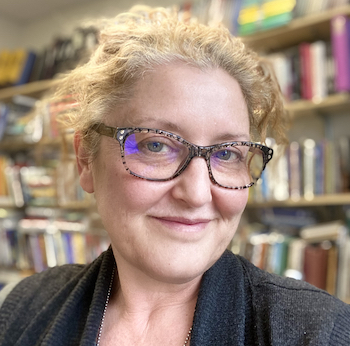
Susan Neylan is an Associate Professor in the Department of History at Wilfrid Laurier University's Faculty of Arts. Her expertise includes Indigenous history in Canada, Indigenous-Church relations in British Columbia, and colonialism. She holds advanced degrees in History and has published extensively on Indigenous resilience, missionary impacts, and cultural encounters. Her recent work critiques national narratives around Canada's 150th anniversary and residential schools. Publications analyze missionary diaries, Indigenous agency in colonial contexts, and reconciliation politics. She teaches courses on Canadian history and Indigenous studies, emphasizing community-based research methodologies.
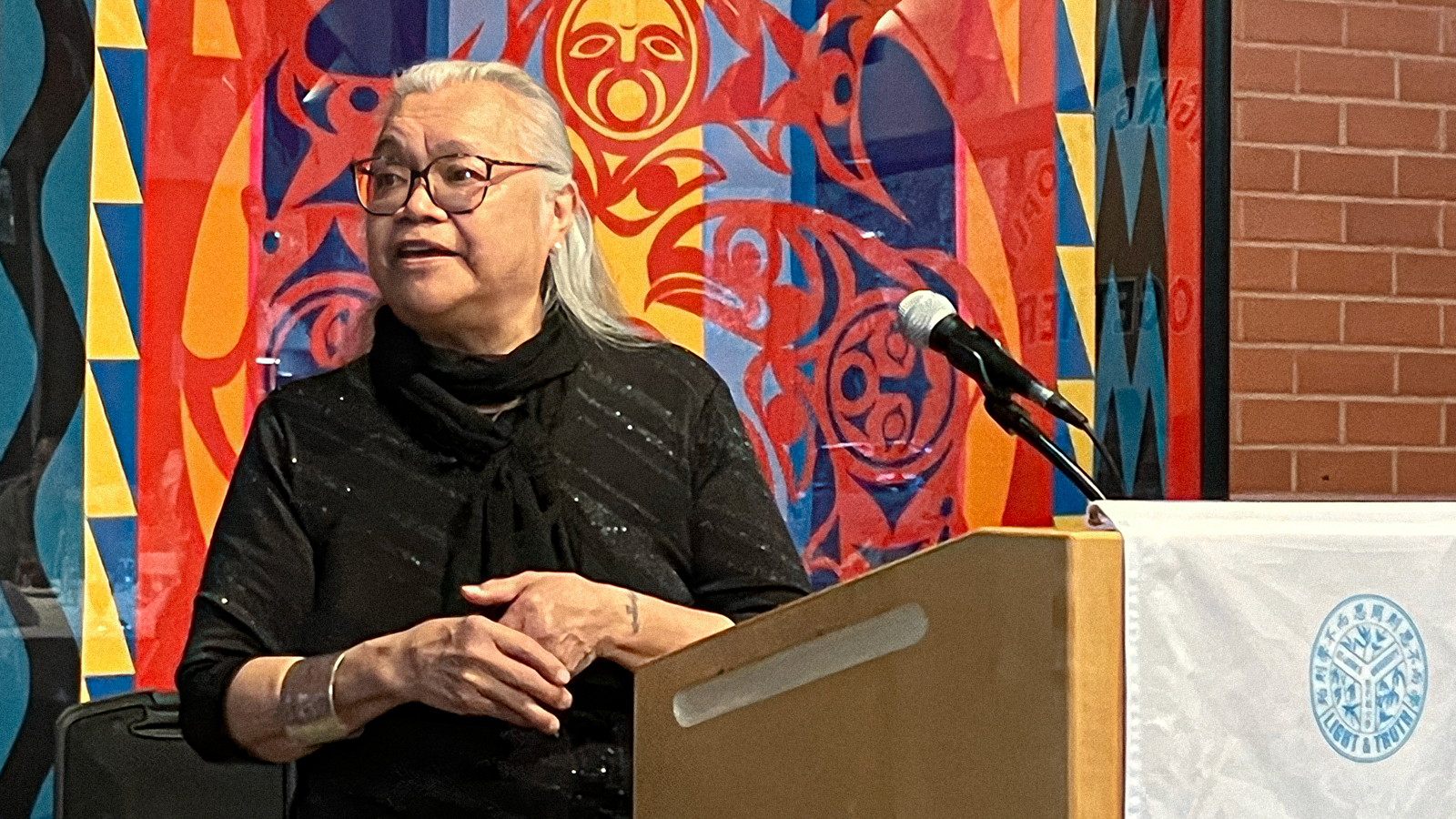
Margaretta James is a Mowachaht/Muchalaht First Nation Elder, MA student in the University of British Columbia's Institute for Gender, Race, Sexuality, and Social Justice (GRSJ), and Visiting Scholar in Residence at UBC's St. John’s College. Her research focuses on transpacific Indigenous-Asian encounters, particularly the migratory histories of Asian peoples to Yuquot (Friendly Cove) and their impacts on Mowachaht/Muchalaht communities. A mother, grandmother, and great-grandmother of Filipino and Stl’atl’imx heritage, Elder James’ work bridges her blended cultural upbringing with her academic pursuits. She collaborates with Professors JP Catungal (GRSJ) and Henry Yu (History) on her thesis, which documents historical and contemporary connections between Indigenous and Asian communities on the West Coast. Her community roles include involvement in Yuquot’s revitalization efforts, including the Annual Yuquot Spirit Summerfest. Elder James emphasizes the spiritual significance of Yuquot and the Nuu-chah-nulth principle of 'isaak' (respect with open heart and mind), guiding her research and community engagement.
Ali H. Musleh is a researcher at the University of Hawai'i at Mānoa's Hawaiʻi Research Center for Futures Studies , holding a Ph.D. in Political Science from the same institution (2022). He specializes in intersections between technology, political theory, and settler-colonialism, particularly focusing on Israel's use of drones, autonomous weapons, and AI as tools for managing life under occupation. Academic Background: Ph.D. in Political Science, University of Hawai'i at Mānoa (2022) Current Role: Researcher at Hawaiʻi Research Center for Futures Studies Key Research Areas: Settler-colonialism, AI ethics, embodied resistance, and spatial/political geographies. His upcoming book, To What Abyss Does This Robot Take the Earth? , examines how Palestinian insurgent practices challenge the legitimacy of settler states through encounters with automated military systems. Scientific Awards: Thomas JW Hill Ibrahim Abu-Lughod Fellow (2023-25)
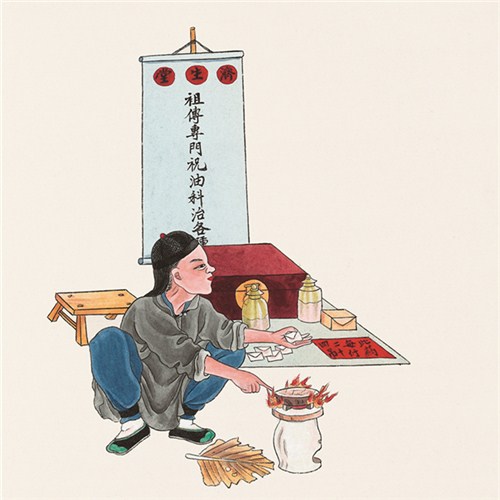
Luis Fernando Bernardi Junqueira is a D. Kim Foundation Postdoctoral Fellow and Research Fellow at Clare Hall, University of Cambridge. He holds a PhD in History from University College London (2023), awarded with no revisions, and has held research positions at Tohoku University and the University of Strathclyde. His research focuses on intersections of science, medicine, and religion in 19th-20th century China, with special attention to psychology, mental health in East Asia, and alternative medicine in South America. Education: B.A. in History (Federal University of Santa Catarina, Brazil), M.A. in Chinese History (Fudan University, China), PhD in History (UCL, UK). Awards include the 2024 Royal Asiatic Society Bayly Prize, British Association Best Thesis Award, and Leverhulme Early Career Fellowship (2025-2028). His upcoming monograph The Science of the Spirit challenges narratives of secularization by exploring how modern science reinvigorated spiritual practices among Chinese elites. Research interests include decolonizing methodologies, transnational knowledge exchange, and the role of laypeople in producing scientific knowledge. Key publications include edited volume Therapy, Spirituality and East Asian Imaginaries (2025) and articles on psychical research in Republican China, talismanic practices, and media dissemination of scientific ideas. Grants: £160k Leverhulme Fellowship, $60k D. Kim Foundation Affiliations: Royal Historical Society Associate Fellow, Royal Asiatic Society Fellow Future projects include a Leverhulme-funded study on transnational esotericism and a comparative analysis of alternative therapies in South America.
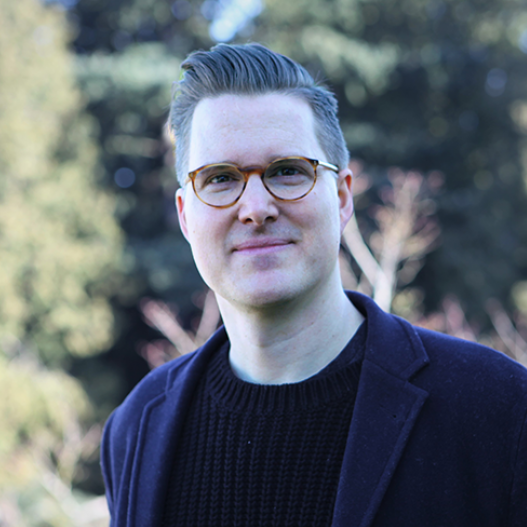
Richard Nisa is an affiliated faculty member in the School of Architecture at Carnegie Mellon University and serves as Program Lead for Sustainability in the IDeATe Program. He holds a PhD in Geography from Rutgers University and a BArch from Syracuse University, where he won the James A. Britton Memorial Prize for Outstanding Thesis. His research bridges infrastructure, technology, and architecture within historical and political contexts, with a focus on U.S. military-carcerality and transnational systems. Previously, he was an associate professor at Fairleigh Dickinson University, earning teaching awards including the 2018 Becton College Teacher of the Year and 2019 Outstanding Honors Faculty Award. He has taught transformative courses in New Jersey prisons through the NJSTEP program, exploring mass surveillance history. Nisa chairs the Urban Geography Specialty Group of the American Association of Geographers. His current book project, The Global Capture Chain: Infrastructures of U.S.-Managed Military Detainment from Truman to Trump , examines spatial tensions in military detention. His articles span journals like Journal of Historical Geography and Radical History Review , addressing topics like automated weapons, humanitarian law, and carceral legacies. Teaching focuses on ethics in architectural decision-making and research methodologies. Courses include 48-383 Ethics (architecture minors) and 48-620 Graduate Seminar: Situating Research.
Sebastian Prange is an Associate Professor of South Asian History in the Department of Asian Studies at the University of British Columbia's Faculty of Arts. His research focuses on economic history and maritime trade networks in the Indian Ocean world, with special emphasis on Islam in monsoon Asia. He holds a PhD from the University of London. Prange's work examines the historical intersections of trade, faith, and maritime violence, particularly exploring piracy as an economic system and the development of capitalism from non-European perspectives. His research spans medieval to colonial periods, analyzing how religious and cultural exchanges shaped trade networks across South India and the broader Indian Ocean region. His publications demonstrate consistent focus on maritime history, with recurring themes of trade diasporas, colonial encounters, and religious syncretism. Recent work increasingly examines legal frameworks governing historical ocean spaces. Major Awards: AHA John F. Richards Prize in South Asian History AHA Pacific Coast Branch Book Award Biennial Best Article Prize (Forum on European Expansion) Pollard Prize (Institute of Historical Research)
Professor Vanessa Smith holds the position of Professor of English at the University of Sydney, within the Discipline of English and Writing. She specializes in late 18th- to early 20th-century literature, psychoanalysis, and Pacific studies. Her research explores intersections between psychoanalytic theory (e.g., Klein, Anna Freud, Marion Milner) and literary forms like the bildungsroman, as well as ethnographic narratives and cultural encounters in Oceania. She co-edits the Oxford University Press series Approaches to the Novel and convenes The Novel Network . Smith’s recent monograph (2023) examines child representation in 19th-century literature through psychoanalytic lenses. Current projects include studies of Marion Milner’s work and the relationship between case histories and novelistic forms. She has authored/facilitated over 50 publications, including edited volumes on Pacific cultural encounters and mutiny narratives. Her teaching focuses on 19th-century literature, psychoanalysis, and narrative theory, with courses like ENGL2674 The Life of Texts and supervising PhD topics on Victorian novels, affect theory, and literary embodiment. She has held grants on climate change humanities (2011), early ecological modernism (2010), and cross-cultural friendship (2001 ARC Discovery Project). Smith is affiliated with organizations including the MLA, Society for Novel Studies, and NAVSA. She actively contributes to public discussions on literature’s relevance, such as analyzing stage adaptations of Brontë works and commenting on Pacific literary histories.
Janice R. Levi is a Visiting Assistant Professor of History at Bates College. Her research focuses on migration histories, historical methodologies, and intercultural encounters in Africa, with a current project examining oral and ritual histories of a Jewish community in western Ghana. Her work explores historical silences, cultural preservation, and migration under duress. She has been funded by prestigious institutions including the Mellon Foundation and FLAS Fellowship. Education Ph.D. and MA in History, University of California, Los Angeles MA in African Studies, Indiana University BA in History, University of Oklahoma Her research interests include anti-colonial resistance by Ghanaian women and African migrants, which will form her next project. She teaches courses on African history, diasporic narratives, and the complexities of Black Judaism. Her expertise spans African Studies, migration, and religious history. Levi’s academic contributions are supported by grants from the Mellon Foundation, West African Research Association, and FLAS Fellowship. Her work bridges historical inquiry with contemporary social dynamics.
Susan Kaplan is a Professor of Anthropology and Director of the Peary-MacMillan Arctic Museum and Arctic Studies Center at Bowdoin College. She specializes in Arctic anthropology and archaeology, focusing on Inuit responses to environmental change and contact with Western societies, Arctic exploration history, and material culture studies. Her work spans northern Labrador, Ellesmere Island, and Newfoundland, supported by grants from the National Science Foundation and other institutions. Education: PhD and MA from Bryn Mawr College; BA from Lake Forest College. Research interests include: Inuit archaeology and environmental adaptation History of Arctic exploration and indigenous collaboration Material culture analysis and museum outreach Community-based heritage preservation Recent grants include projects on Peary's expeditions, Arctic marine mammals, and digitizing historical documents. She has organized conferences like 'North By Degree' and collaborates with northern communities to document cultural histories. The Arctic Museum under her leadership hosts exhibitions and educational programs. Key publications explore Labrador Inuit resilience, Arctic exploration narratives, and interdisciplinary methods in anthropology.
Queens College, City University of New YorkUnited States
Professor Timothy Pugh is affiliated with the Department of Anthropology at Queens College of CUNY and the Graduate Center of CUNY . His research focuses on Maya archaeology , particularly urbanization at the Preclassic site of Nixtun-Ch’ich’ in Guatemala and cultural entanglement during postclassic-colonial transitions. He directs Proyecto Itza and contributes to studies on Mesoamerican cultural contact and archaeological methodology . Education: Ph.D. in Anthropology (2001, Southern Illinois University), M.A. (1991, University of Memphis), B.S. (1988, University of Tennessee at Chattanooga) Research interests include Maya complex societies , urbanization from Preclassic to Colonial periods, and the role of cultural contact in shaping material practices. His work bridges archaeology , anthropology , and historical analysis , emphasizing spatial organization and power dynamics. Recent publications analyze the earliest urban grid in the Americas at Nixtun-Ch’ich’ (400-200 BCE), defensive architecture at Zacpetén, and ritual performance in postclassic Maya communities. Themes span pre-colonial urban planning , colonial missionization , and syncretic cultural practices .
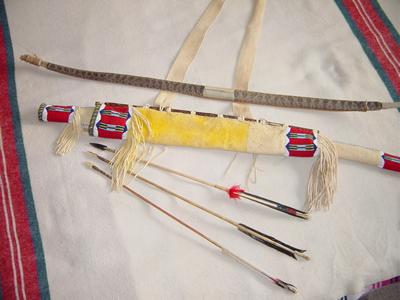
Roland Bohr is an Associate Professor and Director of the Centre for Rupert's Land Studies at the University of Winnipeg's Faculty of Arts. He specializes in Canadian Aboriginal History with a focus on Indigenous hunting and military technologies in the Northern Plains and Hudson Bay Lowlands between 1670–1870. His research emphasizes continuity and change in technological practices amid colonial pressures. Bohr teaches courses on Indigenous history, Métis studies, and Northern Plains history. His publications analyze Indigenous weapon systems, colonial interactions, and oral histories. He collaborates with Indigenous communities, as seen in co-authored works with Louis Bird. His work bridges historical and ethnographic approaches, emphasizing material culture and cultural resilience. He leads the Centre for Rupert's Land Studies, fostering interdisciplinary research on regional Indigenous histories. While no awards are explicitly listed, his contributions to decolonizing historical narratives reflect scholarly impact.
Erin Kathleen Rowe is the Vice Dean for Undergraduate Education in the Krieger School of Arts & Sciences at Johns Hopkins University and holds the rank of Professor in the Department of History. She oversees undergraduate education initiatives, including advising, global education programs, and academic policy development. Her academic role includes maintaining and enhancing the quality of undergraduate programs while advocating for student-centered learning environments. Dr. Rowe earned her PhD in History from Johns Hopkins University. Her research focuses on early modern religious culture, particularly in Iberian contexts, addressing themes such as saints, sanctity, race, gender, and visual culture. She explores how these elements intersected with global Catholicism and colonial dynamics, including the transatlantic slave trade's impact on religious identity. Her notable publications include *Black Saints in Early Modern Global Catholicism* (2019), which won two major academic prizes, and *Saint and Nation* (2011). She co-edited *The Early Modern Hispanic World* (2017) and serves as editor for the *Iberian Encounter and Exchange* series at Penn State University Press. Rowe’s work bridges interdisciplinary methodologies, emphasizing transnational approaches to early modern history. She actively contributes to academic leadership through her editorial roles and institutional responsibilities, shaping both scholarly discourse and undergraduate education policy.
Dr. Cristian Alvarado Leyton is an Acting Professor (50%) at the University of Freiburg since March 2015, affiliated with the Chair of Prof. Judith Schlehe. He holds a PhD in Ethnology from the University of Hamburg (2006) and has held postdoctoral research positions at the University of Erlangen-Nuremberg and the University of Freiburg. His academic career includes roles at AFS Intercultural Encounters and the Berlinale EF M. Education: MA in Ethnology (University of Hamburg, 2001), with studies in Social Anthropology at the University of Chile. Doctoral thesis focused on kinship-based patronage systems. Research interests center on postcolonial studies, Latin American ethnology, ritual kinship, identity formations, and the intersection of power with cultural practices. His work examines themes like German-Argentine identities, Argentine political past, and transnational cultural dynamics. Notable contributions include analyzing Roberto Bolaño's literary works through postcolonial frameworks and critiquing Lévi-Strauss's alliance theory. Teaching spans institutions like the Universities of Hamburg, Erlangen-Nuremberg, and Freiburg, with lecture topics including terror and kinship in Argentina, German-Argentinean identities, and ritual studies. He organized interdisciplinary workshops on guilt, punishment, and postcolonialism, and co-edited critical works on Nazi-era ethnology. Key grants include DFG Research Training Group affiliations (e.g., 'Friends, Patrons, Loyal Ones'). His work bridges ethnographic fieldwork with theoretical debates, emphasizing critical perspectives on colonial legacies and identity politics.
Dr. Tolly Bradford is a Professor and Chair of the Department of Social Sciences at Concordia University of Edmonton’s Faculty of Arts. He specializes in cultural and political histories of colonialism in western Canada, British imperialism, and the Hudson’s Bay Company. His research explores intersections between Indigenous communities and colonial institutions, particularly through the lens of religion and corporate governance. Bradford holds a PhD in History from the University of Alberta (2009), a BEd from the University of Ottawa (2001), an MA from McGill University (2000), and a BA (Hons.) in History from the University of Guelph (1999). His teaching focuses on World History, Canadian Indigenous History, and historical methodologies. Notable works include Prophetic Identities: Indigenous Missionaries on British Colonial Frontiers, 1850-75 (2012), shortlisted for the Aboriginal History Prize, and co-edited Mixed Blessings: Indigenous Encounters with Christianity in Canada (2016). His scholarship frequently examines how Indigenous individuals navigated and contested colonial systems through religious and political agency. Recent research projects include analyses of the Hudson’s Bay Company’s transformation during the Fur Trade War and its global trade linkages with Jamaica. Bradford’s work is widely published in journals like Canadian Journal of History and Prairie History , reflecting his focus on transnational and comparative colonial histories. Awards include recognition for Prophetic Identities from the Canadian Historical Association. His contributions bridge historical inquiry with contemporary debates on reconciliation and colonial legacies in Canada.
Claire Nally is a researcher at Northumbria University specializing in modern and contemporary literature, with a focus on Neo-Victorianism and Irish Studies . She has published extensively on subcultures, gender, and postcolonial encounters in literature. PhD in English (2006), MA in English (2002), BA in English (2001) Fellow of the Higher Education Academy Her research spans Neo-Victorianism , Irish literature , subcultural aesthetics , and contemporary engagements with death . Key publications include monographs on Steampunk and Death Memoirs , alongside co-authored works. Claire supervises PhD research in Neo-Victorianism, modern fiction, and Irish studies. She has led modules such as 'Neo-Victorianism: Contemporary Literature and Culture' and 'James Joyce's Ulysses', contributing to MA programs in English literature and Gothic studies. Co-editor of Bloomsbury Library of Gender and Popular Culture (2011-2024) Deputy Editor of C21 Literature (2019-2022)