Mei-Li Holmberg is a Senior Research Associate at the School of Physics , University of Bristol. Her work focuses on particle physics , particularly in the context of the CMS Collaboration at CERN, with expertise in the Standard Model , Higgs boson studies, and muon detection technologies. Current Role: Research Fellow, School of Physics, University of Bristol Key Research Areas: Standard Model Effective Field Theory, Quark-Gluon Plasma, CMS Detector Upgrades Her recent research explores high-energy particle collisions (pp and PbPb at √s NN = 5.02 TeV) to study bottom quark hadronization and low-momentum muon identification using machine learning. She contributes to the Large Hadron Collider experiments, focusing on precision measurements and detector optimization. Her publications highlight collaborations with the CMS Collaboration , with co-authors like J. Goldstein and I. Tomalin. She has no explicitly listed scientific awards in the provided text.
Joel Walker is a Professor and Department Chair in the Department of Physics at Sam Houston State University (SHSU), where he has served since joining the institution in 2005 and becoming department chair in 2016. His research focuses on theoretical particle physics, particularly in areas related to the Large Hadron Collider and neutrino physics. Walker's research interests include the study of beyond the Standard Model signatures at the Large Hadron Collider, investigation of collider kinematic variables, development of software tools for reinterpretation of LHC data, and probes of new physics in the neutrino sector at reactors. His work has been funded by the National Science Foundation since 2015, and he has been designated a KITP Scholar by the Kavli Institute for Theoretical Physics at the University of California, Santa Barbara. Analysis of Walker's publication record reveals a strong focus on collider physics, neutrino phenomenology, and supersymmetry. His recent work demonstrates expertise in machine learning applications for LHC data analysis, jet substructure algorithms, and coherent elastic neutrino-nucleus scattering. Walker's research often bridges theoretical frameworks with experimental signatures, particularly in searches for physics beyond the Standard Model. Among his notable scientific achievements is being designated a KITP Scholar by the Kavli Institute for Theoretical Physics at UC Santa Barbara. His work has significant implications for understanding fundamental particle interactions and potential new physics beyond the Standard Model. Walker maintains an active research group with numerous students, including Kamal Lamichhane who received a prestigious LHC Physics Center Graduate Scholar appointment at FermiLab. His students have gone on to graduate programs at institutions including Baylor, Georgia Tech, University of Houston, University of Oklahoma, Southern Methodist University, University of Texas at Dallas, Texas Tech, and Vanderbilt. Walker also serves as a theory advisor for the MINER (Mitchell Institute Neutrino Experiment at Reactor) project, collaborating closely with Professor James Dent.
Chao Peng is an experimental physicist in the Physics Division at Argonne National Laboratory, where he serves as an Assistant Physicist since 2021, following a postdoctoral appointment from 2019 to 2021. His research is centered on probing the internal structure of nucleons and their emergent properties within the framework of Quantum Chromodynamics (QCD), with a focus on spin, mass, size, and polarizabilities. He is actively involved in major electron scattering experiments at Jefferson Lab, including PRad-II, X17, and SoLID, and is preparing for future research using the ePIC detector at the Electron-Ion Collider (EIC). Education: Ph.D. in Experimental Nuclear Physics, Duke University, 2018 B.E. in Engineering Physics, Tsinghua University, China, 2009 Chao Peng’s research interests lie at the intersection of nuclear physics, particle physics, and advanced instrumentation. He specializes in understanding how quark and gluon distributions change when nucleons are embedded in light nuclei such as Deuterium, Helium-3, and Lithium-6. His work combines precision electron scattering with cutting-edge detector development, particularly in calorimetry, Cherenkov detectors, and polarized lithium sources. He leads an Argonne LDRD project focused on polarized 6 Li and 7 Li sources, highlighting his leadership in experimental innovation. The 15 most recent publications reflect a strong emphasis on nucleon structure, precision measurements, and detector R&D. Key themes include the proton radius puzzle, spin structure functions (g₂, d₂), searches for new bosons (X17), and instrumentation for the EIC. The articles span subfields such as transverse momentum dependent parton distributions (TMDs), generalized parton distributions (GPDs), dark photon searches, and Monte Carlo simulation frameworks, indicating a broad and impactful research portfolio. Scientific Awards: Argonne Impact Award (2023): Development of a Novel Imaging Calorimeter for EIC Argonne Impact Award (2023): Experimental Determination of the Proton Mass Density JSA Graduate Fellowship (2014–2015): Hardware Preparation of the PRad Experiment JSA 2014 Poster Competition – 1st Place JSA Graduate Fellowship (2013–2014): Simulation/Analysis Development for the PRad Experiment Nuclear Power Award, Tsinghua University (2008) Chao Peng has played a significant role in advising and leading research projects, serving as Lead PI on an Argonne LDRD project and as Co-spokesperson for multiple high-profile experiments (SoLID-SIDIS, Neutron g₂/d₂, PRad-II, X17). While no formal students are listed, his leadership in collaborative teams suggests mentorship roles within large experimental groups. He has secured competitive fellowships and internal funding, demonstrating strong grant acquisition capabilities. His work is supported by national user facilities such as Jefferson Lab and Argonne’s own advanced research infrastructure. Labs and Teams: He is deeply integrated into major experimental collaborations including the SoLID, PRad, and future ePIC collaborations. His work leverages national user facilities such as the Jefferson Lab Continuous Electron Beam Accelerator Facility (CEBAF) and is aligned with the scientific goals of the Electron-Ion Collider. At Argonne, he contributes to the Physics Division's mission in discovery science and detector innovation, working within multidisciplinary teams focused on advancing the frontiers of nuclear and particle physics.
FERNANDO MARTINEZ VIDAL is a Professor at the University of Valencia , affiliated with the Faculty of Physics and the Department of Atomic, Molecular and Nuclear Physics . He is associated with the Institute of Corpuscular Physics (IFIC) and works within the IFIC-EHEP Experimental High Energy Physics at Colliders research group. Education : PhD in Physics (1998) from the University of Valencia, with a thesis titled "High precision measurement of gamma(z-bb-)/gamma(z-hadrons) with the delphi detector at lepcollider" supervised by Dr. Christian de La Vaissiere. Research Interests : Focus on experimental high energy physics, particularly collider experiments, and contributions to atomic, molecular, and nuclear physics. His work involves precision measurements and detector technologies.
Christian Kohlfürst is a Research Scientist and Head of the Strong Fields group at the Helmholtz-Zentrum Dresden-Rossendorf (HZDR), specializing in theoretical high-energy physics at the intensity frontier. His work bridges quantum field theory, computational physics, and experimental laser applications. His research focuses on Strong-Field Quantum Electrodynamics , particularly Schwinger pair production in complex field configurations, field-assisted nuclear fusion , and non-equilibrium quantum processes . Current projects include relativistic quantum kinetic theory for assisted pair production and vacuum birefringence experiments using extreme laser fields. His computational approaches address time-dependent phenomena in multiphoton processes and finite-time quantum systems. His recent publications reveal dominant trends in strong-field QED signatures (60% of output), quantum thermodynamics (25%), and condensed matter analogs (15%). Key collaborations include the BIREF@HIBEF initiative for vacuum birefringence measurements and theoretical frameworks for ELI Beamlines experiments. Awards: Victor Franz Hess Award (2017) Helmholtz Postdoc Grant (2015) As an educator, Kohlfürst teaches Master-level Theoretical Physics and has led specialized courses at the Summer Student Program. His research visits to Chalmers University, Instituto Superior Técnico, and other institutions demonstrate international engagement. Current work focuses on quantum heat engines and time-resolved pair production dynamics using HZDR's high-field infrastructure.
Lingxin Meng is a Research Fellow in Experimental Particle Physics at the Department of Physics, Faculty of Science and Technology, Lancaster University. They are also affiliated with Lawrence Berkeley National Laboratory as a visiting researcher. Their work primarily focuses on high-energy physics experiments using the ATLAS detector at CERN's Large Hadron Collider. Dr. Meng's research spans multiple areas of experimental particle physics, with particular emphasis on Higgs boson physics, top quark physics, and searches for physics beyond the Standard Model. Their work involves both theoretical analysis of collision data and practical detector development, particularly for the ATLAS Inner Tracker system. They have made significant contributions to precision measurements of Standard Model processes while also pushing the boundaries in searches for new particles and phenomena. The publication record shows active involvement in numerous cutting-edge research projects, with a focus on advanced analysis techniques including neural simulation-based inference methods. Recent work demonstrates expertise in complex event reconstruction, particularly for multi-object final states involving Higgs bosons, top quarks, and vector bosons. Their research contributes to our fundamental understanding of particle physics while developing new methodologies for data analysis at the energy frontier. As a member of the ATLAS collaboration, Dr. Meng participates in one of the largest international scientific collaborations in history, working with researchers from institutions worldwide to advance our understanding of fundamental particles and forces. Their work on detector development, particularly for the High-Luminosity LHC upgrade, shows commitment to both current and future experimental capabilities.
Ole Myren Røhne is a Researcher at the Department of Physics , University of Oslo, specializing in High Energy Physics and Particle Physics . He has been actively involved in the ATLAS experiment at the LHC since 2010, focusing on detector development and data analysis. Education: M.Sc. in Physics (1988-1992) from Norwegian Institute of Technology (NTH) Dr.scient. in Physics (1993-1998) from University of Oslo Career: Postdoc at University of Oslo (1998-1999) Research Fellow at CERN (1999-2001) Postdoc at University of Pennsylvania (2002-2006) Researcher at University of Oslo (2010-present) Research Interests: Ole's work centers on silicon pixel detectors with 3D electrode structures , their application in medical imaging (e.g., PET scans), and high luminosity upgrades for the ATLAS experiment. His detector R&D aligns with Instrumentation and Radiation Damage Effects . Publication Trends: His recent contributions include studies on supersymmetry , Higgs boson properties , vectorlike quarks , and dark matter models (2024-2025). Key methodologies involve differential cross-section analysis , machine learning , and vertex reconstruction . Collaborations: He contributes to the ATLAS project's IBL and 3D Pixel R&D groups, working with institutions like CERN, SINTEF, and COMPETITION.
Paul Tipton is the Eugene Higgins Professor of Physics at Yale University, where he has been a faculty member since 2006. He served as Chair of the Physics Department from 2013-2019. Prior to Yale, he was a Professor at the University of Rochester and held positions at Fermi National Accelerator Laboratory and Lawrence Berkeley Laboratory. Professor Tipton's research focuses on elementary particle physics, particularly Higgs boson research and top quark physics. His work primarily involves the ATLAS experiment at CERN's Large Hadron Collider. He leads research on measuring the quantum numbers of the Higgs boson through decay angular correlations and is involved in constructing upgrades to the ATLAS particle tracking system at Yale's Wright Lab. Analysis of his recent publications shows a consistent focus on Higgs boson properties and production mechanisms, with particular emphasis on diphoton decay channels and associated production with top quarks. His research has evolved from early top quark discovery work to cutting-edge Higgs boson studies, reflecting the progression of particle physics research over the past three decades. Fellow of the American Physical Society National Science Foundation Young Investigator Award (1992-97) Outstanding Junior Investigator Award from U.S. Department of Energy (1991-1996) University of Rochester Department of Physics and Astronomy Annual Award for Excellence in Teaching (1995) Teacher of the Year, Honorable Mention, by University of Rochester Student's Association (1994) 2025 Breakthrough Prize in Fundamental Physics Professor Tipton has made significant contributions to particle physics, including essential work on the discovery of the top quark at Fermilab's CDF Collaboration. His group plays a critical role in ATLAS collaboration responsibilities for data quality and detector upgrades, hosting R&D and construction of critical elements for the ATLAS tracker upgrade for the high-luminosity LHC era. At Yale's Wright Lab, Tipton's group is fabricating stave cores using advanced composite materials for the ATLAS tracker upgrade. These structures will house silicon-wafer strip particle detectors in the central region of the new tracker, employing robotic technology and thermal imaging for testing components.
Jessie F Shelton is an Associate Professor of Physics and Astronomy at the University of Illinois at Urbana-Champaign, affiliated with the College of Liberal Arts & Sciences. Her research bridges particle physics and cosmology, focusing on phenomena beyond the Standard Model. PhD in Physics from MIT (2006) Bachelor's degree from Princeton University Research interests: Cosmology of particle dark matter, physics at the Large Hadron Collider, and theoretical models addressing the Hubble tension. Her work spans axion baryogenesis, stochastic gravitational waves, and exotic Higgs decays. Recent publications (2023-2024) analyze dark matter signatures at colliders, early universe structure formation, Hubble tension solutions, and feebly-interacting particles. These studies link particle physics to cosmological observations. Scientific awards: 2017 DOE Early Career Award Award from MIT Award from LHC Theory Initiative Grants and affiliations support research at the intersection of particle physics and cosmology, with collaborations across CMS and LHCb experiments.
Marzia Rosati is a Professor at Iowa State University, specializing in Experimental Nuclear Physics with a focus on Relativistic Heavy Ion Collisions. Her research involves studying quarkonium and heavy flavor production through participation in the sPHENIX experiment at the Relativistic Heavy Ion Collider (RHIC) at Brookhaven National Laboratory. Education: Ph.D. in Physics from McGill University (1992). Research Interests: Experimental studies of quark-gluon plasma dynamics, heavy quark production in high-energy collisions, and analysis techniques for heavy ion collision data. Her work contributes to understanding fundamental aspects of quantum chromodynamics (QCD) at extreme temperatures and densities. Publications: Accessible via the Inspire database, reflecting her contributions to nuclear physics and collider experiments.
Prof. Dr. Heiko Lacker is a Professor of Experimental Elementary Particle Physics at Humboldt University of Berlin, affiliated with the Faculty of Mathematics and Natural Sciences and the Institute of Physics. He leads the AG Lacker research group, focusing on high-energy particle physics experiments. His research centers on: High Energy Physics (HEP) : Investigating fundamental particles and forces Experimental Particle Physics : Developing detector technologies and data analysis methods for particle colliders He collaborates with researchers and technical staff in his group, including scientific collaborators and administrative personnel.
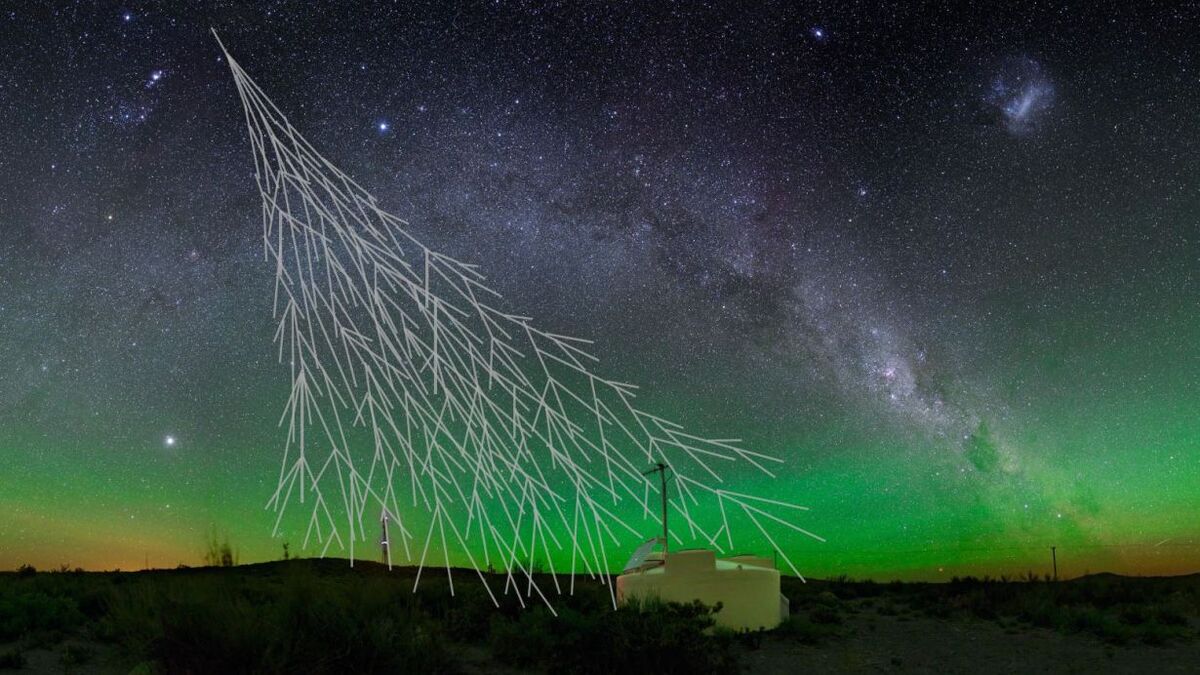
Prof. Ralph Engel serves as Director of the Institute for Astroparticle Physics (IAP) at Karlsruhe Institute of Technology (KIT), scientific spokesperson for the Pierre Auger Collaboration involving 400+ researchers from 17 countries, and spokesperson for the Helmholtz program "Matter and Universe". Since 2022, he has additionally held the position of vice spokesperson for the Astroparticle Physics Commission of the International Union of Pure and Applied Physics (IUPAP). Engel's educational background includes: Studies in Physics and Mathematics Postdoctoral Fellowship at DESY, Hamburg Postdoctoral Fellowship at Bartol Research Institute, University of Delaware, USA His research focuses on experimental astroparticle physics at the intersection of cosmology, astrophysics, and particle physics. Engel investigates the origins of ultra-high-energy cosmic rays—particles carrying energies requiring Earth-based accelerators with Mercury-orbit-scale circumferences. His work examines potential acceleration mechanisms in supermassive black holes, neutron stars, and star-forming galaxies through analysis of extensive air showers generated when cosmic radiation collides with Earth's atmosphere. He actively contributes to multi-messenger astronomy via the IceCube Neutrino Observatory at the South Pole, searching for nearly undetectable neutrinos in Antarctic ice. Engel emphasizes the critical synergy between theoretical and experimental approaches in addressing fundamental cosmic questions. As scientific leader of the Pierre Auger Collaboration, Engel oversees the world's largest cosmic radiation experiment in Argentina using water tank detectors and fluorescence telescopes. He spearheads detector development and maintains KIT's CORSIKA simulation software standard used globally for particle cascade modeling. His Helmholtz program leadership integrates IAP with five other KIT institutes in the "Matter and Universe" initiative. Engel directs KIT's Institute for Astroparticle Physics which operates cutting-edge experimental facilities for cosmic ray detection. The institute maintains significant involvement in both the Pierre Auger Observatory infrastructure in Argentina and IceCube Neutrino Observatory instrumentation at the South Pole, developing specialized detection technologies for air shower analysis and neutrino observation in extreme environments.
Dr. Yannick Ulrich is a Researcher in the Laboratory for Particle Physics at the Paul Scherrer Institute (PSI), Switzerland, specializing in high-precision quantum electrodynamics calculations and Monte Carlo tool development for particle physics experiments. His work bridges theoretical frameworks and experimental applications in low-energy hadronic cross sections and lepton physics. His core research interests include: Quantum Electrodynamics Particle Physics Phenomenology Monte Carlo Methods Radiative Corrections Hadronic Physics Precision Electroweak Physics Analysis of his publication trends reveals a sustained focus on next-to-next-to-leading order (NNLO) precision calculations, particularly through the McMule framework, with recent work emphasizing electron-positron collision dynamics, muon decay predictions, and event generator development for collider experiments. His 2023-2025 publications demonstrate increasing complexity in incorporating electroweak effects and axion-like particle searches. Dr. Ulrich actively collaborates with international research teams across major particle physics institutions but has not received major documented scientific awards to date. His contributions primarily manifest through technical advancements in computational frameworks rather than individual accolades. As a post-PhD researcher (2020), he currently does not supervise graduate students but contributes to collaborative projects requiring specialized expertise in radiative corrections. His work supports critical experimental efforts at facilities like CERN through precision theoretical tools essential for data interpretation. He operates within PSI's High Energy Physics group, which integrates theoretical development with experimental validation through close ties to accelerator facilities and detector projects.
Lesya Shchutska is a Tenure Track Assistant Professor at École Polytechnique Fédérale de Lausanne (EPFL) in the School of Basic Sciences, Institute of Physics, specifically in the High Energy Physics Laboratory LS (LPHE-LS). She also holds a position in the Physics Teaching unit (SPH-ENS) at EPFL. Her research focuses on testing the boundaries of the Standard Model of particle physics and searching for new phenomena to explain fundamental puzzles such as dark matter, matter-antimatter asymmetry, and neutrino masses. Dr. Shchutska received her PhD in High Energy Physics from EPFL (2008-2012), following an MSc (2006-2008) and BSc (2002-2006) in General and Applied Physics from Moscow Institute of Physics and Technology. Prior to joining EPFL as faculty, she was an Assistant Professor at ETH Zürich (2018-2019) and conducted postdoctoral research at the University of Florida (2012-2017). Her research primarily utilizes data from the LHCb detector at CERN, with additional work on the CMS experiment through the ERC Starting grant "MajorNet" (ID 758316). She is actively involved in R&D for next-generation detectors including SND@LHC and SHiP, which aim to explore physics beyond the Standard Model through complementary experimental approaches. Her work spans precision measurements of Standard Model processes, searches for new particles, and development of novel detection techniques for rare phenomena. Dr. Shchutska's recent publications demonstrate a strong focus on lepton universality tests, heavy neutral lepton searches, and forward physics at the LHC. Her work bridges theoretical predictions with experimental measurements, particularly in the areas of B physics, neutrino physics, and searches for long-lived particles that could constitute dark matter or explain other Standard Model puzzles. She has received numerous prestigious awards including: Swiss Science Prize Latsis (2023) for "paving the way to the discovery of new particles" Young Experimental Physicist Prize from the European Physical Society (2019) Young Experimental Physicist Prize from the High Energy and Particle Physics Division of the EPS (2019) LPC Distinguished Researcher fellowship (2016) CHIPP Prize for the best PhD student in particle physics (2011) Dr. Shchutska supervises multiple PhD students and has secured significant research funding including the ERC Starting grant "MajorNet." She is a key member of several major international collaborations including LHCb (2019-present), SND@LHC (2020-present), SHiP (2014-present), and previously CMS (2012-2019). Her laboratory work focuses on the High Energy Physics Laboratory at EPFL, where she leads research groups working on data analysis from LHC experiments and R&D for future detectors. Her team contributes significantly to the development of the SND@LHC detector and research toward the SHiP experiment at CERN's future beam-dump facility.
Dr. David G Cussans is a Research Fellow at the School of Physics, University of Bristol. He specializes in High Energy Physics and contributes to the High Energy Physics research group by designing, constructing, and installing electronics for detector trigger and data read-out systems. Research Interests: His work focuses on Particle detector electronics Quark-Gluon plasma studies Standard Model validation Hadronization processes Nuclear modification factors Jet cross-section analysis Research Output Trends: Recent publications highlight his contributions to analyzing heavy-ion collisions, Higgs boson interactions, and top quark production mechanisms using data from the CMS experiment at CERN. Projects: He served as Principal Investigator for the AWE mini PIPSS II project (2009-2010).