
About
Prof. Ralph Engel serves as Director of the Institute for Astroparticle Physics (IAP) at Karlsruhe Institute of Technology (KIT), scientific spokesperson for the Pierre Auger Collaboration involving 400+ researchers from 17 countries, and spokesperson for the Helmholtz program "Matter and Universe". Since 2022, he has additionally held the position of vice spokesperson for the Astroparticle Physics Commission of the International Union of Pure and Applied Physics (IUPAP).
Engel's educational background includes:
- Studies in Physics and Mathematics
- Postdoctoral Fellowship at DESY, Hamburg
- Postdoctoral Fellowship at Bartol Research Institute, University of Delaware, USA
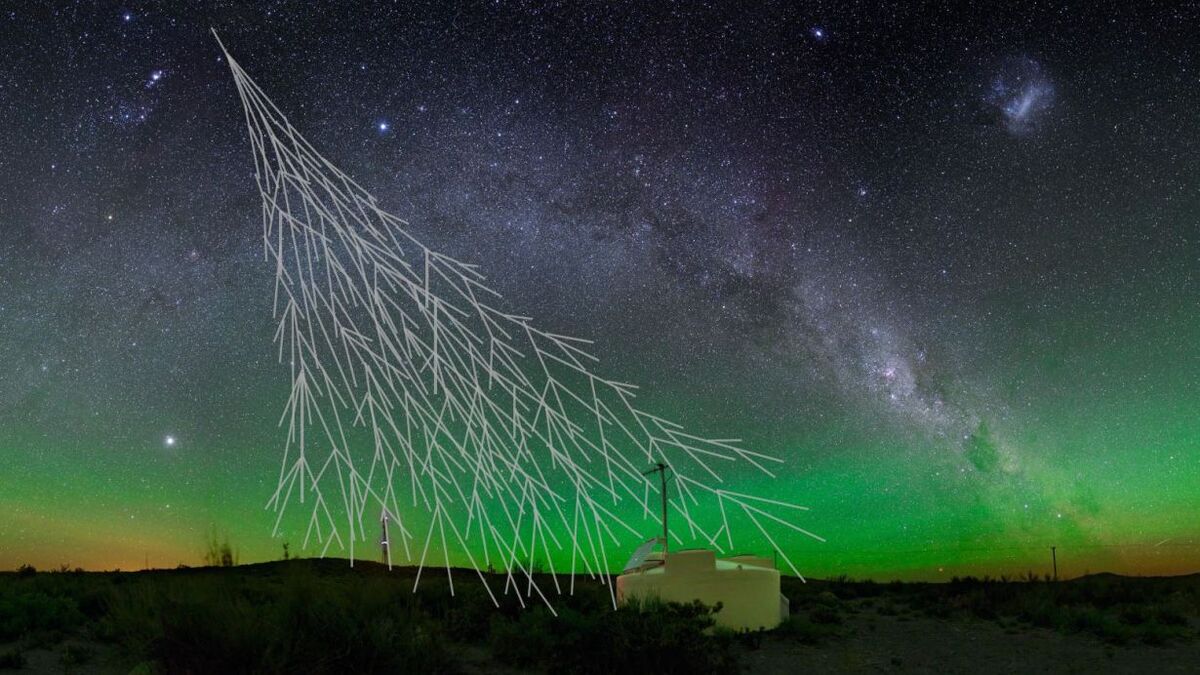
His research focuses on experimental astroparticle physics at the intersection of cosmology, astrophysics, and particle physics. Engel investigates the origins of ultra-high-energy cosmic rays—particles carrying energies requiring Earth-based accelerators with Mercury-orbit-scale circumferences. His work examines potential acceleration mechanisms in supermassive black holes, neutron stars, and star-forming galaxies through analysis of extensive air showers generated when cosmic radiation collides with Earth's atmosphere. He actively contributes to multi-messenger astronomy via the IceCube Neutrino Observatory at the South Pole, searching for nearly undetectable neutrinos in Antarctic ice. Engel emphasizes the critical synergy between theoretical and experimental approaches in addressing fundamental cosmic questions.
As scientific leader of the Pierre Auger Collaboration, Engel oversees the world's largest cosmic radiation experiment in Argentina using water tank detectors and fluorescence telescopes. He spearheads detector development and maintains KIT's CORSIKA simulation software standard used globally for particle cascade modeling. His Helmholtz program leadership integrates IAP with five other KIT institutes in the "Matter and Universe" initiative.
Engel directs KIT's Institute for Astroparticle Physics which operates cutting-edge experimental facilities for cosmic ray detection. The institute maintains significant involvement in both the Pierre Auger Observatory infrastructure in Argentina and IceCube Neutrino Observatory instrumentation at the South Pole, developing specialized detection technologies for air shower analysis and neutrino observation in extreme environments.
Find Ralph Engel elsewhere
Related Searches
You Might Also Like
 Frank G. SchroederUniversity of Delaware · Associate Professor
- GGary HillThe University of Adelaide · Associate Professor
 Matthias PlumSouth Dakota School of Mines and Technology · Assistant Professor
 Stijn BuitinkVrije Universiteit Brussel · Professor
 David Jason KoskinenUniversity of Copenhagen · Associate Professor
- CCorbin CovaultCase Western Reserve University · Professor