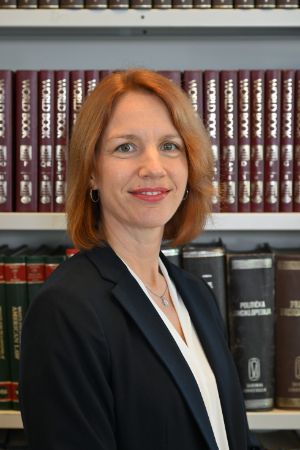
Assoc. Prof. Drahomira Cupar is an Associate Professor at the Department of Information Sciences and Technologies, University of Zadar. She specializes in information organization, digital humanities, and reading habits research. Her work focuses on classification systems, open access publishing, and cultural heritage preservation. She actively participates in projects like TRIPLE, OPERAS-PLUS, and CRAFT-OA. Consultation hours are Wednesdays 10:00–12:00 via email. Her research spans over 60 publications covering digital transformation of historical texts, metadata strategies, and literacy promotion. Key projects include digitization of Glagolitic texts and development of multilingual taxonomies. She teaches courses on information organization, research methodology, and library science. Awards section is currently unspecified. Grants involve EU-funded initiatives focusing on open science infrastructure and digital preservation. She leads the Thesaurus.hr initiative and contributes to the OPERAS network.
Dr. Martina Dragija Ivanović is an Associate Professor at the Department of Information Sciences and Technologies, University of Zadar. She specializes in library management, information institution governance, and the sociology of books and reading. Her research focuses on collection development, evaluation of information services, and critical librarianship. She teaches courses including Library Business Operations , Information Society , and Public Libraries Management . Her scientific interests include exploring reading behaviors, digital legacy preservation, and cultural heritage digitization through citizen science. Notable projects involve crowdsourcing transcription of Glagolitic manuscripts and assessing public library impacts on rural communities. She actively participates in academic initiatives promoting information literacy and inclusive research methodologies. Dr. Ivanović has collaborated on international projects like the DARIAH-HR initiative and contributed to academic conferences on library science and digital humanities. Her work emphasizes bridging theoretical research with practical applications in library services and education.
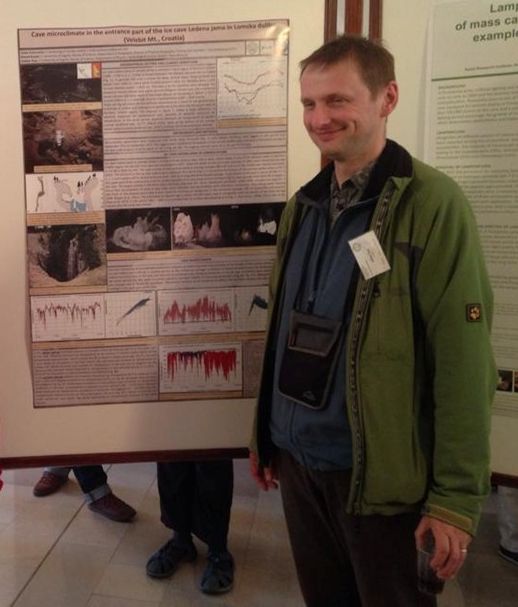
Dalibor Paar serves as an Associate Professor in the Department of Experimental Physics at the Faculty of Science, University of Zagreb. His academic appointment includes teaching undergraduate Physics courses (36208 and 37632), integrated Physics programs (171101 and 171109), and specialized courses in science popularization and computer applications in teaching. He actively supervises graduation theses and contributes to educational innovation through demonstration experiment design. His research spans two primary domains: cave microclimate dynamics in the Dinaric Karst and physics education methodology. In karst studies, he investigates CO 2 dynamics, radon concentrations, magnetic susceptibility of cave sediments, and climate change impacts on deep cave systems like Samograd Cave and Modrič Cave. His educational work focuses on developing demonstration experiments, integrating micro:bit and Arduino technologies into physics instruction, and promoting science popularization in primary/secondary schools through field-based learning and STEM initiatives. Analysis of his 15 most recent publications reveals strong interdisciplinary integration between geoscience and physics education. Karst research dominates with 11 papers examining microclimate controls, geochemical processes, and environmental monitoring in Croatian caves, while 4 papers address physics pedagogy including demonstration experiments, misconceptions in physics learning, and early STEM education. This dual focus creates unique synergies where cave environments serve as natural laboratories for both environmental research and science education. No scientific awards were documented in the provided materials. His research collaborations include the CARDIKARST project examining karst systems in the global carbon cycle and multidisciplinary investigations of Velebit Mountain's deep cave systems. He actively contributes to thesis supervision and has developed educational resources including the STEM educator manual "STEM u neformalnom obrazovanju za zanimanja 21. stoljeća". Professor Paar's field research centers on the Northern Velebit National Park cave systems, particularly the Lukina jama–Trojama cave complex (-1,431 m), where he conducts microclimate monitoring and geochemical analysis. His educational initiatives include the "STEAM Lika" field teaching program and development of the "Jama Varnjača" educational trail concept. He maintains strong connections with Croatian speleological societies and contributes to national cave conservation efforts through scientific monitoring and policy recommendations.
Dr. Dijana Drandić is an Associate Professor at the Faculty of Educational Sciences , Juraj Dobrila University of Pula , specializing in Early and Preschool Education . As Lecturer in charge for courses like General Didactics and Intercultural Communication , she emphasizes inclusive practices and pedagogical innovation. Research Interests : Intercultural communication, inclusive education for children with developmental disabilities, music pedagogy, and ICT integration in special education. Key Projects : Collaborative work on ICT in Special Education , Montessori Adaptation for Disabilities , and intercultural readiness studies. Publications : 15+ works on intercultural sensitivity, traditional music in education, and bilingualism in multicultural kindergartens. Advising : Supervised 20+ theses, including studies on autism inclusion, Roma education, and creative workshops for special needs. Her recent work explores technology-enhanced learning for children with disabilities and curriculum design for intercultural competence. She also co-authored practical guides on ICT as Special Needs Support and Native Identity Development in Istrian contexts.
Zrinka Džoić is an Assistant Professor at the Department of Information Sciences and Technologies, University of Zadar. She teaches courses including Basics of Publishing and Bookselling, Introduction to Scientific Research Work, and Information Society. Her office is located in Office 21, and she holds consultations every Thursday from 1:30 PM to 3:30 PM. Her research focuses on Open Science, methodology of scientific work, information institution management, and the intersection of library science with cultural heritage. She contributes to EU projects like Conexus Research for Society (RFS) and has organized events such as the PUBMET2022 conference on scholarly communication. Her academic work spans library services innovation, student engagement in academic projects, and gender representation in STEM fields. She actively participates in interdisciplinary research collaborations, including studies on queer literature in public libraries and Delphi method applications in academic research. Her recent projects emphasize curriculum development for information science programs and enhancing open science competencies in educational outcomes. Dr. Džoić has published widely on topics ranging from specialized library curation to digital literacy, reflecting her commitment to advancing both theoretical and applied aspects of information sciences. Her contributions bridge academic research with practical library services, emphasizing inclusivity and innovation in information management.
Professor Emilia Mišćenić serves as a faculty member in the Department of International and European Private Law at the University of Rijeka. Her institutional contact details confirm active engagement with the university through room 9, direct telephone line (051/359-530), and official email address. She maintains professional visibility through Google Scholar, CROSBI, and UNIRI portfolio platforms, indicating ongoing scholarly activity. Her research interests center on critical intersections of EU law and consumer protection, with particular focus on Digital Market Regulations , Consumer Vulnerability , and Anti-discrimination Frameworks . Recent publications demonstrate deep engagement with emerging challenges in digital contract formation, algorithmic transparency, and cross-border enforcement mechanisms. Her work consistently addresses the practical implementation gaps between EU directives and national legal systems, especially regarding foreign currency loans and digital consumer rights. Analysis of her 15 most recent publications reveals dominant trends in Digital fairness legislation development Transparency requirements in online transactions Judicial interpretation of unfair contract terms Gender equality enforcement mechanisms Consumer vulnerability assessment models Her scholarship spans both theoretical frameworks and practical case studies, with significant emphasis on Croatian implementation of EU consumer acquis. Professional recognition includes active participation in EU research initiatives such as the COVID-19 Consumer Law Research Group and contributions to legislative evaluations like the European Commission's Study on National Procedural Laws . While specific awards aren't documented in the provided materials, her sustained publication record across leading European law journals indicates scholarly impact. Her institutional role involves teaching and research supervision in private law domains, with documented involvement in curriculum development for European Private Law courses (as evidenced by her 2019-2021 textbooks). Current projects focus on the EU Representative Actions Directive implementation challenges and digital fairness regulatory frameworks, positioning her at the forefront of contemporary consumer law evolution in digital markets.
Professor Stjepan Sito serves at the University of Zagreb's Faculty of Agriculture within the Department of Mechanization and Autonomous Systems in Agriculture. His office is located in the 4th Pavilion, ground floor, room 027, where he holds consultations every Tuesday from 10:00 AM to 12:00 PM. Fluent in Croatian, German, and English, he teaches multiple specialized courses including Modern Technique Application in Fruit and Grape Cultivation and Machine Development in Agriculture . His educational background includes a PhD (1995-1999), MSc (1989-1994), and BSc (1984-1989), all in Agricultural Engineering from the University of Zagreb's Faculty of Agriculture. His doctoral research focused on mechanized harvesting and processing of pumpkin seeds. Research interests center on precision agriculture implementation in horticulture, specialized machinery for pesticide/fertilizer application, soil maintenance equipment performance in permanent crops, and mechanical harvesting systems for fruits, vegetables, and medicinal plants. His work bridges theoretical engineering principles with practical agricultural applications, particularly in winery technology and sustainable crop production systems. Professor Sito has coordinated numerous research projects funded by Croatia's Ministry of Science (MZO), Agricultural Research Council (VIP), and the University of Zagreb. Key projects include biomass utilization for fruit drying, reduced soil fertility maintenance in orchards, and emission reduction in tractor engines. His international collaborations span institutions in Romania, Hungary, and Slovenia. Professional Activities: Regular participant in major agricultural exhibitions including Agritechnica (Hannover), SIMA (Paris), and regional events in Slovenia and Croatia since 2004 Professional Affiliation: Member of the European Society for Agricultural Engineers (EurAgEng) since 2006
Goran Fabijanić is a Senior Expert Associate at the University of Zagreb, Faculty of Agriculture, within the Department of Mechanization and Autonomous Systems in Agriculture. He has been actively involved in academic and professional activities since 1993, focusing on agricultural machinery development and renewable energy systems. PhD Student Senior Expert Associate (University of Zagreb) His research interests include: Machinery and equipment for animal husbandry Harvesting techniques for agricultural biomass as renewable energy sources Precision drilling units for vegetable crops Optimization of agricultural machinery performance Goran has published multiple scientific works on agricultural engineering topics, particularly addressing machinery development and seed distribution accuracy. Notable publications include studies on swath treatment machinery (2014), precision drills (2017), and energy crops (2011). He has contributed to international symposiums such as 'Actual Tasks on Agricultural Engineering' and participated in projects funded by the Ministry of Agriculture and Forestry of Croatia, focusing on energy-efficient farming and precision agriculture.
Ana Tecilazić, Ph.D., serves as Vice-Rector for Quality at Algebra University and chairs the Quality Committee, driving institutional development aligned with European and national educational frameworks. Her academic profile centers on social sciences and humanities with specialized focus on graduate employability and higher education policy. Her research interests concentrate on graduate employability systems , European education harmonization , and quality assurance mechanisms . She develops operational models for education-to-work transitions and analyzes impacts of teaching methodologies on skill development across European contexts, with particular emphasis on Croatian higher education systems and their alignment with European Qualifications Framework standards. Analysis of her 15 most recent publications reveals consistent focus on cross-national comparative studies of graduate outcomes, education-job market alignment , and policy implementation frameworks within the European Higher Education Area. Key trends include micro-credentialing systems, vertical/horizontal qualification coherence, and social integration of graduates. Co-chair of EHEA Working Group on Learning and Teaching Member of EQF Advisory Group ET2020 Working Group participant BFUG observer at EQAR Committee As an international expert, she conducts external evaluations of higher education institutions and implements multinational projects focused on educational policy modernization, while serving as independent evaluator for European education initiatives.
Borut Milfelner serves as a Full Professor at the Faculty of Economics and Business, University of Maribor, where he specializes in advanced research methodologies within business economics and marketing disciplines. His core research focuses on: Development and validation of marketing metrics for effective performance measurement Scientific foundations of measurement instruments in marketing decision-making Integration of quantitative and qualitative research methods in business contexts Application of neural networks and structural equation modeling in empirical research Multi-criteria decision-making frameworks for business analysis Professor Milfelner teaches doctoral-level courses including 'Application of Quantitative and Qualitative Research Methods in Business Economics,' 'Data Collection Methods and Measurement Instrument Validity,' and specialized topics on neural networks and structural equation models, emphasizing practical implementation of research methodologies in marketing science.
Laura Grzunov, PhD, is an Assistant Professor in the Department of Information Sciences and Technologies at the University of Zadar. Her work focuses on information organization, digital humanities, and the preservation of cultural heritage. She specializes in digitization projects related to Glagolitic manuscripts and historical materials, leveraging citizen science and collaborative research approaches. Her office is located in Office 21, and she can be reached at lgrzunov@unizd.hr . Consultations are held Tuesdays 12:30-14:30 by email预约. Grzunov's research interests include the digital transformation of heritage institutions, crowdsourcing methodologies for historical manuscript analysis, and the integration of open science practices in library and information science education. She has led or contributed to projects such as the GlagoLab Portal, virtual research environments for Glagolitic studies, and watermark analysis for archival materials. Her work emphasizes interdisciplinary collaboration between humanities and information science to advance cultural heritage preservation. Key projects include the Linguistic, Scriptural, and Codicological Analysis of the Berčić Collection, the DARIAH-HR initiative on Glagolitic public science, and the creation of a watermark catalog for Zadar manuscripts. These projects highlight her commitment to innovative digital solutions for accessing and preserving Zadar's historical and cultural legacy.
Helena Sablić Tomić is Full Professor and Dean of the Academy of Arts and Culture in Osijek since 2006, and an Academician in the Department of Literature of the Croatian Academy of Sciences and Arts (elected 2024). She serves as Croatia's first Creative Europe Desk ambassador (2018) and contributes to Croatian Radio's 1st Program and Forum magazine. Her academic foundation includes: Graduation from Osijek's Faculty of Pedagogy Master's degree (1997) from Zagreb's Faculty of Philosophy with thesis Short Stories of the 1990s - the Library and Authors of the Quorum Magazine Doctoral dissertation (2001) Models of Contemporary Croatian Autobiographical Prose Professor Sablić Tomić's research pioneers Croatian literary studies through interdisciplinary exploration of autobiographical prose, Slavonian regional identity, and women's literary expression. Her work bridges intimate personal narratives with broader cultural frameworks, examining how space, gender, and historical context shape literary production. Key contributions include developing methodologies for analyzing regional literary traditions and feminist reinterpretations of Balkan cultural heritage. Her 20+ publications reveal consistent thematic evolution from early analyses of 1990s short stories toward comprehensive studies of Osijek's cultural geography and transnational Balkan narratives. Recent works demonstrate sophisticated integration of spatial theory with literary analysis, particularly in examining urban environments and riverine cultural landscapes. Her accolades include: Josip and Ivan Kozarac Award (twice) Fran Galović Award for Regional Literature Seal of Osijek City for Culture Julije Benešić Literary-Critical Award Mediteran Academy Award for Literary Opus Administrative leadership includes presidency of Matica hrvatska Osijek (2003-2007), editorial roles at Kolo (1998-2009) and Forum (2022-present), and screenplay authorship for cultural documentaries featuring prominent Croatian artists. Her radio program Kutiju slova extends scholarly discourse to public audiences. Embedded in Osijek's cultural ecosystem, her work intersects with the Croatian Academy of Sciences and Arts and European cultural networks through Creative Europe, shaping regional literary preservation and cross-border artistic collaboration.
Petra Perišić serves as an Associate Professor at the Department of International Law within the Faculty of Law at the University of Rijeka. Holding a Ph.D., she maintains active academic engagement through teaching and research from Room 20, with contact details including telephone 051/359-543 and email petra.perisic@uniri.hr. Her scholarly profile demonstrates consistent contributions to international legal discourse through peer-reviewed publications and institutional affiliations. Her research expertise spans critical domains of contemporary international law, with primary focus on international humanitarian law, use of force doctrines, and international courts' evolving jurisprudence. Key thematic areas include the legal permissibility of autonomous weapon systems under humanitarian law principles, the interplay between border control measures and human rights obligations in Mediterranean migration contexts, and the impact of international courts' advisory opinions on climate change governance. Her work consistently addresses emerging challenges such as modern threats to self-defense doctrines, Russian aggression against Ukraine within UN peace frameworks, and regulatory approaches to foreign terrorist fighters. Dr. Perišić's publication trajectory reveals progressive engagement with urgent global legal challenges. From 2020-2024, her research demonstrates methodological rigor in analyzing treaty interpretation (e.g., Annex G of the 2001 Succession Agreement), doctrinal evolution (e.g., imminence in self-defense), and practical implementation gaps (e.g., migrant pushbacks). Her bilingual output (English/Croatian) reflects commitment to both global academic discourse and regional legal development, particularly regarding Croatia's maritime boundary disputes and European migration policy implications. This body of work establishes her as a significant contributor to international law's adaptation to 21st-century security and humanitarian challenges.
Tomislav Oroz is an Associate Professor at the Department of Ethnology and Anthropology, University of Zadar, Croatia. His academic work focuses on cultural anthropology with specializations in memory studies, Balkan studies, and island studies, particularly examining Dalmatian islands. He has published extensively on topics related to time perception, social memory, and spatial transformations in the Adriatic region. Dr. Oroz's primary research interests include: Cultural Memory and Social Collective Memory Balkan Studies and Mediterranean Studies Island Studies and Temporalities Public Space and Urban Transformations History and Writing of Memory His work often explores how communities construct memory through festivals, monuments, and spatial practices, with particular attention to Croatian and Balkan contexts. Analysis of Dr. Oroz's recent publications reveals a strong focus on temporal dimensions of cultural phenomena. His work examines 'island time' concepts, particularly on Dalmatian islands like Dugi Otok and Hvar, exploring how communities experience and represent time through spatial practices, migration patterns, and cultural traditions. He also investigates urban transformations in Croatian cities, examining how public spaces become sites of contested memory and identity. His research frequently bridges anthropology, history, and cultural geography to understand the complex interplay between time, space, and cultural memory in the Adriatic region. Dr. Oroz has been actively involved in academic discourse regarding memory practices, island studies, and Balkan cultural dynamics. His work often examines how historical events are memorialized and how these practices shape contemporary identities. He has contributed to understanding the complex relationships between mainland and island communities, capital cities and port cities, and how these spatial relationships influence cultural production and memory practices in Croatia.
Vesna Širić is a Senior Lecturer at the Faculty of Law Osijek, part of the Josip Juraj Strossmayer University of Osijek. She teaches physical education and health education across multiple study programs including Law, Administrative Studies, and Social Work. Her academic and professional focus lies at the intersection of physical education, kinesiology, and sports recreation. Her research interests include physical education in higher education, health promotion through physical activity, sports history, and the socio-cultural role of sports in Croatian society. She has published extensively on topics such as the historical development of sports associations in Osijek, the impact of physical activity on health and body image, and legal aspects of collective agreements in academic physical education. The recent publications highlight a strong trend in interdisciplinary research combining kinesiology with history, public health, and education policy. Her work often appears in proceedings of national and international kinesiology conferences and journals, reflecting her active engagement in the academic kinesiology community. LETTER OF APPRECIATION from the JJ Strossmayer University in Osijek for participation in the 3rd European University Sports Games Zagreb-Rijeka 2016 ACKNOWLEDGEMENT from the Study Center for Coach Education at the Faculty of Kinesiology in Zagreb for exceptional contribution to the development and implementation of professional studies for coach education at the Faculty of Kinesiology, 2014 MEDAL for achievements and contribution of exceptional importance for the development of school sports in the City of Osijek, 2012 ACKNOWLEDGEMENT with the gold badge of the Croatian Kinesiology Association, Koprivnica 2012 LETTER OF APPRECIATION for contribution to the work of the Community of Sports Associations of the City of Osijek, 2011 RECOGNITION from the Women's Handball Club Osijek for contribution to the club's activities, 2004 Vesna Širić has played a significant advisory and leadership role in numerous sports and educational organizations. She has served on the Executive Board of the Association of Physical Education Teachers at Higher Education Institutions of the Republic of Croatia, the Assembly of the Croatian Kinesiology Association, and the Student Sports Association of the JJ Strossmayer University. She has also held presidential roles, including President of the Association of Kinesiologists of the City of Osijek and President of the Court of Honor of the Croatian Kinesiology Association. These roles reflect her deep commitment to advancing sports education and ethical standards in kinesiology. She has been actively involved in community and institutional cooperation, contributing to the development of coach education, school sports, and university-level sports programs. Her work bridges academia and practical sports implementation, particularly in the Osijek region.