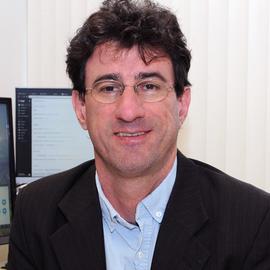
Fabio Petrillo is an Associate Professor in the Department of Software Engineering and IT at École de Technologie Supérieure (ÉTS), Canada, since 2020. His research focuses on improving software engineers' lives through empirical studies and innovative techniques. Education: PhD in Computer Science (2016) and Master in Computer Science (2009) from Federal University of Rio Grande do Sul; Electrical Engineer (2001) from the same institution. Postdoctoral Fellow at Concordia University (2018). His research spans Empirical Software Engineering , Software Quality , Debugging , and Software Engineering for Computer Games . He pioneered Swarm Debugging , a collaborative debugging approach. His publications highlight trends in debugging techniques , cloud API compliance , and stream processing frameworks . He has contributed to datasets and models addressing software engineering challenges, though no formal scientific awards are mentioned. His work often involves collaborations with institutions like Concordia University and ÉTS.
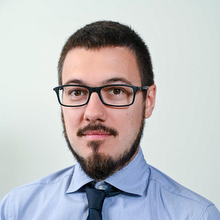
Zhe Yu is an Assistant Professor in the Department of Software Engineering at Rochester Institute of Technology (RIT), leading the HIL-SE Lab since August 2020. Previously, he earned his Ph.D. in Computer Science from North Carolina State University, where he worked in the RAISE Lab under Dr. Tim Menzies, and holds an M.S. and B.S. from Shanghai Jiao Tong University in Control Science & Engineering and Automation, respectively. Education : Ph.D. (Computer Science, NC State), M.S. (Control Science & Engineering, SJTU), B.S. (Automation, SJTU) Leadership : Founded HIL-SE Lab at RIT Yu focuses on human-AI collaboration , advocating for AI systems that enhance human capabilities rather than replace them. His research emphasizes: Partnership models where humans and AI mutually validate outputs Optimizing human effort allocation through AI Quality assurance in human-AI workflows Applications in software engineering and data science He teaches courses including DSCI 633: Foundation of Data Science , IDAI 720: Research Methods for AI , and SWEN 352: Software Testing .
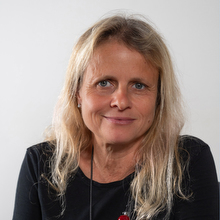
Alessandro Tasora is a Full Professor at the University of Parma in the Department of Industrial Engineering and Department of Engineering and Architecture . He directs the Digital Dynamics Lab and serves as Scientific Director of the Smart Production Lab 4.0 . His work spans theoretical mechanics, robotics, and high-performance computing. Director, Digital Dynamics Lab (2019–present) Scientific Director, Smart Production Lab 4.0 (2017–present) National Scientific Qualification for Full Professor (2016) Honorary Associate, University of Wisconsin-Madison (2009–present) Research focuses on non-smooth multibody dynamics , GPU-accelerated simulation , and industrial robotics . He developed the Chrono::Engine software for multibody physics and HyperOCTANT for NLCP problems. His work addresses granular flows in nuclear reactors, vehicle mobility on deformable terrain, and historical structural analysis. Key article trends include GPU-based HPC for large-scale simulations, cone complementarity in contact dynamics, and isogeometric beam formulations for flexible bodies. Collaborations with Argonne National Laboratory and Fraunhofer ITWM highlight his international impact. Top-SNIP Paper (2017) International CAE Conference Poster Award (2015) Best Paper, Asian Conference on Multibody Dynamics (2010) TOP4 Paper, RAAD Robotics Workshop (2011) He has supervised over 40 theses in automation, tribology, and robotics. Grants include FFABR-MIUR , US Army RIF , and CNR projects . Projects involve seismic protection, autonomous AGVs, and Industry 4.0 consulting.
Federico Bergenti is an Associate Professor in Computer Science at the University of Parma, affiliated with the Department of Industrial Systems and Technologies Engineering (DISTI) and the Department of Mathematics, Physics, and Computer Science. He serves as Chair of the AI Lab since 2015 and is actively involved in teaching Artificial Intelligence, Software Engineering, and related courses across multiple degree programs. His educational background includes a Laurea degree (M.Sc.) in Electronic Engineering from the University of Parma (1998) and a Ph.D. in Information Technologies from the same institution (2002). Prior to his academic career, he worked at CSELT S.p.A. (1998-1999) and CNIT (2000-2006). Bergenti's research primarily focuses on Artificial Intelligence and Software Engineering, with special emphasis on multi-agent systems. His work spans agent communication languages, architectures for agent-based middleware, reusability in agent systems, and more recently, agent programming languages based on constraint logic programming. He is among the founders of the JADE initiative and remains active in the Agent-Oriented Software Engineering research community. Analysis of his recent publications reveals a consistent research trajectory centered on agent-oriented programming (particularly JADEScript), indoor positioning systems, neural-symbolic integration, and mathematical modeling of multi-agent dynamics using kinetic theory approaches. His work demonstrates strong interdisciplinary connections between computer science, mathematics, and engineering applications. Professionally, Bergenti has coordinated various scientific initiatives, served on the Senior Program Committee of the AAMAS international conference since 2006, hosted the IEEE WETICE conference in Parma in 2014, and served as Program Chair for WETICE 2016. He has participated in numerous European Commission-funded research projects under the 5th and 6th Framework Programmes. He leads the AI Lab at the University of Parma, where his team develops practical applications of agent-based systems, including indoor localization technologies, health assistance systems, and social network modeling. His research combines theoretical foundations with real-world implementations, particularly through the JADE multi-agent framework.
Franco Callegati is a Full Professor in Computer Science at the Department of Computer Science and Engineering (DISI), University of Bologna. He coordinates the Degree Course in Computer Science and Engineering and serves as Delegate for the Imola office. His roles include President of CesenaLab, an innovation incubator, and Rector's delegate for Imola campus relations. He has held tenured positions since 1995, progressing from Researcher (1995–2001) to Associate Professor (2001–2023) before achieving Full Professor status. Education: PhD in Electronic and Computer Engineering (1993), University of Bologna Laurea in Electronic Engineering (1989), University of Bologna (cum laude) Scientific High School Diploma (1983), Luigi Valeriani School, Imola Research: Focuses on telecommunications network architectures, SDN/NFV, cybersecurity in Industry 4.0, and Smart City applications. He led European projects (e.g., EuroCPS) and coordinated international teams (e.g., e-Photon/ONe+ project with 17 institutions). His work includes optical networks, 5G slicing, and smart mobility collaborations with Emilia-Romagna Region. Teaching: Teaches telecommunications networks at undergraduate and graduate levels. Invited lecturer at institutions like University of Campinas (Brazil), University of Essex (UK), and IEEE conferences. Served as international reviewer for PhD committees in Denmark, Spain, and Belgium. Industrial Collaboration: Directed the Interdepartmental Center for Industrial Research on ICT (CIRI-ICT, 2013–2020) and led T3Lab Consortium (2016–2020). Coordinates innovation projects with SMEs using cyber-physical systems. Labs & Roles: President of CesenaLab (since 2022), member of editorial boards (Journal on Optical Switching and Networking), and technical committees (IEEE Globecom, IEEE ICC).
Filippo Bergamasco is an Associate Professor at Ca' Foscari University of Venice, affiliated with the Department of Environmental Sciences, Computer Science and Statistics. He is a member of the Scientific Committee of the Center for Studies on Port Economics and Management (DAIS). His work bridges computer vision, environmental monitoring, and oceanography, with a focus on developing advanced imaging techniques for ocean wave analysis and stereo reconstruction. He leads projects like the WASS pipeline, an open-source tool for 3D stereo reconstruction of ocean waves, and collaborates on studies involving rogue wave dynamics, low-cost sensors, and Arctic sea-state analysis. His research leverages machine learning, deep learning, and real-time systems to address challenges in environmental and marine sciences. Research interests include computer vision applications in oceanography, stereo imaging systems, wave dynamics modeling, and environmental monitoring technologies. He has contributed to over 80 peer-reviewed publications, with recent works focusing on real-time wave tracking, 3D reconstruction, and the integration of physics-driven models with neural networks. His expertise spans interdisciplinary collaborations, including projects on fish oil's impact on wind waves and the development of robust camera calibration methods. He actively publishes in top journals like IEEE Transactions on Image Processing, Ocean Modelling, and Physical Review Letters, and engages in international conferences such as ECCV and ICPRAM.
Flaminia Luccio is an Associate Professor at Ca' Foscari University of Venice, affiliated with the Department of Environmental Sciences, Computer Science and Statistics. Her research focuses on computer security, cryptography, distributed systems, and usability engineering. She has contributed to projects like the SAFE PLACE IoT security initiative and the FWS firewall analysis tool. Luccio teaches courses such as Cryptography and Advanced Algorithms at both undergraduate and graduate levels. Research: Her work spans formal verification of cryptographic protocols, secure IoT implementations, and usable security solutions for QR codes and biometric authentication. She has led projects involving secure hardware configuration for cloud environments and resilient firewall management systems. Recent contributions address side-channel vulnerabilities and malware detection through machine learning. Teaching: Courses include Cryptography (Master's), Algorithms and Data Structures (Bachelor's), and Web Technologies for Tourism (Master's). Teaching materials are accessible via her departmental website and personal profile. Collaborations: Collaborates with researchers like Riccardo Focardi on cybersecurity frameworks. Engages in interdisciplinary projects combining accessibility with technology, such as improving tourism websites for users with disabilities.
Flavio SARTORETTO is an Associate Professor in Scientific Computing at Ca' Foscari University of Venice. He holds a Mathematics degree from the University of Padua and has held academic positions at University of Padua (1982-1992) and Sapienza University of Rome (1992-1993) before joining Ca' Foscari in 1993. His research focuses on numerical analysis, computational methods, and interdisciplinary applications including environmental modeling, cognitive processes, and assistive technologies. Key research areas include numerical solutions of PDEs, meshless methods, EEG signal analysis, and e-learning tools for impaired individuals. He has participated in major research projects such as EC Network (1992-1995), PRIN initiatives (1997-2010), and contributed to software development for geomechanical models and air quality systems. His work spans computational fluid dynamics, robotics applications, and cognitive studies. Recent publications highlight advancements in mesh refinement strategies, robotic assistive devices, and spatial cognition research. He has reviewed for prestigious journals and served in academic committees for state examinations and international conferences. He maintains active involvement in academic service, including roles in evaluation committees and contributions to professional societies like SIAM and CICAP.
Luca Olivieri is a Researcher at the Department of Environmental Sciences, Computer Science and Statistics at Ca' Foscari University of Venice. His research focuses on blockchain technology, software verification, and cybersecurity, with particular emphasis on static analysis of smart contracts and distributed ledger systems. He is affiliated with the Research Institute for Complexity and teaches courses on computer programming and software verification at both undergraduate and doctoral levels. His research interests include blockchain interoperability, smart contract security, privacy-preserving technologies, and compliance with regulations such as the EU Data Act and GDPR. He has contributed to the development of static analysis tools like GoLiSA and MichelsonLiSA, which address challenges in ensuring determinism, data integrity, and vulnerability detection in blockchain ecosystems. Recent work explores cross-chain verification, phantom reads in Hyperledger Fabric, and the integration of general-purpose programming languages (e.g., Go, Java) into blockchain development. His publications appear in venues such as ACM SAC, IEEE Access, and the International Journal on Software Tools for Technology Transfer, reflecting a strong focus on both theoretical advancements and industrial applications. Collaborations with peers like Agostino Cortesi, Fausto Spoto, and Pietro Ferrara highlight his engagement in interdisciplinary research addressing cutting-edge topics in blockchain software engineering and formal verification.
Alvise SPANO' is a Researcher at Ca' Foscari University of Venice, affiliated with the Department of Environmental Sciences, Computer Science and Statistics. He is also part of the Research Institute for Complexity. His academic focus includes Blockchain Programming Languages, Programming Languages, and Information Systems. Research projects include ALGOMOVE for Algorand and the RINmaker bioinformatics tool. He has taught courses like Object-Oriented Programming and Introduction to Programming at both undergraduate and doctoral levels. Research interests span smart contract analysis, type systems, and cybersecurity in distributed systems. He contributed to projects like secure RPL for mobile networks and Android-LEGO interoperability. Funding includes the CEVID 2016 project (Role: LD), collaboratively managed with researchers like Agostino Cortesi and Salvatore Orlando. His work bridges theoretical foundations (e.g., COBOL code typing) with practical applications in wearable systems and bioinformatics. Collaborations include the Blockchain Programming Languages research group with Lorenzo Benetollo and Sabina Rossi.
Paolo Squillari is an External Lecturer and Head of Technical Services Office at the Department of Energy (D.ENERG) within Politecnico di Torino. He collaborates with the Department of Electronics and Telecommunications (DET). His teaching responsibilities include courses like 'Introduction to LabVIEW and Data Acquisition' for Energy Engineering programs and 'Electrical Measurements' for Electrical Engineering students since at least 2019/20. He actively participates in academic years up to 2025/26. Professionally, Squillari has led commercial consulting projects such as software development for PEM generators (2007). His recent research focuses on IoT infrastructure for multi-energy systems and magnetic gear prototyping. He contributes to international conferences like IEEE EEEIC and COMPUMAG. No scientific awards or grants are explicitly listed, though his involvement in commercial contracts suggests applied research activities. He leads technical services operations within D.ENERG, indicating managerial responsibilities alongside teaching and research.
Gianmarco Cherchi is a Tenure-Track Assistant Professor and Computer Science Researcher in the Department of Mathematics and Computer Science at the University of Cagliari, Italy, where he also completed his PhD. He teaches courses in Data Visualization and Web Programming at the undergraduate level. His research lies at the intersection of Computer Graphics and Geometry Processing, with a strong focus on surface and volumetric mesh generation, optimization, digital fabrication, and polycube-based modeling. His work combines algorithmic innovation with practical applications in fabrication, visualization, and interactive systems. The recent publications highlight a consistent trend in advanced hexahedral meshing techniques (e.g., HexBox, VOLMAP), robust geometric computation (e.g., mesh booleans), and interactive tools (e.g., ProtoSketchAR, Py3DViewer). His research spans theoretical algorithm development, benchmark creation, and applied systems for VR/AR and simulation. His scientific accolades include the Young Investigator Award 2024 from the Shape Modeling International Organization, and prior Best Thesis Awards from the Eurographics Italy Association for both his M.Sc. and Ph.D. work. Cherchi actively collaborates with researchers such as Marco Livesu, Riccardo Scateni, and others, contributing to major surveys and state-of-the-art methods in hexahedral meshing. His work is supported by publications in top venues like ACM Transactions on Graphics (SIGGRAPH), Computer Graphics Forum (Eurographics), and IEEE VR. He has also developed practical software tools like Py3DViewer for geometry processing prototyping. He leads research in digital fabrication pipelines, as evidenced by publications on polycube decomposition for manufacturing and automated flat pattern generation. His lab work involves developing interactive and robust systems for 3D modeling and analysis.
Amleto Di Salle is an Assistant Professor at the Gran Sasso Science Institute in Italy, specializing in Software Engineering , with a focus on Software Architecture , Model-Based Engineering , and Technical Debt . He previously served as a Research Fellow at the European University of Rome and earned a Ph.D. in Computer Science from the University of L’Aquila in 2015. Research Interests : Software Architecture Model-Driven Software Engineering Distributed Systems Composition Technical Debt and Code Smells Self-Adaptive Systems Digital Twins Recent Publications show a trend toward Deep Learning for Code Analysis , Model-Driven Architecture , and Distributed System Compliance . He has collaborated extensively on projects like CHOReVOLUTION and MATISSE . Teaching spans courses on Software Engineering , Model-Driven Development , and Java/J2EE Programming at institutions including the University of L’Aquila and European University of Rome.
Stefania Costantini is a Professor in Computer Science with a focus on logic programming, multi-agent systems, and healthcare applications. She has contributed to the development of intelligent ecosystems for patient monitoring, ontology frameworks for medical wearables, and formal verification methods for agent systems. Research Interests: Logic-based agent modeling Complex event processing Healthcare technology integration Temporal and metalevel logic applications Wearable device classification Recent Article Trends: Stefania's work combines artificial intelligence with biomedical engineering, emphasizing real-time data analysis from wearables, noise pollution mitigation, and agent-based healthcare systems. Her publications show a consistent focus on computational logic foundations applied to practical healthcare scenarios. Collaboration Network: Key co-authors include Lorenzo De Lauretis, Fabio Persia, and C. Bertoncelli across interdisciplinary projects blending computer science with medical research.
Manuela Chessa is an Associate Professor in Computer Science at DIBRIS (Department of Informatics, Bioengineering, Robotics, and Systems Engineering) within the Interschool Section of Mathematical, Physical, and Natural Sciences at the University of Genoa. Her research focuses on natural human-machine interfaces using virtual, augmented, and extended reality (XR) systems, with an emphasis on perceptual and cognitive aspects of immersive interaction. MSc in Bioengineering (2005) and PhD in Bioengineering (2009) from University of Genoa Her work integrates bioinspired models with modern XR technologies to address misperception issues, visual stress, and fatigue in immersive environments. She investigates the use of sensing (Kinect, RealSense, ZED) and visualization devices (HMDs, 3D monitors) to create ecological interaction systems grounded in human perception principles. Current research themes include: XR for rehabilitation and training User Experience (UX) in immersive systems 3D reconstruction techniques Self-avatar representation Change detection in virtual environments Her publications span topics like gamified coding in XR, cognitive aspects of interaction, and bioinspired VR design. She leads the Perception & Interaction Lab @ DIBRIS, supervising 4 PhD students and 1 research associate.