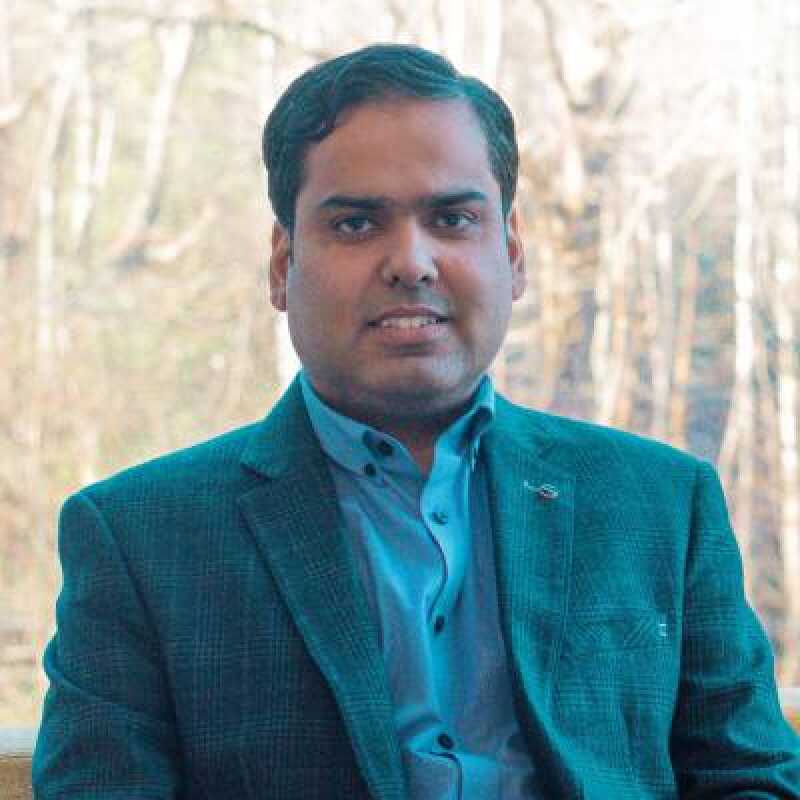
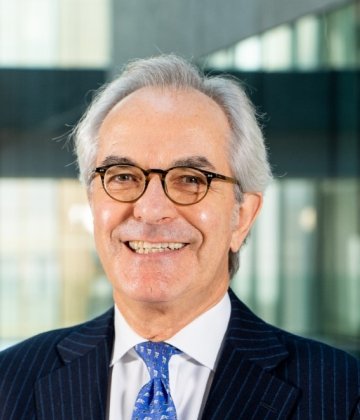
Rizwan Ahmed is a Senior Lecturer in Accounting and Finance at the University of Kent 's Kent Business School . He serves as Director of Studies for the Department for Accounting and Finance, with prior experience as an Assistant Professor at institutions like the University of Birmingham, Cardiff Business School, and Birkbeck University of London. His research focuses on Sustainable Finance , FinTech , and Corporate Governance , with funding from the Economic and Social Research Council (ESRC) for collaborative projects. Fellowship of Higher Education Academy (HEA-UK) Associate Fellow Member, Chartered Institute of Securities and Investment (CISI-UK) His publications in journals like Energy Economics and International Journal of Finance and Economics examine intersections between climate risk, financial markets, and regulatory frameworks. He supervises PhD research in areas including Sustainable Finance, Climate Finance, and Corporate Governance in the financial sector. Research Trends Recent articles analyze climate change impacts , energy market spillovers , and ESG performance under sanctions, utilizing empirical methods and data from the UK, China, and emerging economies. Methodological innovations include cross-quantilogram analysis and portfolio optimization frameworks. Scientific Awards Fellowship of Higher Education Academy (HEA-UK) Associate Fellow Member, Chartered Institute of Securities and Investment (CISI-UK) Rizwan also acts as a peer reviewer for journals including International Review of Financial Analysis and Technological Forecasting & Social Change .
Jenna Wise DiVincenzo is an Assistant Professor at the Elmore Family School of Electrical and Computer Engineering at Purdue University. She specializes in research areas such as software verification, formal methods, and programming languages, with a focus on gradual verification techniques that combine static and dynamic analysis. Her work emphasizes usability and scalability in verification tools, and she has contributed to projects like Gradual C0 and gradual null-pointer analysis. Dr. DiVincenzo earned her PhD in Software Engineering from Carnegie Mellon University (2023) and a BS in Mathematics and Computer Science from Youngstown State University (2017). She has interned at IBM Research, MIT Lincoln Laboratory, and the Software Engineering Research and Empirical Studies Lab at YSU. Her awards include the Google PhD Fellowship, NSF GRFP Fellowship, and 2022 Rising Star in EECS. Her research projects span theoretical advancements in gradual verification, empirical studies on usability, and practical tool development. She advises PhD students (e.g., Craig Liu, Conrad Zimmerman) and collaborates on initiatives like gradual verification for Rust and educational tools to teach verification concepts. Her work also explores leveraging large language models for specification generation and enhancing verification tool soundness through formal proofs.
Roles and Affiliations: Professor David Levinson is a Professor of Transport in the School of Civil Engineering at the University of Sydney since 2017. He holds adjunct faculty status at the University of Minnesota's Department of Civil, Environmental, and Geo-Engineering (since 1999–2016). He previously directed the Accessibility Observatory and the Networks, Economics, and Urban Systems (NEXUS) research group. He is a member of The Net Zero Institute and leads the TransportLab research group. Education: PhD 1998 in Urban and Regional Planning from the University of California, Berkeley. Research Interests: Focuses on transportation networks, urban systems, accessibility analysis, and policy. Key themes include spatial equity, transport economics, and the co-evolution of land use and transport infrastructure. His work emphasizes data-driven approaches to urban mobility challenges, including modeling transport networks and evaluating infrastructure impacts on accessibility and equity. Grants and Projects: Recent grants include Design of micro-decisions in automated transport (2022, ARC) and Reducing pedestrian crashes through better intersection design (2021, Australian Road Safety Innovation). Collaborates internationally on projects like the Accessibility Observatory. Labs and Teams: Leads the TransportLab and collaborates with the NEXUS group. Active in interdisciplinary research, including urban analytics and transport policy.
Florian Kerschbaum is a Professor and NSERC/RBC Industrial Research Chair in Data Security at the Cheriton School of Computer Science, University of Waterloo. His research focuses on data security and privacy, applied cryptography, and confidentiality in data science. Research interests span data collection/preparation management, secure multi-party computation, homomorphic encryption, differential privacy, and machine learning robustness/privacy. His work develops cryptographic solutions for practical data management challenges in distributed systems.
Demetris Christodoulou is an Associate Professor in Accounting, Governance and Regulation at the University of Sydney. He holds a BEcon from Piraeus University, an MSc(Fin) from the University of York (UK), and a PhD from Athens University of Economics and Business (AUEB). His research focuses on applying data analytics, econometrics, and visualization techniques to financial analysis, equity valuation, life insurance, and financial advice. He co-directs the PEMA research group, specializing in productivity and performance measurement analytics, and previously led the MEAFA research group (2007–2022). He has collaborated extensively with industry partners including Deloitte and Australian insurers, and developed training programs for over 1,000 executives. His work includes open-source contributions to Stata software and the Graph Workflow platform, alongside $662k in workshop-generated funds supporting academic programs. He has advised multiple PhD students and taught at leading universities globally. Education: BEcon in Economics (Econometrics), Piraeus University MSc in Finance, University of York (UK) PhD in Accounting and Financial Analysis, Athens University of Economics and Business His research interests span financial reporting models, life insurance underwriting strategies, and behavioral finance. Recent projects address dishonesty mitigation in insurance disclosures and the adviser effect on customer disclosures. He has published widely in top journals like the Review of Accounting Studies and Stata Journal , and his work was featured in The Australian for insights on insurance fraud reduction. He maintains international collaborations, including visiting roles at Columbia Business School and the University of Cyprus, and serves on advisory boards for organizations like Behaviour.ai. Publications highlight methodological innovations in econometrics and visualization, with 2025's upcoming Stata Journal paper advancing time-series analysis techniques. His grants include partnerships with industry on longitudinal studies of insured lives, aiming to improve risk modeling and public policy insights.
Maurizio Dallocchio is a Full Professor of Corporate Finance at Bocconi University and SDA Bocconi School of Management. He served as Dean of SDA Bocconi (2003–2007) and has held leadership roles in academic and professional institutions, including Chair of the Audit Committee of the European Investment Bank (EIB). His research focuses on corporate valuation, mergers & acquisitions (M&A), and sustainable finance. Dallocchio founded DGPA & Co., a corporate finance consultancy, and advises public and private entities globally. He has taught at leading institutions like London Business School and NYU Stern School of Business. Educational Background: Ph.D. in Business Administration, Bocconi University Advanced studies at London Business School and New York University Stern School of Business Research Interests: Prof. Dallocchio’s work emphasizes corporate restructuring, ESG integration in finance, and strategic valuation methodologies . Recent studies explore environmental performance in emerging markets and the resilience of conglomerates during economic crises. He advocates for sustainable investment strategies that balance financial returns with societal impact. Professional Engagements: Board member roles at Klepierre Management, General Finance, and Podravska Banka Past Director of the Master in Corporate Finance program at SDA Bocconi Labs/Teams: Leads research initiatives at Bocconi’s Corporate Finance and Real Estate Department, collaborating with global institutions on projects involving corporate governance, M&A analytics, and sustainable development.
Yuvraj Agarwal is a Professor in the School of Computer Science at Carnegie Mellon University , where he leads the SYNERGY Labs . His research focuses on Systems and Networking with emphasis on Embedded Systems , Security , and Energy Efficiency in computing environments. He has been recognized with the NSF Expeditions in Computing Award for Computational Decarbonization research and multiple best paper awards. Education : PhD in Computer Science from University of California, San Diego Research Leadership : Founder/Director of SYNERGY Labs; Executive Director of NSF Expeditions in Variability (2010-2013) Research Trajectory : Recent publications highlight his work on Privacy-preserving smart classroom systems (EduSense, ClassID) IoT security labeling frameworks Audio privacy protection mechanisms Computational decarbonization of infrastructure His research combines hardware-software co-design with societal impact considerations. Scientific Recognition : NSF Expeditions in Computing Award for CoDec (2024) Ubicomp/IMWUT Distinguished Paper Award (2024) CHI Best Paper Honorable Mention (2022) Advising & Collaboration : Mentors students in IoT systems , privacy research , and green computing . Collaborates with institutions including University of Massachusetts Amherst and industry partners like Johnson Controls. Grants include NSF funding for multi-university research initiatives.
Stefano Rossi is a Full Professor of Finance at Bocconi University's Department of Finance, serving as Chair of the Department. He holds affiliations with the Centre for Economic Policy Research (CEPR) and the European Corporate Governance Institute (ECGI), and serves on editorial boards for journals including Journal of Law, Finance, and Accounting and European Financial Management . His research focuses on corporate governance, bankruptcy, debt financing, sovereign borrowing, and quantitative trading, with publications in top journals such as The Journal of Finance and Journal of Monetary Economics . He has received international recognition, including awards for his work on ownership evolution. Prior to Bocconi, he taught at institutions including the Stockholm School of Economics and Cornell University. He earned his BA/MSc from Bocconi and a PhD in Finance from London Business School. Prof. Rossi's research explores intersections between corporate finance and public policy, with recent work analyzing credit cycles, municipal bankruptcy law, and liquidity shocks in insurance markets. His articles frequently address systemic financial risks and institutional frameworks governing corporate and sovereign debt. Awards include the ECGI Best Paper Prize for his collaborative research on ownership dynamics. Teaching spans corporate finance, valuation, and financial markets at undergraduate, graduate, and executive levels. He has developed courses at Bocconi's undergraduate, MBA, and PhD programs, emphasizing practical applications of theoretical finance models. His comprehensive curriculum includes mergers & acquisitions and private equity strategies. Key contributions include studies on shareholder voting mechanisms, sovereign default dynamics, and the impact of tax policies on corporate behavior. His work often bridges academic rigor with real-world policy implications, influencing both academic discourse and regulatory practices.
Associate Professor Chen Lou is a faculty member at the Wee Kim Wee School of Communication and Information, Nanyang Technological University (NTU), Singapore. Her research focuses on consumer psychology and advertising effects, exploring how marketing communications influence behavior through information processing mechanisms. She investigates topics like influencer marketing, content strategies, and the psychological impacts of brand communications. A mixed-methods researcher, she employs techniques such as eye-tracking, psychophysiological measures, and big data analytics (e.g., sentiment analysis). Dr. Lou holds editorial roles at journals including the International Journal of Advertising and Journal of Interactive Advertising , and serves on committees for organizations like the American Academy of Advertising (AAA) and the International Communication Association (ICA). She earned her Ph.D. from Michigan State University, an M.S. from Ohio University, and a B.A. from Wuhan University. Her research has been recognized with awards such as the 2021 Mary Alice Shaver Promising Professor Award (AAA) and multiple best article awards. She actively supervises student projects, including top-winning FYPs at NTU. Key research areas include: Influencer marketing dynamics and virtual influencers Social media platform affordances and advertising effectiveness Brand activism and message framing Psychological ownership in content marketing Consumer responses to ethical and cultural messaging
Elaine M. Huang is an Associate Professor of Human-Computer Interaction at the Department of Informatics, University of Zurich, where she has served since 2010. She also leads the People and Computing Lab, focusing on the dynamic interplay between human practices and technological advancements. Her academic background includes: PhD in Computer Science, Georgia Institute of Technology (2006) Dr. Huang's research centers on human-computer interaction, examining the bidirectional relationship between technology and human practices. She is particularly known for her work on gender equality in technology, challenging assumptions about innate gender differences and investigating how AI systems may perpetuate biases. Her research also spans sustainable interaction design, mental health technologies, and chronic disease management, always emphasizing empirical data over intuition. Analysis of her recent publications (2023-2025) reveals a strong trajectory toward socially impactful HCI, with significant focus on health technologies (diabetes management, mental health), cultural sensitivity in design, and the ethical challenges of AI. Her methodology often involves field studies to understand real-world technology use, countering the industry's reliance on intuition. As head of the People and Computing Lab, Dr. Huang oversees a research group dedicated to designing and evaluating technologies that address complex human needs. The lab's work frequently involves co-design with diverse user communities to ensure relevance and inclusivity in technological solutions.
Remko Van Hoek serves as Professor of Practice in the Department of Supply Chain Management at the Sam M. Walton College of Business, University of Arkansas. He teaches Sourcing and Procurement courses across undergraduate, master's, and doctoral programs. Prior to joining the University of Arkansas, Dr. Van Hoek held academic positions in Europe and served as a visiting professor at Cranfield School of Management, complemented by extensive industry experience as a supply chain and procurement executive at global corporations including Nike, PwC, and The Walt Disney Company. He currently serves on the Council of Supply Chain Management Professionals (CSCMP) Board of Directors and acts as executive director of the CSCMP Supply Chain Hall of Fame hosted by the Walton College. Dr. Van Hoek's research centers on digital transformation in procurement and supply chain management, with particular focus on blockchain implementation, artificial intelligence applications, and sustainable sourcing practices. His work investigates how emerging technologies reshape procurement processes, supplier relationship management, and risk mitigation strategies. He explores innovative approaches to supplier diversity programs, ethical sourcing frameworks, and the strategic evolution of procurement from cost reduction to value creation. His research consistently bridges academic theory with industry practice through case studies from major corporations, developing actionable frameworks for practitioners facing digital disruption and sustainability challenges. Analysis of his 15 most recent publications (2023-2025) reveals dominant themes in AI-driven supply chain risk prevention, blockchain implementation for transparency, and sustainable supplier engagement. His work demonstrates consistent industry collaboration, drawing from case studies at Walmart, Moet Hennessy, and Bayer to address post-pandemic resilience challenges. A significant portion examines procurement's strategic evolution beyond transactional functions, with recurring emphasis on ethical considerations in digital transformation and the practical implementation barriers for emerging technologies in global supply networks. As a Professor of Practice, Dr. Van Hoek integrates executive-level industry experience into curriculum development and student mentorship. His industry-engaged teaching model includes guest lecturer programs connecting students with supply chain practitioners, as evidenced by his co-authored work on integrating industry insights into supply chain education. While specific grant funding details are not publicly documented, his leadership in the CSCMP Supply Chain Hall of Fame demonstrates commitment to professional development and industry-academia knowledge transfer. Dr. Van Hoek directs the CSCMP Supply Chain Hall of Fame initiative, which documents transformative contributions to supply chain management through interviews with industry pioneers and historical case studies. This platform serves as both an educational resource for Walton College students and a professional development tool for supply chain practitioners globally. The Hall of Fame preserves critical industry knowledge while highlighting contemporary innovations in supply chain strategy and technology implementation.
Ninette Pilegaard is a Professor and serves as Deputy Head of Division and Head of Section for Transport Policy at the Department of Technology, Management and Economics, Technical University of Denmark (DTU). Her academic career spans multiple research domains with significant contributions to transportation policy and economics. Her research interests focus on transportation policy analysis with particular expertise in: Road charging systems and pricing mechanisms Bicycle infrastructure and safety analysis Commuting behavior and accessibility impacts Car ownership and usage patterns Relationship between transportation accessibility and labor market outcomes Dr. Pilegaard's scholarly work demonstrates a strong empirical approach combining transportation engineering with economic analysis. Her recent publications reveal a consistent focus on evidence-based policy evaluation, particularly in the Danish context. She frequently employs quasi-natural experimental methods to assess transportation policy impacts, with particular attention to road pricing, cycling infrastructure, and the economic implications of transportation systems. Her research has been supported by major funding bodies including Innovation Fund Denmark and Forskningsrådsfinansiering, and has resulted in publications in high-impact transportation journals such as Transportation Research Parts A and D, and Journal of Safety Research. As an academic supervisor, Dr. Pilegaard has served as Main Supervisor for PhD projects, including the 'Productivity and agglomeration' project. She has been actively involved in numerous research collaborations both within DTU and with external partners. Her laboratory work focuses on transportation data analysis, particularly utilizing Danish transportation datasets to examine policy impacts. She has developed expertise in analyzing hospital data for traffic safety research and has contributed to methodologies for assessing infrastructure effects on traffic accidents.
Associate Professor Madeline Taylor is an Australian Research Council (ARC) Early Career Industry Fellow at Macquarie Law School and Co-Lead of the Energy, Communities, and Market Regulation Stream at the Transforming Energy Markets Research Centre. She specializes in socio-legal aspects of energy transition, focusing on regulatory frameworks, energy justice, and land-use conflicts between energy developers and communities. Her work bridges property law, commercial law, and comparative law to address challenges in renewable energy integration and resource governance. Affiliations: Honorary Associate at Sydney Environment Institute, Member of Sydney Institute of Agriculture Industry Partners: NSW Department of Primary Industries and Spark Renewables (FAARM Project) Research Interests: Energy law and policy, agricultural-legal synergies, renewable energy siting, and just transition principles. She co-edits the Oil, Gas and Energy Law Journal and contributes to the LexisNexis Energy and Resources Law in Australia . Recent Articles Highlight Key Themes: Offshore wind governance, agrivoltaics regulatory systems, hydrogen licensing, and energy justice frameworks. These works emphasize interdisciplinary approaches to balancing economic, environmental, and social dimensions of energy transitions. Awards: 2023 Lawyers Weekly Women in Law Academic/Researcher of the Year, 2024 AFR Higher Education Awards Finalist, Clean Energy Council Transformational Leadership Scholarship Teaching and Engagement: Embeds climate justice in commercial law education; advises governments and NGOs on energy policy. Active in RE-Alliance Management Committee and IUCN Climate Change Law initiatives.
Timo Rintamäki is an Associate Professor at the Faculty of Management and Business , Tampere University . His research focuses on customer value creation, service ecosystems, and retail innovation, with particular expertise in co-creation, sharing economy platforms, and digital transformation. Research Themes : Customer Value Propositions, Service Ecosystems, E-Commerce, Co-Creation, Retail Experience Design Key Sectors : Retail, Healthcare, Social Media, Public Services Timo’s recent work explores sustainable value creation through collaborative platforms, analyzing customer behavior in online return processes, and optimizing value orchestration in multi-channel environments. His studies span both academic and practical perspectives, including policy implications in healthcare and innovation in consumer cooperatives. His scholarly contributions include frameworks for service experience management, insights into customer data utilization, and models for value co-creation across digital and physical touchpoints. While no specific scientific awards are listed, his interdisciplinary research bridges service science, marketing, and organizational behavior.
Professor Janet McColl-Kennedy is a leading figure in marketing and service science at The University of Queensland's Business School. She serves as Program Lead for Innovation Pathways (FaBA) and co-founded the Service Innovation Alliance (SIA) research hub, focusing on customer experience, AI, digital transformation, and sustainability. With Fellow status in the Academy of the Social Sciences in Australia and the Australian and New Zealand Marketing Academy, she holds international recognition including Research.com's World's Best Business Scientists ranking and the Christopher Lovelock Career Contributions to the Services Discipline Award (2025). University of Queensland Business School Honorary Visiting Professor, Cambridge Service Alliance Research Collaborator, University of Cambridge Her research spans customer experience management, service ecosystems, digital transformation, and healthcare services. She has pioneered frameworks for customer value co-creation and service recovery strategies, integrating AI and behavioral science. Her 2019 paper on customer experience insights was implemented by a major B2B organization, while her work on value co-creation improved outcomes at Lutheran Community Care. Recent publications focus on AI impacts in food and beverage services, sustainable service ecosystems, and digital health interventions. She has secured over $89 million in competitive grants, including multiple ARC Linkage and Discovery Projects, and leads cross-disciplinary teams with institutions like Cambridge University and Arizona State University. 2024 - ARC College of Experts appointment 2023 - Bo Edvardsson Industry Impact in Services Award 2022 - Elected Fellow of Academy of the Social Sciences in Australia 2021 - Clarivate Highly Cited Researcher 2018 - Ranked most influential marketing academic in Australia With over 220 publications and a Google Scholar H-index of 62, she has mentored 15 PhD students and examined theses at multiple universities. Her teaching spans 30+ years across undergraduate, postgraduate, and executive programs in Australia, USA, Italy, China, and Korea, with awards for blended learning and corporate education.