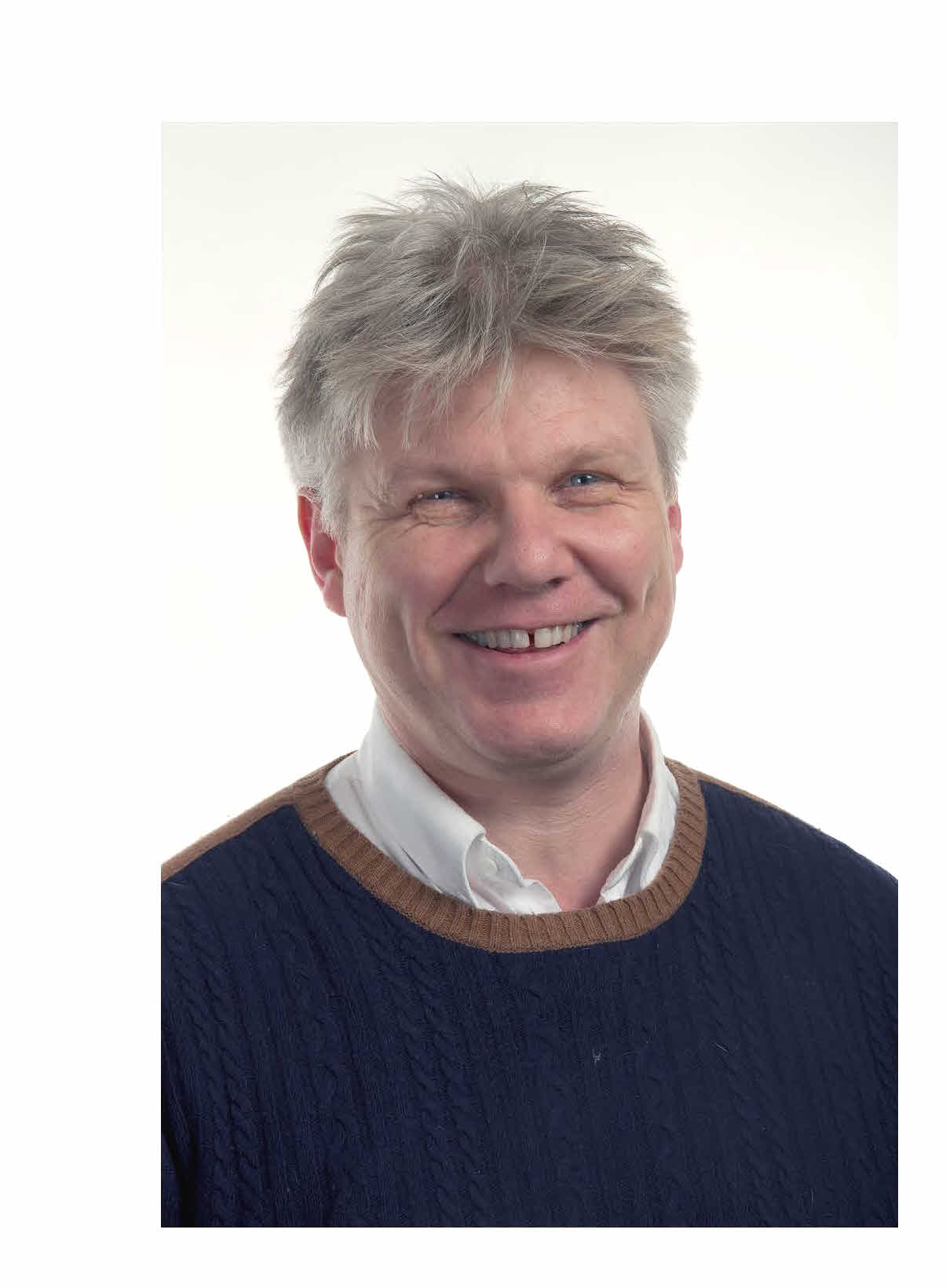
Christoph Strehl is a Professor of Singing at the Mozarteum University in Salzburg, specializing in vocal studies and opera training since 2013. A renowned tenor, he has performed internationally with major opera houses and orchestras, collaborating with conductors like Claudio Abbado and directors including Claus Guth. His career spans key roles in Mozart operas (Don Ottavio in Don Giovanni , Tamino in The Magic Flute ), Beethoven's Fidelio , and Schubert's Fierabras . He has recorded extensively for labels like Deutsche Grammophon and EMI, with notable albums including Die Zauberflöte (2007) and Das Paradies und die Peri (2008). His teaching emphasizes creative process integration and vocal technique, supported by masterclasses with luminaries such as Axel Bauni and Norman Shetler. Education: Studied at Folkwang University (Essen) with Soto Papulkas and privately with Silvana Bazzoni-Bartoli in Zurich. Professional milestones include a 9-year tenure at Zurich Opera House (2002-2011) and Salzburg Festival debuts in 2003 and 2019. Active in recitals with pianists like Helmut Deutsch and Pauliina Tukiainen.
Georg Steinschaden is an Associate Professor of Piano and founder/director of the Pre-College Salzburg at Mozarteum University, focusing on highly gifted young musicians. He serves as president and artistic director of the Austrian Master Classes and leads a piano class at Musikum Salzburg. His roles include former chairman of Prima la Musica's advisory board and federal advisory board member. As part of the Steinschaden Trio Salzburg, he performs internationally with ensembles like the Eichendorff Quintet Vienna and Amati-Quartet Verona, collaborating with artists such as Angelika Kirchschlager. Since 1994, he has been active in cultural management. Education background not explicitly stated but inferred via professional roles. Research interests center on music pedagogy, ensemble dynamics, and cultural leadership. His work emphasizes nurturing young talent through structured educational programs and promoting collaborative artistic ventures. No recent articles listed, but contributions likely span performance pedagogy and cultural management strategies. Awards section remains unpopulated. Advisees: None listed in available texts. Grants: No specific grants mentioned. Labs/teams: Active in Austrian Master Classes and Pre-College Salzburg initiatives.
Zhuomin Huang is a Senior Lecturer in Intercultural Education at the University of Manchester's Manchester Institute of Education (MIE). She holds a PhD in Education (2019) alongside an MBA and teaching qualifications. Her research focuses on intercultural education, creative research methods, and epistemic justice in knowledge production. She leads the MA International Education program's EDUC70621 course unit on intercultural communication and co-designs creative methods training for university staff. Key research areas include intercultural mindfulness, student belonging, and the ethical dimensions of intercultural research. She actively contributes to global networks like the International Association for Languages and Intercultural Communication and Cultnet. Huang supervises PhD candidates exploring themes like international student narratives and intercultural identities. Her work addresses UN Sustainable Development Goal 4 (Quality Education) through advocating inclusive pedagogies and linguistic diversity. Recent research explores musicking as intercultural practice, linguistic resourcefulness, and methodologies that disrupt epistemic hierarchies. She has co-organized impactful workshops like 'Simulating International Students' Experience' to enhance staff awareness of student needs. Huang's creative methods emphasize visual arts, narrative portraits, and participatory approaches. She co-edits journals like Language and Intercultural Communication and serves as a PhD examiner for Leeds University. Her 28+ publications span intercultural education, arts-based research, and multilingual praxis, with emphasis on 2023-2025 outputs.
Claudia Kozman is an Assistant Professor in Residence in the Journalism and Strategic Communication Program at Northwestern University in Qatar. She holds a Ph.D. from Indiana University. Her research focuses on media systems, conflict journalism, and the intersection of sports and politics in media coverage. Prior to academia, she spent 13 years as a journalist in Lebanon and Asia, working across print, broadcast, and online media in sports reporting and editorial management roles. Kozman’s work examines how external factors like politics and laws shape journalistic norms and news content, particularly in conflict zones and major sporting events like the FIFA World Cup. She also explores audience behaviors, including media dependency and selective exposure during uprisings. Her expertise includes comparative media systems analysis in the Arab region, framing and sourcing theories, and digital journalism practices. Kozman has contributed to projects like the Routledge Companion to Journalism in the Global South and co-edited Arab Media Systems . Her research bridges academic and practical journalism, emphasizing empirical methods and media literacy education. Key publications analyze media coverage of the 2019 Lebanese protests, the 2023 Israel-Gaza war, and the role of social media in global uprisings. She investigates how platforms like Twitter influence journalistic practices and public engagement with news. Kozman’s recent work extends to sports journalism’s role in addressing societal issues such as gender representation and health controversies in sports. Her academic contributions include teaching online research methods and media studies courses. She collaborates with global researchers on projects like the Journalistic Role Performance study across 37 countries. Kozman’s interdisciplinary approach integrates conflict studies, digital media trends, and comparative journalism to address contemporary challenges in media systems.
Allan Glassman is a Lecturer in Classical Voice at the Music Conservatory of Roosevelt University's Chicago College of Performing Arts. A celebrated tenor, he has performed internationally in major operatic roles including Herod in Salome, Manrico in Il Trovatore, and Canio in I Pagliacci. His career spans prestigious venues such as the Metropolitan Opera, Deutsche Staatsoper Berlin, and Oper Frankfurt, with notable performances in both the United States and abroad since joining the faculty in 2013. Specialization: Classical Voice and Opera Performance Performance Highlights: Metropolitan Opera engagements (2004–2012), international tours in Europe, Israel, and Mexico, and collaborations with renowned opera companies. Academic Role: Teaching at Roosevelt University's Music Conservatory, contributing to undergraduate and graduate voice programs (BM, MM). Glassman's performance history demonstrates expertise in 19th-20th century operas, particularly in dramatic tenor roles. He bridges practical performance experience with academic training in vocal arts.
Mark Yeary serves as an Adjunct Professor of Music Theory at the School of Music, University of Puget Sound, where he bridges scholarly research with active musical performance and pedagogy. His academic foundation includes: BA from University of California, Berkeley (1995) PhD from University of Chicago (2011) Yeary's research centers on perceptual dimensions of music, specifically analyzing unusual sonorities in Stravinsky and Messiaen's compositions, examining timbre's role in harmonic music pedagogy, and conducting psychoacoustic studies of vocal production in popular recordings. This interdisciplinary work connects theoretical analysis with empirical perception studies. No scientific awards were documented in the source material. Professional activities include private instruction in voice, guitar, and bass, alongside regular performance as a singer, bassist, and arranger with local ensembles. No grant funding details were specified. No dedicated research laboratories or collaborative teams were referenced.
Pierpaolo Polzonetti is a Professor of Music at the University of California, Davis , with a PhD in Musicology from Cornell University . His research bridges opera, eighteenth-century music, and interdisciplinary themes like food, social justice, and transcultural exchange. Research Interests include operatic gastromusicology, the intersection of music and cuisine, eighteenth-century social and gender dynamics in opera, Cuban popular music, and prison music education. He pioneers the study of gastronomic symbolism in operatic works, as seen in his 2021 book Feasting and Fasting in Opera . His publications reveal a focus on gastronomic codes in opera, political themes in Mozart and Haydn, and cultural identity in Italian opera. Awards include the Lockwood Book Award , Slim Award , and Latina International Prize . He has secured grants from the NEH , ACLS , and Earhart Foundation . Scientific Awards: Lockwood Book Award Slim Award Einstein Article Award Latina International Prize in Music Studies Grants: National Endowment for the Humanities American Council for Learned Societies Earhart Foundation Cuban Research Institute Kimberly Green Latin American and Caribbean Center Global Affairs UC Davis Seed Grant Polzonetti's teaching philosophy emphasizes social engagement, notably through programs like Don Giovanni Goes to Prison . His documentary El Sabroso (2024) explores Son music in Havana, aligning with his interests in marginalized cultural expressions.
Owen Chapman is a Professor in Sound Production and Scholarship at Concordia University's Department of Communication Studies. His work bridges sound art, research-creation, and mobility studies, focusing on the role of sound in everyday life through electronic composition, app design, and site-specific installations. He collaborates internationally with artists like Peter Sinclair and Vivek Venkatesh, producing projects such as Selfie Orchestra and Landscape of Hate/Hope that engage with critical issues around technology, disability, and media literacy. Research interests include: Sound studies and sonic cartography Mobile media and locative technology Research-creation methodologies Dub music's influence on contemporary sound art Disability studies in digital environments Interactive 3D audiovisual spaces His publications and projects have been funded by the Canada Council, FRQ-SC, and SSHRC. Chapman co-created the AudioMobile app for GPS-tagged sound recordings and has exhibited extensively in international festivals and symposia. He contributes to academic discourse through peer-reviewed journals and editorial roles, notably as Managing Editor for Wi: Journal of Mobile Media (2014-2018). Chapman's performances span improvisational electronic music, DJ/VJ sets, and multimedia installations. Key collaborations include: Selfie Orchestra (with Peter Sinclair) Landscape of Hate/Hope (with Vivek Venkatesh) Research with Milieux Institute for Arts, Technology and Culture
Danilo Pérez is a Grammy Award-winning Panamanian pianist, composer, and educator, currently serving as the Founder and Artistic Director of the Berklee Global Jazz Institute at Berklee College of Music in Boston. He is also the Artistic Director of the Panama Jazz Festival and holds the prestigious title of UNESCO Artist for Peace and Cultural Ambassador for Panama. Educational Background: National Conservatory of Panama (Classical Piano) Berklee College of Music (Jazz Composition) Bachelor’s Degree in Electronics, Panama Danilo Pérez’s research and artistic interests center on Global Jazz , a genre he pioneered by fusing Panamanian roots, Latin American folk music, West African rhythms, and European impressionism. His work transcends music, promoting it as a multidimensional bridge for community, democracy, and social change. He emphasizes values such as listening, compromise, and discipline in his teaching, viewing music as a tool for personal and societal transformation. His recent artistic works, including albums like Lumen (2024), Crisálida (2022), and Children of the Light (2015), reflect a consistent trend of spiritual depth, cross-cultural collaboration, and narrative composition. These works explore themes of identity, history, and human connection, often commissioned by major institutions like Carnegie Hall and the Banff Centre. His compositions range from intimate piano trios to large orchestral and chamber pieces, demonstrating a mastery of both improvisational jazz and structured composition. Scientific and Artistic Awards: Grammy Award (2006, 2019) United States Artists Fellowship (2018) Smithsonian Latino Center’s Legacy Award (2009) Gloria Career Achievement Award (2015) Boston Music Awards (1999, 2000) UNESCO Artist for Peace (2012) Former UNICEF Goodwill Ambassador Danilo Pérez has been a dedicated mentor and educator, advising and influencing generations of jazz musicians through his leadership at the Berklee Global Jazz Institute and the Panama Jazz Festival. His work has been supported by major commissions from Lincoln Center, Carnegie Hall, and the Detroit Jazz Festival, among others. He has not received traditional research grants but has secured significant artistic funding through fellowships and institutional commissions. His leadership extends to founding the Danilo Pérez Foundation, which provides music education for youth in Panama. Labs and Teams: Pérez leads the Berklee Global Jazz Institute , a dynamic educational and performance lab that fosters innovation in jazz. He also directs the Panama Jazz Festival , a major international event and educational platform. His primary performance ensembles include the Danilo Pérez Trio , the Children of the Light (with John Patitucci and Brian Blade), and the Global Messengers , all of which serve as living laboratories for his global jazz philosophy.
Simon Emmerson is a Professor in Music, Technology & Innovation at De Montfort University 's Leicester Media School. A composer and scholar with over 50 years of experience in electroacoustic music, he has worked extensively in live electronics, music analysis, and gender studies in sonic arts. His contributions include founding EMAS and serving on advisory boards for Sonic Arts Network, Sound and Music, and journals like Organised Sound and Journal of Sonic Studies. Education : BA in Natural Sciences and Education (Cambridge, 1972), PhD in Electronic Music (City University, 1982) External Roles : DAAD Edgard Varese Visiting Professor (Berlin, 2009-10), Silver Jubilee Visiting Professor (Perth, 2016) His research focuses on electroacoustic music composition, live performance with electronics, and the relationship between technology and human perception. Recent projects examine crossadaptive processing, spatial sound design, and the evolution of electronic music terminology. Key publications include The Language of Electroacoustic Music (1986), Living Electronic Music (2007), and The Routledge Research Companion to Electronic Music (2018). Awards span the Bourges Electroacoustic Prize (1985) and Arts Council Bursary (1987). He has served on editorial boards for Organised Sound , Radical Musicology , and Journal of Sonic Studies .
Vovka Ashkenazy is a distinguished classical pianist and lecturer, currently teaching at Kalaidos Musikhochschule (Zurich), the Conservatory of Italian Switzerland (CSI) in Lugano, the Accademia di Imola Foundation, and the Tiziano Rossetti Academy. He holds a Master of Arts from Belford University and advanced pedagogical certification from France. His academic roles are centered on classical piano performance and interpretation. Education: Master of Arts, Summa Cum Laude, Belford University (2008) Certificat d'Aptitude - Professor d'Enseignement Artistique, France (2002) GRNCM Upper Division, Royal Northern College of Music (BA, 1983) Vovka Ashkenazy's research and artistic interests focus on classical and romantic piano repertoire, with a special emphasis on Russian music, two-piano performance, and chamber music. His pedagogical philosophy emphasizes musical understanding before technical execution, advocating for clarity of sound and emotional expression. He has made significant contributions through performances and arrangements of works by Rachmaninoff, Borodin, Mussorgsky, and Scriabin. His recent artistic output, spanning from 2009 to 2014, reveals a strong focus on collaborative piano performance, particularly in two-piano and piano-and-winds genres. He frequently performs with his father, Vladimir Ashkenazy, and his brother, Dimitri Ashkenazy, exploring Russian romanticism, orchestral transcriptions, and chamber repertoire. His work bridges performance and education, with recordings on DECCA, Chandos, and Cryston labels reflecting both technical mastery and interpretive depth. Scientific and Artistic Awards: Honorary Artistic Adviser, Guangzhou Opera House (2010) Artistic Director, Rina Sala Gallo International Piano Competition, Monza, Italy (2014) Vovka Ashkenazy is actively engaged in mentoring through masterclasses across Asia, Europe, and the Americas. While no formal grant information is available, his leadership roles in international competitions and recordings indicate sustained artistic funding and institutional support. He has contributed to charitable causes such as Action for Children, Cystic Fibrosis Trust, and the Bridges Peace Foundation. He runs a private teaching studio in Pura, Switzerland, offering structured and intensive piano study programs. Laboratories and Performance Ensembles: Private Piano Studio at Casa Camelia, Pura, Switzerland Collaborative Duo with Vladimir Ashkenazy (father) Chamber Ensemble with Dimitri Ashkenazy (brother) Reykjavík Wind Quintet (long-term collaborator) Regular performer at international festivals (Marlboro, Edinburgh, Spoleto)
Harald Eikaas is a Norwegian conductor and academic leader currently serving as Dean of the Faculty of Performing Arts at the University of Stavanger. His career spans conducting, music education, and artistic production, with notable collaborations including the Bergen Philharmonic Orchestra and Ålesund Symfoniorkester. Positions: Dean, Conductor, Music Educator Institution: University of Stavanger (Faculty of Performing Arts) Specialties: Church music, orchestral performance, educational concert programming Research and Artistic Focus centers on conducting practices, church music education, and symphonic outreach for youth audiences. His work emphasizes interdisciplinary collaboration and cultural preservation through performances like Henry Purcell's opera Dido & Aeneas and liturgical concerts in Volda kyrkje. Publications and Performances highlight his diverse roles: from directing educational concerts for grades 4-6 to producing contemporary compositions by Luca Francesconi. His projects often blend classical repertoire with modern interpretations, such as Haydn's Skapelsen and NRK broadcasts of symphonic arrangements. Collaborations include partnerships with artists like Stefan Östresjö and institutions like the Swedish Navy Music Corps, demonstrating his commitment to bridging academic and performance-based music traditions.
Samuel Zyman is Professor of Music Theory and Analysis at the Blair School of Music, Vanderbilt University. A prominent Mexican composer and former long-time faculty member at The Juilliard School, Zyman is internationally recognized for his contributions to contemporary classical music across orchestral, chamber, vocal, and film genres. Education: M.Mus. in Composition, The Juilliard School D.M.A. in Composition, The Juilliard School His research and creative work centers on music composition, theory, and analysis, with deep engagement in Mexican cultural identity and Sephardic musical traditions. His compositions often bridge artistic expression with social themes, such as peace and youth empowerment, as seen in works like An Ode to Music and Sacrifixio . Zyman's recent works (2016–2018) reflect a continued focus on large-scale compositions involving orchestra, chorus, and soloists, often inspired by cultural narratives and performed internationally. His music integrates traditional forms with modern compositional techniques, placing him at the forefront of Latin American contemporary music. Scientific Awards: Meet-the-Composer grants (U.S.) Most Outstanding Composer of the Year (1992) – Mexican Society of Theater and Music Critics Mozart Medal (1998) – Austrian Embassy in Mexico Medal of Merit in the Arts (2014) – Mexico City Legislative Assembly Zyman has received numerous commissions and has served as a judge for composition competitions in the U.S. and Mexico. His works are widely performed and recorded by major orchestras and ensembles globally, though no formal advising or lab affiliations are mentioned in the text.
Jara Fernandez-Meneses is a Lecturer in Film at the University of Southampton, Faculty of Arts and Humanities, Department of Film. She joined the university in 2022 and is actively contributing to teaching and research in film policy, the film industry, contemporary European cinema, and popular culture. University: University of Southampton School: Faculty of Arts and Humanities Department: Department of Film Academic Rank: Lecturer Her research focuses on the intersection of film policy, gender, and cultural industries, particularly in Spain and Europe. She explores how digital platforms, festivals, and institutional frameworks shape cinematic production and reception. Her work engages with contemporary debates on streaming, cultural distinction, and the sustainability of film criticism. Her recent publications reflect a strong trend in analyzing Spanish cinema through the lenses of policy, gender, and digital transformation. She has authored and co-authored books on Spanish film policies and gender, directorial practices, and SVoD platform strategies. Her articles and conference papers examine regional identities, popular culture, and the evolving role of film criticism in the digital age. Jara Fernandez-Meneses is currently supervising PhD student Zimo Zhang and accepts new PhD applications. She has previously taught at the University of Exeter, University of Kent, and Universidad Carlos III de Madrid. She is a member of the Centre for International Film Research at Southampton and collaborates with the TECMERIN research group at Universidad Carlos III de Madrid. Her external roles include film curation, criticism for Cahiers du Cinéma España and Serie B, project management at ICAA, and advisory roles for Proimagenes Colombia and international film festivals.
Maria Bania is a Professor at the University of Gothenburg’s Academy of Music and Drama, holding dual roles as Assistant Head of Department and Head of Music. She specializes in music performance studies, particularly focusing on 18th- and 19th-century practices. Her research explores historical performance aesthetics, affective strategies, and the interplay between theory and practice in music. She earned her doctorate in artistic research at Gothenburg University, examining flute vibrato and articulation techniques in historical contexts. Her career includes international performances as a baroque flutist with ensembles like Concerto Copenhagen and Corona Artis, alongside recordings of works by Agrell, Scheibe, and Roman. As a professor, she leads the Swedish Research Council-funded project on Romantic affective strategies and supervises doctoral students. Her work bridges performance practice, critical editions of historical scores, and pedagogical applications of historical methods. Key publications include studies on C.P.E. Bach’s performance advice and re-enactment methodologies in early Romantic music.