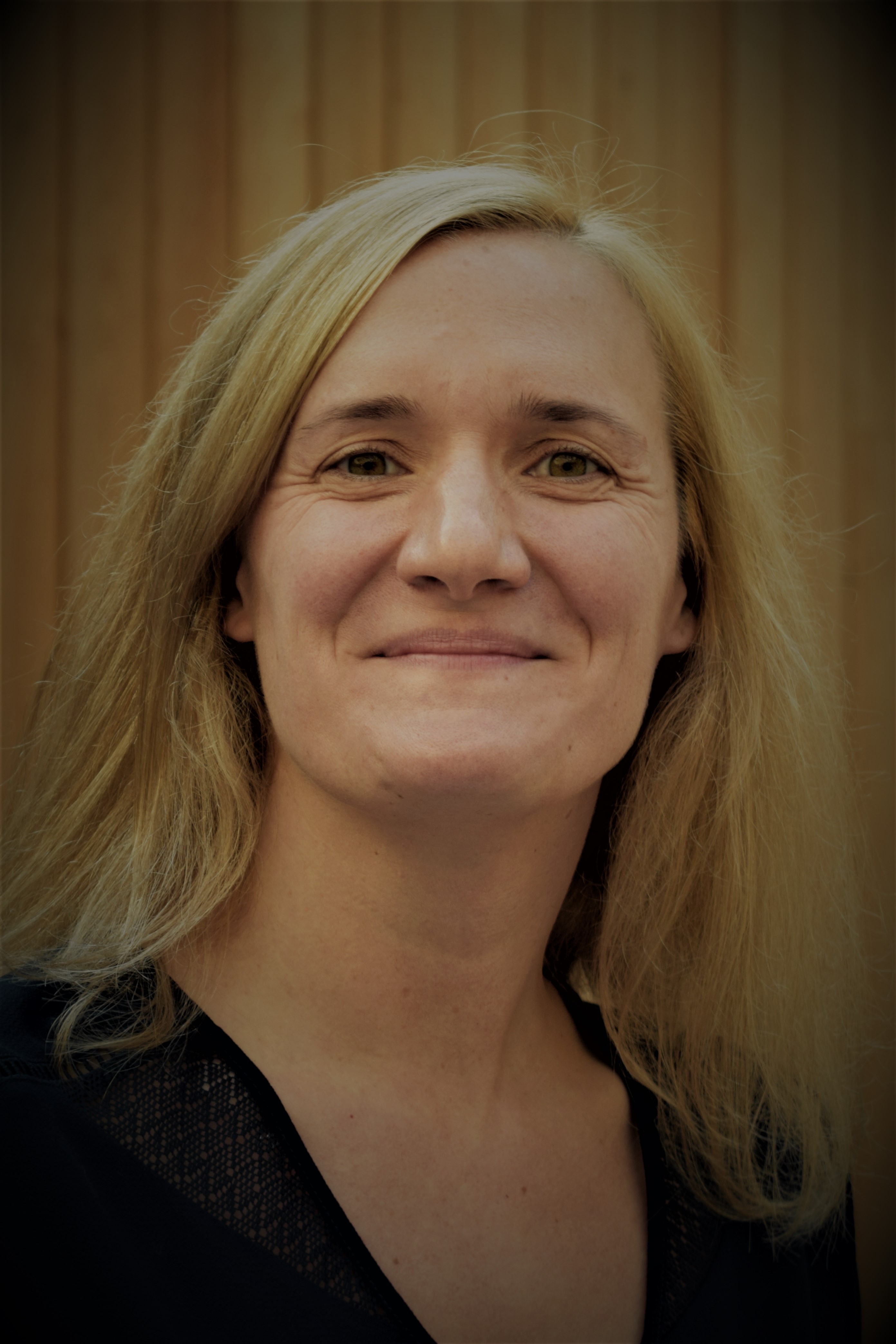
Dr. Sinno Jialin Pan is a leading researcher in machine learning and artificial intelligence at Nanyang Technological University, Singapore. His work focuses on domain adaptation, sentiment analysis, and efficient neural network optimization. Key research areas: Machine Learning, Domain Adaptation, Reinforcement Learning, Sentiment Analysis Recent publications demonstrate expertise in time-series classification (2025) using hierarchical domain adaptation, LLM efficiency (2025) through expert pruning, and graph generation (2024) via spectral diffusion. His work spans both theoretical advancements and practical applications in neural architecture optimization and adversarial learning. Scientific contributions include: 2025: Virtual-label hierarchical domain adaptation 2024: Spectral diffusion for graph generation 2024: Multilingual jailbreak analysis in LLMs Current trends show increasing focus on large language model optimization and robust neural architectures , with applications in fault diagnosis, recommender systems, and misinformation detection.
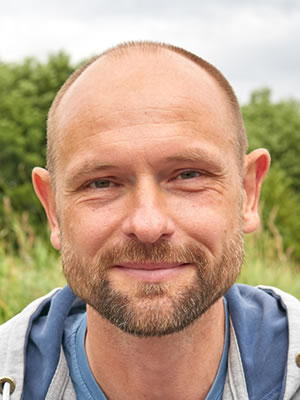
Florian Leiser is a Professor at the Chair of Information Infrastructures (led by Prof. Dr. Ali Sunyaev) at Technical University of Munich's Heilbronn campus. His research focuses on human-AI collaboration, privacy-preserving algorithms, and explainability in machine learning systems. Current research areas include Hybrid Intelligence, Human-centered Generative AI (LLMs), Federated Learning, and Health Information Systems Recent publications demonstrate expertise in Explainable AI for medical imaging LLM hallucination detection Federated learning architectures Human-in-the-loop systems Healthcare data applications He contributes to teaching through Human-Centered Artifact Design courses Collaborative teaching roles in machine learning Supervising student projects
Nele Mentens is a full professor at both KU Leuven and Leiden University, where she leads cutting-edge research in applied cryptography, hardware security, and secure embedded systems. At KU Leuven, she is affiliated with the Faculty of Engineering Technology and the Electrical Engineering Department (ESAT), leading the Emerging Technologies, Systems & Security (ES&S) research group at the Diepenbeek campus. Simultaneously, she holds a full professorship at Leiden University’s Leiden Institute of Advanced Computer Science (LIACS), focusing on applied cryptography and security. She has been instrumental in numerous national and international research initiatives, including Horizon Europe and NWO-funded projects. Full Professor, KU Leuven (since 2023) Full Professor, Leiden University (since 2020) Associate Professor, KU Leuven (2014–2023) Post-doctoral Researcher & Lecturer, KHLim / KU Leuven (2007–2014) Ph.D. in Engineering Science, KU Leuven (2007) M.Sc. in Electrical Engineering, KU Leuven (2003) Her research focuses on secure and efficient hardware design, particularly for cryptographic applications on FPGAs, reconfigurable architectures, IoT security, and neuromorphic computing. She explores physical attack resistance, side-channel analysis protection, and trusted computing architectures, with applications in healthcare, industrial monitoring, and endpoint AI. Her work bridges theoretical cryptography with practical hardware implementations, emphasizing energy efficiency and real-time performance. The 15 most recent publications reflect a strong trend toward secure, energy-efficient, and intelligent embedded systems. Topics include neuromorphic AI accelerators, trusted IoT architectures, dynamic reconfiguration for side-channel protection, and secure medical data processing. These works span disciplines such as computer architecture, cybersecurity, digital design, and embedded systems, with a focus on hardware-software co-design and real-world deployment. Nele Mentens has received recognition for her contributions, including: Best Paper Award, DATE'16 Best Paper Nomination, AsianHOST'17 Best Paper Award, CHES'19 She has supervised over 15 Ph.D. students and post-docs, both current and former, and has served as principal investigator in approximately 25 funded research projects. Her work has attracted significant grants from Horizon Europe, NWO, FWO, and national innovation programs. She actively contributes to the academic community through editorial roles in top journals and leadership in major conferences. Nele Mentens leads the ES&S research group at KU Leuven and collaborates closely with LIACS at Leiden University. Her team includes Ph.D. students, post-docs, and research experts working on projects like NimbleAI, NeuroSoC, and TrustedIoT. She has also established secure electronics labs through infrastructure grants and maintains strong international ties with institutions such as EPFL, Ruhr University Bochum, and ETH Zurich.
Christian Tominski serves as an apl. Professor (non-tenured) at the University of Rostock, holding the außerplanmäßige Professur for Human-Data Interaction within the Institute for Visual and Analytic Computing. His academic work spans teaching in Visual Computing and Computer Science programs, with active research contributions in data visualization and visual analytics. His research focuses on multi-variate data visualization, time-series and geo-visualization, graph visualization, and coordinated multiple views. He investigates interaction techniques including interactive lenses, visual comparison, navigation, and guidance mechanisms, alongside computational aspects such as efficient algorithms and asynchronous processing for visualization systems. Recent work emphasizes task-driven approaches and analytic support for interactive exploration. Analysis of his publication trends reveals strong emphasis on visual analytics for complex data structures, particularly in process mining and multivariate graphs. His work consistently explores guidance frameworks, progressive computation models, and novel interaction paradigms for large high-resolution displays, bridging theoretical foundations with practical applications in visual data analysis. Tominski holds professional roles as a member of the Faculty Council of IEF and the System Technical Group of Computer Science Institutes at the University of Rostock. He actively participates in the Informatik-Forum Rostock (INFO.RO), contributing to the regional computer science community through collaborative initiatives and knowledge sharing.
Prof. Dr. Edgar Kreilkamp is a full-time Professor at Leuphana University of Lüneburg , affiliated with the Institute for Management & Organization (IMO) . His academic and research expertise spans business administration , tourism management , and sustainability science , with a strong focus on integrating sustainable practices into tourism systems through digital innovation and strategic stakeholder collaboration. Research Focus: Sustainable tourism development and policy Digital transformation and big data in tourism Service marketing and consumer behavior Climate adaptation and environmental impact assessment Gamification and experiential design in tourism Projects & Contributions: Prof. Kreilkamp has led and contributed to multiple high-impact projects funded by the Federal Ministry of Education and Research (BMBF), including: Green Travel Transformation : Developing models for sustainable tourism management and labeling of travel packages. Digitalization as a Success Factor in Tourism : Exploring how digital tools can enhance sustainability and competitiveness. Climate-Neutral Island of Juist : A long-term initiative to transform Juist into a global model for climate-neutral tourism. KUNTIKUM : Investigating climate trends and sustainable tourism development in coastal and low mountain regions. Publications & Media: He has authored and co-authored numerous scholarly articles, book chapters, and policy reports. His work has appeared in both peer-reviewed journals and industry-focused publications, and he is a frequent keynote speaker at international conferences and policy forums. His media contributions include expert commentary on sustainable travel, climate-conscious tourism strategies, and digital innovation in the tourism sector. Contact: Email: edgar.kreilkamp@leuphana.de Phone: +49.4131.677-2171 Office: C6.124, Universitätsallee 1, 21335 Lüneburg, Germany
Jignesh M. Patel is a Professor at the University of Wisconsin, Madison, WI, USA , with over 25 years of contributions to database systems, data analytics, and hardware-aware query processing. His work bridges theoretical advancements with practical systems engineering. Research Interests span: Database systems optimization (query processing, transaction management) Hardware acceleration for analytics (eBPF, PIM, GPUs) Machine learning integration in databases (feature selection, model optimization) Efficient data structures (hashing, encoding, indexing) Multi-tenant and cloud database management Recent Work focuses on kernel-embedded databases (BPF-DB, 2025), memory-efficient dataframe processing (SplitDF, 2024), and algorithmic-hardware co-design for dense retrieval (DReX, 2025). He has pioneered techniques for adapting to data skew (VIP Hashing, 2022), leveraging static analysis in R optimization (ROSA, 2017), and rethinking benchmarking paradigms. Collaborations include key partnerships with: Systems researchers (Andrew Pavlo, José F. Martínez) Machine learning experts (Arun Kumar, Kevin Skadron) Education-focused colleagues (Adalbert Gerald Soosai Raj, Richard Halverson) Industry leaders (David J. DeWitt, Microsoft Research)
Dr. Florian Merget is a senior researcher ( Oberingenieur ) at the Institut und Lehrstuhl für Integrierte Photonik at RWTH Aachen University since 2011. His research spans silicon photonics , photonic integrated circuits (PICs) , and their applications in biomedical imaging , quantum optics , and optical communication systems . Education : Diplom-Ingenieur and PhD in Electrical Engineering from RWTH Aachen University Research Areas : Photonic device design (grating couplers, modulators, external cavity lasers), optical packaging, quantum interfaces, and biomedical photonics His recent publications focus on silicon nitride components for biomedical and quantum applications, alignment-tolerant optical couplers , and nonlinear optical transmission systems . Collaborations include work with Jeremy Witzens, Alvaro Moscoso Martir, and other photonics experts. Key contributions involve photonic interposer technology , resonant modulator design , and spin qubit-photon interfaces . He has also filed patents related to optical alignment and photonic integration .
Markus Zanker is a Professor in the Department of Knowledge Engineering within the Faculty of Computer Science at Free University of Bozen-Bolzano, Italy. With an extensive publication record spanning over two decades, he has established himself as a leading expert in recommender systems research, with particular expertise in context-aware, group, and knowledge-based recommendation approaches. His work bridges theoretical foundations with practical applications across diverse domains including tourism, healthcare, and e-commerce. Zanker's research interests center on advancing the theoretical underpinnings of recommender systems while addressing practical challenges in real-world deployments. His recent work has focused on causal decision-making frameworks for recommendation, intent-aware systems, and the integration of generative AI in group recommendation scenarios. He has made significant contributions to explainable recommendation systems, medical recommendation applications, and tourism recommendation systems, demonstrating both theoretical rigor and practical impact. His recent publication portfolio reveals a strong trend toward addressing fundamental challenges in recommendation science, including the growing emphasis on causal reasoning to move beyond correlation-based approaches, the integration of generative AI capabilities for more sophisticated group decision support, and the development of frameworks for ethical and socially beneficial recommendation systems. His work increasingly bridges the gap between traditional recommendation algorithms and emerging AI paradigms while maintaining focus on real-world applicability. Zanker is actively involved in the academic community as a workshop organizer, having co-chaired the Knowledge-aware and Conversational Recommender Systems (KaRS) workshop and the Recommenders in Tourism (RecTour) workshop for multiple consecutive years at major conferences including RecSys. His research has been supported through collaborations with numerous international researchers and institutions, focusing on both theoretical advances and practical implementations of recommendation technology across multiple application domains.
Bruce H. Thomas is a Professor at the University of South Australia, specializing in Augmented Reality (AR), Virtual Reality (VR), and immersive systems. His research focuses on spatial computing, human-computer interaction, and the application of mixed reality in domains like collaborative analytics, architectural design, and healthcare. Key contributions include foundational work on ARQuake (the first outdoor AR game), spatial interaction techniques, and immersive analytics frameworks. He has authored over 280 publications across venues like IEEE Transactions on Visualization and Computer Graphics (TVCG), ISMAR, and CHI. His work spans theoretical studies on cognitive load and EEG responses to AR, as well as applied systems like GeoGate for geo-temporal data visualization. Dr. Thomas collaborates extensively with industry partners (e.g., automotive, energy sectors) and academic institutions globally. His projects emphasize real-world applications, including crime scene reconstruction for legal evidence presentation, VR-based architectural reviews, and haptic interfaces for surgical training. He co-edited the seminal book Emerging Technologies of Augmented Reality (2007) and serves on editorial boards for top journals. His lab's innovations include adaptive portals in VR, proxy-based situated visualizations, and systems for collaborative decision-making in high-stakes environments. Current research explores AI integration with immersive systems and AR-driven solutions for complex data analysis tasks.
Justus Bogner is a researcher at the Institute of Software Engineering (ISTE) and leads the division for Software Engineering for AI- & Microservice-Based Systems (SE4AI&MS) at the University of Stuttgart. His work focuses on empirical software engineering , microservices , AI-based systems , and software evolvability . He has contributed extensively to understanding architectural migration, technical debt in AI systems, and quality assurance methodologies. His research spans various subfields including service-oriented architecture , RESTful API design , design patterns , and software maintainability metrics . Recent publications highlight empirical comparisons between JavaScript and TypeScript, frameworks for microservice migration, and systematic studies on AI engineering challenges. Bogner's work often bridges academic research with industry practices through collaborations with IEEE and Springer, though no specific awards or student advisories are mentioned in the provided text.
Prof. Dr. Peter Michaelis is Chair of Environmental and Resource Economics at the Faculty of Business and Economics, University of Augsburg, Germany. He has held this position since April 1999, leading research and teaching in environmental economics, resource management, and climate change policy. His research focuses on the economic aspects of environmental problems, with particular emphasis on climate change economics. Key areas include: Design and effectiveness of economic instruments in environmental policy Emissions trading systems and carbon pricing mechanisms Climate policy and innovation dynamics Resource economics and sustainable development Environmental policy instruments and their economic impacts Prof. Michaelis's publication record demonstrates a consistent focus on environmental economics, with numerous articles in leading journals examining CO2 pricing, emissions trading, climate policy, and environmental regulation. His recent work has particularly emphasized climate change economics, analyzing the economic implications of greenhouse gas accumulation and developing models for optimal climate policies. His research often addresses the theoretical and empirical challenges of climate change due to uncertainties, long-term impacts, and global nature of the problem. Among his notable recognitions: Recipient of the Baden-Württemberg Metal Industry Promotion Prize (1990) for his doctoral work on waste management Member of the Advisory Council on Environmental Issues (August 2000-June 2008) Prof. Michaelis leads the Chair of Environmental and Resource Economics, which includes several research associates and doctoral candidates working on various environmental economics projects. His team has undertaken research projects on economic instruments in environmental policy, environmental policy and innovations, promoting renewable energies, and optimal climate policies. The Chair also publishes the 'Augsburg Writings in Environmental Economics,' a series offering a forum for academic works addressing current topics in environmental economics and environmental policy. The Chair maintains active research collaborations and offers various lectures and seminars on environmental economics topics, though most courses are taught in German. Prof. Michaelis has also contributed to several environmental policy assessments as a member of the Advisory Council on Environmental Issues, providing expert advice to German policymakers.
Christoph Hönnige is Professor and Chair for Comparative and German Politics at the Institute of Political Science, Faculty of Philosophy, Leibniz University Hannover. He also holds leadership roles including Chair of the Joint Examination Committee for Political Science degree programmes, Deputy Director and Deputy Managing Director of the Institute, and represents professors on several faculty bodies. He is additionally affiliated with the Leibniz Center for Science and Society (LCSS) and the Center for Inclusive Citizenship (CINC). Education PhD, University of Potsdam (supervisors: Herbert Döring & André Kaiser) Graduate studies, University of Konstanz Research Focus Hönnige’s scholarship centres on three interconnected areas: Judicial Politics (comparative analysis and the German Federal Constitutional Court), Legislative Politics (expert consultation and decision-making under institutional constraints), and Higher Education (ethics, administration, and student behaviour). Across these fields he investigates how formal and informal institutional rules shape individual and collective behaviour, and how citizens’ trust in institutions and decision-making procedures is formed and maintained. Recent Publication Trends Since 2020 his peer-reviewed output has addressed four principal themes: (1) governance and organisational diversity in German universities, (2) temporal strategies in bicameral legislatures, (3) legitimacy and public perceptions of constitutional courts, and (4) integrity and assessment practices in digital higher-education settings. Methodologically, the work blends large-N quantitative analysis, survey experiments, and text mining, often with cross-national comparative designs. Scientific Awards & Recognitions While no standalone prizes or medals are explicitly listed, Hönnige’s continuous funding by the German Research Foundation (DFG)—including co-leadership of the project "The Federal Constitutional Court as a Veto Player" —testifies to peer recognition of his research excellence. Advising & Grants As principal investigator on the DFG-funded project on the Federal Constitutional Court he supervises doctoral and post-doctoral researchers. He also mentors BA and MA thesis students through weekly colloquia and is responsible for curricular design within the Politics programmes at Hannover. Labs & Research Groups He leads the Comparative and German Politics research group housed in the Institute of Political Science, coordinates the Constitutional Court Database (CCDB) project, and collaborates closely with interdisciplinary teams at LCSS and CINC that focus on science-society relations and inclusive citizenship respectively.
Prof. Christoph Kinkeldey is a Lecturer at Hamburg University of Applied Sciences, affiliated with the Department of Information, Media and Communication within the Faculty of Design, Media and Information. He holds a doctorate in Geoinformatics from HafenCity University Hamburg (2015) and has conducted research globally, including at PennState University, University of Melbourne, and Inria. His work focuses on data visualization, visual analytics, and uncertainty visualization, emphasizing how visual tools aid decision-making in complex data environments. Education: PhD in Geoinformatics, HafenCity University Hamburg (2015) Research Interests: Interactive visual data analysis Uncertainty communication in visualizations Blockchain data exploration (e.g., Bitcoin network analysis) Evaluation of visualization techniques His research bridges cartography, computer science, and human-centered design to empower diverse stakeholders in understanding complex information. Publications: Recent work emphasizes uncertainty visualization for data analysts, machine learning interpretability, and blockchain analytics. Key contributions include the BitConduite tool for Bitcoin network analysis and participatory design methods for non-technical users. Awards: 2016 VAST Mini Challenge 2: Honorable Mention for Clear Analysis Strategy Advising & Collaboration: Currently on parental leave until August 2024, he collaborates with the gicentre (City, University of London) and Monash University’s Department of Human-Centered Computing. His research teams focus on interdisciplinary projects merging visualization theory with practical applications. Labs/Teams: Active in the gicentre’s visualization initiatives and Monash’s Human-Centered Computing group, contributing to open-source tools and international research networks.
Ke Yan is an Associate Professor in the Department of Computer Science at the National University of Singapore's College of Design and Engineering. With extensive research output from 2021-2026, their work spans computer vision, artificial intelligence, and multimodal learning systems. National University of Singapore (Primary Affiliation) Collaborations with University of Electronic Science and Technology of China Research ties with Tencent Youtu Lab in Shanghai Research focuses on advancing computer vision techniques, particularly in medical image analysis, vision-language integration, and fault diagnosis systems. Their work bridges theoretical AI development with practical applications in healthcare, industrial systems, and environmental monitoring. Notable contributions include novel approaches to multimodal learning, medical image segmentation with sparse annotations, and improving reliability of large vision-language models. Recent publication trends (2024-2026) demonstrate increasing focus on multimodal systems, with significant contributions to vision-language model reliability, medical AI applications, and efficient transfer learning techniques. Their work frequently addresses critical challenges like hallucination mitigation in large models and sparse data scenarios in medical imaging. As an advisor, they mentor multiple researchers including Junlong Du, Shouhong Ding, and Zhiwen Lin, with whom they frequently collaborate on cutting-edge computer vision projects. Their research group maintains strong industry connections, particularly with Tencent's AI research division. The research is conducted within NUS's computer vision and AI research ecosystem, collaborating with multiple laboratories focused on multimodal intelligence and practical AI deployment in real-world systems.
Sio Kei Im is an active researcher with a focus on computer science, machine learning, and human-computer interaction. His recent work spans multiple domains including image processing, quantum computing, and virtual reality. Publications address advanced data augmentation (LogicMix), multi-modal quantum watermarking (MMQW), and efficient neural decoding algorithms (TRHyper). Research interests include time series optimization, dialogue summarization, and haptics in VR environments. Collaborations with experts in linguistics, electrical engineering, and software development indicate interdisciplinary expertise. Key contributions involve adaptive algorithms for AI model protection, speaker recognition systems, and real-time 3D rendering techniques.