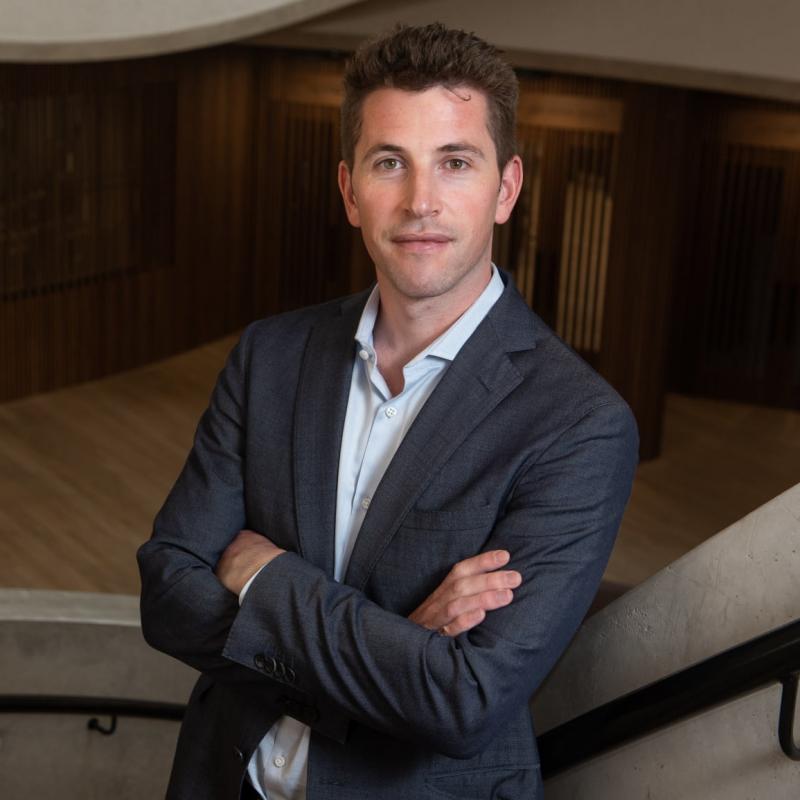
Kees Dorst is a Professor of Transdisciplinary Innovation at the TD School of the University of Technology Sydney. He bridges philosophical understandings of design with practical applications, focusing on tackling complex societal challenges through designerly thinking. His research develops methodologies for strategic transformation and networked problem-solving in public sectors. Professor of Transdisciplinary Innovation, UTS Director, Designing Out Crime Research Centre International keynote speaker and advisor on design thinking Research Interests Dorst specializes in: Transdisciplinary innovation for societal challenges Design thinking and co-evolutionary processes Reframing complex problems in public policy Design cognition and metacognition Urban environment design for safety Recent Research Trends show increasing focus on: Hypercomplex problem-solving frameworks Strategic transformation through design Cognitive models in design processes Public sector innovation methodologies Teaching & Leadership includes: Bachelor of Creative Intelligence and Innovation Master of Creative Intelligence and Strategic Innovation Founding the Designing Out Crime Research Centre International design research symposium leadership
Leah K VanWey is Professor of Environment and Society and Sociology at Brown University, where she also serves as Dean of the School of Professional Studies. She holds affiliations with the Department of Sociology, Institute at Brown for Environment and Society, Population Studies and Training Center, Spatial Structures in the Social Sciences, and Department of Portuguese and Brazilian Studies. Previously, she served as Senior Deputy Director of the Institute at Brown for Environment and Society, Associate Director of the Population Studies and Training Center, and Associate Provost for Academic Space. VanWey completed her education at the University of North Carolina, earning a BA (1996), MA (1999), and PhD (2001). Her research focuses on social demography and environmental social science, particularly examining household responses to reforestation programs in Brazil's Atlantic Forest and the social/environmental impacts of frontier settlement in the Amazon. Her research interests include agricultural intensification, land use change, migration patterns, population-environment interactions, household dynamics, intergenerational support systems, and remittance economies, with a geographic focus on Brazil. She employs interdisciplinary approaches, collaborating with anthropologists, geographers, ecologists, and other social scientists. VanWey has secured significant research funding including grants from NSF, NIH, and NASA totaling over $2.5 million. Major projects include studying agricultural expansion in Brazil, climate variability impacts, land use change dynamics, and population-environment linkages. She mentors graduate students and postdoctoral researchers, including Trina Vithayathil. She teaches courses on human-environment interactions and research methods, including: Feeding Ten Billion, Methods for Interdisciplinary Environmental Research, Multivariate Statistical Methods, Fields and Methods of Social Research, and Professional Development seminars.
Lilly Irani is an Associate Professor in the Department of Communication at the University of California, San Diego. She holds multiple interdisciplinary affiliations including Science Studies, the Design Lab, the Institute for Practical Ethics, and Critical Gender Studies. As Faculty Director of the UC San Diego Labor Center and co-director of the Just Transitions Initiative, she plays a significant role in shaping labor and technology policy discussions at the university and beyond. Dr. Irani's educational background includes a Ph.D. in Informatics (with Feminist Emphasis) from UC Irvine, and both an M.S. and B.S. in Computer Science from Stanford University, with a focus on Human-Computer Interaction. Her unique combination of technical training and social science expertise informs her research approach, bridging practical design work with critical analysis of technology systems. Her research investigates the cultural politics of high-tech work practices with a focus on how actors produce "innovation" cultures. She specializes in the cultural politics of high-tech work in the context of South Asian development and global AI economies. As an ethnographer of work, she analyzes interactional, organizational, and cultural dynamics as mediated by technology. Her work draws on and contributes to Science and Technology Studies, Human-Computer Interaction, and South Asia studies, with particular attention to how technological systems create and reinforce hierarchies of value, gender, race, and cultural positioning. Dr. Irani's publications reveal consistent engagement with issues of digital labor, platform economies, and the politics of innovation. Her work shows a trajectory from examining specific platforms like Amazon Mechanical Turk to broader critiques of innovation culture and entrepreneurial citizenship, with recurring themes of worker power, surveillance, and democratic control of technology. 2020 International Communication Association Outstanding Book Award 2019 Diana Forsythe Prize Honorable mention at CHI 2019 Dr. Irani has received research funding from prestigious organizations including the Ford Foundation, Fulbright-Nehru Doctoral Fellowship, Open Society Foundation, National Science Foundation Graduate Research Fellowship, and NSF Virtual Organizations as Sociotechnical Systems Program. She serves on the editorial advisory boards of Design and Culture, New Technology, Work, and Employment, and Catalyst: Feminism, Theory, Technoscience, and is part of the editorial collective of Public Culture. Collaboratively, she has designed software tools like Turkopticon and Dynamo that intervene in and demonstrate alternatives to existing platforms, with Turkopticon evolving into a worker-run advocacy organization. Her research group and collaborations span multiple disciplines, working closely with scholars in Science and Technology Studies, Human-Computer Interaction, and labor studies. The Just Transitions Initiative she co-directs represents a significant ongoing project focused on democratic control of technology and worker power in the digital economy.
Dr. Caroline Emmer De Albuquerque Green is a Senior Research Fellow in Social Sciences at Jesus College and serves as Director of Research and Head of Public Engagement at the Institute for Ethics in AI , University of Oxford. Her work bridges artificial intelligence, human rights, and aging studies. LLB (Hons), University of Edinburgh MSc, Human Rights, London School of Economics MA, Investigative Journalism, City University PhD, Gerontology, King’s College London Caroline’s research focuses on the ethical implications of AI in aging, health, and social care. She explores inclusive AI governance, stakeholder engagement, and the human rights dimensions of AI in caregiving contexts. Her recent publications address AI legislation (e.g., EU AI Act), care home ethics, and pandemic response frameworks. As Director of Research, Caroline leads the Accelerator Fellowship Programme and organizes public events like the AI in Social Care Summit. She collaborates with the Aspen Institute’s Technology Leaders Initiative and contributes to Oxford’s Stephen A. Schwarzman Centre for the Humanities.
Prof. Dr. M. Bjørn von Rimscha is a full-time Professor of Media Economics at the Department of Social Sciences, Media and Sport, Johannes Gutenberg University Mainz. He serves as Prodekan for Studium und Lehre since 2023 and previously held leadership roles including Geschäftsführender Leiter of the Institute for Journalism. His research focuses on media economics, digital transformation, advertising markets, and cross-border media management. Positions: Professor (2015–present), Prodekan (2023–present) Education: Freie Universität Berlin, University of Ulster Key Collaborations: Co-edited De Gruyter Handbook of Media Economics (2024), Handbuch Medienökonomie (2021) His recent work examines digital disruption in media industries, payment models for journalism, and the economic value of creativity. He advises PhD students like Robin Riemann and holds editorial roles at the Journal of Media Business Studies . Contact: b.vonrimscha@uni-mainz.de
Claudia Arteaga serves as Associate Professor of Spanish, Latin American, and Caribbean Literatures and Cultures and Chair of the Department of Spanish, Latin American and Caribbean Literatures and Cultures at Scripps College. Her academic profile centers on indigenous representation in Latin America through cinematic and literary analysis, with particular emphasis on Andean societies. Her educational background includes: Ph.D. and M.A. in Spanish from Rutgers University B.A. in Linguistics and Literature from Pontificia Universidad Católica del Perú Arteaga's research critically examines indigenous self-representation in Peru, Bolivia, and Guatemala, investigating race-gender intersections , popular environmentalism , and epistemological translation in post-colonial contexts. Her work bridges Decolonial Theory , Indigenous Film Studies , and Andean Cultural Analysis , with significant contributions to understanding how communitarian filmmaking challenges dominant narratives. She actively connects academic research with social movements through interdisciplinary approaches. Her publication trajectory reveals consistent focus on indigenous media as decolonial praxis , with recent works analyzing Mayan documentaries, Quechua poetry, and Amazonian film schools. The research demonstrates evolving methodology from textual analysis toward community-engaged film studies, particularly examining how film festivals and grassroots cinema reshape environmental and identity politics across Latin America. Notable recognitions include: Mary W. Johnson Faculty Achievement Award in Teaching (Scripps College, 2018-2019) Sabbatical Research Fellowship (Scripps College, 2018-2019) Rutgers Teacher-Scholar Fellowship (2013-2014) Adolfo Snaidas Best Graduate Student Essay Award (2009) Arteaga has secured significant research funding from CLAS and GAIA for faculty-student collaborations and academic events, including the initiative 'Sumak Kawsay & Bolivarianism Today.' Her teaching portfolio spans advanced literature courses and specialized seminars on indigenous women's struggles, reflecting her commitment to integrating research with pedagogy. She maintains active engagement with the Latin American Studies Interdisciplinary Group, fostering connections between academic work and community activism. Her current projects extend into contemporary indigenous media production, with ongoing analysis of how digital platforms transform testimonial practices and environmental advocacy among Quechua and Mayan communities.
Brandon M. Stewart is an Associate Professor of Sociology at Princeton University with extensive interdisciplinary affiliations. He serves as Director of the Statistics Core at the Office of Population Research and maintains formal connections with the Politics Department, Princeton Institute for Computational Science and Engineering, Center for Information Technology Policy, and Center for the Digital Humanities. Stewart holds editorial leadership as Co-Editor-in-Chief of Political Analysis and Associate Editor at Sociological Methods & Research . His educational background includes: Ph.D. in Government from Harvard University (2015) Master's degree in Statistics from Harvard University (2014) Stewart's research pioneers innovative quantitative methods for social science applications, specializing in automated text analysis and modeling complex heterogeneity in regression. His methodological frameworks enable researchers to uncover hidden structures in large datasets that were previously too costly or impossible to analyze. While his recent work has focused on using newspaper archives to study propaganda mechanisms in contemporary China, his tools are deliberately designed for broad applicability across diverse domains including education, human trafficking, forced migration, international relations, constitutional law, and psychology. His publication record demonstrates consistent innovation at the intersection of statistics, machine learning, and social inquiry. Stewart's work shows a clear trajectory from foundational methodological development to practical implementation across numerous substantive areas, with recurring themes of enhancing causal inference with textual data, developing robust topic modeling techniques, and creating accessible computational tools for social scientists. Stewart's scholarly excellence has been recognized through multiple prestigious awards: 2024 Leo Goodman (Early Career) Award from the Methodology Section of the American Sociological Association 2023 Emerging Scholar Award from the Political Methodology Society Edward R Chase Dissertation Prize Gosnell Prize for Excellence in Political Methodology Political Analysis Editor's Choice Award Recognition for Excellence in Mentoring Graduate Students As a mentor, Stewart has guided several successful graduate students to faculty positions at institutions including UCLA and Georgetown. His collaborative approach is evident in numerous multi-author projects spanning disciplines from political science to computational linguistics. His leadership extends to the Sociology Statistics Reading Group, which he founded to foster interdisciplinary methodological exchange, and his summer methods camp that trains social scientists in advanced quantitative techniques.
Clifford P. Brangwynne is the June K. Wu '92 Professor of Chemical and Biological Engineering and Bioengineering at Princeton University, serving as Director of the Omenn-Darling Bioengineering Institute. His research bridges biophysics, bioengineering, and cell biology to investigate the physical principles governing intracellular organization through liquid-liquid phase separation. Education Ph.D. in Applied Physics, Harvard University (2007) B.S. in Materials Science and Engineering (minor in Physics), Carnegie Mellon University (2001) Research Focus Brangwynne's lab pioneers the study of membrane-less organelles (biomolecular condensates) formed via phase separation, exploring their roles in nuclear architecture, genome regulation, and disease mechanisms. His work integrates soft matter physics with advanced cell biology to uncover how these condensates form, function, and contribute to pathological protein aggregation in neurodegenerative disorders, while developing synthetic organelle engineering for biomedical applications. Publication Trends His publications consistently demonstrate how liquid phase condensation governs cellular organization across scales—from nuclear genome restructuring to pathological aggregation. The interdisciplinary approach reveals fundamental physical principles while driving technological innovations in organelle engineering and disease modeling. Major Awards Breakthrough Prize for Life Sciences (2023) Raymond and Beverly Sackler International Prize in Biophysics (2023) Tsuneko & Reiji Okazaki Award (2021) Wiley Prize in Biomedical Sciences (2020) Blavatnik National Award in Life Sciences (2020) Human Frontier Science Program Nakasone Award (2020) Michael and Kate Bárány Award, Biophysical Society (2020) HHMI Transformative Technology Award (2019) MacArthur Fellow (2018) HHMI, Simons Foundation, and Bill & Melinda Gates Foundation Faculty Scholar (2016) SCB Gibco Emerging Leader Prize, American Society of Cell Biology (2015) Sloan Research Fellowship (2014) NSF CAREER Award (2013) NIH New Innovator Award (2012) Searle Scholar Award (2012) Helen Hay Whitney Fellow (2008-2010) Advising and Funding He mentors graduate students including Jordy Botello, Yi-Che (Eje) Chang, Yoonji Kim, Claire Weaver, Lennard Wiesner, and Jessica Zhao. Research is supported by HHMI, Simons Foundation, Bill & Melinda Gates Foundation, NIH, NSF, and the Human Frontier Science Program. Laboratory and Collaborations Leading the Soft Living Matter Group, Brangwynne collaborates with theorists including Mikko Haataja (Princeton Mechanical Engineering), Ned Wingreen (Princeton Molecular Biology), and Rohit Pappu (WUSTL), while contributing to the NIH 4D Nucleome Consortium to advance understanding of nuclear organization.
Tamika Nunley serves as Research Professor of History at Duke University within the Arts & Sciences division, holding the prestigious William & Sue Gross Professorship. Her scholarly work centers on the intersection of slavery, gender, and early American history, with particular expertise in African American women's experiences during the 19th century. Her research interests focus on the history of slavery , African American women's and gender history , the early Republic , and the American Civil War . Through meticulous examination of nineteenth-century newspapers, government documents, letters, abolitionist records, legislation, and memoirs, she reconstructs how Black women navigated oppressive systems to develop conceptions of liberty, self-respect, and power. Her work reveals enslaved and free Black women as active agents in shaping Washington D.C.'s history and broader nineteenth-century transformations. Analysis of her publications shows consistent focus on gendered experiences within legal frameworks , Black intellectual traditions , and resistance strategies across her monographs and journal articles. Her scholarship bridges legal history, gender studies, and African American intellectual history through examination of freedom suits, clemency petitions, and literary production. Her scientific recognition includes: 2021 Letitia Woods Brown Book Prize for best book in African American women's history 2021 Pauli Murray Book Prize for best book in Black intellectual history 2021 Mary Kelley Prize for best book in women, gender, or sexuality in the Early American Republic 2023 Cary and Ann Maguire Chair in Ethics and American History from the Library of Congress Nunley's scholarly impact extends through editorial service on Civil War History , The Journal of Southern History , and The Journal of the Civil War Era , alongside committee work for major historical associations. Her research has received substantial support from the Andrew Mellon Foundation, Woodrow Wilson Foundation, American Association of University Women, and Bright Institute Fellowship program. As a lifetime member of the Association of Black Women Historians, she actively contributes to academic communities focused on African American women's historical experiences and intellectual traditions.
Laura A. Meek is an Assistant Professor in the Department of Anthropology at the University of British Columbia Okanagan , specializing in Medical Anthropology , Decolonial Science and Technology Studies , and East African research . She holds affiliations with interdisciplinary networks like the UBC-O Science and Technology Studies Collective and co-directs the Storying Otherwise: Creative Ethnographic Writing Hub . PhD, MA in Anthropology (University of California, Davis) MA in Women’s Studies (George Washington University) Honors BA in Comparative Human Development (University of Chicago) Her research examines counterfeit pharmaceuticals and bodily epistemologies in Tanzania, framed through feminist , decolonial , and anti-racist lenses . She investigates leprosy elimination campaigns and fugitive science practices across Africa and Hong Kong, with recent work focusing on creative ethnographic prose and critical disability studies . Her publications span high-impact journals like Social Science & Medicine and Medical Anthropology Quarterly , addressing themes of radical uncertainty and world-making practices . Laura’s 15 most recent articles (2021–2025) analyze: pharmaceutical counterfeits in East Africa, the temporal politics of leprosy , anti-colonial global health , and creative writing as research . Her work bridges Indian Ocean connections and STS frameworks to critique neocolonial health governance. 2025 Collaborative Research Mobility Award 2024 Wenner-Gren Workshop Grant 2023 MAE–MAT Early Career Paper Award 2021 Society for Humanistic Anthropology Creative Ethnographic Prose Prize 2018 Wenner-Gren Dissertation Grant 2013 NSF Doctoral Dissertation Grant She supervises M.A. and Ph.D. students in UBC-O’s Interdisciplinary Graduate Studies programs, particularly in global health , African politics , and STS . Her professional service includes co-chairing the 2026 Cascadia Medical Anthropology Seminar and serving on the American Anthropological Association Nominations Committee .
Timo Rintamäki is an Associate Professor at the Faculty of Management and Business , Tampere University . His research focuses on customer value creation, service ecosystems, and retail innovation, with particular expertise in co-creation, sharing economy platforms, and digital transformation. Research Themes : Customer Value Propositions, Service Ecosystems, E-Commerce, Co-Creation, Retail Experience Design Key Sectors : Retail, Healthcare, Social Media, Public Services Timo’s recent work explores sustainable value creation through collaborative platforms, analyzing customer behavior in online return processes, and optimizing value orchestration in multi-channel environments. His studies span both academic and practical perspectives, including policy implications in healthcare and innovation in consumer cooperatives. His scholarly contributions include frameworks for service experience management, insights into customer data utilization, and models for value co-creation across digital and physical touchpoints. While no specific scientific awards are listed, his interdisciplinary research bridges service science, marketing, and organizational behavior.
Professor Vasyl Stepanovych Kravtsiv is a distinguished academic and researcher at the Institute of Regional Studies named after M. I. Dolishnyi, part of the National Academy of Sciences of Ukraine. He serves as both the Director of the Institute (from 2014 to July 2025) and Head of the Department of Regional Environmental Policy and Nature Management. With a career spanning over four decades in regional studies, environmental policy, and economic development, Professor Kravtsiv has established himself as a leading expert in regional economics and environmental management in Ukraine. Professor Kravtsiv's educational background includes a degree in Geography from Ivan Franko Lviv State University (1980). His academic achievements include becoming a Candidate of Economic Sciences (1987), Senior Researcher (1994), Doctor of Economic Sciences (2007), and Professor (2010). He has also been honored as a 'Honored Worker of Science and Technology of Ukraine' for his significant contributions to the field. His scholarly work examines the theoretical and practical aspects of regional environmental policy formation, particularly during Ukraine's transition to a market economy. Professor Kravtsiv's research primarily focuses on regional economics, environmental policy, spatial development, and cross-border cooperation. His work examines the intersection of economic development and environmental sustainability, with particular emphasis on the Carpathian region of Ukraine. He pioneered economic methods of environmental quality management in Ukraine, which now operate as pollution fees. Professor Kravtsiv has developed numerous regional environmental safety programs approved by Western Ukrainian authorities and contributed significantly to Ukraine's State Regional Policy Concept. His recent publications address contemporary challenges including the impact of the war and pandemic on tourism, spatial economic development amid European integration, and sustainable growth in decentralization contexts. His scholarly contributions include over 100 scientific works, with 18 monographs exploring regional development, environmental policy, and cross-border cooperation. Professor Kravtsiv's work demonstrates consistent evolution from theoretical foundations to practical policy implementation, with recent publications showing adaptation to Ukraine's wartime conditions and European integration requirements. Honored Worker of Science and Technology of Ukraine Editor-in-chief of the journal 'Regional Economy' Editor-in-chief of the collection 'Socio-economic problems of the modern period of Ukraine' Author of over 100 scientific works including 18 monographs Key contributor to Ukraine's environmental policy framework As Director of the Institute of Regional Studies, Professor Kravtsiv oversees extensive research activities, coordinates international collaborations through Erasmus+ and Visegrad Fund programs, and guides scholarly publication efforts. His leadership has positioned the Institute as a key contributor to Ukraine's regional development policies and environmental management strategies. He actively participates in developing Ukraine's adaptation to European standards and contributes to reconstruction planning amid wartime conditions, demonstrating both academic rigor and practical policy relevance.
Hisham Zerriffi is an Associate Professor at the University of British Columbia (UBC) in the Department of Forest Resources Management, Faculty of Forestry. He also serves as Associate Dean for Equity, Diversity, and Inclusion. His research intersects technology, energy, and the environment, focusing on rural areas in the Global South. Affiliation: BioProducts Institute Affiliation: Clean Energy Research Centre Affiliation: Institute for Resources, Environment and Sustainability His research examines institutional factors in technology diffusion, household energy choices, and welfare impacts of energy use. Current projects include analyzing forest density's ecological impact, clean cooking transitions in India, and decentralized energy systems. Recent publications address just transitions, biomass energy economics, and policy misalignments in Indigenous communities. He has authored works on climate change mitigation via forest carbon credits and rural electrification strategies. Scientific Award: Ivan Head South/North Research Chair As a PhD supervisor, he has guided Natalie Payer on urban energy poverty in the U.S. He collaborates on interdisciplinary grants and leads the Energy Resources, Development and Environment Lab (ERDELab).
Luisa Veronis is a Full Professor in the Department of Geography, Environment and Geomatics at the University of Ottawa, Faculty of Arts. Her research focuses on migration studies, refugee resettlement, and Francophone immigration in minority contexts, with an emphasis on social, economic, and cultural dimensions of integration. She holds the University of Ottawa Research Chair in Immigration and Franco-Ontarian communities. Ph.D. in Social Geography, University of Toronto (2006) MA in Social Geography, University of Toronto (1999) BA Honors in Social Anthropology, McGill University (1997) Her work examines how policies, economic conditions, and cultural contexts influence migrant decision-making. She leads interdisciplinary projects like the SSHRC-funded Ottawa Multicultural Media Initiative and co-leads studies on skilled migrant resilience and refugee settlement. Her research spans Ottawa-Gatineau, Toronto, Latin America, and Africa. Recent publications highlight social media’s role in pandemic-era labor market integration, governance structures in migration, and transnational practices. She supervises graduate students on topics related to Francophone immigration and social cohesion. She serves on the editorial board of Cahiers de Géographie du Québec and collaborates on grants including SSHRC Partnership Grants and Insight Grants. Her current teaching includes courses on geographies of globalization and transnational migration. Fieldwork expertise includes Ottawa-Gatineau, Toronto, and Latin American regions, with a focus on multicultural media and community-based research methods.
Thomas Hale is Professor in Public Policy (Global Public Policy) at the Blavatnik School of Government, University of Oxford, and Director of the Master of Public Policy. His research tackles transnational governance challenges, emphasizing climate change, global health, and economic interdependence. He holds a PhD in Politics from Princeton University, a master's in Global Politics from the London School of Economics, and an AB in Public Policy from Princeton. His research explores the evolution of political institutions to address globalization, with foci on: Climate governance mechanisms like the Paris Agreement and net-zero transitions Global health policy, including pandemic response tracking Transnational commercial disputes and cooperation frameworks His recent publications (2022-2024) predominantly analyze climate policy effectiveness, net-zero accountability, pandemic governance, and geopolitical energy shifts. Trends show consistent emphasis on institutional design, multi-stakeholder action, and data-driven policy assessment across environmental and health crises. He leads major initiatives including the Oxford COVID-19 Government Response Tracker and co-leads the Net Zero Tracker and Climate Policy Hub , collaborating with global policymakers to translate research into governance frameworks.