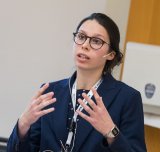
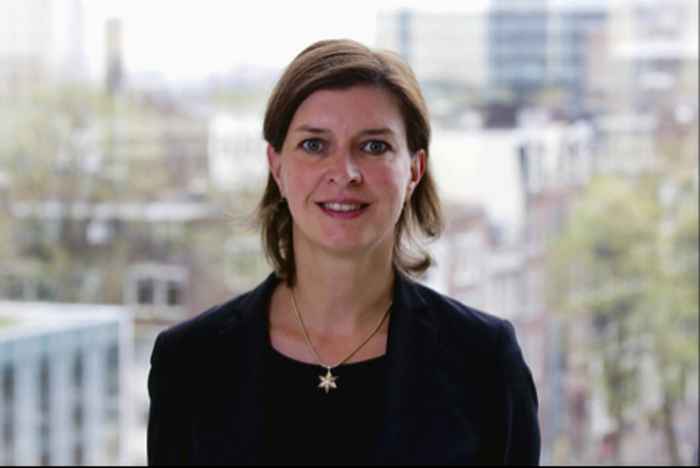
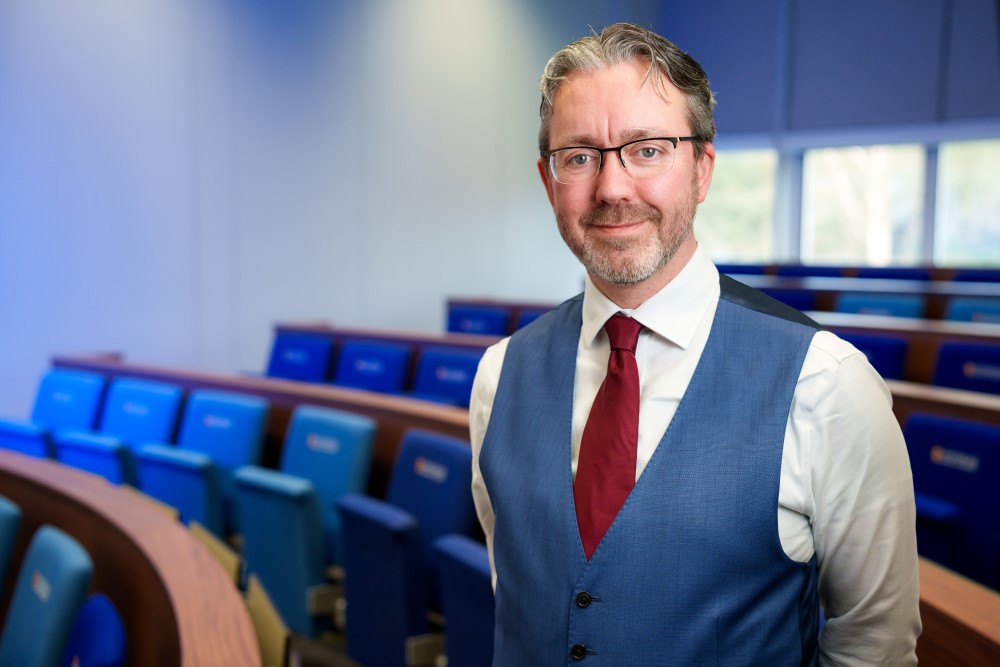
Massimo Mischi is a Full Professor at the Faculty of Electrical Engineering of the Eindhoven University of Technology (TU/e) and chairs the Signal Processing Systems (SPS) Division , the largest division at TU/e with over 250 researchers. He founded the Biomedical Diagnostics (BM/d) Lab in 2012, which now includes 180 researchers and clinical/industrial advisors, focusing on biomedical signal processing for diagnostics and monitoring.
Thomas Bäck is a Professor at the Leiden Institute of Advanced Computer Science (LIACS) , Leiden University , Netherlands, and a member of the interdisciplinary programme Society, Artificial Intelligence and Life Sciences (SAILS) . His academic career spans roles at Leiden University (1996–present) and leadership positions at the Center for Applied Systems Analysis in Dortmund (1994–2000). Education : Diplom-Informatiker (Computer Science), Technische Universität Dortmund (1990) Dr. rer. nat. (Computer Science), Technische Universität Dortmund (1994) Research Interests : Dr. Bäck specializes in evolutionary computation , machine learning , and their applications in sustainable smart industry and healthcare . Recent work focuses on integrating large language models (LLMs) and quantum computing into optimization frameworks, with projects like CIMPLO (predictive maintenance), ECOLE (experience-based optimization), and SAPPAO (airline operations optimization). Scientific Contributions : His 526+ publications cover evolutionary algorithms, quantum optimization, and LLM-driven design, with recent trends including: Quantum computing (e.g., quantum approximate optimization, quantum advantage challenges) LLM integration (e.g., hyperparameter tuning, mutation control, code evolution graphs) Healthcare and industry (e.g., predictive maintenance, anomaly detection, melt quality prediction) Algorithm benchmarking (e.g., IOHprofiler, MA-BBOB, explainable benchmarking) Scientific Awards : IEEE Fellow (2022) Royal Netherlands Academy of Arts and Sciences (KNAW) member (2021) Academia Europaea member (2022) IEEE Computational Intelligence Society Evolutionary Computation Pioneer Award (2015) Fellow, International Society of Genetic and Evolutionary Computation (2003) Best Ph.D. thesis award, German Society of Computer Science (GI) (1995) Advising and Grants : He supervises Ph.D. candidates in evolutionary computation and machine learning and has secured 7 major grants from organizations like the Dutch Research Council , European Commission , and The Research Council of Norway . His editorial roles include Editor-in-Chief of the Evolutionary Computation Journal and associate editorships in leading AI journals.
Serge Fehr is a Senior Researcher in the Cryptology Group at CWI (Centrum Wiskunde & Informatica) in Amsterdam and a part-time Professor at the Mathematical Institute of Leiden University. His research focuses on foundational aspects of cryptology, including post-quantum cryptography, information-theoretic security, zero-knowledge proofs, and secure multiparty computation. He participates in AMSec (Amsterdam Cyber Security Center) and leads work packages in the NWO-funded HAPKIDO consortium. Education: M.Sc. in Mathematics from ETH Zürich (1998) Ph.D. in Cryptography from ETH Zürich and University of Aarhus (2003) Postdoc at Macquarie University (2003-2004) Research Interests: Post-quantum cryptographic primitives (e.g., digital signatures, lattice-based schemes) Quantum-resistant protocols (e.g., non-resignable signatures, Fiat-Shamir transforms) Foundational security proofs in the quantum random oracle model (QROM) Secure multiparty computation and privacy-preserving healthcare systems Key Activities: Editorial Board Member: Journal of Cryptology , IEEE Transactions on Information Theory Program Committee Co-Chair: EUROCRYPT 2025 Steering Committee Member: Beyond IID Information Theory, QCrypt Co-organizer: Symposium Series on Post-Quantum Cryptography Grants/Awards: NWO Cybersecurity consortium grant (HAPKIDO - 2021) NWO Veni Grant (2005) NWO Open & Free Competition Grants (2008, 2013) Students/Advising: Supervised or served on committees for over 15 Ph.D. students, including work on post-quantum signatures, MPC applications, and lattice-based cryptography. Labs/Teams: Active in CWI’s Cryptology Group and Leiden’s Mathematical Institute, collaborating with industry partners (e.g., KPN, Microsoft) in cybersecurity initiatives.
Tom Verhoeff is an Assistant Professor at the Faculty of Mathematics and Computing Science of Eindhoven University of Technology (TU/e) , working within the Software Engineering & Technology group. His research focuses on Model-Driven Engineering (MDE) , Domain-Specific Languages (DSLs) , and the intersection of mathematics, computing, and the arts . He teaches courses in data analytics, programming, algorithms, theoretical computer science , and logic . Verhoeff earned both his MSc and PhD in Technical Science (Mathematics and Computer Science) from TU/e. He is actively involved in promoting mathematics and informatics through initiatives like the annual Bridges conference , and serves as board member and treasurer of the Dutch Mathematics Olympiad , as well as chair of the Koos Verhoeff MathArt foundation . He has also held roles as guest lecturer in Lithuania and Finals Director for the ACM International Collegiate Programming Contest . Research Interests: Verhoeff’s work spans Model-Driven Engineering , domain-specific language development , and 3D geometric modeling . His scholarship often explores symmetry, recursion, and mathematical visualization , particularly through computational art and algorithmic puzzles . Recent publications highlight 3D rotation methods , knot theory , and mathematical art using lattice paths and geometric transformations . Scientific Awards: ACM ICPC European Founders Award (2004) IOI Distinguished Service Award (2007) Second Place in the 2022 Wolfram Computational Art Contest Notable Collaborations and Affiliations: He is affiliated with the Esprit Working Group on Asynchronous Circuit Design (ACiD-WG) , WIRE (TUE Mathematics Alumni) , ACM (Senior Member) , CSTA , IEEE Computer Society , and Royal Dutch Mathematical Society (KWG) .
Robert Prey is an Assistant Professor at the University of Groningen's Faculty of Arts, affiliated with the Center for Media and Journalism Studies. He holds a PhD from Simon Fraser University (2015) focusing on the political economy of music streaming. His research examines technology's intersection with culture, emphasizing platformization, datafication, and the music industry's transformation through streaming platforms. Prey leads the ERC-funded 'PlatforMuse' project (2023–2028), exploring global platform impacts on artists. He also investigates South Korean music ecosystems via the 'Platform Performances' project (2020–2022). Education: PhD in Communication (Simon Fraser University, 2015) Key Research Areas: Cultural Industries, Digital Platforms, Music Streaming, Political Economy Teaching focuses on media theory, digital society, and cultural industries. Awards include the ERC Starting Grant (2022) and Dean of Graduate Studies Medal (2016). His work appears in International Journal of Cultural Studies , Big Data and Society , and Information Society .
Peter H.N. de With is a Full Professor at the Video Coding & Architectures group within the Department of Electrical Engineering at Eindhoven University of Technology (TU/e). He is an international expert in video compression and image analysis for health, surveillance, and automotive applications, with over 35 years of R&D experience. He leads the Video Coding & Architectures Group (SPS-VCA) and contributes to initiatives like the Center for Care & Cure Technology Eindhoven and Eindhoven MedTech Innovation Center. De With's research focuses on video/image signal processing, machine learning, and their applications in healthcare (e.g., esophageal cancer detection), security, and automotive systems. His work includes collaborations with hospitals, EU projects, and industry leaders like Bosch Security Systems and ASML. His recent publications emphasize real-time 3D processing, assembly state recognition, driver action analysis, and medical imaging advancements, reflecting his expertise in computer vision and AI. Notable scientific awards include IEEE Fellowship and multiple paper awards (CE Chester Sall, SPIE, Elsevier). Scientific Awards IEEE Fellow CE Chester Sall Award SPIE Paper Award Elsevier Journal Award Best Paper Award (2017) Second Place in CAMELYON17 Challenge De With has supervised numerous research projects and contributed to datasets in noise reduction, augmented reality, and medical imaging. He actively collaborates on AI-driven innovations for healthcare and industrial applications.
Prof. dr. Mirella M.N. Minkman serves as the Vilans Chair in Innovation of Organization and Governance of Integrated Care at Tilburg University's TIAS School for Business and Society. Concurrently, she is CEO of Vilans (National Knowledge Organization for care and support), bridging science, practice, policy, and education through national innovation programs. Her leadership extends to Chair of the National Governance Innovation Advisory Committee (BoZ), Chair of the NVTZ Scientific Advisory Board, Supervisory Board roles at RIBW Brabant and Rivierenland Hospital, and membership in the VGN Committee of Experts. Minkman's research pioneers person-oriented integrated care governance within multi-organizational networks, focusing on leadership, accountability systems, and strategic innovation. She examines how governance modes enable collaborative care models while addressing implementation barriers in healthcare transformation. Her work emphasizes change management frameworks for large-scale system integration, with particular attention to supervision mechanisms and value-based accountability structures across care continua. Analysis of her 15 recent publications (2021-2023) reveals consistent exploration of integrated care governance across Dutch and international contexts. Key thematic clusters include leadership in nursing home care, decision-making dilemmas in service networks, and emerging AI applications in long-term care. Methodologically, her work spans systematic reviews, policy analyses, and implementation studies, predominantly published in the International Journal of Integrated Care and specialized healthcare management outlets. Through Vilans, Minkman directs national knowledge platforms and large-scale implementation programs that connect academic research with practical healthcare innovation. Her international engagement includes board membership with the International Foundation for Integrated Care, editorial roles for the International Journal for Integrated Care, advisory positions with WHO's Integrating the Health and Care Workforce group, and participation in the UK Center for Evidence IMPACT's Critical Friends Group.
Dr. Karma Dajani is an Associate Professor at the Mathematical Institute of Utrecht University, specializing in Ergodic Theory, Dynamical Systems, and Number Theory . Her research bridges mathematical modeling with symbolic dynamics, beta-expansions, and fractal geometry.
Dr. Maria Pregnolato is an Assistant Professor in the Hydraulic Structures and Flood Risk department within the Civil Engineering and Geosciences faculty at Delft University of Technology. She also holds the position of Honorary Associate Professor at the University of Bristol. Her research focuses on infrastructure resilience and risk management from natural hazards, with particular expertise in flood impacts on transportation networks and structural systems. Dr. Pregnolato earned her PhD in Civil Engineering from Newcastle University in 2017, an MSc in Building Engineering and Architecture from the University of Pavia and Tongji University in 2012, and an MSc in Strategy, Leadership and Change from the University of Bristol in 2022. Her educational background reflects a strong foundation in both technical engineering and strategic leadership. Her research interests span infrastructure resilience, flood risk management, bridge engineering, structural health monitoring, and Digital Twins for civil infrastructure. A significant portion of her work explores the integration of digital technologies with traditional civil engineering practices, particularly in the context of climate change adaptation and natural hazard risk management. She has pioneered approaches to bridge scour management and developed novel frameworks for assessing flood impacts on critical infrastructure networks. Analysis of her recent publications (2019-2025) reveals a clear evolution in her research focus, with increasing emphasis on digital solutions for infrastructure resilience. Her work has expanded from traditional flood risk assessment to incorporate Digital Twins, sensor technologies, and nature-based solutions. The publications demonstrate strong international collaboration, with research spanning multiple continents and addressing both developed and developing world contexts. Dr. Pregnolato has received several prestigious awards recognizing her contributions to the field: EGU Outstanding Early Career Award (2021) EPSRC Fellowship (2018) EPSRC RISE Award (2018) Fellow of the Women in Engineering Society (2019) She actively supervises MSc students and has secured competitive research funding, including an EPSRC Fellowship to investigate extreme flooding impacts on bridges. Her research program integrates hydrodynamic modeling, structural analysis, and digital monitoring technologies to develop comprehensive risk management frameworks for critical infrastructure. Dr. Pregnolato maintains strong international collaborations, with visiting researcher positions at Politecnico di Milano (2022) and the University of Washington (2019), demonstrating her global impact in the field of civil infrastructure resilience.
Dr. Evert van Nieuwenburg is an Assistant Professor at Leiden University, affiliated with both the Leiden Institute of Advanced Computer Science (LIACS) and the Leiden Institute of Physics (LION). His research bridges the fields of Quantum Physics , Machine Learning , and Condensed Matter Physics , with a focus on quantum algorithms, reinforcement learning, and quantum game development (e.g., Quantum TiqTaqToe ). He actively contributes to the Applied Quantum Algorithms (aQa) initiative and leads the QuantumPlayed subgroup for quantum games and education. Research Interests: AI-driven quantum experiment control, quantum machine learning, variational quantum circuits, and quantum games for education and intuition-building. Publications: 15+ peer-reviewed works spanning quantum error correction, phase transitions, reinforcement learning in quantum systems, and quantum dot array simulations. Community Engagement: Developer of educational quantum games, open science advocate, and active participant in interdisciplinary initiatives. Selected Trends: His work demonstrates AI's transformative role in quantum physics, from decoding error-correcting codes with graph neural networks to merging reinforcement learning with quantum control systems. Labs & Initiatives: Affiliated with the Applied Quantum Algorithms (aQa) initiative and co-founder of QuantumPlayed , where quantum mechanics meets game theory to engage diverse audiences.
Yanja Dajsuren is an Assistant Professor and Program Director of the PDEng Software Technology program at Eindhoven University of Technology's Department of Mathematics and Computer Science. Her work bridges academic research and industry applications in software engineering and mobility systems. Education: PhD in Computer Science (2015), TU/e PDEng in Software Technology (2005), TU/e MBA (2002), Maastricht School of Management Research Focus: Yanja specializes in software architecture for autonomous and cooperative driving systems, with a focus on model-driven development, functional safety, and system modularity. Her work contributes to Cooperative Intelligent Transport Systems (C-ITS) and aligns with UN Sustainable Development Goals related to smart cities and innovation. Projects: Current projects include i-CAVE (Project #6) and Horizon 2020 C-MobILE, addressing challenges in automotive software integration and cooperative driving systems. Past projects at Philips Research, NXP Semiconductors, and CWI demonstrate her long-term expertise in industrial software development. Academic Contributions: She co-founded the International Workshop on Automotive Software Architectures (WASA) and launched the Journal of Automotive Software Engineering (JASE). Her collaborations span academia and industry, including partnerships with ASML, Philips Hue, and international research teams.
Dr. Gerwin van der Laan is an Assistant Professor at Tilburg University's TiSEM School of Economics and Management, specializing in the Strategy & Entrepreneurship Department. His research focuses on higher education curricula, character development, and corporate governance. He also serves as Academic Director of the BSc International Business Administration program. His interdisciplinary work bridges philosophy (e.g., Montaigne's educational theories) and contemporary educational practice, advocating for student-centered approaches. He has authored/co-authored influential books like Breaking Barriers: Innovation through Collaboration (2023) and edited volumes such as Educational Utopias (2023). He holds adjunct roles including Research Fellow at the Tilburg Center of the Learning Sciences and Senior Policy Advisor at University College Tilburg. His career spans academic leadership, policy development, and teaching across multiple institutions. Key Roles: Assistant Professor (2012–present), Academic Director (Tilburg), Research Fellow (2022–24) Research Themes: Curriculum design, virtue ethics in education, corporate social responsibility Publications: Over 30 peer-reviewed works emphasizing higher education reform, governance, and interdisciplinary collaboration Teaching: Courses on institutional economics, strategy, and organizational theory at undergraduate and graduate levels His recent work explores Montaigne's influence on modern character education, advocating for resilience and well-being in students. Collaborations include projects on academic innovation and policy frameworks for cultural entrepreneurs.
Dr. Kristina Irion is a prominent legal scholar and academic leader specializing in digital and data law at the University of Amsterdam’s Amsterdam Law School. As Head of Studies for Law at PPLE and Director of the Academic Excellence Track (AcET), she focuses on integrating interdisciplinary approaches to legal education and research. Her career spans academia, policy advising, and regulatory practice in areas like EU data governance, digital trade, and media regulation. Dr. Irion holds a LL.M. in IT & Telecommunications Law and a Dr. iuris from Martin Luther University, Halle-Wittenberg. She has held fellowships with the European Commission, the Electronic Privacy Information Center, and Berlin’s Data Protection Authority. Her research emphasizes evolving legal frameworks around artificial intelligence, privacy, and the interplay between trade law and digital rights. Her work frequently addresses global challenges such as data sovereignty, algorithmic accountability, and the governance of cross-border data flows. She advises major institutions including the European Commission, OECD, and Council of Europe on digital policy. Dr. Irion teaches courses on technology governance and co-leads the Advanced Master in Technology Governance program. Her publications (15 most recent shown) explore topics ranging from AI regulation under EU trade frameworks to privacy implications in digital trade agreements. While no formal awards are listed, her extensive policy contributions reflect her leadership in shaping digital legal landscapes.
Prof. Jeroen Veldman is a Professor of Corporate Governance at Nyenrode Business University, affiliated with the Faculty Research Center for Entrepreneurship, Governance & Stewardship. His work centers on the Modern Corporation Project, an interdisciplinary initiative linking academic research with practitioner insights to foster long-term value creation. This project earned the International Impactful Collaboration Award (2019) from the Academy of Management. His research explores corporate governance, sustainability, and ethics, with a focus on rethinking the legal and conceptual foundations of corporations. Key themes include accountability, stakeholder engagement, and the role of law in shaping corporate behavior. He has contributed to debates on global value chains, environmental reporting, and regulatory harmonization. Awards: International Impactful Collaboration Award (2019) Roles: Visiting Professor at St Gallen University, Associate Editor of the Journal of Business Ethics Labs/Teams: Modern Corporation Project (interdisciplinary collaboration) His work emphasizes bridging theoretical and practical governance challenges, addressing topics like sustainable governance frameworks, corporate culture, and the evolving role of corporations in global society.
Chandan Dasgupta is an Assistant Professor in the Educational Technology department at Indian Institute of Technology Bombay. He holds a Ph.D. in Learning Sciences from the University of Illinois at Chicago and a Master’s in Human-Computer Interaction from Georgia Institute of Technology. His research focuses on collaborative learning, uncertainty management in STEM, and distributed creativity in makerspaces. Education: Ph.D. in Learning Sciences, University of Illinois at Chicago M.S. in Human-Computer Interaction, Georgia Institute of Technology Dasgupta designs technology-enhanced environments for STEM education, emphasizing embodied learning, inquiry-based pedagogy, and artificial intelligence integration. His recent work explores AR/VR applications for spatial reasoning and critical action curricula in engineering education. Analysis of his 88 research outputs reveals trends in collaborative learning technologies (19 publications in 2023-2025), uncertainty management frameworks (13 papers), and makerspace creativity (7 studies). Key technologies include augmented reality (GeoSolvAR, MathReality), virtual reality conversational agents, and adaptive learning systems. Dasgupta actively contributes to EdTech policy discussions in India, advocating for contextualized solutions aligned with UN Sustainable Development Goals. His collaborations span institutions in the USA (Purdue, Georgia Tech) and India (IIT Bombay, Tulna partnership).