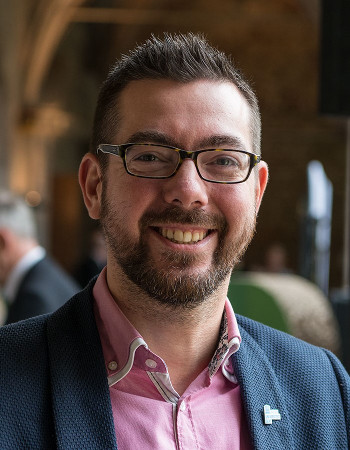
Zhiqiang Que is a Research Associate in the Department of Computing at Imperial College London, affiliated with the Faculty of Engineering and the Centre for High-Throughput Digital Electronics and Machine Learning. His research focuses on computer architecture, embedded systems, high-performance computing, and CAD tools for hardware design optimization. His research interests include FPGA-based acceleration of machine learning models, hardware-software co-design, and real-time signal processing for scientific applications such as particle physics and gravitational wave experiments. He has contributed to projects involving low-latency graph neural networks (GNNs), Bayesian neural networks, and efficient stream processing on FPGAs. Recent work includes advancements in trustworthy design flows for deep learning acceleration, reconfigurable architectures for recurrent neural networks, and optimizing FPGA-based systems for high-energy physics experiments at the HL-LHC.
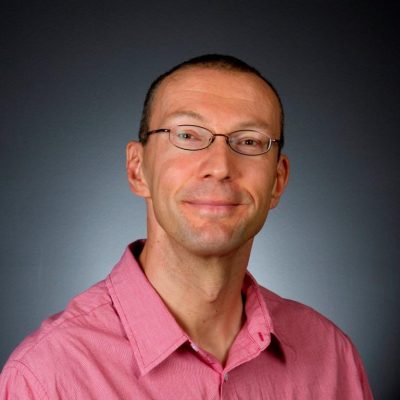
Peter Lambert is a full-time Associate Professor at Ghent University – imec (Belgium), affiliated with the Internet Technology and Data Science Lab (IDLab) where he coordinates the MEDIA research team since 2013. His academic background includes a Master's degree in Science (Mathematics) and Applied Informatics from Ghent University, followed by a Ph.D. in Computer Science from the same institution in 2007. Prior to his current role, he served as a Technology Developer at Ghent University (2010-2013). Lambert's research focuses on: Multimedia signal processing and visual communication systems Computer graphics and computational geometry Augmented and virtual reality (AR/VR) technologies Video compression and perceptual quality assessment Multimedia security and digital watermarking His recent publications (2024-2025) demonstrate strong emphasis on real-time multimedia systems, VR/AR applications, perceptual quality metrics, and multimedia security. Research trends include deep learning-based video forensics, light field rendering optimizations, perceptual hashing techniques, and adaptive video streaming solutions. As leader of the IDLab-MEDIA team, Lambert oversees research on emerging visual media formats with applications in immersive experiences. The team develops technologies like OpenDIBR (real-time light field renderer) and maintains datasets such as SILVR (Synthetic Immersive Large-Volume Plenoptic Dataset).
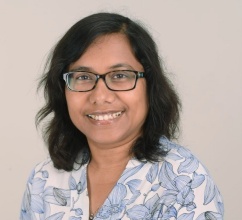
Dr. Martin Reisslein is a Professor in the School of Electrical, Computer, and Energy Engineering at Arizona State University (ASU), where he also serves as Program Chair of Computer Engineering. He earned his Ph.D. in Systems Engineering from the University of Pennsylvania (1998) and holds degrees from the University of Pennsylvania and Fachhochschule Dieburg, Germany. His research focuses on communication networks (e.g., 5G, optical networks, software-defined networking) and engineering education, with over 200 journal articles and 60 conference papers. He has led NSF-funded projects on network architecture optimization and K-12 engineering education. Education : Ph.D. (Systems Engineering, UPenn, 1998), M.S.E. (Electrical Engineering, UPenn, 1996), Dipl.-Ing. (FH) (Electrical Engineering, Fachhochschule Dieburg, 1994) Awards : NSF Career Award (2002), IEEE Fellow (2014), Bessel Research Award (2015), DRESDEN Fellowship (2016) Editorial Roles : Co-Editor-in-Chief of Optical Switching and Networking , Associate Editor for multiple IEEE journals His research spans communication networks (e.g., multimedia networking, optical systems) and engineering education (e.g., K-12 outreach, instructional design). Recent articles address cloud computing, 5G architectures, and cybersecurity in satellite systems. He teaches courses such as Communication Networks and oversees graduate research.
Susanne Mohr is a Professor of English Sociolinguistics at NTNU's Department of Language and Literature since 2020. She holds a German Habilitation (postdoctoral degree) from the University of Bonn and a PhD from the University of Cologne. Her research focuses on sociolinguistic aspects of tourism, multilingualism, and multimodal communication in Africa and the Nordic region, with funding from institutions like the Humboldt Foundation and NTNU Oceans. Her research interests include sociolinguistics of tourism discourse, semiotic landscapes, sign languages (e.g., Irish Sign Language), and African English varieties. She leads the 'Open Landscapes' forum and participates in interdisciplinary projects on topics like sustainability in cruise tourism and space-making in East Africa. She is affiliated with networks such as the 'Africa in the Indian Ocean' research group and the Irish Deaf Research Network. Key awards include a 2024 senior fellowship from the Erich Auerbach Institute and multiple Humboldt Foundation grants. She teaches sociolinguistics at BA/MA levels and supervises PhD/MA students in topics like code-switching and accent attitudes. Recent publications include monographs on African English pluralization and edited volumes on informal language learning and communicative action in Africa.
Simone Ferlin is an Adjunct Senior Lecturer at Karlstad University and a Senior Performance Engineer. She holds a PhD in Computer Science from Simula Research Lab and Universitetet i Oslo (2017), focusing on robustness in multipath transport protocols like MPTCP. Her research spans network performance, security, and congestion control in mobile/5G networks and the Internet. She collaborates actively with academia and industry, co-supervising students in areas such as edge computing, container orchestration, and distributed systems. Affiliations: Department of Informatics, Karlstad University; Red Hat Research; Ericsson R&D. Education: PhD (2017), Simula/UiO; Master’s and Undergraduate studies emphasized networking and electronics. Her work includes projects like AIDA (AI-driven edge networking) and DRIVE (latency-sensitive mobile services). She has published over 50 papers on topics like QUIC, eBPF, and containerized microservices. Awards include the Best Paper at IEEE ICIN 2021 and ANRP 2025 Prize. Teaching responsibilities include Future Internet Design and Service Quality . Advising spans 15+ students across institutions like TU Berlin, KTH, and Unifesp. She chairs conferences (e.g., ACM SIGCOMM 2025) and serves on editorial boards (IEEE Communications Magazine). Key interests: network observability, low-latency protocols, and sustainability in networking.
Dr. Israat Haque is an Associate Professor in the Faculty of Computer Science at Dalhousie University, Halifax, where she leads the Programmable and Intelligent Networking (PINet) research group. She also holds an adjunct professorship in the Department of Computing Science at the University of Alberta. PhD in Computer Science, University of Alberta NSERC Postdoctoral Fellow, University of California, Riverside MSc in Computer Science, Concordia University Her research focuses on developing high-performance, secure, and dependable distributed and emerging networking systems, with key interests in Software-Defined Networking (SDN), Cyber-physical Systems (CPS), Internet of Things (IoT), 5G/6G technologies, and AI/ML applications in networking. She applies data-driven approaches to solve real-world problems in network programmability, stream processing, and edge/cloud computing. The 15 most recent publications highlight a strong trend in in-network computing, IoT security, AI-driven network reliability, and stream processing. Her work spans from theoretical surveys to practical system implementations, often leveraging programmable data planes (P4), machine learning, and hardware acceleration to address challenges in performance, security, and fairness in distributed systems. Dr. Haque has received numerous prestigious recognitions: IEEE/ACM N2Women Rising Star Award (2021) ACM FAccT Best Paper Award (2023) IEEE WICE Outstanding Mentoring Award (2025) University of Alberta Alumni Honour Award (2024) Digital Nova Scotia Thinking Forward Award (2022) Intel Fast Forward Initiative Winner (2022) President’s Research Excellence Award, Dalhousie (2021) She actively mentors PhD and MSc students and leads externally funded research projects, including a Canada First Research Excellence Fund (CFREF)-supported initiative on Securing Smart Environments. She has served on editorial boards of IEEE Transactions on Vehicular Technology and IEEE Communications Magazine, and on program committees of top conferences such as IEEE ICNP, IEEE NetSoft, and ACM SIGCOMM. Her lab, PINet, fosters innovation in networking systems and produces high-impact research with real-world applicability. Dr. Haque leads the PINet research group, which includes current PhD and MSc students working on cutting-edge topics like post-quantum cryptography, network programmability for security, and large ML model security. The group collaborates with institutions such as the University of Alberta, Laval University, and Concordia, and has strong industry ties with Intel, Meta, Amazon, and Facebook.
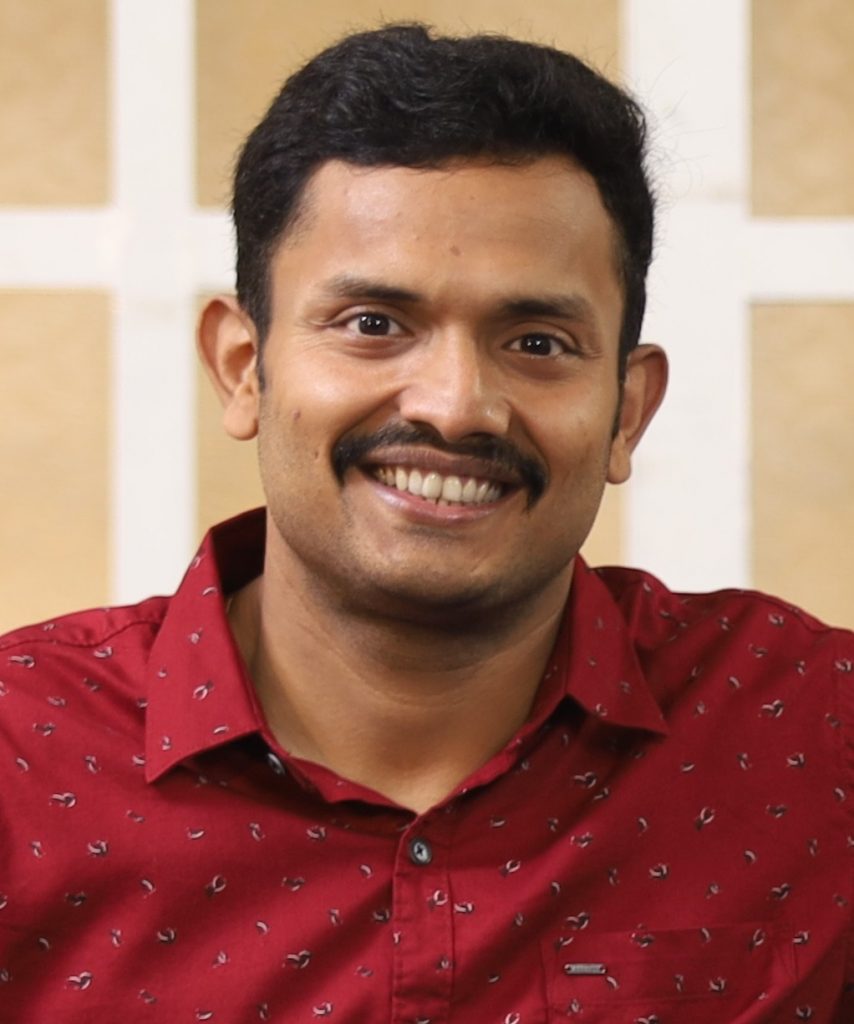
Jayakrishnan M. Purushothama is an Assistant Professor in the Microwave and Antenna Engineering Research Group at Heriot-Watt University's School of Engineering and Physical Sciences since March 2023. Previously, he held roles including Post-Doctoral Researcher (2019–2021) and Ph.D. scholar (2016–2019) at Université Grenoble Alpes, and Research Fellow (2014–2016) at Cochin University of Science and Technology. Education: B.Sc. (Electronics) & M.Sc. (Electronics Science), Mahatma Gandhi University & Cochin University of Science and Technology (2012–2014), both with first rank honours. Ph.D. (RF and Microwave Electronics Engineering), Université Grenoble Alpes (2019). Research interests focus on microwave antennas, beamforming, chipless RFID systems, CBRAM-based RF switches, medical biosensors, and electromagnetic compatibility. His work emphasizes reconfigurable systems, energy efficiency, and non-volatile memory applications in passive devices. Awards include the URSI Young Scientist Award (2020), 4th Prize in URSI Student Competition (2018), and UGC NET/JRF qualification (top 0.6% in 2013). Grants include ERC-funded ScattererID project (2019–2021) developing CBRAM-based RF switches. His lab explores innovations in antenna engineering, RF materials, and wearable electronics. Key contributions include reconfigurable antennas, low-cost RFID tags, and metamaterial-based shielding solutions.
Sage Boettcher is a Career Development Research Fellow in the Department of Experimental Psychology at the University of Oxford and a Stipendiary Lecturer at St Anne's College. She holds affiliations with multiple colleges: St Anne's, Kellogg, and Somerville. Her research focuses on the interplay between memory, attention, and behavior in dynamic environments, leveraging psychophysical methods and non-invasive brain imaging. She investigates how short- and long-term memories guide spatial, temporal, and identity-based behavior through proactive memory use. Boettcher earned her PhD in 2020 from the University of Oxford (supervised by Kia Nobre, Mark Stokes, and Freek van Ede), following a Master’s in Interdisciplinary Neuroscience from Goethe University Frankfurt and a BSc from the University of Delaware. She has held postdoctoral roles, including an EPS Fellowship in Kia Nobre’s Brain and Cognition Lab and a Junior Research Fellowship at Kellogg College. Her research interests span cognitive neuroscience, memory dynamics, and attentional processes. Key themes include how spatiotemporal predictions bias perception and action, and how working memory interacts with sensory input. Recent work emphasizes neural mechanisms underlying attentional template formation and interference shielding. Key Awards: EPS Postdoctoral Fellowship, Junior Research Fellowship at Kellogg College, Career Development Fellowship Labs: Dynamic Cognition Lab (lead), Brain and Cognition Lab (former affiliation) Advocacy: Chair of ECR Committee, member of WIN Ethnic Diversity Working Group Her publications emphasize neural dynamics of memory maintenance, attentional shifting, and prediction-driven behavior. Work bridges theory and application, with implications for understanding robust human behavior in complex environments.
Dr. Naser Ojaroudi Parchin is a Lecturer at the School of Computing Engineering and the Built Environment , Edinburgh Napier University. His work focuses on antenna systems for 5G/6G wireless networks , Internet of Things (IoT) , and microwave power transfer . Research Interests : 5G/6G antenna design IoT wireless power solutions Metamaterials and beam-steering Cognitive radio systems Recent Publications : 15 most recent works span THz phased arrays , SWIPT systems , and compact MIMO designs Key themes: beam-steering , end-fire radiation , and metamaterial integration Awards : No specific awards mentioned Advising : Supervised PhD student: Haleh Jahanbakhsh Basherlou (2023) Second supervisor for: Abubakar Suleiman (2022) Projects : Lead project: Device-based e-Assistant for People (DeAP) (2025, £7,500) Feasibility Study of Wireless Microwave Power Transfer (2022-2023, £14,999)
Kim Soung-U Sebastian is a Researcher at the Department of Asia, Africa and the Mediterranean , University of Naples L'Orientale. His work focuses on Koreanic languages, particularly Jejuan, with expertise in language documentation, typology, politeness metapragmatics, and linguistic ideologies. He has conducted extensive fieldwork and contributed to endangered language preservation through multimodal corpora. PhD in Linguistics (SOAS University of London, 2018) MA in Language Documentation and Description (SOAS, 2013) BA in Linguistics (University of Leipzig, 2012) Research interests span Koreanic language diversity , politeness metapragmatics , egophoricity , and multimodal linguistic analysis . His recent publications with Springer and Cambridge University Press explore Korean politeness and Jejuan morphosyntax . Kim is also involved in language teacher training and academic software workshops . Key grants include a five-year Korean Studies Promotion Service laboratory program and multiple MSCA Seal of Excellence awards . He serves on program committees for endangered language conferences and has organized knowledge exchange initiatives with Jeju Province. Teaching roles include Intermediate Korean Language and Korean Literature courses.
Prof. Heike Wiese holds the chair of German in Multilingual Contexts at Humboldt University of Berlin within the Faculty of Language, Literature and Humanities, Department of German Studies and Linguistics. Previously, she was a professor at University of Potsdam and held visiting positions at Yale University and Brandeis University. She is a distinguished member of the Academia Europaea and of the German Council for Migration, as well as the speaker of the Centre 'Language in Urban Diversity'. Her research focuses on the dynamics of multilingual settings, with particular attention to grammatical developments, monolingual ideologies, linguistic discrimination, and empowerment. Her primary research interests include: Urban contact dialects (including 'Kiezdeutsch' in Germany) Linguistic practices of heritage speakers Turkish-German language contact phenomena Grammatical-pragmatic interfaces and linguistic architecture (V2 and V3 word order in Germanic) Mass and count nouns, numeral constructions, and focus particles Discourse markers and emoji as linguistic elements Linguistic discrimination and empowerment in society and education Prof. Wiese's recent scholarly work demonstrates a sophisticated integration of theoretical linguistics with sociolinguistic and educational perspectives. Her publications from 2021-2025 reveal a consistent focus on language variation in multilingual contexts, particularly examining how linguistic systems interact across language boundaries. She has made significant contributions to understanding urban contact dialects, especially Kiezdeutsch in Berlin, and German-speaking communities in postcolonial settings like Namibia and Australia. Her research challenges monolingual ideologies and advocates for linguistic diversity through both theoretical analysis and practical applications. Her scientific recognition includes: Membership in the prestigious Academia Europaea Leadership role as speaker of the Centre 'Language in Urban Diversity' Through extensive outreach activities, Prof. Wiese collaborates with multilingual communities, kindergartens, schools, educational policymakers, and museums. She has developed practical materials for teachers to address linguistic diversity in classrooms and challenge linguistic discrimination. Her research methodology emphasizes 'language situations' - a technique to elicit comparable, naturalistic data across registers, languages, and speakers, recognizing the complexity of multilingual repertoires. Prof. Wiese leads research in the Multilingualism, Interculturality and Language Lab (CU.mil), where her team investigates language variation in urban contexts and develops methodologies for studying linguistic diversity. Her work bridges theoretical syntax with sociolinguistics, psycholinguistics, and educational linguistics, with important implications for language policy, teacher education, and public understanding of linguistic diversity in increasingly multicultural societies.
Kevin Driscoll is an Associate Professor in the Department of Media Studies at the University of Virginia. His research focuses on the alternative histories of the internet, technology, and communication , emphasizing the social and technical contributions of grassroots communities such as dial-up bulletin board systems (BBS) and France's Minitel network. Education : Ph.D. in Communication & Journalism from USC, M.S. in Comparative Media Studies from MIT. Research : Explores pre-web digital networks, platform governance, and the moral economy of software. His 2017 book Minitel: Welcome to the Internet (with Julien Mailland) examines France's pioneering online system. The 2022 book The Modem World traces social media's origins to 1980s-90s BBS culture. Projects : Maintains the Minitel Research Lab and modem.world archives. His Net Neutrality Research Database analyzes policy debates and discursive artifacts. Publications : Focus on comparative network histories, digital preservation, and the cultural implications of early internet technologies. His work connects media studies, technology history, and policy analysis, offering critical perspectives on platform economies , networked communities , and grassroots innovation .
Tien Ping Tan is an experienced researcher specializing in speech recognition , natural language processing , and machine learning applications. With a PhD in Automatic Speech Recognition for Non-Native Speakers from Joseph Fourier University (2008), his career spans two decades of impactful contributions across multiple domains.
Juan Manuel Hernández-Campoy is a Full Professor in Sociolinguistics at the Department of English Philology, Faculty of Arts and Humanities, University of Murcia, Spain. He teaches courses on English Sociolinguistics, Varieties of English, and the History of the English Language, as well as research methods at the postgraduate level. He has held numerous academic leadership roles, including Head of Department (2005–2008) and currently serves as Director of the International Doctoral School of the University of Murcia (EIDUM). Education: PhD in English Philology, University of Murcia, 1996 (Extraordinary Doctorate Prize, 1997) Bachelor’s in Philosophy and Literature (Modern Philology, English), University of Murcia, 1991 Erasmus Studies, University of Essex, UK His research centers on sociolinguistics, dialectology, and the historical development of the English language. He explores stylistic variation, language change, and sociolinguistic methodology, with a strong emphasis on both synchronic and diachronic analysis. His work bridges theoretical and applied perspectives, often using corpus-based and geolinguistic approaches. The 15 most recent publications reflect a consistent trajectory in historical sociolinguistics, stylistic variation, and dialectology, with major reference works such as encyclopedias, handbooks, and dictionaries published by Wiley-Blackwell, John Benjamins, and Gredos. These works synthesize broad disciplinary knowledge and are widely used in academic settings. Scientific Awards: Extraordinary Doctorate Prize in Letters, University of Murcia, 1997 He has secured significant research funding as Principal Investigator on projects like Sociolinguistic Models of Stylistic Variation (FFI2014-56084-P) and Speaker Design as a Model of Stylistic Variation (Fundación Séneca). He has advised numerous postgraduate students and coordinated multiple master's and doctoral programs. He has also served as editor for major journals including International Journal of English Studies and Cuadernos de Filología Inglesa . He leads the research group Linguistic Variation: Phonetics, Lexicon and Styles and has been instrumental in organizing international conferences such as the Sociolinguistics Symposium 21 and HiSoN-2022. He maintains active Erasmus partnerships with the University of Essex and University of Bern, promoting academic exchange and collaboration.
Dr. George Houghton is a Senior Lecturer at the School of Psychology and Sports Science at Bangor University , UK. His research spans cognitive psychology and neuroscience, focusing on task switching, attention mechanisms, and literacy modeling. Key Research Themes : Task switching, semantic processing, ERP analysis, motor sequence planning, working memory modulation. Email : g.houghton@bangor.ac.uk His publications (22 total) include studies on backward inhibition , covert/overt attention realignment , and common coding theory in literacy . Articles demonstrate interdisciplinary applications of computational modeling and electrophysiological methods (ERPs) to understand cognitive control systems and language processing mechanisms. Recent work (2021) explores how movement competition during planning predicts sequence execution accuracy, while earlier contributions (2018-2003) established frameworks for semantic negative priming and graphemic output models.