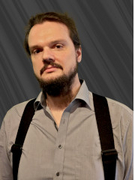
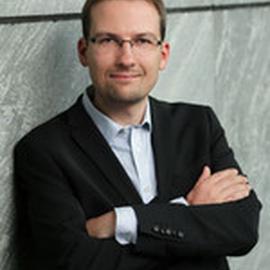
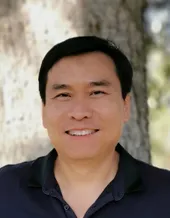
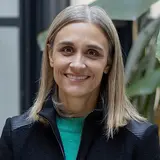
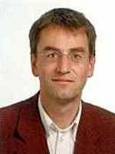
Dr.-Ing. Tobias Fiebig is a Senior Researcher at the Max Planck Institute for Informatics (Internet Architecture department) since April 2022. He previously served as a permanent Assistant Professor at TU Delft's Faculty of Technology, Policy and Management from 2017-2022. His work combines network measurement with human factors to improve security practices, focusing on email protocols, DNS infrastructure, and academic cloud migration. PhD in Computer Science from TU Berlin (2017) MSc in System and Network Engineering from University of Amsterdam (2013) BSc in Cognitive Science from University of Osnabrück (2012) His research spans Internet security (DNS, IPv6, email), academic freedom in cloud contexts, and human-centered security challenges. Recent work analyzes MTA-STS deployment, DNS sampling biases, and university cloud migration privacy implications. He has presented at top conferences including USENIX Security , IEEE Symposium on Security and Privacy , and ACM CCS . Teaching roles include lecturing Data Networks (2023-24) and On the Practice of System and Network Engineering (2024), with prior module management in cyber security analytics and sustainable system operations.
Uwe Flick is a Seniorprofessor in the Department of Education and Psychology at Freie Universität Berlin, specializing in Qualitative Social and Education Research. He has held professorships at Alice Salomon University and Hannover Medical School and is internationally recognized for his contributions to qualitative methodology. Education: Dr. phil. from Freie Universität Berlin (1988), Habilitation in Psychology from Technical University of Berlin (1994). Professional Affiliations: Freie Universität Berlin (2013–present, Seniorprofessor since 2022), Alice Salomon University (2004–2013), Hannover Medical School (1996–1997). His research centers on qualitative methods , social representations of health and illness , chronic illness , migration , and vulnerability . He investigates the lived experiences of marginalized groups, including chronically ill youth, homeless adolescents, and refugees, often employing triangulation and mixed methods to deepen understanding. The 15 most recent publications highlight his sustained focus on advancing qualitative research methodology—editing handbooks, writing foundational texts, and refining concepts of research quality, triangulation, and design. Simultaneously, his empirical work explores health communication, peer relationships, and integration challenges among vulnerable populations, demonstrating a powerful integration of methodological innovation with socially relevant inquiry. Scientific Awards: Lifetime Achievement Award in Qualitative Inquiry, ICQI (2019) Flick actively advises doctoral students through his Promotionskolloquium and has secured substantial research funding for projects on refugee integration, sleep disorders, and chronic illness. His editorial roles in journals like Qualitative Research , Journal of Health Psychology , and Sozialer Sinn , and his leadership in book series such as Qualitative Sozialforschung , underscore his influence in shaping the field. He is a central figure in qualitative research communities, frequently engaging as a visiting scholar and professor across Europe and globally. He leads a research team at Freie Universität Berlin, supervising master’s and doctoral projects on topics like peer relations, health concepts, and migration, fostering the next generation of qualitative researchers.
Wolfgang Forster is a Professor of Civil Law, Comparative Legal History and Legal Philosophy at the University of Tübingen, where he has been teaching since 2011. He served as Dean of the Faculty of Law from October 2020 to September 2022. Prior to his appointment at Tübingen, he was Professor of Civil Law and Legal Philosophy at the University of Giessen from 2007 to 2011. He completed his habilitation at LMU Munich in 2005 with a thesis on insolvency law history and earned his doctorate in 2000 with research on Karl Christian Friedrich Krause's legal philosophy. Forster studied law and philosophy at the Ludwig Maximilian University of Munich from 1987 to 1992, supported by the German Academic Scholarship Foundation and the Bavarian Scholarship for Gifted Students. He passed his first state examination in law in 1992 and his second in 1995. Between 1995 and 2000, he served as a research assistant at KU Eichstätt/Ingolstadt before becoming a research assistant at FAU Erlangen from 2000 to 2003 and at LMU Munich from 2003 to 2007. His research focuses on Civil Law, particularly the general part of the law of obligations, contract law, and family law; German and Spanish legal history, especially regarding insolvency law; History of Canon Law; and Legal philosophy and history of legal philosophy, with special emphasis on Karl Christian Friedrich Krause's legal philosophy. His work bridges historical legal scholarship with contemporary legal theory, examining how historical legal concepts inform modern jurisprudence. Forster's approach combines meticulous historical research with philosophical analysis, revealing continuities and transformations in legal thought across centuries. His publications demonstrate a consistent focus on the intersection of legal history, philosophy, and practical application. Forster has published extensively on Krausist legal philosophy, Spanish legal history, insolvency law development, and historical aspects of family law. His work shows particular strength in analyzing how legal concepts migrate across national boundaries and historical periods, with recurrent attention to German-Spanish legal connections. Hermann Conring Prize 2010 (for his habilitation thesis) Max Weber Prize of the Bavarian Academy of Sciences (for his dissertation) Faculty Prize of the Faculty of Law of the LMU Munich (for his dissertation) Forster has received significant research funding, including publishing support from the German Research Foundation for his habilitation thesis. He co-organized the 40th German Legal Historians' Day in 2014 and was a co-applicant for the interdisciplinary research training group 'Ambiguity: Production and Reception' approved by the DFG in 2013. He has also served as a visiting professor at the University of Wisconsin Law School in Madison, USA. His work demonstrates strong institutional support and recognition within the German and international legal academic community.
Oliver Hohlfeld is a Professor at the University of Kassel, where he leads the Distributed Systems group. He previously held academic positions at Brandenburg University of Technology and RWTH Aachen University, and was a visiting scholar at the University of Wisconsin–Madison. His research focuses on network security, Internet measurements, and Quality of Experience (QoE). He completed his Ph.D. in Computer Science at TU Berlin under Anja Feldmann and holds a B.Sc. and M.Sc. from Darmstadt University of Technology. He also worked at Fraunhofer IGD on telemedical network architectures. His research adopts a data-driven approach, combining large-scale Internet measurements, user studies, and machine learning to understand and improve Internet performance and security. Key areas include DDoS detection, QUIC, HTTP/2, TLS deployment, and BGP analysis. He investigates how protocols like QUIC and HTTP/2 impact user experience and network efficiency, often through empirical studies of real-world deployments. His recent publications highlight a strong trend in network security and protocol analysis, with significant work on DDoS attacks, traffic ingress detection, and web consolidation. He also explores social media dynamics and censorship circumvention through user reviews. 2022 IETF/IRTF Applied Networking Research Prize Best of CCR (2021) for TLS 1.3 deployment study ACM Senior Member (2020) IEEE QoMEX 2019 Best Reviewer Award ACM IMC Community Contribution Award (2018) He has advised numerous Master’s and Bachelor’s students, primarily at RWTH Aachen, and has been a principal investigator in major projects such as AIDOS (AI-based DDoS mitigation), DFG SFB MAKI, COMTEX, and the EU-funded SSICLOPS. He actively serves on the technical program committees of top-tier conferences including SIGCOMM, NSDI, IMC, and CoNEXT, and is a frequent reviewer for leading journals in networking and systems. He leads the Distributed Systems group at the University of Kassel, which conducts research on Internet observability, secure infrastructures, and scalable networking solutions.
Prof. Dr. Sylvia Kesper-Biermann is a Professor of Historical Educational Research at the University of Hamburg's Faculty of Education, specifically within the department of General, Intercultural and International Comparative Education and Educational Psychology (EW 1). She has held this position since 2017 and previously served in various academic roles at institutions such as Justus-Liebig University Giessen, Ludwig-Maximilians-Universität München, and the University of Cologne. Her research focuses on historical education, transnational educational spaces, comics as educational media, post-colonial education, and the history of human rights and emotions. Educationally, she studied Middle and Modern History, History Didactics, and Specialist Journalism at Universities of Siegen, Gießen, and Bristol. Her career includes roles as a research coordinator for the DFG Graduate School on Automatism, a research fellow at the University of Paderborn, and participation in multiple DFG-funded projects. Her research interests are interdisciplinary, emphasizing the intersection of education, history, and media. Recent work explores comics' role in language education for guest workers in West Germany, transnational colonial schools, and emotional dimensions of legal cultures. She has published extensively, including monographs like Einheit und Recht and edited volumes on Turkish-German educational discourse. Prof. Kesper-Biermann has received notable awards such as the Hamburger Lehrpreis 2023 and the Karl-Ferdinand-Werner Fellowship. She leads projects like PostKol (on post-colonial education) and ComBiMe (comics as educational media in West Germany). Her work bridges historical analysis with contemporary educational challenges, emphasizing visual literacy, migration studies, and transnational collaboration. Her academic contributions include organizing lecture series on pedagogy, sexuality, and body politics, as well as international conferences on education history and comics studies. She collaborates with institutions like the Comic Kolloquium Nord and the German Society for Comics Studies, fostering interdisciplinary dialogue in visual and educational historiography.
PD Dr. Lutz Rzehak is an academic staff member at the Institute for Asian and African Studies (IAAW) within the Faculty of Humanities at Humboldt University of Berlin, serving as a Teacher for special tasks specializing in Modern Iranian languages and the ethnography and cultural history of Afghanistan and Central Asia. His educational background includes: Oriental Studies/History from the State University of Leningrad (1985) Doctorate in Iranian Studies, Humboldt University of Berlin (1991) Habilitation in Central Asian Studies / Iranian Studies, Humboldt University of Berlin (2001) Dr. Rzehak's research spans Central Asian Studies , Iranian Studies , Ethnography , and Linguistics , with fieldwork focusing on Baloch, Pashtun, and Tajik communities. His work examines language evolution, social structures, and cultural practices through historical and contemporary lenses, particularly regarding Soviet influence and post-Taliban Afghanistan. Key contributions include grammatical analyses of Iranian languages and ethnographic studies of religious rituals and tribal systems. His recent publications (2016-2021) reveal consistent focus on Iranian language dynamics (especially Dari and Pashto), ethnic identity politics in Afghanistan, and cultural history of Central Asia. These works address language change mechanisms, ethnic consolidation strategies, and the interplay between tradition and modernity, often utilizing comparative linguistic and ethnographic methodologies. His scientific awards include: Heisenberg Fellow of the German Research Foundation Dr. Rzehak has held significant research positions including Research Associate in the Crossroads Asia Competence Network (2011-2016) and Heisenberg Fellow (2002-2011). While his CV does not list formal PhD advisees, his language lecturing and research supervision have mentored numerous students in Central Asian and Iranian studies through course instruction and fieldwork guidance. He has been actively involved in the Crossroads Asia Competence Network, a major interdisciplinary research initiative examining transregional connections and historical trajectories across Central, South, and West Asia.
Olia Lialina is a Professor for New Media and Art and Design Online at Merz Akademie, Stuttgart. Born in Moscow and active since the early 1990s, she is a pioneer of net.art, co-founder of the Geocities Research Institute, and curator of the One Terabyte of Kilobyte Age Archive. Her work explores digital folklore, the vernacular web, and human-computer interaction through artistic and theoretical lenses. Research Interests : Digital art, net.art theory, media archaeology, user-generated content, web preservation, and internet culture. Recent Articles : Focus on digital literacy, vernacular web practices, and critiques of UX design, with an emphasis on historical internet aesthetics and the evolution of user identity. Scientific Awards : Netbased Award 2018 for Self Portrait (Basel). Academic Service : Active in international conferences, juries (Female Artist Award 2021), and publications like Turing Complete User (2021) and Olia Lialina: Net Artist (2020).
Zhenchang Xing is a Research Professor at CSIRO's Data61 and holds a Hans Fischer Senior Fellowship at TUM-IAS. With a Ph.D. in Computer Science from the University of Alberta (2008), he previously served as Associate Professor at Australian National University and Assistant Professor at Nanyang Technological University. His research focuses on software engineering for AI systems and human-centered computing. Current projects include: Automated Software-Hardware Co-Design for AI Systems Software Supply Chain Security frameworks Data Bill of Materials (DataBOM) for verifiable data ecosystems Software Testing Knowledge Graph development Professor Xing has received 10 Distinguished Paper Awards from ACM and IEEE, including the 2005 Most Influential Paper Award for UMLDiff. His work combines software engineering with responsible AI development.
Sophia Hunger is an Assistant Professor of Computational Social Science at the University of Bremen and a visiting scholar at the Center for Civil Society Research (WZB Berlin Social Science Center). She completed her doctorate at the European University Institute in 2020 and remains associated with WZB as a guest researcher. Research Focus : Protest movements, political polarization, immigration policy, and computational methods like quantitative text analysis and automated event extraction. Projects : MOTRA (radicalization monitoring) and PolCon (political conflict in Europe). Publications : Appeared in Political Science Research and Methods , European Political Science Review , and Swiss Political Science Review . Media Engagement : Contributed expert opinions to ARD , El País , France24 , and Süddeutsche Zeitung . Teaching : Co-taught courses on protest politics at Free University of Berlin and conducted workshops on text-as-data approaches at institutions like the European University Institute and WZB. Methodological Innovation : Developed semi-automated protest event data systems and dictionaries to track immigration-related discourse and polarization trends.
Raffi Khatchadourian is an Associate Professor in the Department of Computer Science at Hunter College and the Graduate Center of the City University of New York (CUNY). His research focuses on techniques for automated software evolution, particularly automated refactoring and source code recommendation systems, with the goal of easing the burden associated with evolving large and complex software through automated tools. He also conducts research on the automated analysis of Object-Oriented programs. Ph.D., Computer Science & Engineering, Ohio State University (2011) MS, Computer Science & Engineering, Ohio State University (2010) BS, Computer Science, Monmouth University (2004) Khatchadourian's research spans multiple areas of software engineering and programming languages, with particular emphasis on automated software evolution techniques. His work addresses critical challenges in refactoring legacy systems to modern language constructs, optimizing parallel processing in Java 8 streams, and addressing technical debt in machine learning systems. His recent research has expanded into deep learning program transformation, where he develops techniques to convert imperative deep learning code to more efficient graph execution models while ensuring safety. His approach combines static analysis, program transformation, and empirical validation to create practical tools that developers can integrate into their workflows. Analysis of Khatchadourian's recent publications reveals a strong focus on bridging the gap between theoretical program analysis and practical software engineering challenges. His work increasingly intersects with machine learning systems, examining both how to improve ML code through refactoring and how to ensure safety in deep learning frameworks. The research demonstrates consistent evolution from foundational work on Java language features toward more complex systems involving concurrency, deep learning, and automated program transformation. Distinguished Paper Award at SCAM '18 for work on Java 8 stream optimization EAPLS Best Paper Award at FASE '20 for study on Java 8 stream usage EAPLS Distinguished Paper Award at FASE '25 for Deep Learning refactoring work Best Paper Award nominee at IJCAI '24 for AI safety framework Khatchadourian actively mentors graduate and undergraduate students, with several advisees going on to successful academic and industry positions. His former Ph.D. student Tatiana Castro Vélez accepted a tenure-track Assistant Professor position at the University of Puerto Rico. He has supervised numerous master's theses and undergraduate research projects, often resulting in co-authored publications at top software engineering venues. His research has been supported by various grants, though specific funding details are not prominently featured in the available information. Through his work on tools like Fraglight for aspect-oriented programming and Hybridize Functions for deep learning refactoring, Khatchadourian has established a research group focused on practical program analysis and transformation. His lab develops Eclipse plugins and other IDE-integrated tools that help developers with automated refactoring, bug detection, and code optimization. The group maintains active collaborations with researchers at other institutions and contributes to open-source projects on GitHub.
Dr. Christoph Müller is a leading scientist at the Potsdam Institute for Climate Impact Research (PIK), Germany, where he has served as working-group leader of the Land Biosphere Dynamics group since 2012. He also co-leads the Global Biosphere and Water Modeling team and acts as the scientist-in-charge for the internationally renowned LPJmL global vegetation and crop model. Additionally, he is Co-lead of the Ag-GRID initiative within the Agricultural Model Intercomparison and Improvement Project (AgMIP) and serves as Topical Editor for Geoscientific Model Development . Education Diploma in Geoecology, University of Potsdam (2002) PhD in Geoecology, University of Potsdam & International Max Planck Research School (IMPRS) (2007) Research Interests Dr. Müller’s research centres on understanding and modelling the interactions between climate, land use, and the biosphere to support sustainable food-system transformations. His work integrates global-scale vegetation and crop models with climate projections, socio-economic scenarios, and observational data to assess: Impacts of climate change and extreme events on crop yields and food security Carbon, nitrogen, and water cycles in managed and natural ecosystems Land-based climate-mitigation strategies and their co-benefits or trade-offs Adaptation options for agriculture under global change He promotes open science and reproducible modelling workflows, exemplified by the LPJmL open-source ecosystem model and associated toolkits. Publication Profile & Trends Since 2014 he has authored or co-authored more than 200 peer-reviewed articles. Recent work (2024-2025) highlights three dominant themes: (1) quantifying underestimated negative impacts of climate extremes on crop yields, (2) assessing the sustainability of large-scale land-based mitigation measures, and (3) advancing model intercomparison frameworks (e.g., AgMIP, ISIMIP) to reduce uncertainty in global yield projections. His studies increasingly integrate economic and health perspectives, examining how dietary shifts and food-system transformations can achieve climate, environmental, and social co-benefits. Scientific Awards & Recognition While no formal awards are explicitly listed, several publications have received notable recognition: “Soil quality both increases crop production and improves resilience to climate change” (Nature Climate Change, 2022) – listed among China’s top ten major advances in agricultural science in 2023. “Large potential for crop production adaptation depends on available future varieties” (Global Change Biology, 2021) – top-downloaded article. “Climate change impacts on global agriculture emerge earlier in new generation of climate and crop models” (Nature Food, 2021) – widely cited in IPCC AR6. Leadership, Grants & Collaboration Dr. Müller leads or co-leads multiple international projects and working groups: Working Group Leader – Land Biosphere Dynamics, PIK Research Department 2 Co-Lead – Ag-GRID, Agricultural Model Intercomparison and Improvement Project (AgMIP) Scientist-in-Charge – LPJmL model development and application Topical Editor – Geoscientific Model Development journal These roles involve coordinating multi-institutional consortia, securing competitive grants, and mentoring early-career researchers. Laboratory & Data Resources Dr. Müller’s “team” is essentially the LPJmL modelling group at PIK, comprising post-docs, doctoral researchers, and software engineers who maintain and extend the LPJmL code-base, develop satellite-data fusion products, and provide model-driven policy support to governments and international organisations such as the IPCC, FAO, and World Bank.
Prof. Dr. Klaus Schmid is a Professor in the Department of Software Systems Engineering at the University of Hildesheim, part of the Faculty of Mathematics, Natural Sciences, Economics, and Computer Science. His research focuses on Machine Learning Operations (MLOps), software product lines, adaptive systems, and variability modeling. He leads projects such as EXPLAIN and ReGaP, emphasizing explainable AI and industrial MLOps integration. His work addresses challenges in Cyber-Physical Production Systems (CPPS), including data management, model calibration, and domain knowledge integration. Key research interests include MLOps architecture design, variability modeling transformations (e.g., UVL to IVML), and incremental verification techniques for software product lines. He has published extensively in venues like IEEE ETFA, IEEE Software, and SPLC conferences. Notable achievements include a Best Paper Award for work on control patterns in self-adaptive systems. Collaborations with industry partners highlight his focus on bridging academic research and practical industrial applications. Prof. Schmid’s contributions extend to tool development, such as EASy-Producer for variability-aware software ecosystems, and frameworks for environment modeling in adaptive systems. His research addresses both foundational challenges (e.g., syntax-preserving slicing) and applied topics like MLOps platform comparisons and industrial case studies in Industry 4.0.
Liane Rothenberger is Professor of Media and the Public Sphere with a Focus on Migration at the Faculty of Languages and Literature, Catholic University of Eichstätt-Ingolstadt. She has held this endowed professorship since September 2021 and serves as Deputy Program Director of the Master’s program Flight, Migration, Society (FMG) . Her work is closely linked with the Center for Flight and Migration Eichstätt-Ingolstadt, where she contributes to interdisciplinary research on migration and media. She teaches in the Journalism Studies bachelor’s and master’s programs as well as in the FMG program. Her research centers on journalism, migration, crisis communication, and intercultural communication . Key themes include the media representation of refugees—especially women—the digital transformation of public spheres, and the strategic communication of terrorist groups. She has led studies on Arab and Ukrainian refugee families’ media repertoires, ethical challenges in researching vulnerable populations, and the framing of terrorism in media and public discourse. Her recent publications reflect a strong engagement with interdisciplinary, methodologically rigorous scholarship . Articles examine refugee women in media, social media debates on terrorism, and the use of virtual reality in intercultural teaching. She has co-edited major reference works such as The Palgrave Handbook of Cross-Border Journalism and Terrorismusforschung: Interdisziplinäres Handbuch , and authored the monograph Terrorism as Communication . Liane Rothenberger has contributed to numerous peer-reviewed journals including Journal of Ethnic and Migration Studies , Mass Communication and Society , and Terrorism and Political Violence . Her collaborative projects often involve scholars across Germany and Europe, reflecting a commitment to transnational academic dialogue. She is actively involved in academic networks, including editorial and advisory roles, and has contributed to initiatives on normativity and values in communication research. Her work is supported by institutional funding and donations, including from the ZFM and regional partners.
Christoph Schroeder is a Professor for German as a Second and Foreign Language at the Institute for Germanistics, University of Potsdam. He serves as a corresponding member of the Institute for Migration Research and Intercultural Studies (IMIS) and has held visiting professorships at the University of Cyprus (2004) and Istanbul Bilgi University (2005). His work bridges linguistics, migration studies, and multilingual education. Education: Habilitation in Linguistics (University of Osnabrück, 2004); Promotion (PhD) in Germanistics (University of Bremen, 1995). Key Affiliations: IMIS, Center of Migration Studies (Istanbul Bilgi University), Arbeitsgebiet DaZ/DaF (University of Potsdam). Research Interests focus on language contact, contrastive linguistics, and multilingualism in schools. His work examines orthographic challenges in German-Turkish language contact, secondary predication in Turkish, and strategies for supporting students with non-German native languages through multilingual education frameworks. Notable Projects include leading the Volkswagen Foundation-funded project "Schriftspracherwerb in der Organisation Schule unter den Bedingungen von Migration und Mehrsprachigkeit" (2007-2012), which explored literacy acquisition in multilingual schools across Germany, Turkey, and Cyprus. His editorial roles include co-editing Essener Linguistische Skripte and serving on the editorial board of Language Typology and Universals (STUF) . Publications span contrastive linguistics, language typology, and migration-related educational challenges. Recent work analyzes orthographic systems in language contact scenarios, adverbial modification in Turkish, and article systems across European languages. His research often integrates sociolinguistic and typological perspectives. Professional Memberships: Association of Linguistic Typology (ALT) Deutsche Gesellschaft für Sprachwissenschaft (DGfS) Deutsche Gesellschaft für Fremdsprachenforschung (DGFF)
Professor Tania Avgustinova is a Professor of Slavic and Computational Linguistics in the Department of Language Science and Technology at Saarland University. She serves as Principle Investigator for SFB 1102 - Project C4 (INCOMSLAV) and is Head of the Slavic Lab. Her academic career spans several decades with significant contributions to Slavic linguistics, computational approaches to language, and cross-linguistic studies. Her academic qualifications include: Habilitation venia legendi in General Linguistics (2003) PhD in Slavic and Computational Linguistics (1997) Diploma in Slavistics (1987) Professor Avgustinova's research focuses on the intersection of Slavic linguistics and computational methods. She specializes in microsyntax, intercomprehension among Slavic languages, language contact phenomena, and the processing of non-compositional expressions. Her work examines how speakers of one Slavic language can understand related languages without formal instruction, with particular attention to cognitive and linguistic factors. She has developed computational models to analyze linguistic distances and asymmetries between Slavic languages, contributing significantly to understanding receptive multilingualism. Her recent publications reveal a strong focus on experimental approaches to studying cross-linguistic comprehension using web-based platforms, eye-tracking, and speech processing techniques. There's a clear trend toward investigating microsyntactic units and non-compositional expressions across Slavic languages, with applications in language technology and education. Her work bridges theoretical linguistics with practical applications in natural language processing and language learning. Principle Investigator of SFB 1102 Project C4 (INCOMSLAV) Head of Slavic Lab at Saarland University Contributor to Russian National Corpus project Developer of INCOMSLAV platform for measuring linguistic distances As Principle Investigator of SFB 1102 Project C4 (INCOMSLAV), Professor Avgustinova leads research on mutual intelligibility and surprisal in Slavic intercomprehension. She has been instrumental in developing the INCOMSLAV platform for measuring linguistic distances and asymmetries in receptive multilingualism. Her leadership extends to international collaborations, including contributions to the Russian National Corpus project where she provides expertise on grammatical phenomena at the borderline between lexicon and syntax. Professor Avgustinova heads the Slavic Lab at Saarland University, which focuses on applied, experimental, and computational linguistics. The lab conducts research on Russian corpus grammar, word embedding models, sense frequencies, and microsyntax. Her work has established important connections between theoretical linguistics and practical language technology applications, particularly in the Slavic language context.