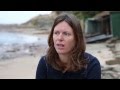
Professor Patrick Moss is a leading academic in Physical Geography and Head of School at QUT's School of Earth & Atmospheric Sciences. His research focuses on understanding landscape responses to climate change and human impacts, with expertise in palaeoecology, Quaternary Science, and environmental management. He holds a PhD from Monash University and supervises PhD and undergraduate students in these disciplines. Key research interests include wetland resilience, fire ecology, and the application of palynology to environmental history. His work integrates archaeological perspectives to address contemporary conservation challenges, such as ecosystem restoration and climate adaptation strategies. Publications span over three decades, emphasizing global fire regimes, human-environment interactions, and Quaternary environmental reconstruction. Collaborations include international projects on peatlands, monsoon variability, and volcanic ash stratigraphy.
Dr. Chenming Zhang is an Advanced Queensland Industry Research Fellow at the School of Civil Engineering, The University of Queensland. His research focuses on hydrological processes in coastal and terrestrial groundwater systems, with particular emphasis on evaporation-driven mass and heat transport in soils and tailings, and hydrogeochemical dynamics in aquifers and mine waste systems. Specializes in IoT-based environmental monitoring Develops numerical models for coastal aquifer dynamics Conducts field and laboratory experiments on tailings behavior Research interests span coastal hydrology, groundwater modeling, mine waste management, and environmental monitoring. He works on contamination transport, aquifer protection, and climate impacts on water systems. Recent publications analyze: Iron curtain formation in subterranean estuaries Sea water intrusion mechanisms Salinity dynamics in tidal wetlands Smart sewer monitoring systems Scientific awards include the prestigious Advanced Queensland Industry Research Fellowship. He supervises multiple PhD projects on mine waste hydrology and coastal aquifer management, with notable collaboration on: Evolution Mining's gold tailings projects ARC Discovery Projects on coastal processes Grange Resources' PAF cell instrumentation His work combines field measurements, laboratory testing, and computational modeling to address critical environmental challenges in mining and coastal zones.
Ana Paula Da Silva is a Research Fellow at the University of Sydney's Faculty of Science, specializing in coastal oceanography and eco-morphodynamics. Her work focuses on wave climate changes, sediment transport dynamics, coastal adaptation strategies, and Arctic coastal processes. She holds a Ph.D. from Griffith University (Australia) and conducted postdoctoral research at the University of Quebec (Canada), studying High Arctic coastal erosion. Currently, she investigates the Great Barrier Reef's eco-morphodynamics and projected coastal changes through 2100. Education Ph.D. in Coastal Oceanography, Griffith University, Australia (Focus: Fingal Headland sediment bypassing) MSc in Coastal Dynamics, UFSC, Brazil Bachelor (Hons) in Oceanography, UFSC, Brazil Research Interests Ana's research bridges climate science and coastal management, emphasizing: Climate-driven changes in wave regimes and sediment transport Headland bypassing mechanisms and coastal connectivity Arctic coastal morphodynamics impacted by glacier retreat Long-term coastal vulnerability assessments Media Engagement She has participated in science communications through: ABC Radio interviews (2021) explaining Fingal Head sand bypassing impacts Conversation article (2020) on disappearing Australian beaches Lab/Affiliation Affiliated with Sydney Southeast Asia Centre, contributing to interdisciplinary coastal research initiatives.
Professor Bradley D Eyre is a leading academic at Southern Cross University, serving as a Professor in the Faculty of Science and Engineering and as the Foundation Director of the Centre for Coastal Biogeochemistry (CCB). His work spans the land-ocean continuum, with a focus on carbon and nitrogen biogeochemistry in coastal and estuarine systems under global change pressures. Education: BAppSc(Hons), University of Adelaide PhD, Queensland University of Technology His research centers on ecosystem-scale biogeochemical processes, particularly the impacts of climate change, ocean acidification, and eutrophication on greenhouse gas emissions and carbonate dynamics. He employs multi-scale approaches, from field measurements to global modeling. His recent work highlights how methane and nitrous oxide fluxes alter the climate benefit of blue carbon ecosystems and how ocean acidification drives net dissolution of coral reef sediments. An analysis of his recent publications reveals a strong focus on quantifying greenhouse gas fluxes in aquatic systems, with an emphasis on upscaling methods, geomorphic controls, and climate feedbacks. His work frequently appears in high-impact journals such as Nature , Science , and Nature Climate Change , reflecting broad disciplinary influence in environmental science, biogeochemistry, and climate research. Scientific Awards and Recognitions: Fellow, Association for the Sciences of Limnology and Oceanography (ASLO), since 2018 Member, ARC College of Experts, since 2022 Deputy Chair, 2024 MPCE DECRA Panel Professor Eyre has supervised 32 PhD students to completion and currently mentors 13 more, in addition to 22 early- and mid-career researchers. His research has attracted over $20 million in funding, including 32 ARC grants (>$10 million), 11 ARC Linkage projects (> $7.5 million), and over $3 million in contract research. His collaborations span federal and state agencies, local governments, private sector partners, and multiple universities across Australia and internationally, demonstrating extensive impact on policy and practice. He leads the Centre for Coastal Biogeochemistry, which played a key role in securing SCU’s ERA Rank 5 (well above world standard) in Geochemistry. His team conducts interdisciplinary research on coastal carbon cycling, sediment dynamics, and climate change impacts, contributing significantly to national and global environmental assessments.
Professor Stuart Phinn is a distinguished academic at the University of Queensland, serving as Professor in the School of the Environment and Centre Director of the Remote Sensing Research Centre (Earth Observation Research Centre). He also maintains affiliations with the Centre for Marine Science. With a career spanning over two decades, Professor Phinn has established himself as a leading expert in earth observation and environmental monitoring, with over 559 publications including 295 journal articles. His educational background includes a Bachelor (Honours) of Science (Advanced) from The University of Queensland and a Doctor of Philosophy from San Diego State University. Professor Phinn's leadership extends to founding directorships of Australia's national earth observation coordination body (www.eoa.org.au) and collaborative research infrastructure (www.tern.org.au), as well as a world-leading research-to-operational program supporting government environmental monitoring (www.jrsrp.org.au). He also leads the Earth Observation for Government Network. Professor Phinn's research focuses on monitoring environmental change using earth observation and field data. His work primarily involves using images collected from satellites and aircraft, combined with field measurements, to map and monitor Earth's environments and how they change over time. This research is conducted in collaboration with environmental scientists, government agencies, NGOs, and private companies. A growing aspect of his work focuses on national coordination of earth observation activities and the collection, publishing, and sharing of ecosystem data. His work provides solutions to support sustainable development and resource use for governments, industries, and communities. His recent publications demonstrate a consistent focus on applying earth observation technologies to solve environmental challenges across multiple domains. The 15 most recent articles reveal strong themes in coral reef mapping and monitoring, land cover change detection, fire resilience analysis, and advanced remote sensing techniques including multi-sensor fusion and machine learning applications. His work spans terrestrial, coastal, and marine environments, with significant contributions to understanding environmental change in Australia and internationally, particularly in Indonesia. Professor Phinn has secured substantial research funding from diverse sources including government agencies (Queensland Government, Great Barrier Reef Marine Park Authority), industry partners (SmartSat CRC, Blue Economy CRC), and international organizations (Google Inc, Vulcan Inc). Current projects include evaluating impacts of threats to endangered reptiles, automating tree-scale vegetation structure monitoring, and continuing the Joint Remote Sensing Research Program. As an academic supervisor, Professor Phinn has mentored numerous PhD and Master's students, with current supervision spanning topics from forest disturbance analysis to kelp forest mapping and fire resilience of mine site rehabilitation. His extensive supervision history demonstrates his commitment to training the next generation of earth observation scientists. The Earth Observation Research Centre he directs fosters a collaborative research environment focused on transforming satellite and airborne images with field survey data into meaningful environmental information for decision-making.
Ruth Reef is an Associate Professor at the School of Earth Atmosphere and Environment, Monash University. She leads the Coastal Research Group, focusing on coastal dynamics, climate change impacts, and environmental DNA applications. Her research emphasizes mangrove and coral reef ecosystems' resilience to sea level rise and human activity. She coordinates courses such as EAE3311 (Oceans and Coasts) and teaches EAE1022 (Earth, Atmosphere and Environment 2). Expertise: Coastal processes, sediment transport, climate adaptation, and ecosystem management. Projects: Includes studies on mangrove restoration in Vietnam, coastal wetland carbon fluxes, and bathymetry innovations via CoastBAT. Her work addresses UN Sustainable Development Goals related to climate action and sustainable ecosystems. Notably, she received the 2021 Award for Exceptional Educational Service to the Faculty of Science.
Nik Callow is an Associate Professor at the UWA School of Agriculture and Environment and co-Director of the UWA Centre for Water and Spatial Science. His expertise spans hydrology, geomorphology, remote sensing, and GIS. He leads major projects like the Australian Plant Phenomics Network (APPN) and WaterSmart Dams, focusing on water-dependent ecosystems and spatial science innovations. Callow oversees UWA’s drone operations and supports ~60 drone pilots. He teaches courses in geographical sciences and environmental monitoring, and his research integrates drone technology with climate change studies. Education: PhD in Geography (UWA, 2007), GCHEd (UQ, 2011) Affiliations: Member of the Western Australian EPA Expert Scientific Advisory Council, Resilient Landscapes Hub (NESP), and multiple industry collaborations. Research interests include ecohydrology, marginal snowpacks, and palaeoclimate studies. Projects address water management, biodiversity, and climate resilience in Australia and globally. His work has received the EGU Jim Dooge Award (2020) for contributions to wetland salinity research. Active grants include partnerships with Snowy Hydro, Rio Tinto, and the Grains Research and Development Corporation. Teaching focuses on field science, GIS, and climate processes.
Associate Professor Jochen Kaempf is a physical oceanographer at Flinders University's College of Science and Engineering since 2009. He holds a PhD from the University of Hamburg (1996) and has pioneered research on coastal upwelling systems, sediment dynamics, and ocean circulation. His work includes discovering the Great Southern Australian Coastal Upwelling System and advancing understanding of the Indian Ocean Dipole. He teaches marine sciences and climate change courses, and advises on desalination and environmental protection. Awards include the Jill Hudson Award (2014) and Eureka Award finalist (2011). Research focuses on physical-biological interactions, hydrodynamic modeling, and coastal processes. Key contributions include studies on sediment transport in submarine canyons, desalination brine dispersion, and pollutant dynamics. He serves on international committees like the 2nd International Indian Ocean Expedition and reviews scientific manuscripts globally.
Mick Filmer is a Senior Lecturer at Curtin University's School of Earth and Planetary Sciences (EPS) within the Faculty of Science and Engineering. He serves as Curtin's representative on the Land Surveyors Licensing Board of Western Australia and holds a PhD (Curtin University) and a Bachelor of Geoinformatics and Surveying (University of South Australia). His research focuses on InSAR technology, vertical land motion, height systems, and coastal sea surface topography, with over 30 peer-reviewed publications since 2007. Teaching responsibilities include Survey Law Ethics Practice, Cadastral Surveying, and Applied Geodetic Surveying. Research contributions span geodetic datum development (e.g., AUSGeoid09), InSAR deformation analysis, and land subsidence monitoring in the Perth Basin and Latrobe Valley. He collaborates with organizations like the International Association of Geodesy and European Geosciences Union. Key projects include evaluating Australia’s AUSHYDROID vertical datum model (2024), integrating InSAR with terrestrial reference frames (2021), and analyzing ocean tide signals in coastal zones (2023). His work bridges geodesy, remote sensing, and hydrogeology, addressing challenges in vertical land motion monitoring and geodetic infrastructure planning.
Dr. Kai Schulz is an Associate Professor in the School of Environment, Science and Engineering at Southern Cross University. He holds a PhD from the University of Bremen and focuses on ocean change impacts, mitigation strategies, and biogeochemical cycles. His research employs experimental, observational, and modeling approaches to address topics like carbon sequestration, coral bleaching, and ecosystem restoration. Education: MSc and PhD from the University of Bremen, Germany. Research grants include multiple awards from the Australian Research Council (ARC). Research Interests : Climate change impacts on marine ecosystems, ocean acidification, plankton physiology, and Ocean Alkalinity Enhancement (OAE) technologies. He explores how OAE affects carbon cycling, plankton communities, and sediment dynamics through projects like OAEPIIP. Publications highlight interdisciplinary work on carbon dioxide removal, coral resilience, and plastic pollution effects. Recent studies investigate OAE efficiency, Sargassum decomposition, and coral shading responses under thermal stress. Awards : Senior Researcher Award for Research Excellence (2022). Advising and grants: Supervises research students and leads ARC-funded projects on climate mitigation. Collaborates with global teams on OAE and coral reef metabolism studies. Labs/Teams: Affiliated with Southern Cross University's Environmental Analysis Laboratory and contributes to international initiatives like the Ocean Alk-Align project.
Dr Daniel Harris is a Senior Lecturer in the Department of Geography at the School of the Environment, University of Queensland (UQ). His research focuses on coastal and coral reef morphodynamics, integrating physical processes like waves and tides with ecological and geological systems. Prior to UQ, he held positions at the University of Sydney and the Leibniz Center for Tropical Marine Ecology (ZMT). He leads The BeachLab, dedicated to developing tools for coastal resilience in a warming world. Research interests include coral reef structural complexity, coastal protection under climate change, and surf zone processes. His work combines field data, remote sensing (e.g., LiDAR, drones), and numerical modeling to address both fundamental and applied questions. Notable projects involve quantifying coral rubble mobility, analyzing Holocene reef evolution, and assessing shoreline change via satellite imagery. His expertise spans marine geoscience, physical oceanography, and environmental adaptation strategies. Publications emphasize coral reef dynamics, coastal geomorphology, and climate impacts. He collaborates with ecologists, geologists, and coastal engineers to advance interdisciplinary solutions. Teaching focuses on geography and marine science, reflecting his commitment to educating future researchers and practitioners. Key contributions include advancing methods for shoreline monitoring using Bayesian networks and Google Earth Engine. His research highlights the critical role of coral reefs in coastal protection, particularly under rising sea levels and extreme weather events. The BeachLab’s work bridges academic inquiry with practical management strategies for vulnerable coastal ecosystems.
David Wainwright is an adjunct research fellow at the University of Queensland's School of Civil Engineering and a adjunct lecturer at the University of Newcastle. With over 20 years of industry experience as a consulting engineer, he specializes in coastal engineering , environmental hydraulics , and climate change adaptation , particularly in coastal zones. University: University of Queensland Secondary Affiliation: University of Newcastle Academic Rank: Research Fellow His research focuses on coastal geomorphology , numerical modeling of coastal processes, and risk assessment for coastal flooding and sea level rise. He has developed frameworks for probabilistic hazard lines , coastal lagoon management , and stochastic erosion modeling . His work integrates engineering design with policy considerations, including local government planning and community consultation . A chartered engineer with Engineers Australia since 2001, he contributes to coastal risk evaluation and climate adaptation guidance . He founded the consulting firm Salients Pty Limited in 2015, extending his expertise to state and national projects .
Dr Alice Jones is a Senior Lecturer in Resilience Ecology at the University of Adelaide's School of Biological Sciences, within the Faculty of Sciences, Engineering and Technology. She leads the Future Coasts Lab, focusing on coastal ecosystems' role in mitigating climate change through blue carbon storage and restoration. Her research emphasizes seagrass restoration, marine aquaculture sustainability, and interdisciplinary collaboration with governments and NGOs. Education: PhD from the National Oceanography Centre (UK), MSc in Aquatic Resource Management (King's College London), BSc Zoology (Manchester University). Research interests include blue carbon ecosystems (mangroves, seagrasses, saltmarshes), climate change mitigation, and policy frameworks. Key projects include a federally-funded seagrass restoration initiative in South Australia and collaborations on climate-smart aquaculture. Notable awards: 2020 Winnovation Award, 2021 South Australian Young Tall Poppy Science Award, and 2022-2024 Superstar of STEM. She is an Associate Editor for Remote Sensing in Ecology and Conservation . Grants include a $2.1M Commonwealth grant for Gulf St Vincent seagrass restoration and a $1M project measuring blue carbon benefits. She has mentored Honours and PhD students in coastal ecology and collaborates internationally on policy and restoration. Labs/Teams: Future Coasts Lab, part of interdisciplinary networks focused on coastal resilience and climate action.
Assoc. Professor Sarah Hamylton holds a position at the University of Wollongong's School of Earth, Atmospheric and Life Sciences (SEALS). Her research focuses on coastal geomorphology, coral reef ecology, and mangrove ecosystems, integrating spatial analysis with art-science collaboration. She leads interdisciplinary projects addressing climate change impacts on coastal environments and promotes gender equity in fieldwork practices. Her work combines remote sensing, GIS modeling, and field-based studies to assess reef island dynamics and sediment transport processes. Hamylton has secured significant funding through grants such as the Australian Research Council's 'Mangrove sustainability on the Australian coast' (2022-2025) and the Advancement and Equity Grants Scheme for Research. These projects explore mangrove carbon storage, island vulnerability, and sustainable coastal management strategies. She actively supervises PhD and Master’s students in topics like interdisciplinary approaches to island sustainability and mangrove extent dynamics. Her research outputs emphasize geospatial analysis of coral reef systems, including studies on sediment dynamics, microatoll detection via drone imagery, and historical reef development. Collaborations span environmental humanities, leveraging songwriting and art to enhance public engagement with climate science. Hamylton's work bridges physical and social sciences, addressing both ecological and human dimensions of coastal change.
Dr. Danelle Agnew serves as a Research Fellow in the Environmental Sustainability and Management department (ESC) under Griffith Sciences at Griffith University. She is a core member of the Coastal Management Program, with research directly supporting Sustainable Development Goal 14 (Life Below Water). Her research focuses on marine and estuarine ecology, specializing in river recovery processes and coastal ecosystem management. Key areas include: Identification of geomorphic river recovery corridors GIS-based landscape analysis for river management Cost-benefit frameworks using Marxan software Soil carbon dynamics in tropical wetlands Integration of ecological and geomorphic data for decision support Analysis of her 2021-2024 publications reveals a cohesive research trajectory centered on practical river management solutions. Her work consistently addresses Australian coastal systems—particularly in New South Wales—while bridging theoretical ecology with applied decision-making tools. A notable trend is the progression from spatial identification of recovery corridors (2021-2022) to economic valuation frameworks (2024). No scientific awards or honors are documented in available sources. Public records indicate no formal student supervision roles or grant funding details. Her Research Fellow position suggests collaborative project involvement within the Coastal Management Program framework. She operates within Griffith University's Coastal Management Program, which develops evidence-based strategies for river and coastal system restoration through interdisciplinary research combining field ecology, geospatial analysis, and environmental economics.