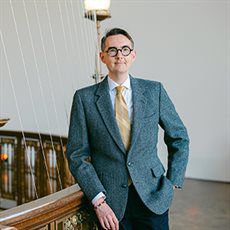
Shital Pravinchandra is a Senior Lecturer in Comparative Literature at Queen Mary University of London, affiliated with the School of Languages, Linguistics and Film. Their research bridges postcolonial studies and the health humanities, examining how biomedical sciences perpetuate colonial legacies through discourses of health and longevity. They also explore the global evolution of the short story form in South Asian literatures. Education: BA, MA, PhD from Cornell University. Current projects include a contracted book with Bloomsbury Academic, Longevity Fictions: Literature, Biomedical Science, and Postcolonial Critique , analyzing how biomedical innovations disproportionately affect marginalized communities. Teaching includes core modules in Comparative Literature and specialized courses like ‘Medicine and Ethics in Contemporary Global Literature.’ Administrative roles include convening the iBSc in Global Medical Humanities and co-chairing the Health and Humanities Research Forum (co-founded). They co-edit the Routledge Global Literatures series and Journal of Commonwealth Literature .
Prof. Tjeerd Bouma is a part-time Professor in the Department of Physical Geography at the Faculty of Geosciences, Utrecht University. His research focuses on coastal dynamics, deltas, and wetland ecology, emphasizing ecosystem engineering and biogeomorphology. He holds a PhD in Plant Physiology from Wageningen University and conducted postdoctoral research at Pennsylvania State University. Previously affiliated with NIOZ-Yerseke, he joined Utrecht University in 2018 on a 1-day-per-week basis. His expertise spans coastal ecosystem services, plant-flow-morphology interactions, and restoration ecology. Research themes include 'Future Deltas' and the role of ecosystem engineers in shaping landscapes and mitigating climate impacts. Bouma combines field experiments, flume studies, and modeling to address practical challenges like salt marsh resilience and nature-based flood defenses. He teaches the 'Coastal Ecology' course and supervises student projects on topics like delta preservation and biogeomorphic processes. His work highlights the importance of understanding thresholds for ecosystem establishment, hydrodynamic effects on organisms, and maximizing ecosystem services through strategic interventions. Despite no explicit awards listed, his contributions to coastal science are widely recognized through his extensive publication record and international collaborations.
Dr. Jimmy Murphy is a Senior Lecturer in Civil Engineering at University College Cork (UCC) and Lead Technical Engineer of the Lir National Ocean Test Facility (Lir NOTF) within the SFI MaREI Centre. With over 25 years of expertise in marine engineering, he specializes in tank testing, hydrodynamic modeling, and coastal/offshore environmental studies. He leads the Lir NOTF, a world-class facility featuring 4 test tanks and advanced workshops critical for ocean system testing in Ireland. His research focuses on coastal engineering (breakwater design, sediment transport, climate adaptation) and offshore renewable energy (wave/wind energy technologies, LCoE optimization). He coordinates major EU projects like LEANWIND, MaRINET2, and MARINERG-i. Awards include the 2017 EI Champion of Research and the 2017 Marine Industry Award for Lir NOTF's infrastructure excellence. Teaching responsibilities include modules on environmental hydrodynamics, coastal engineering, and marine processes. Professional roles include UN panel membership for coastal erosion and marine energy, and EU DG-MARE advisory roles.
Dr. Kate Ellis-Davies is a Senior Lecturer in Psychology at Swansea University, affiliated with the School of Psychology within the Faculty of Medicine, Health and Life Science. She specializes in the intersection of health and developmental psychology, focusing on biological, cognitive, and cultural factors influencing parent and child health, wellbeing, and development across the lifespan. Her research emphasizes minority and underrepresented groups in parental mental health studies, including LGBTQ+ families, surrogacy, and cross-cultural parenting in both Western and hunter-gatherer societies. Dr. Ellis-Davies teaches modules on parental and child development (PSY212, PSY302, PSY326), systematic reviews in health sciences (PSY327), and additional care for women with complex needs (SHM248). She supervises undergraduate, postgraduate, and PhD research projects, including current studies on hypnobirthing, air pollution impacts, and student wellbeing. Her research spans international collaborations, such as the 'Task Division in Gay, Lesbian, and Heterosexual Parents' study funded by the Jacobs Foundation. She chairs the Interdisciplinary Perinatal Mental Health Group and contributes to science festivals like the 'Making of the Modern Dad.' Key publications include work on non-paid task division in diverse parent families and ambient air pollution's effects on birth outcomes. Dr. Ellis-Davies is a member of Surrogacy UK's Ethics Board and has held roles at Nottingham Trent University and the University of Cambridge. Her work bridges academic disciplines, health services, and charities to promote evidence-based policies for family wellbeing.
Alicia Cast was a distinguished Professor of Sociology at the University of California, Santa Barbara (UCSB), specializing in social psychology, family dynamics, and gender studies. She held leadership roles in the American Sociological Association (ASA) and contributed to the development of the General Social Survey’s Identity Module. Her research focused on identity formation, emotions, and their impacts on mental health and social inequality. Education: Ph.D., Washington State University B.A., Beloit College, Wisconsin Her research explored how marital power dynamics influence identity imposition, gender identity shifts during parenthood, and the role of self-esteem as a buffer against identity non-verification. She pioneered studies on farmer identities and environmental adaptation through agricultural practices. Over 1,500 citations of her seminal work in Social Forces underscored her impact on identity theory. Her teaching and mentorship were legendary, directing undergraduate studies for 1,500+ majors and guiding numerous graduate students to academic success. She championed diversity initiatives at UCSB and was deeply involved in campus leadership. Legacy: Alicia’s innovative contributions to sociology, coupled with her compassion and generosity, left an enduring imprint on her field and community.
Ernil Sabaj is an Assistant Professor (Teaching Focussed) and former Teaching Fellow in Macroeconomics at the Department of Economics, University of Warwick, UK. He holds a PhD in Economics from the University of Exeter and an Erasmus Mundus Joint Master's Degree from the University of Antwerp, University of Staffordshire, Universidad de Cantabria, and Universidade de Brasília. Previously, he worked as a senior economist at the Albanian Ministry of Finance and Economy. His research focuses on Macroeconomics, Fiscal and Monetary Policy, Business Cycles, and Macroeconomics of Climate Change. He has published in journals like the Journal of Economic Studies and Economics Letters . Sabaj is a Fellow of The Higher Education Academy and actively supervises dissertations at both undergraduate and postgraduate levels. Education: PhD in Economics, University of Exeter (2017–2022) Erasmus Mundus Joint Master's Degree in Economics (2015–2016) MA in European Economic Studies (2012–2014) BSc in Economics (2007–2011) Teaching: Leads modules such as EC916 (Topics in Global Finance) and EC956 (Macroeconomics), and teaches undergraduate courses like EC135 (Topics in Applied Economics 1b). He also supervises MSc and BSc dissertations. Research Interests: Explores monetary policy transmission mechanisms, fiscal policy impacts, and climate change economics. Recent work includes analyzing oil prices' effects on housing markets and sectoral shocks' influence on price stickiness. Grants & Awards: Holds the Higher Education Academy Fellowship. Active in conferences and workshops, including presentations at the Portuguese Economic Journal Annual Meeting and the Baltic Economic Conference. Professional Engagement: Serves on advisory committees and collaborates on projects aligned with Sustainable Development Goals 4 (Quality Education), 8 (Decent Work), 9 (Industry/Innovation), and 13 (Climate Action).
Dr. Luke Bridgestock is a Lecturer in Terrestrial Environmental Earth Science at the University of St Andrews, School of Earth & Environmental Sciences. His research focuses on global biogeochemical cycles underpinning climate change, water quality, and food security. Key areas include quantifying soil formation vs. erosion imbalances using barium isotope mass balance techniques and assessing CO₂ emissions from mining activities. Current projects involve the Ria de Huelva estuary (Spain) and Himalayan river systems. He collaborates on the NERC-funded LA:TRACE project to develop laser-based chemical imaging tools. Research Interests: 1. Soil degradation dynamics via barium isotope analysis 2. CO₂ emissions from acid mine drainage neutralization 3. Trace metal pollution tracking in oceans and estuaries 4. Enhanced weathering CO₂ sequestration techniques Advising & Grants: Involved in the LA:TRACE project (NERC grant) and multiple international collaborations. No student advisees listed in provided materials. Labs/Teams: Active within the School's geochemistry and environmental science research groups, contributing to field campaigns in Asia, Europe, and the Arctic.
Dr. Nicole Esteban is an Associate Professor of Marine Ecology at Swansea University, affiliated with the School of Biosciences, Geography and Physics. With over 20 years of experience in tropical coastal zone management, she specializes in marine conservation, sea turtle ecology, and biodiversity protection. Her work integrates field research with policy and community engagement, particularly in the Caribbean, Red Sea, and Indian Ocean. She leads the Swansea Marine Conservation & Ecology Lab and has contributed to Protected Area Management Plans and Environmental Impact Assessments globally. Her research focuses on spatial ecology of marine fauna, especially sea turtles, exploring habitat use, nesting behavior, and climate change impacts. Notable achievements include tracking migratory patterns of endangered species and identifying critical habitats such as submerged banks. Dr. Esteban is a Fellow of the Higher Education Academy and has secured grants totaling over £680,000, including projects in the British Indian Ocean Territory. Teaching includes modules on tropical marine ecology and professional skills in marine biology, emphasizing employability through fieldwork and consultancy techniques. Her work bridges academia and conservation practice, with over 100 peer-reviewed publications and global collaborations.
John Breslin is a Personal Professor in Electronic Engineering at the University of Galway, leading the TechInnovate/AgInnovate programs. His roles include Director of the Insight (Data Analytics) and VistaMilk (AgTech) research centers. He has authored 350+ publications and co-created the SIOC framework, widely used in web applications. His research spans Data Science, AI, Semantic Web, IoT, and Entrepreneurship. He has won multiple awards, including the Best Irish-Published Book and IIA Net Visionary Awards. His teaching spans 25 years, covering topics like Digital Control Systems and Innovation. He co-founded boards.ie, StreamGlider, and leads initiatives in Galway's innovation ecosystem. Research Interests: Data Science, AI, Social Semantics, IoT, Agricultural Technology, and Innovation. He is ranked top in Engineering and Computer Science citations at the University of Galway. His work contributes to UN SDGs related to Industry, Innovation, and Infrastructure. Education: Details not explicitly provided in text. Collaborations include Bosch, Cisco, IBM, and Harvard Medical School. Active in industry partnerships and startups, including the PorterShed Innovation District. Awards: Best Paper Awards, Entrepreneurship Recognition, and Academic Excellence. Supervised nearly 30,000 ECTS across modules, with a focus on graduate and postgraduate tech innovation programs.
Zelieann R. Craig is a researcher at the School of Animal & Comparative Biomedical Sciences and the College of Agriculture and Life Sciences at the University of Arizona, where she has been actively contributing since 2013. Her work bridges reproductive physiology and toxicology, focusing on how environmental chemicals affect female fertility. Education: Ph.D. in Physiological Sciences, University of Arizona, Tucson, Arizona B.S. in Industrial Microbiology, University of Puerto Rico, Mayaguez, Puerto Rico Dr. Craig's research is centered on female reproductive physiology , particularly ovarian follicle biology and ovarian toxicology . She investigates how environmental chemicals —especially phthalates, bisphenol A, and other endocrine disruptors—affect steroidogenesis , folliculogenesis , and DNA repair in the ovary, with implications for infertility and ovarian reserve . Her methodological approach includes in vitro follicle culture, gene expression analysis, proteomics, and in vivo mouse models. Her recent publications reveal a strong trend in analyzing low-dose, environmentally relevant exposures to plasticizers and personal care product chemicals. She has extensively studied phthalates (DBP, DEHP, BBP), their metabolites (e.g., MBP), and substitutes (e.g., ATBC), uncovering mechanisms involving oxidative stress , cell cycle disruption , apoptosis , and insulin-like growth factor signaling . She also explores epigenetic impacts, such as DNA methyltransferase activity . Scientific Awards: Graduate Mentor of the Year, UA College of Pharmacy (2024) Janice Bahr Junior Scientist Travel Award, Society for the Study of Reproduction (2018) Burroughs Wellcome Travel Fellowship, Society for the Study of Reproduction (2017) Society for the Study of Reproduction Travel Fellowship (2014) Dr. Craig advises students through honors theses, independent studies, and dissertation committees, particularly in toxicology and reproductive sciences. She has secured research funding and led projects investigating ovarian toxicity mechanisms. She teaches courses such as General+Systems Tox , Animal Toxicology , and Honors Thesis across departments including Pharmacology, Microbiology, and Physiology. She has contributed to the field through book chapters in Encyclopedia of Reproduction and Comprehensive Toxicology , and her collaborative work spans institutions including the University of Illinois and University of Arizona. Her research continues to inform regulatory science and public health understanding of reproductive toxicants.
Dr. Natalie Langford is a Lecturer in Sustainability at the Department of Politics and International Relations, University of Sheffield. She joined in 2022 after working at Durham University, and is affiliated with the Political Economy Research Group (PERG) and Sheffield Political Economy Research Institute (SPERI). Her research focuses on global political economy, examining how states, firms, and civil society in the global South influence labor and environmental governance in transnational value chains. She specializes in South-South trade dynamics and emerging markets' sustainability standards. Dr. Langford holds a PhD in Global Development, MSc in Climate Change and Policy, and BA in English Literature. Her work emphasizes contested norms in global governance, with field research in India and ongoing studies in Indonesia. Key themes include private and public actors shaping regulatory frameworks, transnational sustainability governance, and the political economy of commodity production. Her research outputs analyze Southern-led sustainability standards, legitimacy in polycentric trade systems, and labor governance challenges in global value chains. Teaching focuses on global political economy, political economy approaches, and undergraduate dissertation supervision. She prioritizes active learning and student engagement, leading modules such as POL119 and POL6607. Current affiliations include PERG and SPERI, where she collaborates on projects addressing global political economy challenges. Her work bridges academic research with practical insights into sustainable development and governance innovations in emerging economies.
Prof. Catherine O'Leary is a Professor of Spanish and Assistant Vice Principal, Dean of Arts and Divinity at the University of St Andrews. She holds dual roles in academic leadership and research, currently directing the Cultural Identity and Memory Studies Institute (CIMS). She completed her PhD in Spanish literature at University College Dublin and has held positions at the National University of Ireland, Maynooth and St Andrews since 2013. She previously served as Head of the Department of Spanish (2014-17) and Associate Dean of Arts (2017-18). Her research focuses on contemporary Spanish theatre, censorship, gender studies, cultural memory, and climate fiction. Key projects include studies on Franco-era theatre censorship and the role of translation in political resistance. She co-edited Global Insights on Theatre Censorship (2015) and authored Theatre Censorship in Spain: 1931-1985 (2023), funded by the AHRC. Current work explores Spanish Civil War exiles in Latin America and climate fiction's intersection with memory studies. Teaching includes modules on women's writing in Spain, literary translation, and the representation of the Spanish Civil War. She is co-chair of the Scottish Arts and Humanities Alliance (SAHA), advocating for arts in higher education.
Professor Alexander M. Cannon is a Professor of Ethnomusicology at the University of Birmingham. He specializes in Vietnamese traditional music, creativity studies, and the intersection of music with environmental and socio-cultural change. His current ERC-funded project SoundDecisions examines musical practices in southern Vietnam's Mekong Delta, focusing on how farmer-musicians use improvised music to navigate environmental and economic challenges. Education includes a BA in Music and Mathematical Economics from Pomona College (California), and MA and PhD in Musicology/Ethnomusicology from the University of Michigan. His 2022 monograph Seeding the Tradition won the 2023 Royal Musical Association Book Prize, analyzing how Vietnamese musicians blend Daoist creativity concepts with neoliberal frameworks. Research interests include intangible cultural heritage, queer ethnography, and musical sustainability. He teaches modules on critical musicology, fieldwork methods, and music's role in protest movements. His recent work explores climate change impacts on traditional music practices and diasporic musical identity. Professional roles include Principal Investigator for SoundDecisions, Co-Editor of Ethnomusicology Forum , and member of the British Forum for Ethnomusicology Executive Committee. Awards include the 2023 book prize for his analysis of creativity in southern Vietnamese music. His research combines ethnographic fieldwork, archival studies, and quantitative methods to address interdisciplinary questions. He actively mentors students in Vietnamese music studies, Asian diaspora musics, and music's role in socio-environmental contexts.
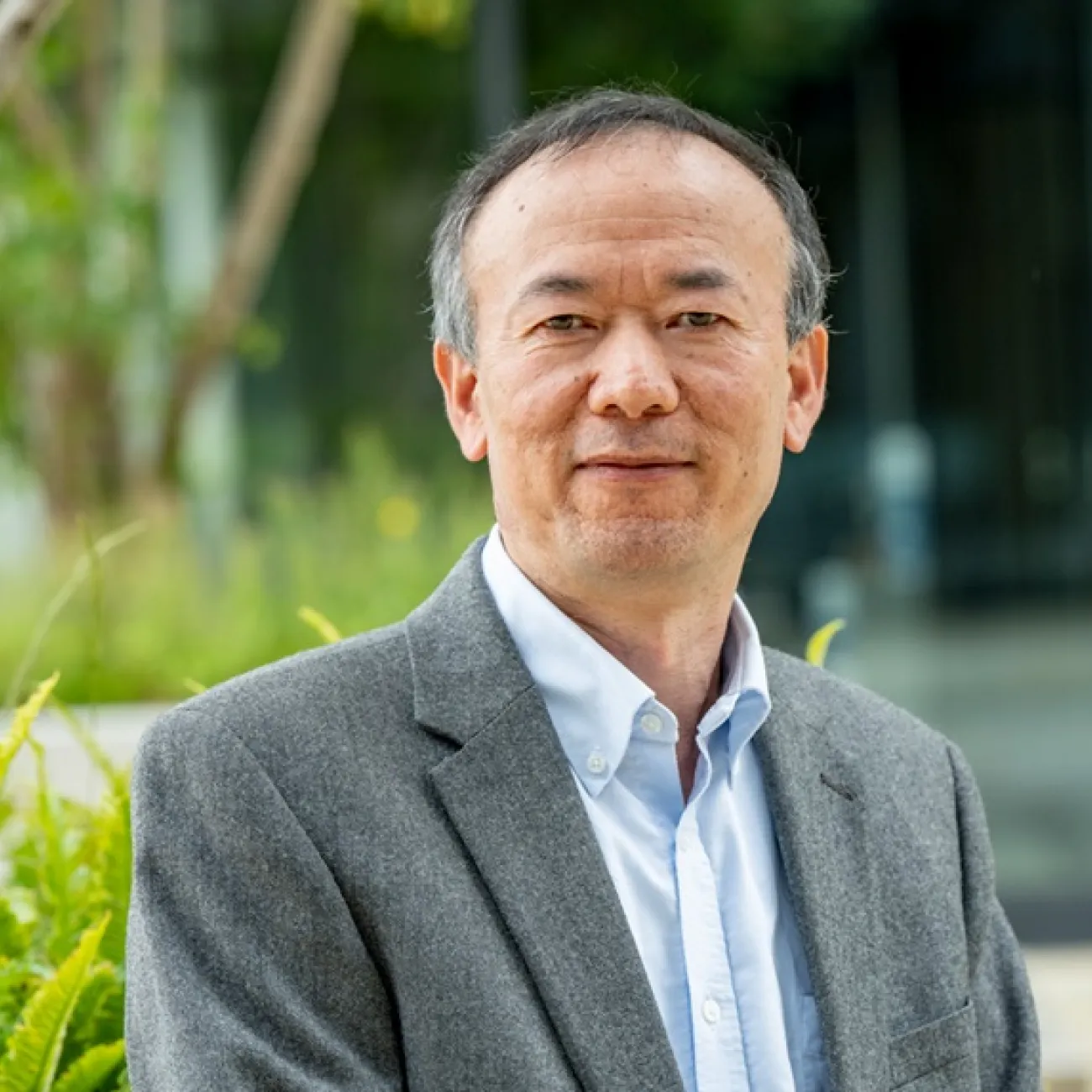
Professor Zheng-Tong Xie is a Professor at the University of Southampton's Department of Engineering and Environment. His research focuses on Aerodynamics, Computational Fluid Dynamics (CFD), Turbulence, and Urban Wind Engineering. He leads modules in Applications of CFD, Race Car Design GDP, and Computational Aerodynamics. Active in professional roles, he serves as a Fellow of the Royal Meteorological Society (since 2009), Chair of the Urban Fluid Mechanics Special Interest Group (since 2017), and Council Member of the UK Wind Engineering Society (since 2014). His work spans urban dispersion modeling, tall building aerodynamics, and CFD methodology development. Current research includes the FUTURE project on urban tall-building clusters and the DIPLOS project on localized urban dispersion. Advises PhD students Keertan Kumar Maskey and Donnchadh Eoghan MacGarry. Collaborates on EPSRC and industry-funded projects, with a focus on wind engineering, turbulence, and fluid dynamics applications. Key research interests include urban airflow dynamics, pollutant dispersion, and CFD validation against sensor data. He contributes to large-eddy simulation (LES) advancements for urban environments, addressing challenges like tall building clusters and street network dispersion. His external roles reflect leadership in both academic and professional wind engineering communities. Research outcomes bridge theoretical CFD models with practical urban design and environmental monitoring needs.
Professor Tolga Bektas is a faculty member at the University of Liverpool Management School, holding the rank of Professor. Previously, he served as Professor of Logistics Management and Head of the Decision Analytics & Risk Department at Southampton Business School for 11 years. He holds a PhD in Industrial Engineering from Bilkent University (2005) and completed a postdoctoral fellowship at CIRRELT, University of Montreal. His research focuses on applying mathematical modeling and optimization to freight transportation, distribution planning, and supply chain networks, emphasizing environmental sustainability. Key projects include railway timetable optimization, maintenance planning for sea vessels, and last-mile urban logistics. He has secured funding from InnovateUK, EPSRC, and others for initiatives like SCALE, Freight Traffic Control 2050, and FTC2050. Professor Bektas actively contributes to academic leadership, serving as Editor for Computers & Operations Research , Transportation Science , and Networks . He has organized conferences such as ICCL 2017 and presented keynote addresses on topics like green vehicle routing and urban last-mile logistics. His professional roles include Associate Dean International at Liverpool and past Treasurer of the Southern OR Group. His teaching responsibilities include coordinating modules on Business Analytics (EBUS205/EBUS305) and teaching Operations Modelling and Simulation (EBUS504). His work bridges academia and industry, collaborating with SMEs to enhance operational efficiency through analytical approaches.