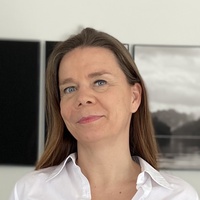
Patrick WillemsView profile
Professor
Patrick Willems is a full Professor at KU Leuven's Faculty of Engineering Sciences, Department of Civil Engineering. He serves as the head of the Hydraulics Subdivision within the Hydraulics and Geotechnics unit. Professor Willems holds multiple significant roles including chairman of the ADS Bureau, member of the Faculty Council of Engineering Sciences, and participant in the Leuven One Health Institute and KU Leuven Institute for Urban Studies (LUSI). His work addresses critical global water management challenges through advanced hydrological modeling and climate change adaptation strategies. Professor Willems' research spans several critical areas in water resources engineering. His primary expertise includes urban hydrology and river engineering, statistical hydrology with focus on flood prediction and risk analysis, integrated river basin management, precipitation analysis, and climate change impacts on hydrological extremes. He employs both traditional hydrological modeling approaches and innovative machine learning techniques to develop practical solutions for flood warning systems, urban water management, and climate adaptation planning. His research integrates statistical methods, numerical modeling, and data science to address complex water management problems across multiple geographical contexts. Professor Willems leads multiple major international research projects examining hydrological extremes in transboundary river basins, natural climate adaptation measures, hydrological modeling of peatland areas, and deep learning-based prediction of hydrological extremes. His work spans various geographical contexts including Belgium, Vietnam, Bolivia, Tanzania, and the Congo Basin, demonstrating both local relevance and global applicability of his research. Within KU Leuven, Professor Willems teaches diverse courses including Environmental Problems and Techniques, Statistics and Data Science, Stochastic Hydrology, Urban and River Hydrology and Hydraulics, River Modeling, and Probability and Statistics. He also leads the Hydraulic Engineering Project course and an Artificial Intelligence Project course, reflecting his commitment to integrating traditional engineering knowledge with modern computational approaches. As head of the Hydraulics Subdivision, he oversees research activities focused on developing advanced water engineering tools and methodologies that bridge theoretical advancements with practical applications for water management authorities.