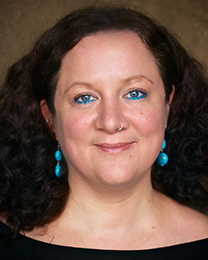
Dr. Frances Smith is an Associate Professor in Film Studies at the University of Sussex's School of Media, Arts and Humanities. She holds a PhD in Film and Television Studies from the University of Warwick (2013), an MA in Management from Durham University (2008), and a Master of Modern Languages in French/Italian from Manchester University (2007). Her research focuses on teen cinema, female authorship, Hollywood and European cinema, and gender studies, with current work on Céline Sciamma's Girlhood. She authored Rethinking the Hollywood Teen Movie (2017) and co-edited Refocus: The Films of John Hughes (2021). Teaching includes convening Analysing Film, American Teen Cinema, and Working with Film modules. She has taught Gender and Representation, British Cinema, and Study Skills. Her awards include Fellowship of the Higher Education Academy (2016). Active in PhD supervision focusing on teen cinema, female authorship, and gender in cinema. Publications span over 25 articles/chapters addressing topics like queer youth representation, transatlantic media comparisons, and directorial authorship in John Hughes and Amy Heckerling films. Research explores intersections of gender, space, and cultural identity in global popular cinema.
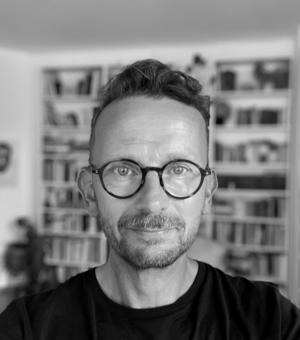
Professor Lizelle Bisschoff is a Professor of Film Studies at the University of Glasgow’s School of Culture & Creative Arts. She specializes in African cinema with particular focus on gender representation, digital technologies, and film festival curation. Her research bridges academic scholarship and practical initiatives, such as co-founding the Africa in Motion Film Festival (AiM). She holds a PhD from the University of Stirling and has held prestigious fellowships including the Leverhulme Trust (2010-2012) and Lord Kelvin Adam Smith (2012-2015). Education: PhD in African Cinema (University of Stirling, 2009) MSc in Cultural Studies (University of Edinburgh, 2005) Research Interests: Gender dynamics in African filmmaking Emerging digital film industries across sub-Saharan Africa Postcolonial cinema and modernist aesthetics Her work emphasizes decolonizing film studies through projects like AiM Festival and edited volumes such as Women in African Cinema . Recent research explores African science fiction and feminist archives. She has secured £115k in grants for film restoration and educational outreach programs. Awards: Leverhulme Trust Postdoctoral Fellowship AHRC Follow-on Funding for Impact (£90k) British Federation of Women Graduates Scholarship Teaching: Convenes MSc Film Curation program Teaches Introduction to African Cinemas and Race on Screen Key Projects: Lead curator for Africa’s Lost Classics restoration initiative Organized international symposia on African art and activism
Rosa Andujar is a Senior Lecturer in Liberal Arts at King's College London, where she is affiliated with both the Department of Liberal Arts and the Department of Classics within the Faculty of Arts & Humanities. She serves as Editor of the American Journal of Philology and holds positions on the editorial boards of Brazilian journals Nuntius Antiquus and PhaoS - Revista de Estudos Clássicos. Dr. Andujar was elected to the Program Committee of the Society for Classical Studies for a three-year term (2022-2025), serving as Vice President for Program and Chair from 2023-2025. Her research focuses on two complementary areas: Ancient Greek tragedy, particularly the tragic chorus and its performance capabilities Global receptions of Greek drama, with special emphasis on Latin America and the Caribbean Dr. Andujar's work examines how engagements with Graeco-Roman antiquity intersect with questions of gender, race, class, and national identity. She has particular expertise in Cuban adaptations of Greek tragedy and Latinx receptions of classical drama, exploring how these cultural encounters create new narratives that challenge traditional understandings of classical reception. Her research has been recognized with prestigious awards including the 2020 London Hellenic Prize for 'The Greek Trilogy of Luis Alfaro' and the 2022 AJP Best Article Prize. She has secured significant research funding from the Loeb Classical Library Foundation, British Academy, A. G. Leventis Foundation, Harvard Center for Hellenic Studies, Andrew W. Mellon Foundation, and Fundación BBVA. Dr. Andujar's current research projects include 'The Cambridge Companion to Classics and Race' (edited volume), 'La Puerta Electra/The Electra Door' (critical bilingual anthology of Cuban rewritings), and 'Tragedy and Revolución' (monograph on Greek drama in Caribbean cultural history), supported by recent fellowships from the Loeb Classical Library Foundation and British Academy. She is actively involved in academic service as Editor of the American Journal of Philology, co-editor of the 'Classics and the Postcolonial' book series for Routledge, and Advisory Board member of 'Hesperides: Classics in the Luso-Hispanic World.' Her external examining work for the University of Birmingham (2018-2023) demonstrates her commitment to academic standards across institutions.
Professor Dan Hicks (FSA, MCIfA) is a leading scholar in contemporary archaeology at the University of Oxford's School of Archaeology, Curator of World Archaeology at the Pitt Rivers Museum, and Fellow of St Cross College. His career spans roles at the University of Bristol and visiting positions at Boston University, Musée du quai Branly, and Freie Universität Berlin. Research Interests: Colonialism/decolonization, cultural restitution, material culture, museum studies, conflict archaeology, memory politics Awards: Rivers Memorial Medal (2017), Best Book in Public History Prize (2021) Supervision: Accepts DPhil students in colonialism, heritage, museums, and contemporary archaeology Hicks' work critically examines colonial legacies through archaeological lenses, focusing on decolonizing museums and heritage practices. His 2020 book The Brutish Museums (Pluto Press) has been recognized as a New York Times Best Art Book and won multiple accolades. Scientific Awards: Rivers Memorial Medal (Royal Anthropological Institute, 2017) Best Book in Public History Prize (National Council on Public History, 2021) Elliott P Skinner Book Award (Association for Africanist Anthropology, 2021 - joint winner) Bread and Roses Book Prize shortlist (2021)
Joe Feagin is the Ella C. McFadden Professor and Distinguished Professor of Sociology at Texas A&M University, College of Arts and Sciences. He holds a Ph.D. from Harvard University (1966) and has held prominent roles such as President of the American Sociological Association (1999-2000). His research focuses on systemic racism, racial and ethnic relations, and anti-racist education. Feagin has authored over 30 books and numerous articles, including seminal works like White Racism: The Basics and The White Racial Frame . He has received prestigious awards such as the W.E.B. Du Bois Career of Distinguished Scholarship Award (2013) and the Arthur Fletcher Lifetime Achievement Award (2013). Feagin's academic journey includes positions at the University of Texas, University of Florida, and Texas A&M. He served as Scholar-in-Residence at the U.S. Commission on Civil Rights (1974-1975). His courses at Texas A&M include the Sociology of African Americans, Classical Social Theory, and Racism and Anti-Racism. His research spans racial discrimination, gender relations, urban sociology, and systemic racism’s impacts. He has pioneered theories like systemic racism and the white racial frame. Feagin’s work emphasizes societal transformation through critical sociology and anti-racist practices. Key awards and recognitions include the Cox-Johnson-Frazier Scholarship Award (2018), Soka Gakkai International Social Justice Award (2012), and multiple fellowships. His grants and administrative roles include leadership in diversity initiatives at Texas A&M and national sociological organizations. Feagin’s legacy includes fostering anti-racist education, leading interdisciplinary research teams, and advocating for social justice. His work continues to influence policy, education, and public discourse on race in the U.S. and globally.
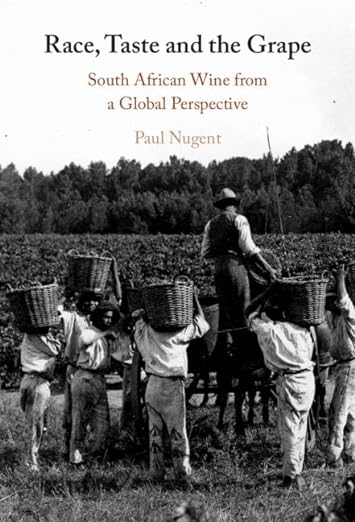
Professor Paul Nugent is a Professor of Comparative African History at the School of History, Classics and Archaeology at the University of Edinburgh, where he also serves as Research Director in History. His work bridges historical scholarship with contemporary policy concerns, particularly regarding African borderlands, wine history, and governance dynamics across the continent. Professor Nugent holds a BA Hons from the University of Cape Town, and MA and PhD from the School of Oriental and African Studies (SOAS) in London. His academic journey began with a temporary lectureship in Comparative Politics at Keele University before joining Edinburgh, where he was promoted to Reader in 2003 and Professor in 2005. Professor Nugent's research primarily focuses on the comparative history of African borderlands, with particular attention to West Africa. His work examines how border regions have shaped state formation, governance, and everyday life, challenging conventional notions of margins and centers. He has also conducted extensive research on the history of the South African wine industry, exploring connections between race, consumption, and economic development. His scholarship spans colonial and postcolonial history, with special attention to Ghana, where he has studied electoral politics and social contracts. Professor Nugent approaches these topics through interdisciplinary frameworks that connect historical analysis with contemporary policy challenges. His scholarly output demonstrates remarkable consistency in exploring the intersections between space, power, and identity in African contexts. Over the past decade, his work has increasingly focused on the governance implications of infrastructure development and border management across the continent, while maintaining his longstanding interest in Ghanaian politics and the cultural history of wine production. ERC Advanced Grant (€2.5 million over 5 years) for "African Governance and Space: Transport Corridors, Border Towns and Port Cities in Transition" (AFRIGOS) Leverhulme Research Fellowship for research on South African wine history British Academy ODA-Challenge grant (2024-2025) for "Living Heritage, Climate Change and Sustainability in South African Agriculture" Fellow of the Stellenbosch Institute of Advanced Study (STIAS) Member of the Institute for Advanced Study (IAS) in Princeton FRHistS (Fellow of the Royal Historical Society) Professor Nugent has supervised 34 successful PhD projects and currently mentors doctoral students including Francesco Longo and Kpanie Addy. His supervisory interests span wine and cultural heritage, African borderlands, regional integration, consumption studies (particularly alcohol), West African politics, and comparative imperial and colonial history. He has received significant research funding including a major ERC Advanced Grant and multiple British Academy grants, demonstrating the impact and relevance of his work to contemporary policy debates. His engagement extends beyond academia through advisory roles with the African Union Border Programme, ECOWAS, and the UNDP African Borderlands Centre. Professor Nugent founded and chairs the African Borderlands Research Network (ABORNE), which has evolved into a major international collaborative platform. He has also led significant research projects including the ERC-funded AFRIGOS project, which examined governance effects of large-scale infrastructure investments across Africa, and currently serves as PI for a British Academy project addressing climate action in the South African wine industry.
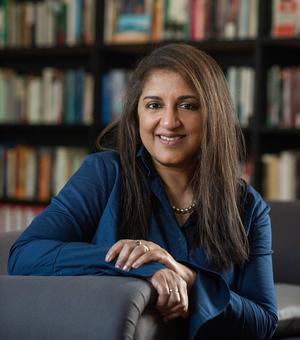
Professor Ankhi Mukherjee holds the position of Professor of English and World Literatures at the University of Oxford and serves as a Tutorial Fellow at Wadham College. Her academic career spans roles such as Chair of Moderations/Prelims (2010–2012) and co-convener of Victorian and World Literature MSt programs (2019–2021). She is also a co-host of the long-running postcolonial studies seminar at Wadham College with Elleke Boehmer. Her research focuses on postcolonial literature, world literatures, and the intersections of psychoanalysis with race, migrancy, and urban poverty. Key works include Aesthetic Hysteria (2007), What Is a Classic? (2014)—which won the British Academy Rose Mary Crawshay Prize—and Unseen City (2021), an interdisciplinary study of global urban poverty and psychoanalysis. She is co-editing Decolonizing the English Literary Curriculum (2022) and under contract for an Oxford University Press Very Short Introduction to Postcolonial Literature . Professor Mukherjee teaches undergraduate and graduate courses on Victorian literature, postcolonial theory, and psychoanalysis. She has supervised fifteen doctoral students, guiding research on topics such as partition narratives, disability in postcolonial literature, and the relationship between literature and neuroscience. Her editorial work includes roles at English Literary History , Contemporary Literature , and The Cambridge Journal of Postcolonial Literary Inquiry . Her research has been supported by the British Academy, AHRC, Wellcome Trust, and John Fell Fund. She has held visiting fellowships at The Australian National University (2014) and Johns Hopkins University (2019). She contributes to the EXPeditions educational platform, discussing global urban poverty and psychoanalysis through videos tied to her work on Unseen City .
Dr. Peter McMurray is an Associate Professor of Music and Director of Studies at Queens' College, University of Cambridge. His research focuses on the intersection of Islam and sound in the Ottoman Empire and Turkey, including recitation, liturgy, and architecture. He is completing a book, *Pathways to God: The Islamic Acoustics of Turkish Berlin*, and co-editing *Acoustics of Empire*. His work also spans global music theory, audiovisual media history (1890–1945), and race and listening studies. Education: PhD in Music (Harvard), MFA in Music Composition (Brandeis), BA in Classics (Greek) and Slavic Literature (Harvard). Research interests include oral poetry, media art, and experimental improvisation. He previously held postdoctoral fellowships at MIT (Mellon) and Harvard’s Society of Fellows. He leads the research project *Ottoman Auralities and the Eastern Mediterranean: Sound, Media and Power, 1789–1922* (2022–2027). Awards: Mellon Fellowship, Harvard Society of Fellows Fellowship. Advising PhD students on topics related to Ottoman sound studies. Collaborates with Harvard’s metaLAB and Sensate Journal. Performance background in jazz and experimental music.
Dr Niamh Bhalla is an Associate Professor of Art History, Assistant Dean, and Director for Belonging at Northeastern University London since 2018. She previously held roles at The Courtauld Institute of Art and the Victoria and Albert Museum. Her research bridges Early Christian/Byzantine art and architecture with their modern receptions, particularly in 19th-century British Isles architecture. She authored Experiencing the Last Judgement (2021) and Newman University Church, Dublin (2024), with a forthcoming Handbook to the Modern Reception of Byzantium . Education: PhD (History of Byzantine Art, The Courtauld Institute, 2014); MA (History of Classical/Byzantine Art, The Courtauld, 2010); BA (History of Art/Theology, Trinity College Dublin, 2009). Research Interests: Lived experience of Early Christian/Byzantine art, theological symbolism in architecture, and modern reinterpretations of Byzantine heritage. Her work integrates material culture, theology, and architectural historiography. Publications Trends: Focused on Byzantine and Early Christian art, architectural revivalism, and material analysis. Recent work emphasizes interdisciplinary approaches, blending art history with theology, archaeology, and cultural studies. Advising & Grants: Supervises PhD candidate Julie Teal on East of England doom paintings. No grants explicitly listed, but her strategic leadership in DEI initiatives suggests institutional grant engagement. Labs/Teams: No dedicated lab mentioned, but collaborates with institutions like the V&A and Courtauld.
Stephanie Galasso is a Research Fellow at the University of Cambridge, affiliated with the Faculty of Modern and Medieval Languages and Linguistics and the German Department. She previously served as a Visiting Assistant Professor at Brown University and completed her PhD in German Studies at Brown University in 2018, following an MA and BA in English and German from the University of California, Davis (2012). Her research integrates German literature and culture from the 18th to 19th centuries with contemporary frameworks like epistemic injustice, critical race theory, and feminist thought. PhD in German Studies from Brown University (2018) MA in German from Brown University BA in English and German from University of California, Davis (2012) Her work interrogates aesthetic philosophy, genre theory, and women’s writing, with a focus on German Romanticism and post-war cultural memory. Stephanie co-edited Epistemic Injustice and Creative Agency (Routledge 2023) and leads a monograph on racializing structures in German Romantic genre theory. She teaches German language, translation, and literature at all levels and supervises advanced theses, including an MPhil on German colonialism and linguistics through the Cambridge Centre for Gender Studies. Her publications span German Romanticism, post-war fiction, and contemporary responses to epistemic injustice, often analyzing intersections of race, gender, and cultural production. She collaborates with institutions like LMU Munich and the University of Bayreuth on projects such as 'Fictions of the Rechtsstaat' and 'Towards a Politics of Fiction', and contributes to initiatives like Towards an Equitable German Studies . Stephanie’s accolades include a Fulbright Research Fellowship for her work at the University of Konstanz (2018–2019).
Dr. Hannah Crawforth is a Reader in Early Modern Literature at King's College London, based in the Department of English within the Faculty of Arts & Humanities. She has been affiliated with King's since 2009, following her PhD from Princeton University. Her research focuses on Early Modern English Literature, Poetics, Greek tragedy, and the works of John Milton, with a particular interest in transhistorical dialogues between early modern texts and contemporary African-American poetry. Her current projects include exploring the political dimensions of Greek tragedy in revolutionary contexts and analyzing African-American poets' engagements with early modern works. She has co-authored influential publications such as Shakespeare's London and edited volumes like The Sonnets: The State of Play . Crawforth actively collaborates with institutions like Shakespeare's Globe and contributes to public engagement through radio appearances and festival committees. Her teaching spans Early Modern poetry, classical reception, and race/gender studies, including supervising MA and PhD students. She co-convenes an MA in Early Modern Literature with the British Library. Research grants include the Leverhulme-funded project A European English: Milton and the 'questione della lingua' . Education: PhD in English Literature from Princeton University (2009) Key Collaborations: With Elizabeth Scott-Baumann on Shakespearean poetry projects and the Globe's Shakespeare and Race festival. Her work bridges historical and modern literary analysis, emphasizing interdisciplinary approaches to Early Modern texts and their contemporary resonances. Recent publications include articles on Spenser and DuBois, C.H. Sisson's anachronistic poetics, and Shakespearean sonnet criticism.
Timothy James Lockley is Professor of American History at the University of Warwick. He has held academic positions at the university since 1996, progressing from Lecturer to Professor in 2015. His research spans the social history of the colonial and antebellum American South, the Caribbean, slavery, race, class, poverty, and medical history. He is also interested in the cultural history of cricket and classical music broadcasting. M.A., University of Edinburgh, 1993 Ph.D., University of Cambridge, 1996 Lockley's research explores the complex relationships between race and class, particularly among non-slaveholding whites and enslaved African Americans. His work on medical history examines racial immunity theories and mortality patterns in urban centers like Savannah. He has also published on the history of classical music radio and the social role of cricket in the American South. His recent articles focus on military slavery in the West India Regiments, slave conspiracies, family life under slavery, urban poverty, and the cultural impact of radio. These publications reflect a consistent engagement with themes of race, resistance, gender, and health in the Atlantic world. Scientific awards and grants include: AHRC Grant (2015–2018): "Africa's Sons Under Arms" AHRB Grant (2000–2002): "Southern Charities Project" He has supervised numerous PhD and MA students on topics including enslaved masculinity, slaveholding ideology, antislavery networks, and folk religion in Jamaica. He has served as associate editor of Slavery & Abolition and contributed to major reference works. He is actively involved in public history, appearing on BBC’s "In Our Time" to discuss topics such as the Pilgrim Fathers, Pocahontas, and the Haitian Revolution. Lockley leads research groups and collaborates with scholars across the UK and US, focusing on Atlantic history, slavery, and cultural memory. His future research includes a study of Savannah in 1820 and the history of classical music radio during World War II.
Professor Nandini Das holds dual roles as Professor of Early Modern Literature and Culture at the University of Oxford and Tutorial Fellow at Exeter College. Her work bridges literary analysis with interdisciplinary research on cross-cultural encounters, identity formation, and digital humanities. She leads major research initiatives including the ERC-funded TIDE and TRACTION projects, which explore mobility, race, and English global engagement. Her award-winning book Courting India (2023) redefines early modern imperial history. Her research spans chivalric romance, travel writing, and the intersection of European and South Asian cultural exchanges. She pioneered digital humanities applications in literary studies, including network analysis of early modern texts and teacher training platforms. Funded by the AHRC, Leverhulme Trust, and European Research Council, her work has produced edited volumes like The Cambridge History of Travel Writing and the forthcoming Oxford Handbook of Travel, Race and Identity . Key Projects: ERC-TIDE (Transculturality and Identity), ERC-TRACTION (teacher training), Oxford Hakluyt Edition Engagement: BBC New Generation Thinker, TV/radio presenter, literary festivals Awards include the 2023 British Academy Prize and 2022 Vice Chancellor’s Innovation Award. She mentors DPhil students using digital methodologies and collaborates internationally on cultural heritage projects. Current work focuses on a revisionist history of Tudor/Stuart England through migration narratives titled This Little World .
Prof Mahon O'Brien is a Professor of Philosophy at the University of Sussex's School of Media, Arts and Humanities. He holds a BA and MA in Philosophy from University College Cork and a PhD from Boston University. His academic career includes roles as Lecturer (2013–2017), Senior Lecturer (2017–2021), and Professor (2021–present) at Sussex, alongside postdoctoral research at University College Dublin. O'Brien's research focuses on 19th- and 20th-century European philosophy, particularly Martin Heidegger's work, with four books on the topic pending or published, including Heidegger on Ethics (2025). He also investigates ancient philosophy, feminist theory (collaborating with Luce Irigaray), and ethics of horseracing. Since 2018, he chairs the British Horseracing Authority's Ethics Committee, addressing issues like the air-cushioned whip's ethics, publishing impactful analyses in International Journal of Sport Policy and Politics . His teaching spans ethics, phenomenology, and continental aesthetics across multiple institutions. Education: BA Philosophy & English Literature, University College Cork MA Philosophy, University College Cork PhD Philosophy, Boston University Research Interests: Phenomenology, Heidegger's ethics, ancient philosophy, feminist theory, and applied ethics in horseracing. He critiques Heidegger's political legacy while engaging interdisciplinary debates on embodiment, gender, and animal welfare. Impact & Grants: Shaped horseracing policies through evidence-based ethics reports. His 2021 article on whip usage influenced BHA's 2022 consultation report and led to podcast discussions. He edits journals, including a 2014 special issue of International Journal of Philosophical Studies . Teaching: Over 20 modules taught worldwide, including ethics, continental philosophy, and interdisciplinary seminars at Sussex, UCD, and Boston University.
Hagar Kotef is a Professor of Political Theory in the Department of Politics and International Studies at SOAS University of London. Her work critically examines the intersections of violence, belonging, and territorial attachments in settler colonial contexts, with particular focus on Israel/Palestine. She currently leads an ESRC-funded project on torture and bureaucracy in Israel/Palestine through collaboration with the Public Committee against Torture in Israel. Professor Kotef's research explores how political belonging and territorial attachments are constructed in settler colonies, challenging conventional understandings by demonstrating how people develop attachment to space not despite violence but through violence. Her work spans early modern political thought, history of political thought, empire and colonialism, Palestine/Israel studies, postcolonial theory, and poststructuralism (particularly Foucault and Derrida). Her scholarly contributions have been recognized with several prestigious awards: C.B Macpherson Book Award Yale Ferguson Award Spitz Prize in Democratic Theory Honorable Mention, MESA Fatema Mernissi Book Award Honorable Mention, Sussex International Theory Prize Honorable Mention, IPS-ISA Book Award Professor Kotef actively supervises PhD students working on diverse projects related to political theory and postcolonial studies. Her current supervisees include Taylor Kenzie Borowetz, Mesrob Kassemdjian, Anna E. Kensicki, and Barbara Schenkel. The ESRC-funded research project on torture bureaucracy represents significant grant support for her ongoing investigation into state violence mechanisms. Her current project, 'Civic Infrastructures of Torture,' examines the array of state apparatuses and institutions implicated in sanctioning torture in Israel, analyzing torture as a political technology whose effects extend far beyond the torture chamber itself into broader social and political relations.