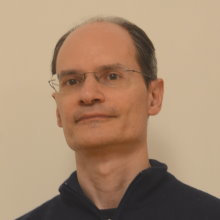
Lucia Avallone is an Associate Professor at the University of Bergamo, teaching Arabic language and literature. She holds a PhD in 'Near Eastern and Maghreb Studies. Cultural Specificities and Intercultural Relations' from the University of Naples 'L'Orientale' (2011) and graduated from the University of Turin (1989). National Scientific Qualification for Full Professor in Cultures of the Ancient Near East, Middle East, and Africa (2024-2035) Member of AIMA (International Association for the Study of Middle and Mixed Arabic) Advisor for Master's Degree in Modern Languages for International Communication and Cooperation (LM-38) Member of PhD programs in Philological and Linguistic Studies (Bergamo) and Linguistic Sciences (Bergamo-Pavia) Her research focuses on modern and contemporary Arabic language and literature , especially linguistic variation , code switching between standard and vernacular Arabic , and Arabic-European language contact . She analyzes political discourse and develops methodologies for Arabic language teaching, with particular attention to dialect-standard dynamics in literary and pedagogical contexts. Recent publications examine: Linguistic creativity in contemporary Egyptian fiction Sociolinguistic aspects of modern Arabic narratives Translation challenges between Arabic dialects and Standard Arabic Historical connections between Arabic and Mediterranean cultures She supervises master's theses and participates in doctoral committees, emphasizing: Intercultural communication Postcolonial Arabic literature Language pedagogy innovations
Lorenzo Geri is an Associate Professor in the Department of Modern Literature and Culture at Sapienza University of Rome's Faculty of Letters and Philosophy. His academic work focuses on Italian literature from the Middle Ages through the Renaissance, with particular expertise in Petrarchan studies, humanism, and Baroque literature. He teaches multiple courses including Italian Literature I, Texts and Questions of Italian Literature III, Italian Renaissance, and Italian Culture and Literature across various degree programs. Professor Geri's research spans eight major areas: meta-literary paths in Petrarch's work; Petrarch's relationship with religious culture; Petrarch's courtly connections; Italian lyric poetry from its origins to the 16th century; Baroque literary genres; Lucian's influence in the 15th century; connections between Italian and Northern European humanism; and Guicciardini's political experience. His work demonstrates deep engagement with textual analysis, historical context, and interdisciplinary approaches to literary studies. His recent publications show a strong focus on Petrarch's epistolary works, Erasmian studies, and Italian lyric poetry. The trend in his scholarship reveals increasing attention to the intersection of religious culture with literary production, particularly examining how theological concepts shape poetic expression across different historical periods. His editorial work on collections like 'Paths in Free Will' demonstrates his ability to synthesize complex interdisciplinary topics. Professor Geri has co-edited significant collections including 'Italian Lyric Poetry: A Fundamental Lexicon (13th-14th centuries)', 'Paths in Free Will: Theology, Philosophy and Literature from the Late Middle Ages to the Reformation', and 'Lirica e sacro tra Medioevo e Rinascimento'. His research has been supported by projects such as 'The political poetry in Curia from Avignon to Rome (1334-1513)' and studies on the manuscript circulation of Petrarch's anticurial texts. His office hours are held on Thursdays from 3-4pm, and he conducts exams in Room 1 of the Department of Modern Literature and Cultures on the fourth floor of the Faculty of Letters and Philosophy building.
Ida Zilio-Grandi is an Associate Professor in the Department of Asian and North African Studies at Ca' Foscari University of Venice, where she specializes in Arabic Language and Literature (SSD L/OR-12). She also holds teaching responsibilities in Islamic Thought and Theology (SSD L/OR-10) and has been actively involved in multiple interdisciplinary programs, including Master’s degrees in Interfaith Dialogue, Islamic Philosophy, and Mediterranean Studies. From 2019 to 2023, she served as Director of the Italian Cultural Institute in Abu Dhabi under the Ministry of Foreign Affairs, reflecting her deep engagement with cultural diplomacy. Education Graduated in Oriental Languages and Literatures (Arabic) from Ca' Foscari University of Venice. PhD in “Studies on the Middle East and the Maghreb from the founding of Islam to the Present day” at the University of Naples “L’Orientale”. Research Interests Her scholarly work centers on Quranic studies, Islamic ethics, and Arabic literature. She investigates religious figures in the Quran (e.g., Mary, Cain, Pharaoh, Jonah), Islamic moral concepts such as gratitude (šukr), patience (ṣabr), tolerance, and mercy, and the ethical dimensions of employment, speech, and hospitality. Her research draws on classical exegesis, adab literature, and contemporary Islamic thought, bridging historical analysis with modern applications. She also explores interfaith dialogue, particularly between Islam, Christianity, and Judaism, and cultural relations between the Islamic world and the West. Publication Trends Her recent publications (2020–2025) reflect a sustained focus on Islamic virtues, ethics, and Quranic interpretation. These include monographs on the moral life of Muslims, studies on Sufism in the UAE, Abraham’s legacy, and environmental ethics in Islam. Her work combines rigorous philological analysis with philosophical insight, often published in high-impact journals and academic volumes. Scientific Service and Recognition Member of the “Committee for Islam in Italy” at the Ministry of Interior (since 2015). Member of the Scientific Committee of the “Dialogue méditerranéen sur la modernité et le religieux” at Collège des Bernardins, Paris. Sits on the editorial boards of Annali di Ca’ Foscari , Islamo-Christiana , and L’opera Comune . Invited Researcher at the Pontificio Istituto di Studi Arabi e d’Islamistica (PISAI), Rome (since 2017). Advising, Grants, and Leadership She has coordinated several Master’s programs at Ca' Foscari, including the LM “Languages, Economies and Societies of Asia and Mediterranean Africa (LEISAAM)” and the international LM “MIM – Crossing the Mediterranean.” She is the Erasmus+ Coordinator for partnerships with the University of Jordan and Mohammed V University in Rabat. She led the research project The Languages of the Absolute (2011–2015), funded by Ca' Foscari University. Though no formal students are listed, her mentorship is evident through her academic leadership and editorial roles. Labs and Research Groups She is affiliated with several research centers, including the Ca' Foscari Center for Studies on Human Rights (CESTUDIR), the Center for Contemporary Middle East Studies (CEM), and the Religion, Law and Economy in the Mediterranean Area Center (REDESM). She is also a member of the Arab-Christian Research Group (GRAC) and the Lay Association for Biblical Culture “Biblia.”
Enrico Maria Ariemma is an Associate Professor at the Department of Humanities (DIPSUM) of the University of Salerno. He specializes in Latin literature with particular focus on Latin epic poetry , Flavian literature , and classical reception studies , working extensively on authors like Silius Italicus, Seneca, and Catullus. His research often explores military narratives , intertextuality , and ethical concepts in antiquity . His academic work features in publications such as Brill's Companion to Silius Italicus , and Lexis , with recent contributions on topics like "Tra vino e fuoco" (2023) analyzing mythological topos in Silius' Punica , and "Contare i baci" (2022) examining Catullus' intersection with mathematical thinking. He has also contributed to conference proceedings on epic-historical synthesis and war representation in Senecan tragedy . Ariemma participates in international academic networks, including co-organizing the 2019 "Ritorno al futuro" conference on Silius Italicus. He maintains an active research agenda with publications in Humanitas , Thaumazein , and Pan , while his teaching focuses on Latin language and literature and Latin didactics . His office is located at the University of Salerno’s Fisciano Campus, Building B, Room 027.
Michaela Valente is an Associate Professor in Early Modern History at the Department of Political Science, Sapienza University of Rome , where she has taught since 2021. Previously, she was Associate Professor at the University of Molise (2005-2021) after postdoctoral work at Salerno. Her research focuses on witchcraft, inquisition practices, religious migrations, and historiographical debates in Early Modern Europe. Her scholarship explores the demonological discourse through works like Charles V (2013) and co-edited volumes on the Roman Inquisition. She has contributed to international research projects including COST Action PIMo (2019-2023) on Mediterranean displacements and PRIN initiatives on Renaissance philosophy. Recent publications analyze transnational religious refugees ( Religious Refugees in the Early Modern World , 2023), gender in exile (2024), and witchcraft's intellectual legacy . Her teaching includes Modern History and Migration History courses, with exam texts emphasizing primary sources and critical historiography. Scientific Awards : Anna Maria Battista Fellowship Fondazione Luigi Firpo Fellow (2000) University of Rome Research Fellow (2001-2003)
Bryan DE NOTARIIS is a Research Fellow in the Department of Asian and North African Studies at Ca' Foscari University of Venice. His research focuses on ancient Indian and Buddhist literature, Gandhāran culture, and the ritual use of wine in South Asian religious traditions. He is actively involved in interdisciplinary projects bridging philology, history, and religious studies. His research interests include: Philology of Pāli and Gandhāri Buddhist texts Hellenistic-Indian cultural interactions The role of wine in ancient Gandhāran rituals Comparative studies between Buddhist and Hellenistic philosophical traditions Cross-cultural transmission of religious ideas The Milindapañha and its textual variants across languages The most recent publications reflect a strong trend in comparative and philological scholarship, particularly in the areas of Buddhist textual criticism, ritual symbolism, and ancient cross-cultural exchange. His work often combines close reading of primary sources with historical and anthropological analysis, especially in the context of the Gandhāran region. He frequently collaborates with scholars like Claudia Antonetti and Marco Enrico on wine in ancient South Asia. Scientific contributions include: Co-editing and contributing to Wine Cultures. Gandhāra and Beyond (2024) Curating the Wine in Gandhara Bibliography (2023) Authoring multiple peer-reviewed articles in journals such as Journal Asiatique and Annali di Ca’ Foscari Providing scholarly prefaces to major works on Buddhism Bryan DE NOTARIIS is involved in the MALIWI research project, funded by Ca' Foscari University of Venice, which investigates the social, ritual, and ceremonial use of wine in Gandhāra from the Achaemenid to the Kushan periods. He collaborates with Claudia Antonetti and Marco Enrico. While no formal students are listed, his editorial and research leadership suggest mentorship roles. No grants beyond MALIWI are detailed, but his project indicates institutional funding support. He is associated with the research group focused on: Languages and literatures of the Indian subcontinent History of ancient civilizations Sanskrit studies The MALIWI project website is publicly accessible at https://mizar.unive.it/venicepigraphy/maliwi/public/ .
Laura Refe is a researcher and faculty member in the Department of Italian Language, Literature, and Arts in the World (LILAIM) at the University for Foreigners of Perugia, where she has been conducting research and teaching in Philology of Italian Literature since December 2021. She holds a fixed-term research position under Italian national law and is actively involved in both research projects and academic instruction, including in Digital Humanities and Italian language teaching programs. Her academic background is distinguished by numerous prestigious fellowships and research appointments, including at Villa I Tatti (Harvard University), the Warburg Institute (University of London), Ca’ Foscari University of Venice, and the Herzog August Library in Wolfenbüttel. She earned her Abilitazione Scientifica Nazionale for Associate Professor in both Italian Philology and Italian Literature. Dr. Refe's research centers on Italian Renaissance literature, with a particular focus on Francesco Petrarca, his annotations of classical texts, and the transmission of Aristotelian philosophy in the vernacular. Her work spans textual criticism, manuscript studies, paratextual analysis, and intellectual history. She has led a national PRIN PNRR research project on 'Petrarch and the Reformation' and contributed to other major initiatives, including an ERC Starting Project on Aristotle in the Italian Vernacular. Her recent publications reveal a sustained and deep engagement with Petrarchan studies, particularly his marginalia on Cicero’s De natura deorum and the complex textual history of his Ad Posteritatem . She also investigates Renaissance translators, manuscript provenance, and the intellectual networks of humanists like Poliziano and Boccaccio. Among her notable honors are the 'Young Researchers 2006' Prize from the University of Messina and the 12th 'Marino Moretti' Prize for Philology (2015) for her critical edition of Petrarch’s Epistle to Posterity . She has advised and collaborated on research projects, though specific names of students are not listed in the provided text. She is actively involved in scholarly communities, with a strong publication record in peer-reviewed journals and edited volumes. Dr. Refe is a member of academic networks and contributes to editorial and research teams, including work on the Dizionario Biografico degli Italiani and collaborative volumes on Renaissance humanism. Her work bridges traditional philology with digital and interdisciplinary approaches.
Giosuè Carducci was a renowned Italian poet, literary critic, and Professor of Italian Literature at the University of Bologna. He was awarded the Nobel Prize for Literature and played a pivotal role in reviving the university's academic traditions during its 8th Centenary celebrations. His work blended classicism with Risorgimento ideals, emphasizing medieval Italian poetry and philological analysis. Affiliations: University of Bologna (Professor of Italian Literature), Scuola Normale Superiore di Pisa (Alumnus). Education: Studied at the Scuole Pie in Florence. Enrolled in the Faculty of Letters at the Scuola Normale Superiore di Pisa (1853). Graduated in Philology with a thesis on medieval poetry (1856). Research Interests: Carducci focused on medieval Italian literature, particularly troubadour poetry, and the cultural legacy of the Risorgimento. He advocated for classical literary values while critiquing contemporary political dynamics. His work Della poesia cavalleresca o trovatorica redefined scholarly understanding of medieval poetic traditions. Awards: Nobel Prize for Literature (year unspecified in text). Teaching and Career: Taught rhetoric in San Miniato al Tedesco before joining Bologna's faculty. His anticlerical stance and patriotic writings shaped his pedagogical and literary contributions. No specific grants or advising details are mentioned in the text. Labs/Teams: No dedicated research groups or labs explicitly referenced.
Antonio Rigopoulos is a Full Professor at the Department of Asian and North African Studies, Ca' Foscari University of Venice, where he has been a faculty member since 1999. He serves as Coordinator of the Editorial Committee of Edizioni Ca' Foscari - Venice University Press and is Scientific Director of the journal Annali di Ca' Foscari - Oriental Series . His research and teaching focus on Indian religions and philosophies, particularly devotional (bhakti) and ascetic (yoga) traditions in medieval and modern India, with a regional specialization in Maharashtra. His educational background includes a PhD in Religious Studies from the University of California, Santa Barbara (1994), an MA from the same institution (1989), and a Laurea in History from Ca' Foscari (1987). He is fluent in Sanskrit, Pali, English, French, Hindi, and Italian, and has conducted extensive fieldwork in India. Rigopoulos's research interests span Indology, Tibetology, Hindu philosophy, metaphysics, and Oriental philology. His scholarly work emphasizes the guru tradition, bhakti movements, and the cultural-religious dynamics of Maharashtra. He has contributed significantly to the study of Dattatreya, the Bhagavad Gita, and the concept of Maya in Hindu thought. His recent publications (2023–2024) reflect a sustained engagement with core Hindu texts and concepts, particularly focusing on Krishna’s theology, divine illusion, compassion, and exegetical methods. These works demonstrate a thematic continuity in interpreting classical Indian philosophy through contemporary academic lenses. Gerald J. Larson Dissertation Award (1995) Annual Departmental Research Funding (ADiR/FRA) since 2000 He has supervised doctoral seminars and contributed to PhD programs in Oriental Studies at Ca' Foscari. He has also participated in national and international research projects (PRIN), served on editorial boards of prestigious journals such as Asiatica Venetiana and Filologie medievali e moderne , and delivered lectures at institutions like Venice International University and the Pontifical University Antonianum. His academic service includes roles in curriculum development, doctoral faculty committees, and research governance within his department. Rigopoulos leads editorial and research initiatives centered on South Asian studies, particularly through the Venice-based academic networks and the Fondazione Giorgio Cini. He is actively involved in promoting Indological scholarship through publications, conferences, and interdisciplinary collaborations.
Cecilia Bello is an Associate Professor at Sapienza University of Rome's Department of European, American and Intercultural Studies (SEAI). She specializes in contemporary Italian literature with particular emphasis on 20th-century and early 21st-century poetry, avant-garde movements, and verbovisual/performance poetry. Active in archival research, she directs the Twentieth-Century Archive and founded the Contemporary Poetry Laboratory "Con gli occhi del linguaggio." Current courses: Contemporary Italian Literature (first semester 2024-2025) and Contemporary Italian Literature II (second semester 2024-2025) Office hours: Wednesdays 11:00-13:00 at Room 413, Department IV floor Research interests include: 20th-century Italian poetry analysis Avant-garde and neo-avant-garde studies Gender-specific writing approaches Word/music/image interactions Philological editions of rare texts Recent publications examine: Eliot's influence on Italian poets Materiality of poetic texts Archival discoveries in the Twentieth-Century Archive Structuralist approaches to contemporary verse Scientific awards: National Scientific Qualification (ASN 2018-2020) for First Fascia Professor (Full Professor level) Research projects include: "Anceschi and the Novissimi" (2023-2024) - intellectual correspondence and editorial projects "TeCa: Texts and Correspondence from the Twentieth Century" (2022-2024) International collaboration "Avant-Garde and Gender Problems" (Tokyo University of Foreign Studies)
Francesco Lupi is a Researcher in Greek and Latin Philology at the Department of Humanities of Ca' Foscari University of Venice since September 2024. Previously, he held research positions at the University of KwaZulu-Natal (2013-2015) and University of Verona (2016-2023). Education : PhD in Literature and Philology (2010) from University of Verona, under Professor Guido Avezzù His research focuses on classical Attic theatre and the history of classical philology , particularly fragmentary theatrical production. He analyzes these through philological-exegetical methods and the history of scholarship from late fifteenth-century Italy to Erasmus of Rotterdam, covering Dutch philological traditions (16th-18th centuries). Key publication trends include: Monograph: Sophocles deperditus (2020) on fragment interpretation Edited volume: The Continuity of Classical Literature Through Fragmentary Traditions (2021) Scientific Awards : Scaliger Fellowship (2013) CooperInt Grant (2019) Tytus Margo Fellow (2017) He organizes international conferences like In the Margins of Theatre (Verona, 2023) and teaches courses in classical culture, Greek language, and literature. Office hours: Tuesdays 4:00-6:00 PM at Malcanton Marcorà, Venice.
Mariagrazia Russo is a full professor of Portuguese and Brazilian Language and Translation at the University of International Studies of Rome (UNINT), where she also serves as Rector and Scientific Director of the University Language Center. Previously, she held roles at the University of Tuscia, including Associate Professor and coordinator of international doctoral programs. Her research focuses on medieval Portuguese philology, intercultural relations, Lusophone literary and historical studies, and missionary linguistics. She has extensively studied documents from Vatican archives, Portuguese diplomatic missions, and Italian-Portuguese cultural exchanges across centuries. Educated at Sapienza University of Rome and the Sorbonne, Russo leads research groups in Italy and Portugal, including roles in the CLEPUL and CHAM centers. She has coordinated over 20 international research projects, published critically edited works on figures like Vasco da Gama and António Vieira, and organized conferences on topics ranging from colonial diplomacy to gender studies in Lusophone literature. A key member of organizations like the Italian Association of Portuguese and Brazilian Studies (AISPEB), she chairs the Vasco da Gama Institute (Camões Institute) and directs editorial series in Lusophone studies. Russo’s work bridges philology, history, and cultural studies, emphasizing linguistic contact, toponymic analysis, and the role of language in identity formation. Her projects often involve archival discoveries, such as unpublished documents on the expulsion of Jesuits from Portugal and the diplomatic missions of Alexandre Metelo to China. She has advised doctoral theses on topics like Portuguese naming conventions and 16th-century song culture.
Laura Massetti is a Researcher in Greek Literature at the University of Naples "L'Orientale", specializing in Greek literature, historical linguistics, and comparative mythology. She has held prestigious fellowships at Harvard University, the University of Copenhagen, and the University of Oxford, establishing herself as a significant scholar in classical studies and comparative linguistics. Dr. Massetti earned her PhD in Historical and Comparative Linguistics from the University of Cologne after studying Classics and Music in Milan. Her academic journey includes positions at the Center for Hellenic Studies at Harvard University (2017), a Marie-Curie Individual Fellowship at the University of Copenhagen (2018-2020), a Visiting Fellowship in Harvard's Department of Classics (Spring 2020), and a Carlsberg Visiting Fellowship at the University of Oxford (2020-2023). Her research focuses on Greek literature, historical linguistics, Indo-Iranian languages, comparative religion, mythology, and poetics. Dr. Massetti's current project, "The Lords of the Rings: A Comparative Lens on Ring-Compositions of Greek Lyric Poetry" (MSCA_0000083-project LORACOLA), funded through the EU NEXT Generation programme, examines ring-compositions in Greek lyric poetry of the Archaic and Classical periods. Analysis of her recent publications reveals a strong focus on comparative studies between Greek literature and other cultural traditions, particularly Ossetic mythology. Her work often explores connections between musical invention, cultural memory, and poetic structures across different civilizations, with special attention to Pindaric odes and Homeric hymns. Dr. Massetti has received significant recognition through prestigious fellowships including: Center for Hellenic Studies Fellowship at Harvard University Marie-Curie Individual Fellowship Harvard Visiting Fellowship Carlsberg Visiting Fellowship at the University of Oxford She currently leads the EU NEXT Generation-funded project "The Lords of the Rings" and serves on the editorial committee of AION Annals of the Oriental University Institute of Naples. Dr. Massetti also teaches courses on Digital Resources for the Study of the Greek Language and advises students on their study plans during her office hours. Dr. Massetti collaborates with international scholars across disciplines, particularly in the fields of comparative mythology and historical linguistics. Her work bridges classical studies with Indo-European comparative approaches, creating innovative connections between Greek literature and other ancient cultural traditions.
Filippomaria Pontani is a Full Professor of Greek and Latin Philology at the Department of Humanities, Ca' Foscari University of Venice, where she serves on the Board of Directors. Her academic work spans classical philology, Byzantine studies, and the reception of ancient texts in later periods, with particular expertise in Homeric scholarship and textual criticism. Her research interests focus on Greek literature from antiquity to the modern period, Byzantine scholarship, and the transmission of classical texts. Pontani has made significant contributions to the understanding of Homeric scholia, Byzantine philological practices, and the Hellenistic poetic tradition. Her work often bridges philological precision with broader cultural analysis, examining how ancient texts were received and transformed across historical periods. Pontani's recent publications demonstrate continued scholarly productivity across multiple formats including journal articles, book translations, critical editions, and edited volumes. Her work spans diverse topics from ancient epigrams to modern Greek poetry, with particular attention to the intersections between classical texts and later cultural contexts. She has been especially active in publishing on Byzantine scholarship, Homeric reception, and modern Greek literary figures like Cavafy. As an educator, Pontani teaches courses on classical culture, classical philology, and the history of the classical tradition at both undergraduate and graduate levels. Her teaching spans multiple degree programs including Conservation and Management of Cultural Heritage, Letters, and Ancient Sciences: Archaeology, Literature and History.
Daniele Fusi is a Lecturer at the Department of Humanities, Ca' Foscari University of Venice, with a focus on Digital Humanities and Computational Philology. He teaches courses on XML databases and digital/public humanities, bridging classical studies with modern technology. University: Ca' Foscari University of Venice Department: Department of Humanities His research spans digital edition frameworks, metrical analysis, and XML markup for classical texts. Recent works explore AI applications in textual dynamics and forensic linguistic tools for legal corpora, demonstrating interdisciplinary approaches between humanities and computer science. Notable projects include: EpiSearch for ancient inscriptions Chiron framework for metrical analysis AttiChiari digital corpus He actively publishes in journals like Journal of Data Mining and Digital Humanities and Rivista di Cultura Classica e Medioevale , with over 20 years of contributions to digital philology, epigraphic databases, and computational linguistics.