Pia S. Hagerup is an Associate Professor at the Department of Teacher Education , Norwegian University of Science and Technology (NTNU) , specializing in Educational Leadership . She currently teaches in NTNU's national principal training program and master's program for school development, while collaborating with schools, municipalities, and counties on research projects. Hagerup is an active member of the AACORN (Aesthetics, Creativity, and Organizations Research Network), FORN (Research on School Leaders in the Nordic Countries), and PLAC (Professional Learning Assessment Communities). PhD in educational leadership (NTNU, 2019) MBA in knowledge and innovation leadership (Copenhagen Business School) BA in Fine Art (NTNU) with exchange in intaglio printmaking (Liverpool Hope University) Research Interests include educational leadership, art-based methods in education, organizational culture, and school development. Her work uniquely combines liberal and servile art perspectives with educational leadership theory. She has led projects on Montessori school systems, longitudinal school development partnerships, and quality assurance in rural education. Advising includes supervision for NTNU's master's and principal training programs. She actively contributes to knowledge dissemination through lectures, media interviews, and advisory roles in municipal art funding processes.
Emmanuel Ullmo serves as Director of the Institut des Hautes Études Scientifiques (IHES) since 2013, a position supported by BNP Paribas and the Institut Pierre Lamoure. Previously, he was Professor at Université Paris-Sud (2001), Director of the Department of Mathematics of Orsay (2007-2010), and President of the Commission of Experts. His international experience includes appointments at IMPA (Brazil), Princeton University, and Tsing-Hua University. His educational background includes: Graduate of École Normale Supérieure de Cachan (1985) PhD in Mathematical Sciences from Université Paris-Sud (1992) Ullmo's research focuses on arithmetic and algebraic geometry, particularly Diophantine questions on abelian varieties and Shimura varieties. His work integrates ergodic theory and o-minimal theory to address fundamental problems in number theory. He has made seminal contributions to the André-Oort conjecture, Zilber-Pink conjecture, and related equidistribution problems, creating innovative connections between algebraic geometry, model theory, and dynamical systems. Analysis of his recent publications reveals a progression toward increasingly interdisciplinary approaches, with growing integration of o-minimality and ergodic theory into classical arithmetic geometry. His collaboration network spans multiple mathematical specialties, reflecting the interconnected nature of modern mathematical research. The geometric aspects of conjectures and the application of measure-theoretic methods represent prominent trends in his current work. His notable scientific honors include: Invited Speaker at the International Congress of Mathematicians (Beijing, 2002) Member of the Institut Universitaire de France (2003-2008) Élie Cartan Prize from the Académie des Sciences de Paris (2006) As IHES Director, Ullmo oversees one of the world's premier mathematical research institutes, facilitating collaborations among leading mathematicians and theoretical physicists. He served on the editorial board of Inventiones Mathematicae since 2006, including as co-editor-in-chief (2008-2014), demonstrating his significant influence in the mathematical community. His leadership at IHES continues the institute's tradition of fostering groundbreaking research in pure mathematics. Ullmo's research program at IHES coordinates work across arithmetic geometry, with particular emphasis on the intersection of number theory, algebraic geometry, and model theory. His extensive collaborative network, evident in publications with Baldi, Klingler, Yafaev, and others, demonstrates his role in connecting diverse mathematical communities.
Dr. Amarendra Kumar Sarma is a full Professor in the Department of Physics at the Indian Institute of Technology Guwahati (IIT Guwahati), where he has been faculty since 2007 and Professor since 2018. He leads the Theoretical Quantum Optics and Quantum Technology Group, focusing on frontier areas of quantum science including quantum optomechanics, entanglement, and nonlinear photonics. His research explores quantum technology through multiple interconnected domains: Quantum Hybrid Systems: Integrating superconducting qubits with optomechanical elements for quantum transduction and sensing Nonlinear Dynamics: Soliton physics, PT-symmetric optics, and ultrafast switching in waveguides Quantum Control: Entanglement generation, mechanical squeezing, and quantum synchronization techniques Quantum Metrology: Overcoming standard quantum limits for force sensing using electro-optomechanical approaches Analysis of his 15 most recent publications (2018-2025) reveals strong emphasis on hybrid quantum systems (60% of works), with particular focus on quantum-classical interfaces for sensing applications. PT-symmetry and nonlinear dynamics constitute 30% of output, while quantum information fundamentals comprise 10%. Machine learning integration emerges as a new frontier in quantum control methodologies. He actively mentors researchers including 7 current PhD students and 12 former advisees. Notable grants include: STARS-2 project: 'Exploring Hybrid Circuit QED Systems for Quantum Technology' (2024-2027) SERB MATRICS: 'Soliton Dynamics in PT-Symmetric Models' (2020-2023) DST Fast-track: 'Parity-time Symmetry in Nonlinear Optics' (2014-2017) The Quantum Optics and Quantum Technology Group develops theoretical frameworks for experimental quantum implementations, maintaining collaborations with international institutions in quantum materials and device physics.
Rainer Kattel is a Professor of Innovation and Public Governance at the University College London (UCL) Institute for Innovation and Public Purpose (IIPP) , where he also serves as Deputy Director. His academic journey includes a BA in political philosophy (1996), MA in Classics (1998), and PhD in Public Administration (2001) from the University of Tartu, Estonia. Fields of Research: Innovation Policy, Political Science, Applied Economics, Digital Transformation His research focuses on the organizational and institutional dimensions of innovation , particularly how governments can balance agility and stability to become entrepreneurial states. He explores digital transformation in public sectors across Estonia, the UK, and Italy, and has authored the book How to Make an Entrepreneurial State (Yale University Press). Recent publications highlight his work on mission-oriented innovation policies , dynamic capabilities in city governments, and the role of public bureaucracies in driving transformative change. He co-developed UCL's MPA Creative Bureaucracies module and has supervised over ten PhD theses. Scientific Awards: Estonian National Science Award (2013), Alena Brunovska Award for Teaching Excellence (2014) Kattel holds an adjunct professorship at Tallinn University of Technology’s Ragnar Nurkse School of Innovation and Governance, which he led for a decade. He chairs Estonia’s Gender Equality Council and advises the OECD, UNDP, and European Commission on public policy frameworks.
Professor Marinko Škare is a full professor with permanent position at the University of Pula, Faculty of Economics and Tourism "Dr. Mijo Mirković" in Pula, Croatia. He serves as Vice-Rector for Research, Arts and Collaboration at the institution. Dr. Škare is affiliated with the Department of Economic Theories where he has been actively teaching since 1994. His educational background includes graduation in 1994, Master's degree in 1996, and PhD in 1998. Professor Škare teaches across undergraduate, graduate, and specialist programs, covering diverse subjects from Welfare Economics and History of Economic Thought to Advanced Macroeconomics and AI and Digital Economy. Dr. Škare's research spans multiple domains including Economic Theory, Macroeconomic Management, Financial Crises, Innovation Economics, and Digital Economy. His scholarly work demonstrates a strong focus on contemporary economic challenges, particularly in the context of digital transformation and post-crisis recovery. The 15 most recent publications analyzed show a consistent pattern of addressing pressing economic issues through theoretical frameworks combined with practical applications. His academic leadership extends beyond teaching as evidenced by his role as Vice-Rector for Research, Arts and Collaboration, indicating significant administrative responsibilities within the university structure. His work connects economic theory with practical applications across tourism, finance, and digital transformation domains.
Giorgio Pastore is an Associate Professor in the Department of Physics at the University of Trieste. He serves as a member of the Department's Board and Boards of Studies for both SM20 and SM23 Physics programs. His research focuses on theoretical and computational aspects of condensed matter physics, with particular expertise in liquid state physics, colloids, and glass transition phenomena. Pastore's research interests span Condensed Matter Physics, Theoretical Physics, Computational Physics, Liquid State Physics, Colloids, and Glass Transition. His work involves theoretical and computational research on liquid states and disordered systems, with special attention to colloids. Recent projects include extension of classical liquid theory approaches (RHNC-type integral equations) to colloidal systems with short-range and anisotropic interactions, studies of self-assembling colloids including Janus systems, ab-initio (DFT) studies of molten salts and ionic liquids, and investigations of the glass transition using Random First Order Transition theory. His publication record shows significant contributions to understanding the physics of liquids and colloids, with recent work focusing on liquid-liquid phase transitions in supercooled water, arrested states in colloidal fluids, electronic structure of liquids, and theoretical aspects of the glass transition. His research employs a combination of analytical methods, integral equation theory, numerical simulations, and computational techniques. Pastore is actively involved in physics education, having contributed to professional development programs for physics teachers and interdisciplinary educational initiatives. His work bridges theoretical physics with practical educational applications, demonstrating commitment to both research excellence and pedagogical innovation. He maintains active research collaborations with colleagues from various institutions including A. Giacometti from Venice, F. Lado from NC State University, and F. Sciortino from Rome, as well as international researchers in Montpellier and Paris.
Wendy MacCaull is an Adjunct Professor in the Department of Computing and Software at McMaster University's Faculty of Engineering. Her scholarly activity focuses on formal methods for healthcare workflow verification, ontology reasoning, and temporal logic applications in process mining. Role: Adjunct Professor Institution: McMaster University Department: Computing and Software Research Interests: Workflow Verification, Ontology Reasoning, Healthcare Process Mining Her work bridges formal logic and healthcare IT , with publications on compensable workflows, timed BDI CTL logic verification, and ontology merging for clinical systems. She has contributed to Journal of Symbolic Logic , Lecture Notes in Computer Science , and IEEE Transactions on Knowledge and Data Engineering . Recent trends include contextual process mining (2024) and multi-context reasoning architectures (2023). Earlier works (2008-2012) explored non-classical logics, residuated logic models, and Kripke semantics.
Maria Medby Tollefsen is a Senior Lecturer in Aural Education at the Conservatory of Music, UiT The Arctic University of Norway. She also serves as Course Leader in Audiology and Audiology Didactics, and is affiliated with the Master's program in Aural Education at Conservatorio Arrigo Boito, Parma. Her teaching includes Listening and Hearing for Bachelor's students in Music Performance, and Personal Skills and Aural Methodology for Master's students. Her research focuses on: National development projects for entrance exams in higher music education Digital learning resources and methodology for aural skills Collaborative projects like Notenett (UiT/UiB) and MusEd European network of Aural Education Pedagogues Recent article trends show expertise in tonal/non-tonal music theory, rhythm education, and digital curriculum development. She has created educational websites mariamedbytollefsen.com and Musicificum.no , focusing on aural methodology and music literacy.
David Stuart is a Professor in the Department of Art and Art History at the University of Texas at Austin, specializing in Mesoamerican archaeology, art, linguistics, and epigraphy. He earned his Ph.D. from Vanderbilt University and is renowned for his expertise in Maya culture and hieroglyphic decipherment. Education: Ph.D., Vanderbilt University His research focuses on Mesoamerican civilizations, particularly the Maya, with emphasis on writing systems, ritual practices, and cultural exchange. Recent publications highlight interactions between Teotihuacan and Maya regions, as well as advancements in hieroglyphic interpretation. Publications Trends: David Stuart's academic output spans Maya political history, Teotihuacan influence, and cross-cultural interactions, with occasional interdisciplinary ventures into virology (e.g., 2025 Monkeypox study). His work combines archaeological analysis, textual studies, and cosmological insights. As the Schele Professor of Mesoamerican Art and Writing, he has authored influential books like The Order of Days (2011), debunking myths about the 2012 apocalyptic predictions.
Lasse Bjørn Kristensen is a Research Fellow at the Department of Computer Science, University of Copenhagen, specializing in Machine Learning with a focus on quantum computing applications. Research Interests His work bridges quantum computing, machine learning, and computational biology, with contributions to: Quantum neural networks and spiking neurons Quantum error correction and circuit robustness Quantum chemistry simulations Information flow in parametrized quantum systems Notable Research Trends Kristensen's publications reveal a strong emphasis on quantum-classical hybrid models, entanglement-enhanced devices, and computational methods for chemistry and physics. His recent work explores error-driven learning paradigms and quantum eigensolvers. Contact Email: lakr@di.ku.dk Address: Universitetsparken 1, 2100 Copenhagen Ø
Justin J.W. Powell is a Full Professor of Sociology of Education and Head of the Department of Social Sciences at the University of Luxembourg, Faculty of Humanities, Education and Social Sciences. Previously, he served as Acting Professor of Sociology of Education at Leibniz University Hannover (2011-2012) and held research positions at WZB Berlin Social Science Center (2007-2012), Georg-August-University Göttingen (2005-2007), London School of Economics (2010), and Johns Hopkins University (2009). Professor Powell received his doctorate (Dr. phil., summa cum laude) in Sociology from Freie Universität Berlin in 2004. He holds an M.A. in Sociology and Political Science from University of North Carolina at Chapel Hill and Humboldt University of Berlin (1999, with distinction), and a B.A. in Sociology, Social Policy, and German Studies from Swarthmore College (1992, with distinction). His academic journey began with coordinating German-American academic programs at the Social Science Research Council in New York (1993-1998). Professor Powell's research focuses on comparative institutional analysis of education systems, examining the dynamics of persistence and change in special and inclusive education, vocational training, higher education, and science systems. His work intersects sociology, political science, and education, with particular attention to cross-national comparative frameworks and institutional analysis. His scholarship has significantly advanced understanding of disability classification systems, educational equity, and the relationship between vocational and academic education pathways. His publication record demonstrates consistent engagement with comparative education research, particularly examining institutionalization processes across national boundaries. His work reveals strong thematic continuity in analyzing policy frameworks and their impact on educational outcomes, with particular attention to inclusion, equity, and system convergence in European and transatlantic contexts, reflecting his expertise in both historical and contemporary educational developments. Professor Powell has received several prestigious awards for his scholarly contributions: Irving K. Zola Award from the Society for Disability Studies (2006) Outstanding Book Award from the American Educational Research Association (Division B) (2012) Association for the Study of Higher Education's Award for Significant Research on International Higher Education Professor Powell has led multiple significant research projects including 'Internationalization of Vocational and Higher Education Systems in Transition (INVEST),' 'Shifting Tensions between Vocational and General Education: France and Germany Compared (VOCGENE),' and the 'OECD Cross-national Study of Transitions of Students with Disabilities beyond Secondary Education.' His extensive grant portfolio reflects his leadership in comparative educational research across international contexts and demonstrates his ability to secure funding for complex multinational studies. Professor Powell maintains active research collaborations across Europe and North America, having held visiting positions at the University of Oxford, Bielefeld University, Institute for Higher Education Research Halle-Wittenberg, University of Gothenburg, and University of Zurich. His work contributes to advancing the fields of comparative education and sociology of education and science through international scholarly networks and interdisciplinary approaches, fostering cross-border academic exchange and knowledge production.
René Hosfeld is a Research Associate in the Department of Numerical Mathematics at the Institute of Mathematics, Technical University of Berlin (since December 2023). His work focuses on infinite-dimensional systems and control theory within functional analysis and operator theory frameworks. His educational background includes a Master of Science in Mathematics (2017-2019) and Bachelor of Science in Mathematics (2014-2017), both from the University of Wuppertal. He is currently completing his doctorate at the University of Wuppertal (scheduled February 2025), with prior research stays at the University of Bordeaux (2021-2022) and University of Hamburg (2020-2022). Hosfeld's research centers on stability analysis of infinite-dimensional control systems, particularly examining input-to-state stability for bilinear systems with unbounded operators, Orlicz space admissibility characterizations, and funnel control methodologies. His recent publications demonstrate strong integration of functional analytic techniques with control-theoretic problems, often addressing challenges in semilinear dynamics and evolution equations. His publication trends reveal consistent focus on stability theory for infinite-dimensional systems, with increasing sophistication in handling unbounded operators and nonlinear dynamics. Recent works bridge abstract operator theory with concrete applications in PDE control, particularly through bilinear system analysis and Orlicz space generalizations of classical Lp frameworks. SS25: Assistant for Linear Algebra I for Mathematicians (TU Berlin) WS 24/25: Assistant for Numerical Mathematics I (TU Berlin) SS24: Assistant for Functional Analysis I (TU Berlin) WS 22/23: Assistant for Analysis 1 and Linear Algebra for Engineers (TU Berlin) DFG Project JA735/18-1/SCHW 2022/2-1: "Evolution equations: input functions and stability" (2020-2023) Hosfeld works within the Numerical Mathematics department's research ecosystem at TU Berlin, collaborating closely with Professor Birgit Jacob and Felix Schwenninger. His office (MA 470) is situated in the main mathematics building at Straße des 17. Juni 136, where he maintains regular office hours on Tuesdays from 12:00-13:00.
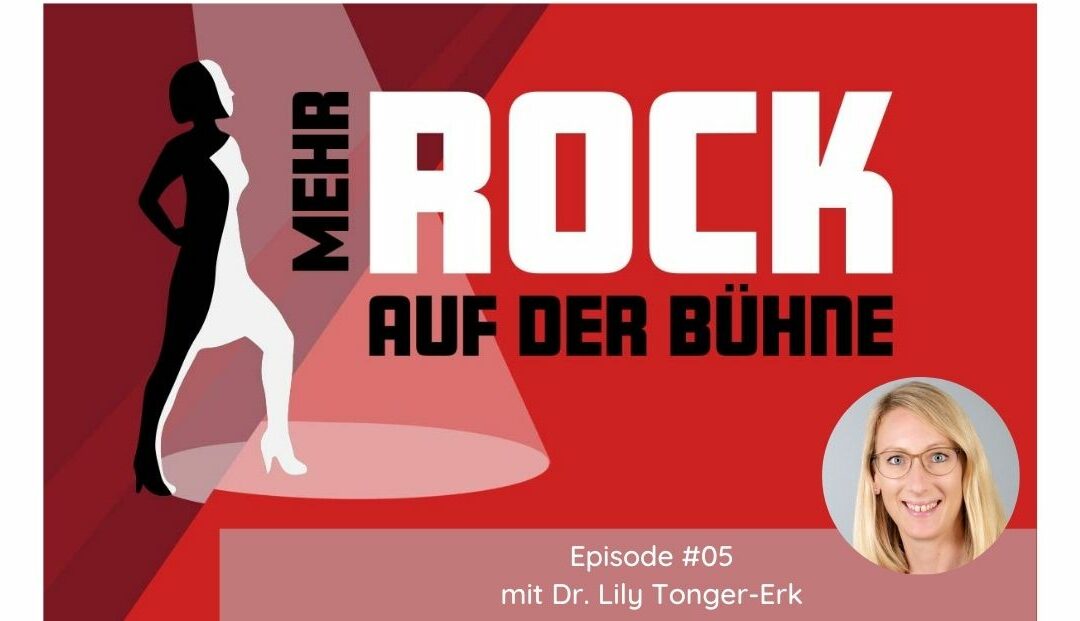
Lily Tonger-Erk is a postdoctoral researcher at the University of Tübingen ’s Department of Philosophy, Rhetoric, and Media , where she specializes in Rhetoric and Gender , 18th-Century German Literature , and Intermediality . She habilitated in December 2023 with a thesis on Mediology, Poetics, and Dramaturgy of Space in 18th-Century Drama , earning a venia legendi in Modern German Literature and General Rhetoric . Currently, she leads a sub-project under the BMBF grant Arguing about Sex and Gender: Conflict and Consensus in Science Communication and temporarily deputizes for a professorship at the University of Duisburg-Essen during the 2024 summer semester. Education: Dr. phil. (PhD) in 2010 from the University of Münster, focusing on Actio: Body and Gender in Rhetoric ; Habilitation: Completed in March 2023 at the University of Tübingen. Her research emphasizes intersections of Rhetoric, Gender, and Spatial Theory in historical and contemporary contexts. She explores Intertextuality , Globality , and Scientific Communication , often linking 18th-century dramatic structures to modern debates on diversity and representation. Her recent publications and collaborations, such as Staging Blackness (2024) and Requisiten des Globalen (2025, in preparation), highlight Globality , Intermediality , and Gendered Rhetorical Practices . Projects and Grants include the BMBF project on Gender and Science Communication (2023–2026) and a DFG-funded conference on Global Figurations in Literature (2023). She has held guest professorships at the University of Trier (2020–2021) and engages in public discourse through podcasts and media interviews , addressing topics like Gendered Speaking Norms and Rhetoric from Knigge to Mansplaining .
Francesca Fiorani serves as Associate Dean for the Arts & Humanities and Professor of Art at the University of Virginia's College of Arts & Sciences. Her academic leadership combines administrative responsibilities with active scholarship in Renaissance art history, focusing on the intersections of artistic practice, scientific inquiry, and cartographic representation during the Italian Renaissance. Her research centers on Leonardo da Vinci studies and Renaissance cartography, examining how visual culture mediated knowledge production between art and science. Key contributions include analyses of Leonardo's treatise on painting, the cultural significance of map cycles in Renaissance courts, and the political dimensions of geographic representation during the Reformation era. Her work consistently bridges art historical methodology with history of science frameworks. Recent publications (2022-2024) demonstrate sustained engagement with Leonardo da Vinci commemorations, particularly the 500th anniversary of his death, while expanding into cartographic studies of papal and Medici courts. These works reveal evolving patterns: increasing focus on institutional contexts of map production, deeper integration of theological perspectives in cartographic analysis, and methodological innovations in studying art-science intersections within specific political frameworks like the Counter-Reformation.
Per Kristian Rekdal is an Associate Professor at the Faculty of Logistics, Høgskolen i Molde. His research spans Theoretical Physics (Quantum Optics, Quantum Gravity) and Logistics (Dynamic Pricing, Inventory Management). He earned his M.Sc. (1998) and Ph.D. (2001) from NTNU, followed by postdocs at Imperial College (2002-2004) and Universität Graz (2005-2006). Rekdal leads projects like SKIFT, CC-moon.net, and SimReal, focusing on educational technology and quantum physics. He co-authored books on Quantum Optics and Logistics, and developed the open course platform himoldeX.no. His work bridges physics and logistics, emphasizing digital innovation in education and research. Education: NTNU, Master of Science, 1992-1998 NTNU, Ph.D. in Theoretical Physics, 1998-2001 Imperial College, London, Post Doc, 2002-2004 Universität Graz, Austria, Post Doc, 2005-2006 Research Interests: Rekdal explores quantum phenomena (angular momentum, Casimir effects, atom chips) and logistics optimization (pricing models, inventory systems). His work integrates theoretical physics with applied logistics, leveraging digital tools to enhance education and operational efficiency. Recent projects include quantum state analysis and open online learning platforms. Publications & Media: His top articles address quantum field theory and logistics systems. Media contributions highlight his role in Norway’s educational digitalization. He collaborates with institutions like Imperial College and has authored over 30 books and papers. Awards & Recognition: No explicit awards listed, but his work on himoldeX earned media attention and a nomination for ‘Teacher of the Year’ (2016). Labs & Teams: Leads the Virtual Technologies and Learning research group, advancing digital education and quantum studies at HiMolde.