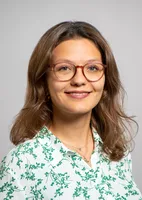
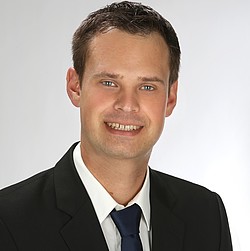
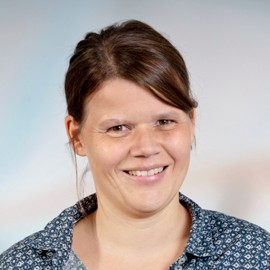
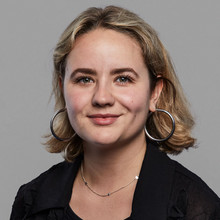
Fatma Deghim is a Research Fellow at the Technical University of Munich , affiliated with the Chair of Energy Efficient and Sustainable Design and Building. Her work focuses on urban microclimate, building energy simulation, and data-driven methods for sustainability. Education : Master’s Degree in Civil Engineering (2019–2022) and Bachelor’s Degree in Civil Engineering (2015–2019), both from TUM. Research Interests include: Urban microclimate and indoor-outdoor interactions Building energy simulation and comfort analysis Integration of green infrastructure in climate-resilient design Data-driven methods for environmental monitoring Publications highlight her expertise in applying machine learning to occupancy modeling, thermal comfort prediction, and multi-objective optimization frameworks for sustainable building design. Her work emphasizes uncertainty analysis, resource efficiency, and computational methods. Teaching contributions include assisting in courses on sustainable architecture, building energy principles, and urban water systems at TUM.
Jun.-Prof. Dr. Christian Krupitzer is a Tenure Track Professor in Food Informatics at the University of Hohenheim's Institute of Food Science and Biotechnology, part of the Faculty of Natural Sciences. He leads the Department of Food Informatics and is a member of the Computational Science Hub (CSH). His research focuses on self-adaptive software systems, machine learning (especially edge computing), IoT technologies, and software engineering applied to food processing and agricultural systems. Education: PhD in Business Information Systems (Dr. rer. pol.), University of Mannheim (2018) M.Sc. and B.Sc. in Business Information Systems, University of Mannheim (2010–2012) High School Diploma (Abitur) from Wilhelmi-Gymnasium Sinsheim (2007) Research Interests: Krupitzer’s work integrates computational methods with food science, emphasizing adaptive systems for food quality monitoring, IoT in agriculture, and machine learning for predictive analytics. He explores edge computing’s role in real-time decision-making and secure group communication schemes for IoT networks. Publications: His recent work spans predictive maintenance in Industry 4.0, digital twins in food systems, and blockchain applications in supply chain authentication. The articles highlight trends in interdisciplinary approaches combining AI, IoT, and domain-specific challenges in food production and logistics. Awards: No scientific awards explicitly listed in the provided materials. Grants & Advising: While specific grants are unmentioned, his roles as department head and tenure-track professor suggest involvement in research funding. No formal advisee list provided, though his team includes postgraduate researchers like Dana Jox, Daniel Einsiedel, and others. Labs & Teams: Leads the Food Informatics department and collaborates with the Computational Science Hub. His team focuses on developing innovative solutions for food systems through computational methods.
Prof. Dr.-Ing. Johannes Henrich Schleifenbaum is a Professor and Chair of Digital Additive Production at RWTH Aachen University, where he leads research in the Profile area Production Engineering (ProdE). His work advances additive manufacturing (AM) through interdisciplinary approaches combining materials science, process engineering, and digital technologies. His research encompasses: Laser powder bed fusion (LPBF) process optimization and defect mitigation Development of novel alloys/composites for AM applications Sustainable manufacturing practices including material recycling Integration of AI/ML for accelerated material and process design Digital tools for automated design and distributed manufacturing Recent publications (2023-2025) demonstrate a strong focus on: Multi-material processing and microstructure control Machine learning-driven alloy development Standardization and scalability of AM processes Advanced simulations for meltpool dynamics and thermal behavior Applications in aerospace, construction, and biochemical engineering He leads the Chair of Digital Additive Production, collaborating with industry partners to translate research into industrial solutions for next-generation manufacturing.
Markus König is a Professor of Informatics in Civil Engineering at Ruhr University Bochum, where he has been researching and teaching since October 2009. His work focuses on Building Information Modeling (BIM), digital construction technologies, and civil engineering informatics, with significant contributions to the development and implementation of digital methods in German construction industry. Dr. König earned his degree in civil engineering with a focus on applied computer science at Leibniz University Hannover, where he also completed his doctorate on cooperative building planning at the Institute for Building Informatics. He subsequently held a junior professorship for Theoretical Methods of Project Management at Bauhaus University Weimar before joining Ruhr University Bochum. His research spans multiple cutting-edge areas including Building Information Modeling (BIM), construction process simulation, tunneling informatics, infrastructure asset management, and the application of artificial intelligence and computer vision in civil engineering. As chair of the Building Informatics Working Group from 2012-2016, he played a key role in developing the first national BIM curriculum for German universities and serves as editor of the book 'Building Information Modeling: Technological Foundations and Industrial Practice.' Analysis of his recent publications reveals a strong trend toward semantic technologies, digital twins, automated compliance checking, and the integration of AI in construction processes. His work increasingly focuses on information containers, ontology development, and the application of large language models to infrastructure data, reflecting the evolving landscape of digital construction. Dr. König's significant contributions to digital construction have been recognized with prestigious awards: Lower Saxony-Bremen Construction Industry Award (2017) for 'services in the development and introduction of digital construction in Germany' Konrad Zuse Medal (2020) While specific details about his advising and grant activities aren't explicitly mentioned in the provided text, his extensive publication record with numerous co-authors suggests active supervision of doctoral students and research staff. His involvement in multiple collaborative research projects is evident from his publication history. At Ruhr University Bochum, Professor König leads a research group focused on civil engineering informatics, with particular emphasis on BIM, digital construction technologies, and their application across the building lifecycle. His team appears to work at the intersection of computer science and civil engineering, developing innovative solutions for construction process optimization, infrastructure management, and digital transformation of the AEC industry.
Luisa Sievers is a Researcher at the Fraunhofer Institute for Systems and Innovation Research ISI, where she has worked since 2010. She holds a PhD in Economics from the Universität der Bundeswehr München (2020) and a Diploma in Physics and Environmental Economics from Humboldt University Berlin and Heidelberg University. Her research focuses on economic impact assessments of long-term strategies in transport, climate, and technology, with expertise in Input-Output Modelling and System Dynamic Modelling. Key areas include structural change in the mobility sector, regional and social distribution effects of energy transitions, and employment impacts of sustainable mobility. Her work spans projects such as the Ariadne project on energy system transformation, climate protection scenarios for 2050, and the National Cycling Plan 2030. She has received the IKU Innovation Award for Climate and Environment, recognizing her contributions to environmental and climate policy research. Publications highlight her analysis of Germany’s energy transition, employment effects of sustainable transport, and the macroeconomic implications of renewable energy expansion. She collaborates extensively with institutions like the German Federal Environment Agency and the Hans-Böckler-Stiftung, contributing to policy-relevant studies on socio-economic impacts of climate policies and energy systems.
Dr. Raimon Tolosana Delgado is a Research Fellow at the Helmholtz-Zentrum Dresden-Rossendorf (HZDR), affiliated with the Helmholtz Institute Freiberg for Resource Technology. He leads research in predictive geometallurgy and statistical analysis of mineral resources, focusing on translating geological data into processing insights. His research integrates geostatistics , compositional data analysis (CoDa) , and machine learning to model ore behavior and resource potential. Key areas include: Predictive geometallurgy for forecasting ore/waste behavior Bayesian statistics for parameter estimation and uncertainty analysis Development of R-based tools (e.g., compositions and gmGeostats packages) for mineral data analysis Particle-based process modelling for mineral separation optimization Recent publications emphasize machine learning integration (e.g., neural networks for geophysical tensor fields), tailings reprocessing (3D geostatistical assessment of resource potential), and advanced statistical methods for compositional data. A consistent trend involves enhancing predictive accuracy in mineral processing through multi-source data fusion. Dr. Tolosana Delgado coordinates the development of technology platforms for geometallurgical data analysis, including databases and interfaces for industrial applications. His work bridges ore geology, mineral processing, and metallurgy to optimize resource efficiency.
Prof. Dr. Moritz Petersen is an Associate Professor of Sustainable Supply Chain Practice and Co-Director of the Center for Sustainable Logistics and Supply Chains (CSLS) at Kühne Logistics University (KLU) in Hamburg, Germany. His academic career began at Hamburg University of Technology, where he completed his doctoral studies in 2017 under Prof. Dr. Wolfgang Kersten, and he has been at KLU since 2016. Research Focus: Decarbonization of logistics, Circular Economy, Blockchain applications in supply chains, and sustainable product development Teaching: Courses on Supply Chain Sustainability, Circular Product Development, and Lean Logistics Operations across KLU’s Bachelor to MBA programs Outreach: Co-hosts the podcast “Das Gleiche in Grün?!”, collaborates on educational children’s books about logistics, and frequently speaks at industry events like the Deutscher Logistik-Kongress Research Trends from his 15 most recent articles center on: Blockchain technology’s role in sustainable logistics Decarbonization strategies across maritime and road freight Circular economy implementation through product design and waste stream analysis Behavioral and organizational barriers to sustainability Public-private partnerships in European logistics Information sharing as a CE enabler Scientific Awards: 2020 Best Paper Award, International Journal of Operations & Production Management (IJOPM) Research Projects include: CREAToR: EU Horizon 2020 project on polymer recycling GATE: German Ministry of Economy-funded GHG emissions data exchange HANSEBLOC: Blockchain applications in logistics ChainLog: Blockchain use cases Development of Logistics Competence Assessment Toolkit
Lena Kostuj is a Research Associate at the Research Center for Digital Transformation and Doctoral Candidate in Business Administration (specializing in Entrepreneurship, Organization and Culture) at Leuphana University Lüneburg, with additional affiliation as Associate at the Leuphana Center for Organization & Social Transformation. Educational background: MA Cultural Studies: Culture & Organization (2020-2022) BA Cultural Studies (2018-2021) BSc International Business Administration & Entrepreneurship (2016-2021) Her research integrates entrepreneurship with digital and social transformation, examining how cultural dynamics and organizational structures drive innovation in sustainable business models. Work spans inclusive working environments, circular economy systems, and digital platform ecosystems through interdisciplinary lenses of psychology, cultural studies, and business administration. As LOST Community Manager since 2023, she coordinates knowledge exchange initiatives within transformation-focused research networks while advancing her doctoral work on socially innovative organizational change.
Dr. Ina Säumel is a scientific collaborator at the Institute of Agricultural and Horticultural Sciences at Humboldt University of Berlin. Her work bridges urban ecology, biodiversity conservation, and socio-cultural dimensions of sustainability through participatory approaches. Research Focus : Urban sustainability transitions, nature-based solutions, medicinal plants, and climate change adaptation. Key Projects : Edible City Solutions, biochar conversion from agro-residues, and biodiversity assessments in urban cemeteries. Geographic Scope : Uruguay, Andes, South Tyrol, and Berlin. Emphasis on post-industrial and water-sensitive cities. Her recent publications highlight interdisciplinary methods in co-creation, land-use impacts on metacommunity structures, and health-promoting urban green spaces. Contact: ina.saeumel@hu-berlin.de
Christoph Gehlen is Professor and Chair of Materials and Materials Testing in Civil Engineering at the Technical University of Munich (TUM), based at Franz-Langinger-Str. 10 in Munich. His research group focuses on advanced concrete technologies, materials science, and digital construction methods, with significant contributions to additive manufacturing in civil engineering through the Collaborative Research Center TRR 277. His research spans concrete technology, durability assessment, and sustainable construction practices. Key interests include corrosion mechanisms in reinforced concrete, non-destructive testing methodologies, and additive manufacturing techniques like Selective Paste Intrusion (SPI). Recent work emphasizes 3D concrete printing for structural applications, life cycle assessment of printed elements, and fundamental studies on material behavior under environmental stressors including carbonation, chloride exposure, and freeze-thaw cycles. Analysis of his 15 most recent publications (2024-2025) reveals dominant research trajectories in digital fabrication of concrete structures, particularly SPI-based additive manufacturing. His work integrates materials science with structural engineering to develop functionally graded components, assess sustainability metrics, and solve reinforcement integration challenges. Significant interdisciplinary efforts address durability issues through electrochemical monitoring, coda wave interferometry, and advanced imaging techniques for concrete microstructure characterization. Gehlen leads the Chair of Materials and Materials Testing in Civil Engineering at TUM, which operates advanced laboratories for concrete characterization including confocal laser scanning microscopy and virtual testing environments. His team actively participates in TRR 277 (Additive Manufacturing in Construction), developing fabrication-aware design methods and experimental validation protocols for novel construction technologies.
Alina Roitberg is a Junior Professor (Assistant Professor) at the University of Stuttgart , affiliated with the Faculty of Computer Science, Electrical Engineering and Information Technology . Her research focuses on advancing computer vision, machine learning, and robotics applications, particularly in human activity recognition, domain adaptation, and synthetic data generation. She explores challenges in action understanding, cross-domain generalization, and real-world deployment of AI systems in fields like healthcare, autonomous vehicles, and industrial automation. Her work emphasizes robust learning under noisy conditions, multimodal data fusion, and ethical AI applications. Recent projects include foundational studies on large language models in construction (AEC), video-based muscle group estimation, and improving driver activity recognition for autonomous vehicles. She also investigates circular factory design through uncertainty-aware process optimization and human-robot interaction. Dr. Roitberg's contributions span academic publications and industrial collaborations, addressing both theoretical advancements and practical implementations. Her research bridges computer vision techniques with real-world problems, emphasizing scalability and ethical considerations in AI deployment.
Stephan Hankammer is a Professor of Sustainable Corporate Management at Alanus University of Arts and Society, where he holds the Chair for Sustainable Management, Innovation, and Entrepreneurship. He is also the co-founder and scientific director of the Institute for Regenerative Economics (REGWI), an affiliated research institute. His academic career includes roles as Junior Professor (2018-2022) and Postdoctoral Researcher at RWTH Aachen University. His research focuses on sustainable innovation, regenerative business models, circular economy, and the dual transformation of digital and sustainable business practices. Key areas include collaboration in value chains, regeneration of ecosystems, and post-growth economic models. He earned his Ph.D. in Business Administration from RWTH Aachen in 2018, with postgraduate studies at institutions like MINES Saint-Étienne and the University of St. Gallen. His work emphasizes frameworks for sustainable degrowth, co-creation in innovation, and leveraging digital tools (e.g., blockchain) for transparency and circular practices. He has presented globally at venues like the Academy of Management and Impact Festival, advocating for regenerative business practices. Hankammer serves on editorial boards (e.g., International Journal of Sustainable Design) and is a member of professional networks like the Academy of Management and SCORAI. His recent projects explore Industry 4.0 sustainability, post-growth business models, and co-opetition strategies for circular economies.
Jessica Süßenbach is a Professor for Sports Pedagogy and Sports Science at Leuphana University of Lüneburg. She maintains an active research profile with 78 publications, 48 academic activities, 16 research projects, and multiple media appearances. Her work focuses on physical education, gender and diversity issues in sports, and innovative teaching approaches in primary school settings. Her research interests center on physical education in primary schools, with particular emphasis on inclusive sports practices, gender diversity, and the integration of digital media in sports teaching. She has conducted qualitative studies on movement, play, and sports in all-day primary schools, examining perspectives from both educational staff and children. Her work explores wheelchair basketball as an inclusive sport, digital video tagging in football instruction, and quality development frameworks for sports offerings in extended school settings. Analysis of her recent publications reveals a strong focus on inclusive sports education, particularly examining how to make sports accessible to children with diverse needs. She has pioneered work on digital media integration in sports teaching, especially video-based approaches for reflection and instruction. Her research consistently addresses practical applications for primary school settings, with a focus on qualitative methodologies and participatory approaches that include children's perspectives. Professor Süßenbach is actively involved in significant research projects including 'Sport vernetzt,' the Move4Health subproject examining sports clubs as developmental environments for children, and the Circular EURO 2024 sustainability initiative. Her work has received substantial institutional support, including the 'Millions in funding for Leuphana teacher training' project from 2018. Her academic contributions extend to practical applications in schools, particularly through her work on wheelchair basketball (RoBaTaS project) and video-based reflection methods for physical education. She regularly presents her findings at conferences and through media outlets, demonstrating commitment to translating research into practice.
Prof. Monika Fuchs serves as a Professor at HTW Berlin within the Department of Clothing Technology/Ready-Made Clothing (B), actively engaged in teaching and research. Her institutional role encompasses leadership in academic projects and student supervision while maintaining regular office hours during academic semesters. Her research integrates sustainability principles across product lifecycle domains, with specialized focus on ergonomics in household laundry systems and vocational education frameworks. Key investigations address procurement management inefficiencies in textile supply chains, sustainable design of ready-made clothing, and behavioral aspects of consumer laundry practices. This interdisciplinary work bridges engineering, environmental science, and educational theory to advance circular economy models in apparel industries. Prof. Fuchs demonstrates significant scholarly productivity through 29 publications and leadership in 24 research projects, though specific award recognitions are not documented in available materials. Her methodological approach combines empirical user studies with systemic sustainability assessments. She has supervised 3 doctoral candidates and contributes to academic governance through assessment activities. Current office hours during winter semesters occur Wednesdays 2:00-3:00 PM, with individual appointments available after January 15, 2025, reflecting ongoing mentorship commitments. Her project portfolio indicates active collaboration with industry partners on sustainable textile innovation.
Prof. Dr. Philipp Staab is a full professor of Sociology of the Future of Work at Humboldt-Universität zu Berlin, affiliated with the Einstein Center Digital Future (ECDF). His research lies at the intersection of digital capitalism, labor sociology, and the political economy of technology and artificial intelligence. He holds a PhD from the University of Kassel and has held research and teaching positions at institutions including the Hamburg Institute for Social Research, WZB Berlin, and the University of St. Gallen. Staab is a leading voice in analyzing how digital transformation reshapes labor, power, and governance. His research focuses on: Theoretical foundations of digital capitalism Power structures in platform economies and industrial digitalization The role of venture capital and financialization in shaping work The political economy of artificial intelligence and digital sovereignty The transformation of the public sphere in the digital age The social implications of green and digital transitions Staab’s recent publications explore the geopolitical dimensions of technology, sustainable digital market design, and the crisis of legitimacy in green capitalism. His work reveals patterns of increasing control, inequality, and state intervention in digital economies. He leads a collaborative research environment with multiple assistants and contributes to public discourse through books, policy papers, and media engagement. Notable recognitions include: Hans Matthöfer Prize for Business Journalism (2021) Named one of 'Germany’s 30 by 2030' by WirtschaftsWoche (2024) Staab advises on digital and labor policy and is involved in interdisciplinary research networks. He supervises a team of researchers and contributes to academic and public debates on the future of work, digital sovereignty, and ecological transformation.