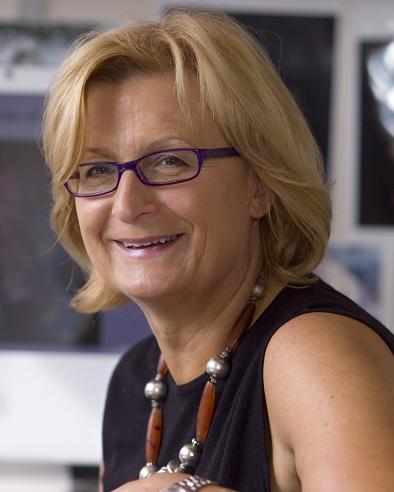
Rosana CollepardoView profile
Research Fellow
Dr. Rosana Collepardo is a Winton Advanced Research Fellow at the Cavendish Laboratory, University of Cambridge, where she leads a research group within the Theory of Condensed Matter (TCM) Group and is also affiliated with the Biological and Soft Systems group. Her research focuses on developing multi-scale computational models to investigate chromatin nanostructure, epigenetic regulation, and biomolecular condensates, with applications in understanding genome organization and sustainable data storage. Her primary research interests include: Computational biophysics of chromatin and epigenetics Mechanisms of biomolecular condensates and phase separation Nanoscale structure of the genome and DNA accessibility Multi-scale modeling from atomistic to mesoscale Design principles for chromatin-inspired data storage Analysis of her recent publications (2023-2025) reveals a dominant focus on chromatin organization, epigenetic mechanisms, and biomolecular condensates. Key trends include the role of nucleosome spacing, linker histones, and epigenetic modifications in chromatin phase separation, alongside investigations into condensate aging, material properties, and the physical principles of phase transitions in RNA-protein systems. Her work consistently integrates computational modeling with experimental validation. Notable scientific awards include: Winton Advanced Research Fellowship ERC Starting Grant Dr. Collepardo actively mentors PhD and MPhil students, including Sivapalan Chelvaniththilan (MPhil in Physics, recipient of Gates and Winton Scholarships), Miguel Garcia Ortegon (MPhil in Scientific Computing), Stephen Farr (PhD in Computational Methods for Materials Science), Akshay Sridhar (MPhil in Scientific Computing), and Adiran Garaizar (PhD with EPSRC scholarship). Her group secures competitive funding through ERC grants and student scholarships. The Collepardo group, established in 2016 at the Maxwell Centre, Cavendish Laboratory, comprises postdoctoral researchers, PhD students, and MPhil candidates. They collaborate with experimental groups to study chromatin dynamics and biomolecular condensates using advanced computational techniques, contributing to fundamental biological understanding and potential biotechnological applications.