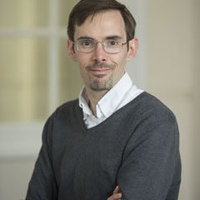
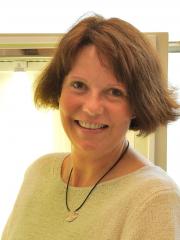
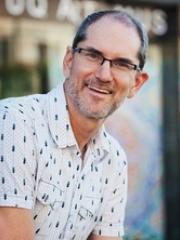
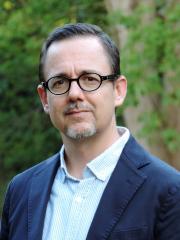
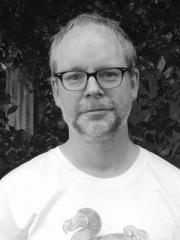
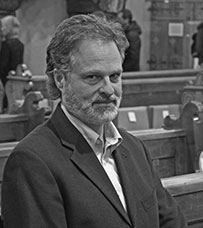
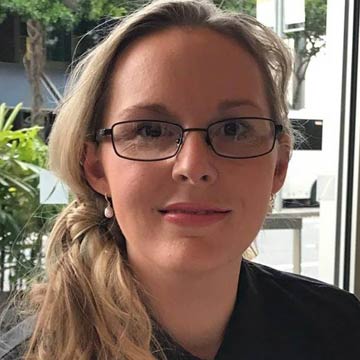
Dr. François Soyer is an Associate Professor at the University of New England's School of Humanities, Arts, and Social Sciences, specializing in Early Modern History. He holds a PhD from the University of Cambridge (2007) and has held academic positions at the University of Southampton and the University of Adelaide. His research focuses on anti-Semitism, the Spanish and Portuguese Inquisitions, gender/sexuality history, and colonial empires. He has authored multiple books and articles, including Popularizing anti-Semitism in early modern Spain and its empire (2014) and Antisemitic conspiracy theories in the early modern Iberian world (2019). His work often examines how religious persecution intersected with medical, artistic, and legal practices. Education: PhD in History, University of Cambridge (2007) MPhil in History, University of Cambridge (2003) MA Honours, University of St. Andrews (2002) Postgraduate Certificate in Academic Practice, University of Southampton (2011) Research Interests: Anti-Semitic propaganda and conspiracy theories Inquisitorial archives and legal practices Gender transgression and queer histories Censorship of art and religious imagery His recent publications explore the Blood Libel legend, the trial of Catalan cross-dresser Maria Duran, and the emotional dimensions of religious conversion. He has been awarded fellowships from the Royal Historical Society and the Parkes Institute. His current projects include tracing the origins of anti-Jewish iconography in colonial Peru and analyzing the role of emotion in early modern religious trials.
Professor Christiane Funk holds the position of Professor of Biochemistry in the Department of Chemistry at Umeå University (Sweden). Her affiliation with the Institute for Molecular Bioscience (IMB) is indicated by the webpage structure, though her primary academic appointment appears tied to Umeå University. Current role: Full-time Professor Institution: Umeå University Research interests focus on biochemistry and molecular biosciences, likely involving structural or mechanistic studies given her departmental affiliation. Specific research topics are not detailed in the provided text, but her title suggests expertise in biochemical processes at the molecular level. No awards, grants, or active lab teams are explicitly mentioned in the text. The email domain (uq.edu.au) hints at possible ties to The University of Queensland, though this may relate to prior roles or collaborative affiliations.
Neil Pembroke is a Lecturer in Studies in Religion at the University of Queensland , affiliated with the School of Historical and Philosophical Inquiry . His academic work bridges theology, philosophy, and pastoral care, with a focus on spiritual formation, healthcare ethics, and the intersection of psychology and religion. Education : B.Eng (Agric.), B.Th (B.C.T.), BA (Hons), PhD (Edin) Teaching interests : Jung and Human Spirituality, Religion and Health, Mysticism, Psychology of Religion, Religion and Psychotherapies His research explores therapeutic preaching, spiritual maturity, and the role of empathy in Christian and interfaith contexts. He has contributed to organizational spirituality, particularly in church-sponsored healthcare, and examined compassion fatigue through Christian and Buddhist perspectives. Publications include books like Divine Therapeia and the Sermon and Renewing Pastoral Practice , with over 50 journal articles and 10 book chapters. Collaborative projects span international studies on pastoral care models and interdisciplinary dialogues on ethics. Neil Pembroke's work emphasizes the integration of theological and psychological insights into personal and communal spiritual growth, with a particular focus on shame, identity, and the relational Trinity as frameworks for pastoral practice.
Associate Professor David Smith is a Senior Lecturer in American Politics and Foreign Policy at the University of Sydney, jointly appointed between the United States Studies Centre and the School of Social and Political Sciences. Dr. Smith earned his BA from the University of Sydney and his PhD from the University of Michigan. His academic journey has positioned him as a leading expert in American politics with a distinctive Australian perspective. Dr. Smith's research focuses on the intersection of religion and politics, American and comparative political development, collective violence, and theories of the state. His work often examines how religious identity shapes political behavior and policy outcomes, with particular attention to the American context. His comparative approach extends to examining Australian politics through the lens of American political development, creating a unique transnational perspective that informs both fields. His recent publications demonstrate a strong trend toward examining the relationship between identity politics, religious values, and public policy. He has made significant contributions to understanding vaccine policy acceptance across political spectrums, the role of religion in foreign policy decisions, and the dynamics of racism and anti-racism in contemporary politics. His research bridges theoretical political science with practical policy implications, particularly in the areas of public health communication and international relations ethics. Dr. Smith has supervised several graduate students including Anastasiya BYESYEDINA working on "The Re-construction of Ukrainian Identity During Revolutions" and Yiyang XU researching "Rationality and Beauty in International Politics." He is currently leading an Australian Research Council Discovery Project titled "The ideologies and practices of anti-racism in Australia" alongside colleagues Soutphommasane T and Park J.
Stephen Bullivant is Professorial Research Fellow in Theology and Sociology at the University of Notre Dame Australia (Sydney Campus), School of Philosophy & Theology, and also Professor of Theology and the Sociology of Religion at St Mary's University, London. He holds doctorates from Oxford (Theology) and Warwick (Sociology), and directs the Benedict XVI Centre for Religion and Society at St Mary's. His research spans the sociology of religion, Catholic theology, atheism, nonreligion, and religion’s interaction with science and technology. Key areas include Catholic disaffiliation, secularization, empirical studies of Christianity, and the abuse crisis in the Church. He has published extensively, including major works like Mass Exodus , The Oxford Handbook of Atheism , and The Cambridge History of Atheism . The recent articles reflect a strong interdisciplinary focus on Catholicism, secular trends, and moral theology. They show a consistent methodological blend of empirical data, sociological analysis, and theological reflection, particularly on British and American religious contexts. Topics include youth commitment, liturgical change, conscience, and ecclesial power structures. Fellow, International Society for Science and Religion (2019–) Fellow, Higher Education Academy (2010–) Fellow, Word on Fire Institute (2019–) Co-director, Nonreligion and Secularity Research Network (2008–14) Prof. Bullivant has led and co-led numerous research grants, including major projects funded by the John Templeton Foundation, Arts and Humanities Research Council, and Porticus UK. He supervises research in theology and sociology of religion and collaborates widely across institutions. He is actively engaged in public scholarship, with media contributions in BBC, The Guardian, The New York Times, and EWTN. He is also involved in editorial work for journals such as Secularism and Nonreligion , Antiphon , and the International Journal for Evangelization and Catechetics .
Dr. Aaron Ghiloni serves as an Honorary Senior Research Fellow in Religious Studies at the School of Historical and Philosophical Inquiry, Faculty of Humanities, Arts and Social Sciences, at The University of Queensland. He is the author of Islam as Education: Pedagogies of Pilgrimage, Prophecy, and Jihad (2019) and John Dewey among the Theologians (2012), and editor of World Religions and their Missions (2015, 2nd ed. 2022). He also serves as Associate Editor for the journal Religious Education . Dr. Ghiloni earned his Doctor of Philosophy from The University of Queensland. His educational background forms the foundation for his interdisciplinary approach that bridges philosophy, theology, and educational theory. Dr. Ghiloni's research focuses on the intersection of religion and education, with particular expertise in Islam, Christianity, and interreligious studies. His work explores how John Dewey's pragmatist philosophy can inform religious education and interfaith dialogue. He examines educational approaches to supernaturalism, religious formation, and the role of religion in democratic societies. His scholarship addresses critical questions about how religious traditions can be taught respectfully in pluralistic contexts while maintaining academic rigor. Dr. Ghiloni's scholarly output demonstrates a consistent focus on religious education from multiple perspectives. His work bridges theological inquiry with educational theory, particularly through the lens of John Dewey's pragmatism. Recent publications emphasize interfaith education, comparative approaches to religious missions, and the challenges of teaching religion in pluralistic societies. His research shows an evolving trajectory from examining specific religious traditions to broader questions about religious education methodology and philosophy. Dr. Ghiloni actively supervises doctoral students working in religion and culture. He has served as Associate Advisor for at least one completed PhD dissertation on Wide-Awake In God's World: Bible Engagement For Teenage Spiritual Formation In A Culture Of Expressive Individualism (2018). His teaching portfolio at UQ includes subjects such as History of the Supernatural , Belief and Unbelief , World Religions , Spirituality in the Everyday , and Western Religious Thought from the Middle Ages to the Present .
Hakan Coruh is a Senior Lecturer in Islamic Studies at the Centre for Islamic Studies and Civilisation, Charles Sturt University. He joined the university in 2015 as a lecturer and was promoted to Senior Lecturer in November 2021. Dr. Coruh has served as the Higher Degree Research Coordinator (HDR) for master's and PhD candidates at the center from 2020 to 2022. He is actively involved in multiple academic associations including the Australian Association of Islamic and Muslim Studies (AAIMS), CRES (Centre for Religion, Ethics and Society), and PAPER (Practical and Public Ethics Research group) at Charles Sturt University. Dr. Coruh obtained his Bachelor of Divinity (Ilahiyat) degree from the Faculty of Divinity at Sakarya University. In 2007, he completed his master's degree in Qur'anic exegesis (tafsīr) at the same university. Between 2003 and 2008, he actively participated in academic circles and centers such as İSAM (Centre for Islamic Studies) in Istanbul. In 2015, he successfully earned his PhD from Australian Catholic University, focusing his research on the early modern exegesis of the Qur'an, specifically studying the works of Said Nursi, Muhammad 'Abduh, and Sir Ahmad Khan. Dr. Coruh specializes in Qur'anic exegesis (tafsīr) and actively teaches and writes on subjects related to Qur'anic studies, classical exegesis, and contemporary approaches to the Qur'an and Islam. His academic interests encompass various fields, including classical and modern Qur'anic exegesis, contemporary Islamic thought, Islamic Legal Theories (usul al-fiqh) and Jurisprudence (fiqh), Islamic Ethics (akhlaq), Islamic theology, Medieval Classics (Islamic, Christian, and Jewish), and Comparative Theology. His teaching includes subjects such as Usul al-Tafsir, Usul al-Fiqh, Islamic Family Law and Society, and Islamic Jurisprudence of Five Pillars. Dr. Coruh's research output shows a strong focus on Qur'anic hermeneutics, particularly examining the works of key figures like Bediuzzaman Said Nursi and Muhammad 'Abduh. His publications demonstrate interdisciplinary approaches, connecting Islamic studies with contemporary issues such as religious freedom, science and religion dialogue, bioethics, and interfaith relations. He has made significant contributions to understanding the relationship between traditional Islamic scholarship and modern contexts, especially regarding topics like religious freedom (Qur'an 2:256), the methodology of Qur'anic exegesis, and Islamic responses to contemporary challenges. Dr. Coruh supervises multiple research students, including PhD candidates David Drennan, Sarkhan Gasimov, and Nadia El-Mouelhy (as co-supervisor), as well as Master's students Ikramullah Ahmad and Ensar Cutahija. His supervision topics cover diverse areas such as Islamic legal theory, interfaith relations, and contemporary Islamic thought. Dr. Coruh is actively engaged with various academic communities, serving as a member of the CISAC Research Team, CISAC School Board, Sufi Studies Network at Monash University, and the Comparative Theology Reading Group at Australian Catholic University. In 2023, he held a visiting research fellow position at the Center for Islamic Legislation and Ethics (CILE) at Hamad Bin Khalifa University in Qatar.
Benjamin Day is a Senior Lecturer in the Department of International Relations at the Coral Bell School of Asia Pacific Affairs, Australian National University (ANU). His research focuses on leaders' roles in foreign policy decision-making, particularly how leaders drive policy change. He co-authored *Foreign Policy Analysis: Classic and Contemporary Theory* (3rd ed., 2019), a leading textbook in the field. His recent work explores leaders' 'thinking practices' about global order, informed by elite interviews with over 100 politicians and policymakers. Education: BA (University of Queensland) BEcon (University of Queensland) MIS (University of Queensland) PhD (ANU, 2018) Research Interests: Political Decision Making and Foreign Aid Leaders and World Order Aid Policy Dynamics Elite Influence in Policymaking Academia-Policymaker Bridging Affiliations and Fellowships: Partners around the Globe Fellow, NATO Defence College (2025) Visiting Fellow, University of Edinburgh (2023) Australian National Fellow, King’s College London (2019) Centre Associate, ANU Development Policy Centre (since 2016) Contributions: Regularly publishes in platforms like *The Strategist*, *Devpolicy Blog*, and *The Conversation*. Designs courses for diplomats and public servants via the ANU Diplomacy Forum. Previously worked in international development for a decade, including health sector reform in Papua New Guinea. Labs/Teams: Active in the ANU’s Development Policy Centre and collaborates with institutions globally to advance policy-relevant research on foreign aid and leadership.
Gil-Soo Han is a Professor in the Department of Communications and Media Studies at Monash University, Faculty of Arts, where he has been a faculty member since 2008. His interdisciplinary research bridges sociology, media studies, and cultural analysis, with a focus on intercultural communication, religious communication, health communication, and contemporary Korean society. Disciplinary Background: Sociology with applications in media, religion, and migration Institution: Monash University, Australia Department: Communications and Media Studies Teaching: Global and intercultural communications, media industries His research interests include: Intercultural and global communications Religious communication, especially Korean Christianity Health communication among migrants Media representation of ethnic minorities Nationalism and grassroots movements in South Korea Funeral rites and death culture in Korea and Australia The Korean diaspora in Australia and New Zealand His recent publications reflect a strong trend toward analyzing nationalism, identity, and socio-cultural change in South Korea, particularly through media discourse and public movements such as the 2016–2017 Candlelight Revolution. He also explores end-of-life practices among migrants, highlighting cultural continuity and change. His scientific awards include: Good Practice in Teaching, Monash University (2007) Winner of Korean Education Minister’s Book Prize (2020) He has received research funding from the Academy of Korean Studies and the Australian Research Council. He is actively involved in supervising PhD students and contributing to public discourse through media engagement. He leads an international project on Local Agency and National Responses to Globalisation and has published extensively on Korean diaspora, media, and religion. He is affiliated with the following research groups and platforms: ORCID: 0000-0003-4135-211X Google Scholar, ResearchGate, Academia.edu
Dr. Ian Hesketh is an Associate Professor of History at the University of Queensland within the School of Historical and Philosophical Inquiry . With over 50 publications including books and journal articles, his work focuses on intersections between history, science, and religion in 19th-century Britain. Education: Bachelor of Arts, Okanagan University College Masters (Coursework), York University Doctor of Philosophy, York University His research explores Darwinian Revolution narratives, Victorian physics through figures like John Tyndall, and Big History epistemology. Recent work examines how scientific concepts permeate cultural consciousness through media like The Conversation and academic monographs. Key publications include the 2023 book A History of Big History and 2022 edited collection Imagining the Darwinian Revolution . His 2025 article in British Journal for the History of Science analyzes character assessment in Victorian botany through John Scott's experiments. Scientific Awards: Australian Research Council Future Fellowship As HDR Coordinator , he supervises projects like John Tyndall: Science and the State and has served as advisor for works on evolutionary ethics and medical history. Current research receives funding from international collaborations including the University of Birmingham's science-religion project.
Dr. Anne Rogerson is a Senior Lecturer in Classics and Ancient History at the University of Sydney, affiliated with the Vere Gordon Childe Centre. She holds a BA and BSc from the University of Sydney and a PhD from the University of Cambridge. Her research centers on Virgil’s Aeneid , its cultural reflections, and its reception in art and literature across eras, including analyses of late antique to modern commentaries. Current projects include a book exploring how female novelists like George Eliot and Margaret Atwood engage with Latin learning, and an Australian Research Council-funded study on Vandal North African Latin literature. Education: BA and BSc, University of Sydney PhD, University of Cambridge Research Interests: Virgil’s Aeneid and its narrative dynamics Commentary traditions on Virgil Classical reception in modern literature and art Gender studies in classical contexts Grants: ARC-funded project: The Vandal Renaissance: Latin Literature in Post-Roman Africa (435-534CE) Media Engagement: Regular contributor to ABC Radio’s Self Improvement Wednesday and This Week in History , discussing topics such as ancient Roman culture, classical literature, and historical parallels. Labs/Teams: Member of the Vere Gordon Childe Centre Editor of Classicum (Classical Association of NSW journal)
Professor Thomas A. Fudge is a leading scholar of Medieval and Reformation History at the University of New England (UNE), where he holds a professorial chair in the Faculty of Humanities, Arts, Social Sciences and Education. He specializes in the history of Christianity, particularly in the medieval and Reformation periods, focusing on heresy, crusades, witch-hunting, and Hussite movements. His research spans European and American religious history, including studies on Pentecostalism and Australian Anglicanism. Dr. Fudge has authored over 30 books and numerous articles, including seminal works on Jan Hus and the Hussite Reformation. He has held ten contestable research grants and serves on editorial boards for journals like Mediaevistik and Kosmas . He currently chairs the UNE Professoriate and is a member of the Australian Association of University Professors. Education: PhD in Medieval History (Cambridge University), PhD in Theology (Otago University), Master of Divinity (Iliff School of Theology), BA (Warner Pacific College) His research interests include medieval heresy, crusades, witch-hunting, and the intersection of theology with reform movements. Fudge has conducted extensive archival work in Europe and is a founder of the biennial The Bohemian Reformation and Religious Practice conference. He teaches courses on medieval Europe, witch-hunting, and the Reformation. His recent publications explore the Hussite Uprising, Anglo-Australian religious history, and the legacy of Jan Hus.
Professor Andrew Singleton is a leading sociologist at Deakin University's School of Humanities and Social Sciences , with expertise in religion, spirituality, and social research methodologies. His career spans over two decades at Deakin, where he has held progressively senior roles since 2000. Education: PhD in Sociology from Monash University (2000) Research Interests include: Spirituality in contemporary society New Religious Movements (particularly Spiritualism) Global Christianity and secularisation Quantitative and qualitative methods Research Trends show extensive work on Australian teen spirituality, Holocaust education impacts, marine conservation policy, and historical religious studies. His 2024 article on marine protected areas revealed majority Australian support for expanding ocean protections. Scientific Awards include multiple teaching accolades, though specific prizes aren't listed in the source material. Supervision covers diverse topics like neurodivergent birthing experiences, church hurt recovery, and honor-based violence support. He has taught sociology of religion and methods courses. Grants include Australian Research Council funding for Holocaust education studies ($305k+) and spiritual wellness research ($420k+), plus DFAT Korea Foundation support ($39k).
Dr. Milad Milani is a Senior Lecturer in Religious Studies at Western Sydney University and a School-based Member of the Institute for Culture and Society. He leads the Humanities Religious Studies Research Collective and co-leads the Sufi Studies Network (Monash University). He serves on the editorial boards of Sophia and the Journal for the Academic Study of Religion . From 2023–2025, he was President of the Australian Association for the Study of Religion. His expertise focuses on Islam and Sufism, contributing to UN Sustainable Development Goals related to peace and understanding. Education: PhD and BA in Religious Studies from the University of Sydney. Research Interests : Sufism and its philosophical dimensions (e.g., Heideggerian ontology) Islamic mysticism and its global manifestations Gender dynamics in Sufi traditions Sufi political thought and modernity Interfaith dialogue and civic roles of Sufi orders Publications Trends : Recent works critically examine Sufism through existential philosophy, Islamic identity in modern contexts, and gendered holiness. His analysis bridges historical narratives with contemporary challenges, emphasizing ontology, political culture, and cross-cultural influences. Awards : Includes the Australian Postgraduate Award, Early Career Research Fellowship, and recognition for contributions to religious education and community projects. Advising & Grants : Supervised 2 HDR completions. Secured grants such as the Community Grant Blacktown Arts ($29,000) and Early Career Research Fellowship ($20,000). Active in editorial roles and academic leadership. Labs/Teams : Leads the Humanities Religious Studies Research Collective and co-leads the Sufi Studies Network, fostering interdisciplinary collaborations in Sufi studies and global religious dynamics.
Dr. Antonia Pizzey is a Lecturer in the School of Theology at the Australian Catholic University (ACU) and a Postdoctoral Researcher at the Research Centre for Studies of the Second Vatican Council. She earned her PhD from ACU in 2016 and continues to contribute significantly to theological scholarship on Vatican II, ecumenism, and ecclesiology. Her research focuses on ecumenism , particularly Receptive Ecumenism and Spiritual Ecumenism , ecclesiology , theological virtues (especially hope and humility), and the reception of Vatican II . She is currently working on a five-year ACURF-funded project titled The Vision of Vatican II on Revelation, Church, Ecumenism, and Education . The recent publications and book chapters by Dr. Pizzey reflect a consistent trajectory in ecumenical theology , emphasizing spiritual transformation, ecclesial learning, and the renewal of Christian unity. Her works bridge academic theology with practical ecumenical engagement, addressing themes such as pilgrimage, virtues, and interdenominational dialogue. Scientific Awards: Teaching ACU Citation for Outstanding Contribution to Student Learning (2019) Dr. Pizzey is also a Fellow of the Higher Education Academy (2019–present) and serves as Secretary of the Australian Catholic Theological Association. She advises on theological education and ecumenical initiatives, though no formal students are listed. She is active in academic networks and contributes to major theological collections and journals. She is affiliated with the Research Centre for Studies of the Second Vatican Council, which serves as the hub for her current research project and scholarly collaborations.