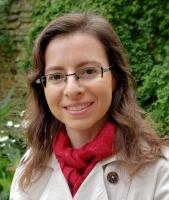
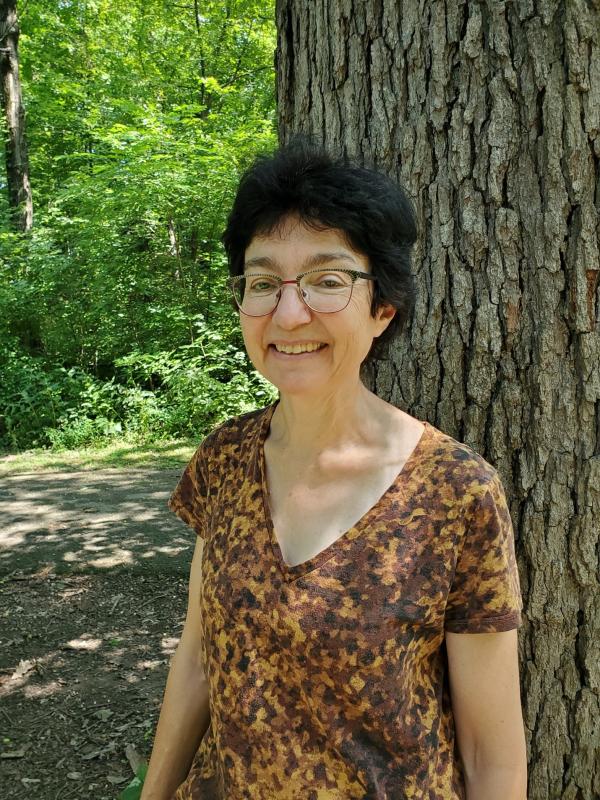
Prof. Ann Heylen is a Professor at the Department of Taiwan Culture, Languages and Literature (TCLL) at National Taiwan Normal University (NTNU), Taipei, Taiwan since 2008. She also serves as Executive Director of the International Taiwan Studies Center at NTNU. Holding a Ph.D. in Chinese Studies (Sinology) from Catholic University Leuven (KULeuven), her research focuses on Taiwan’s historical narration, colonial periods (Dutch and Japanese), sociolinguistics, and digital humanities. Education: Ph.D. in Chinese Studies (Sinology), Catholic University Leuven (KULeuven), Belgium Research Interests: Prof. Heylen explores Taiwan’s historical discourse through digital newspaper corpora and language planning. Her work applies Einar Haugen’s sociolinguistic matrix model to analyze Taiwanese language standardization. She also investigates 17th-century European presence in East Asia, particularly Dutch-Taiwan relations, and uses ego-documents (diaries, oral histories) to study Taiwanese national identity. Publications: Her work bridges historical analysis and modern methodologies, with recent focus on digital humanities and colonial historiography. Affiliations: Founding board member of the European Association of Taiwan Studies (EATS) Editor-in-Chief of the East Asian Journal of Popular Culture (Intellect Books) Current Projects: Monograph on Formosa media narratives in Benelux newspapers (19th-20th centuries) and 400-year Dutch-Taiwan relations commemoration studies.
Dr. Noga Ganany serves as University Associate Professor in the Study of Late Imperial China at the Faculty of Asian and Middle Eastern Studies, University of Cambridge, and holds dual roles as Governing Body Fellow and Director of Studies at Sidney Sussex College. Her scholarship centers on cultural history of Ming-Qing China (1400-1900), specializing in literature, religion, and book history with emphasis on print culture's role in religious practices. Education: PhD, Columbia University (2018) Research Focus: Dr. Ganany investigates the interplay between writing and worship in late-Ming hagiographic literature, examining how commercial publishing reshaped reverence for cultural icons and influenced pilgrimage. Her work extends to conceptualizations of death/afterlife through figures like King Yama, bridging literary analysis, religious studies, and historical context with material culture of the book. Publication Trends: Recent articles (2013-2023) reveal consistent engagement with religious narratives in late imperial China, particularly netherworld journeys, hagiographic texts, and tomb art. Her scholarship demonstrates interdisciplinary methodology combining textual analysis with visual/material sources, highlighting print culture's transformative role in religious practices and icon veneration. Academic Leadership: She actively supervises graduate research in late-imperial Chinese literature and religions, currently guiding Ilay Golan's PhD on overseas sailor religious traditions. Dr. Ganany organizes two major sponsored lecture series: 'Book Culture in Buddhism and Beyond' (Glorisun Global Buddhist Network) and the 'Yin-Cheng Distinguished Lecture Series on Buddhism' (Tzu Chi Foundation), fostering cross-disciplinary dialogue in Buddhist studies.
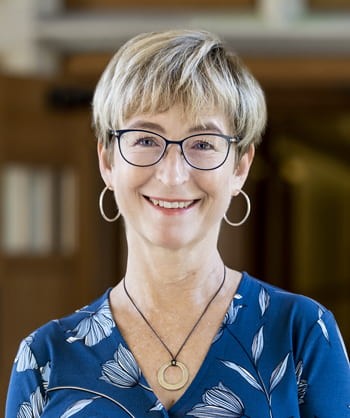
Susan Holmes is Professor at the School of Media, Language and Communication Studies at the University of East Anglia (UEA), where she joined as Reader in Television in 2007 and was appointed to Professor in 2018. She is an active member of several research groups including Media Equality, Film, Television and Media, Gender and Its Intersections Steering Committee, and HealthUEA. Her work spans television studies, celebrity culture, and feminist approaches to eating disorders. Professor Holmes received her academic training at the University of Sussex (BA in English and Media Studies), followed by an MA in Film from the University of Southampton, and completed her PhD on British film and television in the 1950s at the same institution. Prior to joining UEA, she taught Media and Cultural Studies at the Southampton Institute (now Southampton Solent University) and television and film at the University of Kent. Her research focuses on several interconnected areas that challenge traditional disciplinary boundaries. In television studies, she has made significant contributions to understanding British television history, particularly through her books 'British TV and Film in the 1950s' and 'Entertaining TV: the BBC and Popular Programme Culture in the 1950s,' where she challenges canonical ideas about early BBC television. Her work on reality TV examines historical development, generic labeling, and celebrity. Since 2014, she has conducted important empirical research on feminist approaches to eating disorders, analyzing media representations and working directly with people with lived experience. A key focus of this research examines how feminist approaches are neglected in contemporary eating disorder treatment, with implications for both clinical practice and cultural understanding. She co-founded the influential Celebrity Studies journal in 2010 and edited it for the first eight years of its publication. Analysis of Professor Holmes' recent publications reveals a clear trajectory where her expertise in media and television studies converges with her feminist scholarship on eating disorders. Her most recent work (2023-2025) increasingly focuses on cross-cultural applications of feminist approaches to eating disorders (including work in China), the use of innovative methodologies like Photovoice, and examinations of therapeutic alliance in treatment settings. Simultaneously, she continues to analyze contemporary media representations, particularly focusing on motherhood, true crime television, and reality TV through feminist lenses. This dual focus demonstrates how media representations shape cultural understandings of both celebrity and health conditions. Professor Holmes' significant contributions to academia have been recognized with several prestigious awards: Senior Fellowship from Advance HE (2024) UEA engagement award (2017) ALPSP award nomination for Celebrity Studies as best new journal (2011) She currently runs the Feminist Media Studies research cluster at UEA and is actively supervising postgraduate research in areas including popular television, television/film history, British TV history, stardom/celebrity, and feminist approaches to eating disorders. Her current major research project is the 'ALLIANCE study' (2024-2026), funded by the National Institute for Health and Care Research, which aims to develop practice and policy recommendations to support effective therapeutic alliance in inpatient treatment for eating disorders. This builds on her earlier British Academy-funded research on 'Entertaining Television: British TV, the BBC and Popular Programme Culture in the 1950s' (2007-2008). Professor Holmes plays a significant role in the academic community through her editorial work, serving on the boards of journals including Archives of Psychology, Big Data & Society, and Critical Studies in Television, and previously as co-founder and editor of Celebrity Studies. She has also been active in media engagement, contributing expert commentary on topics ranging from Netflix's portrayal of eating disorders to Celebrity Big Brother.
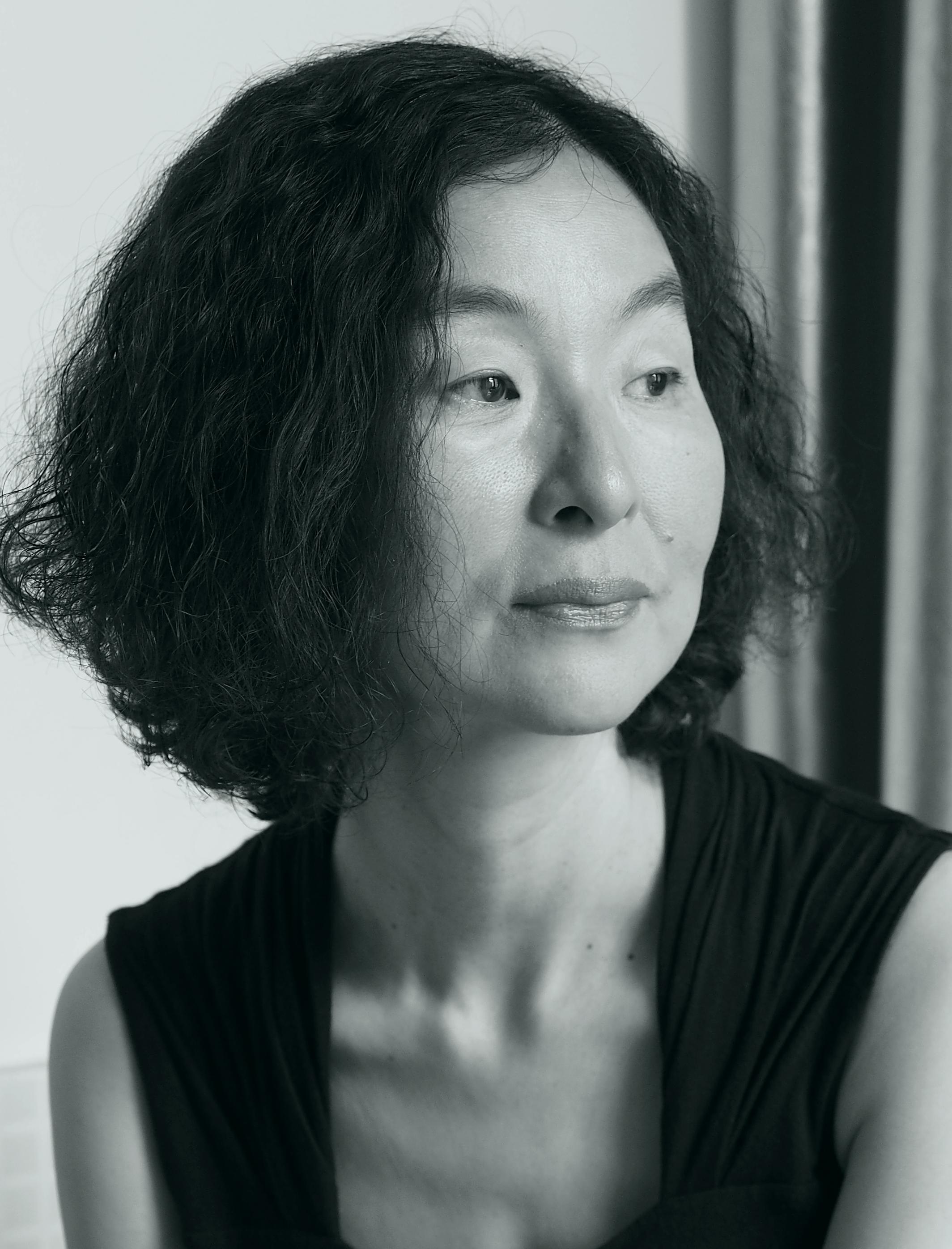
Lingzhen Wang is a Professor of East Asian Studies at Brown University, specializing in modern Chinese literature and culture, women's cinema, critical theory, and transnational feminist studies. She received her PhD in East Asian Literature from Cornell University and B.A./M.A. from Nanjing University. Research Interests Her research focuses on women's liberation movements in Chinese revolutionary history, socialist feminism, and the intersection of gender, media, and cultural studies. She critically examines how Chinese female filmmakers and writers navigate institutional frameworks and global ideologies. Scientific Awards Distinguished IWLC Visiting Professor, Tsinghua University National Endowment for the Humanities Fellowship Bunting Fellowship, Radcliffe Institute Teaching She teaches courses on modern Chinese literature, China through cinema, gender studies, and media analysis, including courses like Chinese Women, Gender and Feminism and Market Economy and Popular Culture in Contemporary China .
Panpan Yang is a Lecturer in Arts and Visual Cultures of Modern China at the School of Arts, SOAS University of London. She joined SOAS in 2021 after completing her joint PhD at the University of Chicago under the direction of Wu Hung, Tom Gunning, W. J. T. Mitchell, Judith Zeitlin, and Dana Polan. Her interdisciplinary work bridges art history, screen studies, East Asian studies, and digital humanities, with a focus on innovative methodologies in art historical writing. Dr. Yang earned a dual BA from Peking University, double majoring in art and philosophy, followed by an MA from Tisch School of the Arts at NYU, and a PhD from the University of Chicago. During her undergraduate studies, she served as president of the Society of Dream of the Red Chamber Studies, which informed her secondary academic interest in Redology and the visual material world of the novel Hong lou meng. Panpan Yang's research explores how minor discourses can deterritorialize the terrains of both art history and screen studies. Her work demonstrates a multimethodological approach attentive to archival research, material practices, close visual analysis, computer-aided vision, and cross-cultural theorization. She is particularly interested in Chinese animation history, calligraphic imagination in contemporary art, and the intersections between traditional Chinese art forms and new media. Her publications reveal a consistent focus on Chinese visual culture across multiple media forms, with particular attention to animation, film, and calligraphy. Yang's work demonstrates how traditional Chinese art forms engage with contemporary digital media, creating new hybrid forms that challenge disciplinary boundaries. Her research shows a trajectory from historical analysis of Chinese animation to contemporary explorations of calligraphy in digital contexts, revealing the ongoing relevance of traditional Chinese aesthetics in modern media. Dr. Yang has received several prestigious awards for her scholarly and creative work: China's National Young Screenwriter Award Domitor Essay Award Dean's Distinguished Dissertation Award Nomination Honourable Mention from the Association for Chinese Animation Studies As a Principal Investigator, Dr. Yang leads the AHRC-funded research project "Stroke by Stroke: Calligraphic imagination in contemporary Chinese art and emergent media" (2023-25) with Shane McCausland. She was also a collaborating partner on the NEH-funded "Media Ecology Project." Her research has received additional support from the Getty Foundation and the Sino-British Fellowship Trust. At SOAS, she works closely with faculty and graduate students interested in Chinese arts and cultures, art theory, cinematic arts, and digital art history. Dr. Yang is currently developing innovative research at the intersection of traditional Chinese calligraphy and contemporary digital media through her AHRC-funded project. This work explores how calligraphic imagination manifests in contemporary art and emergent media contexts, creating new pathways for understanding Chinese cultural heritage in the digital age.
Christina Klein is a Professor of English and American Studies at Boston College, serving as Director of the Ph.D. Program, American Studies Program, and Literature Core Program. She holds a B.A. in Film Studies from Wesleyan University and a Ph.D. in American Studies from Yale University. Her research focuses on Korean cinema, transnational genres, and Cold War cultural encounters between Asia and the U.S. Expertise: Korean Cinema, Transnational Genres, Cold War Cultural History Affiliations: Harvard's Institute of Korean Studies (Research Associate), Asian Studies Program Steering Committee Her work analyzes films like Bong Joon-ho’s works and explores how Hollywood genres are reworked through Korean contexts. Recent publications include Cold War Cosmopolitanism (2020) and Cold War Orientalism (2020). She has contributed to journals like American Quarterly and Cinema Journal .
Geraint Thomas is a historian of twentieth-century Britain, serving as a College Lecturer and Fellow at Peterhouse, University of Cambridge. His academic focus includes political culture, post-war reconstruction, and Celtic history. He holds a PhD from the University of Cambridge and previously held positions at Oxford, Cambridge, and York. His research explores popular conservatism under the National Government (1930s) and post-war reconstruction politics (1916-1922). He also examines Celtic societies' integration within Anglo-world contexts. Teaching includes courses on modern British and Irish history, twentieth-century global history, and historical methodology. He supervises PhD candidates researching topics like post-war reconstruction legacies, Labour’s working class, and British Chinese communities' political activism. His key publications include *Popular Conservatism and the Culture of National Government in Inter-War Britain* (2020) and co-edited volumes like *Brave New World* (2011). Current research investigates reconstruction politics post-World War I. No scientific awards are explicitly mentioned, but his work is AHRC-funded for select students. He advises on British political history from 1870, specializing in the British state, political leadership, and Celtic politics. His academic network includes collaborations with institutions like the Institute of Historical Research.
London School of Economics and Political Science (LSE)United Kingdom
Professor Leigh K. Jenco holds the position of Professor of Political Theory at the Department of Government, London School of Economics and Political Science (on sabbatical during 2024/25). Her expertise spans Chinese Thought, Taiwan Studies, Political Philosophy, and Global Intellectual History. She previously taught at the National University of Singapore and has held visiting roles at Taiwan's Academia Sinica, National Taiwan University, and the University of Heidelberg. Education: B.A. from Bard College M.A. and Ph.D. from University of Chicago Her research explores late Ming neo-Confucian concepts of equality through literary theory and the 20th-century rediscovery of Chinese folksong compendia. She leads the £1.5M British Academy-funded 'Chinese Global Orders' project and was the principal investigator for the EU's 'East Asian Uses of the European Past' initiative. She served as associate editor of the American Political Science Review (2016–2020). Her publications include groundbreaking monographs like Changing Referents (Oxford UP, 2015) and Making the Political (Cambridge UP, 2010), which bridge political theory with Chinese intellectual history. Current projects focus on Ming dynasty poetics and cross-cultural knowledge transfer. Grants & Projects: Lead investigator for 'Chinese Global Orders' (£1.5M, British Academy) EU H2020 'East Asian Uses of the European Past' (€1.2M) She is fluent in Classical Chinese, Mandarin, and English, and her work emphasizes global comparative frameworks to challenge Eurocentric narratives. Her research often intersects historical texts with contemporary political debates, particularly around cultural borrowing and identity formation.
Sheldon Lu is a Distinguished Professor of Comparative Literature at the University of California, Davis. He holds affiliations with East Asian Studies, Performance Studies, Cultural Studies, Film and Media Studies, Critical Theory, and Environmental Humanities. His academic career includes roles as Chair of the Department of Comparative Literature, Director of the Graduate Program in Comparative Literature, and Founding Co-Director of the Film Studies Program. Lu has taught at institutions including the University of Pittsburgh and Beijing Normal University, and served as a Fulbright scholar in Ukraine (2004-2005). Education: B.A. (1984) and Ph.D. (1990) in Comparative Literature from Indiana University and University of Wisconsin-Madison, respectively. His research bridges literary studies, visual culture, film, and China studies. Key publications include Contemporary Chinese Cinema and Visual Culture (2021, BAFTSS Honorable Mention) and Chinese Modernity and Global Biopolitics (2007). He edited the Critical Interventions book series (2009-2019). Lu's work has appeared in journals like New Literary History , Journal of World Literature , and Cinema Journal . Awards include the 2005 Choice Award for Chinese-Language Film: Historiography, Poetics, Politics . He has organized special journal issues on topics ranging from ecocinema to transnational Chinese cinemas. Teaching focuses on Asian literature, film studies, critical theory, and urban culture. Notable courses include World Cinema and East-West Literary Relations .
Professor Tim Bergfelder is a leading scholar in Film Studies at the University of Southampton, specializing in European and Asian cinema history, film industries, and transnational reception studies. He holds a professorial role in the Department of Film Studies, contributing to both research and academic leadership. Prior to his academic career, Bergfelder studied English Literature, Journalism, and History in Berlin before transitioning to film criticism. He earned his MSc and PhD in Film at the University of East Anglia, UK. His research has been internationally recognized through keynote speaking engagements across Asia, Australia, Europe, and the Americas. He advises on documentaries, exhibitions, and film retrospectives, blending academic expertise with public engagement. Current research focuses on the ERC-funded STUDIOTEC project examining European film studios (1930–1960). He leads the German-speaking émigrés in British cinema project and has coordinated AHRC-funded research on Brazilian stardom. Editorial roles include editor for Screen journal and Berghahn’s Film Europa series. Teaching interests include European film history, transnational cinema, and critical theory. He supervises multiple PhD students in Film Studies. Professional memberships span NECS, BAFTSS, and MeCCSA, with peer review roles for REF2014/2021 and various institutions.
Bal Krishna Sharma is Associate Professor of Applied Linguistics at the University of Idaho's College of Letters, Arts and Social Sciences, with affiliate status at the Habib Institute for Asian Studies. His scholarship examines language globalization across education, tourism, and digital media contexts. Education credentials: Ph.D. in Second Language Studies, University of Hawaii at Manoa (2016) M.A. in Second Language Studies, University of Hawaii at Manoa (2011) M.Ed. in English Education, Tribhuvan University (2004) B.Ed. in English Education, Tribhuvan University (2001) Research explores: Neoliberal influences on language education Intercultural communication in tourism Translingual practices in digital spaces Multilingual policy in South Asia Recent publications analyze linguistic landscapes in pandemic communication, multilingual STEM education, and social media discourse in Nepal. His work integrates sociolinguistic theory with critical analysis of globalization. Teaches courses including Sociolinguistics, Intercultural Communication, and History of the English Language.
Paize Keulemans is an Associate Professor of Chinese Literature at Princeton University's Department of East Asian Studies. His research focuses on the interplay between oral and written literary traditions in Chinese literature, particularly exploring acoustic dimensions in 19th-century martial arts fiction and the role of gossip and rumor in 17th-century texts. He holds a Ph.D. from the University of Chicago (2004) and a B.A. from Leiden University (Netherlands). His work bridges literary analysis with cultural studies, examining topics like Dutch-Chinese interactions since the 17th century and the adaptation of classical texts like The Three Kingdoms into modern media such as video games. Education: Ph.D. in East Asian Languages and Literatures, University of Chicago B.A. in Chinese Language and Literature, Leiden University Research Interests: Acoustic imagination in printed novels Rumor dynamics in late-Ming literature Cultural exchanges between the Netherlands and China Modern adaptations of classical Chinese narratives Publications highlight his exploration of Ming-Qing transition narratives through Dutch tragic plays and the sonic dimensions of martial arts fiction. Current projects include analyzing video game adaptations of classical texts and the role of 'idleness' in literary production.
Ana Paulina Lee is an Assistant Professor of Writing and Digital Humanities in the Comparative Literature, English, and Creative Writing Department at the American University of Paris. She joined AUP in 2025 after teaching Latin American literature and culture at Columbia University for eight years and serving as a Mellon Postdoctoral Fellow at Tulane University. Her interdisciplinary scholarship bridges literature, history, law, and urban studies with particular focus on marginalized narratives in the Americas. Ph.D. from University of Southern California M.A. from New York University B.A. from Binghamton University Professor Lee's research examines how stories—archival, fictional, oral—shape legal imagination, social life, and urban experience in the Americas. She specializes in the intersections of magic, law, and literature in Latin America, with particular focus on Asian and African diasporas in Brazil. Her work traces how narrative functions as both historical record and catalyst for social transformation, exploring themes of slavery, emancipation, colonial legacies, and urban memory. She approaches these topics through interdisciplinary lenses combining literary analysis with histories of labor, migration, and performance. Lee's recent publications reveal a consistent focus on marginalized narratives and their impact on social structures. Her scholarship connects legal history with cultural production, showing how magical thinking and narrative practices shape urban spaces and social relations. Works like 'Urban Sorcery, Segregation, and Spectacle in Twentieth-Century Rio de Janeiro' and 'Black Magic City' demonstrate her innovative approach to understanding the relationship between occult logics and legal frameworks in Brazilian contexts. Her research on diasporic communities, particularly Chinese and Japanese experiences in Latin America, contributes significantly to transnational and comparative race studies. David B. Larson Fellowship in Health and Spirituality, Kluge Center, United States Library of Congress (2025-2026) National Endowment for the Humanities Fellowship (2025) Social Sciences Research Council, Inaugural Recipient of Interdisciplinary Projects in the Social Sciences (2020-2023) Institute for Ideas and Imagination Fellowship, Columbia University in Paris, France (2021-2022) Provost's Tsunoda Senior Fellowship, Visiting Scholar, Waseda University, Tokyo, Japan (2019) Heyman Center Fellow, The Heyman Center for the Humanities, Columbia University (2017-2018) Fulbright, Lisbon, Portugal (2013-2014) Professor Lee's scholarly activities have been generously supported by major research grants from the National Endowment for the Humanities, the Social Sciences Research Council, and the Library of Congress. Her work demonstrates a commitment to interdisciplinary approaches that bridge humanities and social sciences, particularly through projects examining intersections of race, migration, and cultural production in the Americas. Her publication 'Socially Engaged Oral History Pedagogy Amid the COVID-19 Pandemic' indicates a strong commitment to innovative teaching methods and community-based research. While specific details about current advisees aren't provided, her research program suggests engagement with graduate students interested in diaspora studies, urban history, and literary-cultural analysis. Though not explicitly mentioned in the available information, Professor Lee's research on urban spaces, magic, and law in Brazil likely involves collaborative work with scholars across disciplines. Her participation in centers like the Institute for Ideas and Imagination at Columbia University suggests engagement with interdisciplinary research communities focused on global cultural production and social transformation. Her work contributes to ongoing conversations about how narrative practices shape legal frameworks and social structures in the Americas, particularly regarding racial formation and diasporic experiences.
Patricia Sieber is a Professor of Chinese Literature in the Department of East Asian Languages and Literatures at The Ohio State University. She holds a Ph.D. and M.A. in Chinese literature from the University of California, Berkeley. Her research focuses on print culture, performance culture, and transcultural studies, with emphasis on traditional Chinese drama's global afterlives. She directs the Translation and Interpreting Program and leads the Chinese Theater Collaborative project funded by OSU's Arts and Humanities Grant. Notable works include Theaters of Desire (2003) and editorial work on How To Read Chinese Drama (2022). Awards include the 2023 Ratner Teaching Award. She has held fellowships at the Library of Congress, Princeton Library, and Taipei's National Central Library. Active in scholarly societies, she serves on editorial boards for journals like Journal of Chinese Literature and Culture . Her teaching spans traditional Chinese literature, translation theory, and interdisciplinary courses. She pioneered experiential learning initiatives including a drama translation residency with Amy Ng. Her research has been supported by NEH, ACLS, Chiang Ching-Kuo Foundation, and DAAD grants. Public outreach includes collaborations with the Royal Shakespeare Company and media appearances (BBC, New York Times).
Thomas B. Gold is a Professor of Sociology at the University of California, Berkeley, and has held multiple leadership roles, including Executive Director of the Inter-University Program for Chinese Language Studies (IUP), a consortium managing advanced Chinese language programs at Tsinghua University. He has also served as Associate Dean of International and Area Studies, Founding Director of the Berkeley China Initiative, and Chair of the Center for Chinese Studies. Gold’s research examines the emergence of individual autonomy and civil society in East Asian contexts, particularly mainland China and Taiwan, focusing on topics like guanxi, entrepreneurship, popular culture, and non-governmental organizations. Gold earned his undergraduate degree in Sociology from Oberlin College, followed by a Master’s in Regional Studies-East Asia and a PhD in Sociology from Harvard University. His early academic work included being among the first American exchange students to study in China at Fudan University in Shanghai (1979-1980). He has taught courses on Development and Globalization, Contemporary Chinese Society, and special topics like North Korean Society and non-profits in education. His advocacy for public sociology led to roles on boards of organizations such as the National Committee on U.S.-China Relations and the East Bay College Fund, alongside editorial board positions in scholarly journals. Gold’s research trends emphasize civil society development, post-authoritarian societal change, and cross-strait dynamics between China and Taiwan. His work bridges traditional cultural frameworks with modern political and economic transformations, particularly in analyzing how individual agency evolves within authoritarian systems. Awards include the 2007 Distinguished Teaching Award and the 2010 Chancellor’s Award for Civic Engagement. As an advisor, he supports international student groups like Strait Talk and the East-West Coalition, and advises programs in Japan and Singapore. His civic engagement and academic leadership highlight a commitment to both scholarly rigor and practical societal impact. Labs/Teams: Gold is affiliated with the Institute of East Asian Studies (IUP program), the Center for Chinese Studies, and collaborates with academic consortia and civic organizations globally.