David Salesin is an Affiliate Professor in the Department of Computer Science & Engineering at the University of Washington and a Principal Scientist/Director at Google Research since 2019. He has held academic roles at Cornell University (Visiting Assistant Professor, 1991-92) and guest professorships at Zhejiang University. His career spans academia and industry, including leadership at Adobe's Creative Technologies Lab (2005-17) and Microsoft Research (1999-2005). PhD, Stanford University (1991) Sc.B., Brown University (1983) His research focuses on computer graphics, particularly non-photorealistic rendering, digital typography, color science, and adaptive document layout. He pioneered techniques in image-based rendering, pen-and-ink illustration, and facial animation, with applications in multimedia and user interface design. Article Trends : His work bridges procedural content generation, 3D visualization, and artistic computing, emphasizing user-driven tools for creative industries. Key subfields include texture advection, multiresolution modeling, and real-time camera control for virtual cinematography. Scientific Awards : ACM Fellow (2002) ACM SIGGRAPH Achievement Award (2000) Carnegie Foundation Professor of the Year (1998) NSF Presidential Faculty Fellow (1995-98) Alfred P. Sloan Research Fellowship (1995-97) Numerous industry grants and lab donations He has advised over 30 PhD and Master's students, including leaders at Microsoft, Pixar, and Google. His labs at UW and Adobe focused on graphics, imaging, and creativity tools.
Hanbyul Joo is an Assistant Professor in the Department of Computer Science and Engineering at Seoul National University (SNU). Prior to joining SNU, he was a Research Scientist at Facebook AI Research (FAIR) in Menlo Park. He completed his Ph.D. in the Robotics Institute at Carnegie Mellon University, working with Yaser Sheikh, and received his M.S. in Electrical Engineering and B.S. in Computer Science from KAIST, Korea. Dr. Joo's educational journey began at KAIST, where he earned both his Bachelor's and Master's degrees. He then pursued his Ph.D. at Carnegie Mellon University's Robotics Institute, completing his dissertation titled "Sensing, Measuring, and Modeling Social Signals in Nonverbal Communication." His doctoral work focused on developing the Panoptic Studio, a unique sensing system with over 500 synchronized cameras for capturing social interactions. Dr. Joo's research primarily focuses on endowing machines and robots with the ability to perceive and understand human behaviors in 3D . His goal is to build "social Artificial Intelligence" that can interact with humans using social signals (body languages). He pursues this direction using data-driven methods where data is collected by measuring the wide spectrum of social signals transmitted during interpersonal social interaction. His research spans computer vision, machine learning, computer graphics, and robotics , with particular emphasis on 3D human pose estimation, human-object interaction, and social signal processing. His recent publications demonstrate a clear trend toward leveraging diffusion models for 3D reconstruction and generation tasks, with a focus on human-centric applications. His work bridges the gap between 2D image understanding and 3D scene reconstruction, often utilizing pre-trained models to overcome data limitations. The research consistently addresses fundamental challenges in understanding human behavior, interaction with objects, and social dynamics in 3D space. Dr. Joo is a recipient of several prestigious awards including the Samsung Scholarship and the CVPR Best Student Paper Award in 2018 . His paper "Total Capture: A 3D Deformation Model for Tracking Faces, Hands, and Bodies" received this honor at CVPR 2018. His research has been widely recognized in top computer vision and AI conferences, with multiple oral presentations at venues like CVPR, ICCV, and ECCV. Dr. Joo actively mentors a large group of students, with approximately 15 current students working toward MS/PhD degrees under his supervision. His lab, the SNU VCLab, focuses on cutting-edge research in computer vision and graphics. He has secured significant research funding through his work, though specific grant details aren't provided on his website. Dr. Joo frequently serves as an area chair for major conferences including CVPR, ICCV, and NeurIPS, demonstrating his standing in the academic community. Dr. Joo leads the SNU VCLab, which has developed several notable datasets and tools including SNU ParaHome, FrankMocap, and the CMU Panoptic Studio Dataset. His lab maintains strong industry connections, with students interning at leading companies like Meta. The lab's research focuses on building the infrastructure and algorithms needed for social AI, with an emphasis on practical applications that can be deployed in real-world settings.
Barbara Mones is a Teaching Professor in the Paul G. Allen School of Computer Science & Engineering at the University of Washington. She serves as Director of the Reality Studio, part of the Reality Lab, and leads the Facial Expression Research Group (FERG) and the Octopus Research Group (ORG). Education: Undergraduate degree from University of Michigan, Ann Arbor Post graduate certification in Animation from Sheridan College, Oakville, Canada MFA from Rhode Island School of Design Professor Mones specializes in Human-Centered Computing and Interaction with the Physical World, with expertise in Augmented, Virtual & Mixed Reality; Computer Graphics & Animation; and Computing Education Research. Her research focuses on the intersection of animation, storytelling, and immersive technologies, exploring how these can be effectively integrated into educational contexts and creative production pipelines. She has developed specialized curriculum for facial expression in animated characters and immersive storytelling environments. Professor Mones has directed and produced more than twenty animated shorts throughout her career at the University of Washington. Her recent works demonstrate expertise in character animation, facial expression, and digital storytelling, often incorporating innovative techniques in virtual and augmented reality. These films showcase her commitment to advancing both the artistic and technical aspects of computer animation. Scientific Awards: SIGGRAPH 2021 Distinguished Teaching Award NASA Group Achievement Award Professor Mones has been instrumental in developing animation curriculum that has influenced programs worldwide. She serves on the ACM SIGGRAPH Executive Committee and the Education Committee, where she continues to shape computer graphics education globally. Her teaching approach emphasizes hands-on, project-based learning through the complete animation production pipeline. She leads the Reality Studio, which focuses on research and development in immersive storytelling technologies, and oversees the Facial Expression Research Group which investigates the technical and artistic aspects of creating expressive digital characters for animation and virtual environments.
Sheldon Andrews is an Associate Professor of Software Engineering and IT at École de technologie supérieure (ETS) in Montreal, Canada, with an adjunct appointment in Computer Science at McGill University. He is a member of the Multimedia Research Laboratory and has established himself as a leading researcher in physics-based computer animation and simulation. Andrews earned his Ph.D. in Computer Science from McGill University (2015), MASc in Electrical and Computer Engineering from the University of Ottawa (2007), and B.Eng. in Computer Engineering from Memorial University (2004). His academic journey reflects a strong foundation in both theoretical and applied aspects of computer engineering and graphics. His research focuses on real-time physics simulation, articulated mechanism simulation, 3D character animation, motion capture, computational contact mechanics, and virtual environment modeling. Andrews' work bridges the gap between theoretical physics and practical applications in computer graphics, with particular emphasis on creating physically plausible animations that can run in real-time. His research has significant implications for video games, virtual reality, and robotics applications. Analysis of his recent publications (2022-2025) reveals a strong trend toward increasingly sophisticated physics-based character animation techniques, with growing integration of machine learning approaches. His work spans multiple subfields including collision detection, deformable object simulation, vehicle physics, and reinforcement learning for character control, demonstrating both breadth and depth in his research program. VRIPHYS 2012 best paper award for 'Policies for goal directed multi-finger manipulation' Andrews has advised numerous graduate students through their PhD and Master's degrees, with many going on to positions at major companies like DNEG, CM Labs Simulations, and AMD. His professional service is extensive, having served as Program Chair for SCA 2025 and MIG 2024, Conference Chair for I3D 2019, and on program committees for major conferences including SIGGRAPH, SCA, and MIG for multiple years. He has also been active in the Montreal SIGGRAPH Chapter as Secretary from 2018-2021. As a core member of the Multimedia Research Laboratory, Andrews collaborates with researchers across multiple disciplines to advance the state of the art in physics-based simulation. His lab maintains strong industry connections, including a visiting researcher position at Roblox Research, ensuring that theoretical advances translate to practical applications in gaming and virtual environments.
Jon Macey is a Senior Lecturer in Computer Animation at Bournemouth University . His work focuses on technical and artistic aspects of animation, particularly character modeling and deformation techniques. Research interests include: Facial deformation transfer Character skinning 3D modeling Real-time animation algorithms His publications highlight collaborations with international researchers in computational symmetry and animation production workflows. Notable works include: 2020: Fully automatic facial deformation transfer 2007: Production friendly character skinning Contact: jmacey@bournemouth.ac.uk (Weymouth House W235, Talbot Campus, Poole, BH12 5BB).
Xue Hang is a Lecturer in the Animation Department at Tongji University's School of Art and Media, where he has been teaching since 2002. He holds a Master of Science degree in Optics from Fudan University (1993) and has expanded his expertise through international exchanges at Hungary's Academy of Art and Design (1998-1999) and Germany's Bauhaus University (2010). His multidisciplinary career spans physics, visual design, and new media arts. Research interests include: Film and television animation Creative photography Art history Visual aesthetics in digital media Key research projects involve: Teaching reform for high-definition film/TV development Multimedia documentation of historical narratives (e.g., 'Jinggangshan' music-dance epic) Cultural value preservation through modern creative industries Scientific awards highlight: 2021 Special Prize in Chinese Poetry Competition Multiple teaching excellence awards (2008-2014) 1996 Li Guohao Young Faculty Award 2009 Shanghai Teaching Achievement Award (Team member) His 15 most recent publications demonstrate expertise in multimedia production, cultural adaptation, and digital art education, with projects spanning both theoretical and practical domains of new media arts. Notable collaborations include international academic exchanges with Germany and Hungary.
Joe Geigel is a Professor in the Department of Computer Science at Rochester Institute of Technology's Golisano College of Computing and Information Sciences. He holds a DSc in Computer Science from George Washington University, an MS in Computer Science from Stevens Institute of Technology, and a BS in Mathematics from Manhattan College. His career includes industry positions at Eastman Kodak, Bell Laboratories, and RCA Solid State before transitioning to academia. Geigel's research explores the intersection of computer graphics and performing arts, with expertise in: Virtual and augmented reality systems Facial expression analysis and motion capture Interactive theatre and dance technologies Human-computer interaction for creative applications Interdisciplinary education methods His publications demonstrate consistent innovation in virtual performance technologies, with recent work focusing on mixed reality theatre, museum interpretation systems, and educational applications of immersive technologies. He has directed over 15 technology-enhanced productions including Singring and the Glass Guitar and Farewell to Dawn . As co-director of the CS Graphics and Applied Perception Lab, Geigel leads the XRLive team developing extended reality solutions for live performances. He teaches graduate courses in computer graphics, animation algorithms, and virtual reality applications.
Knud Henriksen serves as a Part-time Lecturer at the Department of Computer Science (DIKU), University of Copenhagen, within the Image Analysis, Computational Modelling and Geometry research section. His academic profile integrates teaching and research in computer graphics, physics-based animation, and computer vision, contributing to DIKU's expertise in visual computing methodologies. His educational background comprises: Elektroingeniør (Electrical Engineering) Cand. Scient (Master of Science) Ph.D. Henriksen's research focuses on Computer Graphics, Physics-Based Animation, Computer Vision, and Mathematics, with current investigations into inverse kinematics using bone representations and quaternions. His work emphasizes improving computational efficiency and realism in character animation through mathematical modeling and geometric algorithms. Analysis of his 30 publications (2002-2008) reveals consistent innovation in animation algorithms, particularly in inverse kinematics, physics simulation, and spline-based modeling. These contributions bridge theoretical computer graphics with practical applications in gaming and virtual reality, demonstrating robust solutions for 3D interaction and character rigging. No scientific awards are documented in the available information. Henriksen has supervised graduate projects including a 2008 thesis on quaternion-based inverse kinematics. While specific grant details are absent, his research aligns with DIKU's interdisciplinary approach. He operates within the Image Analysis, Computational Modelling and Geometry section, which collaborates extensively with industry on visual computing challenges.
Markus Gross is a Professor of Computer Science at ETH Zurich, where he founded the Computer Graphics Laboratory in 1994. He also serves as the Chief Scientist of the Walt Disney Studios and Director of DisneyResearch|Studios, a position he has held since 2008. His work bridges academia and industry, with research that has been applied in Hollywood films, sports broadcasting, and medical applications. Professor Gross received his Master of Science in electrical and computer engineering and his Ph.D. in computer graphics and image analysis from Saarland University in Germany in 1986 and 1989. His research spans multiple domains of computer graphics and visual computing. Early in his career, he pioneered point-based graphics techniques that offered alternatives to traditional triangle-based rendering pipelines. More recently, his work has focused on digital humans, AI characters, and machine learning applications for visual computing. His research has led to significant practical applications, including the Medusa capture system used in Hollywood films, the blue-c immersive telepresence system, and the Liberovision technology now used by major sports broadcasters. Analysis of his recent publications reveals a strong focus on neural rendering techniques, particularly around Gaussian splatting and diffusion models. His work increasingly integrates AI with traditional computer graphics methods, with applications in digital humans, medical visualization, and video processing. Many papers demonstrate practical applications in film production, medical treatment planning, and interactive systems. Professor Gross has received numerous prestigious awards throughout his career: 2024 Eurographics Gold Medal 2021 Steven Anson Coons Award for outstanding creative contributions to computer graphics 2019 Technical Achievement Award from the Academy of Motion Picture Arts and Sciences 2013 Karl Heinz Beckurts-Preis 2013 Konrad-Zuse-Medaille für Informatik 2013 Technical Achievement Award from the Academy of Motion Picture Arts and Sciences 2012 Academy Sci-Tech Oscar award for Wavelet Turbulence Professor Gross has mentored numerous Ph.D. students throughout his career, with 20 Ph.D. students contributing to his blue-c project alone. His research has been supported by significant funding from both academic and industry sources, enabling the creation of multiple startups including Cyfex, Novodex, LiberoVision, Dybuster, and Animatico (acquired by Nvidia in 2022). He leads the Computer Graphics Laboratory at ETH Zurich and DisneyResearch|Studios, fostering collaboration between academic research and practical industry applications. His teams have developed groundbreaking technologies that have impacted film production, sports broadcasting, medical visualization, and educational technology.
Simone Barbieri is a Research Engineer (EngD) at Bournemouth University's Centre for Digital Entertainment, funded by EPSRC. He collaborates with Thud Media in Cardiff under the supervision of Dr. Xiaosong Yang and Dr. Zhidong Xiao. His academic background includes a BSc (2012) and MSc (2014) in Computer Science from the University of Cagliari, Italy, where his Master's Thesis developed a curve-skeleton editing tool and inverse-skeletonization algorithm. His research integrates computer graphics with virtual reality, focusing on sketch-based interaction for character posing and deformation. Key interests include VR content creation, animation pipelines, and human-computer interaction. Publications emphasize VR adaptation, 3D modeling, and geometric algorithms, with consistent applications in animation and gaming. Grants include the EPSRC-funded project '3D VR content creation exploiting 2D character animation' (ongoing since October 2015).
Barbara Solenthaler is a Lecturer at the Department of Computer Science, ETH Zurich. Her research focuses on physics-based simulations, facial animation, and machine learning applications in computer graphics.
Anamaria Weston is a Lecturer in Computer Animation Techniques at Manchester Metropolitan University (MMU), part of the Department of Computing and Mathematics. She specializes in procedural and behavioral animation, focusing on character movement analysis using techniques like Laban Motion Analysis and AI. She leads courses such as 3D Fundamentals, Modelling, Rigging, and Innovation in VFX on the BSc Computer Animation and VFX program, and contributes to the MA Animation course through the Exploration in CG unit. Education includes a BSc in Computer Science (Alexandru Ioan Cuza University), MSc in Computer Animation (Bournemouth University), and an EngD in Computer Animation (University of Bath). She holds a PGCert in Learning and Teaching in Higher Education (Distinction). Her research explores procedural animation, physics-based techniques, and expressing emotions through abstract movement. She co-founded the CAVE Animation Jam, an annual interdisciplinary project for students. She previously co-chaired the Department’s Athena SWAN initiative to promote gender equality. Her technical expertise spans Autodesk Maya, Unreal Engine, Python, and C/C++.
Professor Greg Maguire is a faculty member at Ulster University , holding the Professor of Animation role within the Belfast School of Art under the Faculty of Arts, Humanities & Social Sciences. His work bridges academia and industry, focusing on sustainable animation ecosystems through partnerships with organizations like Digital Northern Ireland 2020 , Northern Ireland Screen , and the Visual Effects Society (USA) . He pioneered the Toody Threedy animation cluster to connect students, researchers, and studios globally. Research Focus : Facial animation, AI-driven character modeling, and industry-academia collaboration Industry Leadership : R&D Supervisor at Lucasfilm Animation, Technical Animation Supervisor at Walt Disney Feature Animation His recent publications with colleagues explore deep learning for facial animation and spectral mesh processing , emphasizing technical rigor and artistic innovation. He contributed to Academy Award-nominated visual effects in Harry Potter and the Prisoner of Azkaban and Avatar , maintaining Ulster University's status as a hub for applied creative technology research.
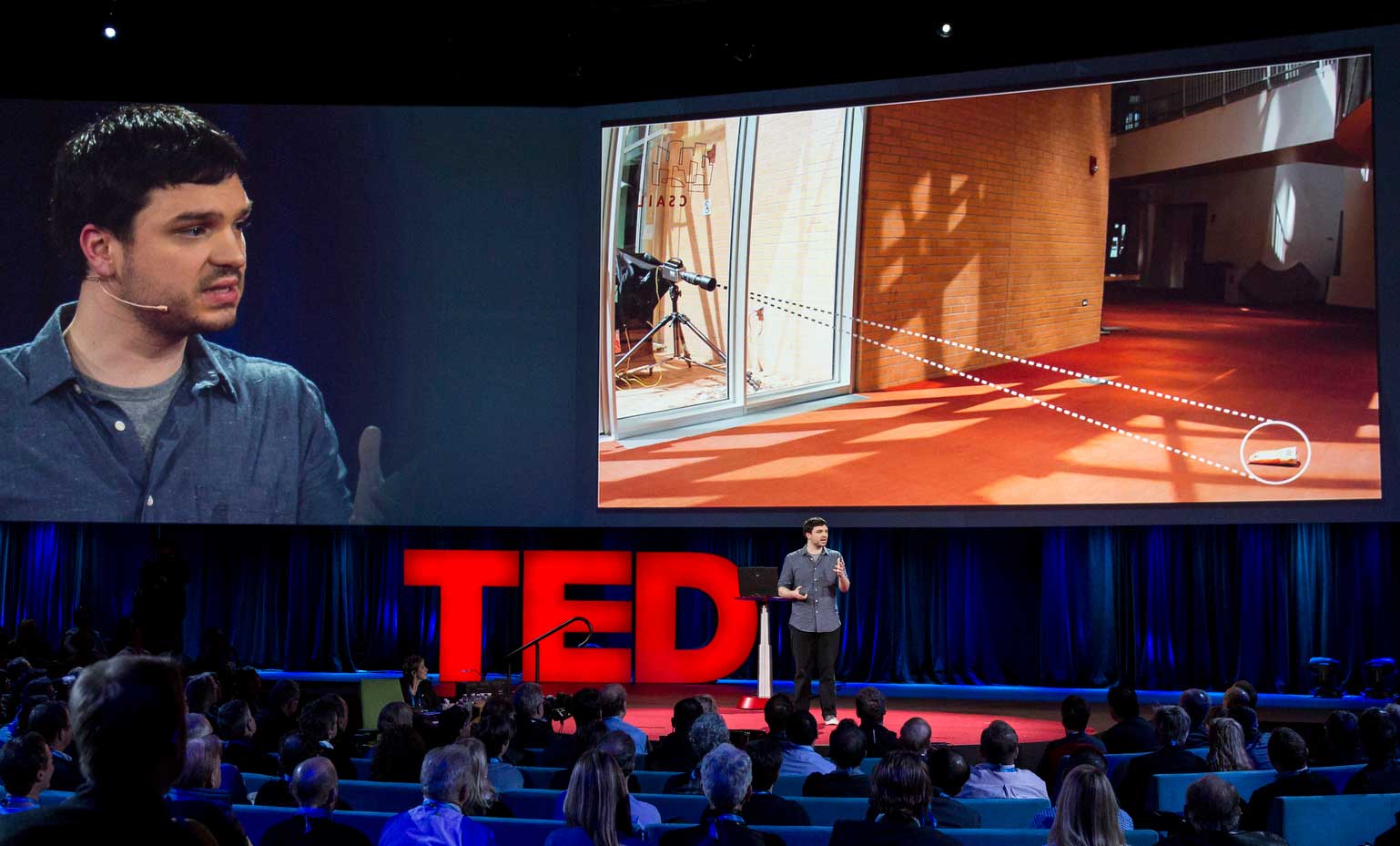
Abe Davis is an Assistant Professor of Computer Science at Cornell University in Ithaca, NY, with a research focus at the intersection of Computer Graphics , Computer Vision , and Human-Computer Interaction (HCI) . He leads a research group that develops innovative computational methods for video analysis, augmented reality (AR), and visual editing. Davis previously held postdoctoral positions at Stanford University and Cornell Tech , following his Ph.D. in Electrical Engineering and Computer Science from MIT (2016) and undergraduate degree in Computer Science at Stanford. Education Ph.D. in Electrical Engineering and Computer Science, MIT M.A. in Electrical Engineering and Computer Science, MIT B.S. in Computer Science, Stanford University Davis' research addresses novel problems in computational video editing, AR applications, and structural health monitoring. His group has made significant contributions to visual vibration analysis , light field reconstruction , and video-based sound recovery . Recent work includes Noise-Coded Illumination for fake video detection and MeCapture for mobile AR body change visualization. His publications span top-tier conferences like SIGGRAPH, CVPR, and CHI. Scientific recognition includes being named to Forbes 30 Under 30 (Science, 2015), 5 TED 2015 Technologists , and recognition as one of The 8 most innovative scientists in tech and engineering (2015). His TED 2015 talk on visual vibration analysis gained international attention. The group's work has been featured in Ars Technica , Engadget , and Cornell Chronicle .
Dr. Adam Watkins is a Full Professor and Coordinator of the 3D Animation and Game Design program at the University of the Incarnate Word. With over 20 years of teaching experience, he specializes in animation techniques, interactive media, and game development. His research intersects art and technology through interactive installations, educational tools, and virtual/augmented reality applications. Recent projects include museum installations for the McNay Art Museum and virtual choreography tools. Watkins explores innovative approaches to 3D education, particularly in anatomy modeling and cinematography principles for animators. As founder of Spoon Designs LLC and Augmented Ideas LLC, he bridges academic and industry practices. His scholarly work examines curriculum development for 3D production pipelines and technology integration in studio-based education.