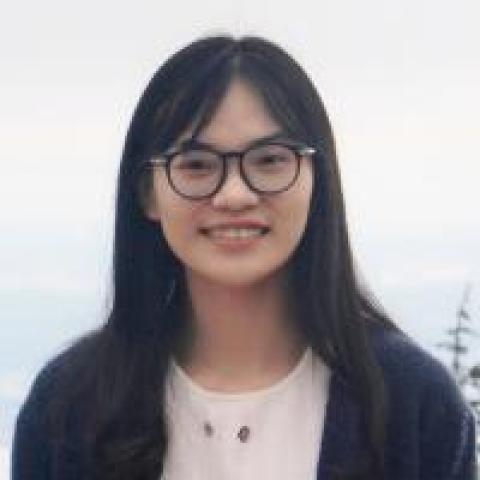
Subhashis Ghoshal is a Goodnight Distinguished Professor in the Department of Statistics at North Carolina State University (NCSU). He holds a Ph.D. in Statistics from the Indian Statistical Institute (1995). His research focuses on Bayesian nonparametrics, high-dimensional models, asymptotic theory, and functional data analysis. He has authored influential books like *Fundamentals of Nonparametric Bayesian Inference* (2017) and contributed to methodologies in image processing and statistical inference. Key awards include the Goodnight Distinguished Professorship (2021), Dr. Cavell Brownie Mentoring Award (2014-15), and the De Groot Prize (2019). He has held editorial roles in journals like *Statistical Science* and *Annals of Statistics*. His work bridges theory and applications, addressing challenges in modern statistical problems such as uncertainty quantification and causal inference. He advises on graduate programs and actively contributes to academic leadership at NCSU.
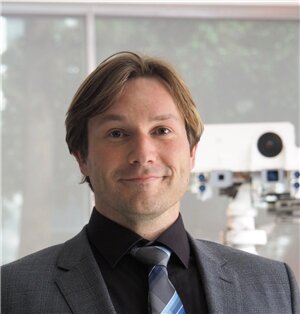
Vladimir Spokoiny is a Professor at the Departments of Mathematics and Economics of the Humboldt University of Berlin and Head of the Research Group "Stochastic Algorithms and Nonparametric Statistics" at the Weierstrass Institute for Applied Analysis and Stochastics (WIAS) in Berlin, Germany. His research spans multiple areas of statistics, machine learning, and financial mathematics, with significant contributions to nonparametric statistics, high-dimensional data analysis, and statistical methods in finance. Spokoiny received his M.Sc. in applied mathematics from the Moscow Institute of Railway Engineering in 1981 and his Ph.D. in mathematics from Lomonosov Moscow State University in 1988. He completed his Habilitation at Humboldt University in 1996. His academic career includes positions at the All-Union Institute of Railway Transport in Moscow, the Institute for Information Transmission Problems in Moscow, and the Institute for Applied Analysis and Statistics in Berlin before joining the Weierstrass Institute and Humboldt University where he has been a professor since 2002. Spokoiny's research focuses on adaptive nonparametric smoothing and hypothesis testing, high dimensional data analysis, statistical methods in finance, image analysis with applications to medicine, classification, and nonlinear time series. His work often addresses the challenges of nonstationarity in time series data and develops innovative methods for volatility estimation and risk management. He has made significant contributions to the development of adaptive weights smoothing procedures, which have applications in image processing, community detection, and manifold learning. His recent work has expanded into high-dimensional statistics, Bayesian inference, and optimization methods for machine learning, with publications demonstrating novel approaches to Gaussian approximation, Laplace methods, and statistical inference in non-Euclidean spaces. Spokoiny has supervised numerous PhD students including Oliver Reiss, Danilo Mercurio, Ying Chen, Elmar Diederichs, and Mstislav Elagin, whose research has focused on mathematical finance, time series analysis, and statistical methods. He serves as an Associate Editor for The Annals of Statistics (since 2004) and Statistics and Decisions (since 2002), and has previously served on the editorial board of the Journal of Statistical Planning and Inference. His professional activities include reviewing for major statistical journals including Annals of Statistics, Bernoulli, Econometrica, and Journal of American Statistical Association, as well as reviewing grant proposals for the National Science Foundation (USA), German Research Foundation, and Netherlands Organisation for Scientific Research. Spokoiny is a member of several professional societies including the International Statistical Institute, American Statistical Association, Institute of Mathematical Statistics, and Bernoulli Society. He is fluent in Russian (mother tongue), English, and German, and has good knowledge of French. His research group at WIAS focuses on developing novel statistical methodologies with applications across various scientific domains, particularly emphasizing adaptivity and robustness in complex data environments. The group's work has significant implications for financial risk management, medical imaging, and machine learning applications, with recent publications addressing fundamental questions in high-dimensional statistics and nonparametric inference.
Masoud Asgharian is a Professor in the Department of Mathematics and Statistics at McGill University. His research focuses on survival analysis, changepoint problems, nonparametric Bayesian methods, and data envelopment analysis. He has contributed to influential studies on dementia survival rates, censored data methodologies, and statistical efficiency measures. His work bridges biostatistics and operations research, with applications in public health and medical sciences. Key contributions include methodologies for prevalent cohort survival analysis, input relaxation efficiency measures in stochastic DEA, and causal inference techniques. Asgharian has collaborated extensively with researchers in epidemiology and biomedical engineering, as evidenced by his co-authored publications on topics ranging from tooth enamel properties to low-precision neural network quantization. His research has been published in high-impact journals such as New England Journal of Medicine , Journal of the American Statistical Association , and Biometrics . Current affiliations include leadership roles in statistical research at McGill, with ongoing projects in computational statistics and healthcare analytics.
Tara Garnett serves as Director of TABLE, a global knowledge platform for food systems analysis hosted by the Environmental Change Institute within the School of Geography and the Environment at the University of Oxford. TABLE operates as a collaboration between the University of Oxford, Wageningen University & Research, and the Swedish University of Agricultural Sciences, facilitating evidence-based dialogue on sustainable food futures. Her research interrogates the complex intersections between food systems, climate change, public health, and sustainability, with particular focus on livestock as a critical nexus point. Garnett investigates how scientific knowledge is translated across policy, civil society, and industry contexts, emphasizing the diverse values stakeholders bring to food system challenges. Her work consistently advocates for systems-thinking approaches that recognize the interconnected nature of food-related problems. As a fellow of the Oxford Martin School and co-investigator on the Wellcome Trust-funded Livestock, Environment and People (LEAP) project, she contributes to high-impact research at the food-environment-health interface. Her publication portfolio reveals evolving research trajectories from early climate-food connections toward contemporary explorations of alternative proteins, regenerative agriculture, and the political economy of food system transformation. Recognition Oxford Martin School Fellowship Garnett's leadership through TABLE exemplifies her commitment to creating spaces for inclusive, evidence-informed dialogue about building food systems that are sustainable, resilient, and just. Her work consistently bridges academic research and practical application, emphasizing that context-specific solutions and multi-stakeholder engagement are essential for meaningful food system transformation.
Simon Mak is an Assistant Professor of Statistical Science at Duke University and a Faculty Network Member of the Duke Institute for Brain Sciences. His educational background includes: Ph.D. in Statistics, Georgia Institute of Technology (2018) M.S. in Statistics, Georgia Institute of Technology (2018) B.S. in Statistics, Simon Fraser University (2013) Dr. Mak's research focuses on advanced statistical methodologies for complex scientific problems. His expertise spans statistical modeling , Bayesian inference , Gaussian process emulation , and uncertainty quantification . He applies these methods to nuclear physics (heavy-ion collisions), engineering (engine control systems), and music information retrieval, emphasizing scalability and interpretability in scientific computing. Analysis of his 2023-2025 publications reveals dominant trends in scalable Gaussian process methods for massive datasets and multi-fidelity simulations, particularly applied to high-energy physics and engineering systems. He has pioneered innovations in Bayesian optimization for expensive simulators and developed novel frameworks for online change-point detection in streaming data, demonstrating exceptional cross-disciplinary impact. Dr. Mak leads multiple significant research initiatives: Collaborative Research: Cost-Efficient and Confident Sampling for Modern Scientific Discovery (2023-2026) Science-Integrated Predictive modeLing (SCINPL) for scalable scientific computing (2022-2025) The X-SCAPE collaboration for statistically advanced nuclear collision modeling (2020-2025) These projects fund his development of statistical frameworks for scientific discovery in complex systems. He actively contributes to the JETSCAPE collaboration, developing multi-stage frameworks for studying jet quenching in heavy-ion collisions, and applies statistical methods through the Duke Institute for Brain Sciences to advance neuroscience research.
Clément Mallet is a Senior Researcher and Director of the LASTIG laboratory at Université Gustave Eiffel, IGN, and École Nationale des Sciences Géographiques (ENSG) in Champs-sur-Marne, France. He leads research in geospatial computer vision, focusing on the intersection of remote sensing, computer vision, and machine learning. His responsibilities include overseeing 75 laboratory members and directing the STRUDEL research team focused on spatio-temporal information modeling. Education: Habilitation (HDR) in Geographical Information Science, Université Paris-Est (2016) PhD in Image and Signal Processing, Télécom ParisTech (2010) Engineering Degree in Geographical Information Science, ENSG (2005) Master's in Remote Sensing, Université Paris 6 (2005) Research Interests: Dr. Mallet specializes in multi-modal land-cover mapping, change detection, geohistorical image analysis, and airborne lidar processing. His work integrates deep learning with geospatial data analysis to solve complex problems in environmental monitoring, urban studies, and historical geography. Current research explores foundation models for earth observation and semantic change detection using hybrid data generation techniques. Publication Trends: Mallet's recent articles (2021-2025) demonstrate strong focus on deep learning applications for geospatial challenges: 40% address land-cover mapping innovations, 30% develop novel change detection methodologies, 20% advance lidar data processing, and 10% explore historical map analysis. His work consistently bridges computer vision theory with operational remote sensing applications. Awards and Recognition: Schwidefsky Medal from ISPRS (2016) 5x Outstanding Reviewer awards (CVPR/ECCV/ICCV 2017-2024) Best Paper Awards at GEOBIA 2016 and ISPRS 2014 Young Researcher Award from GDR ISIS (2010) EuroSDR Best PhD Thesis supervision (2020) Research Leadership: Directs multiple national and international projects including MAESTRIA (ANR-funded multi-modal EO analysis) and HIATUS (historical image analysis). Supervised 14+ PhD students in geospatial AI topics. Secured funding from ANR, CNES, EU H2020 (VOLTA, LandSense), and industrial partners. Leads the STRUDEL team developing cutting-edge methods for territory dynamics analysis. Professional Service: Editor-in-Chief of ISPRS Journal of Photogrammetry and Remote Sensing (2021-present). Organized major conferences including ISPRS Congress (2020-2022 Program Chair) and JURSE events. Active in ISPRS working groups since 2008, currently leading initiatives in large-scale machine learning applications for geospatial data.
Jesper Lund Pedersen is an Associate Professor at the Department of Mathematical Sciences , University of Copenhagen , specializing in applied probability theory with applications in financial mathematics and insurance mathematics . His research spans stochastic processes, optimal stopping time problems, and stochastic control. Education : PhD in Mathematics (2000, Aarhus University) His work addresses: (Nonlinear) optimal stopping time problems Stochastic control and filtering Multidimensional point processes Levy processes in finance Key publications reveal expertise in Bayesian changepoint detection , random drift identification , and mean-variance portfolio optimization , with interdisciplinary applications in neuroscience (V-ATPase dynamics) and epidemiology. Scientific awards : Villum Experiment Grant (2018-2020) Steno Research Fellowship (2002-2005) His research collaborations span Denmark, the UK, Germany, and the USA, focusing on probability theory, financial mathematics, and biomedical applications.
Julia Camps is a postdoctoral research associate at the University of Oxford, Department of Computer Science. Her work bridges Computational Biology and Health Informatics, focusing on cardiac digital twin development for precision medicine applications. She specializes in combining data-driven and mechanistic approaches for in silico clinical trials, particularly through Purkinje network modeling and ECG-based calibration. Education: Informatics Engineer (2014) and Master's in Artificial Intelligence (2015-2017) from Universitat Politècnica de Catalunya PhD in Computer Science (2017-2021) at Oxford, completed within the Computational Cardiovascular Science research group under Prof Blanca Rodriguez Current role: postdoc in Prof Rodriguez's group since 2021, focusing on post-myocardial infarction disease progression Software development: open-source cardiac digital twin tools available on GitHub Her research interests center on creating patient-specific cardiac digital twins using multimodal clinical data. This work enables virtual therapy evaluation and in silico clinical trials through: Integration of statistical inference and machine learning techniques Development of Purkinje network models from clinical ECG data Electrophysiological and repolarization sequence modeling Gait detection algorithms for Parkinson's disease applications Recent publications (2024-2025) demonstrate trends in: GPU-accelerated cardiac electrophysiology simulations (MonoAlg3D) Topology-informed ECG electrode localization Sex-specific electromechanical cardiac modeling Multi-modal characterisation of diabetic cardiac deterioration Pro-arrhythmic risk assessment for stem cell therapies
Hans-Georg Mueller is a Professor in the Department of Statistics at the University of California, Davis. His research spans multiple domains of modern statistical methodology, with groundbreaking contributions to functional data analysis, metric statistics, and nonparametric inference for random objects. Key research areas include Fréchet regression, distributional data analysis, network regression, and optimal transport Applications span longitudinal growth studies, brain development, aging and longevity, plant genomics Research Interests : He has pioneered methods for analyzing complex data structures such as functional data, manifold-valued data, and random objects. His work on the PACE approach for longitudinal data has become foundational in the field. Recent Publications demonstrate strong trends in Fréchet analysis, metric statistics, and distributional data modeling, with applications in both biomedical and environmental domains. Books and Edited Works : Author of the foundational monograph Nonparametric Regression Analysis for Longitudinal Data (1988), and co-editor of influential volumes including Change-point Problems (1994) and Mathematical Modeling in Experimental Nutrition (1998).
Holger Dette is a Professor and Chair Holder of Stochastics (specializing in Statistics) at the Faculty of Mathematics, Ruhr University Bochum. He leads the prominent Group Dette within the Institute of Statistics, overseeing a team of researchers, doctoral students, and administrative staff including Birgit Tormöhlen as team assistant. His research group is deeply integrated within the university's mathematical ecosystem, collaborating with other research groups across algebra, analysis, numerics, and topology. Dette's research spans mathematical statistics with strong applications in real-world problems. His primary interests include optimal experimental design, time series analysis, functional data, change point problems, nonparametric regression, biostatistics, special functions, goodness-of-fit tests, and random matrices . His work bridges theoretical statistics with practical applications, particularly evident in his collaborations with pharmaceutical giants Novartis and Bayer AG in biostatistics, as well as Quasol, a spin-off company from his statistics institute. His recent publications (2024-2025) reveal a research program increasingly focused on high-dimensional and functional data analysis, privacy-preserving statistics, and novel methodological approaches to longstanding statistical problems. Dette's work shows strong interdisciplinary connections, particularly with biomechanics (analyzing joint angles during fatigue phases) and data science (addressing challenges in the era of big data). His research group is actively involved in multiple DFG-funded projects including the newly established 'Small Data' collaborative research center (Sonderforschungsbereich 1597) and the Spatio-temporal Statistics for the Transition of Energy and Transport (Transregio 391). Dette has received significant recognition including the prestigious Humboldt Research Award . His paper 'With Great Power Come Great Side Channels: Statistical Timing Side-Channel Analyses with Bounded Type-1 Errors' achieved second place at the CSAW'24 Applied Research Competition MENA. His research group has also secured multiple significant funding awards from the German Research Foundation (DFG). As an advisor, Dette supervises numerous doctoral and master's students including Pascal Quanz, Marius Kroll, and Carina Graw. His group offers statistical consulting services for scientists and students across bachelor's, master's, and doctoral phases. The group maintains strong industrial partnerships, particularly in biostatistics applications, demonstrating Dette's commitment to translating theoretical statistics into practical solutions for real-world challenges.
Pearl Sandick is a Professor in the Department of Physics and Astronomy and Interim Dean in the College of Science at the University of Utah. She has previously served as Associate Chair of the Department of Physics and Astronomy and Associate Dean for Faculty and Research in the College of Science. Her academic journey at the University of Utah began in 2011 as an Assistant Professor, progressing to Associate Professor in 2017, and achieving the rank of Professor in 2022. Her educational background includes: BA in Mathematics from New York University (2003) PhD in Physics from the University of Minnesota (2008) Sandick is a theoretical particle physicist whose research focuses on physics beyond the Standard Model, with particular emphasis on dark matter. Her work spans theoretical modeling, connections to astrophysical observations, and implications for experimental detection. She investigates various dark matter candidates and their potential signatures in current and future experiments, including collider searches, direct detection experiments, and indirect detection through astrophysical observations. Her research also extends to connections between particle physics and cosmology, including early universe phenomena and implications for cosmic structure formation. She has developed computational tools like MADHAT for dark matter analysis and has made significant contributions to understanding how stellar evolution can constrain axion physics. Her scholarly contributions have been recognized with several prestigious awards: University of Utah Early Career Teaching Award (2016) University of Utah Distinguished Mentor Award Linda K. Amos Award for Distinguished Service to Women University of Utah Presidential Scholar Sandick has been actively involved in mentoring graduate students, as evidenced by her teaching of PhD thesis research and Master's research courses. She has secured significant research funding from the National Science Foundation and other agencies to support her work on dark matter, dark energy, and new physics. Her grant portfolio includes projects on theoretical particle physics, connections to astrophysical observations, and studies on graduate education reform following a departmental tragedy. She is an active member of the American Physical Society, having served as Chair of the regional Four Corners Section in 2021-2022, demonstrating her commitment to the broader physics community and leadership in her field.
Enrico Magli is a Full Professor at the Department of Electronics and Telecommunications (DET) at Polytechnic University of Turin, Italy. He serves as Director of the Image Processing and Learning group and Coordinator of the 'ICT for Smart Societies' M.Sc. degree program. Additionally, he is a committee member of the PhD program in Electrical, Electronic and Communications Engineering and a member of the Interdepartmental Center SmartData@PoliTO - Big Data and Data Science Laboratory. Professor Magli's research focuses on applying machine learning and deep learning methods to satellite imaging, with applications to onboard processing and image analysis on the ground. His work spans deep learning for image and video analysis, image and video compression, compressive sensing, satellite imaging, and graph signal processing. He has published over 90 journal papers with 5900+ citations and an h-index of 40 on Google Scholar. His recent publications demonstrate a strong focus on developing deep learning architectures for satellite image processing, particularly for onboard applications. His research addresses challenges in hyperspectral image compression, super-resolution, change detection, and efficient neural network architectures suitable for resource-constrained satellite environments. There's also significant work on secure authentication systems using deep learning techniques and neural network optimization for edge devices. Elevated to IEEE Fellow (2017) 'for contributions to compression and communication of remotely sensed imagery' IEEE Geoscience and Remote Sensing Society 2011 Transactions Prize Paper Award IEEE Multimedia 2019 Best Paper Award Best Paper Awards at IEEE ICIP (2015, 2019) ERC Starting grant (consolidator type) and ERC Proof-of-Concept Grant recipient Multiple Best Paper Awards Francesco Carassa (2011, 2013, 2014) Professor Magli actively supervises numerous PhD students working on cutting-edge topics in deep learning for satellite imaging, image processing, and secure authentication systems. His research is supported by significant grants including ERC projects and multiple commercial contracts with space agencies and technology companies. He leads the Image Processing and Learning (IPL) Group at Politecnico di Torino, which focuses on developing innovative solutions for satellite image analysis and compression.
Alexander Aue is a Professor in the Department of Statistics at the University of California, Davis. His research focuses on time series analysis, change-point problems, functional data analysis, and high-dimensional statistics. He holds a Ph.D. and has contributed to foundational methodologies in these areas. His work emphasizes developing robust statistical techniques for analyzing complex data structures, including spectral analysis, bootstrap methods, and functional time series. Notably, he has advanced change-point detection methodologies without relying on dimension reduction. Awarded the prestigious AAAS Fellowship for his contributions, his recent publications explore topics like high-dimensional hypothesis testing, stationarity testing for functional time series, and error estimation in time series predictions.
Shan Yu is an Assistant Professor in the Department of Statistics at the University of Virginia. His research focuses on developing statistical and machine learning methods for large-scale, complex data, with applications in neuroimaging, genomics, spatial epidemiology, and health disparities. He employs advanced techniques including non/semi-parametric regression, functional data analysis, and distributed learning while emphasizing data privacy. Yu received his Ph.D. in Statistics from Iowa State University (2020), advised by Professors Lily Wang and Dan Nettleton, following a B.S. from the University of Science and Technology of China. His work bridges statistical methodology and real-world problems, addressing challenges in environmental science (e.g., nitrogen dioxide inequalities), public health (e.g., pandemic forecasting), and computational biology (e.g., genotype-environment interactions). He collaborates on tools like the GgAM R package for generalized geoadditive models and contributes to open-source projects such as fFLM for functional linear regression. Key research trends include spatially varying coefficient models, fusion learning for heterogeneous data, and integration of satellite data with environmental health studies. His publications span journals in statistics, epidemiology, and environmental science, reflecting interdisciplinary impact.
Siegfried Eggl is an Assistant Professor in the Department of Aerospace Engineering at the University of Illinois at Urbana-Champaign , with additional affiliations as an Affiliate Faculty in the Department of Astronomy (2022–present) and the National Center for Supercomputing Applications (NCSA) (2021–present). His research bridges astrodynamics, planetary defense, and celestial navigation, focusing on spacecraft trajectory optimization, asteroid deflection, and autonomous navigation systems. Education: B.S., Astrophysics, University of Vienna (2005) M.S., Astrophysics, University of Vienna (2008) M.S., Computational Physics, University of Vienna (2009) Ph.D., Astrophysics, University of Vienna (2013) Research Interests: Eggl investigates astrodynamics for planetary defense, including momentum transfer in asteroid impacts (e.g., NASA’s DART mission). He develops algorithms for celestial navigation using variable stars and studies space domain awareness to address satellite constellation interference. His work also explores dynamical systems in binary star environments and computation/data-driven approaches to orbital mechanics. Recent Publications highlight advancements in planetary defense simulations , celestial navigation algorithms , and asteroid impact dynamics . Topics include state transition matrix computation , ejecta momentum analysis , and binary asteroid system modeling . Scientific Awards: LSST Architect Award (2021) Space Foundation 2023 Space Achievement Award (DART Team) AIAA Award for Engineering Excellence (DART Team, 2023) Asteroid 2000 GT167 named 'Eggl' (2023) 2024 Engineering Council Outstanding Advisors Best paper award at AIAA Guidance, Navigation, and Control Conference (2024) Eggl contributes to professional societies such as the AIAA , American Astronomical Society (Division on Dynamical Astronomy) , and International Astronomical Union , where he co-leads the Centre for the Protection of the Dark and Quiet Sky. His APEX research group at UIUC focuses on planetary defense and astrodynamics.