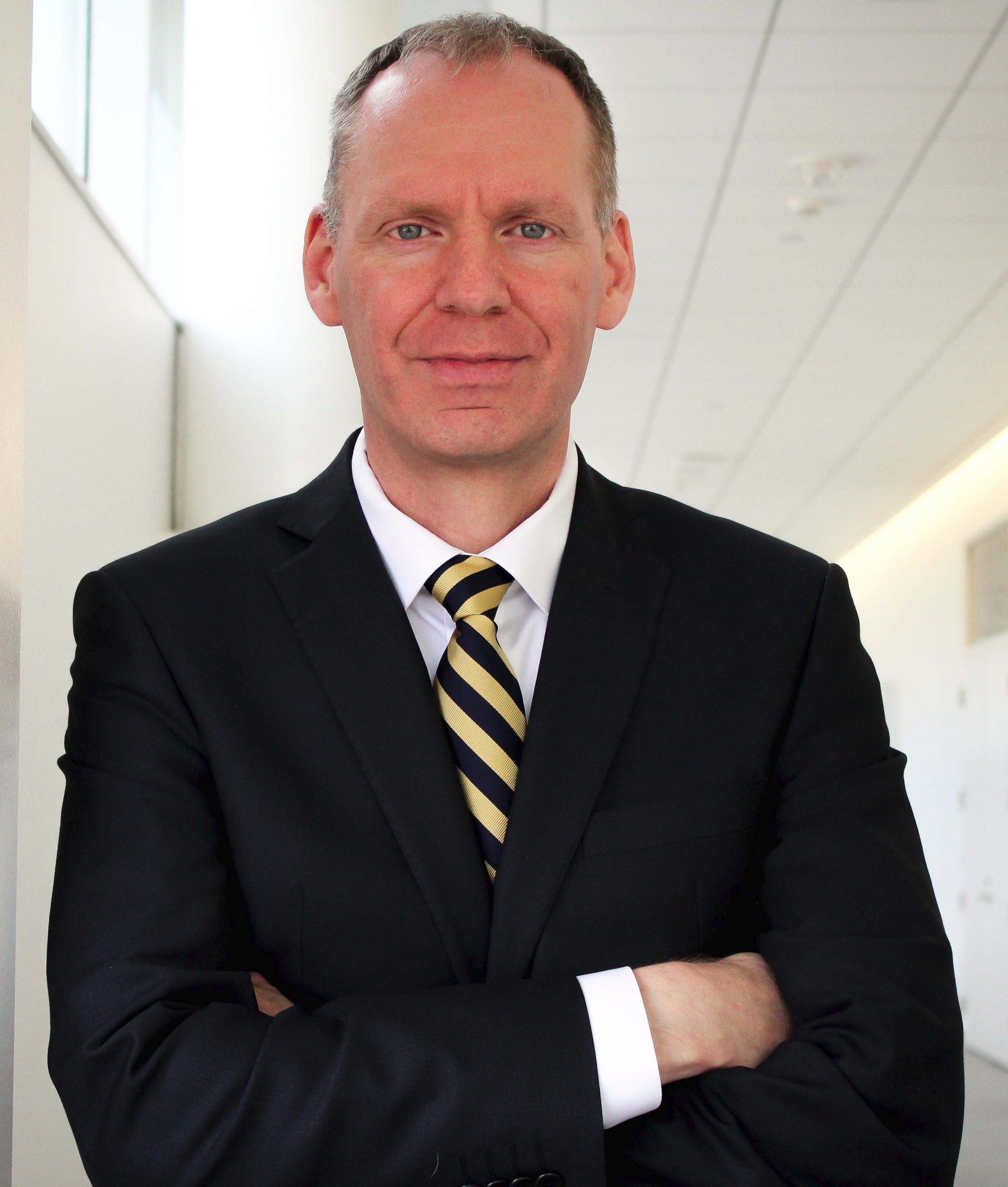
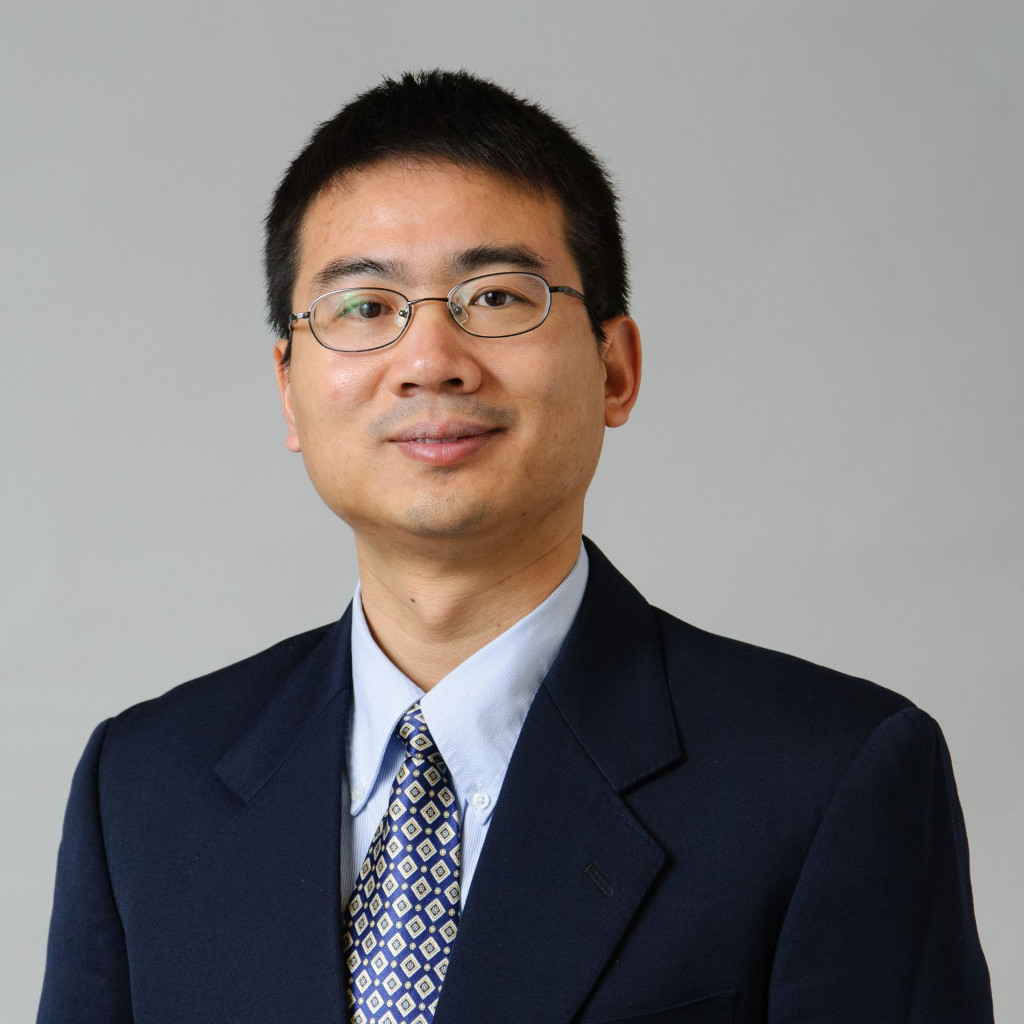
Luis Filipe Santos is an Associate Professor at the Department of Chemical Engineering, Instituto Superior Técnico (University of Lisbon), specializing in Physical Chemistry, Materials, and Nanosciences. His research focuses on rare-earth doped glasses, glass ceramics for non-linear optics, and advanced material characterization methods. Research Interests Rare-earth doped glasses for optical applications Medical applications of Raman spectroscopy Materials characterization using vibrational spectroscopy Development of functional materials for optoelectronics Structural analysis of advanced materials Recent Research Trends His work emphasizes optical materials (e.g., glass ceramics with enhanced luminescence), biomedical applications (e.g., drug delivery systems), and advanced characterization techniques such as X-ray scattering and Raman spectroscopy. Recent studies explore ion-exchanged materials, thermoelectric compounds, and polymer-modified conductive films. Grants & Advising He has advised numerous interdisciplinary projects involving material synthesis, optical device development, and biomedical coatings. His research is supported by grants focusing on energy materials, biomaterials, and advanced manufacturing. Labs & Teams He leads the Center for Structural Chemistry (CQC) at IST, collaborating with multidisciplinary teams in photonics, energy materials, and biomedical engineering.
Peter Hedström is a Professor of Materials Science at the Department of Materials Science and Engineering, KTH Royal Institute of Technology. He leads the Hultgren Laboratory for Materials Characterization and directs the Center for X-rays in Swedish Materials Science (CeXS) and the Vinnova competence center NEXT. His research focuses on advanced materials characterization, structure-property relations, and materials design, particularly in metallic alloys, steels, ceramics, and composites. He co-founded companies Ferritico and Scatterin based on his research. Hedström’s work leverages large-scale infrastructure like synchrotron and neutron methods, with key projects including ENDUREIT for improving duplex stainless steels and Track-AM for additive manufacturing analysis. Education: PhD from Luleå University of Technology. Earlier roles at MEFOS/Swerim before joining KTH in 2008. Research Interests: Phase transformations, materials characterization (e.g., synchrotron/X-ray/neutron techniques), additive manufacturing, machine learning applications, and fatigue mechanics. His group explores topics like low-temperature embrittlement, microstructure-strength relationships, and cemented carbide sintering. Articles Trends: Recent work emphasizes in-situ observations of phase separation, precipitation kinetics, and microstructural stability under fatigue. Studies often integrate computational modeling with experimental methods, highlighting interdisciplinary approaches. Grants/Projects: Directs CeXS (hosting the Swedish beamline P21 at PETRA III) and NEXT. Active in EIT Raw Materials (ENDUREIT) and MMD initiatives. Supervises PhD/postdoc projects in neutron scattering, Mg-AM, and machine learning. Labs/Teams: Hultgren Laboratory, SwedNess graduate school, and collaborations with industrial partners like Ferritico.
Professor Zhijian Pei holds the Mike and Sugar Barnes Professor II position in Industrial & Systems Engineering at Texas A&M University's College of Engineering. His research focuses on additive and subtractive manufacturing, with notable work in ceramic and bioprinting processes. He received his Ph.D. in Mechanical Engineering from the University of Illinois at Urbana-Champaign (1995). Pei is a Fellow of IISE (2022), SME (2016), and ASME (Swanson Fellow, 2016). He has led NSF programs and received prestigious awards, including the NSF CAREER Award (2004). His research explores sustainable materials, biodegradable composites, and advanced manufacturing techniques. Key interests include binder jetting, powder metallurgy, and bioprinting applications. He has contributed to over 100 publications, focusing on material characterization, process optimization, and environmental sustainability in manufacturing.
Yingbin Hu is an Assistant Professor in the Industrial and Systems Engineering Department at Mississippi State University (MSU), part of the Bagley College of Engineering. Prior to joining MSU in 2024, he held an Assistant Professor position at Miami University. His educational background includes a Ph.D. in Industrial Engineering from Texas Tech University (2019), an M.S. in Manufacturing Engineering from the University of Texas-Rio Grande Valley (2015), and a B.S. in Mechanical Engineering from Shandong University (2013). Dr. Hu’s research focuses on additive manufacturing, materials processing, and advanced machining, with specializations in composite materials, laser-assisted manufacturing, and ultrasonic vibration techniques. His work has yielded over 70 peer-reviewed publications in journals like Composites Part B: Engineering and Additive Manufacturing , along with patents and conference contributions. He received the Miami University Junior Faculty Scholar Award and serves as an associate editor for Materials and guest editor for multiple journals. His research interests include: (1) additive manufacturing of composites, ceramics, and biomaterials; (2) ultrasonic vibration-assisted laser additive manufacturing; (3) laser alloying of metallic materials; and (4) rotary ultrasonic machining of hard materials. His contributions bridge fundamental material science with advanced manufacturing processes. Lab Affiliation: The AIM Laboratory (Additive Manufacturing & Innovation) Professional Memberships: SME, ASME, IISE Dr. Hu’s work emphasizes sustainable and high-performance material systems, with applications in biomedical engineering, aerospace, and advanced manufacturing. His recent articles explore 4D printing, functional graded ceramics, and acoustic field-assisted additive manufacturing techniques.
Tresa Pollock is the ALCOA Professor of High Tech Materials in the Materials Department at the University of California, Santa Barbara (UCSB), part of the College of Engineering. Her research focuses on structural materials, high-temperature processing, ultrafast laser interactions, alloy design, and 3D characterization techniques. She holds a Ph.D. from MIT and a B.S. from Purdue University. Research Interests: Her work addresses extreme environment materials performance, thermal barrier coatings, cobalt-base superalloys, hypersonic flight materials, femtosecond laser tomography, and computational materials engineering. Recent projects include developing refractory alloys and advanced characterization methods like the TriBeam system. Awards: She is a Fellow of TMS (The Minerals, Metals & Materials Society) and received the 2023 Acta Materialia Gold Medal. Grants & Collaborations: Supported by agencies like ONR, NSF, AFOSR, and industry partners including GE, Boeing, and Rolls-Royce. Her lab includes advanced facilities at UCSB’s Microscopy and Microanalysis Facility. Labs & Teams: Leads a research group with senior scientists like Chris Torbet. Labs are located in Engineering II and Elings Hall, focusing on 3D tomography, laser-material interactions, and high-temperature alloy development.
Prof. Mariusz Deja serves as the Dean of the Faculty of Mechanical Engineering and Ship Technology at Gdańsk University of Technology. He holds a PhD (2001) and habilitation (2014) in Mechanical Engineering. His academic roles include Head of the Department of Manufacturing and Production Engineering (since 2019), and former Vice-Dean for Education (2016–2020) and Vice-Dean for Cooperation (2020–2024). Education: Master's in Mechanical Engineering (1993), Pedagogical Studies (1993), and postgraduate courses in TQM and ECO-Integrated Mechanical Engineering (1997). Professional experience includes roles as an assistant (1993–2001), assistant professor (2002–2017), associate professor (2017–2019), and full professor (since 2019). Research focuses on abrasive machining, additive manufacturing, and CAPP algorithms. Key interests include material removal processes, precision engineering, and tool fabrication using AM. Collaborations include visiting professorships at China's Dezhou University (2018), Germany's Technical University of Berlin (2021–present), and Sweden's KTH Stockholm (2023–2024). Awards include the Silver Cross of Merit (2016) and multiple Rector Awards for scientific, didactic, and organizational achievements. His work spans over 98 publications, with recent studies on 3D printing applications, container terminal logistics, and AI-driven defect analysis. Labs/Teams: Involved in research infrastructure related to additive manufacturing tools and precision machining systems. Active in projects like the NEPTUN initiative (Horizon Europe-funded) and Industry 4.0 collaborations.
Michael Sangid is the Reilly Professor of Aeronautics and Astronautics and Professor of Materials Engineering at Purdue University. His academic roles include being a University Faculty Scholar (2022–2027) and Executive Director of the Hypersonics Advanced Manufacturing Technology Center. He holds dual appointments as a Professor in the School of Aeronautics and Astronautics and a courtesy Professor in the School of Materials Engineering. Dr. Sangid earned his B.S., M.S., and Ph.D. in Mechanical Engineering from the University of Illinois, Urbana-Champaign (2002–2010). His research integrates materials science, solid mechanics, and advanced manufacturing to develop physics-based models for structural materials, including high-temperature alloys, composites, and additive manufacturing processes. His ACME Laboratory focuses on microstructure-sensitive modeling, defect analysis, and experimental validation using advanced techniques like synchrotron X-ray diffraction and in-situ imaging. Key research interests include fatigue crack propagation, microstructural defect characterization, and computational tools for material lifing. He leads projects on rotating detonation rocket engines, ceramic matrix composites, and damage tolerance in aerospace materials. Notable awards include the NSF CAREER Award (2017) and DARPA Director’s Award (2016). Education: B.S. Mechanical Engineering, UIUC, 2002 M.S. Mechanical Engineering, UIUC, 2005 Ph.D. Mechanical Engineering, UIUC, 2010 Lab & Teams: Advanced Computational Materials and Experimental Evaluation (ACME) Lab, focusing on integrated computational and experimental approaches. Awards: NSF CAREER, DARPA Director’s Award, TMS Early Career Fellow, ASME Orr Award, and Purdue University Faculty Scholar.
Andrea Argüelles is an Associate Professor in the Department of Engineering Science and Mechanics at Pennsylvania State University (Penn State), part of the College of Engineering. She holds affiliate researcher roles in the IEE Research Themes focusing on Health and the Environment, and Integrated Energy Systems. Her work bridges materials science and mechanical engineering, emphasizing non-destructive evaluation (NDE) techniques like ultrasonics for characterizing additive-manufactured materials and polycrystalline structures. In 2024, she received the NSF CAREER Award for her research contributions. Her research interests include ultrasonic testing of composites and metals, additive manufacturing process-structure-property relationships, and computational modeling of wave propagation in complex materials. Notable projects involve improving inspectability of 3D-printed parts, cryogenic ultrasonic testing of ice matrix composites, and analyzing defects in silicon wafers. She collaborates widely, with recent work published in journals like Communications Materials , Journal of Applied Physics , and Finite Elements in Analysis and Design . Key Themes: Polycrystalline materials, binder jetting, acoustic holography, defect detection. Awards: NSF CAREER Award (2024). Dr. Argüelles is actively involved in engineering education, contributing to initiatives like the ASEM seminar series for doctoral career development. Her research group addresses challenges in materials characterization, with applications in aerospace, energy systems, and semiconductor manufacturing.
Prof Arun Arjunan is a Professor in Research at the University of Wolverhampton , affiliated with the Faculty of Science and Engineering and the School of Engineering . He serves as the Director of the Centre for Engineering Innovation and Research (CEIR) and leads the Additive Manufacturing of Functional Materials (AMFM) research group. His roles span academic leadership, research, and teaching in advanced manufacturing and materials science. PhD in Structural Mechanics and Vibro-Acoustics (University of Wolverhampton, 2014) PgCert in Higher Education (2014) Senior Fellow of the Higher Education Academy (SFHEA, 2015) His research focuses on additive manufacturing of metamaterials , including auxetic structures, meta-biomaterials for tissue regeneration, infection-resistant implants, and acoustic metamaterials for noise control. He has pioneered the development of Herschel Quincke-Arjunan waveguides for passive noise cancellation. His work integrates numerical modeling, mechanical testing, and advanced fabrication techniques. His recent publications span biomedical engineering , sustainable materials , environmental technology , and energy systems , with a strong emphasis on 3D printing applications. Themes include personalized implants, water purification using natural coagulants, and sustainable manufacturing. His work demonstrates a multidisciplinary approach bridging engineering, biology, and environmental science. Vice Chancellor’s Award for Outstanding Contribution to Research (2020) UK Engineering Innovation Award (2021) THE ENGINEER UK Collaborate to Innovate Finalist (2021) Nominated for Blavatnik Awards (2019, 2020) GKN Award (2011) Senior Fellow, Higher Education Academy (2015) Arun actively supervises PhD students and has secured research grants from the UK Department of Transport (DfT) , Innovate UK , European Union (ERASMUS+) , and industrial partners. He previously served as Course Leader for Mechanical Engineering (BEng/MEng) and led TEF and NSS enhancements in the School of Engineering. He teaches advanced modules such as Advanced FEA and Applied Stress Analysis . He leads the AMFM Research Group and CEIR , fostering interdisciplinary collaboration with post-docs, research technicians, and PhD students. He is also a member of the BSI AMT/8 Additive Manufacturing standards committee and has served as an external examiner for the University of Greenwich.
Dr. Spencer Jeffs is an Associate Professor in Aerospace Engineering at Swansea University's School of Aerospace, Civil, Electrical and Mechanical Engineering. Based in the Institute of Structural Materials, his research focuses on advanced high-temperature materials including ceramic matrix composites (CMCs), titanium alloys, and nickel superalloys, with applications in gas turbines and nuclear reactors. He is a Chartered Engineer (CEng) and Fellow of the Higher Education Academy (FHEA), teaching across foundation, aerospace, mechanical, and materials engineering modules. Current roles: Admissions Tutor (2017-present), Honorary Editor for the Engineering Integrity Society (2020-present) Research aligns with SDGs 7 (Affordable Clean Energy) and 9 (Industry Innovation) His work employs experimental and computational techniques like mechanical testing, electron microscopy, and X-ray CT, often in collaboration with industrial partners. Recent publications emphasize small punch testing for additive manufacturing, process optimization, and structural integrity of advanced materials. Supervision includes PhD projects on CMCs, corrosion-fatigue interactions, and hybrid composite driveshafts.
Rainer J. Hebert is a Professor in the Department of Materials Science and Engineering at the University of Connecticut, serving as Director of the Pratt and Whitney Additive Manufacturing Center and Associate Director of the Institute of Materials Science. His research focuses on advancing additive manufacturing technologies with particular emphasis on materials development and process optimization for industrial applications. Education Ph.D., University of Wisconsin-Madison, 2003 Postdoctoral Fellow, University of Wisconsin-Madison, 2003-2005 Post Doctoral Fellow, Research Center Karlsruhe, Germany (now Karlsruhe Institute of Technology), 2003-2005 Research Interests Professor Hebert's research spans multiple areas within materials science and additive manufacturing. His primary focus is on developing new alloys specifically designed for additive manufacturing processes, with particular attention to how microstructures form during rapid solidification and laser processing. He investigates powder characteristics and their effects on the final manufactured products, aiming to improve quality and performance. His work on quasicrystal-reinforced aluminum alloys has shown promising results for high-performance applications, and he has made significant contributions to understanding the fundamental mechanisms of laser powder bed fusion. Hebert's research bridges fundamental materials science with practical industrial applications, particularly in aerospace and high-temperature environments. Publication Trends Analysis of Professor Hebert's recent publications reveals a strong focus on advancing additive manufacturing technologies, particularly laser powder bed fusion. His work spans from fundamental materials science (microstructure formation, phase transformations) to practical applications (alloy design, process optimization). A notable trend is the increasing integration of computational methods with experimental work to predict and optimize material behavior. His research shows a progression from basic microstructure characterization to more complex systems involving multi-material interactions, intelligent manufacturing systems, and the development of specialized alloys resistant to cracking and other defects. The consistent theme across his publications is improving the reliability and performance of additively manufactured components for demanding applications. Awards Materials Science and Engineering Program Teaching Award, 2010-2011 Advising and Grants As Director of the Pratt and Whitney Additive Manufacturing Center, Professor Hebert oversees significant research initiatives funded by both government agencies and industry partners, particularly in aerospace applications. His leadership in the Institute of Materials Science provides opportunities for student research and collaboration across multiple disciplines. His extensive publication record suggests active mentorship of graduate students in materials science and engineering. His research program likely involves multiple PhD and Master's students working on various aspects of additive manufacturing, from fundamental materials science to process development. Laboratories and Teams Professor Hebert directs the Pratt and Whitney Additive Manufacturing Center at UConn, which serves as a hub for collaborative research between academia and industry. The center focuses on advancing metal additive manufacturing technologies, particularly for aerospace applications. He also plays a key leadership role in the Institute of Materials Science, one of UConn's premier research centers. His research teams likely include graduate students, postdoctoral researchers, and industry collaborators working on projects related to powder characterization, laser processing, microstructure analysis, and alloy development. The collaborative nature of his work is evident from the multi-institutional authorship on many of his publications.
Professor David Armstrong serves as Professor of Materials Science and Engineering at the University of Oxford and Fellow and Tutor at St Edmund Hall. His work focuses on developing materials for extreme environments including nuclear fusion reactors, aerospace systems, and energy storage applications through microstructural control and advanced mechanical characterization. His educational background includes a first degree in Materials Science from St Anne’s College, Oxford and a DPhil from Corpus Christi, Oxford investigating micromechanical properties in copper and nickel alloys. This foundational work evolved into radiation damage studies during his Culham Centre for Fusion Energy Junior Research Fellowship. Armstrong's research centers on mechanical behavior of materials under extreme conditions—high temperatures (jet engines, reactors), radiation exposure (nuclear facilities, space), and high stresses (batteries, geological systems). He develops novel testing methodologies for nanoscale mechanical properties up to 1300 K, collaborating with Rolls Royce, UKAEA, ESA, and Berkeley on fusion materials, aerospace components, and battery technologies. His work bridges fundamental micromechanics with industrial applications in energy systems. Analysis of his 2023-2025 publications reveals dominant themes in nuclear fusion materials (tungsten, ODS steels), lithium battery interfaces, and ceramic composites for extreme environments. Methodologically, his group pioneers correlative microscopy combining nanoindentation, TEM, and atom probe tomography to study irradiation effects, high-temperature deformation, and interfacial degradation across length scales. His scientific recognition includes: Culham Centre for Fusion Energy Junior Research fellowship (2009) Royal Academy of Engineering Research Fellowship (2013) Institute of Materials Minerals and Mining Grunfeld Memorial Award & Medal (2015) As an educator, Armstrong teaches core mechanical properties courses across undergraduate years and leads Fusion CDT modules on nuclear materials. He supervises numerous doctoral students while serving on the EPSRC Fusion Advisory Board and CDT management board. Current grants support micro-engineering of alloys for nuclear environments and lithium-metal battery development through industry partnerships with Rolls Royce and MicroMaterials. His research group operates advanced micromechanical testing facilities for high-temperature and irradiated materials, collaborating with UKAEA’s Culham Centre and European fusion laboratories on plasma-facing component development. Future work targets solid-state battery interfaces and radiation-resistant high-entropy alloys for next-generation fusion reactors.
Professor Luyi Sun is a faculty member at the University of Connecticut in the Department of Chemical and Biomolecular Engineering. He earned his Ph.D. from The University of Alabama in 2004 and has held academic positions at Texas State University and Texas A&M University before joining UConn. Current research focuses on multi-functional nanostructured materials for structural, environmental, and energy applications. Specializes in polymer nanocomposites, wearable electronics, soft robotics, and stimuli-responsive materials. Develops green science solutions using biomass-derived materials and novel polymer processing techniques. Recent publications highlight advancements in 4D printing of polymers, MXene-based flexible electronics, and defect engineering in photocatalysts. His work spans nanoscale design for energy storage, flame-retardant coatings, and self-assembled nanosheets for dielectric performance. Awards include Fellow of the National Academy of Inventors, Morand Lambla Award, and Composites Educator of the Year. Professional memberships span American Chemical Society (ACS), American Institute of Chemical Engineers (AIChE), and Society of Plastics Engineers (SPE). 2021 Fellow of the National Academy of Inventors 2020 Morand Lambla Award (Polymer Processing Society) 2018 Composites Educator of the Year (SPE) 2016 Fellow of the Royal Society of Chemistry and SPE His lab develops scalable methods like rotational coating and doctor-blade-assisted casting for thin nanocomposite films. Research includes bio-inspired mechanochromisms, superhydrophilic silica coatings, and enzyme-linked microneedle patches for diabetic wound healing. Current projects explore 4D-printed nerve guidance conduits, dual photo-mechano-responsive materials, and sustainable phase change materials for thermal energy storage.
James Roscow is a Senior Lecturer in the Department of Mechanical Engineering at the University of Bath, affiliated with the Centre for Integrated Materials, Processes & Structures (IMPS), IAAPS, and the Institute of Sustainability and Climate Change. His research focuses on developing ferroelectric composites for energy harvesting, sensing, and energy storage, with expertise in material fabrication, property tuning, and numerical modeling. He holds a PhD in Mechanical Engineering from the University of Bath and a BSc in Materials Science from the University of Manchester. Research interests include porous ferroelectric ceramics, piezoelectric and pyroelectric materials, and their applications in renewable energy and sensors. He has led or contributed to 12 projects funded by organizations like EPSRC and Innovate UK, exploring topics such as low-cost transducers, nanofluid cooling for solar panels, and phase transformations in ceramics. Key publications (2021–2025) address piezoelectric energy harvesting, porous material design, and advanced manufacturing techniques. His work aligns with UN SDGs, particularly sustainable energy and innovation. Roscow supervises PhD students in functional ceramics, energy storage, and sensor technologies. Notable collaborations include projects on hydraulic energy harvesters, SONAR transducers, and self-healing materials. He has contributed datasets on piezoelectric composites and energy storage systems, emphasizing reproducibility and applied research.
Cejna Anna Quist-Jensen is an Associate Professor at the Department of Chemistry and Bioscience, Aalborg University, affiliated with the Bioresources and Process Engineering Center and the Center for Membrane Technology. Her research focuses on membrane-based technologies for resource recovery, including minerals/metals and freshwater from unconventional sources like waste streams. She specializes in membrane distillation, membrane crystallization, electrodialysis, and forward osmosis. Education: PhD in Membrane Crystallization (Institute on Membrane Technology, ITM-CNR, 2016) and MSc in Chemical Engineering (2012). Key projects include BEYONDBATTREC (battery recycling), CORNERSTONE (water-energy-solute recovery), and EXBRINER (seawater brine resources). She teaches Integrated Process Modeling and supervises students across multiple semesters in water/wastewater treatment. Research interests span sustainable development goals (SDGs), particularly clean water (SDG 6), affordable energy (SDG 7), and responsible consumption (SDG 12). Her work addresses industrial wastewater treatment, produced water management, and circular economy strategies. Notable contributions include advancements in 3D-printed membranes, percrystallization for zero liquid discharge, and lithium/magnesium recovery from brines. She actively participates in conferences and collaborates internationally on membrane technology innovations.