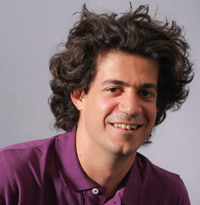
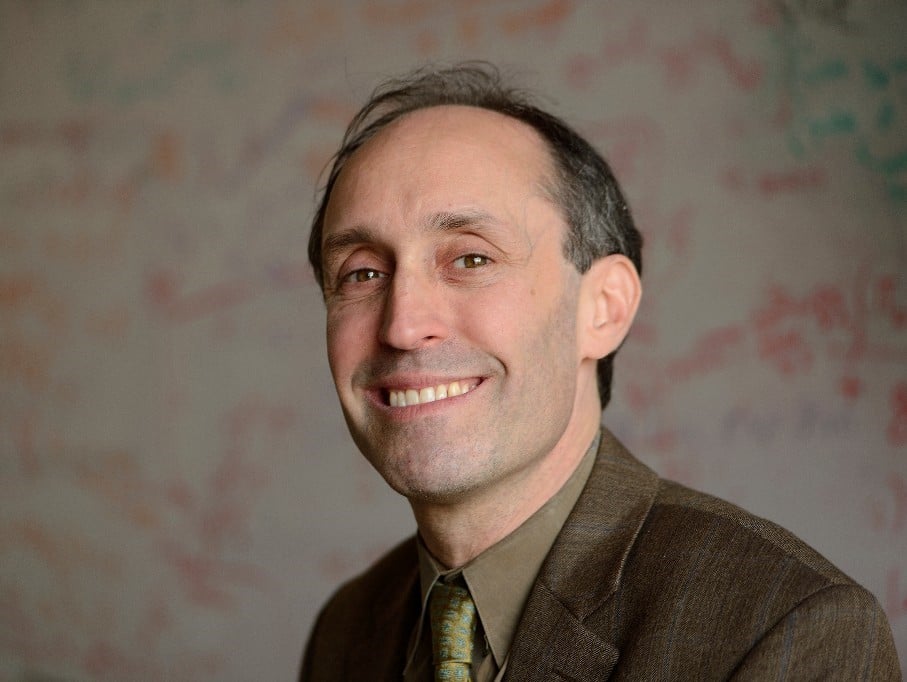
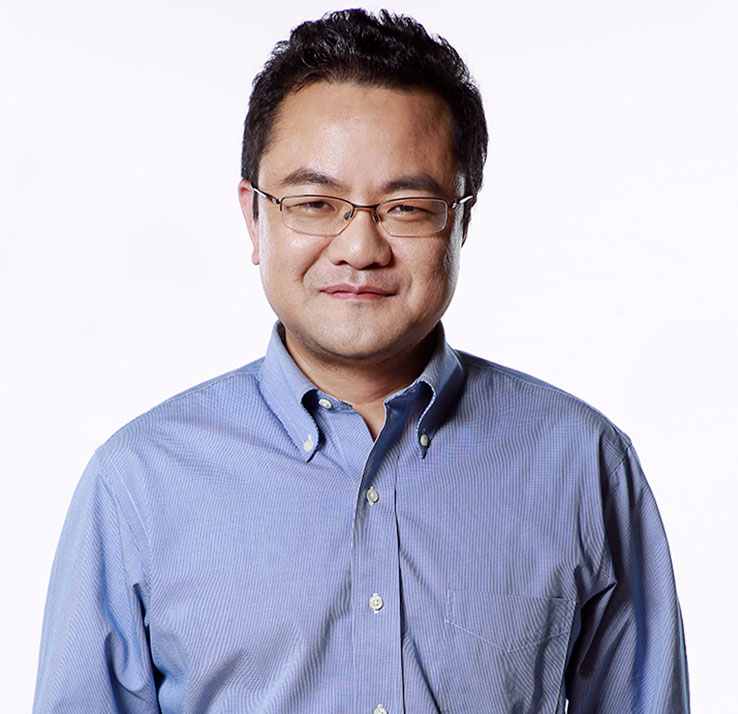
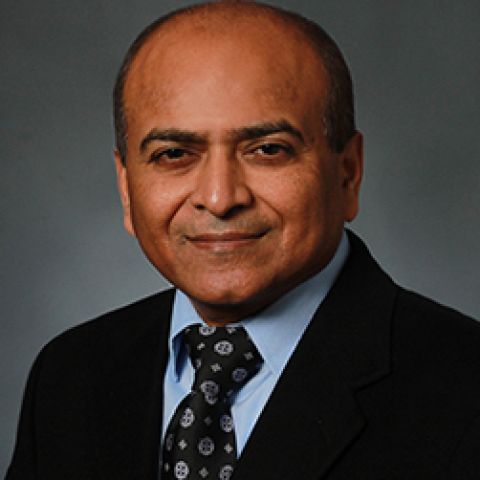
Constantinos Daskalakis is the Armen Avanessians (1982) Professor in the MIT Schwarzman College of Computing and the Department of Electrical Engineering and Computer Science (EECS). He joined MIT in 2009 and is a member of the Computer Science and Artificial Intelligence Laboratory (CSAIL), affiliated with the Laboratory for Information and Decision Systems (LIDS) and the Operations Research Center (ORC). His research focuses on theoretical computer science, with emphasis on game theory, machine learning, and high-dimensional statistics. Education: Ph.D. in Computer Science (not explicitly stated, but implied by tenure and awards). Research interests include computational complexity of Nash equilibria, multi-item auctions, machine learning algorithms, and causal inference. His work bridges game theory, economics, probability, and statistics, with applications in AI and healthcare. Key contributions include resolving long-standing problems in computational game theory and developing efficient methods for statistical hypothesis testing. He has been recognized with the 2018 Nevanlinna Prize, ACM Grace Murray Hopper Award, and the Kalai Game Theory Prize. Affiliations: CSAIL, LIDS, ORC, and the Foundations of Data Science Institute. Active in multi-agent learning, bias mitigation in data, and generative models.
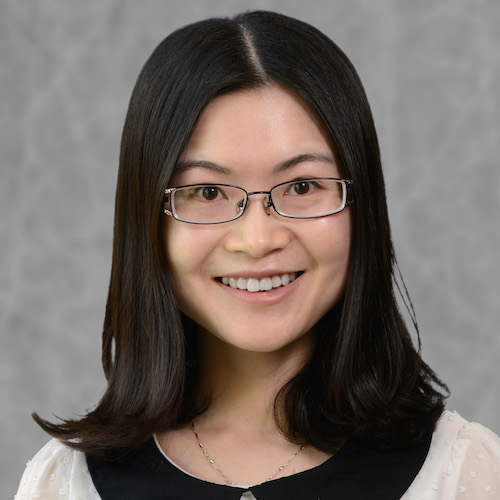
Shu Yang is an Associate Professor of Statistics at North Carolina State University (NC State), specializing in causal inference, missing data analysis, and biostatistics. She holds a Ph.D. in Applied Mathematics and Statistics from Iowa State University and has held roles including Postdoctoral Fellow at Harvard University and Assistant Professor at NC State. Her research focuses on developing statistical methods for observational and clinical studies, particularly in healthcare and environmental applications. Education: Ph.D. in Applied Mathematics and Statistics from Iowa State University (2014) B.Sc. in Mathematics and Applied Mathematics from Beijing Normal University (2009) Research Interests: Dr. Yang’s work addresses challenges in causal inference, including longitudinal data analysis, missing data imputation, and high-dimensional statistics. She applies these methods to environmental health, cardiovascular diseases, HIV infection, and cancer research. Her team also explores spatial statistics and data integration techniques. Awards: 2025: Think, Collaborate & Do Ideation Award 2024: COPSS Emerging Leader Award, Cavell Brownie Mentoring Award 2022: University Faculty Scholar 2018: Ralph E. Powe Junior Faculty Enhancement Award Grants & Advising: She leads funded projects on causal inference methods in environmental health, sepsis detection, and marine protected areas. She advises over 20 Ph.D. students and postdocs, focusing on causal methods, data integration, and healthcare analytics.
Harri Lähdesmäki is an Associate Professor (tenured) at the Department of Computer Science, Aalto University, where he leads the Computational Systems Biology research group. His work focuses on probabilistic machine learning and deep generative models with applications in biomedicine and molecular biology. Key Research Interests: Probabilistic machine learning, deep generative models, computational biology, bioinformatics, longitudinal data modeling Contact: harri.lahdesmaki@aalto.fi | Konemiehentie 2, 02150 Espoo, Finland His recent publications highlight advancements in: Gaussian process priors for scalable deep generative models Single-cell analysis of immune repertoires in leukemia and diabetes Probabilistic deconvolution methods for RNA-seq data Epigenetic analysis using hidden Markov and mixed models Transformer-based survival prediction and missing data handling Harri’s work integrates mechanistic modeling with Bayesian inference, particularly applied to immunology, cancer biology, and early disease prediction.
Jianming Liang is a full professor at Arizona State University's College of Health Solutions, specializing in biomedical informatics, data science, and computer vision. His research focuses on self-supervised learning, foundation models, and improving transfer learning techniques for medical imaging applications. National Academy of Inventors Fellow (2021) ASU Faculty Innovation Award (2019) ASU Distinguished Faculty Award (2023) NIH R01 grant recipient Led lab producing FDA-approved medical imaging products His lab has developed multiple open-source frameworks like Ark , Foundation_X , and ModelsGenesis for medical image analysis. Team has received over 70 student research awards including NCWIT Collegiate and AMIA Ph.D. Dissertation honors. Key research contributions include: Anatomically consistent foundation models Domain-adaptive pretraining strategies Annotation-efficient deep learning Integrated classification/localization/segmentation frameworks 40+ US patents (50+ pending) Major publications demonstrate leadership in self-supervised learning for chest radiography, pulmonary embolism detection, and medical AI explainability.
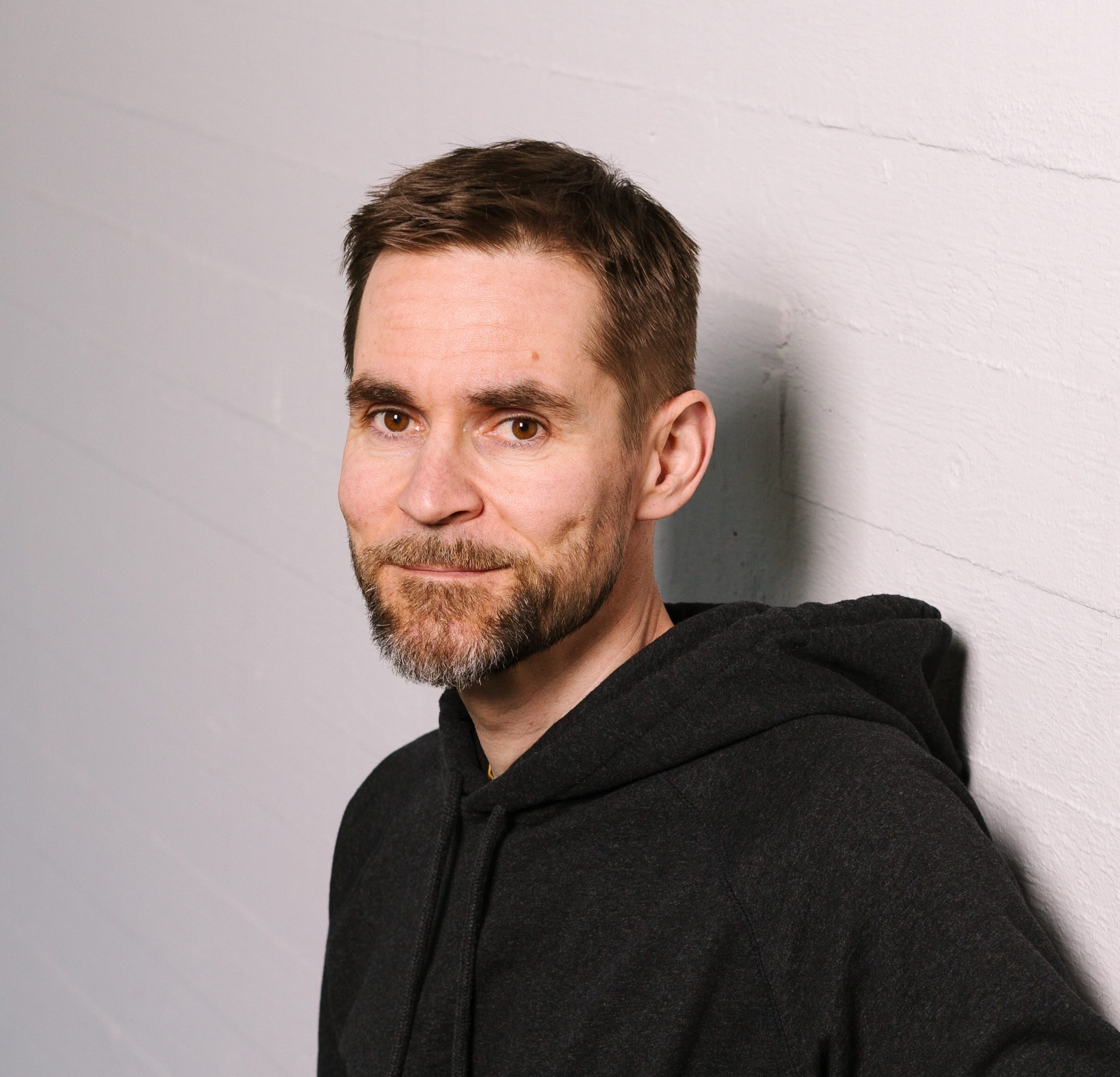
Aapo Hyvärinen is a Professor of Computer Science at the University of Helsinki , affiliated with the Helsinki Institute for Information Technology and the Helsinki Probabilistic Machine Learning Lab . He previously held the position of Professor of Machine Learning at the Gatsby Computational Neuroscience Unit, University College London (2016-2019). Education : Undergraduate Mathematics at University of Helsinki, Vienna, and Paris; Ph.D. in Information Science from Helsinki University of Technology (1997) His research focuses on machine learning and computational neuroscience , particularly: Independent Component Analysis (ICA) Natural Image Statistics Causal Representation Learning Neural Signal Processing Applications to brain imaging (MEG, CryoEM) Recent publications emphasize causal discovery , identifiable machine learning , and nonlinear ICA . Key projects include: VETURI (AI for health) DIGIMIND (AI in mental health) CIFAR grants (2022-2025) Scientific awards : Highly Cited Researcher (2010) He serves as Action Editor for the Journal of Machine Learning Research and Neural Computation , and has held Area Chair roles at NeurIPS, ICML, ICLR, AISTATS, and UAI conferences. His work bridges theoretical machine learning with neuroscience and philosophical implications of artificial intelligence .
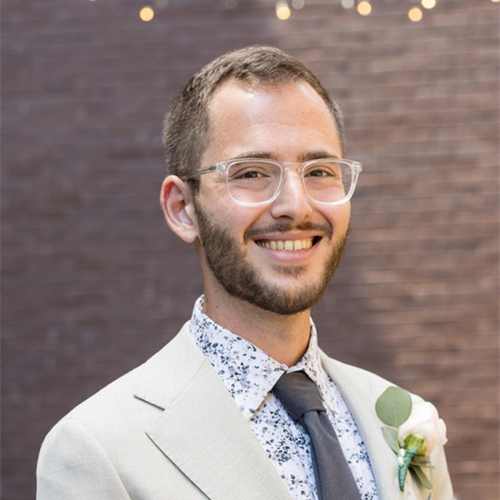
Eli Ben-Michael is an Assistant Professor jointly appointed in the Heinz College of Information Systems and Public Policy and the Department of Statistics & Data Science at Carnegie Mellon University. He is affiliated with the CMU-NIST AI Measurement Science & Engineering Cooperative Research Center (AIMSEC), contributing to cutting-edge research at the intersection of statistics, policy analysis, and artificial intelligence. His educational background includes a PhD in Statistics from U.C. Berkeley and undergraduate studies at Columbia University where he earned a dual degree in Computer Science and Statistics. Prior to his current position, he completed a postdoctoral fellowship at Harvard University's Institute for Quantitative Social Science and Department of Statistics. Ben-Michael's research focuses on developing innovative statistical and computational methods for causal inference and policy evaluation, with particular emphasis on integrating machine learning techniques to address complex problems in public policy and social science. His work bridges theoretical statistics with practical applications in healthcare, criminal justice, education, and social policy. Current research directions include safe policy learning, sensitivity analysis for clustered data, and methodological innovations for the synthetic control method. His publication record shows a strong trajectory in top-tier journals including Journal of the American Statistical Association, Journal of the Royal Statistical Society, and Proceedings of ICML. Recent work demonstrates increasing focus on policy-relevant applications including abortion legislation impacts, pre-trial risk assessment, and healthcare disparities, while maintaining methodological rigor in causal inference frameworks. Ben-Michael has developed open-source software tools including augsynth and multical R packages, which implement his methodological contributions for synthetic controls and multilevel calibration weighting. These packages have been adopted by researchers in multiple disciplines for causal inference applications.
Matthew B. Blaschko is a Professor in the Department of Electrical Engineering at KU Leuven, Belgium. He serves as director of the KU Leuven ELLIS unit and is a fellow in the ELLIS Health program. He is a Core PI in the Flanders AI Research Program, working as a workpackage lead for Decision Support Systems and Medical Imaging. Blaschko is also a member of the KU Leuven Institute for Artificial Intelligence and one of the leaders of the working group on Machine Learning and Data Science. Professor Blaschko received his B.S. from Columbia University, M.S. from the University of Massachusetts Amherst, and Dr. rer. nat. from Technische Universität Berlin (awarded for work at Max Planck Institutes Tübingen). He was a Newton International Fellow at the University of Oxford and received his Habilitation (HDR) from École Normale Supérieure de Cachan. Prior to joining KU Leuven, he was a Permanent Research Scientist in the INRIA Saclay Research Center and a Faculty Member at Ecole Centrale Paris. His research focuses on machine learning techniques applied to visual data, with particular emphasis on calibration in deep learning, medical image analysis, and federated learning. Blaschko's work bridges theoretical foundations with practical applications, as evidenced by technology developed in his research being incorporated into MONA, software for ophthalmic image analysis. His research group has made significant contributions to the fields of model calibration, uncertainty estimation, and medical imaging analysis, with recent publications showing strong trends toward improving reliability of AI systems in medical contexts and advancing theoretical understanding of calibration metrics. Professor Blaschko has been recognized with several awards including the Université Paris-Saclay STIC Doctoral School Best Scientific Contribution Award, Best Paper Award at CVPR 2008, Main Award at DAGM 2008, and Best Student Paper Award at ECCV 2008. Professor Blaschko has supervised numerous PhD and Master's students, with current and former students including Deniz Soysal, Claire Marchal, Dongli Xu, Sebastian Gruber, Jiameng Li, Marco Mezzina, and many others working on diverse topics from Alzheimer's disease analysis to surgical phase recognition. His research has been supported by various funding sources including the Flanders AI Research Program. He has co-organized several influential workshops including the "Another Brick in the AI Wall: Building Practical Solutions from Theoretical Foundations" at CVPR 2025, Commands 4 Autonomous Vehicles workshop at ECCV 2020, and the Learning from Limited Labeled Data workshop series at NIPS 2017 and ICLR 2019. His laboratory focuses on machine learning for medical image analysis, with applications in ophthalmology, neurology, and surgical robotics. The group maintains active collaborations with medical institutions and participates in international challenges such as the KNee OsteoArthritis Prediction (KNOAP2020) challenge.
Jason Eisner is a Professor in the Department of Computer Science at Johns Hopkins University's Whiting School of Engineering, with a secondary joint appointment in Cognitive Science. He is affiliated with the Center for Language and Speech Processing (CLSP), the Human Language Technology Center of Excellence, and leads JHU's cross-departmental machine learning group. His research focuses on developing probabilistic modeling, inference, and learning techniques for linguistic structure. Eisner has authored over 100 papers in computational linguistics, particularly in parsing, grammar induction, machine translation, computational phonology, computational morphology, and weighted finite-state methods. He is the lead designer of Dyna, a declarative programming language for AI research that allows concise programs backed by efficiency tricks. Eisner's work centers on novel methods in NLP and machine learning, with emphasis on probabilistic modeling and inference in complex, structured settings. His research program combines computer science with statistics and linguistics to create statistical models that capture linguistic structure and develop efficient algorithms for applying these models to data with minimal supervision or through large pre-trained models. As an ACL Fellow, Eisner has made significant contributions to the field. His recent work (2023-2025) shows a strong focus on large language models, semantic parsing, controlled text generation, model interpretability, and privacy-preserving techniques, continuing his long-standing interest in the intersection of probabilistic modeling and linguistic structure. ACL Fellow He teaches courses including Natural Language Processing (601.465/665), Machine Learning: Linguistic and Sequence Modeling (601.765), Declarative Methods (601.325/425/625), and Selected Topics in Natural Language Processing (601.865). His advising focuses on research students through the Argo research group, with emphasis on fundamental research questions in NLP rather than immediate applied engineering.
Zach Shahn is an Assistant Professor in the Department of Epidemiology and Biostatistics at the CUNY School of Public Health. He holds a PhD in Statistics from Columbia University and a BA in Mathematics from Stanford University. His research focuses on causal inference methods applied to healthcare data, particularly time-varying treatment effects and critical care applications. He has conducted postdoctoral work at Harvard School of Public Health and previously worked at IBM Research in Healthcare and Life Sciences. Education: PhD in Statistics and Probability, Columbia University BA in Mathematics, Stanford University Research interests include developing causal inference frameworks for evaluating treatment efficacy in dynamic healthcare settings, with a focus on critical care outcomes and methodological innovations. Recent work explores applications of causal diagrams, instrumental variables, and machine learning in healthcare decision-making. His studies often involve large-scale healthcare datasets to assess interventions' real-world impacts. Key trends in his articles include advancements in causal effect estimation under complex treatment regimes, bias analysis in observational studies, and methodological contributions to difference-in-differences and N-of-1 trial designs. His work bridges statistical theory with practical healthcare challenges, emphasizing reproducibility and policy relevance. No scientific awards are listed, though his contributions to causal inference methodologies are notable in academic circles. He has advised on healthcare data projects and published extensively without explicitly listed grants. His professional network includes collaborations with institutions like Harvard and IBM. He is affiliated with CUNY's public health programs and actively engages in academic discourse via Twitter and LinkedIn. His lab or team details are not explicitly mentioned in available materials.
Prof. Dr. Julia Vogt is an Assistant Professor at the Department of Computer Science at ETH Zürich, leading the Professur für Medizin. Datenwiss. Her research focuses on medical machine learning, data science, and AI applications in healthcare. She specializes in developing interpretable AI systems for clinical decision support, particularly in pediatric diabetes management, medical imaging analysis, and anomaly detection. Her work bridges translational gaps by emphasizing causal approaches and clinical validation. Her academic role includes teaching courses like the Data Science Lab (263-3300-00L/10L) and Topics in Medical Machine Learning (263-5100-00L). Her lab's research spans predictive modeling for nocturnal hypoglycemia, echocardiogram analysis for pulmonary hypertension detection, and multimodal learning in radiology. She also contributes to national pediatric data initiatives like SwissPedHealth. Key technical areas include concept bottleneck models, stochastic AI frameworks, and generative models for medical signal denoising. Her work often emphasizes model interpretability, fairness, and robustness to distribution shifts. She collaborates on projects involving wearable devices for pediatric monitoring and AI-driven rehabilitation tools for post-stroke gait analysis.
Yasushi Sakurai is a Professor in the Department of Translational Datability at Osaka University's Institute of Scientific and Industrial Research, co-leading the Sakurai and Matsubara Laboratory within the Center for Industrial Science and AI. His research mission focuses on transforming society through real-time prediction of natural and social phenomena using large-scale data analytics, with emphasis on practical technological implementation. His research spans time-series big data analysis, dynamic learning systems, and real-time information provision. Key areas include tensor stream mining, EEG-based healthcare applications, cybersecurity anomaly detection, and multi-omics cancer subtyping. The lab specializes in developing deployable technologies that optimize social activities through predictive modeling of evolving data streams. Recent publications (2023-2025) reveal concentrated innovation in time-series data stream processing, with dominant themes in tensor analytics, frequency-domain forecasting, and causal modeling. His team produces high-impact work accepted at premier AI venues (ICLR, AAAI, KDD, WWW), consistently featuring oral presentations that highlight technical novelty and societal relevance. Scientific Awards: FY2024 Minister of Education, Culture, Sports, Science and Technology Award for Science and Technology (Research Category) for dynamic learning and real-time data stream analysis Professor Sakurai mentors graduate students including Naoki Chihara (DEIM2024 Outstanding Paper Award winner), Yuka Tamura (DEIM2024 Student Presentation Award winner), and Ren Fujiwara. His lab maintains active industry-academia partnerships focused on practical technology deployment, with research directly addressing real-world challenges in healthcare monitoring and cybersecurity. The Sakurai and Matsubara Laboratory operates as a dynamic research unit within Osaka University's Center for Industrial Science and AI, structured around specialized teams for tensor stream analysis, medical data mining, and network dynamics. Current projects emphasize real-time prediction systems with immediate societal applications, supported by strong industry collaboration frameworks.
Dr. Hongtu Zhu is the Kenan Distinguished Professor of Biostatistics, Statistics, Radiology, Computer Science, and Genetics at the University of North Carolina at Chapel Hill (UNC). He holds affiliations with the Gillings School of Global Public Health and leads the Biostatistics and Imaging Genomics Analysis Lab. His expertise spans statistical learning, medical imaging, AI, and big data integration, with a focus on precision medicine and biomedicine. Dr. Zhu earned his PhD in Statistics from The Chinese University of Hong Kong (2000) and has held prior roles including DiDi Fellow/Chief Scientist (2018-2020) and Bao-Shan Jing Endowed Professor at MD Anderson Cancer Center (2016-2018). He has published over 345 peer-reviewed articles in top-tier journals like Nature, Science, and JASA, and actively contributes to editorial roles including Coordinating Editor of JASA. His research interests include neuroimaging analysis, knowledge graphs, and AI applications in healthcare. Notable awards include the COPSS Snedecor Award (2025), IEEE Fellowship (2025), and IMS Medallion (2027). He has mentored over 80 PhD students/postdoctoral fellows and serves on NIH grant review panels and professional organizations like the ASA's Section on Statistics in Imaging. Key Contributions: Imaging genomics, brain connectivity studies, ridesharing market optimization, medical AI frameworks Lab Innovations: Brain Imaging Genetics Knowledge Portal, Biomedical Knowledge Graph Interface Teaching: Advanced biostatistics courses (Generalized Linear Models, Deep Learning in Biomedicine) Recent work explores causal inference in healthcare, X chromosome's role in neurobiology, and AI ethics in medical vision-language models. His interdisciplinary projects bridge statistics, computer science, and clinical practice to address complex biomedical challenges.
Carlos Cinelli is an Assistant Professor in the Department of Statistics at the University of Washington, where he conducts research at the intersection of causal inference, statistical methodology, machine learning, and artificial intelligence. He is also a data science fellow at the eScience Institute and affiliate faculty of the Center for Statistics and the Social Sciences, demonstrating his interdisciplinary approach to causal methodology. Dr. Cinelli received his Ph.D. in Statistics from the University of California, Los Angeles, advised by Chad Hazlett and Judea Pearl, two prominent figures in causal inference. His research focuses on developing new causal and statistical methods for transparent and robust causal claims in empirical sciences, with particular attention to challenges faced by social and health scientists. His work spans theoretical developments in causal identification, sensitivity analysis frameworks, and practical software implementations that enable researchers to assess the robustness of their causal conclusions. Cinelli's research program addresses fundamental questions about how unobserved confounding affects causal estimates and develops tools to quantify how sensitive findings are to potential violations of causal assumptions. His work on omitted variable bias frameworks has been particularly influential across multiple disciplines. Through his publications, Cinelli has established himself as a leading researcher in causal inference methodology, with papers appearing in top journals across statistics, machine learning, epidemiology, and social sciences. His work demonstrates both theoretical rigor and practical relevance, often accompanied by open-source software implementations that make his methods accessible to applied researchers. Best paper award at SBE 2024 in Econometrics Royalty Research Fund (RRF) Award recipient NSF/MMS research support As an advisor, Cinelli has successfully guided PhD students like Nick Irons to dissertation completion. He actively seeks new students with strong interests in causal inference. His research is supported by multiple funding sources including the National Science Foundation and the University of Washington's Royalty Research Fund. Cinelli contributes to the academic community through editorial work for the Journal of Causal Inference and by developing widely used software packages like sensemakr for sensitivity analysis.
Rama Cont is Statutory Professor of Mathematics at the University of Oxford and Head of the Oxford Mathematical and Computational Finance Group. He holds additional positions as Senior Research Fellow at the Institute for New Economic Thinking and Director of the Oxford Martin Programme on Systemic Resilience. Cont's research focuses on stochastic analysis and mathematical finance, particularly modeling extreme market risks, systemic risk, and developing pathwise approaches in stochastic analysis. His recent work explores causal functional calculus, fractional Ito calculus, and analysis of deep neural networks. His publications demonstrate consistent development of mathematical frameworks for financial risk analysis, including recent advances in causal transport theory and market microstructure modeling. Cont received the Louis Bachelier Prize in 2010 and was elected SIAM Fellow in 2017 for contributions to stochastic analysis and financial modeling.
Dr. Vasant Honavar is a Professor of Computer Science and Informatics at Pennsylvania State University, holding the Edward Frymoyer Endowed Chair. He serves as Director of the Center for Artificial Intelligence Foundations and Scientific Applications and Associate Director of the Institute for Computational and Data Sciences. His expertise spans artificial intelligence, machine learning, causal inference, and bioinformatics. Honavar has led over $60M in research grants and mentored 36 PhD students, 30 MS students, and numerous undergraduates. He is a Fellow of the AAAS and recipient of NSF Director’s Awards. Education: Ph.D., Computer Science and Cognitive Science, University of Wisconsin–Madison (1990) M.S., Computer Science, University of Wisconsin–Madison (1989) M.S., Electrical and Computer Engineering, Drexel University (1984) B.E., Electronics Engineering, Bangalore University (1982) Research Interests: His work focuses on machine learning, causal inference, knowledge representation, health informatics, and algorithmic fairness. Notable contributions include scalable algorithms for big data analytics and predictive modeling, as well as computational infrastructure for interdisciplinary science. Awards: Fellow, AAAS (2018) ACM Distinguished Member NSF Director’s Award for Superior Accomplishment (2013) Edward Frymoyer Endowed Chair (2013) Leadership: Honavar co-founded the Penn State Center for Artificial Intelligence and led the NIH-funded Biomedical Data Sciences Ph.D. program. He is a Co-PI of the North East Big Data Innovation Hub and serves on editorial boards of journals like IEEE/ACM Transactions on Computational Biology and Bioinformatics. Lab & Teams: Directs the Artificial Intelligence Research Laboratory and the Center for Big Data Analytics and Discovery Informatics, fostering collaborations across computer science, life sciences, and health sciences.