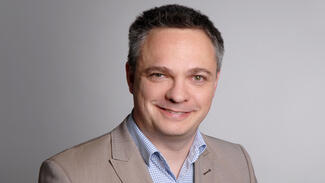
Xavier Allamigeon is a researcher at INRIA and CMAP (Centre de Mathématiques Appliquées) at École Polytechnique, where he also serves as a part-time associate professor in the Applied Mathematics Department. His research focuses on optimization, combinatorics, tropical geometry, game theory, and formalization of mathematics in proof assistants, with a particular emphasis on computational aspects of these fields. He earned his Ph.D. in 2009 from École Polytechnique with a thesis on static analysis of memory manipulations and tropical polyhedra. His work bridges theoretical mathematics and practical applications, including contributions to emergency call center modeling and epidemic monitoring during the COVID-19 pandemic. Key awards include the 2022 Prix Inria–Académie des sciences, the 2021 SIAM SIGEST award, and the 2010 Gilles Kahn Prize for Best Dissertation in Computer Science. His research has led to the development of tools like the Tropical Polyhedra Library (TPLib) and formal proofs in proof assistants such as Coq. He has supervised multiple Ph.D. students and contributed to funded projects such as URGE (2023–2026) and CAPPS (2018–2021). His interdisciplinary work spans optimization, formal methods, and applied mathematics, with applications in healthcare systems and computational geometry.
Prof. Dr. Ralph Bergmann is a full professor at the University of Trier since 2004 and leads the Experience-Based Learning Systems research group. Since 2020, he serves as topic-field leader for experience-based learning systems at the Trier Branch of the German Research Center for Artificial Intelligence (DFKI) . He has directed approximately 35 EU/DFG/BMBF-funded projects and authored over 200 papers (h-index 40) with four books and 13 edited proceedings. Academic Rank: Professor (Business Information Systems II) Key Collaborations: DFKI, KI-AIM, KIAFlex, DZW (Digital Twins), myRPA, SPELL Ralph Bergmann's research focuses on hybrid AI systems that combine data-driven methods (machine learning, case-based reasoning) with semantic technologies (ontologies, knowledge graphs). His work addresses knowledge-intensive processes like emergency call handling, healthcare discharge management, smart factory automation, and political argumentation analysis. He explores similarity assessment, workflow flexibility, and context-sensitive reasoning through frameworks like ProCAKE and CBRkit . Recent publications highlight IoT data integration (SensorStream, DataStream XES), large language models for knowledge engineering, and graph neural networks for similarity ranking. Application domains span Industry 4.0 , oncology decision support, water resource management, and clinical guideline conformance checking. His teaching includes courses on Data Mining , Semantic Technologies , and Research Internships in business informatics, with consultation hours held both in-person and online. Current projects like KI-AIM and SPELL emphasize AI anonymization in medicine and semantic platforms for control centers .
Dong Lou is a Professor of Finance at the London School of Economics (LSE), where he holds a position in the Department of Finance. He is currently on leave and serves as a CEPR Research Fellow. His office is located at MAR 8.09 on the LSE campus in London, UK. Professor Lou's research focuses on several interconnected areas of finance: Asset Pricing : Investigating market anomalies, return predictability, and factor-based investing strategies Investment Management : Analyzing portfolio optimization, institutional behavior, and quantitative strategies Behavioral Finance : Examining how psychological factors and investor attention impact market dynamics Market Microstructure : Studying trading patterns, information diffusion, and liquidity effects Corporate Finance : Exploring communication strategies and their market impacts His work consistently bridges theoretical frameworks with empirical market analysis. Professor Lou's publications demonstrate a strong focus on market efficiency anomalies, investor behavior quantification, and institutional trading patterns. His recent work (2020-2025) increasingly examines network effects in financial markets, retail trading impacts, and advisor-client dynamics, utilizing innovative empirical approaches to analyze large-scale datasets across global markets. Professor Lou has received numerous prestigious awards recognizing his research contributions: Three-time winner of the Crowell Memorial Award (2011, 2014, 2018) NASDAQ OMX Award for Best Paper on Asset Pricing (2011) Best Paper Awards at China International Conference in Finance (2019) and China Financial Research Conference (2016, 2019) INQUIRE Europe and Q Group research grants (2010-2013) Paul Woolley Center Academic Grant (2010) Multiple best paper prizes from CRSP Forum and Istanbul Stock Exchange He has secured several competitive research grants from institutions including INQUIRE UK, Europlace Institute of Finance, and the Quantitative Management Initiative. His research collaborations extend across global financial academia, with frequent co-authorships spanning multiple continents.
Thea Palsgaard Møller serves as a Clinical Associate Professor at the Department of Clinical Medicine within the Faculty of Health and Medical Sciences at the University of Copenhagen. Her professional activities are closely integrated with Region Zealand (Region Sjælland), as evidenced by her institutional email address (thea@regionsjaelland.dk), reflecting Denmark's dual academic-healthcare affiliation model for clinical academics. Her research program centers on Emergency Medicine with specialized focus in Trauma Care, Prehospital Systems, and Medical Simulation. She employs rigorous observational methodologies to evaluate emergency medical services, particularly leveraging Denmark's comprehensive national health registries. Current investigations examine surf lifeguard training efficacy, traumatic cardiac arrest outcomes, ambulance transport patterns, and emergency call utilization trends across Region Zealand. Professor Møller's work demonstrates consistent emphasis on real-world healthcare system evaluation through population-based cohort studies and register-linked data analysis. Her publications reveal strong collaboration with regional emergency medicine networks and focus on improving prehospital care quality through evidence-based system optimization. The research consistently addresses practical challenges in emergency service delivery within the Danish healthcare context.
Gillian Lord is a Professor of Hispanic Linguistics at the University of Florida's Department of Spanish and Portuguese Studies, affiliated with the College of Liberal Arts and Sciences. She holds administrative roles as Associate Dean for Undergraduate Affairs and Director of the Academic Advising Center. With a Ph.D. in Hispanic Linguistics from Penn State University (2001), she specializes in second language acquisition, particularly Spanish phonetics/phonology and technology-enhanced language pedagogy. Her research explores effective teaching methods, study abroad outcomes, and digital innovations in language learning. She has directed UF's lower-division Spanish program and served as Department Chair (2010-2021). Education: Ph.D. in Hispanic Linguistics, Penn State University, 2001 M.A. in Spanish Literature, University of Virginia, 1997 B.S. in Spanish and English, Vanderbilt University, 1993 Research Interests: Gillian's work focuses on optimizing language learning through technology, including her digital textbook Contraseña . She investigates L2 phonology acquisition, the role of phonological memory, and compassionate pedagogical approaches to language placement. Her publications span journals like Second Language Research and Practice , Foreign Language Annals , and CALICO Journal , emphasizing real-world applications of digital tools and intercultural competence development. Recent Trends in Articles: Recent work addresses pandemic-driven educational shifts, textbook modernization, and the integration of maker culture into language learning. She critiques traditional language requirements while advocating for adaptive digital curricula and inclusive assessment strategies. Grants & Advising: Gillian has advised numerous graduate instructors and led initiatives to improve language program articulation. She collaborates on projects funded through interdisciplinary grants exploring technology's role in fluency development and intercultural awareness. Labs/Teams: Her work involves collaboration with the University of Florida's Academic Advising Center and digital language resource development teams. She actively contributes to professional networks like CALICO and ADFL.
Dr. Aaron Schecter serves as an Associate Professor in the Department of Management Information Systems within the Terry College of Business at the University of Georgia. His research investigates how digital technologies transform human decision processes, problem-solving, and collaborative dynamics in organizational contexts. His academic credentials include: PhD in Industrial Engineering and Management Science, Northwestern University (2017) MSE in Industrial Engineering and Management Science, Northwestern University (2013) MS in Applied Mathematics and Statistics, Johns Hopkins University (2012) BS in Applied Mathematics and Statistics, Johns Hopkins University (2012) Dr. Schecter's scholarly focus spans human-machine interaction, algorithmic bias, and open source software ecosystems. Key research domains feature: Human-AI decision collaboration frameworks Social network dynamics in distributed development Methodological innovations for behavioral studies Coordination mechanisms in open platform innovation Temporal analysis of team interaction sequences Reproducibility standards in information systems research His publication trajectory (2018-2024) demonstrates increasing emphasis on human-AI teamwork methodologies and algorithmic decision systems, with significant contributions to understanding coordination patterns in open source communities and behavioral responses to algorithmic advice. These works consistently appear in premier outlets including MIS Quarterly and Journal of Operations Management. Recognition for his scholarly impact includes: Hackman Dissertation award for group research Young Investigator award from the US Army Research Office Lilly Teaching Fellowship at the University of Georgia Research funding from the US Army and NASA supports his investigations into human-technology interaction, while his methodological contributions like the Vero framework enable accessible human-AI teamwork studies. Though specific advisees aren't listed, his role encompasses mentoring graduate students in management information systems research.
Dr. Marcin Witkowski is an Assistant Professor at the AGH University of Science and Technology in Cracow, Poland, specializing in the Department of Electronics and Telecommunications . His work focuses on signal processing with particular emphasis on speaker verification, speech dereverberation, and multichannel audio analysis. He holds a Ph.D. (2022) and master's degree (2012) in Electronics and Telecommunication from AGH UST, alongside a B.E.E. in Acoustics Engineering (2013). Research Interests: Far-field speaker verification, speech dereverberation techniques, robust audio processing, and blind source separation. His projects include developing anti-spoofing systems and enhancing distant speech recognition in reverberant environments. Recent work explores neural network hallucinations in Whisper ASR and VR-based voice training tools. Labs/Teams : Core member of the Signal Processing Group at AGH UST. Active in EU-funded projects on multichannel signal processing and speaker recognition systems.
Benoit Baudry is a Professor in Software Technology at KTH Royal Institute of Technology (KTH) within the Digital Futures Faculty and Division of Theoretical Computer Science. He also holds a professorship at Université de Montréal. His research focuses on software diversity, testing, and reliable web-based applications, emphasizing experimental approaches using large-scale open-source systems. He leads the CHAINS project (supported by SSF) and holds a Wallenberg AI, Autonomous Systems and Software Program (WASP) research chair. Previously, he directed the CASTOR software research center (2018–2022) and led the DiverSE group at INRIA Rennes, France. Research Interests Baudry's work spans software supply chain security, blockchain node reliability, and production monitoring for test suite improvement. He explores techniques like N-version design for blockchain nodes, binary diversification for WebAssembly, and coverage-based debloating of Java dependencies. His methods emphasize collaboration with industry and empirical validation of software systems. Grants & Projects - CHAINS project (SSF-funded) - WASP research chair - Former leadership of CASTOR and DiverSE groups. Labs & Collaborations Affiliated with Digital Futures, a cross-disciplinary center at KTH collaborating with Stockholm University and RISE. His work addresses societal challenges via digital technology innovation.
Gareth Clegg serves as a Senior Clinical Lecturer at the Centre for Population Health Sciences within the Usher Institute, College of Medicine and Veterinary Medicine at the University of Edinburgh. Based at the Edinburgh BioQuarter (5-7 Little France Road, Edinburgh EH16 4UX), his work focuses on optimizing out-of-hospital cardiac arrest (OHCA) response systems through interdisciplinary approaches spanning emergency medicine, public health, and behavioral science. Dr. Clegg's research centers on critical gaps in the OHCA 'chain of survival,' with particular emphasis on bystander intervention barriers , defibrillator accessibility equity , and resuscitation communication dynamics . His methodology integrates geospatial modeling of AED placement, linguistic analysis of emergency calls, and behavioral interventions to address socioeconomic disparities in survival outcomes. Recent work demonstrates innovative applications of narrative medicine to improve clinical practice and examines how depression and sex characteristics modify resuscitation outcomes. Analysis of his 2023-2025 publications reveals a strategic shift toward implementation science , with increasing focus on feasible real-world solutions like bystander support services and socially primed CPR training. His Scottish-centric research leverages national health data to address rural-urban divides and develop equity-focused interventions, while maintaining rigorous mixed-methods approaches combining quantitative modeling with qualitative insights from emergency call recordings. No scientific awards were documented in the source materials. Though specific student mentorship isn't listed, Dr. Clegg's work involves substantial collaboration with Scottish Ambulance Service, NHS Scotland, and public health agencies. His research program appears grant-funded through UK public health initiatives, particularly evident in geospatial modeling projects and nationwide cohort studies spanning 2011-2020. As part of the Centre for Population Health Sciences, he contributes to Edinburgh's leadership in emergency care epidemiology. His current work suggests active involvement in Scotland's OHCA strategy development, with emerging focus on post-resuscitation psychological support systems and advanced resuscitation technologies like extracorporeal CPR.
Dr. Lars Schütze is a researcher at the Chair for Compiler Construction within the Faculty of Computer Science at Dresden University of Technology (TU Dresden). Holding a PhD in Computer Science from TU Dresden, he currently serves as a PostDoc specializing in domain-specific compilers for verifiable Full Homomorphic Encryption (vFHE) and hybrid quantum-classical computing systems. His academic credentials from TU Dresden include: Bachelor's degree in Computer Science Master's degree in Computer Science PhD in Computer Science (awarded February 2025) Schütze's research centers on advanced compiler design for emerging computational paradigms. His foundational work explores context-oriented and role-based programming languages, focusing on runtime optimization and dispatch mechanisms. Recent efforts pivot toward post-quantum security through homomorphic encryption compilers and hybrid quantum-classical computing frameworks. His research bridges theoretical language design with practical compiler implementation, emphasizing verifiable security and performance efficiency in next-generation computing environments. Publication analysis reveals a clear evolution from context-oriented programming (2017-2020) toward cryptographic compiler development (2022-2025). Early work optimized role-based dispatch systems, while recent publications establish compiler frameworks for Fully Homomorphic Encryption using MLIR infrastructure. His research consistently addresses performance bottlenecks in dynamic language features while transitioning toward quantum-resistant cryptography solutions. Scientific Awards: No awards documented in source materials Dr. Schütze supervises student theses in Homomorphic Encryption and Quantum-Classical Computing frameworks, offering projects spanning Bachelor to Master levels. His research is funded through institutional projects including (verifiable) Full Homomorphic Encryption and Hybrid Quantum-Classical Computation, though specific grant details remain undisclosed. He actively develops compiler infrastructure for encrypted computation and quantum-classical orchestration. As core personnel in TU Dresden's Chair for Compiler Construction, Schütze contributes to the RoSI project (role-based software infrastructures) and leads current initiatives in vFHE. His team collaborates on building domain-specific compiler toolchains that address quantum computing threats through post-quantum cryptographic solutions while advancing hybrid execution models for emerging hardware architectures.
Dr. rer. nat. Stefan Lankes is an academic researcher at the Chair of Automation of Complex Power Systems, RWTH Aachen University's Faculty of Electrical Engineering and Information Technology. His work focuses on operating systems, high-performance computing (HPC), cloud computing, and lightweight virtualization techniques for embedded and real-time systems. Stefan holds a PhD in Electrical Engineering (2003) for his dissertation on real-time distributed platforms. His career spans roles from Scientific Assistant (1998-2004) to Academic Director (since 2019), with key contributions to HPC infrastructure and simulation environments. Research highlights include Rust-based OS development ( HermitCore unikernel ), GPU virtualization in distributed systems, and energy-efficient embedded computing paradigms. He pioneered the FlippedOS digital teaching platform using virtual workstations for operating systems education. Scientific awards include the 2016 Digital Teaching Fellowship and the 2021 RWTH Lecturer distinction. His publications cover topics from NUMA memory management to real-time CORBA protocols, with recent works addressing unikernel security and CUDA virtualization. Stefan leads simulation infrastructure and HPC virtualization projects, with affiliations to the E.ON Energy Research Center and involvement in European workshops like Euro-Par. His work bridges system software innovation with practical applications in energy systems and supercomputing.
Thomas Robbins is an Associate Professor in the Department of Marketing & Supply Chain Management within the College of Business at East Carolina University , Greenville, North Carolina. He teaches courses including Management Science, Statistics, Operations and Supply Chain Management, Project Management, and has also delivered a Big Data & Analytics seminar in the ECU Honors College. Education: Ph.D. in Business Administration and Operations Research – The Pennsylvania State University, 2007 MBA – Weatherhead School of Management, Case Western Reserve University, 1989 B.S. in Electrical Engineering – The Pennsylvania State University, 1985 Research Interests: Dr. Robbins’ scholarship centers on applying rigorous quantitative models to real-world business and societal problems. His expertise spans simulation, linear, integer and stochastic programming, predictive analytics, sports analytics, service sciences, and innovative business education . Current themes include optimizing service operations, forecasting in sports and betting markets, and data-driven decision making in healthcare and quick-service industries. Publication Trends: Over the past fifteen years his work has appeared in leading journals such as European Journal of Operational Research, Service Science, Decision Sciences Journal of Innovative Education, International Journal of Operations & Quantitative Management, The Journal of Thoracic and Cardiovascular Surgery, and The Wiley Encyclopedia of OR/MS . A clear trajectory emerges from early stochastic call-center models and workforce cross-training studies (2010-2012), through healthcare learning-curve analyses (2011-2015), to contemporary topics in sports analytics, COVID-19 modeling, and pedagogical innovation (2017-2023). Previous Career: Before academia, Dr. Robbins accumulated 20 years of industry experience at IBM, Boston Market, Advanced Graphical Applications, General Electric, and—most prominently—as a Partner in the consulting practice of Ernst & Young, retiring from Cap Gemini in 2002 as a Vice President. Grants & Funding: Specific grant details are not provided in the source text. Labs & Teams: While no formal laboratory is named, his affiliation with the College of Business and ongoing research collaborations suggest active participation in the university’s analytics and operations communities.
Giuliana Mattiazzo is a Full Professor in the Department of Mechanical and Aerospace Engineering at the Polytechnic University of Turin. She serves as Vice Rector for Scientific and Technological Innovation and holds multiple leadership positions including Member of the Board of Governors (without voting rights), Member of the Academic Senate (without voting rights), and Member of the Interdepartmental Center Ec-L - Energy Center Lab. She also presides over several important committees including the University Committee for Research, Technology Transfer and Services to the Community, the Patent Commission, and the Commission for evaluating Polito Spin-Offs and Start-Ups. Professor Mattiazzo's research focuses on marine renewable energy technologies, particularly wave energy conversion and offshore wind systems. Her work spans from mathematical modeling and numerical simulation to physical testing in wave tanks and at sea. She leads the MORE (Marine Offshore Renewable Energy) Lab, which specializes in offshore renewables with a focus on developing analysis methods, design, and testing of marine energy powerplants. Her research interests include energy storage, fluid mechanics, marine energy, offshore wind turbines, smart grids, and wave energy converters, with applications toward achieving several UN Sustainable Development Goals including affordable and clean energy, industry innovation, sustainable cities, responsible consumption, and climate action. Her recent publications (2023-2025) demonstrate a strong focus on hybrid energy systems that combine wind and wave energy conversion, with particular attention to control strategies, uncertainty modeling, and system optimization. The research shows a clear progression toward integrated multi-source renewable energy platforms that maximize energy capture while ensuring structural integrity. Her work addresses both theoretical aspects of energy conversion and practical implementation challenges for real-world deployment, particularly in Mediterranean island contexts. Scientific Committee member - Comitato Tecnico CEI CT 114 'Marine energy - Wave, tidal and other water current converters', Italy (2018-) Scientific Committee member - National Cluster BIG (Blue Italian Growth), Italy (2018-) Editorial board member - Journal of Marine Science and Engineering (2020-2021) Professor Mattiazzo actively supervises numerous PhD students across multiple cycles (35th-40th) in Mechanical Engineering, Energy Engineering, and related fields. Her research portfolio includes substantial grant funding from competitive calls including EU Horizon programs (MSCA, H2020), National Research projects, and numerous commercial collaborations with major energy companies including ENI, EDF, and Intesa Sanpaolo. She has coordinated multiple research projects focused on wave energy conversion, offshore wind platforms, and integrated marine energy systems, with particular emphasis on applications for Mediterranean islands like Pantelleria. She leads the MORE Lab research center at Politecnico di Torino, which has extensive experience in marine energy technology development and transfer. The lab collaborates closely with industry partners and has been instrumental in developing several patented technologies including the ISWEC (Inertial Sea Wave Energy Converter) wave converter, which represents the world's first hybrid and distributed wave power and photovoltaic power plant.
Marco Actis Grande is a Full Professor at Politecnico di Torino in the Department of Applied Science and Technology (DISAT), where he leads research in metallurgy and materials engineering. He is also a member of the Interdepartmental Center Photonext for Applied Photonics. His academic career includes multiple visiting professor positions at Tongji University in China, where he served as Full Professor and Associate Professor from 2011 to 2020. Dr. Actis Grande's research interests focus on aluminum alloys, powder metallurgy, precious metals, soft magnetic materials, and stainless steel. His work spans fundamental materials science and applied industrial research, with particular emphasis on sustainable manufacturing processes. He has made significant contributions to the understanding of powder-based manufacturing techniques, including additive manufacturing and traditional powder metallurgy processes. His recent publications demonstrate expertise across multiple domains within materials science, with particular focus on powder production, additive manufacturing of metals, soft magnetic composites, and sustainable materials processing. His research group actively investigates methods to improve material properties through innovative processing techniques and novel material compositions. Dr. Actis Grande has received the National Scientific Qualification (Level II) from the Italian Ministry of Education, University and Research. He serves on the editorial boards of Acta Metallurgica Slovaca and Powder Metallurgy Progress, and has been active in the WorldPM and EUROPM conference series, serving on program committees and as program chair. He has supervised multiple PhD students in materials science programs and leads numerous research projects funded by competitive calls, corporate partnerships, and international collaborations. His work bridges academic research with industrial applications across sectors including aerospace, automotive, and jewelry manufacturing.
Rishabh Iyer is an Assistant Professor in the Electrical Engineering and Computer Sciences department at the University of California, Berkeley. His research focuses on developing techniques that enable engineers to build systems with well-understood performance and functionality. Iyer is affiliated with the Networked Systems Lab (NETSYS) at Berkeley and teaches courses such as CS 294-262: Performance Analysis and Optimization of Computer Systems. Dr. Iyer completed his PhD at EPFL in Switzerland and his bachelor's degree at IIT Bombay. His educational background includes: 2023, PhD, Computer Science, EPFL, Switzerland 2017, BTech, Electrical Engineering, IIT Bombay Iyer's research spans multiple areas in computer systems, with a particular focus on performance analysis and optimization. His work draws insights from operating systems, networking, computer architecture, and formal methods. He has developed techniques for creating performance interfaces that allow engineers to reason about system performance before deployment, focusing on areas such as packet processing applications, OS system calls, cryptographic libraries, and specialized hardware accelerators for deep learning. His research also includes work on kernel extensibility through frameworks like KFlex, which improves the flexibility of eBPF extensions in Linux while maintaining negligible performance overheads. Additionally, he has contributed to building reliable and provably correct systems, particularly in the domain of software-defined wide-area networks and network packet-processing applications. Dr. Iyer's publication record demonstrates a consistent focus on performance analysis, system reliability, and network function optimization. His recent work has centered on performance interfaces for various system components, kernel extensions, and validation techniques for software-defined networks. His research has practical applications, with several systems he has helped design being deployed in production at companies such as Meta and Alibaba. Dr. Iyer's contributions to the field have been recognized with several prestigious awards: ACM SIGOPS Dennis M. Ritchie Doctoral Dissertation Award (2023) Eurosys Roger Needham PhD Award Dimitris N. Chorafas Award As an educator, Dr. Iyer teaches courses related to computer systems and performance analysis. He has previously served as a teaching assistant for various computer science courses at EPFL and IIT Bombay. He actively seeks talented and ambitious students to join his research group, encouraging Berkeley students to contact him directly via email and prospective graduate students to mention his name on their Berkeley EECS Graduate Admissions applications.