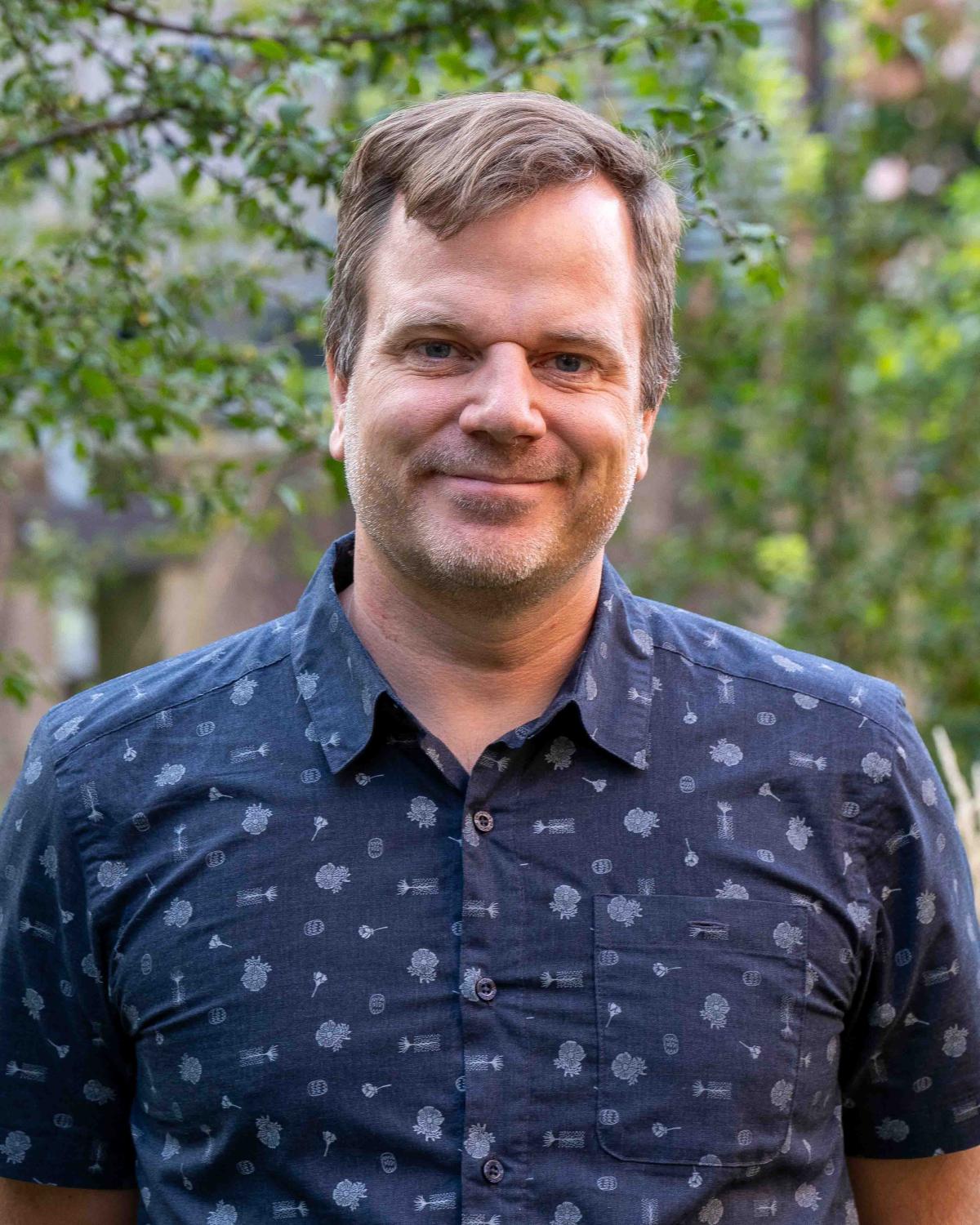
Professor Markus Helfert is a leading academic in Digital Service Innovation and Digital Transformation at Maynooth University's School of Business . He serves as Director of the Innovation Value Institute , Hub for Data and Digital Research, and holds Science Foundation Ireland Principal Investigator roles at Lero – The Irish Software Research Centre and Adapt Research Centre. His research spans Service Innovation , Artificial Intelligence , Intelligent Transportation Systems , FinTech , and Enterprise Architecture , with active involvement in European Standardisation initiatives.
Tim Harper is a Professor of the History of Southeast Asia at the University of Cambridge, serving as Head of the School of the Humanities and Social Sciences. He is a Fellow of Magdalene College and Director of the Centre for History and Economics. His research focuses on Southeast Asian colonial and postcolonial history, with a particular emphasis on anti-imperial movements, nationalism, and the British Empire's decline. He has authored seminal works such as Underground Asia: Global Revolutionaries and the Assault on Empire (2020) and co-authored Forgotten Armies (2004) and Forgotten Wars (2007) with Christopher Bayly. His articles explore themes like colonial resistance, diaspora networks, and the socio-political dynamics of decolonization in Southeast Asia. Harper's scholarship challenges traditional narratives of empire, highlighting grassroots movements and transnational networks. His work bridges academic rigor with accessible storytelling, as seen in Underground Asia , which reinterprets 20th-century imperialism through the lens of radical underground networks. His research also examines education, state governance, and environmental politics in colonial contexts. He actively contributes to interdisciplinary initiatives at the Centre for History and Economics, fostering collaboration between historians and economists.
Bruno Basso serves as the Hannah Distinguished Professor in the Department of Earth & Environmental Sciences at Michigan State University, based in 307A Natural Science Building. He teaches GLG 446: Water and Food and maintains active research in sustainable agricultural systems, with contact via 517-353-9009 or basso@msu.edu. His work bridges academic research with practical farm applications across the US Midwest. His core research interests include: Food Security and Plant Resilience mechanisms Soil Science with emphasis on organic carbon dynamics Precision Agriculture technologies (drones, remote sensing) Climate-Smart Agriculture practices Nitrogen and phosphorus use efficiency Yield stability analysis through spatial-temporal modeling Regenerative agriculture impacts on greenhouse gas emissions Ecosystem services valuation in crop-livestock systems Analysis of his 2023-2025 publications reveals a dominant focus on quantifying climate benefits from regenerative practices using multi-model ensembles. His work consistently addresses scalability for farmer adoption, with strong emphasis on N₂O emissions mapping, soil carbon durability, and yield stability zones. Key methodological innovations include hybrid SAR-remote sensing integration and AI-driven nutrient prescription systems, primarily applied across Midwest corn-soybean systems. No scientific awards were documented in the provided materials. While specific advising details are absent, his leadership in the LTAR cropland common experiment and Soil Inventory Project indicates active mentorship of graduate researchers. His research likely attracts significant USDA and NSF funding given the scale of field experiments and modeling initiatives focused on decarbonizing agriculture. Dr. Basso co-leads the Soil Inventory Project at Kellogg Biological Station, developing integrated sampling, data repository, and modeling frameworks for regenerative agriculture. His team combines ground observations, remote sensing, and biophysical modeling to quantify soil carbon and greenhouse gas fluxes, collaborating with farmers, industry partners, and international researchers to translate science into on-farm practices.
Geoffrey Cohen is the James G. March Professor of Organizational Studies in Education and Business, and Professor of Psychology at Stanford University's Graduate School of Education. He holds a courtesy appointment in Organizational Behavior at the Graduate School of Business. His research focuses on identity, belonging, and interventions to address social inequities in education, healthcare, and workplace settings. Cohen earned his Ph.D. in Psychology from Stanford University (1998) and a B.A. in Psychology from Cornell University. Education: Ph.D., Stanford University, Psychology (1998) Bachelor of Arts, Cornell University, Psychology Research Interests: Cohen investigates how identity threats and belonging shape behavior, particularly for marginalized groups. His work emphasizes scalable interventions to improve academic outcomes, reduce disciplinary disparities, and foster inclusive environments. He is author of Belonging: The Science of Creating Connection and Bridging Divides (2022), which explores belonging's role in education, healthcare, and societal contexts. Key Contributions: Cohen's interventions, such as social-belonging exercises and self-affirmation techniques, have demonstrated long-term impacts on academic success, mental health, and social cohesion. His studies span disciplines including education, medicine, and public health, with findings published in top journals like Science Advances and Journal of Personality and Social Psychology . Grants & Teaching: Cohen teaches courses on social psychology, intervention design, and belonging. He mentors doctoral students and postdocs investigating identity processes and scalable solutions to social problems. His lab collaborates with schools and healthcare systems to implement evidence-based strategies. Labs/Teams: Cohen leads a research group at Stanford's Graduate School of Education, affiliated with the Institute for Human-Centered Artificial Intelligence (HAI) and the Wu Tsai Human Performance Alliance. His work bridges theory and practice, aiming to create real-world impact through psychologically informed interventions.
Michael Pratt is a Professor in the Division of Global Health at the Herbert Wertheim School of Public Health & Human Longevity Science School, UC San Diego. He specializes in physical activity and public health, with expertise in global health, chronic disease prevention, and evidence-based interventions. Previously, he served as a Visiting Professor at Emory University and held roles at the CDC, including Senior Advisor for Global Health and Chief of the Physical Activity and Health Branch. He founded the CDC-WHO Collaborating Center for Physical Activity and led initiatives like the International Physical Activity and Public Health Course. His education includes a Master's in Exercise Physiology and MD from the University of Washington, residency at the Mayo Clinic, and a Master's in Public Health from the University of Minnesota. He is a Fellow of the American College of Preventive Medicine and American College of Sports Medicine. Research interests focus on global research capacity building for physical activity, intervention strategies, and policy implementation. His work emphasizes the intersection of urban environments, health equity, and policy effectiveness. Recent publications highlight trends in physical activity surveillance, policy disconnects, and WHO guidelines. He leads the Global Observatory for Physical Activity (GoPA!), tracking global progress in physical activity initiatives. Scientific awards include Fellowships in preventive medicine and sports medicine. His grants and advising roles are not explicitly detailed but align with his research themes. He collaborates with institutions worldwide and co-authors studies on physical activity policy, environment impacts, and global health disparities.
Jon McCormack is a Professor jointly appointed in Monash University's Faculty of Art, Design & Architecture (MADA) and Faculty of Information Technology. He founded and directs SensiLab, a research facility focusing on computational creativity, human-machine interfaces, and generative systems. His work spans electronic media art, evolutionary music, and artificial life. McCormack holds a PhD in Computer Science from Monash University, along with degrees in Computer Science, Applied Mathematics, and Film/Television. Research interests include computational creativity, tangible interfaces, and cybernetic systems. Notable projects include 'Explainable Artificial Creativity' (ARC-funded) and 'Building 4.0 CRC,' addressing architectural innovation through AI. He has been recognized with awards for collaborative projects like the Blundstone Intelligent Footwear for Healthcare. McCormack's recent articles explore AI-driven art, generative systems, and interdisciplinary design. His work bridges artistic practice with technical innovation, emphasizing ethical and creative dimensions of human-AI collaboration. SensiLab serves as a hub for practice-based research in digital media and interactive systems. Education: PhD in Computer Science, Monash University (2004) Bachelor of Science (Honours), Computer Science/Applied Mathematics, Monash University (1987) Graduate Diploma in Film/TV, Swinburne University (1986) Bachelor of Science, Computer Science/Applied Mathematics, Monash University (1985) Key Projects: Lead investigator on 'Explainable Artificial Creativity' (2022–2026) Co-investigator in 'Building 4.0 CRC' (2020–2027), exploring AI-driven architectural design Awards: 2022 Designers Australia Award for Blundstone Footwear 2020 'On the Machine Condition' Prize McCormack's lab, SensiLab, fosters collaborations across disciplines, producing exhibitions, software, and theoretical frameworks for computational creativity. He actively supervises PhD students in practice-based research, emphasizing the intersection of art and technology.
Dr Justine Howard is an Associate Professor in Education and Childhood Studies at Swansea University's Faculty of Humanities and Social Sciences. She holds Chartered Psychologist status and is an Associate Fellow of the British Psychological Society. Her research focuses on developmental psychology, educational psychology, and the role of play in early childhood development. With over 15 years of experience in higher education, she teaches and supervises PhD students in education-related topics. Her work emphasizes play-based learning, therapeutic play, and inclusive education. Notable contributions include publications on play's developmental benefits, teacher perspectives, and the implementation of play curricula. She has presented globally on topics like play advocacy and child well-being in crisis contexts. Awards include recognition from the British Psychological Society. Current PhD supervision includes projects on social justice in Bangladesh, music education impacts, and therapeutic play in healthcare settings. Howard's research spans international collaborations and policy engagement, such as advising on Welsh educational initiatives.
Aniket 'Niki' Kittur is a Professor in the Human-Computer Interaction Institute at Carnegie Mellon University's School of Computer Science. His research focuses on AI-augmented cognition, exploring how human and machine intelligence can collaborate to enhance creativity, decision-making, and innovation. He leads projects like the Semantic Reader and Skeema browser extension, aiming to reduce cognitive overload through intelligent systems. Education: BA in Psychology & Computer Science from Princeton University; PhD in Cognitive Psychology from UCLA. His work bridges HCI, crowdsourcing, and cognitive science, with 100+ publications and 17 best paper awards. He advises industry partners including Google, Microsoft, and Toyota while maintaining a lab focused on real-world impact. Research interests center on accelerating knowledge acquisition via systems that scaffold sensemaking (e.g., Selenite for web exploration) and fostering analogical innovation through crowdsourced/AI hybrid approaches. Notable contributions include CrowdForge (human-machine workflows) and Kinetica (touch-based data visualization). Awards include NSF CAREER Award, Allen Newell Award, and CHI Academy membership. His lab's Skeema tool has achieved 79% 30-day retention in beta, reflecting impactful user-centered design principles. Current projects emphasize LLM integration for composite cognition, aiming to create systems where 'LLMs + Humans > Either Alone.' Funding来自NSF, NIH, ONR, and industry partners like Bosch and Wikimedia. Teaching includes PhD bootcamps and user-centered research courses. Over 100 students have contributed to his projects, many advancing to tech leadership roles.
Dr. E. Keith Smith is a Lecturer at ETH Zürich's Department of Humanities, Social and Political Sciences, affiliated with the Center for Comparative and International Studies (CIS). His research focuses on sociopolitical dimensions of climate change, particularly climate change attitudes, behaviors, and social tipping processes. He holds PhD from Colorado State University and master’s degrees from KU Leuven and University of British Columbia. His work explores why individuals engage—or disengage—in climate action, emphasizing factors like political polarization, religious beliefs (especially evangelical Protestantism), and trust in institutions. Smith's research employs quantitative methodologies and addresses challenges in environmental policy implementation, such as equitable air quality monitoring and global supply chain regulations. He contributed to the DominoES project on social tipping dynamics and has published in journals like Global Environmental Change and Nature Scientific Reports . His recent studies analyze public support for climate policies across Europe and the U.S., emphasizing how procedural inclusiveness and transparency can build trust in environmental governance. He also explores mobility policies in Switzerland, including road pricing and public transport expansion, using experimental methods to gauge citizen preferences. Smith’s work bridges environmental science and social science, aiming to identify pathways for transformative societal shifts toward climate action. His current projects focus on social tipping mechanisms and the interplay between climate risk anticipation and policy demand.
Philippe Thalmann is an Associate Professor at the École Polytechnique Fédérale de Lausanne (EPFL), leading the Laboratoire d'Économie Urbaine et de l'Environnement (LEURE). His research focuses on environmental economics, climate policy, energy systems, and sustainable urban development. He holds academic affiliations within the School of Architecture, Civil and Environmental Engineering (ENAC) and teaches courses on energy economics, environmental policy, and real estate. Thalmann serves on numerous national committees, including the Federal Housing Commission, the Climate Change Advisory Committee (OcCC), and the Swiss Competence Centers for Energy Research (SCCER). He has directed the INTER Institute for Urban Studies (2009–2014) and currently chairs ProClim, the Forum for Climate and Global Change. His work emphasizes interdisciplinary approaches to climate mitigation, housing affordability, and environmental policy design. Education: PhD in Economics (implied via academic rank and research output) Research interests include carbon pricing mechanisms, renewable energy systems, urban sustainability, and the economic implications of climate policy. He has advised over 30 doctoral and master’s students on topics ranging from energy efficiency valuation to housing market dynamics. Thalmann’s recent publications analyze Switzerland’s climate policy frameworks, renewable energy transitions, and the environmental impact of housing and mobility systems. He actively advises policymakers on decarbonization strategies, tax reforms, and carbon removal technologies. Notable contributions include the Renewable Energy Outlook II for Switzerland and studies on fiscal incentives for climate action. Advising & Grants: Supervised 28 students (listed above). Engaged in research projects funded by EPFL and Swiss federal initiatives. Collaborates with the Swiss National Research Program (PNR66) and energy policy think tanks. Labs/Teams: Director of LEURE Lab, part of the Urban Institute (INTER), and member of ProClim leadership.
Jun.-Prof. Dr. Annette Rudolph is an Assistant Professor leading the AI and (Climate-Induced) Land Use Change research group at TU Berlin's Institute of Landscape Architecture and Environmental Planning. She holds a Diplom in Mathematics (TU Berlin, 2011) and a PhD in Meteorology (FU Berlin, 2018), with a habilitation thesis on geophysical fluid dynamics and data-driven methods (2023). Her research integrates AI, climate science, and geophysical fluid dynamics. Academic Roles: Head of FG KI und Landnutzungswandel (since 2023), Postdoc in SFB 1114 (2014–2022) Research interests focus on AI applications in environmental sciences, clouds-climate interactions, and fluid dynamics. Her work bridges theoretical meteorology with data science, including machine learning for precipitation modeling and climate analysis. Publications emphasize AI-driven climate modeling, geostatistical methods, and atmospheric dynamics. Notable contributions include a 2024 paper on deep learning for precipitation nowcasting and a 2023 study on CAPE-precipitation relationships using machine learning. She developed e-learning resources on geodata analysis using Python and R, and led DAAD-funded research in Oslo (2022). Current projects involve AI-driven land-use change analysis and climate impact modeling.
Professor Jes Sammut is a faculty member at the University of New South Wales (UNSW) in the School of Biological, Earth & Environmental Sciences . He serves as Deputy Dean for External Engagement and leads the UNSW Aquaculture Research Group , while also holding the position of Deputy Director (International) at the Centre for Marine Science & Innovation. Additionally, he is an Honorary Research Fellow at ANSTO , where he uses nuclear tools to study seafood provenance. His research spans biological, physical, and social sciences, focusing on aquaculture solutions across Australia, Vietnam, Papua New Guinea, Indonesia, India, Thailand, and the Philippines.
Prof Tan Ming Jen is a Professor and Associate Chair (Faculty) at the School of Mechanical & Aerospace Engineering, Nanyang Technological University (NTU). He holds the President's Chair in Mechanical Engineering and leads the HP-NTU Digital Manufacturing Joint Lab. His research focuses on additive manufacturing, metallurgy, and sustainable construction materials, particularly in 3D concrete printing and lunar construction materials. Education: B.Sc.(Eng.) and Ph.D. from Imperial College London. Notable fellowships include JSPS Fellow (Kyoto University), STA Fellow (Japan), Visiting Scientist (Columbia University), and Fulbright Scholar (UCLA/Northwestern). Research Interests: Advanced manufacturing techniques, materials science, and sustainable construction. Pioneered work on concrete 3D printing, recognized as a Global Shaker. Over 300 journal publications and S$95M+ in research funding. Leadership Roles: Former Program Director (Building & Construction) at Singapore Centre of 3D Printing, and member of World Economic Forum's Global Future Council on Advanced Manufacturing. Editorial Board roles at Journal of Magnesium & Alloys and Metals .
Dr. Zhigang Peng is a Professor in the School of Earth & Atmospheric Sciences at Georgia Institute of Technology, part of the College of Sciences. His research focuses on seismicity dynamics, fault zone imaging, and data science applications in geophysics. He holds a Ph.D. in Geological Sciences from the University of Southern California (2004), an M.S. in Electrical Engineering (2002), and a B.S. in Geophysics from the University of Science and Technology of China (1998). Dr. Peng’s work spans seismological studies of earthquake triggering mechanisms, fault zone structures, and deep-focus earthquakes. He has pioneered dense seismic array techniques to image fault systems and employs machine learning for event detection and phase picking. His recent projects include analyzing the 2023 Kahramanmaraş earthquake sequence in Türkiye and the 2024 Noto earthquake in Japan. He leads initiatives like the Center for Collective Impact in Earthquake Science (C-CIES), promoting inclusive scientific collaboration. Research Highlights: Fault zone imaging, dynamic triggering, AI-driven seismology Labs: ES&T 2235 (Seismology Lab), ES&T 2256 (Office) His awards include the 2002 AGU Outstanding Student Paper Award. He actively contributes to earthquake hazard assessment, nuclear explosion monitoring, and volcano-seismic interactions, with over 150 peer-reviewed publications.
Dr. Amy Damashek serves as Professor in the Department of Psychology at Western Michigan University, teaching undergraduate and graduate courses while mentoring Clinical Psychology doctoral students. She chairs the department's Diversity, Equity, and Inclusion Committee and maintains an active research program focused on vulnerable populations. Education: Ph.D. in Psychology, University of Missouri-Columbia (2007) Postdoctoral Fellowship, University of Oklahoma Health Sciences Center (2009) Research Focus: Her work centers on preventing child maltreatment and unintentional injuries among at-risk youth, with specialized expertise in infant sleep-related deaths and health disparities . She develops culturally responsive parenting interventions for low-income and Spanish-speaking families, emphasizing community-based solutions through home visiting programs. Publication Trends: Recent work (2020-2023) demonstrates consistent focus on pandemic adaptation of family services, safe sleep practices in marginalized communities, and digital intervention strategies. Her mixed-methods approach bridges clinical psychology with public health, prioritizing implementation in real-world settings. Scientific Recognition: Fellow of the American Psychological Association Former President of APA Division 37 (Society for Child and Family Policy and Practice) Grants & Mentoring: Secured federal funding for child injury prevention in underserved communities. Mentors Clinical Psychology doctoral students with emphasis on culturally competent practice, accepting new graduate students for Fall 2025. Her federally funded work directly informs evidence-based home visiting protocols. Research Ecosystem: Collaborates extensively with community health workers, home visiting agencies, and pediatric care providers to implement and evaluate interventions addressing structural barriers in family support systems.