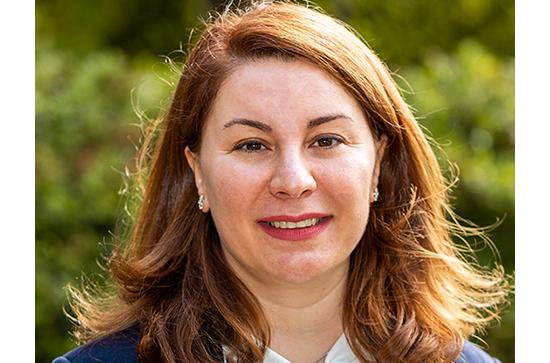
Zohreh Pourzolfaghar is an Assistant Professor in Management Information Systems (MIS) at the School of Business, Maynooth University (MU). She serves as Director of the IT-Enable Innovation Programme and cluster lead for the Digital Construction cluster at the Innovation Value Institute (IVI). She is also a member of Lero, the SFI Research Centre for Software. Education: PhD in Project Management (University Putra Malaysia, 2011); MSc in Management Systems and Productivity; BSc in Software Engineering. Research Interests : Focuses on digital transformation for SMEs, information management in construction, and smart city architectures. Leads EU-funded projects like EnTrust (agri-data governance), DIGI+ (sustainable digital transformation), and DigiFABs (food & beverage SMEs). Co-PI for projects such as GDI-IE (genomic data infrastructure) and PERFORM (digital retail innovation). Grants & Awards : Secured funding from SFI, Enterprise Ireland, and EU. Notable awards include the BIM Hero Award (2022) and Research Engaged Award (2022). Teaching : Courses include Digital Business, Digital Technology Governance, and Enterprise Architecture. Advises PhD students in MIS and digital transformation. Industry Collaboration : Works with firms like ArcDox and Corballis Technologies on BIM standards and data governance. Active in national and EU policy networks, including NSAI committees.
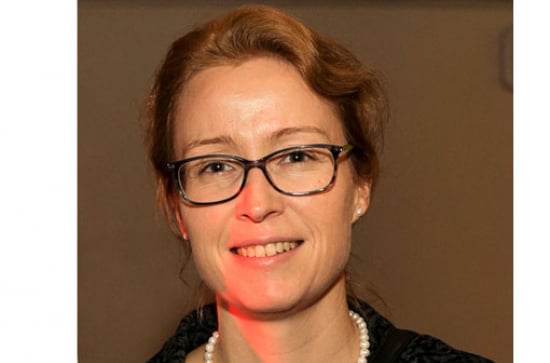
Rozenn Dahyot is a Professor of Computer Science at Maynooth University within the Faculty of Science & Engineering. She previously held roles as Assistant and Associate Professor in Statistics at Trinity College Dublin (2008-2021) and Lecturer in Computer Science (2005-2008). Her research interests bridge Digital Signal Processing, Computer Vision, Machine Learning, and Statistical Analysis. She organized the European Signal Processing Conference (EUSIPCO2021) in Dublin and served as President of the Irish Pattern Recognition and Classification Society (IPRCS) from 2014-2020. Her work spans topics like semantic scene understanding, CNN compression, and medical image segmentation. Key contributions include advancements in graph-based image analysis, reinforcement learning optimization, and AI-driven systems for disaster management. Dahyot is a member of IEEE, ACM, and EURASIP, contributing to both academic and industrial collaborations.
Michela Bertolotto is a Professor in the School of Computer Science at University College Dublin (UCD). Her research focuses on spatio-temporal data modeling, GIScience, and applications of geospatial technologies in fields like urban planning and health informatics. She leads a research group and has supervised 19 PhD and 8 MSc students. Her work includes innovations in LiDAR-based flood risk visualization, semantic web quality assurance, and open-source spatial data analysis. Bertolotto has held roles including College Lecturer at UCD (2000–2006) and postdoctoral research positions at the University of Maine and University of Genoa. Education: BSc and PhD in Computer Science from the University of Genoa (1993, 1998). Professional achievements include over 100 publications, 24 grants (e.g., Science Foundation Ireland-funded Urban ARK project), and editorial roles at journals like the International Journal of Geographical Information Science. Awards include the UCD President's Research Award (2001) and NATO Postdoc Fellowship (1998–1999). Research interests span map personalization, volunteered geographic information (VGI), and geospatial data quality. Her lab develops tools like the LAMSkyCam (low-cost sky imaging system) and dynamic flood risk viewers. She chairs international conferences and serves on program committees for GIScience events.
Professor Markus Helfert is a leading academic in Digital Service Innovation and Digital Transformation at Maynooth University's School of Business . He serves as Director of the Innovation Value Institute , Hub for Data and Digital Research, and holds Science Foundation Ireland Principal Investigator roles at Lero – The Irish Software Research Centre and Adapt Research Centre. His research spans Service Innovation , Artificial Intelligence , Intelligent Transportation Systems , FinTech , and Enterprise Architecture , with active involvement in European Standardisation initiatives.
Fabiano Pallonetto is a Professor at Maynooth University's School of Business, with affiliations to the Hamilton Institute and Innovation Value Institute (IVI). He combines academic research with industry experience in energy, IT, and transport sectors. Role: Professor Location: Room 314, Maynooth University Contact: Fabiano.Pallonetto@mu.ie His research focuses on smart grid integration, energy system optimization, and sustainable development. Key projects include: NexSys (Funded Investigator): Developing net-zero energy pathways FLOW (Principal Investigator): Flexible EV-grid integration RES4CITY (Coordinator): Workforce upskilling for renewables Recent publications analyze energy flexibility software, deep learning optimization models, phase change materials for thermal storage, and blockchain security frameworks. His work spans smart cities , renewable integration , and AI-driven energy systems . Student Supervision: Currently advising MR B. Mohseni-Gharyehsafa (PhD research).
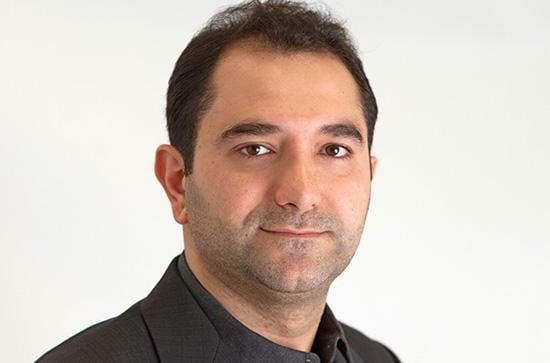
Dr. Ali Nazarpour is an Assistant Professor in Management at the School of Business, Maynooth University. He holds a PhD in Operations and Supply Chain Management from University College Dublin’s Smurfit School of Business, along with a BSc in Industrial Engineering and an MSc in Business Administration from Iran University of Science and Technology. Prior to his academic career, he spent nine years in industry roles, including Sales Supervisor, Marketing and Sales Planning Chief, and Inventory Management Project Manager in the automotive sector, alongside teaching and research activities. His work bridges industry experience with academic rigor, focusing on supply chain optimization, mass customization strategies, and AI integration in business processes. Education: PhD in Operations and Supply Chain Management (Smurfit School of Business, UCD) MSc in Business Administration (Iran University of Science and Technology) BSc in Industrial Engineering (Iran University of Science and Technology) Research Interests: Artificial Intelligence applications in supply chain and logistics Mass customization feasibility across industries and countries Third-party logistics selection methodologies Project management and risk mitigation strategies Global logistics frameworks Industry 4.0 technologies for operational efficiency His publications and conference contributions between 2014 and 2021 highlight trends in leveraging AI for supply chain decision-making, analyzing mass customization challenges, and exploring cross-country operational dynamics. Despite no explicit scientific awards listed, his active participation in conferences like INFORMS, POMS, and EurOMA underscores his academic engagement. In advising and teaching, he focuses on Contemporary Issues in Management, Operations and Supply Chain Management metrics, and Project Risk Management. His industry experience enriches classroom discussions and research projects. He is based in the TSI Building (Room 253) and reachable via ali.nazarpour@mu.ie or phone (01) 474 7516.
Mark Kelly serves as Head of the ATU Centre for Sustainability and Senior Lecturer at Atlantic Technological University, Ireland, while also functioning as Principal Investigator for the Engineering Research Group (ERG). His research centers on sustainability within the Irish construction industry, with emphasis on waste stream management and circular economy implementation. His research interests include: Sustainability in Construction Construction and Demolition Waste Management Circular Economy Applications Resource Efficiency Lean Construction Methodologies Building Information Modeling Integration Analysis of his 2018-2024 publications reveals consistent focus on practical SME applications in Irish construction, examining environmental-economic tradeoffs of waste reduction strategies. His work demonstrates particular expertise in demolition-phase interventions and material circularity for small-scale projects, with significant impact evidenced by high citation counts in key articles. Scientific Awards: No awards specified in available documentation. Advising and Grants: Student supervision details and grant funding information not provided in source materials. He leads the ATU Centre for Sustainability while collaborating within the Engineering Research Group, driving industry-academia partnerships focused on sustainable engineering solutions for the built environment.
James O'Donnell is an Associate Professor in the School of Mechanical and Materials Engineering at University College Dublin (UCD). He joined UCD in 2013 after working at Lawrence Berkeley National Laboratory. His research focuses on multi-scale energy modeling, interoperable BIM solutions, and sustainable building design. He contributes to buildingSMART’s Energy Modelling Expert Panel and teaches modules on building physics and energy analysis. Education: B.E. Civil and Environmental Engineering, University College Cork Ph.D. in Holistic Building Performance Analysis, University College Cork Professional Diploma in University Teaching & Learning, University College Dublin Research Interests: James specializes in energy informatics, building energy simulation, and semantic web technologies for the built environment. His work bridges BIM integration with energy modeling to optimize urban-scale performance. Grants & Funding: PROBONO (2022–2026): Integrator-centric approach for energy-efficient buildings NexSys (2022–2026): Next-Generation Energy Systems ALIVE (2020–2024): Indoor Environmental Quality in Energy-Efficient Buildings Teaching & Editorial Roles: James coordinates courses like Energy Systems in Buildings and serves as an Associate Editor for Journal of Building Engineering and editorial board member of Advanced Engineering Informatics . Professional Affiliations: Member of Engineers Ireland, International Building Performance Simulation Association (IBPSA), and European Council on Computing in Construction.
Dr. Rob Brennan is an Assistant Professor in the School of Computer Science at University College Dublin. With 25 years of academic and industry experience, he specializes in data governance, AI ethics, and cybersecurity. His research integrates socio-technical systems analysis, data protection frameworks, and healthcare risk management. He leads the Value and Risk research challenge within the ADAPT Centre's Transparent Digital Governance initiative and coordinates projects like the ARK platform for risk governance. Education: BSc in Physics, Dublin City University MSc, Queen's University Belfast PhD in Governance, Dublin City University Professional Diploma in University Teaching and Learning, University College Dublin Research Interests: Data Governance & AI Accountability GDPR Compliance & Privacy Engineering Healthcare Risk Management Knowledge Graphs & Linked Data Cybersecurity & Incident Response Key Contributions: Co-PI of Science Foundation Ireland's Empower Data Governance project Coordinator of the €4M H2020 ALIGNED project on software/data engineering Developed the ARK platform for risk governance in healthcare and cybersecurity Grants & Awards: Best Paper Award at Extended Semantic Web Conference 2023 Principal Investigator for grants including the ARK-Virus platform (SFI-funded) Teaching & Mentorship: Coordinates courses on Cyber Risk Assessment, Incident Response, and Data Protection Supervises PhD students focusing on data governance and AI ethics Co-developed the MA in Data Protection and Privacy Law with Computing Professional Activities: Member of FAccT 2023 Program Committee Co-chair of the Irish Conference on Artificial Intelligence and Cognitive Science Contributor to international standards (OMG, IETF, 3GPP)
Zubair Kabir is a Senior Lecturer in Public Health and Academic Director of the Master of Public Health (MPH) program at University College Cork (UCC). He holds dual roles in academia and global health research, serving as the country lead for Ireland in the Global Burden of Disease (GBD) Study since 2016. His work has contributed to over 70 GBD-related publications, earning him recognition as the most cited Irish researcher in his field since 2019. Dr. Kabir’s research focuses on tobacco control, alcohol policy, and non-communicable disease (NCD) epidemiology, with a particular emphasis on policy-informed research. He pioneered the Irish CHD IMPACT model, instrumental in shaping Ireland’s cardiovascular health strategy and Healthy Ireland Framework. His contributions to the GBD Study have impacted global health policy, including WHO reports and OECD publications. He leads the Irish Burden of Disease (I-BoD) Research Group, fostering capacity-building through training master’s students in BoD methodology. His recent work includes alcohol policy research (e.g., estimating alcohol-attributable deaths in Ireland), tuberculosis epidemiology in migrant populations, and mental health studies among cancer patients. He also investigates the health impacts of obesity, aging, and long-COVID in Ireland. Dr. Kabir has secured significant funding, including EU COST Action grants and HRB awards, and serves on national health committees such as the Health Research Consent Declaration Committee (HRCDC). His awards include the American College of Chest Physicians Fellowship (2014) for excellence in tobacco control advocacy. His academic career spans postdoctoral fellowships at Harvard and Trinity College Dublin, and he holds a PG Diploma in Higher Teaching & Learning. Key contributions include co-editing Tobacco Use Insights, co-authoring WHO policy reports, and advancing dental public health through GBD-linked studies on oral cancer.
Dr. Simon Kelly is an Associate Professor in the UCD School of Electrical & Electronic Engineering, part of the UCD College of Engineering and Architecture. With a background in Electrical and Electronic Engineering (B.E. and Ph.D. from UCD), he has established himself as a leading researcher at the intersection of engineering and cognitive neuroscience, focusing on how the brain makes perceptual decisions. Dr. Kelly's research program centers on understanding the neural mechanisms underlying perceptual decision making. Using human electroencephalography (EEG), he investigates how the brain accumulates sensory evidence to reach decisions about what we see, hear, and experience. His pioneering work around 2012 identified the Central Parietal Positivity (CPP) signal that reflects the accumulation of evidence during decision processes, building to a threshold before decisions are executed. This discovery has fundamentally advanced our understanding of how the brain transforms sensory input into decisions. His recent publications reveal continued innovation in understanding the dynamics of evidence accumulation, the neural representation of confidence in decisions, and how prior knowledge shapes perceptual processing. His work spans theoretical advances in decision mechanisms and practical applications for diagnosing and treating cognitive impairments associated with neurological disorders like Parkinson's disease. Wellcome Trust Investigator Award in Science (2020) for 'What dictates the extent of evidence accumulation in human decision making?' SFI US-Ireland Research Partnership Programme award (2020) for 'Uncovering the neural architecture underlying decisions abstracted from movements' As an interdisciplinary researcher, Dr. Kelly bridges engineering, neuroscience, and psychology through his leadership of the UCD Cognitive Neural Systems Lab. His work has significant implications for both fundamental cognitive science and potential clinical applications, reflecting his commitment to basic research as a foundation for future practical advances.
Derek J. Sinnott is a Researcher at the RIKON Sustainable Architecture & Built Environment Research Centre, focusing on sustainable construction, digitalization, and circular economy principles. His work develops frameworks for material passports and lean-agile construction methodologies. Research addresses: Dynamic material tracking systems Integration of Scrum and Lean Construction principles Takt planning optimization Regulatory compliance in construction Recent publications establish conceptual frameworks for sustainable material management and analyze Last Planner® System implementations in residential projects.
Dr. Philip Crowe is a Lecturer/Assistant Professor at University College Dublin's School of Architecture, Planning and Environmental Policy (APEP), where he also serves as Director of Research. He holds a joint appointment with the School of Civil Engineering and is actively involved in multiple research initiatives focused on urban resilience, climate action, and sustainable development. His academic leadership extends to roles as co-Director of the UCD Centre for Irish Towns and Programme Director of the MSc in Architecture, Urbanism and Climate Action. Dr. Crowe's educational background includes a Dip Arch and MA from the University of Edinburgh, an MSc in Applied Carbon Management from the University of Glasgow (2011), and a PhD from University College Dublin. His doctoral research explored urban resilience through the lens of Scottish polymath Patrick Geddes, connecting historical precedents with contemporary climate challenges. His research interests focus on how the built environment can respond to crises like climate change, biodiversity loss, and resource depletion. With over 25 years of experience in both professional practice and academic research, Dr. Crowe's work spans urban resilience frameworks, vacancy and underuse analysis, town revitalization strategies, and innovative citizen engagement methods. His recent publications reveal a strong emphasis on practical applications of resilience theory, particularly in the Irish context, with projects addressing housing challenges, water infrastructure, and adaptive reuse of buildings. Among his notable achievements is the Ripple project in Ballina, which became the first Irish project to receive a New European Bauhaus Award in the Reconnecting with Nature Champion Category. His TREBUChEt project addresses the adaptive reuse of buildings in Ireland's towns through circular economy principles. Dr. Crowe has also made significant contributions to understanding how coworking spaces can provide social, urban, and environmental co-benefits to Irish towns. College Level Teaching Excellence Award (2024) New European Bauhaus Award: Reconnecting with Nature Champion (2023) THRIVE Leadership in Research (2023) EIT Climate KIC Accelerator Programme (2017) THINKTECH Award (2016) Dr. Crowe actively mentors PhD students including Stephen Wall, Merlo Kelly, Sarah Cremin, and Miriam Lins, with research focusing on urban resilience, town revitalization, and sustainable architecture. His grant portfolio includes significant projects funded by the Environmental Protection Agency, European Regional Development Fund, and Science Foundation Ireland. Through the UCD Centre for Irish Towns and the Urban Institute of Ireland, he leads collaborative efforts to address Ireland's urban challenges while contributing to broader European initiatives like the HeritACT project and New European Bauhaus movement.
Dr Brenda Daly is an Associate Professor of Law in the School of Law and Government at Dublin City University (DCU), where she lectures on healthcare law, dispute resolution (arbitration and mediation), and employment law. She serves as the European Association of Health Law National Contact for Ireland and is an active member of the EAHL Advisory Board, EAHL Interest Group on Supranational Biolaw, and the Northern/Ireland Health Law and Ethics Network. Education BA (Hons) MA PhD Research Focus : Her work centers on dispute resolution and healthcare law , with deep expertise in patients' rights, medical accountability, and mediation frameworks. She critically examines abortion law through European human rights jurisprudence and investigates mediation's role in medical negligence claims. Her employment law research includes practical guidance for Lexis+ Ireland and regular RTÉ Brainstorm contributions. Publication Trends : Daly's scholarly output reveals dual trajectories: healthcare law publications analyzing Ireland's abortion legislation and patient consent frameworks through European Court of Human Rights rulings, and conflict resolution work examining international peace mediation (notably the Aceh case study). Her methodology blends doctrinal legal analysis with empirical case studies across medical ethics and international relations contexts. Scientific Recognition No formal awards documented in source materials Advising & Funding : Daly supervises PhD/LL.M students in healthcare law and dispute resolution. She secured Irish Research Council/Department of Foreign Affairs funding (2009-2010) for EU peace mediation capacity research. Her grant history demonstrates interdisciplinary collaboration between law, health policy, and conflict studies. Research Ecosystem : As former Director of DCU's Socio-Legal Research Centre (2007-2011) and current Northern/Ireland Health Law Network member, she cultivates collaborative environments for healthcare ethics and mediation research, bridging academic theory with practical legal applications in high-stakes domains.
Prof. Siobhain O’Mahony is a Senior Lecturer in the Department of Anatomy and Neuroscience at University College Cork (UCC), affiliated with the APC Microbiome Ireland and the Biosciences Institute. She holds a B.Sc. (Hons) in Neuroscience from UCC (2001) and a Master’s in Neuropharmacology from the National University of Ireland, Galway. Her research focuses on microbiome-gut-brain axis dysfunction, stress-related disorders, women’s health, and neurodevelopmental impacts of early life stress. She established UCC’s first MSc in Human Anatomy (2017) and pioneered pre-clinical models linking early life stress to gut-brain axis disruptions, informing industry collaborations with GlaxoSmithKline and Mead Johnson Nutrition. Education: B.Sc. Neuroscience (UCC, 2001), M.Sc. Neuropharmacology (NUIG), PhD in Psychiatry (UCC, 2006) Her research explores microbiome modulation to address visceral pain, endometriosis during pregnancy, and stress mitigation in infants via nutritional interventions. She has a Google Scholar H-index of 49 and was ranked in the top 100 researchers on the Plos List (2019). Notable achievements include bridging breast-vs-formula feeding gaps through infant formula additives and receiving awards for teaching, engaged research, and clinical impact. Labs/Teams: APC Microbiome Ireland, Department of Anatomy and Neuroscience (Biosciences Institute & Western Gateway Building)