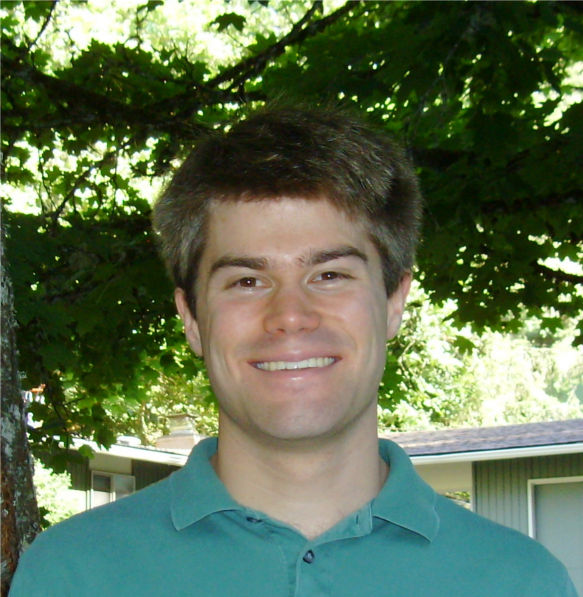
Eric Larson is an Associate Professor at Brown University's Department of Mathematics, specializing in algebraic geometry. His research focuses on moduli spaces, Brill-Noether theory, and algebraic curves. He collaborates with notable mathematicians such as Isabel Vogt and Izzet Coskun on topics like normal bundles, Chow rings, and stability conditions. Larson actively engages in academic outreach, organizing Putnam competition practices and undergraduate colloquia. He has developed computational tools for studying elliptic curves' Galois representations and contributed to expository works on interpolation problems and LaTeX accessibility.
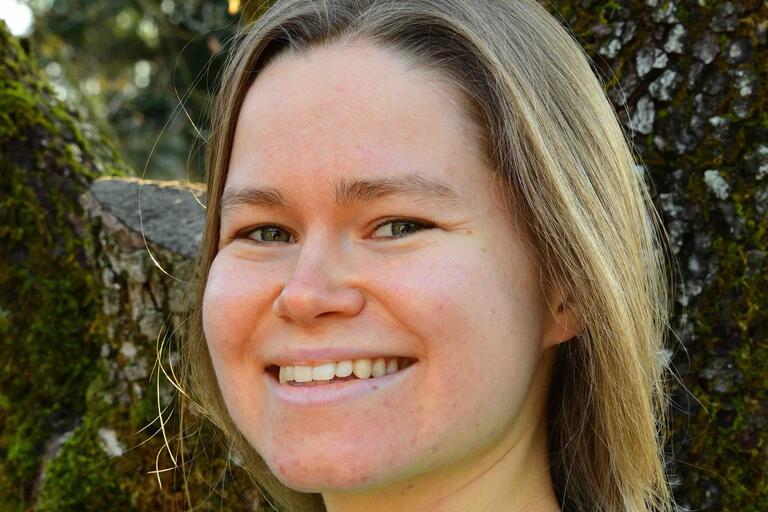
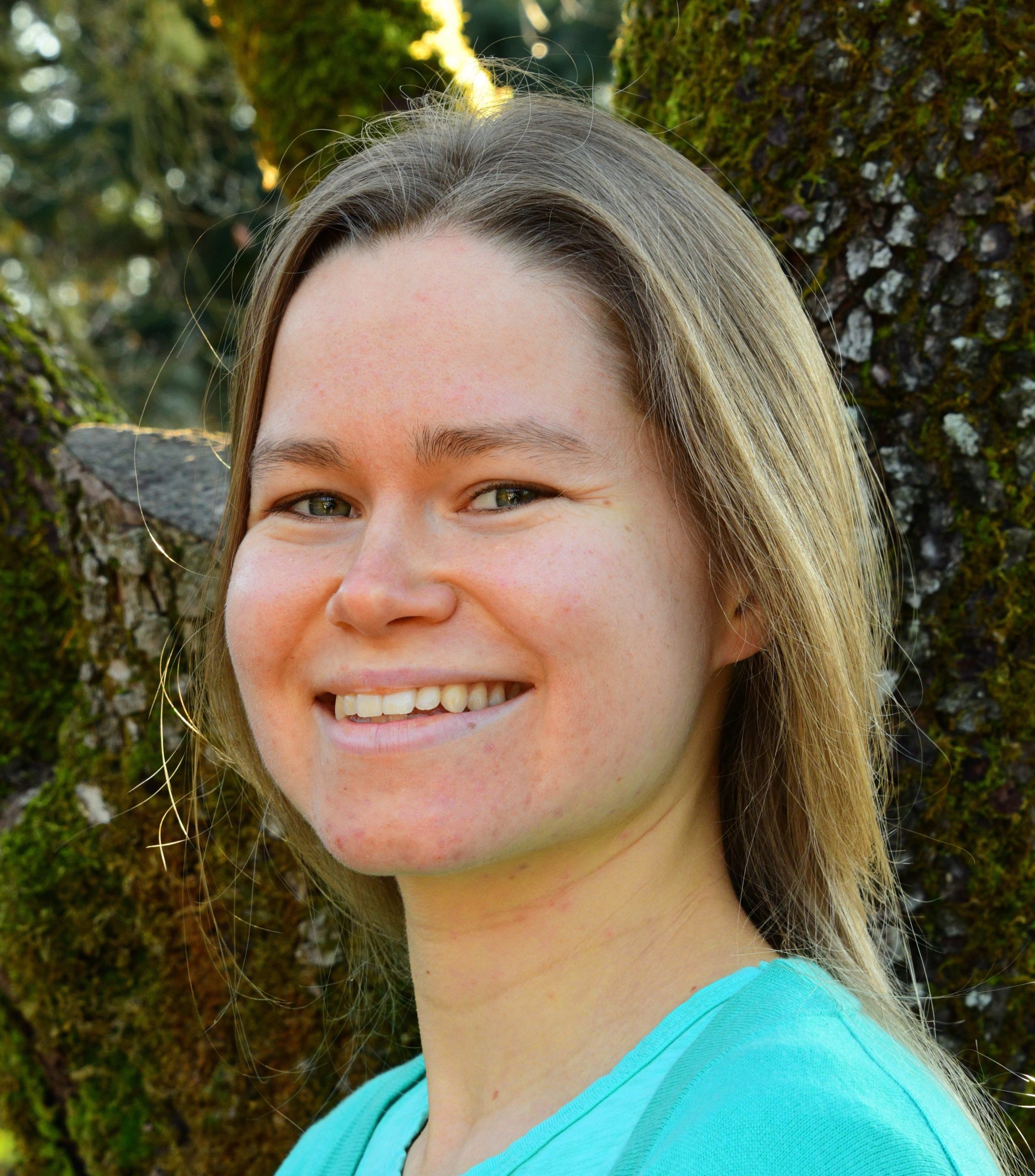
Hannah K. Larson is an Assistant Professor in the Department of Mathematics at the University of California, Berkeley. She is also a Clay Research Fellow (2022-2027) and recipient of the 2024 Maryam Mirzakhani New Frontiers Prize. University: University of California, Berkeley Academic Rank: Assistant Professor Clay Research Fellow: 2022-2027 Educational Background: PhD in Mathematics from Stanford University (2022), advised by Ravi Vakil Research Interests focus on algebraic geometry and intersection theory , particularly moduli spaces of curves, tautological rings, and Chow rings. Her work investigates cohomological structures of moduli spaces and extends Brill-Noether theory to special curve classes. Publications trend emphasizes moduli spaces , Chow rings , and tautological structures across 15 recent articles. Collaborators include Samir Canning, Sam Payne, and Ravi Vakil. Scientific Awards: 2024 Maryam Mirzakhani New Frontiers Prize Hertz Thesis Prize (2022) Advising and Grants: She has no listed advisees but collaborates extensively. The Clay Research Fellowship (2022-2027) supports her research. Labs and Teams: She participates in the Berkeley mathematics community and collaborates with institutions like Harvard Society of Fellows and ETH Zürich researchers.
Arend Bayer is a Professor of Algebraic Geometry at the University of Edinburgh's School of Mathematics, where he has been a faculty member since 2012. He specializes in areas such as stability conditions, moduli spaces, and derived categories, contributing to the understanding of Fano varieties, K3 surfaces, and wall-crossing phenomena. His research emphasizes collaboration, reflecting his belief in mathematics as a social endeavor. Education: Arend holds degrees from prestigious institutions, including a PhD from the University of Bonn, with earlier studies at Heidelberg University and a year at the University of Cambridge. His academic journey reflects a deep commitment to advancing algebraic geometry through rigorous research and interdisciplinary collaboration. Research Interests: Arend’s work focuses on algebraic geometry, particularly in stability conditions, Fano varieties, and moduli spaces. He explores the interplay between algebraic structures and geometric objects, often employing derived categories and wall-crossing techniques. His contributions include foundational insights into Kuznetsov components and the geometry of cubic threefolds. Collaborations are central to his approach, emphasizing problem-solving through shared ideas and sustained intellectual exchange. Scientific Awards: No specific scientific awards were mentioned in the provided text. Advising and Grants: While specific advising records or grant details are not detailed in the text, Arend’s collaborative approach suggests active involvement in mentoring and securing research funding. Labs and Teams: Arend contributes to a thriving research group within the School of Mathematics at Edinburgh, focusing on structural and symmetrical aspects of algebraic geometry. His work aligns with broader initiatives in the department, fostering a collaborative environment for advanced mathematical inquiry.
Professor Dhruv Ranganathan is affiliated with the Department of Pure Mathematics and Mathematical Statistics at the University of Cambridge, working within the Algebraic Geometry research group. His research spans foundational and applied aspects of algebraic geometry, focusing on enumerative geometry, Gromov-Witten theory, moduli spaces, tropical geometry, logarithmic structures, and classical geometry of curves. Research Focus Enumerative geometry and Gromov-Witten theory, particularly in toric varieties and tropical settings. Moduli spaces of curves and stable maps, with expansions and logarithmic structures. Applications of tropical geometry to classical problems in algebraic geometry. Brill-Noether theory and its combinatorial analogues for graphs and finite structures. Recent Publications The articles reflect a strong emphasis on logarithmic and tropical geometry, with connections to moduli spaces, enumerative invariants, and combinatorial algebraic structures. Topics include Donaldson–Thomas theory, double ramification cycles, chip firing on graphs, and motivic zeta functions. Contact Email: dr508@dpmms.cam.ac.uk Room: E1.01, Telephone: 01223 337990 Personal Homepage
Jack Huizenga is an Associate Professor in the Department of Mathematics at The Pennsylvania State University. His research focuses on algebraic geometry, particularly Hilbert schemes of points, moduli spaces of vector bundles, and interpolation problems. He is a co-organizer of the Algebra and Number Theory Seminar at Penn State. Education: Ph.D., Harvard University (2012). He has designed courses introducing algebraic geometry through linear algebra and interpolation problems, such as Polynomial Interpolation: An Introduction to Algebraic Geometry . Research Interests: Algebraic Geometry, with a focus on Brill-Noether theory, moduli spaces, vector bundles on surfaces, and birational geometry. His work explores geometric structures like Hilbert schemes, projective plane blowups, and stability conditions of sheaves. Publications highlight advanced topics in algebraic geometry, including cohomology of vector bundles, Seshadri constants, and geometric interpolation problems. He has collaborated extensively with researchers like Izzet Coskun on foundational problems in moduli spaces and stability conditions. No scientific awards are explicitly listed in the provided information. His advising and grant activities are not detailed here, though he has authored lecture notes and exercises for specialized courses. He maintains a research website at https://sites.psu.edu/jhuizenga/ .
Dhruv Ranganathan is a Professor of Algebraic Geometry at the University of Cambridge's Faculty of Mathematics and a Fellow at St John's College. His research focuses on logarithmic and tropical geometry, with applications to moduli and enumerative geometry. He holds a 2023 ERC Starting Grant from UKRI, coordinates the Cambridge Summer Research in Mathematics Programme, and teaches advanced mathematics courses such as IB Groups, Rings, and Modules. Affiliations: University of Cambridge (Faculty of Mathematics), St John's College. Research Interests: Tropical geometry, moduli spaces, enumerative geometry, logarithmic structures, and their interactions with combinatorics and algebraic varieties. He has mentored over 30 undergraduate researchers since 2013, focusing on projects in toric geometry, tropical moduli spaces, hyperplane arrangements, and Brill-Noether theory. His team includes postdoctoral researchers such as Alessio, Patrick, and Veronica. He co-edits Forum of Mathematics Pi/Sigma and the Mathematical Proceedings of the Cambridge Philosophical Society .
Dr. Angela Ortega Ortega is a permanent Researcher in the Institute of Mathematics at Humboldt University of Berlin , affiliated with the Faculty of Mathematics and Natural Sciences . She is an active member of the Algebraic Geometry research group , focusing on moduli spaces and vector bundles. Her primary research interests include: Geometry of moduli spaces of vector bundles on algebraic curves Brill-Noether theory Prym varieties and Abelian varieties Cyclic coverings and ramified coverings Hyperelliptic curves and trigonal constructions Her work bridges theoretical algebraic geometry with applications in mathematical physics and number theory. Analysis of her recent publications (2018-2024) reveals a concentrated focus on Prym varieties, with 12 of 15 articles exploring their structural properties, connections to moduli spaces, and applications to curve theory. Key trends include the study of cyclic/etale coverings (7 articles), ramification effects (5 articles), and genus-2 curve specializations (4 articles). Her collaborations with H. Lange, G. Farkas, and P. Borowka dominate her output, indicating strong international research networks. Dr. Ortega actively contributes to the academic community through organizational roles : she co-organized the Berlin-Hannover Algebraic Geometry Workshop (2023) and participates in major conferences including the Math AMSUD Workshop (2024) and XXIV Congreso Latinoamericano de Álgebra (2024). Her teaching portfolio includes core analysis courses for physicists and specialized graduate topics like Abelian Varieties and Representation Theory. She maintains laboratory collaboration through the Algebraic Geometry research group , engaging in long-term projects on moduli spaces with international partners across Germany, France, Chile, and Mexico. Current work focuses on cyclic coverings of genus-2 curves and Prym-Torelli theorems for ramified coverings.
Hannah Larson is a Clay Research Fellow affiliated with the University of California, Berkeley. She will receive her PhD from Stanford University in 2022 under the guidance of Ravi Vakil. Her research focuses on classical and modern problems in algebraic geometry, particularly moduli spaces of complex curves, vector bundles on the Riemann sphere, and Brill-Noether theory applied to low-gonality curves.
Giulia Saccà is an Associate Professor in the Department of Mathematics at Columbia University. In Fall 2025 she will be on medical (maternity) leave. Previously, she spent 2019–2020 at the Collège de France, was an Assistant Professor at MIT (2017–2018), a J. H. Simons Instructor at Stony Brook University, and a Member of the School of Mathematics at the Institute for Advanced Study (IAS) in 2014–2015. Education: PhD, Princeton University, 2013 Research Interests lie in algebraic geometry, with a specific focus on hyper-Kähler and Calabi-Yau manifolds, K3 surfaces, moduli spaces of sheaves, families of abelian varieties and their degenerations, and symplectic resolutions. Her work intersects Hodge theory, derived categories, and enumerative aspects of these geometries. Her recent publications demonstrate a concentrated effort on understanding moduli spaces arising from Kuznetsov components, compactifications of Lagrangian fibrations, and the intricate geometry of O’Grady-type hyper-Kähler manifolds. A recurring theme is the interplay between derived categories and classical geometric constructions, often leveraging Bridgeland stability conditions and perverse sheaf techniques. Awards & Funding: NSF CAREER Award DMS-2144483 NSF FRG Grant DMS-2052750 “Derived Categories, Moduli Spaces, and Classical Algebraic Geometry” Member of the Simons Collaboration on Moduli of Varieties Previous NSF Grants DMS-1949812 and DMS-1801818 Graduate Advising & Service: Current PhD students: Anna Abasheva, Nicolás Vilches Reyes Organizer: Columbia Algebraic Geometry Seminar, FRG workshop “Hyperkähler Varieties, Derived Categories, and Moduli Spaces”, 2024 & 2025 GROW conferences, AMS Summer Research Institute 2025 session “Hyper-Kähler manifolds and derived categories” Former organizer: ZAG online seminar She maintains an active presence in the algebraic-geometry community through seminar organization, conference leadership, and collaborative grants that support graduate training and international workshops.
Richard Haburcak is a Visiting Assistant Professor at the Ohio State University (OSU) as part of the RTG 'Arithmetic, Combinatorics, and Topology of Algebraic Varieties'. Previously, he held postdoctoral positions at the Max Planck Institute for Mathematics in Bonn and the Hausdorff Institute for Mathematics. He earned his PhD in 2023 from Dartmouth College under Asher Auel's supervision, following a BA/MA in physical chemistry from Brandeis University under Bing Xu. His research focuses on Brill-Noether theory, K3 surfaces, vector bundles, and cubic fourfolds, with recent work exploring Brill-Noether loci in moduli spaces and unstable Lazarsfeld-Mukai bundles. He actively teaches courses such as Math 2255: Intro to Ordinary Differential Equations at OSU and has mentored students through the Directed Reading Program. His publications span topics including maximal Brill-Noether loci, moduli spaces of curves, and algebraic surfaces. He adheres to Federico Ardila's axioms emphasizing equitable mathematical experiences and collaborates widely across institutions. Upcoming engagements include speaking at the Summer Research Institute in Algebraic Geometry (2025) and organizing events like KOALA 2025. His work bridges pure mathematics and interdisciplinary research, reflecting his background in both chemistry and advanced algebraic geometry.
Prof. Dr. Gavril Farkas is a Full Professor (W3) and the Director of the Institute of Mathematics at Humboldt-Universität zu Berlin, where he leads the Algebraic Geometry I research group and serves as Chair of the Berlin Mathematical School. His academic career spans prestigious institutions including Princeton University and the University of Texas at Austin before joining Humboldt University in 2007. Professor Farkas completed his PhD at the Universiteit van Amsterdam in 2000 under Gerard van der Geer with a thesis titled "The birational geometry of the moduli space of curves." His academic journey began with studies at Babes-Bolyai University, followed by a Master's program in the Netherlands, and postdoctoral work at the University of Michigan. His research focuses on algebraic geometry, particularly the geometry and topology of moduli spaces. His work spans multiple interconnected areas including moduli of curves, enumerative geometry, syzygies, vector bundles on curves, abelian varieties, Prym varieties, K3 surfaces, and Brill-Noether theory. Professor Farkas employs sophisticated techniques from commutative algebra, topology, and combinatorics to address fundamental questions in algebraic geometry. His recent publications demonstrate a continued focus on the interplay between syzygies, moduli spaces, and topological invariants. The 15 most recent papers reveal a strong emphasis on Koszul modules, resonance varieties, and their applications to classical problems in algebraic geometry, with frequent collaborations with leading mathematicians across Europe and the United States. Member of Berlin-Brandenburgische Akademie der Wissenschaften (2022) Member of Academia Europaea (2023) ERC Advanced Grant "SYZYGY: Syzgies, moduli and topological invariants of groups" (2020-2026) DFG Research Training Group Berlin-Hannover "From geometry to numbers" (2024-2029) As a dedicated educator, Professor Farkas has supervised over 15 PhD students whose work spans various aspects of algebraic geometry. He is Managing Editor of "Algebraic Geometry" and serves on editorial boards of several prestigious mathematics journals. He regularly organizes international conferences including upcoming events "Two centuries of moduli" in Berlin (2026) and "Algebraic curves: moduli and syzygies" in Cetraro (2026), demonstrating his continued leadership in the field.
Jenia Tevelev is a Professor in the Department of Mathematics and Statistics at the University of Massachusetts Amherst. His research focuses on algebraic geometry, particularly moduli spaces, birational geometry, derived categories, and tropical geometry. He has held prestigious awards including the Simons Fellowship (2019), Fulbright Scholarship (2019), and Sloan Fellowship (2007). Tevelev's research explores advanced topics such as noncommutative resolutions of moduli spaces, mirror symmetry, and categorical aspects of singularities. He has contributed to significant results on Mori Dream Spaces, hypertree divisors, and the geometry of vector bundles. His work bridges algebraic geometry with mathematical physics, notably through connections to scattering amplitudes in N=4 Yang-Mills theory. Research Grants: Multiple NSF grants (e.g., DMS-2401387, DMS-2101726) supporting projects on moduli spaces and algebraic geometry. Editorial Role: Managing Editor of Transformation Groups . Scientific Contributions: His publications address foundational questions in derived categories, birational geometry, and compactifications. Notable works include the resolution of the BGMN conjecture, studies on non-polyhedral effective cones of toric surfaces, and the analysis of stable curves via scattering amplitudes. Awards: Simons Fellowship (2019), Fulbright Scholarship (2019), Sloan Fellowship (2007). Mentoring: Tevelev has supervised numerous graduate and undergraduate students, fostering their research in algebraic geometry and related fields. His mentoring program supports underrepresented students through specialized training in algebraic geometry, leading to impactful contributions in areas like derived categories and tropical geometry.
Asher Auel is an Associate Professor in the Department of Mathematics at Dartmouth College. He holds a Ph.D. in Mathematics from the University of Pennsylvania (2009) and a DEA in Pure Mathematics from Université Paris-Sud (2004). His research focuses on arithmetic geometry, quadratic forms, K-theory, and algebraic geometry, with significant contributions to the study of Brauer groups, rationality problems, and moduli spaces. Auel has held appointments at Yale University, Emory University, and the Max Planck Institute for Mathematics. He is an active member of the academic community, organizing conferences like BATMOBYLE and serving on editorial boards. His work has been supported by grants from the NSF, Simons Foundation, and others. Education Ph.D. Mathematics, University of Pennsylvania (2009) DEA Mathématiques Pures, Université Paris-Sud (2004) A.B. Mathematics, Reed College (2003) Research Interests Auel explores the interplay between algebraic structures and geometric objects, particularly in arithmetic contexts. His work addresses questions about quadratic forms over various fields, the rationality of algebraic varieties, and the role of Brauer groups in obstructions to geometric properties. Recent projects include studies on cubic fourfolds, Brill-Noether loci, and local-global principles in number theory. Awards & Grants NSF Grant DMS-2200845 ($360k, 2022–2025) Simons Collaboration Grant 712097 ($42k, 2020–2025) Susan and Gib Myers Faculty Fellowship (2021) Over $1M in total grant funding for research and education Teaching & Mentorship Awarded for distinguished teaching, Auel advises graduate and undergraduate students at Dartmouth and Yale, including doctoral candidate Richard Haburcak and postdocs Sarah Frei and Jack Petok. He co-founded the Directed Reading Program at Dartmouth and led initiatives to improve accessibility in mathematics education. Service & Outreach Organizes academic events like AGNES and BATMOBYLE conferences. Served on editorial boards for journals including Algebra & Number Theory and Inventiones Mathematicae . Engages in outreach through public lectures and initiatives promoting diversity in STEM.
Anand Patel is an Associate Professor in the Department of Mathematics at Oklahoma State University (OSU). He holds a Ph.D. in Mathematics from Harvard University (2013) and a B.A. in Mathematics from the University of California, Berkeley (2008). His research focuses on algebraic geometry and number theory, with particular emphasis on moduli spaces, enumerative geometry, and equivariant cohomology. Patel's academic journey includes roles as an Assistant Professor at OSU (2017–2023), Visiting Assistant Professor at Boston College (2013–2016), and Lecturer at Harvard University (2016–2017). He has supervised numerous students, including undergraduates Aaron Landesman (Morgan Prize runner-up), Ashvin Swaminathan (Morgan Prize winner), and Ph.D. candidates Steve Thakur and Adam Cartisano. His teaching spans courses in algebraic geometry, number theory, and calculus. Patel’s research explores topics like ramification divisors of projections, p-curvature conjectures, and moduli of hypersurface slices. His work often combines classical techniques with modern algebraic geometry, yielding results such as universal formulas for counting cubic surfaces and novel insights into the geometry of branched covers. His collaborative projects and industry engagements include work on interpolation problems, quantum cohomology, and geometric enumerative problems. Patel’s contributions have appeared in leading journals like *International Mathematics Research Notices*, *Advances in Mathematics*, and *Memoirs of the American Mathematical Society*.
Manuel Ramon Pedreira Perez is a mathematician affiliated with the Faculty of Mathematics at Universidad Complutense de Madrid . His work focuses on Algebraic Geometry , particularly in the study of Scrolls K3 surfaces Hilbert schemes Moduli spaces Projective geometry and their degenerations. Pedreira Pérez earned his PhD from Universidad Complutense de Madrid in 1987, with a thesis titled On regular regulated surfaces of IP3 , supervised by Dr. Ignacio Sols Lucia. His research includes collaborations with Luis Fuentes García and Flaminio Flamini, contributing to understanding special scrolls and nodal curves on surfaces. Key themes in his publications involve Vector bundles Stable vector bundles Geometric genus Brill-Noether theory Low-dimensional varieties and their applications.