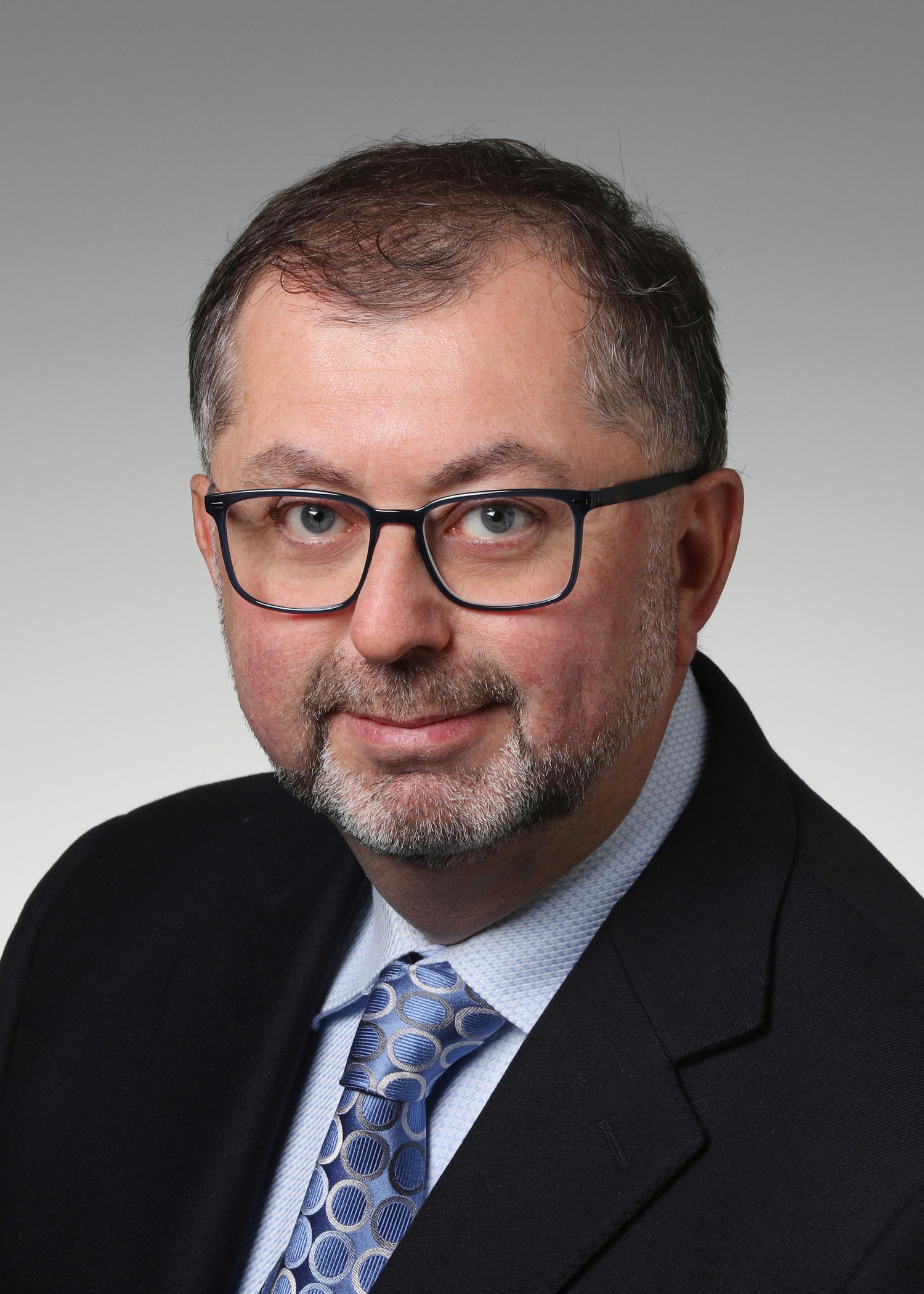
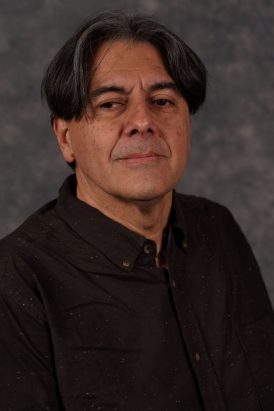
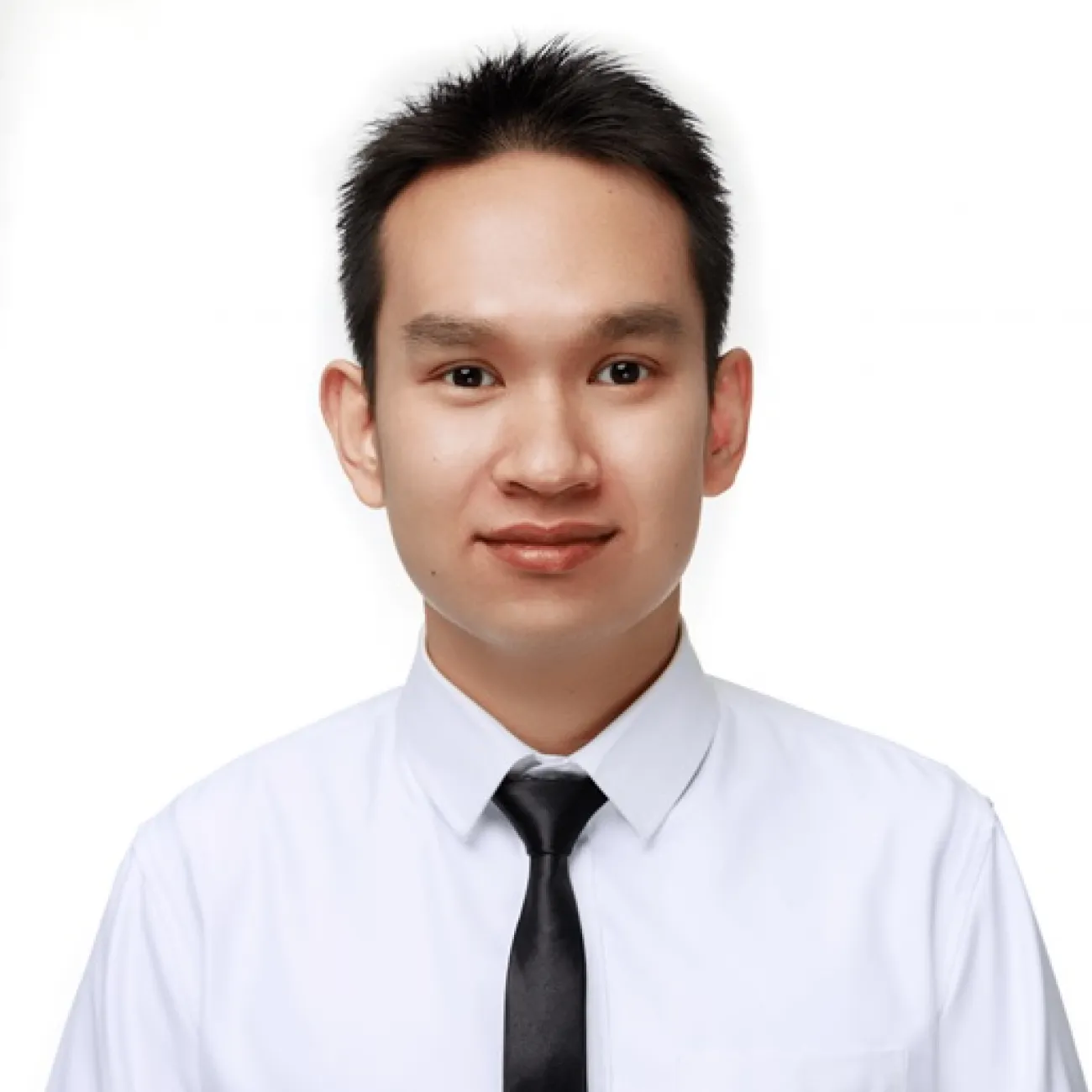
Halim Yanikomeroglu is a Full Professor and Chancellor's Professor at Carleton University's Department of Systems and Computer Engineering, part of the Faculty of Engineering and Design. His research focuses on wireless communications, including 5G/6G networks, non-terrestrial systems (HAPS/LEO satellites), MIMO, and cognitive radio. He has supervised numerous graduate students and holds IEEE Fellow status and the Harold Sobol Award. His work integrates machine learning, federated learning, and sustainability into next-generation networks. Affiliations: Carleton University, IEEE Education: Ph.D. (Toronto), M.A.Sc. (Toronto), B.Sc. (Middle East Technical University) Research interests span cellular networks, relay architectures, and energy-efficient systems. He pioneered cell-switching strategies for green networks and contributed to HAPS and UAV-based infrastructure. His recent work addresses NTN integration, AI-driven spectrum management, and 6G innovations. Awards include IEEE Fellow (2017) and multiple Research.com leadership accolades. His 150+ publications span journals like IEEE Transactions and conferences like ICC. Advising over 50 students, he emphasizes interdisciplinary solutions for future wireless challenges.
Adrian Linacre is a Professor and Chair in Forensic DNA Technology at Flinders University, within the College of Science and Engineering, Department of Biological Sciences. He is a leading figure in forensic science, with a focus on DNA analysis, wildlife forensics, and crime scene investigation. BSc in Biological Sciences (Hons), University of Edinburgh, 1984 DPhil in Molecular Genetics, University of Sussex, 1988 His research centers on getting more from less at crime scenes , particularly through developing highly sensitive DNA typing methods and studying the transfer and persistence of biological materials. He also pioneers the use of non-human DNA in forensic investigations, notably in wildlife forensic science , aiding in species identification and combating illegal wildlife trade. His recent publications reflect a strong trend in trace DNA analysis , body fluid identification , and DNA transfer dynamics , with applications in drug cases, sexual assault investigations, and environmental DNA degradation. His work increasingly integrates molecular techniques with real-world forensic challenges. Notable scientific awards include: Medal of the Order of Australia (OAM), 2020 Inspirational Scientist of the Year, Royal Society of Edinburgh, 2005 Fellow of the Royal Society for the Encouragement of Arts and Commerce (FRSA) Finalist, South Australian Science Excellence and Innovation Awards (2023, 2024) He has successfully supervised several students, including Piyamas Kanokwongnuwut and Alicia Haines, many of whom have won international recognition. He has secured significant research funding and contributed to national and international forensic policy, including a key review for the UK Home Office on low-template DNA. His professional leadership includes presidencies of the ANZFSS and ISFG, and vice presidency of the IAFS. Linacre is actively involved in editorial roles, serving as Associate Editor for Forensic Science International: Genetics and on the boards of Forensic Science, Medicine and Pathology and the Australian Journal of Forensic Science . He is a sought-after expert witness and media commentator in forensic science.
Daniela Kraft is a Professor of Experimental Physics at the Huygens-Kamerlingh Onnes Laboratory , part of the Leiden Institute of Physics (LION) at Leiden University. She obtained her Ph.D. cum laude from Utrecht University and completed postdoctoral research at New York University's Center for Soft Matter Research with a Rubicon grant. Her research bridges self-assembly in soft and biological matter , including colloidal particles , lipid membranes , and active systems . Key awards include the NWO Athena Prize (2019) , ERC Starting Grant , VENI/VIDI fellowships , and the Biophysical Journal Paper of the Year (2017) . She has published extensively in journals like Nature Communications , ACS Nano , and Physical Review Letters , with recent work on membrane-deforming colloids , non-additive interactions , and anisotropic microswimmers . Research Focus : Self-organization principles in biological and synthetic systems, colloidal model systems, and non-equilibrium physics. Labs : Leads the Kraft Lab at Leiden University. Education : Ph.D. in Physics (Utrecht University), Postdoc in Soft Matter Physics (NYU).
Michael Knap is an Associate Professor of Collective Quantum Dynamics at the Technical University of Munich (TUM), within the Department of Physics at the TUM School of Natural Sciences. His research group focuses on condensed matter theory, quantum many-body systems, and quantum simulation. Knap holds office in room 5101.01.037 at James-Franck-Str. 1, 85748 Garching b. München, and can be reached at michael.knap@ph.tum.de or +49 (89) 289 - 53777. Prof. Knap's research delves into the rich physics of quantum many-body systems, particularly exploring non-equilibrium dynamics and transport phenomena in ultracold quantum gases, interacting light-matter systems, and correlated quantum materials. His work spans multiple subfields including topological phases of matter, quantum simulation with trapped ions, fracton physics, and quantum computation. He develops novel numerical approaches based on quantum information theory and utilizes artificial intelligence and machine learning to tackle challenging problems in condensed matter physics. His group's research connects fundamental theoretical questions with experimental implementations in quantum simulators. The analysis of Prof. Knap's recent publications (2023-2025) reveals a strong focus on topological quantum matter, quantum simulation, and emergent phenomena in constrained quantum systems. His work frequently bridges condensed matter theory with quantum information science, as evidenced by publications on fracton hydrodynamics, higher-form symmetries, and quantum error correction. There's a clear progression toward increasingly complex quantum systems and connections to experimental implementations on quantum processors. His research shows significant interdisciplinary reach, connecting condensed matter physics with quantum computing and quantum information theory. ERC Consolidator Grant (2025) ERC Starting Grant (2019) Supervisory Award, TUM Department of Physics (2018) Promotio sub auspiciis Praesidentis rei publicae, Austria (2013) Prof. Knap has established a robust research program supported by prestigious European Research Council grants. His group actively collaborates with both theoretical and experimental groups worldwide, particularly in the quantum simulation community. He has supervised numerous students through Master's Seminars on Collective Quantum Dynamics covering topics like quantum simulation with trapped ions and theoretical quantum computation. His research has received significant attention, with several publications featured as Editors' suggestions and Research Highlights in leading journals. The Collective Quantum Dynamics group maintains strong connections with experimental quantum simulation efforts, particularly in the areas of ultracold atoms and trapped ion systems. Knap's theoretical work often provides frameworks for interpreting experimental results in quantum simulators, creating a productive feedback loop between theory and experiment. His group participates in collaborative research networks focused on advancing quantum simulation capabilities and understanding fundamental aspects of quantum many-body physics.
Dr. Cathy Oke OAM is an Associate Professor and Melbourne Enterprise Principal Fellow in Informed Cities at the Melbourne School of Design, University of Melbourne. She serves as Director of the Melbourne Centre for Cities and holds roles as a Senior Advisor to the Global Covenant of Mayors for Climate and Energy. Her work bridges research, policy, and practice to advance nature and climate action in urban environments. Previously, she served as a Councillor for the City of Melbourne (2008–2020) and contributed to the Clean Air and Urban Landscapes Hub (CAUL) as a Knowledge Broker. Cathy holds a PhD in Genetics and over 20 years of experience in environmental communications and project management. Her research focuses on urban sustainability, climate resilience, and nature-based solutions. Key initiatives include Innovate4Cities, which drives city-led climate innovation, and projects on urban biodiversity restoration. Cathy’s work emphasizes interdisciplinary collaboration and the integration of scientific evidence into actionable policies. Educations: PhD in Genetics RMIT University affiliation as a former research fellow Awards: 2023 Order of Australia Medal for service to Local Government and the Environment Her articles highlight themes such as urban climate governance, nature-based solutions, and global city networks. She collaborates with international bodies to enhance city diplomacy and accelerate climate action. Cathy leads the Melbourne Centre for Cities, a hub for urban research and policy engagement.
Professor Holly Thorpe is a Professor of Sociology in Te Huataki Waiora / School of Health at the University of Waikato, specializing in Sport and Human Movement. She serves as Associate Dean Research in the Division of Health PVC Office and is an internationally recognized sociologist of sport, physical culture and gender whose work has earned prestigious fellowships and awards including Fulbright, Leverhulme, and Royal Society honors. Her educational background includes a PhD from the University of Waikato and Papa Reo Level 1 certification from Te Wananga o Aotearoa, reflecting both academic excellence and cultural engagement with Māori language and knowledge systems. Professor Thorpe's research centers on equity and inclusion in sporting cultures, with particular attention to women's health and wellbeing, sport and gender, and the impact of social media on athletic experiences. She employs critical and feminist theoretical frameworks with expertise in qualitative methods to examine how sport, physical activity, and health intersect in rapidly changing social landscapes. Her work spans gender studies, feminist methodologies, sports science, sociology of health, and digital media studies within sporting contexts, with a strong commitment to community-engaged research. Her extensive publication record reveals consistent thematic focus on contemporary issues including menstruation in sport, digital technologies and athlete experiences, pandemic impacts on wellbeing, and the gendered dimensions of mega-sport events. Her work frequently employs intersectional analysis and collaborates across disciplines to address complex questions about embodiment, identity, and social change in sporting cultures, particularly as they relate to women and marginalized communities. Professor Thorpe's significant scholarly recognition includes: Royal Society Early Career Research Excellence Award for Social Sciences (2018) Fellow of the North American Society for the Sociology of Sport (2018) Royal Society James Cook Fellowship for a two-year project focused on women's wellbeing through and beyond pandemic (2021) She actively supervises students and has secured substantial research funding including the Te Punaha Matatini CORE Research Institute project 'Youth Wellbeing in Uncertain Times: The Voices of Rangatahi from Flood-Effected Tairāwhiti Gisborne' (2023-2025). Professor Thorpe collaborates extensively with international and national sports organizations including the International Olympic Committee, High Performance New Zealand, Sport New Zealand, Skateistan, and Voice in Sport to ensure her research has real-world impact on policy and practice. She serves as Series co-editor for 'New Femininities in Digital, Physical and Sporting Cultures' and maintains active media engagement through The Conversation and other outlets. Professor Thorpe leads several significant research initiatives including 'Reimagining Fields of Play' (2023) and co-organized the 'Gender, Health and Wellbeing Symposium' (2022), demonstrating her commitment to creating spaces for critical dialogue about sport, gender, and health while advancing culturally responsive methodologies that center Indigenous and diverse perspectives.
Alana Clifton-Cunningham is a dedicated educator and researcher in fashion and textile design at the University of New South Wales, Faculty of Arts, Design & Architecture. With over two decades of experience in higher education, she has established herself as a leader in sustainable and innovative design education. Her work bridges traditional craftsmanship with cutting-edge technologies, creating experiential learning environments that prepare students for contemporary design practice while addressing global sustainability challenges. Educational Background: 2021 | UNSW - Learn to Lead: Progress Needs Resilient Leaders 2019 | UTS - Graduate Certificate in Higher Education Transdisciplinary Learning 2008 | UNSW (COFA) - Master of Design (Hons) Research 2002 | UTS - Graduate Certificate in Higher Education Teaching and Learning 2001 | TAFE - Diploma of Marketing Management 1993 | UTS - Bachelor of Design (Hons) (Fashion and Textile Design) Clifton-Cunningham's research focuses on sustainable fashion practices, with particular emphasis on circular economy principles in textile production and garment design. Her work explores scalable models for textile remanufacturing, clothing waste reduction, and sustainable workwear systems. She is deeply engaged in addressing clothing sizing issues and standards in Australia, advocating for more inclusive approaches to fit and body diversity. Her commitment to equity, diversity, and inclusion underpins all aspects of her leadership and teaching, making her a strong advocate for responsible design futures that prioritize both environmental sustainability and social justice. Her publication record demonstrates a consistent focus on the intersection of design education, cultural exchange, and sustainable practices. Notable works include her 2022 book chapter on cross-cultural textile workshops in India, her 2018 analysis of undergarment technology evolution, and her contributions to exhibitions like 'Out of Hand' at the Powerhouse Museum. These works collectively highlight her emphasis on hands-on, experiential learning that connects students with real-world sustainability challenges and cultural contexts. Research Grants: 2024 | Redesigning Clothing Waste Using a Circular Design Framework - LP230200929 $220,473K 2024 | Department of Community and Justice - $17,900 2024 | Education Focussed Community of Practice (PVCESE) - $2,500 2023 | Department of Community and Justice - $15,900 2023 | Education Focussed Community of Practice (PVCESE) - $6,995 2017 | AbbVie Pharmaceutical Pty Ltd, HS Support Garments: Chief Investigator - $35,000 Clifton-Cunningham actively supervises research in fashion and textile design, with a focus on sustainable practices and innovative design processes. Her extensive industry network, including partnerships with major fashion labels, brings real-world insight into the classroom. She has led international global studios, including immersive programs in India where students collaborate with artisans. Her current ARC Linkage project 'Redesigning Clothing Waste Using a Circular Design Framework' represents a significant contribution to sustainable fashion research. Her creative practice is reflected in numerous exhibitions, including the Seoul International Fashion Art Biennale (2016, 2018), Wangaratta Contemporary Textile Awards, and the Powerhouse Museum's 'Out of Hand' exhibition. These artistic endeavors complement her academic work, demonstrating the practical application of her research interests in sustainable and innovative textile design.
Ari Schlesinger is an Assistant Professor of Computer Science at the University of Georgia (UGA), directing the Socially Responsible Tech Lab. She holds a PhD from the School of Interactive Computing at Georgia Institute of Technology. Her research focuses on anti-discriminatory computing, technology policy, and equitable sociotechnical systems. She advocates for reducing computing-enabled harm to advance justice in technology. Education : PhD in Human-Centered Computing (HCC), Georgia Tech Affiliations : ACM's U.S. Technology Policy Committee Her work spans Human-Computer Interaction (HCI), Artificial Intelligence (AI), and broader CS applications. Key interests include addressing algorithmic bias, inclusive design, and policy frameworks for ethical computing. She has developed strategies to mitigate discrimination in technical systems through frameworks like anti-discriminatory computing. Awards include the 2021 Outstanding Graduate Teaching Assistant Award and a Best Paper Award at CHI 2018. Her research has been featured in venues like CSCW and CHI, focusing on topics from chatbot ethics to decentralized social networks. Lab : Socially Responsible Tech Lab at UGA Grants/Advising : Advises graduate student Eddie Alexander Gomez Schieber. Active in policy advocacy and academic leadership roles.
Gustavo Verdesio serves as an Associate Professor of Spanish within the Department of Romance Languages & Literatures at the University of Michigan. He maintains significant interdisciplinary affiliations as a faculty member of the Program in Native American Studies and as a Faculty Associate for Latina/o Studies. His academic credentials include: Ph.D. in Hispanic Studies or Latin American Studies from Northwestern University (1992) Verdesio's research critically engages with Colonial Studies, Native American Studies, and Material Culture, focusing on Indigenous materialities in Uruguayan history. His current project examines the re-emergence of Indigenous groups previously declared extinct in Uruguay and non-Indigenous responses to Indigenous bodies within settler colonial structures. He investigates objects, agricultural practices, monumentality, and the political implications of Indigenous bodily recognition. Analysis of his 2018-2021 publications reveals consistent thematic focus on settler colonialism in Latin America, Indigenous rights frameworks, and decolonial approaches to archaeology and historical knowledge, with concentrated attention on Southern Cone nations including Uruguay and Argentina. Scientific Awards: No awards, fellowships, or medals were documented in available materials No information regarding graduate student advising, dissertation supervision, or specific research grants was provided in the source documentation. His academic activities appear centered on independent research and interdisciplinary collaboration rather than directed mentorship or externally funded projects as described. The available texts contain no references to laboratories, research centers, or formal collaborative teams associated with Professor Verdesio's work.
Dr. Tan Viet Tuyen Nguyen is a New Frontiers Fellow (Lecturer) in AI at the University of Southampton, specializing in Human-Centered Artificial Intelligence and Social Human-Robot Interaction. His research focuses on multimodal learning for robots to adapt their behavior to human social needs, with applications in healthcare, education, and service environments. Prior to this role, he was a Research Associate at King’s College London and a Research Assistant on the EU-funded CARESSES project, developing culturally-aware assistive robots for elderly support. Education: PhD in Information Science (Robotics) from Japan Advanced Institute of Science and Technology. He has organized conferences such as the IEEE RO-MAN 2022 special session on nonverbal communication and served as a reviewer for top-tier robotics and AI conferences. Research Interests include: Human-Robot Collaboration, Multimodal Perception, Generative AI for Social Interaction, and Context-Aware Robot Behavior Generation. His work has been recognized with awards including the Best Paper Award at ROMAN 2022 and the Prospective Research Award at ICServ 2023. Teaching Responsibilities include courses on Biologically Inspired Robotics, High-Level Programming, and MSc/Undergraduate project supervision. He currently oversees two PhD students and collaborates on projects like 'Exploring the impact of AI-driven writing of engagement in climate change' and 'Bridging Generations and Cultures through Generative AI.' Labs/Teams: Member of the Agents, Interaction and Complexity Centre and the Centre for Robotics Research at Southampton.
Dr. Basak Tas is a Research Fellow at King's College London, based in the Institute of Psychiatry, Psychology & Neuroscience within the Department of Addictions Sciences. She has been working at King's since 2014, initially as a PhD student and then as a Post-doctoral Research Associate, before taking up her current role in 2021. Her work focuses on opioid overdose and related interventions, collaborating with Professor Sir John Strang and Dr. Will Lawn. Her educational background includes an undergraduate degree in Neuroscience from King's College London and an MSc in Neuroscience from the University of Edinburgh. She completed her PhD at King's College London under the supervision of Professor Sir John Strang, Dr. Caroline Jolley, and Dr. James Bell. Her PhD thesis was titled "Clinical and Laboratory Investigation into Heroin and Opioid Overdose Risk". Dr. Tas's research centers on opioid overdose mechanisms, opioid use disorder treatments, and health interventions to reduce drug-related deaths. She investigates experimental drug studies and develops wearable technologies for overdose detection. Her work aims to understand the physiological underpinnings of overdose and create practical tools for real-world overdose prevention, particularly in high-risk populations. Her recent publications (2020-2025) focus on innovative approaches to prevent opioid overdose deaths, including wearable biosensors (e.g., PneumoWave) and mHealth technologies. She explores risk factors for respiratory depression and the acceptability of detection devices among people who use opioids. Her work bridges laboratory models of overdose with clinical applications in supervised injecting facilities and community settings. Dr. Tas was awarded the following scientific award: Addictions Clinical Academic Group (CAG) Early Career Research Prize (2022) She contributes to teaching by supervising MSc Addiction Studies projects and teaching in the BSc Psychology "Addictions" and "Choices" modules. Additionally, she has been involved in public engagement, including school workshops and the art-science project "Heroin Bodies". Dr. Tas is part of the Drugs Research Group within the Addictions Department at King's, led by Professors John Strang and John Marsden. Her current work involves collaboration on projects related to opioid overdose and wearable technologies.
Dr Tim Aistrope is a Senior Lecturer in International Relations and Director of Graduate Studies (Taught) at the University of Kent's School of Politics and International Relations. Based in Canterbury, his research focuses on the intersection of political culture, security studies, and international relations theory. Key themes include the role of imagination, conspiracy theories in foreign policy, and the embodiment of political narratives. His notable work includes the book Conspiracy Theory and American Foreign Policy (2016), analyzing post-9/11 secrecy and power dynamics. He teaches courses on IR theory and security, supervising PhD students exploring topics like securitization and translation. Active in professional associations, he contributes to journals like International Studies Quarterly and International Affairs . His recent publications address pandemic governance, apocalyptic narratives, and cybersecurity. Research interests span IR theory, US/Australian foreign policy, international ethics, and cyber security. His work often bridges cultural studies and security, examining how narratives shape policy and public perception. He has advised on counter-radicalization strategies and explored the role of social media in counterterrorism. His academic contributions highlight interdisciplinary approaches to understanding global politics through lenses of culture, ethics, and critical theory.
Dr. Jennifer Mills is a Professor and Director of Clinical Training in the Clinical Psychology graduate program at York University's Faculty of Health, leading the EASE Lab. Her research focuses on body image, eating disorders, and the impact of social media on women's psychological well-being. She holds degrees from the University of Toronto (PhD 2001, MA 1996, BSc 1995). Key research areas include social media's effects on body dissatisfaction, orthorexia nervosa, and interventions for disordered eating. She has published extensively on topics such as self-compassion interventions, Instagram imagery impacts, and pandemic-related behavioral changes. Her educational background includes a strong foundation in psychology and clinical research, with a focus on translational work between theory and practice. Current projects explore the psychological mechanisms behind body image concerns, including the role of perfectionism and emotional intelligence in mitigating eating disorder symptoms. She collaborates widely, as evidenced by multi-author publications and interdisciplinary research efforts. Labs/Teams: Director of the EASE Lab (Eating, Affect, and Self-Evaluation) at York University. The lab's work integrates behavioral experiments, longitudinal studies, and community-based interventions to address body image and eating disorder prevention.
Sohmyung Ha is an Associate Professor of Electrical Engineering and Bioengineering at NYU Abu Dhabi and holds a Global Network position at NYU Tandon School of Engineering. He leads the Integrated BioElectronics Laboratory, focusing on advancing silicon integrated technologies for biomedical applications such as implantable devices and wearable sensors. His expertise spans biomedical circuits, neural interfaces, and wireless power systems. Education: MS (2004, KAIST), PhD (2016, UC San Diego) with a Best Thesis Award. Prior industry experience includes analog circuit design at Samsung Electronics (2006-2010). Academic affiliations include NYU Abu Dhabi, NYU Tandon, and global collaborations. Research interests include high-performance biomedical sensors, neural prosthetics, and energy-efficient bioelectronic systems. Notable achievements include a Best Paper Award (ISCAS 2024) and innovations in impedance spectroscopy and neural interface ICs. Current projects emphasize closed-loop neural interfaces, subcutaneous glucose monitoring, and retinal prostheses. His lab develops miniaturized, power-autonomous systems for healthcare applications.
Karen Livescu is a Professor at the Toyota Technological Institute at Chicago (TTIC), a philanthropically endowed graduate institute for computer science located on the University of Chicago campus. She also serves as a courtesy faculty member in the Department of Computer Science at the University of Chicago and is an Affiliated Scholar at the Data Science Institute there. Her research focuses on advancing speech and language processing through innovative machine learning approaches. Education: PhD in Electrical Engineering and Computer Science from MIT (2005) S.M. from MIT Department of Electrical Engineering and Computer Science (1999) A.B. in Physics from Princeton University (1996) Karen's research spans multiple dimensions of speech and language processing with particular emphasis on speech recognition, spoken language understanding, and multimodal processing. She has made significant contributions to articulatory feature-based speech recognition, self-supervised learning for speech representation, and sign language processing. Her work consistently bridges machine learning techniques with linguistic and speech science knowledge, focusing on creating more robust, interpretable, and inclusive speech processing systems that can handle diverse languages and modalities. Her recent publication trajectory reveals a strong focus on self-supervised learning for speech representation, multilingual speech processing, and sign language understanding. She has been instrumental in developing benchmark frameworks like SUPERB and ML-SUPERB that have become standard evaluation tools in the speech community. Her work increasingly addresses critical challenges in low-resource language scenarios, language disparities in speech technology, and ethical considerations in real-world deployment. Scientific Awards: Best Paper award at EMNLP 2024 for 'Towards robust speech representation learning for thousands of languages' Best Student Paper Award at ASRU 2023 Best Short Paper Award at CRAC 2021 Top system at WMT-SLT 2023 Karen has successfully advised numerous PhD students and postdoctoral researchers who have gone on to faculty positions at institutions like University of Waterloo, University of Edinburgh, and Stellenbosch University, as well as industry roles at major technology companies including Google, Meta, and NVIDIA. Her research group has secured significant funding for projects including the development of the SLUE benchmark for spoken language understanding and the SUPERB framework for evaluating self-supervised speech models. She has been actively involved in organizing workshops and symposia that bring together researchers in speech and language processing. Karen leads the Speech and Language at TTIC (SL@TTIC) research group, which maintains a strong collaborative relationship with researchers at the University of Chicago and other institutions. The group has been particularly active in advancing sign language processing through projects like ChicagoFSWild and OpenASL, while also making significant contributions to spoken language understanding and multilingual speech recognition. Her team regularly participates in community challenges and benchmarks, helping to push the field forward through open science and collaborative evaluation frameworks.