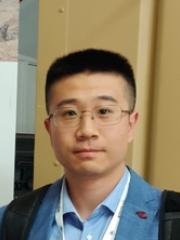
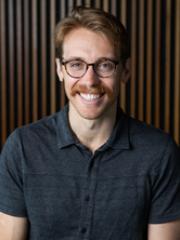
Professor Hong Hao is a John Curtin Distinguished Professor at Curtin University, affiliated with the School of Civil and Mechanical Engineering and the Curtin Research Centre for Infrastructural Monitoring & Protection. His expertise spans Structural Dynamics, Earthquake Engineering, Blast and Impact Engineering, and Structural Health Monitoring. He holds prestigious roles like Fellow of ATSE, ISEAM, and ASCE, and has led organizations such as the International Association of Protective Structures and the Australian Earthquake Engineering Society. Education: BE (Tianjin University, 1982), MSc (UC Berkeley, 1985), PhD (UC Berkeley, 1989). Awards include the Tan Chin Tuan Fellowship and multiple Ko Medals. He has authored over 200 journal articles, with recent work focusing on blast-resistant materials, seismic fragility, and AI-driven structural health monitoring. His research emphasizes resilient infrastructure, including metaconcrete structures, corrosion-resistant materials, and sensor-based damage detection. Ongoing projects involve smart tunnel safety under BLEVE explosions and modular building systems.
Dr. Farhad Aslani is an Associate Professor in the Department of Civil, Environmental and Mining Engineering at the University of Western Australia (UWA), serving as Director of the Materials and Structures Innovation Group. He leads the $250M Australian Composites Manufacturing CRC and co-leads UWA's Engineering Materials Research Cluster. His research focuses on innovative construction materials, including self-sensing concrete, 3D-printed composites, and fire-resistant materials. He has secured over $20M in CRC funding and holds leadership roles in national/international conferences. Key awards include the 2024 Concrete Institute WA Rising Star Award and multiple citation milestones. His work aligns with sustainable development goals, emphasizing eco-friendly materials and infrastructure resilience. Education: PhD in Structural Engineering, University of Technology Sydney (2014) Certificates in Leadership, Research Commercialization, Public Policy, and Project Management from Curtin University, Queensland University of Technology, RMIT, and UTS. Research Interests: Smart materials, sustainable concrete technologies, additive manufacturing, blast/fire resistance, and composites for infrastructure. His lab develops self-sensing concretes, lightweight engineered composites, and electromagnetic shielding materials. Grants & Projects: $4.3M ACM CRC project on composite repairs ARC grants for nanocomposite coatings and fire facilities Main Roads WA funding for timber bridge strengthening Expertise: Structural design, composite materials, and industrial collaborations (e.g., Woodside, Holcim). He advises on major projects like the Morley Ellenbrook Rail Line and Forrestfield Airport Link. Awards: 2024 Concrete Institute WA Rising Star Highly Cited Scholar (ScholarGPS, 2024) Most Cited Paper Awards (2018–2020)
Dr. Ali Kashani is a Senior Lecturer at the University of New South Wales (UNSW) within the School of Civil and Environmental Engineering. His research focuses on sustainable and low-carbon concrete materials, robot-aided construction (particularly 3D printing), and Circular Economy-aligned applications. Leadership in cementitious materials innovation Expertise in 3D printing for construction Advocate for waste valorisation and carbon capture Dr. Kashani has secured approximately $7 million in research funding and holds a patent in lightweight concrete foam. His work spans 70+ publications with 9,000+ citations, including media coverage in the Sydney Morning Herald and The Fifth Estate. He actively contributes to professional organizations such as MECLA, RILEM, and ASTM. Recent research trends include AI and optimization algorithms for sustainable concrete mix design, chloride diffusion modeling, and 3D printing performance analysis. His publications often address waste material integration, durability assessment, and eco-friendly construction practices. Scientific Awards: National and NSW Awards for 'Excellence in Concrete' (Technology and Innovation) from the Concrete Institute of Australia Churchill Fellowship for Digital Construction and 3D Printing sponsored by AVJennings Dr. Kashani serves as Co-Chair of the cement and concrete working group at MECLA and contributes to RILEM and ASTM committees. His email is ali.kashani@unsw.edu.au , and his office is located in the Civil Engineering Building (H20), Level 2, Room CE204, UNSW.
Professor Ling Li is a faculty member at Curtin University's School of Electrical Engineering, Computing and Mathematical Sciences (EECMS), within the Faculty of Science and Engineering. Their research focuses on interdisciplinary applications of machine learning, computer vision, and deep learning in structural engineering and materials science. Notable contributions include advancements in structural health monitoring, blast loading prediction, and 3D displacement measurement using monocular vision. Professor Li has authored numerous peer-reviewed articles and collaborates on projects involving civil infrastructure resilience, smart materials, and AI-driven solutions for engineering challenges. They hold an office in the New Technologies Building at Curtin Perth and can be reached at L.Li@curtin.edu.au.
Mina Mortazavi is a Senior Lecturer at the University of Technology Sydney's School of Civil and Environmental Engineering with over 15 years of experience specializing in structural engineering. Her academic journey includes a PhD in Structural Engineering from Western Sydney University, an MEng in Structural Engineering from Amirkabir University of Technology in Tehran, and a BSc in Civil Engineering from Shahid Beheshti University in Tehran. Her research interests focus on three interconnected fields: cold-formed steel profile assessment and section optimization, modularization in construction, and prefabrication of seismic mounting systems for building services. Mortazavi has developed expertise in applying machine learning techniques to structural engineering problems, particularly in thermal buckling analysis, seismic performance evaluation, and concrete material behavior prediction. Her publication record demonstrates consistent output in high-impact journals such as Thin-Walled Structures , Automation in Construction , and Journal of Building Engineering . Recent research shows increasing integration of artificial intelligence methods with traditional structural engineering problems, particularly in thermal analysis, seismic performance evaluation, and material behavior prediction. Research Innovation Connection grant recipient Multiple contract research projects with industry partners Active PhD and Masters student supervision Mortazavi's teaching portfolio includes courses in Steel and Composite Design, Steel and Timber Design, Mechanics of Solids, and Application of Timber in Engineering Structures. Her industry collaborations demonstrate strong practical application of research findings to real-world structural engineering challenges.
Professor Chengqing Wu is a distinguished academic in the School of Civil and Environmental Engineering at the University of Technology, Sydney (UTS). He serves as Professor of Structural Engineering with a research focus on blast-induced phenomena and advanced concrete technologies. His expertise spans structural response to blast loading, mitigation of blast effects, and the development of ultra-high performance concrete systems. Professor at University of Technology, Sydney Former Chair of Australian Chapter of International Association of Protective Structures (2013-2017) Associate Editor of ASCE Journal of Performance of Constructed Facilities Editorial Board Member of International Journal of Protective Structures Professor Wu's research interests center on structural engineering with emphasis on blast resistance, ultra-high performance concrete, geopolymer concrete, and structural response to extreme loading conditions. His work bridges theoretical analysis with practical applications, particularly in protective structures and extreme environment construction. His research group has made significant contributions to understanding material behavior under blast, impact, and extreme thermal conditions, with applications ranging from terrestrial infrastructure to potential lunar construction. Analysis of Professor Wu's recent publications reveals a strong focus on advanced concrete technologies for extreme environments. His research spans 3D-printed concrete, lunar and Martian construction materials, cryogenic performance of concrete, and blast-resistant structural systems. A notable trend is the increasing application of computational methods and machine learning techniques to predict structural response to explosions, alongside traditional experimental approaches. His work demonstrates a progression from fundamental material characterization to complex structural system analysis, with growing emphasis on sustainable construction and extraterrestrial applications. Author/co-author of over 200 international journal papers Editor of four conference proceedings Editor of two ASCE special issues Editor of two International Journal of Protective Structures special issues Professor Wu has successfully attracted over 4 million dollars in research funding from diverse sources including the Australian Research Council (ARC), Defence Science and Technology Organization (DSTO), and industry partners. His current projects include Eco-friendly Ultra-High Performance Rubberised Concrete, Decarbonised Infrastructure, Structural protective design on large capacity flywheel energy storage system, and Gas Explosion Resistance of Non-Cement Based High Performance Concrete. He actively supervises undergraduate honors students, coursework master's students, and research higher degree candidates, with several scholarships available for prospective postgraduates and research associates. Professor Wu leads research in protective infrastructure technology through the Joint Research Centre for Protective Infrastructure Technology and Environmental Green Bioprocess with Tianjin Chenjian University. His team operates the National Drop Weight Impact Testing Facility and contributes to the National Facility for Physical Blast Simulation. Current research directions include sustainable concrete technologies for extreme environments, blast-resistant structural systems, and innovative applications of concrete in space exploration contexts.
Professor Wensu Chen is a Director of the Centre for Infrastructural Monitoring and Protection (CIMP) and holds the position of ARC Future Fellow at Curtin University's School of Civil and Mechanical Engineering. He leads research in protective structures and materials, structural resilience, and multi-hazard mitigation. With a BE/MSc from Tianjin University, ME from the University of Melbourne, and a PhD from the University of Western Australia, his career spans academia and industry. His research focuses on novel metaconcrete materials, blast-resistant designs, and modular construction. He has secured multiple ARC grants (Discovery, DECRA, Linkage) and collaborates with industry/government bodies like DEMIRS WA and Engineers Australia. Research interests include metamaterials, structural strengthening, and dynamic response analysis under impact and blast loads. Key awards include the Curtin Early-Career Researcher of the Year and Western Australian Premier’s Science Award nominations. He supervises over 20 PhD students and teaches courses in structural analysis and dynamics. His work emphasizes sustainable, resilient infrastructure with applications in building envelopes, seismic control, and tunnel safety under explosive threats.
Dr. Yiran Zhu is a Postdoctoral Research Fellow at the School of Mechanical and Mining Engineering, University of Queensland. He completed his PhD at the same institution in 2022, focusing on capillary trapping and gas-water flow in coal seam gas reservoirs. His research integrates mining engineering, energy fuels, and geomechanics to optimize resource extraction and subsurface processes. Research Interests: Dr. Zhu specializes in coal seam gas (CSG) recovery enhancement, rock mechanics, and mining technology. Key areas include: Capillary trapping dynamics in CSG reservoirs Rock mass damage prediction from blasting Coal fracturing using microwave/electric pulse technologies Horizontal borehole optimization for gas extraction AI applications in geoenergy systems Publication Trends: His recent work (2021-2025) emphasizes experimental and computational studies of coal permeability, fracture propagation, and reservoir modeling. Dominant themes include laboratory validation of CSG recovery techniques, blasting impact on mining infrastructure, and optimization of energy extraction processes. Supervision: Currently available for research student supervision. No specific grants or awards are documented in available sources.
Dr. Mike Bambach is a Senior Lecturer at the University of Sydney's School of Civil Engineering, where he also serves as Director of the Centre for Advanced Structural Engineering and Undergraduate Program Director for Civil Engineering. His research spans composite materials, crashworthiness, and structural optimization. Structural Engineering Composite Material Analysis Road Safety & Impact Mechanics Research Interests Dr. Bambach investigates advanced structural systems using fiber-reinforced polymers (FRP), natural fiber composites for sustainable construction, and crash energy absorption in transportation systems. His work combines experimental testing with numerical modeling to improve structural performance under extreme loads. Recent Publications (2025-2018) Current research focuses on natural fiber composites for structural applications, hybrid metal-composite energy absorption systems, and innovative buckling control mechanisms. Key trends include sustainable material development and dynamic structural response analysis. Teaching & Supervision He teaches foundational civil engineering courses and supervises PhD/Master's students working on projects like AI-based quality control in steel fabrication, sustainable cementitious composites, and deep foundation reuse solutions.
Professor Luming Shen is a distinguished academic in the School of Civil Engineering at The University of Sydney. With over two decades of experience in mechanical behavior of materials research, he leads cutting-edge investigations at the intersection of civil engineering, materials science, and computational mechanics. His work spans multiple scales from nano to macro, focusing on fundamental understanding that can be applied to real-world engineering challenges in water purification, structural safety, and sustainable infrastructure. Professor Shen's educational background includes: Bachelor's degree in Building Engineering from Tongji University, China Master's degree in Structural Engineering from Tongji University, China PhD in Civil Engineering from the University of Missouri-Columbia, USA Professor Shen's research focuses on the mechanics and behaviors of materials across multiple scales. His primary interest lies in understanding both brittle materials (concrete, rock, glass) and ductile materials (aluminum, titanium, metals). Two major thrusts of his work include nano-mechanics and materials research, particularly developing carbon nanotube membranes for water purification, and studying novel composite materials under impact and extreme loading conditions for applications in blast-resistant structures and vehicle safety. He employs high-performance computing for molecular and macro-level analyses, complemented by physical laboratory testing. Professor Shen's extensive publication record demonstrates a consistent focus on multiscale modeling of materials behavior, with recent work emphasizing granular materials dynamics, carbon nanotube applications, 3D-printed concrete technology, and energy storage systems. His research shows a clear evolution toward increasingly complex multiphysics problems that integrate mechanical, thermal, and fluid dynamics phenomena at multiple scales. The interdisciplinary nature of his work bridges civil engineering, materials science, computational mechanics, and environmental engineering, with applications spanning from fundamental material science to practical civil infrastructure solutions. Professor Shen actively supervises multiple research students, including Yifang Cao working on 3D printing concrete, Jiangshuai Meng studying granular materials under impact loads, and Runda Wang applying machine learning to rock burst prediction. His research is supported by access to advanced computational resources and laboratory facilities at The University of Sydney, particularly through his membership in The University of Sydney Nano Institute. The university has provided specialized space and equipment necessary for conducting physical tests on materials under high-speed impact conditions. Professor Shen maintains active laboratory facilities for conducting physical tests on materials under various loading conditions, particularly high-speed impact testing. His work is supported by computational resources for molecular dynamics and multiscale modeling. As a member of The University of Sydney Nano Institute, he collaborates with interdisciplinary researchers working at the nanoscale, particularly in applications related to water purification technologies using carbon nanotube membranes.
Dr. Travis Mitchell is a Lecturer at the School of Mechanical and Mining Engineering , The University of Queensland , and an affiliate of the Centre for Multiscale Energy Systems . He holds a PhD in Multiphase Computational Fluid Dynamics and dual degrees in Mechanical Engineering (BE Hons) and Mathematics (BSc). Education: PhD in Multiphase Computational Fluid Dynamics, The University of Queensland BE (Hons) in Mechanical Engineering, The University of Queensland BSc in Mathematics, The University of Queensland Research Interests focus on numerical modeling of multiphase fluid dynamics in porous media , with applications spanning CO2 electrolysis , hydrogen production via methane pyrolysis , biomedical fluid-structure interaction , and geomechanical fracture analysis . His methodological expertise includes Lattice Boltzmann techniques and high-performance computing . Recent Work Trends encompass multiphase transport in fractured media , gas diffusion electrode optimization , fiber-based air filter design , and thermocapillary flow modeling , reflecting his interdisciplinary impact in energy, health, and resource engineering. Scientific Recognition includes the ICMMES-CSRC Award for multiphase lattice Boltzmann research and an EAIT Citation for Excellence in Student Learning (2023) . Teaching Portfolio includes coordination of MECH2700: Computational Engineering and Data Analysis and lectures in MECH3780: Computational Mechanics and MECH6480: Computational Fluid Dynamics .
Associate Professor Thomas Haselhorst is a research leader at the Institute for Biomedicine and Glycomics , Griffith University, with a distinguished career in structural glycoscience and NMR spectroscopy . His expertise spans glycan-virus interactions , structure-guided drug design , and targeted drug delivery for diseases like SARS-CoV-2, HIV, and Non-Hodgkin’s Lymphoma. He has pioneered NMR methodologies to study glycan-cell receptor dynamics and developed glycan-based prebiotics to reduce Campylobacter jejuni in poultry. Education: Doctor of Natural Science (Dr rer nat), Medical University Lübeck (1996-1999) Research Interests: Structural analysis of glycan-pathogen interactions Design of prebiotic supplements for agricultural applications Development of glycan-targeted therapies for viral and fungal diseases Innovative NMR approaches for ligand-binding studies Article Trends: Focus on glycan-virus binding mechanisms (SARS-CoV-2, Influenza, Rotavirus) Structural characterization of antifungal and anticancer agents Methodological advancements in NMR-based glycan analysis Exploration of glycan-glycan crosslinking in disease Scientific Awards: ARC Future Fellow Alexander von Humboldt Fellow Supervision: Principal/Associate Supervisor for 15+ doctoral students Research on glycan roles in HIV, cancer, and pathogenic fungi Collaborative Networks: International partnerships in glycomics and virology Multi-million-dollar grants from ARC, NHMRC, and industry
Dr. Tuyen Nguyen is a Lecturer in the School of Engineering at the University of Newcastle. His expertise lies in heat transfer, fluid dynamics, and metallurgical processes, with a focus on low-emission steelmaking and ironmaking technologies. He holds a PhD from the University of Newcastle, a Master’s from Ritsumeikan University (Japan), and a Bachelor’s from Da Nang University of Technology (Vietnam). Research interests include computational fluid dynamics (CFD), iron ore sintering, and sustainable metallurgical practices. He has contributed to projects improving blast furnace efficiency and hydrogen-based reduction processes. His work integrates experimental methods, numerical modeling, and collaboration with industry partners. Teaching responsibilities span undergraduate and postgraduate courses in Heat Transfer and Fluid Mechanics. He has authored over 28 publications, including studies on sinter analogues, phosphorus recovery from slag, and hydrogen’s role in ironmaking. Grants include a $1.2M ARC Linkage Infrastructure grant for extreme environment testing and a BHP-funded project on steel slag utilization. He supervises five PhD/Masters students in areas like electric smelting furnaces and phosphorus recovery. Affiliated with the Centre for Ironmaking Materials Research, he collaborates on low-emission steel production and material science innovations.
Dr. Malindu Sandanayake is an Honorary Associate Professor at the School of Engineering, RMIT University, Australia. His research focuses on sustainable construction practices, environmental engineering, and the integration of waste materials in building technologies. He is actively involved in advancing circular economy principles through studies on geopolymer cements, prefabricated construction, and life cycle assessments of construction materials. His work emphasizes reducing carbon emissions and optimizing resource efficiency in infrastructure projects. Open to supervising PhD and Master’s students, he collaborates internationally to bridge gaps between academic research and industry applications. Research Interests : Dr. Sandanayake’s expertise spans environmental science, civil engineering, and materials innovation. Key areas include waste material utilization in concrete, sustainable construction frameworks, and policy-driven approaches to reduce construction’s environmental footprint. His interdisciplinary research often intersects with accounting and auditing methodologies to evaluate project sustainability. Recent Trends in Publications : His recent work highlights trends in circular economy applications, such as geopolymer cements from soil waste and prefabricated construction in developing economies. He also investigates carbon emission reduction strategies in highway construction and foundation systems. These studies underscore his commitment to practical, scalable solutions for sustainable development goals. Advising and Collaboration : Dr. Sandanayake is open to supervising postgraduate research in sustainable construction and materials engineering. His collaborations span universities in China, Vietnam, and Australia, focusing on real-world case studies to inform policy and industry practices.
Ramil Mauleon is an Adjunct Senior Lecturer at Southern Cross University (Faculty of Science and Engineering) and a former Senior Research Fellow in bioinformatics/computational biology at SCU. Previously, he served as a Bioinformatics Scientist at the International Rice Research Institute (IRRI), contributing to global projects like the 3,000 Rice Genomes Project and the Rice Galaxy initiative. His research focuses on integrative omics data analysis, FAIR-compliant data systems, and computational tools for crop genomics. Education: BSc in Biology (Genetics) from University of the Philippines Los Baños (1986–1989) MSc in Genetics (RFLP mapping of rice blast resistance) (1992–1996) PhD in Genetics (transcriptome analysis of rice blast resistance) (2002–2006) Research Interests: Bioinformatics methodologies for crop genomics FAIR data standards (Crop Ontology, interoperability frameworks) High-performance computing for genomic data analysis Plant phenotyping via computer vision/machine learning Genetic marker development for breeding applications Key Projects: Rice Galaxy: Open bioinformatics platform for plant science 3,000 Rice Genomes Project: Genomic diversity analysis CannSeek: Cannabis SNP database and analysis portal Labs/Teams: Active contributor to Southern Cross Plant Science and global agricultural data initiatives.