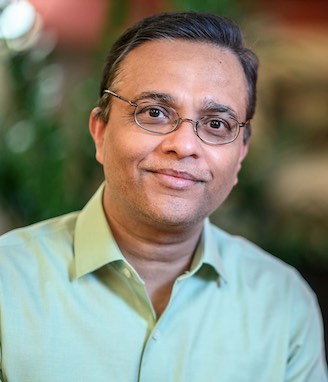
Nick Bassiliades is a Professor at the School of Informatics , Aristotle University of Thessaloniki , Greece. His academic roles include serving as President of the Digital Governance Committee and the Digital Transformation of Greek Universities Committee, as well as Director of the Web, Data, and Knowledge Engineering Sector. Education: B.Sc. in Physics, Aristotle University of Thessaloniki (1991) M.Sc. in Applied Artificial Intelligence, University of Aberdeen (1992) Ph.D. in Parallel Knowledge Base Systems, Aristotle University of Thessaloniki (1998) His research focuses on Semantic Web , Ontologies , Knowledge Graphs , and applications in Artificial Intelligence , eGovernment , and Intelligent Agents . Recent publications emphasize ontological frameworks for requirements engineering, explainable AI, and electric vehicle knowledge graphs. He actively contributes to scientific communities as a Senior Member of IEEE and ACM , and serves as Co-Editor-in-Chief for the International Journal of Artificial Intelligence in Business and Management . His work involves collaborations with the Intelligent Systems laboratory and projects like XR4DRAMA for disaster management.
Professor Ian Kerridge is a renowned academic at the University of Sydney , where he holds the Chair in Bioethics and Medicine at Sydney Health Ethics (SHE) . He is also a Staff Haematologist/Bone Marrow Transplant physician at Royal North Shore Hospital in Sydney. His career spans clinical practice, academic leadership, and interdisciplinary research, with a focus on bridging philosophical inquiry and empirical bioethics in healthcare. Education: Trained in medicine at the University of Newcastle, bone marrow transplantation (BMT) at the Royal Free Hospital in London, and philosophy at the Universities of Sydney, Newcastle, and Cambridge. Research Interests include biomedical ethics, public health ethics, organ transplantation, stem cell research, end-of-life care, and the socio-cultural implications of medical innovation. He has extensively explored conflicts of interest, over-diagnosis, and the commercialization of healthcare, particularly in reproductive medicine and transplantation. Teaching & Supervision : Coordinated the Masters in Bioethics program at the University of Sydney and supervises students across medicine, philosophy, nursing, and humanities in Honours, Masters, and Doctoral projects. Leadership Roles: Former Director of SHE (2003-2015) and the Clinical Unit in Ethics and Health Law at the University of Newcastle (1995-2001). Committee Memberships: Chair of the South East Sydney LHD Clinical Ethics Committee, member of the Australian Ethical Health Alliance (AEHA), NSW Health Ethics Advisory Panel, and Director of Praxis Australia. Publications : Authored 6 textbooks and over 500 peer-reviewed papers, with recent work examining the ethical implications of health data use, pandemic research integrity, and the cultural dimensions of assisted dying.
Dr. Viviana Cotik is an Associate Professor at the Department of Computer Science, Faculty of Exact and Natural Sciences, University of Buenos Aires. She also serves as Professor for the Master's Degree in Data Mining and Knowledge Discovery within the same department. Additionally, she works as an Assistant Researcher at the National Council for Scientific and Technical Research (CONICET) in Argentina. Artificial Intelligence Natural Language Processing (BioNLP) Information Extraction Machine Learning Biomedical Informatics Social Applications of AI Her research focuses on applying natural language processing techniques to biomedical domains, including negation detection in clinical reports, entity recognition in radiology texts, and cross-lingual information extraction. She investigates applications of AI in social inclusion and has developed methodologies for automatic classification of medical documents through machine learning and syntactic analysis. Her work also extends to data quality assessment frameworks and historical analysis of ICT education in Argentina. Recent publications highlight her expertise in Spanish and French language processing for biomedical texts, with applications in radiology report analysis and social implications of AI. She has contributed to multiple conferences including IberLEF, RANLP, ACL BioNLP, and IJCAI workshops, while also publishing in journals like International Journal of Information Quality and Fuzzy Sets and Systems . Scientific recognition: First prize in Estudiantiles Works Contest (undergraduate category), 33rd JAIIO, 2004 She has delivered numerous guest lectures internationally, including at Stanford's Women in Data Science chapter, Universidad Nacional de La Plata, and institutions in Peru, Germany, UK, and Spain. Her outreach activities include coordinating the Computer History Museum and organizing Drunk Talks for PhD students.
Olivier Gevaert is an Associate Professor at Stanford University with dual appointments in the Department of Medicine (Biomedical Informatics) and the Department of Biomedical Data Science. He leads interdisciplinary research at the intersection of machine learning and biomedical data fusion, with significant contributions to cancer genomics, imaging biomarkers, and synthetic biomedical data generation. His work spans multiple Stanford institutes including Bio-X, Cancer Institute, and Neurosciences Institute. His research focuses on: Biomedical data fusion across molecular, cellular, and tissue scales Multi-omics integration for cancer driver gene discovery Imaging genomics/radiogenomics Medical digital twin frameworks Synthetic data generation for machine learning Key awards include Faculty Fellow at Stanford Center at Peking University and fellowships from King Baudouin Foundation and Belgian American Educational Foundation. His lab has produced transformative tools like Moonlight, EpiMix, SEQUOIA, and RNA-GAN. He teaches foundational courses in biomedical data science and machine learning approaches.
Brian D. Athey is a Professor of Computational Medicine and Bioinformatics and Psychiatry at the University of Michigan Medical School. He serves as Michael Savageau Collegiate Professor & Chair of his department, leading interdisciplinary research in pharmacogenomics, epigenomics, and machine learning applications. His work bridges biomedical informatics with clinical insights in mental health, neurology, and drug response mechanisms. Ph.D. , Biophysics, University of Michigan (1990) B.S. , University of Michigan-Dearborn (1982) Dr. Athey’s research focuses on the pharmacoepigenome, high-throughput 4D imaging, and AI-driven pharmacogenomic pipelines. His lab develops tools for patient-specific drug response prediction, chromatin structure analysis, and next-generation sequencing assays. Collaborations span institutions like Assurex Health, tranSMART Foundation, and Johns Hopkins Medical School. His publications highlight innovations in pharmacogenomics, including AI integration for variant identification, 4D nucleome modeling, and adverse event ontologies. Recent projects address bipolar disorder treatment personalization, hypertension management, and generative AI workflows to enhance academic productivity. Scientific Awards : NIH Postdoctoral Fellowship 1990-1991 NIH Postdoctoral Fellowship 1991-1993 Advisees & Collaborations : His lab mentors PhD and Masters students in bioinformatics and biostatistics, with graduates like Ari Allyn-Feuer (GSK AI Products Director) and Alex Kalinin (Broad Institute). Collaborations include NIH-funded initiatives (O’Brien Kidney Core Center, VIOLIN 2.0) and industry partnerships.
Paul Groth is a Professor of Algorithmic Data Science at the University of Amsterdam, where he leads the Intelligent Data Engineering Lab (INDElab). He earned his Ph.D. in Computer Science from the University of Southampton (2007) and has conducted research at institutions including the University of Southern California, Vrije Universiteit Amsterdam, and Elsevier Labs. Research Interests: His work centers on intelligent systems for managing large-scale, diverse contextualized knowledge, particularly in web and science applications. Key areas include data provenance , data integration , knowledge sharing , and semantic web technologies . He has contributed to standards like the W3C Provenance Interchange (PROV) and community initiatives such as altmetrics and FAIR data principles. Leadership Roles: Scientific Director of the University of Amsterdam’s Data Science Center Co-Scientific Director of two Innovation Center for Artificial Intelligence (ICAI) labs: AI for Retail (AIR) Lab (UvA-Ahold Delhaize collaboration) Discovery Lab (Elsevier-UvA-VU collaboration) Contributions: Previously led large-scale data integration projects in biomedicine, co-chaired the W3C Provenance Working Group, and co-authored foundational texts like "Provenance: an Introduction to PROV" and "The Semantic Web Primer: 3rd Edition".
Dr.-Ing. Bashir Kazimi is a group leader at the Materials Data Science and Informatics (IAS-9) department within the Institute for Advanced Simulation at Forschungszentrum Jülich. His work focuses on advancing deep learning and computer vision techniques for electron microscopy data analysis, enabling efficient material characterization. Expertise: Deep Learning, Computer Vision, Image Analysis Collaboration: Works closely with the Ernst-Ruska-Center (ER-C) for electron microscopy expertise Research Interests: Bashir develops and applies deep learning methods for tasks such as denoising, super-resolution, semantic segmentation, and tracking in electron microscopy. His applications span nanomaterial characterization, crystallographic defect identification, and orientation mapping. Scientific Trends: His recent publications highlight advancements in self-supervised learning, semantic segmentation of TEM images, and applications of deep learning to both materials science and archaeological monument detection in geospatial data. Scientific Achievement: Admitted to the Young Excellent Scientist Program (YESP) in 2024, supporting leadership development and scientific visibility Advising: Supervises Shrindhi Bhat , a PhD student in his group. He is involved in projects like FAST-EMI (Deep-learning assisted fast in situ 4D electron microscope imaging), with a focus on enhancing materials analysis through AI.
Sune Darkner is a Professor at the Department of Computer Science (DIKU) at the University of Copenhagen, specializing in the Image Analysis, Computational Modelling, and Geometry research section. His work focuses on medical image processing with particular emphasis on neuro-imaging data including MRI and PET scans. His primary research interests include Image Registration, Segmentation and Classification of Medical Image Data , with a specific focus on estimation of image similarity as his main research interest. Darkner strongly believes that the implementation of image processing algorithms should be thoroughly tested and reflect the theoretical properties as accurately as possible. His work primarily centers on neuro-imaging data such as MRI and PET. His recent publications (2024-2025) reveal a strong focus on medical image analysis, with particular emphasis on tumor volume delineation, deformable image registration with physics constraints, and applications of deep learning in medical imaging. His work spans both theoretical foundations of image processing and practical clinical applications. Darkner previously held a Post Doc position at the Technical University of Denmark from February 2009 to January 2010, demonstrating his longstanding engagement with image analysis research in the Danish academic community.
Morteza Zihayat is an Associate Professor and Canada Research Chair (Tier 2) in Human-Centered Artificial Intelligence at Toronto Metropolitan University. He holds dual appointments in the Faculty of Engineering and Architectural Science (Department of Electrical, Computer, and Biomedical Engineering) and the Ted Rogers School of Management. Additionally, he serves as an Adjunct Professor at the University of Waterloo in Management Sciences and is a Faculty Fellow at IBM's Centre for Advanced Studies. Dr. Zihayat's educational background includes: PhD in Computer Science from York University (2016) MSc in Computer Engineering from University of Tehran (2011) Postdoctoral Research Fellowship at University of Toronto's Faculty of Information (2017) His research lies at the intersection of AI, security, and society with a focus on building fair and transparent AI systems. Dr. Zihayat's expertise spans human-centered AI, fair information retrieval systems, and blockchain-enabled AI infrastructures. His work emphasizes creating AI systems that are accountable and designed to serve the public good, with applications in healthcare, digital media, and social networks. Dr. Zihayat has received numerous accolades including the Canada Research Chair (Tier 2) in Human-Centered AI (2024), Dean's Outstanding Scholarly, Research, and Creative Activity Award (2023), Best Short Paper Award at ECIR (2023), and IBM CAS Faculty Fellowship (2021). His research has attracted over $1.7 million in external funding from agencies such as NSERC, Mitacs, and multiple industry partners including Toronto Transit Commission, The Globe and Mail, AT&T, and IBM. Dr. Zihayat serves as Associate Editor of the Computational Intelligence Journal and is an active reviewer for top-tier venues. He is also Co-director and Co-founder of the Digital Enterprise Analytics and Leadership (DEAL) Research Center.
Jignesh M. Patel is a Professor in the Computer Science Department at Carnegie Mellon University, where he leads research on efficient data analysis methods. His work focuses on improving both system efficiency (e.g., high-performance data algorithms) and human efficiency (e.g., user productivity with data systems). Research Focus: Patel's group specializes in database systems, query optimization, hardware acceleration, and human-data interaction. Their interdisciplinary work spans: Transactional processing and real-time analytics Query optimization techniques Hardware-algorithm co-design Natural language interfaces for data systems Memory-efficient data processing Professional Activities: Co-founded four technology companies (Paradise, Locomatix, Quickstep, DataChat). Serves on program committees for premier conferences including SIGMOD and CIDR (as co-chair). Teaches database systems courses at CMU. Awards: Received Best Paper Award at DaMoN 2010 for work on cluster efficiency.
Dr. Gary D. Wu is the Ferdinand G. Weisbrod Professor in Gastroenterology at the University of Pennsylvania’s Perelman School of Medicine, where he serves as Co-Vice Chief for Research in the Department of Medicine and Director of the Penn Center for Nutritional Science and Medicine. He co-leads the Penn-CHOP Microbiome Program and directs multiple NIH-supported core facilities, including the Human-Microbial Analytic and Repository Core (H-MARC) and the Microbial Culture and Metabolomics Core. His research focuses on the interplay between diet, gut microbiota, and host metabolism, with contributions to high-impact journals in microbiome science and clinical gastroenterology. Education : A.B. in Chemistry (Cornell University, 1980); M.D. (Northwestern University Medical School, 1986); Honorary M.A. (University of Pennsylvania, 2002) Research Interests : As a physician-scientist, Dr. Wu investigates how dietary components shape gut microbiome composition and functionality, leading to metabolic and physiological consequences in the host. His work spans translational studies, computational biology, and molecular microbiology, emphasizing microbial metabolism, pathobiont dynamics, and microbiome-driven disease mechanisms. Current projects include dietary interventions for infection resistance and microbiome-based diagnostics for chronic diseases. Publication Trends : Recent articles highlight his expertise in gut microbiome ecology, dietary modulation of pathogens (e.g., Clostridioides difficile ), and host-microbe co-metabolism. Key subfields include nitrogen assimilation, metal availability in early-life microbiomes, and microbiome associations with systemic infections and kidney disease. Scientific Awards : Elected Member of the American Society for Clinical Investigation and the Association of American Physicians; Honorary M.A. from the University of Pennsylvania Labs & Teams : Dr. Wu directs multiple NIH-funded core facilities and co-leads the Penn-CHOP Microbiome Program, fostering collaborations between Perelman School of Medicine and Children’s Hospital of Philadelphia. His lab investigates microbiome-driven pathophysiology, with personnel specializing in molecular microbiology, computational biology, and clinical translational research.
Deborah J. Rubens is a Professor (Part-Time) in the Department of Imaging Sciences at the University of Rochester Medical Center, with a secondary appointment in Biomedical Engineering. She serves as Vice Chair for Faculty and Professional Development and Medical Director of the Rochester Center for Biomedical Ultrasound. Education : Biology (BS, Stanford University), Medicine (MD, University of Rochester) Board Certifications : Diagnostic Radiology Leadership : Former Director of Body MRI, Head of Ultrasound Division Her research focuses on ultrasound innovations including: Prostate cancer detection via sonoelasticity 3D ultrasound and contrast agent development US/MR/CT fusion imaging Shear wave dispersion for liver disease Telemedicine ultrasound applications in Peru She has led NIH-funded research on 3D ultrasound elastography and co-investigated studies on venous thrombosis prophylaxis. Scientific accolades include Fellowships in the American College of Radiology and American Institute of Ultrasound in Medicine, plus the Armed Forces Institute of Pathology Distinguished Scientist award. Her clinical expertise spans ultrasound, CT, and MRI diagnostics for genitourinary and hepatobiliary conditions.
Laura Brown is an Associate Professor of Computer Science and serves as the Associate Dean of Data Science Initiatives in the College of Computing at Michigan Technological University. She also directs the Data Science M.S. and B.S. programs. Her educational background includes: PhD in Biomedical Informatics from Vanderbilt University MS in Biomedical Informatics from Vanderbilt University MSE in Electrical Engineering and Computer Science from the University of Michigan BS in Engineering from Swarthmore College Laura's research centers on Artificial Intelligence , Machine Learning , and Data Science , with applications spanning energy systems (microgrids and power systems), health informatics , and computer systems . Her work bridges theoretical advancements with real-world problem solving, particularly in optimizing electrical grids and healthcare through data-driven approaches. Her recent publications (2017-2019) demonstrate a strong focus on applying machine learning to energy forecasting and computer architecture. Key trends include solar irradiance prediction, load forecasting for power systems, and memory management in data centers using neural networks and dynamic policies. Laura actively mentors students as co-advisor for Women in Computing Science (WiCS) and organizes Carpentries workshops, ICPC programming competitions, and Google research workshops. Her grant portfolio includes significant funding from NSF ($1.6M+), Google ($53K), and DoD (~$1M) for projects in smart grid technologies, microgrid management, and computer science education. She collaborates through the Institute of Computing and Cybersystems (ICC), Ecosystem Science Center (ESC), and Center for Agile Interconnected Microgrids (AIM) on interdisciplinary research initiatives.
Archer Yang is an Associate Professor in the Department of Mathematics and Statistics at McGill University, with additional affiliations as an Associate Academic Member of Mila - Quebec AI Institute, Associate Member of the School of Computer Science, and Member of the Quantitative Life Science Program. His academic journey began with a PhD from the University of Minnesota under the supervision of Hui Zou, establishing his foundation in statistical methodology and machine learning. Dr. Yang's research spans three interconnected themes: statistical machine learning, applications in drug discovery, and computational genomics and healthcare. In statistical machine learning, he focuses on developing dimensionality reduction, probabilistic models, and causality-inspired methods to address complex high-dimensional data challenges. His work in drug discovery involves creating machine learning models to accelerate drug candidate identification and enhance understanding of drug efficacy and safety. In computational genomics and healthcare, he develops techniques to analyze genomic data, identify biomarkers, and explore the genetic basis of diseases, with the goal of improving precision medicine and predicting patient outcomes. His overarching objective is to bridge advanced data-driven methodologies with impactful applications in pharmacology, genomics, and healthcare. His recent publications reveal a strong trend toward applying machine learning to healthcare challenges, particularly in congenital heart disease analysis, mortality prediction, and drug discovery. His work demonstrates expertise in developing interpretable models that can handle complex, high-dimensional biomedical data while maintaining statistical rigor. The integration of causal inference methods with machine learning appears to be a growing focus in his research trajectory. ICML Spotlight Paper (top 2.6%, 313/12,107) Dr. Yang actively supervises a large research group including multiple postdoctoral fellows, PhD students, and Master's students. His lab has developed several notable software tools, including ml-mr for machine learning in Mendelian randomization. His supervision extends across statistics, computer science, and biomedical applications, reflecting the interdisciplinary nature of his work. He appears to maintain strong collaborative relationships with researchers in healthcare and genomics fields. His laboratory, the Archer Yang Lab, maintains active GitHub repositories focused on machine learning applications in healthcare and drug discovery, with particular emphasis on interpretable models and statistical methodology development. The lab appears to work at the intersection of theoretical statistics and practical biomedical applications, with projects spanning from algorithm development to clinical implementation.
Professor Lesley Anderson holds a Personal Chair in Health Data Science at the University of Aberdeen where she serves as Interdisciplinary Institute Director for Health, Nutrition & Wellbeing. She maintains a part-time role as Deputy Director of the Northern Ireland Cancer Registry. Her academic credentials include a PhD in Public Health (Queen's University Belfast, 2004), MPHe from University of Manchester (2006), BSc (Hons) in Biomedical Science (QUB, 2001), and PGCHET (QUB, 2009). Her research spans artificial intelligence evaluation in healthcare, cancer epidemiology, health data science, and global health initiatives. She established international collaborations across 5 continents and led the £25M Industrial Centre for AI in Digital Diagnostics (iCAIRD). Current work focuses on AI validation for medical imaging, myeloproliferative neoplasms etiology, and cancer detection in low-resource settings. Publications demonstrate strong emphasis on: 1) AI/ML clinical translation (orthopedics, oncology), 2) Cancer biomarker discovery (liquid biopsy, HPV), 3) Population health analytics (cancer epidemiology, risk factors), and 4) Healthcare pathway optimization. Recent works show increased focus on AI implementation frameworks and multimodal data integration. Major Awards: Data Driven Innovation Awards (2024-2025) Multiparty Collaboration Award (2022) STAR Recognition at QUB (2019-2020) BUPA Foundation Epidemiology Award (2005) Dr J.D. Williamson Prize (2007) She currently supervises 5 PhD students in health data science/AI topics and has mentored 15+ doctoral candidates. Secured £6M+ in active grants including NIHR funding for early cancer detection technology (EDITH project) and Blood Cancer UK support for MPN genomics research. Leads the UK-wide MOSAICC study on myeloproliferative neoplasms etiology. Directs research teams within the Aberdeen Centre for Health Data Science and maintains labs focused on AI validation and cancer epidemiology. Collaborates with NHS, industry partners (Kheiron Medical), and global research consortia including BEACON and OPTIMA.