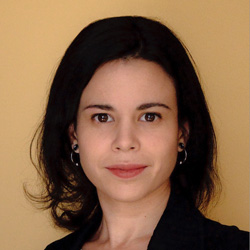
Rosemary Braun is an Associate Professor at Northwestern University, holding joint appointments in Molecular Biosciences and Engineering Sciences and Applied Mathematics within the McCormick School of Engineering. Her research focuses on developing computational methods for systems-level analysis of high-dimensional genomic and proteomic data to understand complex biological phenomena, particularly cancer and circadian rhythms. She leads the Braun Research Group, collaborating with experimentalists to investigate topics such as circadian regulation, cancer biology, and developmental processes. Dr. Braun's education includes a Ph.D. in Physics from the University of Illinois at Urbana-Champaign and an M.P.H. in Biostatistics from Johns Hopkins University. Her work bridges mathematics, statistics, physics, and biology, emphasizing multi-scale computational approaches. She has developed innovative tools like scHolography for spatial single-cell analysis and TimeCycle for circadian transcriptomics. Her publications highlight advancements in understanding circadian clock dynamics, post-COVID-19 pulmonary pathologies, and metabolic disorders linked to circadian disruption. Braun collaborates across disciplines, contributing to translational research in precision medicine and systems biology. She directs the Braun Lab, which emphasizes computational methods for addressing complex biological questions.
Joseph Young is an Assistant Teaching Professor in the Electrical and Computer Engineering (ECE) department at Rice University, serving as Director of the Professional Master's Program. He joined Rice in 2021, focusing on overseeing capstone projects and advising MECE students. His research interests span computer engineering, embedded systems, signal processing, neuroengineering, and information theory. Education: B.S. in Electrical Engineering, North Carolina State University (2015) M.S. in Electrical and Computer Engineering, Rice University (2018) Ph.D. in Electrical and Computer Engineering, Rice University (2020) Research focuses on applying information theory to neural data analysis, embedded systems design, and signal processing. Recent work includes validation of passive TV viewing measurement systems, functional connectivity analyses in neuroscience, and LED device optimization. Notable awards include the NSF IGERT fellowship (2017-2019), Rice ECE Distinguished Student Service Award (2017), and an undergraduate research grant from NC State (2015). He advises the MECE capstone program and has held internships at RTI International and Sandia National Laboratories. His professional roles emphasize bridging academic research with practical applications in engineering education and industry collaboration.
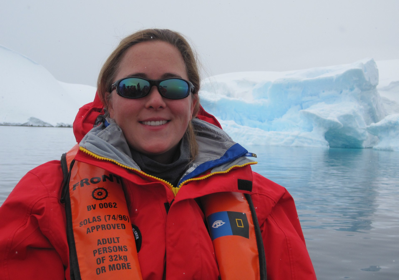
Prof. Alexandra H. Techet is a Professor of Mechanical and Ocean Engineering at MIT's Department of Mechanical Engineering. She leads the Experimental Hydrodynamics Laboratory (EHL), focusing on experimental investigations of hydrodynamics problems relevant to naval engineering and ocean science. Her research integrates advanced imaging techniques like 3D PIV/PTV and biomimetic design to study fluid-structure interactions, free surface flows, and unsteady propulsion mechanisms in marine systems. Prof. Techet holds a B.S.E. from Princeton University and M.S./Ph.D. from MIT's Joint Program with WHOI. Education: B.S.E. in Mechanical & Aerospace Engineering, Princeton University (1995) M.S. in Oceanographic Engineering, MIT/WHOI Joint Program (1998) Ph.D. in Oceanographic Engineering, MIT/WHOI Joint Program (2001) Research Interests: Prof. Techet's work addresses hydrodynamics challenges in naval systems and marine environments through experimental methods. Key areas include: Biologically inspired propulsion (fish swimming, jumping mechanics) Fluid-structure interaction in offshore platforms 3D imaging techniques for multiphase flows Water entry dynamics and spray hydrodynamics Development of autonomous underwater vehicles Her EHL lab employs cutting-edge experimental setups like light field cameras and synthetic aperture PIV for high-resolution flow visualization. Awards & Recognition: 2011, 2009, 2007, 2005 APS Gallery of Fluid Motion Prize 2004 ONR Young Investigators Award 2002-2004 Doherty Professorship for Ocean Utilization Teaching & Outreach: Prof. Techet teaches core courses in hydrodynamics and design principles for ocean engineering systems. She co-directs the Naval Engineering Education Center (NEEC) at MIT and advises the MIT Marine Technology Society chapter. Her pedagogy emphasizes hands-on learning through lab modules linked to ongoing research projects, such as biomimetic underwater vehicle design and offshore energy systems. Lab & Collaborations: The EHL collaborates with Woods Hole Oceanographic Institution to develop oceanographic instrumentation. Recent projects include studying archer fish jumping mechanics, unsteady vortical wakes, and high-speed ship hydrodynamics. Prof. Techet also explores applications of light field imaging for autonomous robotics and real-time flow analysis.
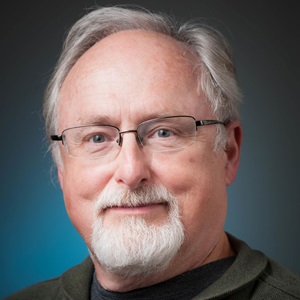
Brygg Ullmer is a Professor at Clemson University's School of Computing and Chair of the Human-Centered Computing Division. He leads the Tangible Visualization group, focusing on Tangible User Interfaces (TUIs) Computational Genomics Interactive Computational STEAM Rapid Physical/Electronic Prototyping Computationally-Mediated Art and Design His work bridges physical and digital domains, with applications in K-12 education, high-performance computing, and culturally-rooted design. Research trends from his 15 most recent articles show a focus on Generative AI for cyberphysical systems Shape-changing interfaces Token+Constraint interaction models Genomics data visualization Hybrid tangible-gestural interfaces Multi-display collaboration These span both theoretical and applied work in computer science, biology, and design. Ullmer has held significant roles including Postdoctoral work at Zuse Institute Berlin Associate Professor at Louisiana State University (CCT & Computer Science) Visiting Lecturer at Hong Kong Polytechnic University Contributions to IBM Systems Journal and special editions of Springer's Personal and Ubiquitous Computing He has also co-edited journal special issues and served on conference committees. His scientific contributions include co-invented U.S. patents (6164541, 6263507, 6259441) related to Invisible hyperlinking Audiovisual data browsing Digital video time-shifting These patents reflect early innovations in tangible interface technology that have influenced modern interactive systems.
Yifeng Li is an Associate Professor in the Department of Computer Science at Brock University, cross-appointed in Biological Sciences and the Centre for Biotechnology. He holds a Canada Research Chair in Machine Learning for Biomedical Data Science and leads the Brock Biomedical Data Science Lab. His research focuses on AI, machine learning, data science, and their applications in computational biology and bioinformatics. Education: BSc/MSc (Computer Science, Shandong Institute of Light Industry) PhD (Computer Science, University of Windsor) Postdoc (Bioinformatics, University of British Columbia) Research Interests: AI algorithms inspired by neuroscience, deep learning for genomics, drug design, and healthcare applications. He has over 40 peer-reviewed publications and numerous grants, including NSERC and CFI funding. His lab develops tools like MVMF and DECRES for integrative data analysis. He supervises MSc/PhD students in AI, bioinformatics, and computational biology. Awards: Canada Research Chair, NSERC Discovery Grant, NRC Rising Star Award, and 20+ scholarships/honors.
Robert Heckendorn, Ph.D., is an Associate Professor in the Department of Computer Science at the University of Idaho, part of the College of Engineering. His research interests span machine learning, evolutionary computation, robotics, optimization algorithms, computational biology, and transportation systems. He holds a Ph.D. and has contributed extensively to interdisciplinary areas such as autonomous systems, traffic simulation, and bio-inspired algorithms. His work often bridges theoretical foundations with practical applications, including developing high-fidelity traffic modeling tools, optimizing manufacturing processes, and advancing robotic control strategies. Notable contributions include neuroevolution techniques for crowd behavior prediction and fuzzy logic-based crowd management systems. He also explores evolutionary algorithms in biological fitness landscapes and disaster management scenarios. He has authored over 50 publications since 1997, focusing on algorithmic efficiency, population diversity in evolutionary systems, and multi-agent coordination. His research has implications for smart cities, healthcare, and autonomous vehicle technologies. Despite no listed awards here, his prolific output underscores his impactful contributions to computer science and engineering. As an educator, he contributes to curriculum development in computational thinking and web-based learning systems (e.g., vTutor platform). His lab likely focuses on real-world problem-solving through computational methods, though specific lab names aren’t mentioned. Collaborations with industry and interdisciplinary teams are implied through his research topics like connected-vehicle systems and cancer modeling via cellular automata.
Esther Ibáñez Marcelo is a Professor at the Universitat Oberta de Catalunya (UOC) in the Computer Science, Multimedia and Telecommunications Department since April 2024. Prior to this, she worked as a Data Scientist at AilyLabs (2023-2024) and held postdoctoral and data science roles at ISI Foundation from 2015 to 2019 and 2019 to 2022, respectively. Current Role: Professor at UOC Previous Roles: Data Scientist at ISI Foundation, Postdoctoral Researcher at ISI Foundation Her research focuses on Topological Data Analysis (TDA) and its applications to biological data, including genotype-phenotype networks, phylogenetic reconstruction, and dynamical systems modeling. She developed the Easy_PH tool—a Python-based GUI for persistent homology computations. Her publications span neuroscience (fMRI analysis, cortical networks), biomedical engineering (EMG features, gait biomechanics), and evolutionary biology (escape dynamics, network robustness). Notably, her 2017 article on gait biomechanics was among the top 10 most downloaded Springer engineering papers in 2018. Scientific Awards: Top 10 most downloaded engineering article in 2018 (Springer) She has collaborated on projects involving data quality, human behavior analysis, sentiment analysis, and industrial process optimization through network modeling and machine learning techniques.
Dr. Charlotte Brassey is a Senior Lecturer in Zoology at Manchester Metropolitan University, specializing in functional morphology, comparative anatomy, and 3D imaging techniques. Her research explores mammalian genitalia evolution and animal kinematics using advanced imaging technologies. She serves as Associate Editor for Proceedings of the Royal Society B and is a grant reviewer for major UK research councils. Her research spans: Evolution of mammalian baculum and clitoris 3D shape quantification methods AI-based animal tracking Biomechanical modeling Her publications focus on comparative anatomy across species, employing CT scanning and morphometric analysis to understand functional adaptations in vertebrates and arthropods. The research shows consistent application of 3D imaging to evolutionary questions across diverse taxa. Dr. Brassey supervises PhD students investigating reproductive biomechanics in mammals and predatory structures in arthropods. She serves on governance boards including the EPSRC National X-Ray Computed Tomography Facility and NERC Peer Review College.
Darrin Walenta is an Associate Professor and Extension Agronomist at Oregon State University's Department of Crop and Soil Science within the College of Agricultural Sciences . He has served at OSU since 2000, focusing on field crop responsibilities in Union, Baker, and Wallowa Counties. His work bridges research and outreach, addressing practical agricultural challenges through integrated pest management (IPM) and plant pathology. Education : B.S. in Agronomy from Oklahoma State University (1992); M.S. in Crop Science from Washington State University (2001). Dr. Walenta's research centers on ergot disease in grass seed crops, herbicide resistance , and insect vector dynamics . He develops predictive models for pest outbreaks and employs information technology to enhance disease surveillance. His projects often involve collaborations with USDA-ARS and Pacific Northwest agricultural stakeholders. His recent publications highlight advancements in ACCase-inhibitor resistance monitoring, invasive moth management , and fungicide efficacy for ergot control. He has pioneered tools like the Ergot Alert Newsletter and electronic pest alert systems for real-time grower support. Scientific Awards : Distinguished Service Awards (2024, 2016); Vice Provost Award for Outreach Excellence (2018); Experienced/Newer Faculty Awards (2013, 2006). Dr. Walenta leads community partnerships to improve IPM adoption, including the Electronic Mint Pest Alert Newsletter and learner-centered education programs . His outreach spans grass seed production , potato pest management , and agricultural technology training .
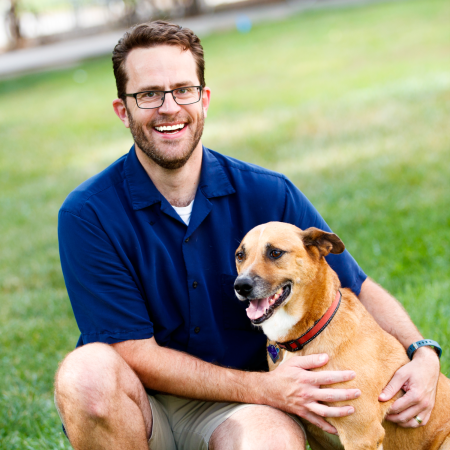
Jeffrey Stevens is a Susan J. Rosowski Professor in the Department of Psychology and the Center for Brain, Biology & Behavior at the University of Nebraska-Lincoln. He directs the Canine Cognition and Human Interaction Lab and serves as a Data Science Mentor at Posit Academy. His academic journey includes a Ph.D. in Ecology from the University of Minnesota, a postdoctoral fellowship in Psychology at Harvard University, and research scientist position at the Max Planck Institute for Human Development in Berlin. Dr. Stevens' research program integrates perspectives from biology, psychology, computer science, neuroscience, and economics to understand decision making in humans and other animals. His work spans canine cognition, human-animal interactions, intertemporal choice, and quantitative methods in behavioral research. He has worked with over 15 different species of fish, birds, and mammals, with particular focus on dogs and corvids. His research employs data science approaches and emphasizes open science practices to ensure transparency and reproducibility. The analysis of his recent publications reveals a strong trend toward big team science approaches in comparative cognition, particularly through the ManyDogs Project which involves multi-lab collaborations to investigate canine behavior and cognition. His work increasingly combines traditional behavioral methods with computational approaches, including machine learning algorithms for similarity judgments and decision making. There is also a clear trajectory toward understanding the intersection of biological mechanisms and behavioral outcomes, particularly in the domains of impulsivity, quantity discrimination, and social cognition. Susan J. Rosowski Professor (named professorship) Co-director of the ManyDogs Project Active participant in Big Team Science initiatives Dr. Stevens actively mentors undergraduate and graduate students, having trained hundreds of students in data science methods. He is currently seeking motivated undergraduate students to join his Canine Cognition and Human Interaction Lab. His research has been supported by multiple grants including from the National Science Foundation, University of Nebraska Food for Health Collaboration Initiative, Nebraska EPSCoR, and the Alexander von Humboldt Foundation. He teaches courses in Evolution, Behavior, and Society; Controversial Issues in Psychology; Animal Learning and Cognition; and Psychology of Decision Making. Dr. Stevens leads the Canine Cognition and Human Interaction Lab, which conducts research on dog behavior, cognition, and the human-dog bond. The lab is part of the ManyDogs Project, a large-scale collaborative effort investigating canine cognition across multiple laboratories worldwide. His work emphasizes methodological rigor, open science practices, and interdisciplinary approaches to understanding decision making across species.
Mauro Lo Brutto is an Associate Professor at the University of Palermo, Department of Engineering, specializing in Geomatics. He earned a PhD in Geodetic and Topographic Sciences from the University of Naples Parthenope (2002) and holds an MSc in Geological Sciences (cum laude, 1992). His career includes a Researcher role at the University of Palermo (2003–2020) and leadership of the Geomatics Laboratory. He teaches Topography, Photogrammetry, and 3D Surveying. PhD: Geodetic and Topographic Sciences, University of Naples Parthenope (2002) MSc: Geological Sciences, University of Palermo (1992) Postgraduate Course: GIS and Remote Sensing, FORMEZ Naples (1993) Research spans photogrammetry, laser scanning, GNSS, and Scan-to-BIM methodologies for cultural heritage documentation. Key applications include UAV surveys, virtual archaeology, geospatial positioning, and monitoring of unstable geological sites. His work integrates innovative technologies for heritage preservation and environmental analysis. Recent publications focus on 3D modeling of archaeological sites, geospatial networks, and HBIM (Heritage BIM) applications. Articles address topics like UAV surveying of Arab-Norman churches, thermographic landfill analysis, and flow dynamics around freshwater mussels. Scientific Affiliations Member, SIFET (Italian Society of Photogrammetry and Topography) Member, AUTEC (University Cartography Association) Member, ISPRS (International Society for Photogrammetry) Member, CIPA (Architectural Photogrammetry Committee) He contributes to editorial boards (Applied Sciences, Remote Sensing) and serves as Guest Editor for journals like European Journal of Remote Sensing. His lab at the University of Palermo drives geomatics innovation for cultural heritage.
Dr. Beth Chapman is a Lecturer in Teacher Education and Program Director for Postgraduate Education at the University of Canberra's Faculty of Education . With over 20 years of experience spanning science, research, and education, she transitioned from a decade-long role at CSIRO's National Biological Collections to focus on science pedagogy. PhD in Zoology (2008) Masters of Secondary Teaching (University of Canberra, science specialization) Her research focuses on Australian curriculum development , student comprehension of scientific diagrams , and data visualization in education. Current projects examine ethical AI frameworks for teaching and digital feedback mechanisms in secondary schools. She teaches units on Using Data to Improve Learning and collaborates on science pedagogy and Australian Curriculum understanding. Her career combines biological research expertise with educational innovation.
Anthony Estey is an Assistant Teaching Professor and Acting Experiential Learning Coordinator in the Department of Computer Science at the University of Victoria. His work focuses on innovative educational technologies, quantum computing pedagogy, and studio-based learning models in game design. He holds roles in both the Faculty of Engineering and Computer Science and coordinates experiential learning initiatives. Research interests include developing interactive tools to lower learning barriers in quantum computing (e.g., QNotation/QGrover), applying extended reality for immersive education, and analyzing student behavior through programming workflows. His publications span educational technology, game design pedagogy, and interdisciplinary collaboration strategies. Recent work emphasizes real-time systems for motion capture in performances and predictive analytics for student support. Though no scientific awards are listed, his contributions to educational tool development are highlighted through publications in 2024-2010. He coordinates experiential learning programs but no grants or specific lab affiliations are noted in available data.
Ulrike Stege is an Associate Professor and Director of the Master of Engineering in Applied Data Science (MADS) at the University of Victoria's Faculty of Engineering and Computer Science. She holds a PhD from the Swiss Federal Institute of Technology (ETH Zurich). Her research spans computational biology, parameterized complexity, algorithm design, graph theory, and cognitive psychology. She leads initiatives in quantum computing frameworks and educational tools, including projects like SCOOP (quantum optimization) and QGrover (quantum algorithm visualization). Her work also addresses RNA pseudoknot structure prediction and the integration of quantum computing into combinatorial optimization software. Key educational contributions include developing browser-based quantum learning tools (e.g., QNotation and QuantumCrypto) and promoting computational thinking in K-12 education. Her research bridges theoretical computer science with practical applications in biology and quantum systems, emphasizing algorithmic innovation and interdisciplinary collaboration. Her publications focus on advancing quantum computing frameworks, optimizing bioinformatics algorithms, and creating accessible educational resources. Recent work addresses quantum annealing for constrained optimization, structural biochemistry of viral RNA, and hybrid quantum-classical problem-solving methods.
Dar-Jen Chang is an Associate Professor in the Department of Computer Science and Engineering at the University of Louisville. He holds a B.S. in Mathematics from National Tsing Hua University (1970), an M.S. in Computer Information/Control Engineering from the University of Michigan (1982), and a Ph.D. in Mathematics from the same institution (1982). His research focuses on parallel computing, GPU programming, bioinformatics, 3D modeling, and algorithm optimization. His work spans disciplines including computer science, data mining, and biomedical applications. Chang’s research interests emphasize leveraging GPU acceleration for computational tasks such as RNA folding algorithms, hierarchical clustering, and Euclidean distance calculations. He has explored applications in 3D anatomical modeling, robotics simulation using Unity, and gaming frameworks with CUDA integration. His contributions include developing frameworks for algorithm visualization and database systems for automated process planning. His publications highlight trends in GPU-optimized algorithms, graph database analysis (e.g., Yelp and IMDb datasets), and interdisciplinary applications like medical imaging and genetic sequence prediction. He has also contributed to neural networks for fuzzy logic systems and biological sequence mining.